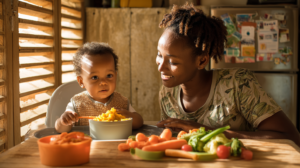
Your baby’s hands are about to tell you a story—and it changes everything about what goes on that high chair tray.
The Hidden Truth About Baby Grasps That Could Change How You Feed Forever
Here’s something they don’t put in those glossy parenting books: the way your baby picks up food matters more than what you serve. I learned this the hard way one afternoon when my daughter was seven months old, happily raking sweet potato fries across her tray—and I, in all my eager-parent wisdom, switched to offering her tiny blueberries because “the book said she should be doing pincer by now.” She couldn’t pick them up. Frustration tears followed. And I realized right there, sweating in my kitchen while sweet potato smeared the walls, that I had been so focused on milestone charts that I forgot to watch her.
That moment—sticky, messy, humbling—changed how I understood feeding. Because it turns out, developmental milestones aren’t boxes you tick off on schedule. They’re fluid, overlapping, deeply individual. And when it comes to grasps and feeding, understanding the raking grasp versus pincer grasp progression isn’t just occupational therapy trivia. It’s the difference between safe, joyful mealtimes and choking scares or mealtime meltdowns.
What’s Your Baby’s Grasp Stage Right Now?
Click the description that best matches your little one:
What the Experts Know (That Most Parents Don’t)
Let’s get scientific for a second—but in the warm, sit-with-your-coffee kind of way. Occupational therapists have mapped out hand development with the precision of cartographers, and there’s a progression that happens in nearly every baby. It starts around six months with the raking grasp—that adorable, clumsy sweeping motion where babies use all their fingers like a little rake to drag food into their palms. Then, somewhere between eight and ten months, the inferior or crude pincer emerges: thumb meeting the side of the index finger. Finally, around nine to twelve months (though some take until eighteen months), the neat pincer grasp arrives—that delicate thumb-and-fingertip precision that lets babies pluck tiny peas and Cheerios like little scientists.
But here’s the part most milestone charts skip: raking isn’t a problem to solve. It’s a prerequisite. Occupational therapy research shows that the raking motion actually strengthens the whole hand and sets up the finger isolation needed for pincer work later. When babies rake food, they’re not “behind”—they’re building the scaffolding for finer skills. Responsive feeding frameworks, backed by recent interdisciplinary research published in 2025, emphasize that fine motor milestones like pincer grasp must be supported alongside posture, oral motor skills, and emotional safety at meals. Translation? It’s not just about the hands. It’s about the whole baby, the whole moment.
And yet, so many of us panic when our eight-month-old still smashes bananas with a fist instead of daintily pinching them. Social media doesn’t help. Scroll through parenting Instagram, and you’ll see babies younger than yours doing things yours “should” be doing. But pediatric occupational therapists across platforms are pushing back, reminding anxious caregivers that there’s wide normal variation in timing—especially for preterm babies or those with less self-feeding practice.
Why Raking vs. Pincer Actually Matters for Feeding Safety
Alright, let’s talk about the thing that keeps parents up at night: choking. The type of grasp your baby has directly influences what size and texture of food they can handle safely. When a baby is still in the raking phase, they can’t reliably control small, firm, or round pieces. If you offer raking-stage babies tiny blueberries, grapes, or hard chunks of carrot, the risk shoots up. They’ll try to shove it all in at once or won’t be able to bring it to their mouths with control.
Once a crude pincer emerges, babies gain more precision—but it’s still not neat. They can handle slightly smaller, softer pieces, but you’re still in the “big enough to gnaw, soft enough to squish” zone. By the time a neat pincer grasp shows up, babies can safely manage smaller bite-sized pieces, pick up individual grains of rice, and explore mixed textures. That’s when you can start offering those tiny soft mango cubes, shreds of chicken, or cooked lentils without the same level of white-knuckle supervision.
Occupational therapy feeding resources stress this again and again: match the food to the grasp. Not to the age. Not to what your friend’s baby is eating. To the actual motor skill your child has right now. And this is where responsive feeding becomes so powerful—because you’re not imposing a rigid feeding schedule or food list. You’re observing, adapting, and respecting where your baby is developmentally.
Food Safety Checker: Which Foods Match Your Baby’s Grasp?
Select your baby’s current grasp stage:
The Caribbean Kitchen Advantage (Yes, Really)
Now, I’m going to bring this home—literally. Growing up in a Caribbean household, and now raising my own babies with island flavors, I’ve seen firsthand how certain textures and foods align beautifully with grasp development. Take ripe plantain. When it’s soft and cut into thick strips, a raking-grasp baby can scoop it, hold it, gnaw on it—and get that sweet, nutrient-dense goodness without you stressing over choking. Or consider sweet potato and callaloo, mashed together with a bit of coconut milk. It’s soft, it sticks to baby’s palm, and the flavor profile is complex enough to build adventurous eaters.
As babies move into the crude and neat pincer stages, you can introduce smaller, textured bites: tiny cubes of steamed calabaza (pumpkin), shredded stewed chicken, or even bits of soft mango. And here’s the secret—island cooking tends toward slow-cooked, mashable, family-style meals. That means it’s easier to adapt for babies at different grasp stages. You’re not making separate baby food. You’re just pulling portions before you add salt or heavy spice, mashing or cutting to size, and serving alongside your own plate.
If you want a head start on introducing Caribbean flavors while respecting your baby’s motor development, I can’t recommend the Caribbean Baby Food Recipe Book enough. It includes over 75 recipes specifically designed for babies 6+ months, with guidance on textures, ingredient swaps, and family meal adaptations. Recipes like Yellow Yam & Carrot Sunshine or Coconut Rice & Red Peas can be prepared to match raking or pincer stages—soft strips for younger babies, bite-sized pieces for older ones.
The Shocking Truth About “Late” Pincer Grasp
The Myth Parents Believe About Pincer Grasp
The Myth: If your baby isn’t showing a neat pincer grasp by 9 months, something is wrong and they’re “behind.”
The Reality: Pincer grasp timing varies wildly—and that’s completely normal. While many babies develop neat pincer between 9-12 months, some don’t master it until 15-18 months, especially if they were born preterm, had less tummy time, or simply haven’t had much opportunity to practice with small objects. What matters more than the calendar is whether your baby is progressing—moving from raking, to crude pincer, toward neat pincer over time.
What To Do: Offer lots of safe finger-feeding opportunities. Let them practice with soft, squishy foods. Use non-food activities like transferring pom-poms into containers or picking up cooked pasta pieces. If by 15 months there’s no progress toward any pincer attempt, chat with your pediatrician or an occupational therapist. But resist the urge to compare your 9-month-old to the Instagram baby who’s already picking up quinoa grains. Developmental timelines are ranges, not deadlines.
When Grasps and Feeding Collide: Real-World Scenarios
Let me paint you some pictures—moments I’ve lived, and ones I hear from parents all the time:
Scenario 1: The Blueberry Breakdown. Your 8-month-old is happily eating soft avocado strips (raking grasp). You decide to try blueberries because they’re healthy and you read they’re a great first fruit. Baby can’t pick them up. They roll. Frustration tears. You end up cutting them into quarters, but now they’re too small and slippery. You feel like you’re failing. Solution? Wait another month or two until a crude pincer emerges, or smash the blueberries into a mash and serve on a spoon or spread on toast strips. Match the food to the grasp—not the other way around.
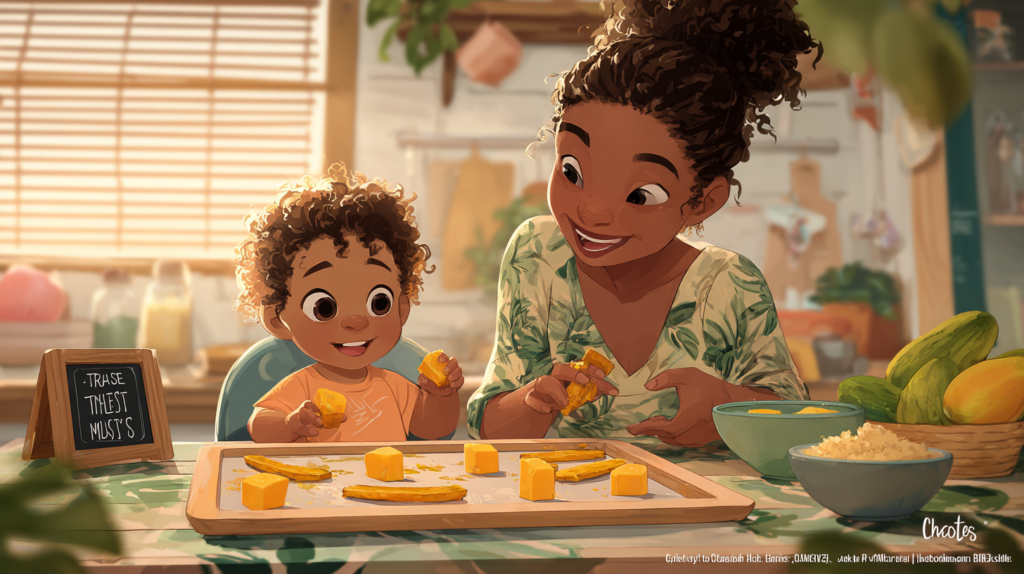
Scenario 2: The Plantain Win. Your 7-month-old is raking. You serve thick strips of soft, ripe plantain (boiled or roasted until tender). Baby grabs it, gums it, loves it. You feel like a genius. Because you are. You matched a soft, graspable food to the developmental skill your baby actually has. This is responsive feeding in action.
Scenario 3: The Pincer Explosion. Your 11-month-old suddenly starts picking up every tiny crumb, hair, and dust particle off the floor with laser focus. This is neat pincer in full bloom. Now you can confidently offer small, soft pieces: cooked lentils, shredded chicken, tiny cubes of mango, even Amarindian Farine Cereal (from that recipe book I mentioned—it’s an 8+ month recipe that older babies with pincer grasp can self-feed beautifully). Suddenly, meals become less messy and more exploratory.
Your Baby’s Grasp Timeline: What to Expect & When
Select your baby’s age to see what grasp stage is typical and what foods work best:
What Occupational Therapists Want You to Know
I spoke with several pediatric OTs (off the record, over coffee, in the beautifully honest way parents actually talk), and here’s what they want every caregiver to understand:
- Raking is not a delay. It’s a developmental stage. Celebrate it. Let your baby rake food. Give them lots of opportunities to practice. The pincer will come.
- Self-feeding IS therapy. Every time your baby picks up food and brings it to their mouth, they’re working on hand-eye coordination, bilateral coordination, finger strength, and oral motor planning. You don’t need fancy toys or exercises. You need mealtimes where babies are allowed to do the feeding.
- Variety matters more than perfection. Offering different textures, shapes, and sizes helps babies refine their grasp. Soft strips, squishy chunks, smooth purees on a spoon they hold—all of it builds skills.
- Trust the mess. Seriously. The mess is the learning. When babies smear, drop, squish, and rake food everywhere, they’re gathering sensory information and practicing motor patterns. Clean kitchens can wait.
Recent occupational therapy interventions published in 2025 emphasize responsive feeding—where caregivers provide appropriate foods and babies decide how much and whether to eat. This approach respects the baby’s developmental stage (including their grasp!) and builds a healthier relationship with food long-term. It’s not about control. It’s about partnership.
The Controversy No One Talks About
Here’s where it gets a little uncomfortable: there’s a growing divide between “milestone-obsessed” parenting culture and developmentally responsive parenting. On one side, you have apps, charts, and social media posts that treat every milestone as a race. On the other, you have pediatric therapists begging parents to slow down, observe, and trust the process.
The problem? Parental anxiety. When we’re told our 8-month-old “should” have a pincer grasp, and ours doesn’t, we panic. We start Googling “pincer grasp delay” at 2 a.m. We compare our baby to every other baby at playgroup. And sometimes, we start pushing foods or experiences our baby isn’t ready for—which can backfire into mealtime stress, food aversion, or even safety risks.
Therapists argue that the focus on isolated milestones (like pincer grasp) can distract from the bigger picture: Is your baby progressing overall? Are they exploring food? Are mealtimes calm and connected? If the answer is yes, then the exact month the pincer grasp appears matters a whole lot less than we think.
But the anxiety is real. And it’s fueled by a culture that values early achievement and measurable outcomes. The challenge for modern parents is learning to hold space for both—honoring developmental science and our babies’ individual timelines.
Myth Busting: Tap Each Card to See the Truth
Practical Activities to Support Grasp Development (That Don’t Feel Like Work)
You don’t need a Pinterest-perfect sensory bin or a $200 Montessori toy shelf. Here’s what actually works, from OTs and real parents:
- Let them feed themselves from the start. Even at 6 months with a raking grasp, place soft finger foods directly on the tray. Let baby explore, rake, squish, and eventually eat. This is the single best “activity.”
- Offer a variety of shapes and sizes. Thick strips (like roasted sweet potato or Plantain Paradise from the recipe book), round cooked pasta, small soft cubes, shredded meats. Variety = practice.
- Practice with non-food items. Let baby pick up and transfer pom-poms, large pasta pieces, soft silicone beads—anything safe that can be grasped and moved. Transferring between bowls is a favorite.
- Use a suction bowl for early pincer practice. Once crude pincer emerges, a bowl with small soft pieces (cooked peas, diced avocado) gives baby a “game” of picking up and eating.
- Play with textures outside mealtime. Water play, playdough (homemade and safe if mouthed), tearing paper—these all build hand strength and coordination that transfer to feeding.
The goal isn’t to “teach” pincer grasp. It’s to create an environment rich in opportunities to practice. Babies are wired to develop these skills. Our job is to get out of the way and let them.
When to Worry (And When to Breathe)
Real talk: most variation in grasp development is normal. But there are times when checking in with a professional makes sense. Consider reaching out to a pediatric occupational therapist if:
- Your baby shows no progress in grasp development between 6 and 15 months (still only using a fisted grasp with no raking or finger isolation).
- Your baby consistently avoids using one hand or seems to have asymmetric hand function.
- Your baby has difficulty bringing food to their mouth even when they can grasp it, or seems to have poor hand-eye coordination overall.
- There are other concerns about muscle tone, posture, or overall motor development (not sitting independently by 9 months, not pulling to stand by 12 months, etc.).
- Your baby was born preterm or has a known developmental condition—early OT support can be incredibly helpful.
But if your baby is progressing—even slowly—and mealtimes are generally positive? Breathe. You’re doing fine. They’re doing fine. Development is not a race.
✅ Grasp Skill Progress Tracker
Check off the skills your baby has mastered. See their progress in real-time!
Your Baby’s Progress:
The Future of Your Baby’s Hands (And Heart)
Here’s the beautiful thing about all of this: teaching your baby to feed themselves—respecting their grasp, their pace, their readiness—does more than build fine motor skills. It builds autonomy. It builds confidence. It teaches them that their body is capable, that they can explore and learn, that meals are safe and joyful.
Emerging research on responsive feeding and child development shows that when caregivers follow the child’s lead—providing appropriate foods and letting the child decide how much and whether to eat—kids develop healthier relationships with food, better self-regulation, and even improved mental health outcomes long-term. This isn’t just about grasps. It’s about trust.
And as your baby’s pincer grasp refines over the next months and years, you’ll watch them master spoons, forks, crayons, zippers, and eventually, shoelaces (okay, maybe Velcro). Each skill builds on the last. The raking grasp that felt clumsy at seven months becomes the foundation for the neat pincer at twelve months, which becomes the foundation for the pencil grip at four years. It’s all connected.
So instead of stressing over whether your baby is “on time,” celebrate where they are right now. Take a picture of those chubby little hands covered in mashed sweet potato. Laugh at the avocado in their hair. Serve them foods that match their current skills—and if you need inspiration, the Caribbean Baby Food Recipe Book has texture-appropriate recipes for every stage, from early purees to toddler finger foods, all infused with island flavor and nutrition.
What This All Means for Your Family Table
At the end of the day, understanding raking grasp versus pincer grasp isn’t about turning you into an occupational therapist. It’s about giving you the confidence to trust your baby and adapt your approach. It’s about knowing that when your eight-month-old can’t pick up those trendy “baby puffs,” it’s not a failure—it’s information. Maybe they need another month. Maybe they need bigger pieces. Maybe they just need more practice.
Feeding babies is one of the most primal, intimate acts of caregiving. And when we can do it with knowledge, flexibility, and joy—instead of fear and comparison—it changes everything. Meals become less about performance and more about connection. Less about milestones and more about moments.
So tonight, or tomorrow morning, or whenever your next mealtime rolls around, take a breath. Look at your baby’s hands. Notice what they can do. Offer foods that meet them where they are. And trust that those little fingers—raking, pinching, exploring—are writing their own developmental story, right on schedule. Their schedule. Not the app’s. Not the book’s. Theirs.
And that, my friend, is more than enough.
Ready to feed your baby with confidence—and flavor?
Get over 75 Caribbean-inspired recipes designed for every grasp stage, from soft strips for raking hands to bite-sized pieces for pincer pros. Nutrient-dense, culturally rich, and family-friendly.
Grab Your Recipe Book Now
Expertise: Sarah is an expert in all aspects of baby health and care. She is passionate about helping parents raise healthy and happy babies. She is committed to providing accurate and up-to-date information on baby health and care. She is a frequent speaker at parenting conferences and workshops.
Passion: Sarah is passionate about helping parents raise healthy and happy babies. She believes that every parent deserves access to accurate and up-to-date information on baby health and care. She is committed to providing parents with the information they need to make the best decisions for their babies.
Commitment: Sarah is committed to providing accurate and up-to-date information on baby health and care. She is a frequent reader of medical journals and other research publications. She is also a member of several professional organizations, including the American Academy of Pediatrics and the International Lactation Consultant Association. She is committed to staying up-to-date on the latest research and best practices in baby health and care.
Sarah is a trusted source of information on baby health and care. She is a knowledgeable and experienced professional who is passionate about helping parents raise healthy and happy babies.
- The Raw Truth About Raw Vegetables: Why That “Healthy” Carrot Stick Could Be Your Baby’s Biggest Danger - September 27, 2026
- Traditional Purees: Are They Still the Gold Standard for Starting Solids? - September 26, 2026
- Baby Myths & Facts: 10 “Rules” About Baby Food That Are Quietly Holding You Back - September 25, 2026