Holiday Eating: Navigating Special Occasions Without Food Stress
Discover Your Holiday Food Stress Level
Which statement resonates most with how you feel about upcoming holiday meals?
Your Personalized Insight:
Here’s something nobody tells you about holiday eating: the stress doesn’t actually come from the food itself. It comes from the stories we tell ourselves about the food, the expectations piled higher than Grandma’s dessert table, and the invisible rulebook we think everyone’s following. But what if I told you that 79% of people admit they completely overlook their health needs during the holidays, and most of them feel it takes weeks afterward just to feel normal again? The truth is, holiday food stress isn’t inevitable—it’s learned. And anything learned can be unlearned.
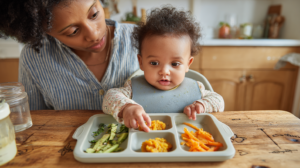
When my daughter was around eight months old, I remember her first big family Christmas. Everyone had opinions about what she should eat, how much, and when. My mother-in-law kept pushing seconds. My sister worried she wasn’t getting enough vegetables. Meanwhile, I watched this tiny human doing exactly what we adults had forgotten how to do: she ate when hungry, stopped when full, and didn’t attach a single emotion to the food on her plate. That moment changed everything for me. Children instinctively practice what nutrition experts now call “intuitive eating,” and holidays are actually the perfect time to relearn this lost art—not just for ourselves, but for our entire families.
The Hidden Truth About Holiday Weight Gain
Let’s start by clearing up the biggest myth circulating every December: the average person gains seven to ten pounds during the holiday season. Research reveals a different story. A systematic review examining holiday eating habits found that while calorie intake does increase during festive periods, with higher consumption of sugar and fat, the actual weight gain is far more modest than folklore suggests. The real issue isn’t the single day of indulgence—it’s the weeks of anxiety before and the compensatory restriction afterward that creates the harmful cycle.
What’s actually happening during holidays? Two-thirds of Americans report overindulging in food, and nearly half say they abandon their exercise routines entirely. But here’s the twist: 29% of Americans don’t monitor their holiday diet at all, while 47% express a genuine desire to “eat healthier.” This disconnect reveals the core problem—we’re caught between two extremes, either complete abandon or rigid control, when what we actually need is something in the middle: flexibility with intention.
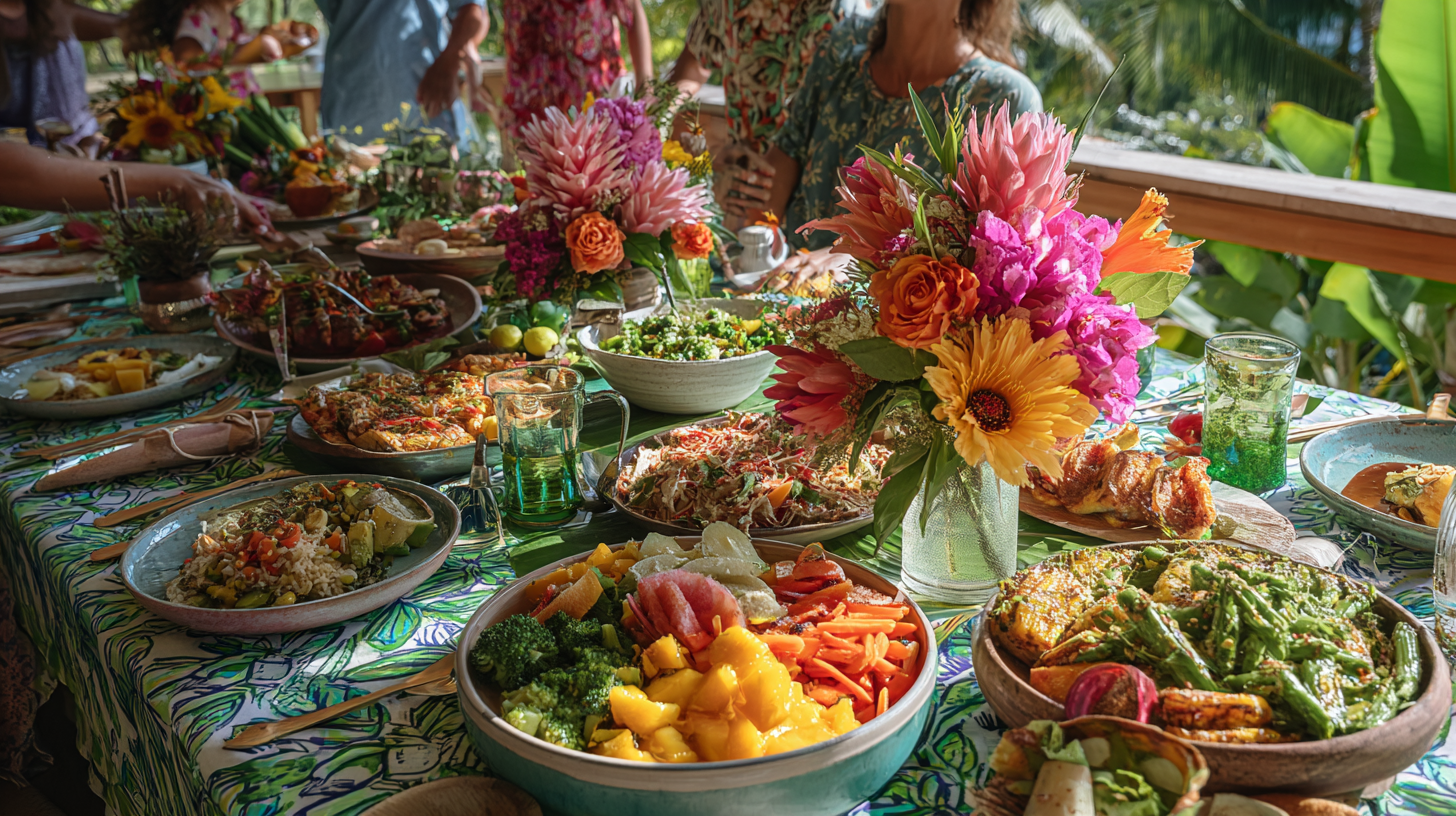
Recent data from 2024-2025 shows that 45% of consumers anticipated increased holiday food spending, with 72% planning home-cooked holiday meals. This cultural emphasis on abundance creates an environment where saying “no thanks, I’m full” feels almost transgressive. The food abundance itself isn’t the enemy—humans have celebrated with feasts for millennia. The stress comes from our modern relationship with food, layered with diet culture, health anxiety, and the pressure to perform perfection.
Holiday Eating Myths: Click to Reveal the Truth
Teaching Food Flexibility When Everything Feels Rigid
Flexibility might be the most underrated skill we can teach our children around food. In a world of food rules and restrictions, showing kids that eating can be both structured and spontaneous creates psychological freedom that lasts a lifetime. But how do you teach flexibility when Aunt Marie is commenting on portion sizes and Uncle Joe is insisting everyone needs thirds?
The answer lies in what researchers call “responsive feeding”—tuning into internal cues rather than external pressures. Recent studies on family eating behaviors emphasize that children who learn to recognize their own hunger and fullness signals develop healthier relationships with food long-term. During holidays, this means giving children permission to serve themselves, try new foods without pressure, and yes, leave food on their plates when they’re satisfied.
One Caribbean approach that beautifully illustrates flexibility is the tradition of “taste everything, finish what calls to you.” During my childhood holidays in Jamaica, the table would be laden with dishes—rice and peas, curry goat, callaloo, fried plantains, and more desserts than anyone could count. The expectation wasn’t to finish everything but to experience the variety, honor the cooking, and listen to your body. This wisdom, passed through generations, aligns perfectly with modern nutrition science about exposing children to diverse flavors and textures early to build adventurous, intuitive eaters.
Flexibility Check: What’s Your Food Parenting Style?
Your child asks for dessert before finishing dinner at a holiday gathering. You:
Your Flexibility Insight:
Teaching flexibility also means modeling it yourself. When children see you enjoying traditional foods without guilt, trying new dishes with curiosity, and stopping when satisfied rather than stuffed, they internalize these behaviors. Recent expert perspectives emphasize that parents’ own relationship with food significantly impacts their children’s eating patterns—more than any verbal instruction ever could.
Managing the Mountain of Holiday Food
The sheer abundance of holiday food can feel overwhelming. Multiple courses, endless desserts, snacks between meals, plus the leftovers that seem to multiply overnight. How do you navigate this abundance without feeling like you’re either restricting yourself or completely losing control?
Leading nutrition authorities recommend a simple framework: the balanced plate approach. Visualize filling half your plate with fruits and vegetables, one quarter with protein, and one quarter with starches or grains. This isn’t about rigid rules—it’s a flexible template that accommodates holiday indulgences while ensuring your body gets nourishment. The magic happens when you stop labeling foods as “good” or “bad” and start seeing them as different forms of nourishment and pleasure.

One practical strategy from mindful eating practices: engage all your senses. Before diving into the meal, take a moment to appreciate the colors, aromas, and textures. This simple pause activates your body’s natural satisfaction signals. When you eat quickly and distractedly, your brain doesn’t register fullness until you’ve consumed far more than comfortable. When you eat slowly and attentively, satisfaction comes with less food and more enjoyment.
For families with young children, the abundance challenge takes on additional dimensions. You’re not just managing your own eating but modeling behaviors and navigating other adults’ feeding attempts. Here’s where the “division of responsibility” framework becomes invaluable: adults decide what foods are offered, when, and where; children decide whether to eat and how much. This boundary protects children’s autonomy while maintaining family structure, even amid holiday chaos.
️ Pick Your Holiday Eating Challenge
Click a scenario to get your personalized strategy:
Your Personalized Strategy:
Another overlooked aspect of managing abundance: leftovers. The post-holiday fridge packed with containers can either be a blessing or a source of continued stress. Consider adopting a Caribbean tradition: transform leftovers into entirely new meals. That roasted turkey becomes hearty soup stock; extra rice and peas gets mixed with coconut milk for a comforting porridge; sweet potatoes blend into baby food or toddler smoothies. Creative recipe adaptations like these reduce food waste while preventing the monotony that leads to emotional eating.
Handling Relative Food Pressure (The Real Holiday Challenge)
If we’re honest, the hardest part of holiday eating isn’t the food—it’s the people. The grandmother who equates love with overfeeding, the aunt who comments on everyone’s portions, the uncle who insists you’re “too skinny” or “watching your weight too much.” Food pressure from relatives can trigger stress responses that last long after the holiday ends.
Understanding the psychology behind food-pushing helps defuse the emotional charge. Often, older generations express care through feeding because that’s how they learned to show love. In many cultures, including Caribbean traditions, feeding someone well demonstrates hospitality, respect, and affection. When Grandma keeps piling food on your child’s plate, she’s not trying to undermine your parenting—she’s trying to nurture in the way she knows best.
That said, you can honor the intention while maintaining boundaries. Mental health professionals working on holiday stress recommend scripting responses in advance. Practice saying, “Thank you so much—this is delicious, and I’m completely satisfied,” or “She’s learning to listen to her body, so we let her decide when she’s full.” Delivered warmly and repeatedly, these phrases create boundaries without confrontation.
Pressure Response Practice: Click to Reveal Effective Replies
Why it works: Acknowledges their care, asserts your autonomy, redirects conversation positively.
Why it works: Educates without lecturing, frames your approach positively, maintains confidence.
Why it works: Expresses genuine appreciation, reframes fullness as positive, avoids seeming restrictive.
Why it works: Validates their effort, separates eating speed from appreciation, maintains boundaries gently.
For children specifically, relative food pressure poses unique challenges. Body comments, portion policing, and treat restrictions from well-meaning family members can plant seeds of disordered eating. Recent research on eating disorder prevention emphasizes that early intervention—protecting children from diet culture exposure—significantly reduces risk. This means you might need to have direct conversations with relatives before gatherings: “We don’t comment on body size in front of the kids,” or “We’re not restricting any foods; we’re teaching balance.”
These conversations feel uncomfortable but create lasting boundaries. One approach that works: frame it as team parenting. “I need your help with something important—we’re working on healthy food relationships, and it really helps when everyone avoids pressuring the kids to eat more or less.” Most relatives, when they understand the bigger picture, become allies rather than obstacles.
The Post-Holiday Reset (Without the Diet Mentality)
January 1st arrives, and suddenly the entire world is screaming about detoxes, cleanses, and resolutions. The implicit message: you were “bad” during the holidays, and now you must repent through restriction. This cycle—indulgence followed by punishment—is precisely what creates disordered eating patterns and makes holidays stressful in the first place.

What if we approached the post-holiday period differently? Instead of dramatic overhauls, what if we simply returned to routine? Research on behavior change consistently shows that sustainable habits come from small, consistent actions, not dramatic resolutions that fizzle by February. The goal after holidays isn’t to “undo damage”—it’s to reconnect with the rhythms that support your wellbeing.
For families, this looks like reestablishing regular mealtimes. During holidays, eating often becomes chaotic—late dinners, skipped breakfasts, constant grazing. Returning to predictable meal schedules helps everyone’s bodies recalibrate. Children especially thrive on routine, and consistent mealtimes support their natural hunger regulation. This doesn’t mean rigid timing, but rather reliable patterns that create structure without stress.
Another key element: reconnecting with movement you enjoy, not exercise you dread. The “work off the holiday meals” mentality turns physical activity into punishment. Instead, focus on movement that energizes you—family walks after dinner, dance parties in the living room, playground adventures with the kids. When my daughter was a toddler, our post-holiday tradition became “island walks” where we’d explore the neighborhood, collecting leaves and singing songs. It brought joy and movement without any sense of obligation or compensation.
Your Post-Holiday Routine Builder
Click each day as you successfully return to your healthy routines (meals, sleep, movement):
Your Progress:
Nutrition-wise, the post-holiday period is perfect for reintroducing produce variety. After days of rich, decadent foods, your body often craves fresh vegetables, fruits, and lighter preparations. This isn’t about restriction—it’s about balance. One family tradition I love: creating a “rainbow challenge” where kids help identify and prepare foods of different colors throughout the week. It turns vegetable consumption into play rather than obligation.
Sleep deserves special attention in the post-holiday reset. Disrupted schedules, late-night gatherings, and excitement wreak havoc on sleep patterns, which then impacts hunger hormones, mood regulation, and stress responses. Prioritizing consistent bedtimes—for both children and adults—might be the single most impactful post-holiday intervention. Better sleep naturally supports better food choices without requiring willpower or restriction.
For families introducing solid foods or navigating toddler eating, the post-holiday period offers opportunity for culinary creativity. Those holiday flavors children were exposed to—cinnamon, nutmeg, coconut, sweet potatoes—can continue appearing in everyday meals. This consistent exposure builds the adventurous palate you’re cultivating. Recipes that incorporate traditional Caribbean spices and ingredients help maintain that connection to cultural food heritage while supporting nutritional needs.
Building Food Memories Worth Keeping
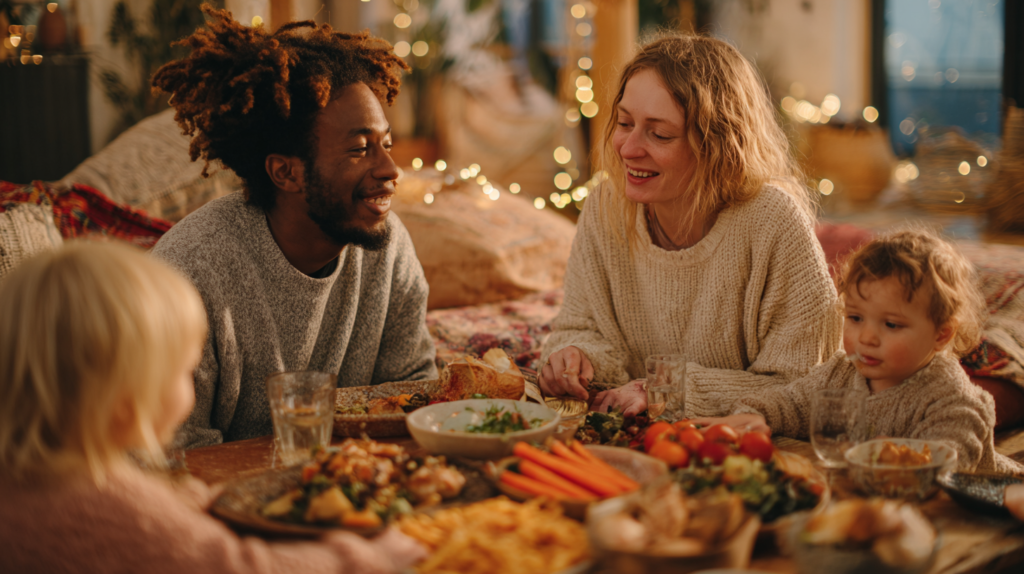
Ultimately, holiday eating isn’t just about nutrition—it’s about memory-making. The foods we share during celebrations become woven into our identity, our family story, our sense of belonging. When we spend holidays stressed about calories and portions, we miss the actual magic: connection, laughter, tradition, love. The question isn’t “How do I avoid gaining weight during the holidays?” but rather “How do I fully enjoy holidays while honoring my health?”
The answer lies in presence. When you’re truly present with your food and your people, you naturally eat in ways that satisfy without overdoing. You taste the love in your grandmother’s recipe. You notice when your body feels pleasantly full rather than uncomfortably stuffed. You create memories centered on togetherness rather than anxiety.
For children, the memories we create around holiday food shape their lifelong relationship with eating. If holidays mean stress, restriction, and guilt, that’s what they’ll internalize. If holidays mean joy, flexibility, and satisfaction, they’ll carry that forward. Research on childhood eating behaviors consistently shows that positive food experiences in early years predict healthier adult patterns. Every time you model enjoying food without guilt, you’re giving your children a gift that compounds over their lifetime.
Consider starting new traditions that celebrate food without centering it exclusively. In my family, we began a practice of “gratitude before plates”—each person shares something they’re thankful for before serving food. It shifts focus from what’s on the table to who’s around the table. Other families incorporate post-meal activities—walks, games, storytelling—that create association between gatherings and joy rather than just consumption.
One particularly meaningful tradition from Caribbean culture: involving children in food preparation. When kids help cook, they develop understanding of where food comes from, how flavors develop, and the care involved in feeding people. They’re also more likely to try foods they helped prepare. During holidays, this might mean letting toddlers stir ingredients, allowing older children to measure spices, or teaching teenagers family recipes. The tradition transcends the meal itself, becoming about skill-building, bonding, and cultural transmission.
Your Holiday, Your Way
Here’s the truth that nobody says out loud: you don’t owe anyone a perfect holiday performance. Not the Pinterest-worthy meal, not the impressive dessert spread, not the meticulously planned nutrition strategy. What you owe yourself and your family is authenticity—showing up as you are, eating in ways that feel good, and prioritizing connection over perfection.
This might mean serving simpler meals than Instagram suggests. It might mean buying some dishes rather than cooking everything from scratch. It might mean setting boundaries with relatives who overstep. It might mean letting your kids eat dessert first at one meal because it’s a special day and flexibility matters more than rules. Whatever choices align with your family’s values and needs—those are the right choices.
The families who navigate holidays with the least stress share common traits: they prioritize presence over perfection, communicate boundaries clearly, model flexibility with food, and release the need to control every aspect. They understand that one season of eating differently won’t make or break health outcomes, but years of food stress absolutely will.
Survey data shows that 79% of people overlook their health needs during holidays, and 51% report it takes weeks to feel less stressed afterward. But these statistics don’t have to include you. By implementing even a few strategies from this article—mindful eating, boundary-setting, routine restoration, memory-focused celebrations—you can shift from holiday surviving to holiday thriving.
The post-holiday period also offers reflection opportunity. What worked well this year? What felt stressful? What would you do differently next time? These questions, journaled or discussed as a family, create learning rather than regret. Maybe you discovered that hosting is too stressful and attending works better. Maybe you realized your child actually does fine with food flexibility when you relax. Maybe you found that setting one clear boundary transformed the entire dynamic. These insights become wisdom for future celebrations.
For parents specifically, remember that you’re not just navigating this holiday season—you’re modeling for the next generation how to approach food, stress, family dynamics, and self-care during challenging times. Every time you eat without guilt, every time you set a boundary respectfully, every time you choose connection over perfection, you’re teaching. Your children are watching how you handle abundance, pressure, and recovery. Make sure what they’re learning serves them.
And here’s your permission slip, in case you needed one: it’s okay to enjoy holiday food. It’s okay to feel full. It’s okay to skip the workout. It’s okay to eat more vegetables the next day. It’s okay to change traditions that no longer serve you. It’s okay to say no. It’s okay to say yes. It’s okay to feed your children flexibly. It’s okay to protect your peace. You’re doing better than you think, and the fact that you read this entire article means you care deeply about creating a healthy, joyful holiday experience for your family.
The holidays come every year, offering another chance to practice. Each celebration is opportunity to refine your approach, to implement one more strategy, to release one more source of stress. Progress, not perfection. Flexibility, not rigidity. Presence, not anxiety. These principles, applied consistently, transform holidays from something to survive into something to genuinely enjoy. And isn’t that what they should be all along—not just for your children, but for you too?
As you move through this holiday season, carry this final thought: the most nourishing thing on the table isn’t actually food. It’s love, expressed through gathering, through recipes passed down generations, through the simple act of feeding people we care about. When we remember that, the stress dissolves. The food becomes what it should be—delicious fuel, cultural connection, shared pleasure—rather than source of anxiety. And that shift, that remembering what actually matters, might be the most valuable gift you give yourself and your family this year.

Kelley's culinary creations are a fusion of her Caribbean roots and modern nutritional science, resulting in baby-friendly dishes that are both developmentally appropriate and bursting with flavor. Her expertise in oral motor development and texture progression ensures that every recipe supports your little one's feeding milestones while honoring cultural traditions.
Join Kelley on her flavorful journey as she shares treasured family recipes adapted for tiny taste buds, evidence-based feeding guidance, insightful parenting anecdotes, and the joy of celebrating food, culture, and motherhood. Get ready to immerse yourself in the captivating world of Kelley Black and unlock the vibrant flavors of the Caribbean for your growing baby, one nutritious bite at a time.
- The Feeding Revolution: Why Your Everyday Meals Are Changing the World - October 13, 2026
- Your Feeding Story Matters More Than The “Perfect” One Online - October 12, 2026
- Looking Forward: Stepping Into Your Confident Feeding Future - October 11, 2026