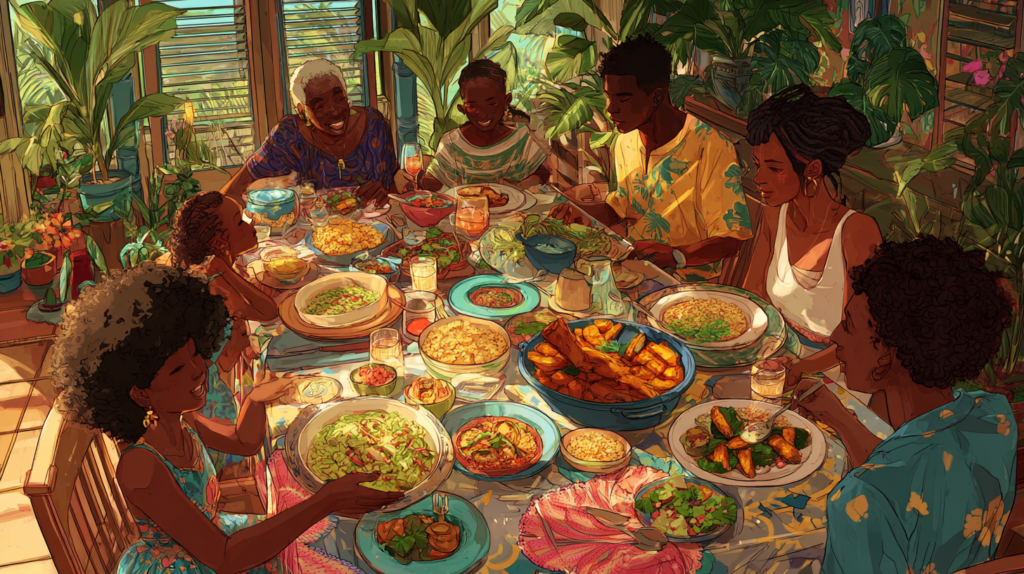
The Flexitarian Family Revolution: Why the “Mostly Plant-Based” Approach Is Changing Everything We Thought We Knew About Family Meals
Let’s be honest about your current situation. Select what sounds most like your household:
Here’s something that never gets talked about in those pristine Instagram posts about plant-based family dinners: the reality that your partner wants steak while you’re dreaming of lentil curry, your toddler only eats three foods, and everyone at the table has a different opinion about what “healthy eating” actually means. Sound familiar?
I remember the evening everything shifted in my own kitchen. There I was, standing over the stove at 6:47 PM (because family dinners are never actually at 6:00, are they?), trying to make two separate meals—one plant-based for me, one with chicken for my husband—while my daughter demanded fishsticks and my mother-in-law politely suggested that children “need their protein.” The tension was thick enough to slice with a kitchen knife, and I hadn’t even served dinner yet.
That’s when I discovered something that completely transformed our family meals, our health markers, and honestly, our entire relationship with food. It wasn’t going fully vegan. It wasn’t staying omnivore and pretending the research on plant-forward eating didn’t exist. It was something beautifully in between, and researchers now have a name for it: the flexitarian approach.
The truth nobody’s telling you? The flexitarian pattern—where vegetables, grains, and legumes form your base and meat plays a supporting role rather than starring in every scene—is backed by over a decade of solid nutrition research showing reduced risk for heart disease, diabetes, and excess weight. But here’s the part that changed everything for families like mine: it validates flexibility instead of demanding perfection. Finally, a way to eat that doesn’t require anyone to take a moral stance at the dinner table.
The Uncomfortable Truth About “All or Nothing” Eating
Let’s talk about what’s actually happening in kitchens across the country. Market data shows that roughly forty-two percent of consumers now identify as flexitarian—people who are actively reducing meat but not eliminating it—and that number is growing faster than the strict vegan or vegetarian populations combined. Translation? Most families aren’t choosing sides anymore. They’re choosing sanity.
Research published in comprehensive nutrition reviews confirms that semi-vegetarian eating patterns (another term for flexitarian) are associated with lower body weight, reduced type 2 diabetes risk, and better cardiovascular markers compared to typical omnivorous diets. The beauty is that you don’t need to hit some arbitrary “perfect” threshold. Moving along the spectrum toward more plant foods—even if you’re not at the far end—yields real, measurable health benefits.
Think about it this way: a typical family of four shifting from daily beef and processed meats to a flexitarian pattern (more beans, lentils, whole grains, less beef, unchanged dairy) could reduce their diet-related greenhouse gas emissions by about thirty-eight percent while still meeting all nutrient requirements. That’s not coming from a wellness influencer’s imagination—that’s from actual environmental modeling studies done with real families.
But here’s what nobody warned me about when we started: the mental shift is harder than the meal planning. We’re conditioned to think in extremes. You’re either “good” (vegan, plant-based, morally superior) or “bad” (omnivore, planet-destroyer, health-ignorant). The flexitarian approach says something radical: you can care deeply about health, sustainability, and animal welfare and still serve your kid occasional fish or add parmesan to your pasta. Revolutionary, right?
Why Flexitarian Eating Works When Everything Else Creates Family Warfare
The defining characteristic of flexitarian households, according to recent family food research, is that they use plant-based meals as the “common denominator”—the shared foundation everyone agrees on—and then layer in optional animal products for those who want them. This approach practically eliminates the dinner table power struggles that arise when parents restrict foods or when family members feel their beliefs are being dismissed.
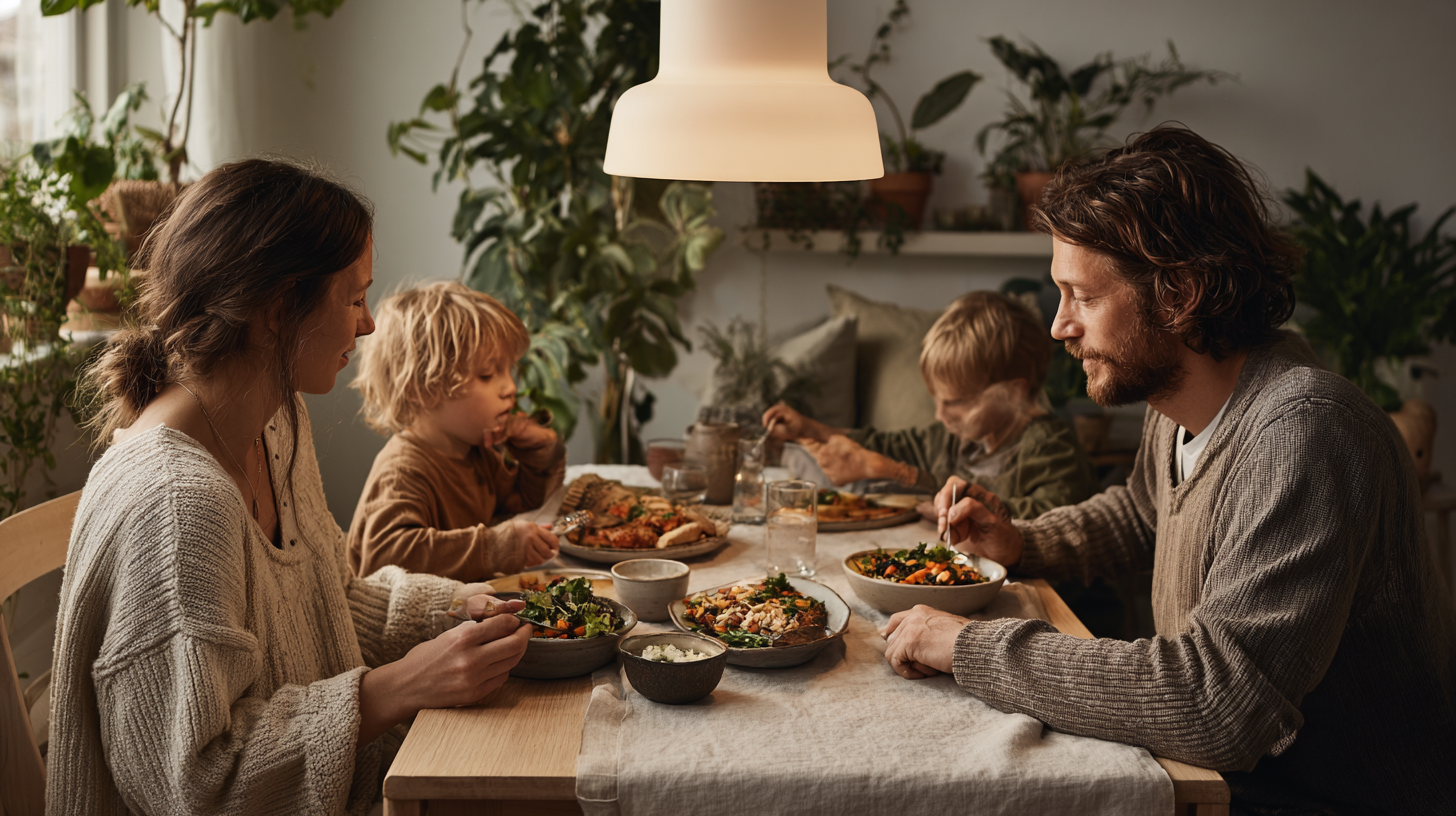
Here’s how this plays out in real life. Instead of making entirely separate meals (exhausting) or forcing everyone to eat the same thing (rebellion-inducing), you build meals around plants and add animal proteins as components rather than centerpieces. A huge bowl of coconut curry with chickpeas, sweet potatoes, and greens becomes the base. Those who want chicken can add a small grilled portion on the side. Those who want tofu get tofu. Those who want just the vegetables and rice get that. Everyone’s eating together, nobody’s policing anyone’s plate, and you made one meal.
The research backs this up beautifully. Studies on families with mixed dietary preferences found that households adopting flexitarian strategies—like using meat analogues occasionally, stretching smaller portions of meat across dishes, or centering meals on legumes and grains with optional animal sides—reported less conflict, more shared meals, and better adherence over time compared to families attempting strict vegetarian transitions.
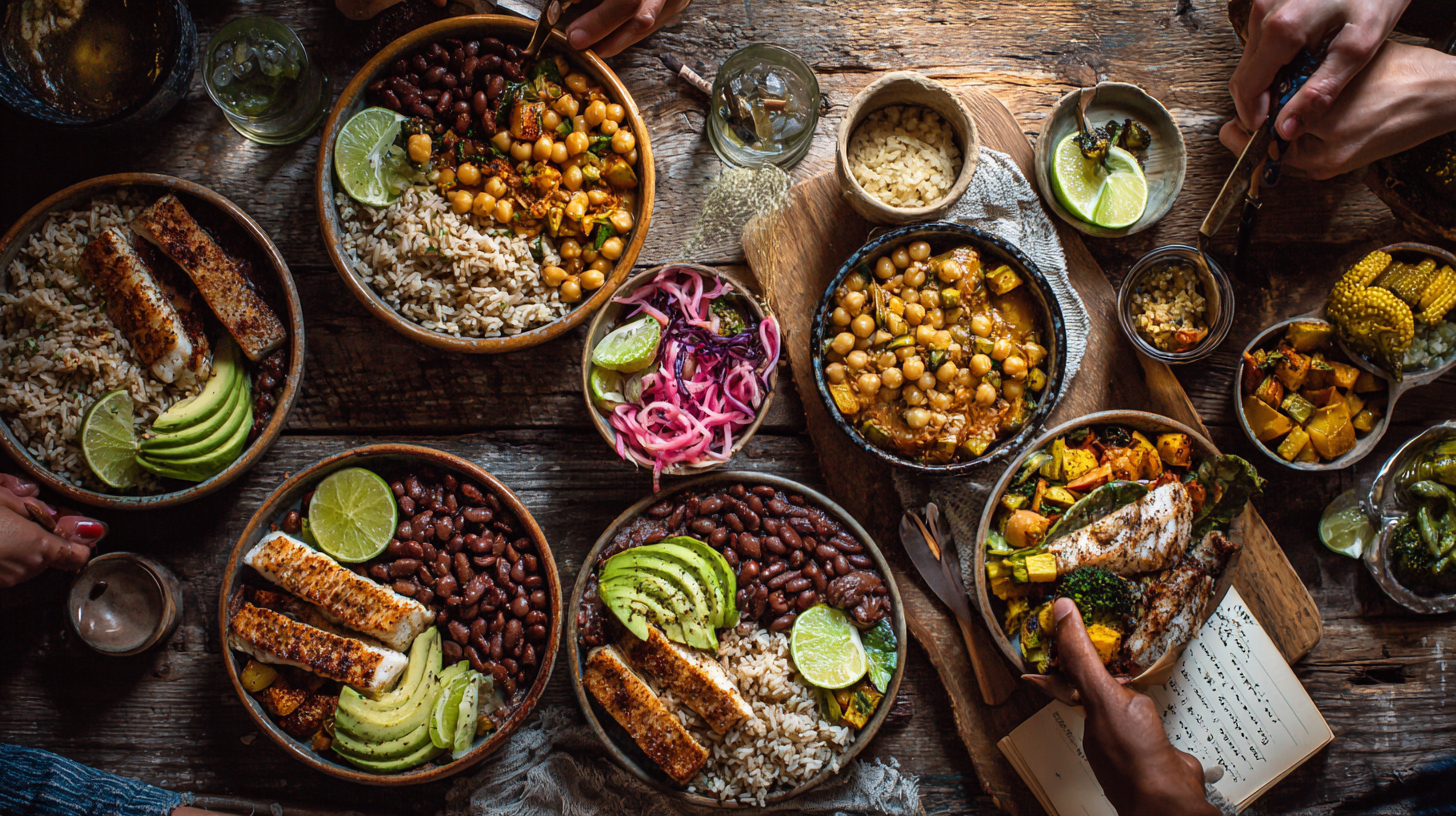
Let me give you a practical example from my own table. Last Tuesday, I made a massive pot of red beans cooked down with coconut milk, thyme, scotch bonnet pepper (seeds removed for the little one), and scallions—inspired by the traditional Caribbean recipes in our Caribbean Baby Food Recipe Book, which has dozens of plant-forward dishes that work for the whole family. I served it over rice with a big cucumber and tomato salad. My husband added some leftover jerk chicken on his plate. I added avocado slices. My daughter ate hers plain with extra rice. My mother-in-law had hers with a dollop of sour cream. Same base meal, zero arguments, and everyone left satisfied.
Select your approach for different scenarios and see your personalized flexitarian strategy:
The Nutrition Conversation Nobody’s Having (But Everyone Needs to Hear)
Let’s address the elephant in the room: “But will my kids get enough protein? What about iron? B12? Omega-3s?” These are the questions that keep well-meaning parents up at night, scrolling through conflicting nutrition advice on their phones at midnight.
Here’s the honest answer nutrition experts give but wellness influencers often skip: a well-planned flexitarian diet easily meets nutrient needs for children and adults, but the key phrase is “well-planned.” You can’t just remove meat, replace it with pasta and bread, and call it plant-based. That’s how you end up with nutrient gaps and cranky, hungry kids.
Recent pediatric nutrition reviews emphasize that flexitarian families need to consciously plan for adequate iron, zinc, vitamin B12, calcium, iodine, and omega-3 fatty acids—especially for young children, pregnant parents, and breastfeeding mothers. The good news? These nutrients are completely achievable through a thoughtful combination of plant foods, fortified products, and the occasional animal foods that flexitarian eating naturally includes.
Here’s what that actually looks like at breakfast, not in a textbook but on an actual Tuesday morning. My daughter’s plate has scrambled eggs (B12, complete protein, iron), whole grain toast with almond butter (healthy fats, minerals), and mango slices (vitamin C to boost iron absorption). My plate has the same toast and mango, but instead of eggs, I have a bowl of fortified oat milk smoothie blended with spinach, banana, chia seeds, and a scoop of hemp protein. My husband has the eggs and adds leftover beans from last night. Three different plates, same foundational nutrients covered, zero stress.
When you’re introducing these diverse flavors and plant-forward ingredients to babies and toddlers from the start, you set up their palates for a lifetime of flexible eating. The recipes in our Caribbean Baby Food Recipe Book do exactly this—dishes like Coconut Rice and Red Peas, Sweet Potato and Callaloo Rundown, and Basic Mixed Dhal Puree teach babies that beans, greens, and grains are normal, delicious, everyday foods, not “health food” you suffer through.
Child nutrition experts specifically highlight that plant-based meat substitutes and products like mycoprotein can be useful in flexitarian family cooking, but caution that many are high in fiber and lower in fat than whole foods. For young children who need energy-dense foods for growth, you need to balance these with fats from oils, avocados, nuts and nut butters (in safe forms), full-fat dairy or fortified alternatives, and yes, occasional animal foods if your family includes them. It’s about the full picture, not individual foods.

The Social Media Illusion vs. Your Actual Kitchen Reality
Can we talk for a moment about the gap between what you see online and what’s actually happening in kitchens? Social media platforms are flooded with perfectly plated plant-based meals, glowing testimonials, and before-and-after transformations. Analysis of diet discourse on Instagram and TikTok shows that influencers promoting plant-based lifestyles frequently emphasize simple swaps, budget-conscious cooking, and child appeal—which sounds helpful until you realize most content is optimized for engagement, not your actual family dynamics.
Research examining “What I Eat in a Day” vlogs and diet culture on platforms like TikTok found that while these posts can normalize diverse eating patterns and provide recipe inspiration, they can also reinforce body-focused ideals and present an unrealistic picture of how flexible, intuitive eating actually works day-to-day. The recommendation from researchers? Filter heavily. Seek accounts that model positive, non-restrictive relationships with food and that acknowledge the messiness of real family meals.
Here’s what they don’t show you in those beautifully lit kitchen videos: the nights you’re too exhausted to cook anything and everyone eats cereal. The meals where your toddler refuses everything green and survives on rice and banana. The family gatherings where your food choices become a topic of public debate and your aunt questions whether your children are “getting enough nutrition.” The moments when you question whether you’re doing any of this right.
The flexitarian approach offers something incredibly valuable here: built-in permission to be imperfect. There’s no membership card to revoke, no purity test to fail. Had chicken at your grandmother’s house because she spent all day making her famous recipe? That’s flexitarian. Grabbed fast food on the way home from soccer practice because everyone was starving? That’s flexitarian too. The framework accommodates real life instead of demanding you contort real life to fit the framework.
Track your first week and watch your progress build. Click each item as you complete it:
The Part Where Everything You Thought About “Healthy Family Eating” Gets Challenged
Here’s the shocking truth that most parenting nutrition advice completely misses: the way you talk about and serve food matters more than the actual food itself when it comes to your children’s long-term relationship with eating. Research on family food environments reveals that restrictive or pressure-based feeding around “healthy” eating—even with the best intentions—can backfire spectacularly, leading to food sneaking, guilt, disordered eating patterns, and power struggles that last well into adolescence.
This is where flexitarian eating becomes genuinely revolutionary for families. Instead of labeling foods as “good” (plants) or “bad” (meat), you’re modeling a values-driven approach that says, “Our family eats mostly plants because we feel better, we care about the planet, and we love how these foods taste. And we also eat some animal foods sometimes, and that’s okay too.” No moral weight, no guilt, just choices.
Studies examining families with mixed dietary preferences—like one vegetarian parent, one omnivore parent, and kids somewhere in between—found that households using autonomy-supportive feeding practices (offering, modeling, creating structure but not coercing) alongside flexitarian patterns had less conflict and better child food acceptance than families using restrictive approaches. The kids in these homes learned that food can hold values and meaning without being tied to shame or identity warfare.
Let me share a story that illustrates this perfectly. My friend Keisha, a fellow Caribbean mama, was driving herself crazy trying to raise her kids vegetarian while her husband remained firmly omnivore. Every meal was a negotiation, every family gathering was tense, and her seven-year-old started asking to eat meat at friends’ houses and hiding it from her. The guilt was crushing everyone.
When she shifted to a flexitarian household approach—beans and rice as the base most nights, with her husband adding fish or chicken to his plate and the kids choosing what felt right for them—something remarkable happened. The pressure evaporated. Her son stopped sneaking food because there was nothing to sneak. Her daughter, who’d been incredibly picky, started trying more vegetables because the meals weren’t emotionally charged anymore. And Keisha? She realized she’d been so focused on making her family’s diet “perfect” that she’d forgotten to make it peaceful.
The Practical Magic: What Flexitarian Eating Actually Looks Like in Your Kitchen
Let’s get extremely practical because meal planning advice that doesn’t account for your actual life is about as useful as an umbrella made of tissue paper. Here are the specific strategies that research and real families confirm actually work:
Strategy One: The Foundation Approach – Plan your weekly menu around plant proteins and whole grains as the main event. Think big pots of curry chickpeas, lentil dals, bean stews, grain bowls, vegetable stir-fries with tofu or tempeh. These form your foundation. Then, keep some cooked animal proteins (grilled chicken, hard-boiled eggs, canned fish) in the fridge that individual family members can add to their own plates if they want extra protein or just prefer it. One base meal, multiple customizations, minimal extra work.
Strategy Two: The Blended Method – Use dishes that naturally combine plant and animal proteins in smaller ratios than traditional recipes. Industry initiatives promoting “blended burgers” (combining ground meat with mushrooms, beans, or lentils) follow this principle. In your home, this might look like tacos with half ground beef and half seasoned black beans, or meatballs that mix ground turkey with finely chopped vegetables and oats. You’re reducing meat quantity while maintaining familiar flavors—perfect for transitioning skeptical family members.
Strategy Three: The Deconstruction Technique – Serve meals as components rather than pre-plated dishes. Taco night becomes a spread with seasoned beans, roasted vegetables, rice, salsa, cheese, sour cream, and optional grilled chicken or fish. Everyone builds exactly what they want. Same with grain bowls, pizza night, pasta dishes, breakfast plates. This approach respects individual preferences while keeping your cooking load manageable.
From a Caribbean perspective, this is second nature to us. Traditional meals like rice and peas, callaloo, provision and greens, or dhal and rice are already plant-centered, with meat or fish as a side or small addition, not the star. My grandmother didn’t call it “flexitarian”—she called it “making the grocery money stretch”—but the principle is identical. The Caribbean Baby Food Recipe Book captures this beautifully with recipes like Stewed Peas Comfort, Geera Pumpkin Puree, and Cook-Up Rice and Beans that teach babies these plant-forward flavors are normal, everyday delicious foods.
For busy weeknights, batch cooking is your secret weapon. Dedicate an hour on Sunday to cooking a big pot of beans, a pot of brown rice or quinoa, and roasting a sheet pan of mixed vegetables. Store them in the fridge, and you’ve got instant components for multiple meals throughout the week. Monday: beans over rice with avocado and salsa. Tuesday: rice and vegetable stir-fry with peanut sauce and optional egg. Wednesday: bean and vegetable soup. Thursday: grain bowl with roasted vegetables and tahini dressing. Friday: everyone fends for themselves with leftovers. This is real-life flexitarian eating, not the Instagram version.
Navigating the Challenges Nobody Warns You About
Let’s address the hard parts, because if I tell you flexitarian eating is all sunshine and perfectly behaved children happily eating lentil curry, I’d be lying. There are real challenges, and you deserve to know about them before you dive in.
Challenge One: The Definition Problem – “Flexitarian” doesn’t have a universal operational definition, which means you’re somewhat making up your own rules. Is three meat meals per week flexitarian? Four? Six? Research papers can’t even agree, which simultaneously makes this approach incredibly flexible and occasionally frustrating when you’re trying to assess if you’re “doing it right.” The answer? You define it for your family. If you’re eating significantly more plants than before and less meat than the typical Western diet, you’re probably in flexitarian territory.
Challenge Two: The Nutrition Vigilance Requirement – You can’t just wing this and assume everyone’s nutritional needs are automatically met, especially for young children. You need to actively plan for iron sources (beans, lentils, fortified cereals, occasional meat), pair them with vitamin C-rich foods (tomatoes, peppers, citrus, berries) to boost absorption, ensure adequate healthy fats for brain development (avocado, nut butters, olive oil, fish occasionally), and either include some animal foods or choose fortified plant milks and cereals for B12 and calcium. This requires more thought than the standard American diet, where animal products deliver these nutrients without much planning.
Challenge Three: The Social Judgment Minefield – Be prepared for unsolicited opinions from family members, friends, pediatricians, random people at the grocery store, and basically everyone who has ever had an opinion about food. If you’re reducing meat, someone will worry your children are protein-deficient. If you’re still including some animal products, someone else will question your commitment to the environment or animal welfare. The flexitarian approach doesn’t fit neatly into most people’s categories, which makes some folks uncomfortable. Your job is to smile, thank them for their concern, and continue feeding your family in the way that works for you.
Challenge Four: The Ultra-Processed Plant-Based Product Trap – As plant-based eating has gone mainstream, food companies have flooded the market with ultra-processed meat alternatives, plant-based cheeses, and convenience products that are technically plant-based but nutritionally questionable. A flexitarian approach focused on whole foods—actual beans, actual vegetables, actual grains—is vastly superior to one built on plant-based nuggets, burgers, and processed cheese alternatives. These products can absolutely have a place (convenience, transitioning taste preferences, occasional use), but they shouldn’t be the foundation. Real food first, processed alternatives occasionally.
Let’s bust some myths. Click each one to reveal the research-backed truth:
The Truth About Protein
Research shows that plant proteins from beans, lentils, tofu, nuts, seeds, and whole grains easily meet protein needs when consumed in adequate amounts and variety throughout the day. A flexitarian diet that includes occasional eggs, dairy, or fish makes meeting protein needs even simpler. The real concern isn’t quantity but variety—mix your plant protein sources throughout the week.
Real example: A half-cup of cooked lentils has about 9 grams of protein. A tablespoon of peanut butter has 4 grams. Two slices of whole grain bread have 8 grams. A toddler eating varied plant foods across the day easily hits their target without meat at every meal.
The Money Truth
Dry beans, lentils, rice, oats, seasonal vegetables, and frozen produce are among the cheapest foods in the grocery store—far less expensive than meat per serving. Where costs increase is when families rely heavily on specialty processed plant-based products like gourmet meat alternatives or trendy health foods. A flexitarian approach built on whole foods and bulk staples typically costs less than a meat-heavy diet.
Cost comparison: A pound of dry beans (about 6-7 cups cooked) costs roughly two dollars and provides multiple meals. A pound of ground beef costs five to eight dollars and serves a single meal for a family. Do the math.
The Flavor Truth
This myth exists because many people’s first exposure to plant-based eating involved unseasoned steamed vegetables and plain tofu. Cultures around the world—Indian, Caribbean, Mediterranean, Mexican, African—have been creating incredibly flavorful plant-centered dishes for centuries using spices, herbs, cooking techniques, and layered flavors. The issue isn’t plant foods being bland; it’s some people not knowing how to season and prepare them properly.
Caribbean reality: Our traditional dishes burst with flavor from thyme, scallion, garlic, scotch bonnet, allspice, curry, and coconut milk. A pot of Jamaican stewed peas or Trinidadian dhal has more flavor complexity than most meat-centered meals. It’s about technique and seasoning, not animal products.
The Impact Truth
This is perhaps the most damaging myth because it prevents people from making any change at all. Research clearly shows that moving along the spectrum toward more plant foods yields progressive health and environmental benefits—you don’t need to be at the far end to see results. A family reducing their meat consumption by half still makes a significant positive impact on their health outcomes and carbon footprint. Progress, not perfection, is what matters.
The data: Studies show that even reducing red meat and increasing plant foods by modest amounts improves cardiovascular markers, weight management, and disease risk. Every plant-forward meal counts. Every reduction in processed meat counts. It all adds up.
Building a Flexitarian Future That Actually Lasts
Here’s what the research on sustainable dietary change tells us: the approaches that last aren’t the ones built on willpower, restriction, or rigid rules. They’re the ones that align with your values, accommodate your real life, and feel sustainable not just for a month or a year, but for decades. Flexitarian eating offers exactly this—a framework flexible enough to adapt as your family grows, your circumstances change, and your understanding evolves.
Market projections indicate that the plant-based food sector will continue expanding dramatically through 2032, reaching well over two hundred billion dollars globally, with flexitarian consumers remaining the primary driver. This isn’t a trend that’s going away. Industry analysts increasingly frame “open omnivore” flexitarians—people curious about alternatives and willing to experiment—as the core of the future plant-based category, not strict vegans. What this means for families is that the food landscape is adapting to support this approach. More restaurants offering plant-forward options. More school cafeterias providing flexitarian choices. More products designed specifically for mixed households.
From a cultural perspective, this approach honors the way many traditional food cultures actually ate before the post-World War II Western diet became globalized. My grandmother’s kitchen in Jamaica didn’t center every meal on meat because meat was expensive and reserved for special occasions or Sundays. The everyday meals were rice and peas, steamed vegetables and ground provisions, callaloo, ackee without saltfish (yes, it’s delicious that way), and bean stews. The flexitarian approach isn’t inventing something new—it’s returning to patterns that sustained humans for generations and then giving it a modern name and research backing.
For families specifically, researchers studying long-term dietary patterns in children emphasize the importance of early exposure to diverse foods, positive mealtime environments free from pressure and restriction, and modeling rather than forcing. When you raise children in a flexitarian household where plants are the foundation and animal foods are occasional additions, you’re teaching them food flexibility, intuitive eating, and values-aligned choices without the psychological baggage of “good” and “bad” food categories. These children tend to have better relationships with food and more diverse palates as they grow.
Your Next Meal Is Your Fresh Start
If you’re reading this and feeling overwhelmed by everything you think you need to change, I want you to stop and take a breath. You don’t need to overhaul your entire kitchen tonight. You don’t need to announce to your family that everything is different now. You don’t need to become someone you’re not.
You just need to make your next meal a little more plant-forward than your last one. That’s it. That’s the entire secret.
Maybe that means adding an extra can of beans to your chili and using a little less ground beef. Maybe it means serving breakfast for dinner—scrambled eggs, whole grain toast, fruit, and avocado—and calling it a win. Maybe it means finally trying that coconut curry chickpea recipe you’ve been eyeing. Maybe it means ordering the vegetarian option next time you get takeout just to see what it’s like. Small moves, consistently applied, create lasting change. Grand dramatic overhauls create burnout and return to old patterns within weeks.
The families who successfully adopt flexitarian patterns long-term don’t do it through superhuman discipline. They do it by making it easy, enjoyable, and aligned with what they actually care about. They stock their pantries with dried beans, canned tomatoes, coconut milk, and curry powder. They keep a few simple plant-based recipes in rotation that everyone genuinely likes, not recipes they’re supposed to like. They give themselves and their families full permission to be imperfect and still eat some meat when it makes sense. They focus on addition—adding more vegetables, more fiber, more variety—rather than obsessing over elimination.
Remember that Tuesday evening I mentioned at the beginning? The one where I was drowning in stress trying to please everyone with multiple separate meals? That was five years ago. Today, our flexitarian kitchen is the most peaceful, nourishing space in our home. We gather around meals built on rice and peas, roasted vegetables, crispy plantains, spicy lentil dal, and coconut curry chickpeas. My daughter, now eight, helps me cook and requests “the bean soup” for her birthday dinner. My husband, once skeptical of plant-based meals, actually prefers them most nights now because he feels better and they taste amazing. My mother-in-law stopped questioning and started asking for recipes.
We still serve fish sometimes. We still have eggs regularly. There’s cheese in the refrigerator and occasionally chicken on someone’s plate. And there’s zero guilt, zero judgment, zero tension about any of it because we’ve defined for ourselves what flexitarian means in our household: mostly plants, some animals, all love, no rules.
That’s the gift this approach offers—the permission to feed your family in a way that honors health, values, tradition, pleasure, and peace all at once. Not because some expert or influencer told you this is the “right” way. Because you’ve discovered it works for your actual life with your actual people in your actual kitchen.
So go ahead. Check your pantry, see what beans you have, throw them in a pot with some aromatics and coconut milk, and serve them over rice tonight with whatever else makes sense for your family. Introduce your little ones to these flavors early, exploring the plant-forward foundations detailed in resources like our Caribbean Baby Food Recipe Book, which makes starting babies on wholesome, flavorful plant-based foods natural and delicious. You’ve just made your first flexitarian family meal. Welcome to the revolution where nobody’s perfect, everyone’s invited, and the food actually tastes like something worth gathering around a table for. This is how we eat now. This is how we move forward. Together.

Kelley's culinary creations are a fusion of her Caribbean roots and modern nutritional science, resulting in baby-friendly dishes that are both developmentally appropriate and bursting with flavor. Her expertise in oral motor development and texture progression ensures that every recipe supports your little one's feeding milestones while honoring cultural traditions.
Join Kelley on her flavorful journey as she shares treasured family recipes adapted for tiny taste buds, evidence-based feeding guidance, insightful parenting anecdotes, and the joy of celebrating food, culture, and motherhood. Get ready to immerse yourself in the captivating world of Kelley Black and unlock the vibrant flavors of the Caribbean for your growing baby, one nutritious bite at a time.
- The Feeding Revolution: Why Your Everyday Meals Are Changing the World - October 13, 2026
- Your Feeding Story Matters More Than The “Perfect” One Online - October 12, 2026
- Looking Forward: Stepping Into Your Confident Feeding Future - October 11, 2026