
When Your Baby Pushes Away Every Spoon: The Sensory Truth Nobody’s Telling You
There’s something happening at your dinner table that your pediatrician might be missing—and it’s not your baby being stubborn or you being “too soft.” It’s happening in the neurons, in the way your child’s brain processes the world around them, specifically how they experience food.
Here’s what I didn’t know when my nephew would gag at the sight of mashed avocado, or when my friend’s daughter would only eat exactly five foods in exactly the same way every single day: sensory processing differences affect up to 16% of children globally, yet most of us have never heard of them. We’re told it’s “just picky eating” or that they’ll “grow out of it.” But what if there’s something deeper happening—something that explains why some babies seem genuinely distressed by textures that other children love?
The truth is, eating is the most sensory-rich activity our babies experience. It involves taste, texture, temperature, smell, sight, and touch all at once. For children with sensory processing differences, this can be overwhelming in ways that typical picky eating never is. And here’s the thing: understanding the difference changes everything.
Quick Check: Is This Sensory or Just Picky?
Click on the scenario that sounds most familiar:
If you clicked on A or C, you’re observing something that goes beyond typical food preferences. Let me take you deeper into this connection—because the magic isn’t in forcing your child to eat; it’s in understanding how they experience food.
The Sensory-Feeding Connection Your Doctor Might Miss
Picture your baby’s nervous system as a sophisticated filtering system. For most children, this system takes in sensory information—the squish of a banana, the smell of sweet potato, the temperature of warm oatmeal—and processes it without much fuss. But for babies with sensory processing differences, this filter is either too sensitive or not sensitive enough.
Here’s what the research tells us: 95% of children with autism spectrum disorder have sensory processing challenges, but sensory processing disorder (SPD) shows up in neurotypical children too. The gap? SPD isn’t even included in the DSM-5 diagnostic manual, which means many pediatricians aren’t trained to recognize it. They see a child pushing food away and call it “behavioral.” But when your child’s nervous system is genuinely overwhelmed by the sensation of lumpy yogurt, that’s neurological—not behavioral.

Dr. Kay Toomey, the pediatric psychologist behind the widely-respected Sequential Oral Sensory (SOS) Approach, emphasizes that children need to build tolerance through what she calls the “steps to eating”: tolerating, interacting, touching, smelling, tasting, chewing, and swallowing. Notice how many steps come before actual eating? That’s because for sensory-sensitive children, the journey to accepting food is much longer than we realize.
Think of it like this: if you were asked to eat something that felt like sandpaper in your mouth or smelled overwhelmingly strong, your nervous system would revolt. That’s what happens for these children—except it’s happening with everyday foods like applesauce or rice. Their sensory alarm system is firing constantly, making mealtimes genuinely stressful.
Your Baby’s Texture Tolerance Profile
Select all the textures your baby currently accepts to discover their sensory eating pattern:
The Three Sensory Types and How They Eat
Not all sensory differences look the same at the dinner table. Understanding your child’s sensory profile is like getting the manual you wish came with your baby. There are three main patterns:
Sensory Over-Responders (The Avoiders): These children have nervous systems that react too strongly to sensory input. The texture of cottage cheese might feel unbearably lumpy. The smell of fish might be overwhelming. They typically prefer bland, smooth foods—think plain pasta, smooth yogurt, crackers. They’re not being difficult; their sensory alarm system is genuinely going off. In our Caribbean context, they might struggle with the beautiful complexity of callaloo or the varied textures in a traditional rice and peas dish.
Sensory Under-Responders (The Seekers): On the flip side, these children need more sensory input to register that they’re eating. They gravitate toward crunchy, chewy, strongly-flavored foods—anything that provides intense oral input. They might stuff their mouths full because they need that proprioceptive feedback. They might love spicy foods or intensely flavored options. These are the babies who might actually enjoy foods with bold Caribbean spices earlier than expected.
Sensory Cravers (The Mixed Profile): Some children show a combination—seeking certain sensations while avoiding others. They might love crunchy foods but refuse anything wet or mixed together.
Here’s what changed everything for my friend Maria: once she realized her daughter was a sensory avoider, she stopped forcing bites and started the slow work of desensitization. She let her daughter play with sweet potato before tasting it. She let her smell the Calabaza con Coco puree before offering a tiny taste on a spoon. And slowly—so slowly—her daughter began expanding her accepted foods.
SPD vs. Typical Picky Eating: The Shocking Differences
This is where parents get stuck. You’re told your child is “just picky,” but deep down, you know something feels different. Here’s the truth that often gets missed: typical picky eating and sensory processing differences have completely different root causes—and they need completely different approaches.

The research backs this up: a 2024 study found that children who prefer softer, non-particulate textures are more neophobic and sensory-sensitive across all sensory domains—not just oral sensitivity. This means their feeding challenges are part of a broader sensory profile. It’s not about food; it’s about how their entire nervous system processes the world.
Here’s what this means practically: typical picky eating responds to modeling, repeated exposure, and making food fun. Sensory-based feeding challenges require occupational therapy strategies, desensitization protocols, and understanding that forcing bites can actually make things worse by creating negative sensory associations.
The Temperature and Texture Truth
Let’s talk about something that sounds small but matters enormously: temperature and texture sensitivity. For children with sensory differences, these aren’t just preferences—they’re neurological requirements for being able to eat.
Temperature sensitivity means your child might only accept foods served at very specific temperatures. Too hot triggers their sensitive nervous system. Too cold might hurt their teeth or feel overwhelming. That lukewarm sweet potato puree you think needs heating? It might be exactly the temperature their nervous system can handle.
Texture sensitivity is even more complex. Some textures trigger gag reflexes. Some feel “wrong” in the mouth. Mixed textures—like yogurt with fruit chunks—can be particularly challenging because the brain has to process multiple sensations at once. For a sensory-sensitive child, that’s like trying to listen to three conversations simultaneously.
Here’s what helped my nephew: his mother learned to serve everything at room temperature initially. She stopped mixing textures and offered them separately. She let him use his hands when utensils felt like too much sensory input. These small accommodations—which have nothing to do with “giving in”—allowed his nervous system to stay regulated enough to actually eat.
Build Your Child’s Sensory Feeding Profile
Answer these questions to understand your child’s unique pattern:
1. How does your baby react to new food textures?
2. What foods does your child prefer?
3. How does temperature affect eating?
Caribbean Flavors for Sensory-Sensitive Eaters
Now here’s where it gets personal for me. Growing up Caribbean, food is culture. It’s love. It’s identity. So when a child has sensory feeding challenges, there’s this added layer of heartbreak—how do we share our heritage through food when traditional dishes feel overwhelming to their nervous system?
The beautiful truth I’ve discovered: you can absolutely introduce Caribbean flavors while respecting sensory needs. It’s about adapting the how, not abandoning the what.
For sensory avoiders who need smooth, predictable textures, start with single-ingredient purees that carry gentle island flavors. A silky-smooth sweet potato puree with just a whisper of cinnamon. A perfectly blended calabaza (pumpkin) with coconut milk that’s creamy and consistent. The Caribbean Baby Food Recipe Book includes adaptations specifically for texture-sensitive babies—recipes like Batata y Manzana (white sweet potato and apple) that are smooth, naturally sweet, and culturally rich without overwhelming the senses.
For sensory seekers who crave intense input, Caribbean cuisine is actually perfect. They can handle bold flavors earlier. They might love the texture of mashed plantains or the slight chew of properly-cooked rice and peas. Recipes like Cornmeal Porridge Dreams or Yellow Yam and Carrot Sunshine provide the sensory feedback their nervous systems crave.
The key is understanding that you’re not diluting your culture—you’re making it accessible. My friend’s daughter who only ate five foods? She now eats a modified version of callaloo (blended smooth, served warm). It took months, but she’s eating a traditional Caribbean green because her mother understood how to bridge sensory needs with cultural pride.
Sensory-Friendly Feeding Strategies That Actually Work
Let’s get tactical. These strategies come from occupational therapists, feeding specialists, and parents who’ve been in the trenches. They’re not about “fixing” your child—they’re about supporting their unique nervous system.
The Positioning Foundation: Stable seating matters more than you think. Ensure 90-90-90 positioning: hips, knees, and ankles all at 90-degree angles with feet flat and supported. This proprioceptive stability helps regulate the sensory system and can actually improve eating. For babies in high chairs, use towels or footrests to create this support.
Pre-Meal Sensory Prep: For sensory avoiders, calming input before meals helps. This might look like gentle brushing (with proper OT training), joint compressions, or simply five minutes of calm, dim lighting before serving food. For sensory seekers, they might need activating input—jumping, pushing a heavy toy, or oral motor exercises like blowing bubbles before meals to “wake up” their system.
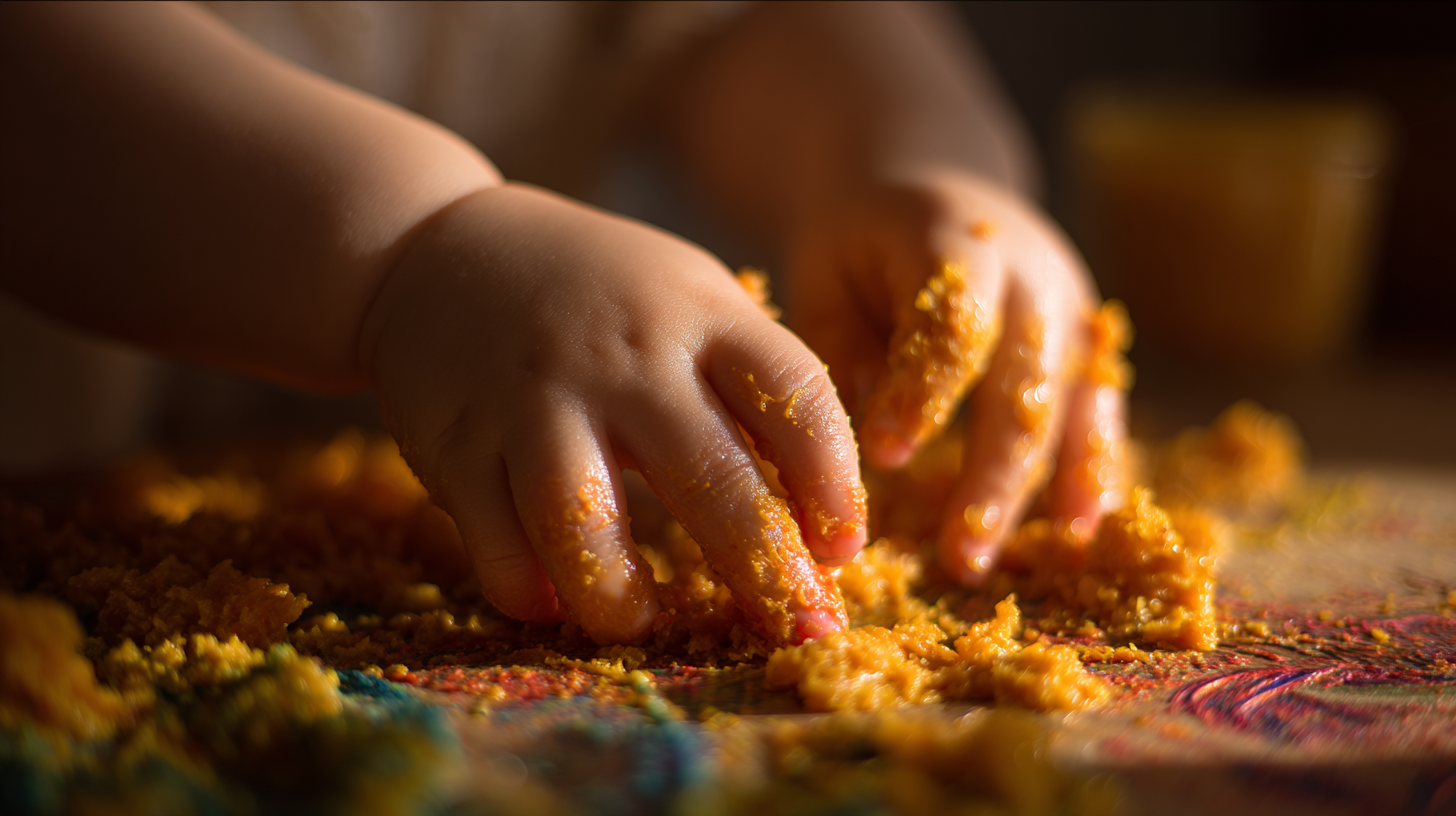
The Play Bridge: This changed everything for the families I know. Before asking a sensory-sensitive child to eat a food, let them play with it—no pressure to taste. Make cucumber caterpillars. Let them “paint” with yogurt. Squish mashed sweet potato between their fingers. This desensitizes their tactile system, making eventual oral introduction less threatening. One occupational therapist told me: “A child needs to touch a food 20 times before they might consider tasting it. Most parents give up after three.”
Texture Progression Strategies: For children struggling with slippery foods (a common sensory challenge), coat items with something textured: chia seeds, hemp seeds, crushed cereal, shredded coconut. This gives their nervous system more sensory information to work with. When transitioning from smooth to lumpy textures, make the changes so gradual they’re almost imperceptible—add texture over weeks, not days.
Temperature Control: Always test food temperature—it should feel lukewarm, not hot. For sensitive children, serve everything at the same temperature initially (room temperature is often safest). Heat bottles by running under warm water rather than microwaving, which creates hot spots that can startle a sensitive system.
The Division of Responsibility (Modified): You decide what foods are offered, when, and where. Your child decides whether to eat and how much. But for sensory-sensitive children, add this: they also decide how to interact with the food. Maybe today they smell it. Tomorrow they touch it. Next week they lick it. Each interaction is progress, even if no eating happens.
Get Your Personalized Mealtime Strategy
Click on your biggest feeding challenge right now:
When to Seek Professional Help
Here’s the thing nobody tells you: you don’t have to wait until things are “bad enough” to get help. In fact, early intervention is the single best predictor of success. If you’re reading this article and feeling seen—if these descriptions match your child—that’s enough reason to reach out to a feeding specialist.
Specific red flags that warrant immediate professional evaluation: your child is losing weight or not gaining appropriately; they’re eating fewer than 20 different foods; mealtimes consistently involve gagging, vomiting, or extreme distress; they refuse entire food groups or textures; or their feeding challenges are affecting family quality of life. A 2023 study found that approximately 73% of children with feeding disorders improved toward age-appropriate intake after behavioral treatment—but boys, children with intellectual disabilities, and those with selective eating patterns at baseline were at higher risk for not achieving adequate intake, meaning intervention timing matters.
Who can help? Start with a pediatric occupational therapist trained in feeding or a speech-language pathologist with feeding specialty. Many offer the SOS Approach or similar sensory-based protocols. Some families benefit from interdisciplinary feeding clinics where OTs, SLPs, dietitians, and psychologists work together. The key is finding providers who understand that sensory feeding challenges aren’t behavioral—they’re neurological.
And here’s something important: if your pediatrician dismisses your concerns with “they’ll grow out of it” but your gut says something’s different, seek a second opinion. A 2025 study on healthcare professionals found that many lack adequate knowledge about sensory processing disorders. Trust your instincts. You know your child best.
Real Stories, Real Progress
Let me tell you about Connor. His mother reported: “He used to panic if food even touched his hands.” Through feeding therapy with a speech-language pathologist specializing in sensory approaches, Connor made steady progress accepting different textures, temperatures, and brands. The breakthrough came when Connor began not just tolerating new foods, but talking about his preferences—showing that his nervous system was regulating enough to move past survival mode. On April 8, 2025, Connor ate two chicken drumsticks. During a family trip to Iceland, he willingly tried new Icelandic snacks, demonstrating that his skills generalized beyond the therapy room. His mother now reports: “It’s night and day. Connor can now feed himself and meet his nutritional needs. And his family can finally go to restaurants without fear or stress.”
That’s what proper sensory-based intervention can do. It’s not about forcing compliance—it’s about helping a child’s nervous system learn to process sensory information more effectively so that eating becomes safe instead of threatening.
Or consider M.D., a young child who typically gagged when presented with food. Through a gentle behavioral feeding program paired with sensory support, starting with a dry spoon and gradually transitioning to applesauce, M.D. began leaning toward the spoon in anticipation. Eventually, M.D. accepted 4 ounces of applesauce puree with good bolus formation. The key? The program moved at the child’s neurological pace, not an arbitrary timeline.
Your Next Steps Start Today
If you’ve made it this far, you’re already changing your child’s feeding future. Understanding that sensory processing affects eating is half the battle—it shifts you from frustration to compassion, from forcing to supporting.
Here’s what you can do right now, today, before you even contact a professional:
Observe without judgment: For three days, just watch. What textures does your child accept? What triggers refusal? What time of day are they most regulated for eating? Does background noise affect them? Does lighting matter? You’re becoming a sensory detective, and this information is gold for any future therapist.
Remove pressure: This is counterintuitive, I know. But for sensory-sensitive children, pressure activates their nervous system’s threat response, making eating even harder. For one week, serve foods without expectation. Let them explore, touch, smell, play—all without the requirement to eat. You might be shocked at what happens when the pressure lifts.
Create sensory-safe first foods: If you’re just starting solids or looking to expand variety, begin with textures and temperatures your child has already accepted. For most sensory avoiders, that’s smooth purees at room temperature. Build your child’s confidence with success before introducing challenges. The Caribbean Baby Food Recipe Book includes texture progression guidance—recipes organized by age and texture complexity so you can meet your child exactly where they are while still introducing cultural flavors.
Document progress differently: Instead of counting bites or foods eaten, celebrate sensory interactions. “Today she touched the mango.” “He smelled the callaloo without turning away.” “She watched me eat plantain and didn’t leave the table.” These are victories in the sensory-feeding journey.
✅ Celebrate Your Progress: Check Off Your Wins
These are sensory-feeding milestones worth celebrating. Click each one your child has achieved:
Your Progress
The Bigger Picture
Here’s what I want you to understand: this isn’t about getting your child to eat like everyone else’s child. It’s about supporting their unique nervous system so that eating becomes a source of nourishment and connection rather than stress and struggle.
The future of sensory-based feeding interventions is moving toward greater standardization, telehealth accessibility, and neurodiversity-affirming care. The 2026 International Pediatric Feeding Disorder Conference is bringing together experts committed to advancing understanding and treatment. Research continues to establish age-appropriate expectations for feeding skill acquisition, enabling earlier identification of challenges.
But the most important development isn’t happening in research labs or therapy clinics—it’s happening at kitchen tables where parents like you are learning to see their children differently. Where “picky eater” becomes “sensory-sensitive child who needs support.” Where shame transforms into understanding.
Mealtimes can become peaceful again. Your child can expand their food repertoire. You can share your cultural food heritage in ways that honor their sensory needs. It won’t happen overnight—sensory work is slow work. But every small step is rewiring their nervous system, teaching their brain that food is safe, that eating can be okay.
The magic isn’t in the perfect puree or the ideal feeding schedule. It’s in the moment you stop fighting your child’s sensory reality and start working with it. That’s when everything shifts.
So tomorrow morning, when you’re staring at another refused meal, remember: their nervous system isn’t being difficult. It’s doing exactly what it’s wired to do. Your job isn’t to override it—it’s to gently, patiently, lovingly teach it a new way of experiencing the sensory world of food.
And that? That’s not just about feeding. That’s about giving your child the foundation to navigate a sensory-rich world with confidence instead of fear. It starts with food, but it expands into everything.
You’ve got this. Your child’s got this. And now you’ve got the understanding to support them in ways that truly matter.

Kelley's culinary creations are a fusion of her Caribbean roots and modern nutritional science, resulting in baby-friendly dishes that are both developmentally appropriate and bursting with flavor. Her expertise in oral motor development and texture progression ensures that every recipe supports your little one's feeding milestones while honoring cultural traditions.
Join Kelley on her flavorful journey as she shares treasured family recipes adapted for tiny taste buds, evidence-based feeding guidance, insightful parenting anecdotes, and the joy of celebrating food, culture, and motherhood. Get ready to immerse yourself in the captivating world of Kelley Black and unlock the vibrant flavors of the Caribbean for your growing baby, one nutritious bite at a time.
- The Feeding Revolution: Why Your Everyday Meals Are Changing the World - October 13, 2026
- Your Feeding Story Matters More Than The “Perfect” One Online - October 12, 2026
- Looking Forward: Stepping Into Your Confident Feeding Future - October 11, 2026