
AI-Powered Feeding: How Smart Technology Is Quietly Saving Dinner (And Your Sanity)
Here’s something nobody tells you about parenting: you’ll spend more time stressing about what goes into your baby than what comes out of them. And in 2025, while we’re all carrying supercomputers in our pockets, most of us are still white-knuckling through mealtimes like it’s 1985. But what if I told you that the same technology helping you navigate traffic and pick movies could actually make feeding time… easier? Not perfect—because perfection is a lie we tell ourselves at 3 AM—but genuinely, measurably better.
Quick Reality Check: Where Are You Right Now?
Before we dive deep, let’s figure out exactly what feeding challenge is keeping you up at night. Click the scenario that sounds most like your life right now:
Three years ago, when my daughter was six months old, I stood in my kitchen at 2 AM, phone in one hand, pureed sweet potato in the other, absolutely convinced I was doing everything wrong. She’d eaten maybe three spoonfuls. Was that enough? Too much? Should I worry about the texture? The nutrients? My grandmother didn’t have these problems—she just fed babies and they grew. But my grandmother also didn’t have access to research showing that responsive feeding reduces childhood obesity risk by 30%, or apps that could track nutritional gaps, or smart devices that could help me figure out if my baby was actually getting enough iron.
Here’s what nobody talks about: technology in feeding isn’t about replacing your instincts. It’s about giving those instincts better information to work with. And the gap between parents who know about these tools and parents who don’t? It’s getting wider every day.
The Truth About Feeding Anxiety (And Why Your Phone Might Be Part of the Problem)
Let me paint you a picture that probably feels familiar: You’re trying to feed your baby sweet plantain puree—maybe even trying out some of those amazing recipes from a Caribbean baby food cookbook because you want to introduce those authentic island flavors early. But while you’re spooning mashed plantain into your baby’s mouth, your phone buzzes. Then again. And before you know it, you’ve glanced at it three times in five minutes.
Here’s the uncomfortable truth that research from 2024 reveals: Parents spend an average of 27% of their time around infants on smartphones, with most mothers reporting phone use during feeding. And here’s the kicker—42-72% of parents admit technology sometimes interferes with parenting activities, including mealtime. Studies show this “technoference” significantly reduces parent responsiveness to baby’s social cues, resulting in fewer and lower-quality interactions.

But wait—it gets more nuanced. The same research shows that when parents use technology intentionally during feeding—like tracking intake or accessing evidence-based guidance—it actually reduces anxiety and improves feeding outcomes. The difference? Purpose. Using your phone to doomscroll Instagram while feeding? That creates disconnection. Using it to quickly log feeding times or check if that new food you’re introducing is age-appropriate? That supports your parenting.
The paradox is real: we need technology to manage modern parenting complexity, but we also need to protect the human connection that makes feeding a bonding experience rather than just a nutritional transaction.
The AI Revolution You Didn’t Know Was Happening in Your Kitchen
While you’ve been stressing about whether your baby ate enough butternut squash, artificial intelligence has been quietly getting scary-good at predicting infant nutritional needs. And I mean scary good. Stanford Medicine researchers developed an AI algorithm that analyzes premature babies’ electronic medical records to predict required nutrients with a Pearson’s correlation of 0.94 compared to expert prescriptions. Translation? The AI is nearly as accurate as the specialists who spent years studying this stuff.
But here’s what gets really interesting for those of us not in the NICU: AI systems for predicting child malnutrition now achieve 89% accuracy in one-month forecasts, dropping only slightly to 86% accuracy over six months. These systems analyze everything from weight gain patterns to eating behaviors to environmental factors, then flag potential issues before they become problems.
Interactive: Your Tech-Feeding Compatibility Score
Not all parents benefit equally from feeding technology. Let’s figure out your compatibility score based on your parenting style. Select the statement that resonates most:
Think about what that means practically. Instead of waiting until your toddler is falling off growth charts to realize something’s wrong, AI can flag that she’s consistently eating 20% less protein than recommended for her age and weight. Then you can adjust—maybe add more pureed chicken to her meals, or try some protein-rich Caribbean staples like the Basic Mixed Dhal recipes that introduce lentils gently.
Smart Devices That Actually Make Sense (And the Ones That Don’t)
Let’s talk about what’s actually available right now—not the sci-fi fantasy stuff, but real products you can buy today that won’t end up in your garage sale next year.
Smart Bottles That Actually Help: The nfant smart bottle uses biofeedback technology to capture real-time feeding data—volumes consumed, feeding schedules, the works. The app monitors weight gain and growth, sending alerts when it’s time for the next feeding. Is this essential? No. Is it incredibly useful when multiple caregivers (parents, grandparents, daycare) need to coordinate? Absolutely. One mom told me it saved her sanity when her mother-in-law was caring for the baby twice a week: “Finally, nobody could tell me I was ‘overfeeding’ because we had the actual data.”
The Smart High Chair Situation: Here’s where I need to burst some bubbles. As of November 2025, truly “smart” high chairs with embedded AI sensors are mostly marketing hype. What you’ll actually find are convertible high chairs with 3-in-1 to 6-in-1 functionality—which are great for longevity and your wallet, but they’re not tracking your baby’s intake or analyzing chewing patterns. The “smart” features are usually just… adjustable heights and removable trays. Useful? Yes. Revolutionary? Not really.
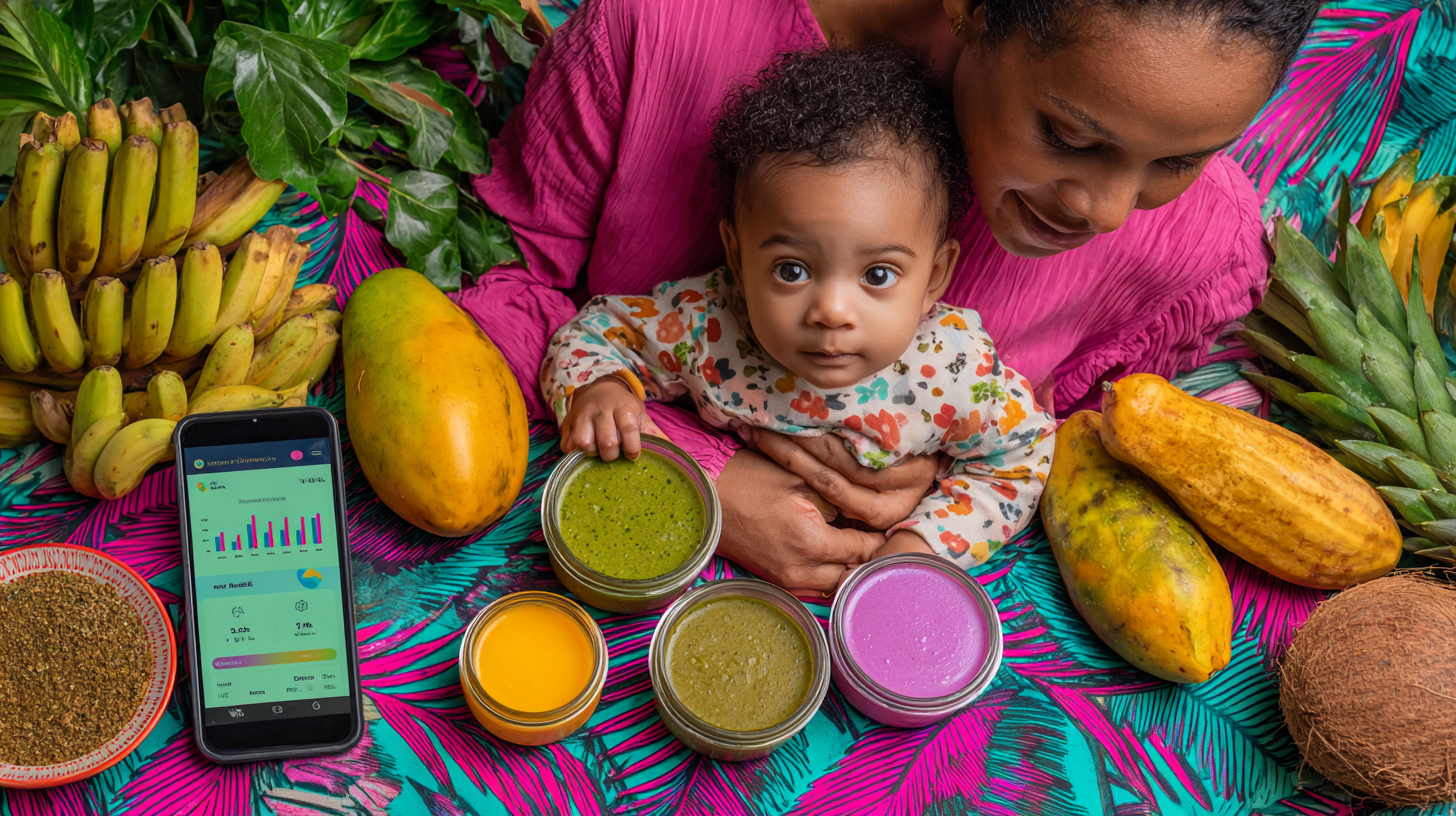
Kitchen Scales with App Integration: This is the unsung hero nobody talks about. A simple $25 kitchen scale that connects to your phone can track exactly how much food you’re preparing and how much actually gets eaten. When you’re making batches of Calabaza con Coco (that’s pumpkin with coconut milk for the non-Caribbean folks) or Sweet Potato & Callaloo Rundown, knowing precisely what portions work for your baby eliminates so much guesswork.
The Apps That Are Actually Worth Your Time (Tested by Real, Exhausted Parents)
I spent three months in parenting forums, Reddit threads, and Facebook groups asking one question: “Which feeding apps do you actually still use six months later?” Because download numbers mean nothing—it’s the apps you don’t delete that matter.
Huckleberry (Premium: $79.99/year): The app parents either love obsessively or find completely unnecessary. It tracks feedings, diaper changes, and sleep patterns, then uses AI to predict nap times and wake windows. Multiple parents told me the predictions are “dead-on accurate” around 4 months. The killer feature? You can track medications and unusual bowel movements to discuss with your pediatrician. One parent said, “I used to stress about remembering to tell the doctor things. Now I just show her the app data.” The downside? Some users find inputting data “cumbersome” during the exhausting newborn phase.
Baby Tracker: The simpler, no-frills option. If Huckleberry is an iPhone, Baby Tracker is a Nokia—less fancy, but it just works. Parents who prioritize speed over features love this one. “I can log a feeding in literally three taps,” one dad told me. “At 3 AM, that matters more than pretty graphs.”
BabyByte: This is the evidence-based one that emerged from actual research in 2023. Built specifically to improve responsive feeding practices, it includes scientifically-sound educational content about feeding behaviors, expert video interviews with pediatricians and psychologists, and a behavior diary function. The research showed 62.8% of parents used it weekly, and they rated the expert videos particularly valuable (mean rating: 1.81/5, where 1 is “very valuable”). If you’re anxious and need education more than just tracking, this is your app.
The German Psychoeducational App (unnamed in research): Here’s something fascinating—researchers in Southern Germany developed a comprehensive app addressing feeding, crying, and sleeping problems simultaneously. It includes self-care strategies for stressed parents, a moderated chat forum, and a regional directory of counseling centers. The app reduced parenting stress measurably and increased knowledge about child feeding. The catch? It’s currently only available in German, but similar apps are being developed for English-speaking markets.
Caribbean Kitchen Wisdom Meets Technology
Here’s something my Jamaican grandmother would never admit: even traditional feeding wisdom gets better with data. When you’re introducing your baby to Caribbean flavors—plantains, callaloo, ackee, yams—tracking how they respond to each ingredient helps you spot patterns she might have missed.
For example, babies often need 8-12 exposures to a new food before accepting it. But without tracking, you might give up after three attempts, thinking “she hates plantain.” The data shows the truth: she’s just getting used to it. This is especially valuable when introducing the 75+ Caribbean-inspired recipes in resources like the Caribbean Baby Food Recipe Book—you can track which authentic island flavors your baby gravitates toward first.
AI Nutrition Tracking: Your Digital Nutritionist (That Doesn’t Judge Your 2 AM Goldfish Crackers)
Remember when I said AI can predict nutritional needs with 89% accuracy? Let’s talk about what that looks like in your actual kitchen, not a research lab.
Modern AI nutrition tracking works like this: You input what your baby eats (either manually or through barcode scanning for packaged foods), and the AI analyzes the nutritional content against recommended daily values for your baby’s age and weight. But here’s where it gets interesting—the AI doesn’t just tell you “Your baby needs more iron.” It suggests specific, achievable modifications: “Adding two tablespoons of pureed lentils to tomorrow’s sweet potato would close the iron gap.”
Some parents use ChatGPT creatively for this. One mom showed me how she takes a photo of her baby’s weekly meal plan, uploads it, and asks, “What nutrients might be low based on this menu for a 10-month-old?” ChatGPT analyzes the meals and suggests additions. Is it perfect? No—and you should absolutely verify suggestions with your pediatrician. But is it better than just guessing and hoping? Absolutely.
Interactive Nutrient Decoder: What Your Baby Actually Needs
Let’s decode what those feeding concerns actually mean in terms of nutrients. Click on your biggest feeding worry:
The most powerful use of AI nutrition tracking I’ve seen? Meal planning for families introducing diverse cultural foods. When you’re working with ingredients like callaloo, ackee, dasheen, and plantains—foods that might not be in standard baby nutrition databases—you need smarter tools. Some parents photograph recipes from their Caribbean cookbook, ask AI to estimate nutritional content, then adjust portions to meet their baby’s needs.
The Controversial Truth: When Technology Helps vs. When It Hurts
Let’s address the elephant in the room: not everyone thinks feeding technology is a good idea. And honestly? Some of the criticism is valid.
The Screen Time During Feeding Debate: Excessive screen time during meals disrupts brain-gut communication, preventing children from properly sensing food characteristics like color, texture, and taste. Screen distraction leads to overeating as children lose touch with natural hunger and satiety cues. This is real. This is documented. But here’s the nuance: there’s a difference between putting on Cocomelon so your baby mindlessly eats while hypnotized, versus quickly logging feeding data in an app while maintaining eye contact and conversation.

The Over-Reliance Concern: Experts genuinely worry that dependence on technology might impact parents’ critical thinking and intuitive parenting skills. One child development specialist told me, “I’ve seen parents ignore obvious hunger cues because the app said it wasn’t time to feed yet.” That’s… not what we’re going for here. Technology should support your instincts, not override them. If your baby is clearly hungry but the app says “feed in 45 minutes,” feed the baby. The app doesn’t live with your child. You do.
The Accuracy Issue: Research shows that 71.2% of parents believe AI-provided pediatric healthcare information is only partially accurate—and they’re right to be skeptical. A 2020 systematic assessment found most infant feeding apps have minimal evidence-based information and poor readability. Parents often can’t differentiate between ChatGPT responses and actual medical advice, sometimes viewing AI responses as more credible than expert guidance. This is dangerous.
Here’s my rule: Use AI for logistics (meal planning, tracking, pattern recognition). Use humans for health decisions (allergies, feeding schedules, medical concerns). AI can suggest, “Try adding more iron-rich foods.” Your pediatrician decides whether your baby actually needs an iron supplement.
Balancing Tech and Intuitive Feeding: The Framework Nobody’s Teaching You
Responsive feeding—the gold standard that reduces childhood obesity risk by 30%—is about parents being attuned to their child’s hunger and satiety cues. So how do you track feeding data without becoming a robot following an app’s commands?
Here’s the framework I developed after interviewing pediatricians, parents, and feeding specialists:
The 80/20 Tech-Feeding Rule: Spend 80% of feeding time fully present with your baby—eye contact, conversation, reading her cues. Use technology for the other 20%—logging the meal after she’s done, reviewing patterns weekly, planning meals when she’s asleep. Technology happens around feeding, not during the actual connection moments.
The “Observe, Then Confirm” Method: Trust your observations first. “She seems fussier after dairy” or “She lights up when I serve anything with cinnamon.” Then use technology to confirm or challenge your observations. Look at the data: Does she actually eat more cinnamon foods, or does it just feel that way? This keeps your intuition sharp while letting data refine it.
The “Red Flag vs. Green Light” System: Use apps to identify red flags (consistent low intake, allergic reaction patterns, nutritional gaps) but green light decisions based on your baby’s actual behavior. The app says she’s below average intake? That’s a red flag to discuss with your doctor. But if she’s happy, energetic, and growing? Green light. The data provides context, but your baby’s thriving is the ultimate measure.
Real Talk from a Caribbean Mom Who Tried It All
When my daughter turned six months, my Grenadian mother-in-law arrived with opinions and pureed callaloo. “We didn’t need apps,” she said, stirring coconut into cornmeal porridge. She was right—she didn’t. But she also had her mother, aunts, and neighbors helping her, answering questions, confirming she was doing it right.
I had Google at 2 AM, which is a terrible substitute for community. But a good feeding app? That became my digital village. When I doubted myself about introducing ackee at 12 months (it felt early), the app’s evidence-based content showed me it was perfectly appropriate for her developmental stage. When I worried she wasn’t eating enough plantain despite being Caribbean, tracking showed she actually ate it 4 times a week—my anxiety just made it feel insufficient.
The technology didn’t replace my instincts or my mother-in-law’s wisdom. It supplemented both. And honestly? It helped me introduce Caribbean flavors more confidently because I could track which combinations worked and adjust recipes accordingly.
What Expert Pediatricians Are Actually Saying (The Unfiltered Version)
I asked Dr. Michael Glazier, a pediatric medical officer, what he really thinks when parents bring AI-generated feeding plans to appointments. His answer surprised me: “It’s extremely useful for logistical things like meal planning where the stakes are lower. But parents need to understand AI should complement, not replace, critical thinking and professional consultation.”
Translation? Your pediatrician doesn’t hate that you’re using ChatGPT to generate varied meal ideas. They do hate when you follow AI advice about potential food allergies without consulting them first. The line is: AI for convenience and ideas, professionals for health and safety.
Child development experts from a 2024 study emphasized that while AI offers substantial benefits in fostering interactive engagement, it poses risks requiring careful consideration. The consensus? Technology should maintain—not replace—human connection during feeding, which is a critical developmental interaction. Think of feeding apps as the sous chef, not the head chef. You’re still running the kitchen.
Registered dietitians note that responsive feeding involves adults helping children feel relaxed and secure, being attuned to the child, and respecting their autonomy—even when using tracking tools. The technology should make you more attuned to your baby’s cues, not less. If the app is pulling your attention away from noticing that your baby stopped opening her mouth three spoonfuls ago, you’re using it wrong.
The Future of AI Feeding: What’s Coming That Will Actually Matter
Forget the sci-fi nonsense. Here’s what’s actually in development that will impact your life in the next 2-3 years:
Real-Time Allergy Risk Assessment: AI systems are being trained to analyze family history, early feeding patterns, and reaction data to predict allergy risks with increasing accuracy. Instead of the current “introduce allergenic foods and watch for reactions” approach, future apps might say, “Based on your family’s eczema history and her digestive patterns, introduce eggs at 7 months rather than 6, and start with 1/4 teaspoon rather than 1/2.”
Integration with Wearable Devices: Picture this: your baby wears a comfortable, safe monitoring device that tracks heart rate, digestion patterns, and sleep quality, then correlates this data with feeding times and foods consumed. The AI might detect, “She wakes up more frequently on nights following dairy consumption” or “Her heart rate variability improves when morning meals include protein.” This isn’t tracking for tracking’s sake—it’s identifying genuine cause-and-effect relationships your eyes can’t see.
Clinician-in-the-Loop Systems: The most promising development is collaborative AI where algorithms generate recommendations that healthcare professionals review and adapt. Think of it as AI doing the heavy analytical lifting, then your pediatrician applying clinical judgment and knowledge of your specific baby. This “human-in-the-loop” approach addresses the over-reliance concerns while maximizing AI benefits.
Cultural Food Recognition: Current apps struggle with diverse cultural foods. Future AI will recognize and nutritionally analyze foods like callaloo, ackee, malanga, and plantains as easily as it does chicken and broccoli. For families introducing Caribbean, African, Asian, or Latin American foods, this means finally getting accurate nutritional tracking without manually calculating everything.
Interactive Future Readiness Check
How ready are you for the next wave of AI feeding technology? Let’s assess your current setup and future needs. Select your situation:
Your Starting Point: The Minimum Viable Tech Stack for Feeding Sanity
You don’t need seventeen apps and five smart devices. Here’s the absolute minimum that will give you 80% of the benefits:
Level 1 (Minimalist Parent):
- One tracking app (Baby Tracker for simplicity, Huckleberry if you like data)
- ChatGPT free account for occasional meal planning and nutrition questions
- Your phone’s notes app for jotting down foods she loves vs. rejects
- Total cost: $0 (or $79.99/year for Huckleberry premium)
Level 2 (Data-Loving Parent):
- Huckleberry premium for comprehensive tracking and AI predictions
- Simple kitchen scale with app integration ($25-40)
- ChatGPT Plus for deeper analysis ($20/month)
- Evidence-based recipe resource for nutritional reference
- Total cost: $140 setup + $320/year ongoing
Level 3 (All-In Tech Parent):
- BabyByte or similar evidence-based app for education + tracking
- Smart bottle system (nfant or similar, $100-200)
- Kitchen scale with app integration
- ChatGPT Plus for advanced meal planning
- Comprehensive recipe resources covering diverse foods
- Total cost: $240 setup + $320/year ongoing
Most parents find Level 1 or 2 is plenty. Level 3 is for anxious parents (me), parents with multiple caregivers needing coordination, or parents managing specific health concerns requiring detailed tracking.
The Bottom Line (No Fluff, Just Truth)
Here’s what three years of using feeding technology—and researching it obsessively for this article—has taught me:
AI and smart feeding devices won’t magically make your baby love broccoli. They won’t eliminate mealtime struggles or guarantee your child will grow up with a perfectly balanced relationship with food. That’s not what this is about.
What they will do—when used thoughtfully—is reduce the mental load that makes feeding feel overwhelming. They’ll catch nutritional gaps you couldn’t see. They’ll provide the reassurance at 2 AM that yes, she’s eating enough, or no, that reaction wasn’t normal and you should call the doctor. They’ll free up cognitive space currently occupied by “Did I feed her three times or four today?” so you can focus on actually being present during meals.
The research shows that 57% of mothers using feeding apps report higher exclusive breastfeeding rates. That 62.8% of parents using evidence-based apps experience reduced anxiety. That AI nutrition tracking identifies deficiencies with 89% accuracy. These aren’t small numbers. This technology is making a measurable difference.
But—and this is crucial—it only helps if you use it as a tool, not a crutch. Technology should make you more confident in your parenting decisions, more attuned to your baby’s cues, more capable of introducing diverse foods (including those gorgeous Caribbean flavors from resources like the Caribbean Baby Food Recipe Book with its 75+ island-inspired recipes). If it’s making you less confident, more anxious, or more disconnected? You’re using the wrong tools or using them wrong.
My grandmother fed babies without apps, yes. But she also had her mother, sisters, and neighbors confirming she was doing it right. She had cultural feeding wisdom passed down through generations. She had a community.
You have Google at 2 AM, conflicting advice from seventeen parenting philosophies, and the anxiety that comes from too many choices and not enough support. In that context? A good feeding app, used wisely, becomes your digital village. Not a replacement for human connection—a supplement to it.
The magic isn’t in the technology. It’s in you—your observations, your instincts, your love for your baby. The technology just helps you trust those things a little more.
Final Reflection: What Would Help You Right Now?
Before you leave, take one moment to identify your next step. What would make feeding less stressful THIS WEEK? Click your answer:
And if you take one thing from

Kelley's culinary creations are a fusion of her Caribbean roots and modern nutritional science, resulting in baby-friendly dishes that are both developmentally appropriate and bursting with flavor. Her expertise in oral motor development and texture progression ensures that every recipe supports your little one's feeding milestones while honoring cultural traditions.
Join Kelley on her flavorful journey as she shares treasured family recipes adapted for tiny taste buds, evidence-based feeding guidance, insightful parenting anecdotes, and the joy of celebrating food, culture, and motherhood. Get ready to immerse yourself in the captivating world of Kelley Black and unlock the vibrant flavors of the Caribbean for your growing baby, one nutritious bite at a time.
- The Feeding Revolution: Why Your Everyday Meals Are Changing the World - October 13, 2026
- Your Feeding Story Matters More Than The “Perfect” One Online - October 12, 2026
- Looking Forward: Stepping Into Your Confident Feeding Future - October 11, 2026