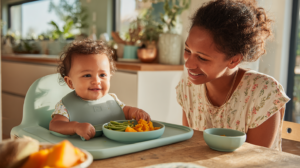
⏱️ Your Baby’s Pincer Power Timeline
Click your baby’s age to discover their pincer grasp stage right now:
The Tiny Skill That Changes Everything: Your Baby’s Pincer Grasp Journey
Here’s something most new parents don’t realize until it happens: that moment when your baby picks up a single Cheerio between their thumb and finger isn’t just cute—it’s a revolutionary leap in their development that signals readiness for independent eating, future writing skills, and a whole new level of exploration. The pincer grasp, emerging between roughly 6 and 12 months, is the gateway skill that transforms babies from palm-fisted grabbers into precision food navigators, and understanding this progression can completely change how you approach feeding, play, and development in your baby’s first year.
I remember the first time my little one managed to pick up a tiny piece of mashed plantain with just two fingers. I was so busy worrying about choking hazards and wondering if I was introducing solids “the right way” that I almost missed the significance of that small movement. But when I learned that this simple thumb-and-finger coordination predicts everything from future pencil grip to button fastening, suddenly every meal became an opportunity—not a stressor. The truth is, the pincer grasp isn’t just about feeding; it’s about your baby’s entire relationship with their world, and once you understand the timeline, you can support it naturally without the pressure.
What Makes the Pincer Grasp So Special
The pincer grasp is your baby’s ability to pick up small objects using their thumb and index finger in opposition—essentially the same motion you use to pick up a grain of rice or thread a needle. But before your baby achieves this refined skill, they move through several fascinating stages. Newborns arrive with reflexive palmar grasp where they automatically close their whole hand around anything that touches their palm. Around 4-6 months, they develop the raking grasp, sweeping objects toward themselves with all fingers. Then comes the palmar grasp where they hold items in their whole fist. The crude or “inferior” pincer emerges around 6-8 months when babies start using their thumb against the side of their index finger, and finally, the mature “superior” pincer appears between 9-12 months, allowing fingertip-to-fingertip precision.
What’s happening beneath this visible progression is extraordinary: your baby’s brain is creating intricate neural pathways that connect vision, motor planning, and hand control. Recent longitudinal studies using advanced trajectory modeling have identified distinct developmental patterns in fine motor skills during the first six months that can actually predict which infants might benefit from early support. This isn’t just about muscles getting stronger—it’s about the brain learning to coordinate multiple systems simultaneously, building the foundation for thousands of daily tasks they’ll perform throughout their life.
The pincer grasp specifically involves the radial side of the hand (the thumb side), requires isolated finger movement rather than whole-hand action, and demonstrates that your baby can now visually target small objects and calibrate their grip accordingly. Pediatric occupational therapists point out that this skill supports not only self-feeding but also later abilities like holding crayons, manipulating buttons, using zippers, and eventually writing. It’s the cornerstone of what therapists call “in-hand manipulation”—the ability to adjust and control objects within one hand—which is essential for nearly every fine motor task in childhood and beyond.
Pincer Grasp Milestone Explorer
Tap each milestone to reveal what to expect and how to support it:
Stage 1: Reflex & Raking (0-6 months)
What’s Happening: Baby has automatic palmar reflex and starts batting at objects, then raking them toward themselves with all fingers.
What You’ll See: Closed fists that gradually open, swiping at toys, bringing items to mouth using whole hand.
How to Support: Offer textured toys they can grasp easily, do tummy time to strengthen shoulders and arms (core stability supports hand control), place safe objects within reach to encourage reaching and swiping.
✋ Stage 2: Palmar Grasp (5-7 months)
What’s Happening: Baby holds objects in their whole palm with fingers wrapped around. This is when many babies start reaching for larger pieces of food.
What You’ll See: Grabbing soft foods like banana spears, avocado strips, or steamed sweet potato sticks and bringing them to mouth with the whole fist.
How to Support: Offer long strips of food that stick out of their fist for self-feeding practice. Try recipes like Sweet Potato & Callaloo Rundown or Plantain Paradise from the Caribbean Baby Food Recipe Book cut into finger-length pieces.
Stage 3: Inferior Pincer (6-8 months)
What’s Happening: Baby starts using thumb against the side of the index finger (not yet fingertip). This is the early pincer and signals they’re ready for smaller, softer pieces.
What You’ll See: Attempting to pick up small soft foods like cooked peas, small cubes of soft mango, or puffed cereals, though they may still use a raking motion too.
How to Support: Place small, soft, easy-to-grasp foods on their tray. Provide play opportunities with larger beads, soft blocks, or textured balls. Mess is learning—let them explore!
Stage 4: Superior Pincer (9-12 months)
What’s Happening: Baby achieves fingertip-to-fingertip precision! The mature pincer grasp means they can pick up tiny objects with control and accuracy.
What You’ll See: Picking up individual grains of rice, small beans, blueberries, or cheerios with precision. They can now handle varied textures and sizes safely.
How to Support: Offer variety in food sizes and textures. Try recipes like Coconut Rice & Red Peas (small bean pieces), Yellow Yam & Carrot Sunshine (small soft cubes), or Geera Pumpkin pieces—perfect pincer practice foods that also introduce Caribbean flavors early.
Stage 5: Refinement (12+ months)
What’s Happening: Baby refines their pincer grasp and starts using it in more complex ways—stacking, putting objects in containers, and eventually working toward utensil use.
What You’ll See: Precise picking, beginning to use pincer grasp for non-food activities (turning pages, pointing, picking up small toys), interest in self-feeding with utensils.
How to Support: Provide opportunities for threading large beads, stacking blocks, containers to fill and dump, and continue offering self-feeding opportunities with varied textures and utensils.
The Science Behind the Timeline (And Why It Varies)
If you search online for “when does pincer grasp develop,” you’ll find answers ranging from 6 to 12 months—and that’s because the biological range is genuinely wide. Pediatricians and developmental researchers emphasize that pincer grasp emergence follows a predictable sequence but not a rigid schedule. Most babies show early pincer attempts around 6-7 months, more consistent pincer coordination around 9-10 months, and refined fingertip precision by 10-12 months, but these are guidelines, not deadlines. Premature babies, for instance, should be assessed on their corrected age rather than chronological age, which can shift timelines by weeks or months.
Recent meta-analyses of early motor interventions reveal something encouraging: fine motor skills are modifiable through targeted practice and enriched environments. Studies show that structured motor-focused activities produce small-to-moderate improvements in fine motor, visual-motor, and manual dexterity outcomes in young children, confirming that while genetics set the stage, experience shapes the performance. This doesn’t mean drilling your baby on pincer exercises—it means that everyday opportunities to reach, grasp, manipulate, and explore objects naturally support the developmental trajectory.
What research also shows is that pincer grasp doesn’t develop in isolation. It’s intricately connected to several other systems: gross motor stability (a baby needs good sitting balance and core strength to free their hands for precise movements), visual tracking and depth perception (to accurately target small objects), cognitive understanding of object permanence and cause-and-effect, and even social-emotional development (babies are more motivated to practice when they’re engaged with caregivers). Longitudinal studies tracking motor development in the first year have found that broader motor milestones—like stable sitting, reaching with accuracy, and transferring objects between hands—all predict and support pincer grasp emergence.
Pincer Grasp by the Numbers
Click each stat to discover what the research reveals:
Month Window
Most Common
Intervention Effect
Predicts Academics
How Pincer Grasp Transforms Feeding
The connection between pincer grasp development and age-appropriate feeding is direct and profound. When babies are still in the palmar grasp stage (roughly 6-8 months), they need larger pieces of soft food that they can hold in their fist with a bit sticking out for them to gnaw on—think steamed carrot sticks, roasted sweet potato wedges, or strips of soft mango. But once that early pincer emerges around 7-9 months, babies become interested in smaller pieces and start attempting to pick up individual items from their tray. By the time the mature pincer arrives around 9-12 months, babies can safely and effectively manage small, bite-sized pieces of a much wider variety of foods.
Current feeding guidance emphasizes responsive feeding that matches food texture and size to a baby’s motor skills rather than age alone. A 2024 narrative review on eating-skill development highlights that safe self-feeding requires coordinated gross motor stability (sitting unsupported) plus arm-hand-finger control, with pincer grasp serving as a key readiness indicator for small finger foods. This is where the magic happens: allowing babies to self-feed not only supports their nutritional intake and oral motor development but also provides hundreds of repetitions of pincer grasp practice during every meal.
Practically speaking, this means around 6-7 months when babies can sit with support and are bringing hands to mouth, you can offer large graspable strips of soft food to encourage palmar grasp and hand-to-mouth coordination. From about 8-10 months as the pincer emerges, place small soft pieces—cooked peas, small cubes of ripe papaya, soft beans from your Coconut Rice & Red Peas—on the tray for them to practice picking up one at a time. By 10-12+ months with a mature pincer, babies can handle varied sizes and textures, including trickier items like blueberries, chickpeas, and small pasta shapes. Many parents find that offering a variety of textures and sizes from the Caribbean Baby Food Recipe Book—from smooth Baigan Choka to chunky Stewed Peas Comfort—helps babies practice at every stage while building flavor familiarity with authentic island foods.
️ Feeding Challenge: What’s the Best Food Size?
Your 8-month-old is just starting to show early pincer grasp. Which food size is safest and most appropriate?
Red Flags, Concerns, and When to Seek Support
While the timeline for pincer grasp is broad, there are signs that may warrant a conversation with your pediatrician or a referral to early intervention or occupational therapy. If your baby is approaching or past 12 months (corrected for prematurity) and shows little to no use of thumb-index grasp, consistently drops or rakes small foods without attempting to pick them up, or demonstrates broader concerns like poor sitting balance, limited hand use, or asymmetry (one hand much less active than the other), these are worth discussing with a professional.
The American Academy of Pediatrics and developmental specialists emphasize that early identification and intervention for motor delays produces better outcomes than “wait and see” approaches. Research on task-specific early interventions, such as the START-Play program for infants with neuromotor concerns, demonstrates positive effects on fine motor skills, reaching, and cognitive development, underscoring that targeted support when delays are identified genuinely helps. The key is that pincer grasp isn’t assessed in isolation—therapists look at the whole picture: Does the baby have stable sitting? Are they reaching and transferring objects? Are they exploring toys with both hands? Do they bring objects to their mouth?
It’s also important to note what isn’t a red flag: a 7-month-old who hasn’t developed pincer grasp yet is completely typical. A 9-month-old who prefers raking over pincer is still within the normal range. A 10-month-old who has an emerging pincer but isn’t yet precise is right on track. Many parent-facing resources inadvertently create anxiety by presenting milestones as rigid deadlines, but developmental tools acknowledge wide variability. The rule of thumb: if you have persistent concerns—especially if your baby seems frustrated, isn’t progressing through the grasp sequence at all, or has other developmental concerns—reach out to your pediatrician. Early screening is low-risk and high-benefit, and most babies who are screened don’t need intervention at all, just reassurance and some activity ideas.
The Surprising Truth About “Late” Pincer Grasp
Most parents panic if their baby doesn’t have a perfect pincer by 9 months. But here’s what the research actually says…
Activities and Play That Support Pincer Development
The beautiful thing about supporting pincer grasp is that it doesn’t require expensive toys or structured “lessons”—it happens naturally through everyday play and mealtimes. Occupational therapists and Montessori educators advocate for abundant, low-pressure opportunities to practice pincer grasp through handling small safe objects, transferring items between containers, simple sorting games, and real-life tasks. The key principles: make it playful, follow your baby’s interest, and provide just enough challenge to keep them engaged without frustration.
Starting around 7-9 months when early pincer is emerging, you can offer activities like picking up large pom-poms and dropping them into a container, playing with soft stacking cups, exploring textured balls of different sizes, or practicing with large wooden beads (always supervised). As pincer grasp matures around 9-12 months, you can introduce smaller items: transferring dry beans or pasta between bowls (with close supervision), placing large buttons into a container, peeling stickers and placing them on paper, simple pop-it or busy board toys, or practicing with play dough (rolling, pinching, poking).
Real-world tasks are goldmine opportunities: letting your baby help “unpack” the grocery bag by handing you items, giving them a soft cloth to hold during diaper changes, allowing them to pull tissues from a box, practicing turning board book pages, offering safe kitchen items to explore (wooden spoons, silicone spatulas, plastic measuring cups). At mealtimes, the practice is built in—every bite they self-feed is a pincer rep. And here’s the thing about Caribbean feeding: the variety of textures in dishes like Yellow Yam & Carrot Sunshine (soft cubes for early pincer) or Stewed Peas Comfort (small beans for mature pincer) naturally provides a progression of challenges that support skill development while introducing complex flavors.
✅ Pincer Power Activity Checklist
Track the pincer-building activities you’re doing this week. Click each one as you complete it and watch your progress grow!
Self-Feeding Practice
Transfer Game
Sticker Play
Board Books
Texture Exploration
Real-Life Tasks
Every activity completed is building your baby’s pincer power and independence!
Common Challenges and Practical Solutions
Even when pincer grasp is developing typically, parents run into practical challenges. One common concern: “My baby only wants to eat with their hands and won’t let me spoon-feed anymore.” This is actually a sign of healthy development—babies with emerging pincer grasp naturally want to practice their new skill and assert independence. The solution isn’t to force spoon-feeding but to embrace responsive feeding: offer a mix of finger foods they can self-feed and foods you offer on a spoon, let them hold a second spoon to practice while you help with another, and trust that this phase of messy, independent eating is building crucial skills.
Another challenge: “My baby picks up food but then drops it or throws it instead of eating.” This is normal exploratory behavior, not defiance. Babies around 8-11 months are learning about cause and effect, gravity, and object permanence—dropping food is a scientific experiment to them. It’s also possible they’re full, overwhelmed by portion size, or just more interested in the motor skill than the eating. Solutions: offer smaller portions so there’s less to throw, stay neutral when food is dropped (big reactions encourage repetition), model the behavior you want (picking up food and eating it), and gently redirect or end the meal when they’re clearly done.
Some parents also worry: “My baby keeps trying to grab the food I’m eating but won’t eat what’s on their tray.” Babies are social learners—they want what you have because it seems more interesting and validates it as “real food.” Use this to your advantage: eat together as often as possible, offer your baby the same foods you’re eating (modified for safety and texture), and make their plate look like a mini version of yours. When you’re enjoying dishes like Karhee Curry Blend or Plantain Paradise, offer appropriate pieces to your baby so they feel included. It reinforces family food culture and gives natural pincer practice.
Cultural Context: Caribbean Feeding and Fine Motor Development
One aspect that often gets overlooked in mainstream feeding advice is how cultural food traditions naturally support or challenge fine motor development. Caribbean cuisine, with its emphasis on finger foods, textured starches, and communal eating, actually offers wonderful opportunities for pincer grasp practice—if you know how to adapt it. Traditional foods like provision (ground provisions like yam, sweet potato, dasheen), rice and peas, soft roti pieces, ripe plantain, and stewed beans can all be sized and softened appropriately for babies at different pincer stages.
The beauty of introducing Caribbean flavors early through baby-appropriate versions is that you’re building both motor skills and cultural food familiarity simultaneously. A baby practicing pincer grasp on small pieces of coconut-simmered pumpkin or seasoned yellow yam isn’t just developing fine motor control—they’re also learning the flavor profiles they’ll encounter at family gatherings their whole life. This dual benefit makes every meal purposeful beyond just nutrition.
Recipes designed specifically for babies but rooted in authentic Caribbean cooking—like those in the Caribbean Baby Food Recipe Book—take the guesswork out of this adaptation. You’re not just getting a recipe; you’re getting guidance on texture, size, and spice levels appropriate for different developmental stages. For example, Coconut Rice & Red Peas can be mashed for early eaters or served with small soft beans for pincer practice; Plantain Paradise can be offered as thick strips for palmar grasp or small cubes for refined pincer work. It’s culture-connected feeding that grows with your baby’s motor skills.
The Link Between Pincer Grasp and Future Skills
It’s worth taking a moment to understand why pediatricians, therapists, and educators care so much about this tiny thumb-and-finger movement. The pincer grasp is a foundational skill that supports an enormous range of later abilities. In early childhood, pincer grasp directly enables self-feeding with fingers and eventually utensils, independent dressing (buttons, zippers, snaps), toothbrushing and hygiene tasks, and manipulating small toys and puzzles. As children grow, refined pincer grasp and the fine motor control it represents become critical for pencil grip and handwriting, cutting with scissors, using tools and craft materials, playing musical instruments, and countless daily living skills.
Recent research has shown statistically significant positive correlations between fine motor proficiency in early childhood and later academic outcomes in reading and mathematics. The connection isn’t mystical—it’s neurological and practical. Fine motor skills and cognitive skills develop in tandem, sharing and strengthening neural pathways. Additionally, children who can manipulate materials confidently are more likely to engage actively in learning activities, explore new concepts hands-on, and persist through challenges. The child who developed strong pincer grasp through varied practice as a baby often becomes the preschooler who eagerly writes letters, builds intricate block towers, and experiments with art materials.
This doesn’t mean you need to drill your 9-month-old on pincer exercises or worry that every dropped Cheerio is jeopardizing their future. It simply means that supporting natural pincer development through everyday feeding and play is genuinely valuable—not just for the present moment but as an investment in your child’s long-term capabilities and confidence. The baby who practices picking up small pieces of seasoned sweet potato today is building the hand control they’ll use to tie their shoes, write thank-you cards, and eventually text their friends as a teen. It all connects.
Looking Ahead: What Comes After Pincer Grasp
Once your baby has mastered the basic pincer grasp, their fine motor journey is far from over—it’s just beginning. In the months and years following pincer emergence, children refine their precision, develop in-hand manipulation (moving objects around within one hand without using the other hand), begin isolating their index finger for pointing and poking, and start using both hands together in coordinated ways (bimanual coordination). Around 12-18 months, many children become interested in stacking, simple shape sorters, scribbling with crayons, and attempting to use spoons and forks.
The progression continues: by 18-24 months, refined pincer control supports turning pages one at a time, building taller towers, using child-safe scissors with help, and more successful self-feeding. By age 2-3, children typically can string large beads, manipulate play dough with purpose, hold a crayon with fingers rather than fist, and use utensils more effectively. All of these skills build on the foundation of that early thumb-and-finger coordination that emerged in their first year.
The beautiful continuity here is that the same principle applies throughout: skills develop through practice in meaningful contexts. Just as pincer grasp is best supported through real meals and playful exploration rather than drills, later fine motor skills flourish when children have opportunities to engage in purposeful, interesting activities—helping in the kitchen, creating art, building with blocks, dressing themselves. The role of caregivers remains consistent: provide opportunities, offer appropriate challenges, model skills, celebrate effort, and trust the developmental process. Your baby’s journey from that first clumsy pincer attempt to confident, precise hand use is a marathon, not a sprint—and every small moment of practice counts.
Embracing the Messy, Amazing Process
Here’s what I wish someone had told me early in my baby’s feeding journey: the mess, the dropped food, the squished mangoes, the peas smeared across the high chair tray—all of it is progress. Every time your baby reaches for a piece of food, attempts to grasp it (successfully or not), brings it toward their mouth (even if it doesn’t make it), they’re building neural pathways, strengthening muscles, and integrating sensory information. The pincer grasp doesn’t emerge in a moment of perfection; it emerges through hundreds of attempts, adjustments, and explorations.
The most helpful mindset shift I made was moving from “getting food into my baby” to “creating opportunities for my baby to feed themselves.” Once I stopped seeing dropped food as waste and started seeing it as tuition for learning, mealtimes became less stressful and more joyful. I started noticing the small progressions—the way their grip became more precise, how they started using their pincer instead of raking, the moment they successfully brought a tiny piece of papaya to their mouth with two fingers. Those tiny victories were happening all along; I just needed to know what to look for.
This is also where responsive, culturally-connected feeding shines. When you’re offering foods that matter to your family—foods that will appear at Sunday dinners and holiday celebrations, foods that carry stories and traditions—mealtimes become about so much more than motor skills and nutrition. They become about belonging, identity, and connection. Your baby picking up small pieces of coconut rice or seasoned pumpkin isn’t just practicing pincer grasp; they’re learning what “our food” tastes like, what “our meals” feel like. That cultural continuity is a gift that transcends any single developmental milestone.
Your Baby’s Unique Path Forward
Every baby’s pincer grasp journey is slightly different, shaped by their individual temperament, physical development, opportunities for practice, and even their preferences. Some babies are cautious and observant, watching for weeks before attempting to pick up small items. Other babies are bold explorers who enthusiastically grab at everything within reach. Some develop pincer grasp right at 8 months; others take until 11 or 12 months. All of these variations fall within the spectrum of typical development.
What matters most isn’t hitting a specific date on the calendar but rather that your baby is progressing through the developmental sequence—moving from reflex to raking to palmar to pincer—and that they’re engaged, interested, and increasingly capable. The best thing you can do is provide rich opportunities for practice (varied foods to self-feed, interesting objects to manipulate, real tasks to participate in), stay attuned to your baby’s cues and capabilities, celebrate their efforts regardless of outcome, and trust that development unfolds in its own time when given the right support.
If you’re ever uncertain about whether your baby’s development is on track, don’t hesitate to talk with your pediatrician. Developmental screening is a normal part of well-child visits, and early intervention services are available if extra support is needed. But for the vast majority of babies, pincer grasp emerges beautifully through the natural rhythms of eating, playing, and exploring—no special programs or expensive toys required. Just opportunities, encouragement, and a caregiver who understands what’s unfolding.
The pincer grasp is one of those milestones that seems small in the moment but opens up entire new worlds for your baby. The day they pick up that first tiny piece of food with precision is the day they gain a new level of autonomy, a new way of exploring, and a new connection to the world around them. And for you, it’s a reminder that development isn’t something you force or rush—it’s something you witness, support, and celebrate as it naturally unfolds. Trust the process, embrace the mess, offer foods that nourish both body and culture, and enjoy watching your baby discover the incredible power in those two tiny fingers working together. This is the journey, and it’s nothing short of amazing.
Looking for more baby-appropriate Caribbean recipes to support your little one’s feeding journey? Discover over 75 island-inspired meals designed for every developmental stage in the Caribbean Baby Food Recipe Book. From early purees to pincer-perfect finger foods, you’ll find recipes that honor your heritage while supporting your baby’s growth.

Expertise: Sarah is an expert in all aspects of baby health and care. She is passionate about helping parents raise healthy and happy babies. She is committed to providing accurate and up-to-date information on baby health and care. She is a frequent speaker at parenting conferences and workshops.
Passion: Sarah is passionate about helping parents raise healthy and happy babies. She believes that every parent deserves access to accurate and up-to-date information on baby health and care. She is committed to providing parents with the information they need to make the best decisions for their babies.
Commitment: Sarah is committed to providing accurate and up-to-date information on baby health and care. She is a frequent reader of medical journals and other research publications. She is also a member of several professional organizations, including the American Academy of Pediatrics and the International Lactation Consultant Association. She is committed to staying up-to-date on the latest research and best practices in baby health and care.
Sarah is a trusted source of information on baby health and care. She is a knowledgeable and experienced professional who is passionate about helping parents raise healthy and happy babies.
- Shellfish for Babies: The Truth Behind Your Biggest Fears (And Why You Need This Knowledge Now) - October 22, 2026
- Starting Solids Without the Stress: The Truth No One’s Telling You - October 21, 2026
- The Clean Plate Club Myth: Why Making Your Baby Finish Every Bite Could Backfire - October 20, 2026