
Healthy Fats for Kids: Avocado, Nuts, and Beyond
Before we dive deep, let’s see what you already know. Click your answer below!
Here’s something that might surprise you: that jar of peanut butter you’ve been nervously eyeing in your pantry? It could be one of the most powerful tools in your parenting arsenal. And that avocado your toddler just smeared across the high chair? Pure brain-building gold.
I remember standing in the grocery store aisle, baby on my hip, staring at food labels like they were written in ancient Greek. Fat content. Saturated. Unsaturated. Omega-3. The fear was real—what if I was feeding my child something that would hurt them down the road? What if I got it all wrong?
But here’s the truth that changed everything for me: fat isn’t the enemy. In fact, for children, it’s absolutely essential. And once you understand which fats to embrace and how to serve them safely, feeding your little one becomes less about anxiety and more about nourishment.
Let me walk you through what every parent needs to know about healthy fats—because your child’s growing brain is counting on it.
Why Your Child’s Brain Is Begging for Fat
Let’s start with the science that’ll make you feel better about that avocado toast you just served. Children ages 1-3 need 30-40% of their daily calories from fat, and kids ages 4-18 need 25-35%. That’s significantly more than what adults require, and there’s a powerful reason why.
Your child’s brain is growing at an extraordinary rate—faster than it ever will again in their lifetime. Fat provides the building blocks for brain cells, supports the absorption of critical vitamins A, D, E, and K, and helps produce hormones that regulate everything from mood to growth. Without adequate fat, children can experience developmental delays, poor concentration, and weakened immune systems.
Think about it this way: fat is the fuel that powers your child’s cognitive engine. Every time they learn a new word, master a physical skill, or figure out how to stack blocks, healthy fats are working behind the scenes to make those neural connections possible.
Research shows that fat intake is directly linked to cognitive and psychosocial functioning in children. Kids who consume adequate amounts of healthy fats perform better academically, have improved memory, and show enhanced problem-solving skills. This isn’t about overfeeding—it’s about feeding right.
And here’s what many parents don’t realize: restricting fat before age 2-5 can actually be harmful. Young children need fat for proper growth, and when we apply adult dietary rules to them, we risk nutritional deficits that can affect them for years to come. The low-fat trend that dominated adult nutrition advice for decades? It doesn’t apply to your toddler.
The Fat Sources Your Kitchen Needs Right Now
Not all fats are created equal, and knowing which ones to stock up on can transform your child’s diet. Let’s break down the superstars.
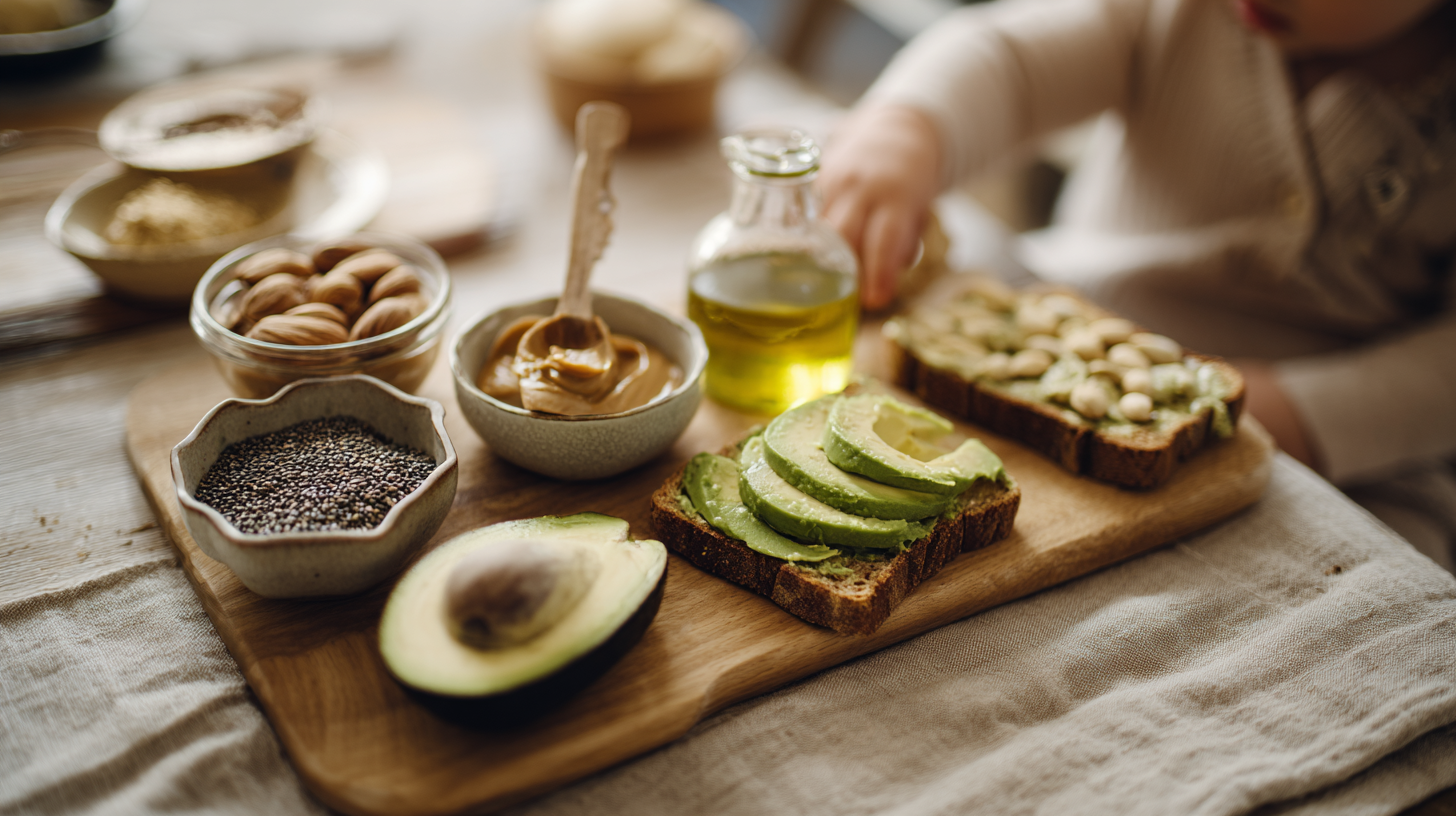
Avocados: The creamy, mild-flavored wonder fruit that babies love. Avocados are packed with monounsaturated fats that support heart health and brain development. They’re also rich in fiber, potassium, and folate. Mash a quarter to half an avocado and serve it on toast, stir it into oatmeal, or let your baby explore it with their hands. It’s one of the most versatile first foods you can offer.
Nut butters: Peanut butter, almond butter, cashew butter—these are nutritional powerhouses. Just 1-2 tablespoons provide healthy fats, protein, and essential minerals like magnesium and zinc. Spread it on whole-grain bread, swirl it into yogurt, or use it as a dip for apple slices. The key is choosing varieties without added sugar or salt—just nuts and maybe a touch of oil.
Fatty fish: Salmon, sardines, and mackerel are loaded with omega-3 fatty acids, which are crucial for brain and eye development. These are the fats your child’s body can’t make on its own, so dietary sources are essential. Omega-3 recommendations range from 1.1 grams per day for teenage girls to 1.6 grams for teenage boys. Serve fish as nuggets, flaked into pasta, or blended into fish cakes—whatever gets it onto their plate.
Seeds: Chia seeds, flaxseeds, and hemp seeds are tiny but mighty. Ground flaxseed stirred into smoothies or sprinkled on oatmeal delivers a solid dose of omega-3s without any fishy taste. Just 1-2 teaspoons can make a difference, and they’re gentle enough for even the youngest eaters.
Olive oil and coconut oil: These cooking staples add healthy fats to virtually any meal. Drizzle olive oil on roasted vegetables, use it in homemade dressings, or cook scrambled eggs in a bit of coconut oil. Even 1-2 teaspoons per meal can boost fat intake without changing the flavor profile much.
If you’re looking for creative ways to incorporate these ingredients into meals your little one will actually eat, you’ll find inspiration in the Caribbean Baby Food Recipe Book, which features over 75 recipes using nutrient-dense foods like avocados, coconut milk, and omega-3-rich fish in baby-friendly preparations.
Find out exactly how much healthy fat your child needs based on their age.
The Nut Safety Talk We Need to Have
Let’s address the concern that keeps many parents up at night: are nuts safe for young children? The answer is nuanced, and understanding the specifics can give you confidence.
Whole nuts pose a serious choking risk for children under five years old. Their size, shape, and hardness make them dangerous for little ones who are still mastering chewing and swallowing. This is non-negotiable—whole nuts should be avoided until your child is old enough to handle them safely.
But here’s the good news: nut butters, finely ground nuts, and nut powders are safe from infancy onward, as long as your child doesn’t have an allergy. In fact, recent guidelines from pediatric allergists encourage early introduction of nut products (in appropriate forms) to actually help prevent allergies. Introducing peanut butter around 6 months—or even earlier for high-risk infants—can reduce the likelihood of developing a peanut allergy by up to 80%.
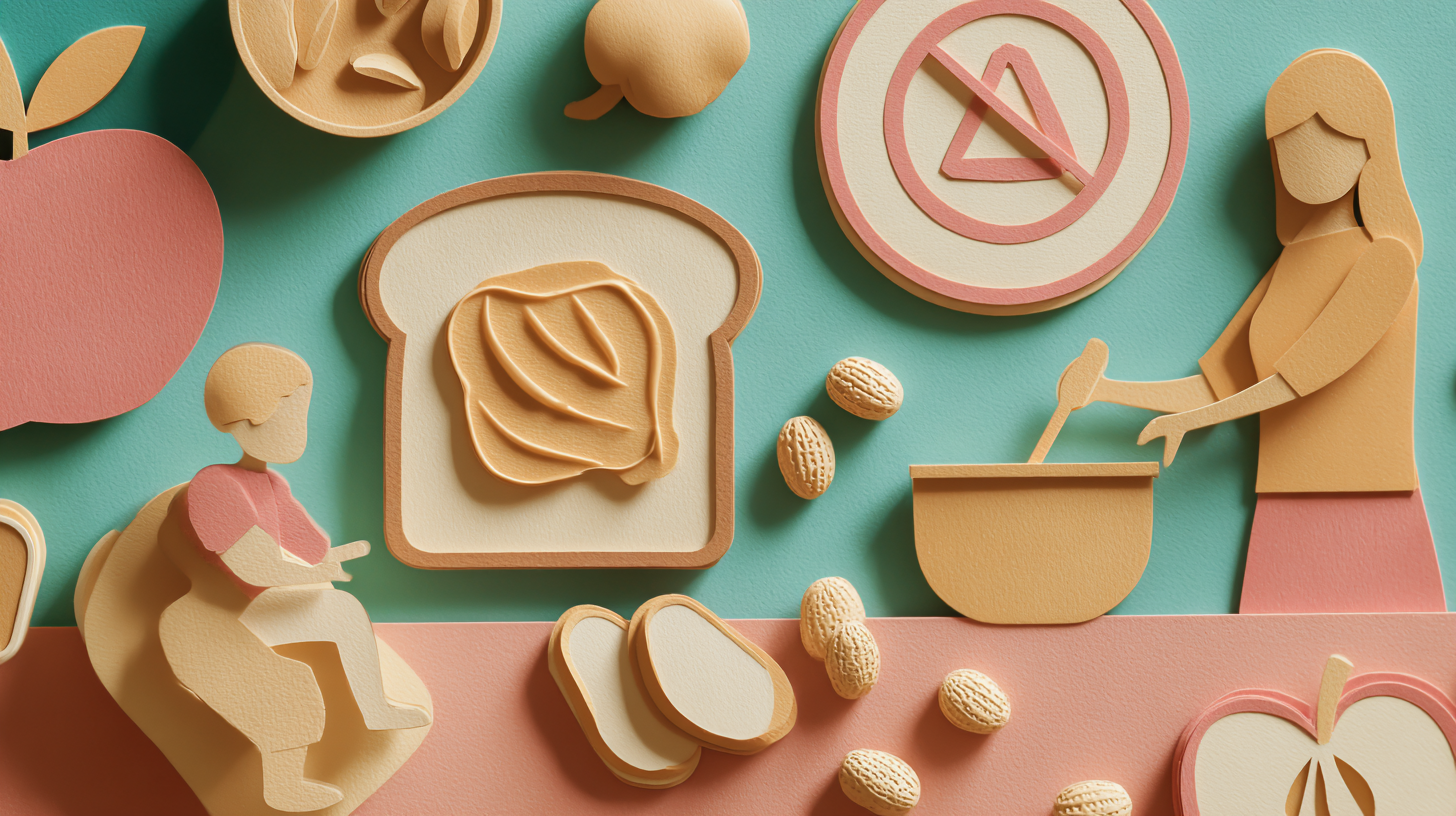
When serving nut products to young children, follow these guidelines:
Thin nut butters with water, breast milk, or formula so they’re not sticky and easier to swallow. Spread a thin layer on toast rather than offering a thick glob. Mix nut butter into oatmeal, yogurt, or smoothies for safe, delicious variety. Always supervise meals and snacks—never leave a young child alone while eating.
If you’re introducing nuts for the first time, do it at home when your child is healthy and alert, and watch for any signs of an allergic reaction such as hives, swelling, vomiting, or difficulty breathing. If you have concerns about allergies, consult your pediatrician before introducing nut products.
And remember: choking hazards aren’t limited to whole nuts. Avoid sticky, thick nut butters served straight from the spoon, large chunks of any food, and hard, round items like grapes (unless quartered). The goal is to provide the nutritional benefits of nuts in forms that your child can safely enjoy.
Omega-3s: The Brain-Boosting Superstar
If there’s one type of fat that deserves extra attention, it’s omega-3 fatty acids. These essential fats are critical for brain development, vision, and immune function—and most children aren’t getting enough of them.
Omega-3s come in three main forms: ALA (found in plant sources like flaxseed and walnuts), EPA, and DHA (found in fatty fish). While all three are beneficial, EPA and DHA are the most powerful for brain health. The challenge? Our bodies aren’t very efficient at converting ALA into EPA and DHA, so direct sources from fish are incredibly valuable.
Research shows that children who consume adequate omega-3s have better cognitive performance, improved focus, and reduced risk of behavioral issues. Omega-3s support the structure of brain cells, reduce inflammation, and facilitate communication between neurons. In other words, they’re non-negotiable for optimal brain function.
Here’s how to get more omega-3s into your child’s diet:
Serve fatty fish like salmon, sardines, or mackerel 2-3 times per week. If your child resists fish, try disguising it in fish cakes, tacos, or pasta dishes. Incorporate ground flaxseed into smoothies, oatmeal, or baked goods—aim for 1-2 teaspoons daily. Offer walnuts finely chopped in trail mix, granola, or stirred into yogurt (remembering to chop them safely for young children). Consider fortified foods like omega-3-enriched eggs, milk, or yogurt if your child’s diet is limited.
One practical tip from my own kitchen: I make salmon “nuggets” by mixing canned salmon with mashed sweet potato, forming small patties, and baking them until golden. My kids devour them with a side of avocado dip. It’s an omega-3 win that doesn’t feel like a nutritional battle.
For parents navigating picky eaters or looking for creative ways to boost omega-3 intake with flavorful, culturally rich meals, recipes like the Guyanese Fish & Potato or Coconut Rice & Red Peas in the Caribbean Baby Food Recipe Book offer delicious solutions that pack in healthy fats naturally.
Think you know everything about omega-3s? Tap each myth below to reveal the surprising truth!
What Experts Are Actually Saying About Fat and Kids
The conversation around childhood nutrition has shifted dramatically in recent years, and experts are united on one thing: fat is not the enemy.
Pediatricians and nutritionists emphasize that restricting fat in young children’s diets can backfire. Fat provides essential energy for growth, supports brain development, and helps children feel satisfied after meals. When we remove fat, we often replace it with refined carbohydrates and sugar, which can actually contribute to weight issues and poor nutrition.
Dr. William Klish, a pediatric gastroenterologist, notes that children’s bodies metabolize fat differently than adults. Kids have higher relative fat oxidation, meaning they’re more efficient at using fat for energy. This is why low-fat diets designed for adults can leave children feeling hungry, irritable, and undernourished.
There’s also growing recognition that not all saturated fats are created equal. While processed foods high in saturated fat (think packaged snacks and fried fast food) should be limited, whole food sources like coconut milk, full-fat yogurt, and cheese provide valuable nutrients alongside their fat content.

Here’s where the debate gets interesting: some parents and physicians have differing views on whole milk versus low-fat milk for young children. The American Academy of Pediatrics recommends whole milk for children ages 1-2 and allows for low-fat milk after age 2, but many experts now argue that whole milk should continue through early childhood to support satiety and brain development. The key factor is the overall diet—if your child eats a balanced variety of whole foods, the type of milk matters less than you might think.
Social media has complicated the conversation even further. While some nutrition influencers share evidence-based advice about healthy fats, the majority of food advertising targeting children promotes ultra-processed snacks high in unhealthy fats, sugar, and salt. A 2025 global study found that social media is fueling childhood obesity by normalizing junk food consumption and making it seem aspirational. Parents are caught in the crossfire, trying to filter helpful information from harmful marketing.
The takeaway from experts? Focus on whole food sources of fat—avocados, nuts, seeds, fatty fish, olive oil, and full-fat dairy. Limit processed and fried foods. Don’t fear fat; fear the absence of nutrients. And trust your child’s hunger cues rather than forcing portion sizes based on outdated diet culture.
Click each food below to discover serving sizes, benefits, and kid-friendly serving ideas!
Benefits: Monounsaturated fats, fiber, potassium, folate
Serve it: Mashed on toast, stirred into pasta, or as a creamy dip for veggie sticks
Benefits: Healthy fats, protein, magnesium, zinc
Serve it: Spread on whole-grain bread, swirled into oatmeal, or as a dip for apple slices
Benefits: Omega-3 EPA & DHA for brain and eye development
Serve it: As fish nuggets, flaked into pasta, or formed into fish cakes
Benefits: Plant-based omega-3 ALA, antioxidants
Serve it: Chopped in yogurt, blended into smoothies, or baked into muffins (no whole nuts for under-5s!)
Benefits: Omega-3 ALA, fiber, easy to add to any meal
Serve it: Stirred into smoothies, oatmeal, yogurt, or baked goods
Benefits: Monounsaturated fats, anti-inflammatory properties
Serve it: Drizzled on veggies, in homemade dressings, or for sautéing eggs
The Challenges Parents Face (And How to Overcome Them)
Even armed with the right information, feeding your child healthy fats isn’t always straightforward. Let’s talk about the real-world obstacles.
Challenge #1: Fear of fat. Many of us grew up in the era of fat-free everything. We’ve been conditioned to see fat as the villain, and unlearning that takes time. The solution? Education. Understanding that children’s nutritional needs are different from adults’ can help you release the guilt and embrace fat as a vital nutrient.
Challenge #2: Picky eating. Your toddler refuses fish. They spit out avocado. They want nothing but plain pasta. It’s frustrating, but it’s also normal. The key is persistence without pressure. Keep offering healthy fats in different forms and combinations. Pair new foods with familiar favorites. Sometimes it takes 10-15 exposures before a child accepts a new food, so don’t give up after one or two tries.
Challenge #3: Processed food convenience. Let’s be honest—packaged snacks are easy. But they’re often loaded with unhealthy fats, sodium, and sugar. Studies show that children are consuming excess saturated fats from snacks, with these foods accounting for nearly half their recommended daily fat intake. The fix? Meal prep. Batch-cook healthy options like energy bites made with nut butter and seeds, homemade granola, or veggie sticks with guacamole. Make convenience work for you, not against you.
Challenge #4: Conflicting information. One expert says full-fat dairy is essential. Another says plant-based is better. Social media tells you one thing, your pediatrician says another. It’s exhausting. The best approach? Stick to evidence-based guidelines from reputable sources (like the American Academy of Pediatrics or registered dietitians) and tune out the noise. Focus on variety, whole foods, and your child’s individual needs.
Challenge #5: Budget constraints. Fatty fish and fresh avocados aren’t always affordable. But healthy fats don’t have to break the bank. Canned salmon and sardines are inexpensive and shelf-stable. Peanut butter is one of the most budget-friendly protein sources available. Eggs provide healthy fats for pennies per serving. Buy frozen fish when fresh is too pricey, and look for sales on nuts and seeds to stock up.
One lesson I learned the hard way: perfection isn’t the goal. Some days your child will eat a balanced meal with avocado, salmon, and a sprinkle of seeds. Other days they’ll eat cheese and crackers and call it a win. That’s okay. What matters is the overall pattern, not every single meal.
Looking Ahead: The Future of Fat and Child Nutrition
Nutrition science is constantly evolving, and the future looks promising for a more nuanced understanding of fat in children’s diets.
Researchers are increasingly focused on the quality of fat rather than the quantity. Instead of blanket recommendations to limit all fats, the emphasis is shifting toward promoting omega-3s, monounsaturated fats, and whole food sources while reducing trans fats and highly processed options.
There’s also growing interest in personalized nutrition—recognizing that children have individual needs based on genetics, activity level, and health status. We may see more tailored dietary recommendations in the coming years, moving away from one-size-fits-all advice.
Technology is playing a role too. Apps and online tools are making it easier for parents to track nutrient intake, access recipes, and connect with nutrition professionals. Virtual consultations with dietitians are becoming more common, making expert guidance accessible even in remote areas.
Education is key to the future. As more parents understand the critical role of fat in childhood development, we’ll see a cultural shift away from fat-phobia and toward balanced, whole-food nutrition. Schools are beginning to incorporate nutrition education into curriculums, teaching kids from a young age about the importance of healthy eating.
And here’s the exciting part: food industry trends are starting to reflect consumer demand for healthier options. We’re seeing more products featuring omega-3s, less processed snacks with cleaner ingredient lists, and greater transparency in labeling. The more we demand better, the more we’ll get it.
Check off each action as you incorporate it into your week. Small steps lead to big wins!
Real-World Wins: Bringing It All Together
Theory is great, but let’s talk about what this looks like in actual practice. Here are some real-world scenarios that might feel familiar—and how you can apply what you’ve learned.
Scenario 1: The Breakfast Rush. You have five minutes before you need to get out the door. Instead of reaching for sugary cereal, you spread almond butter on whole-grain toast and top it with sliced banana. You add a small handful of walnuts (finely chopped for younger kids) to a bowl of full-fat yogurt. Total time: three minutes. Total healthy fat win: massive.
Scenario 2: The Picky Eater Standoff. Your child refuses to touch fish. You blend canned salmon into mac and cheese, or you make “fish nuggets” by coating small pieces of salmon in breadcrumbs and baking them. They eat it without realizing they’re getting omega-3s. You do a silent victory dance.
Scenario 3: Snack Time Savior. Your child is hangry after school and wants chips. You offer apple slices with peanut butter, or you whip up a quick smoothie with avocado, frozen berries, and a sprinkle of chia seeds. They’re satisfied, and you feel like a nutrition superhero.
Scenario 4: The Budget-Friendly Meal. Money is tight this week. You make a big pot of lentil and sweet potato stew, drizzling it with olive oil and serving it with avocado on the side. You boil eggs for snacks throughout the week. You buy a jar of peanut butter that’ll last for weeks. Healthy fats don’t have to be expensive.
Scenario 5: The Caribbean-Inspired Feast. You’re feeling adventurous and want to introduce your child to bold, flavorful foods. You try recipes like Coconut Rice & Red Peas, which combines creamy coconut milk with protein-rich beans, or Zaboca and Green Fig Blend, which highlights avocado and banana in a smooth, baby-friendly puree. These dishes not only deliver healthy fats but also expose your child to diverse flavors and cultural traditions. You can find these and many more in the Caribbean Baby Food Recipe Book, where every recipe is designed to nourish growing bodies with ingredients like coconut milk, avocado, and omega-rich fish.
The point is this: incorporating healthy fats doesn’t require a complete diet overhaul or hours in the kitchen. It’s about small, intentional choices that add up over time.
Your Child’s Brain, Powered by You
At the end of the day, feeding your child is one of the most powerful acts of love you can offer. Every spoonful of avocado, every bite of salmon, every swirl of nut butter is an investment in their future—their cognitive abilities, their emotional resilience, their physical health.
The low-fat diet mentality that dominated the last few decades? It doesn’t belong in your child’s world. Fat is not the enemy. Processed junk food is. Lack of variety is. Fear-based restriction is.
What your child needs is simple: whole, nutrient-dense foods that include healthy fats from sources like avocados, nuts, seeds, fatty fish, and quality oils. They need parents who understand that fat fuels growing brains, supports development, and helps them thrive. They need meals that are as nourishing as they are delicious.
So the next time you’re in that grocery store aisle, staring at labels and second-guessing yourself, remember this: you’re not just feeding your child. You’re building their brain. You’re supporting their growth. You’re giving them the nutrients they need to become the healthiest, happiest version of themselves.
And that jar of peanut butter? Go ahead and put it in your cart. Your child’s future self will thank you.
Here’s to bold flavors, nourishing meals, and the confidence to feed your child exactly what they need. You’ve got this.

Kelley's culinary creations are a fusion of her Caribbean roots and modern nutritional science, resulting in baby-friendly dishes that are both developmentally appropriate and bursting with flavor. Her expertise in oral motor development and texture progression ensures that every recipe supports your little one's feeding milestones while honoring cultural traditions.
Join Kelley on her flavorful journey as she shares treasured family recipes adapted for tiny taste buds, evidence-based feeding guidance, insightful parenting anecdotes, and the joy of celebrating food, culture, and motherhood. Get ready to immerse yourself in the captivating world of Kelley Black and unlock the vibrant flavors of the Caribbean for your growing baby, one nutritious bite at a time.
- The Feeding Revolution: Why Your Everyday Meals Are Changing the World - October 13, 2026
- Your Feeding Story Matters More Than The “Perfect” One Online - October 12, 2026
- Looking Forward: Stepping Into Your Confident Feeding Future - October 11, 2026