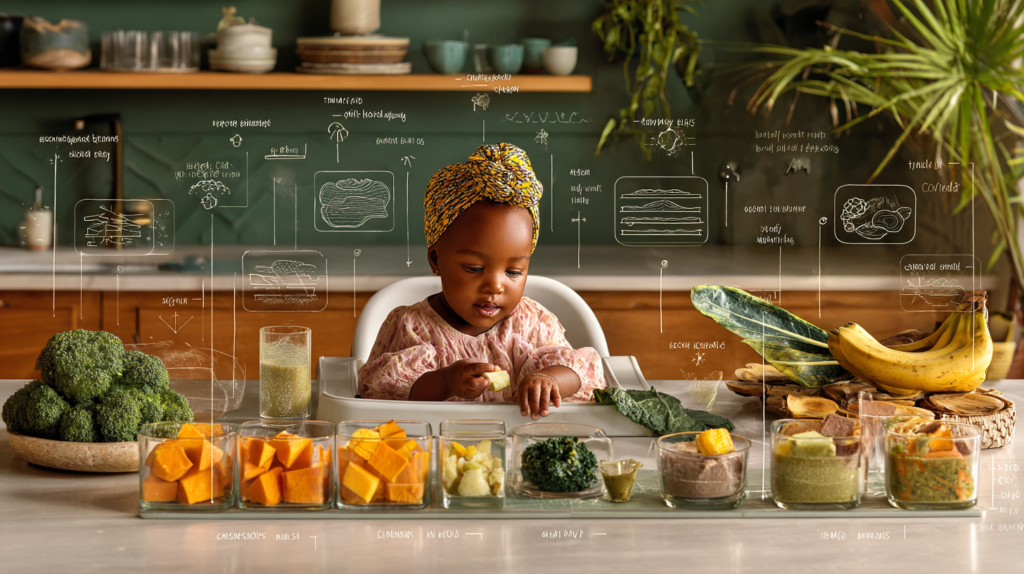
Raw vs Cooked for Baby: The Shocking Truth About What Really Preserves Nutrients
What if everything you believed about cooking “killing” nutrients was keeping your baby from getting the most nutrition possible?
Myth-Busting Challenge: Test Your Knowledge!
Before we dive in, let’s see what you already know. Click each statement to reveal the truth:
Here’s what nobody tells you when you’re standing in your kitchen at 3am, staring at a pile of vegetables and wondering if you’re about to “cook away” all the goodness your baby needs. You’ve seen the Instagram posts—those picture-perfect raw food platters with perfect little hands grabbing cucumber sticks and bell pepper strips. Meanwhile, your grandmother is telling you everything must be boiled soft, your pediatrician mentioned something about steaming, and TikTok is screaming that enzymes die at 118°F.
I’ve been exactly where you are right now. When my little one turned six months, I spent an entire week overthinking a single sweet potato. Should I bake it? Steam it? Serve it raw somehow? The nutrition anxiety was eating me alive, and I wasn’t even the one being fed.
But here’s the truth that changed everything for me: the raw vs. cooked debate isn’t actually about which is “better.” It’s about understanding what each method does to specific nutrients, and then using that knowledge to build a meal plan that maximizes what your baby actually absorbs. Because here’s the kicker—having nutrients IN the food means nothing if your baby’s immature digestive system can’t break them down and use them.
The Science Nobody’s Talking About: Bioavailability Beats Raw Every Time
Let me break down what’s really happening when you cook (or don’t cook) your baby’s food, because this information literally changed how I meal prep for the week.
Research from multiple nutrition studies shows that vitamin C retention after cooking vegetables ranges wildly from 0% to 91%—and the method matters more than whether you cook at all. When you boil vegetables in a ton of water for a long time, you’re basically pouring liquid vitamins down the drain. But when you steam or microwave with minimal water? You’re preserving the vast majority of those heat-sensitive nutrients while simultaneously making other nutrients MORE available.
Here’s where it gets fascinating: cooking carrots, sweet potatoes, and other orange vegetables with even a tiny amount of healthy fat (think a teaspoon of ghee or coconut oil) can increase beta-carotene bioavailability by several hundred percent. Your baby’s body converts beta-carotene into vitamin A—crucial for vision, immune function, and growth. Raw carrots might technically “contain” more vitamin C, but cooked carrots deliver exponentially more vitamin A that your baby can actually use.
The same goes for iron and zinc in leafy greens and legumes. Raw spinach and kale are loaded with compounds called oxalates and phytates that literally bind to minerals and prevent absorption. A light steam? Reduces those anti-nutrients significantly while softening the texture so your baby can actually chew and digest the food. You’re not “killing” nutrients—you’re unlocking them.
️ Your Baby’s Meal: What’s The Best Cooking Method?
Select the food you’re preparing and discover the optimal cooking method for maximum nutrient retention:
The Real-World Caribbean Kitchen Test: What Actually Works
Now, I know what you’re thinking: “That’s great, but I’m not running a chemistry lab in my kitchen. I’m trying to feed a squirmy six-month-old who just discovered they can fling purée across the room.”
Trust me, I get it. That’s exactly why I started testing all of this with real Caribbean ingredients—the foods we actually eat, the flavors we actually want our babies to know. Because what’s the point of “optimal” nutrition if you’re stressed out of your mind trying to achieve it?
Here’s my weekly routine now, and it’s a game-changer. On Sunday, I batch-prep using my steamer basket and a little bit of planning. Sweet potatoes, pumpkin (calabaza), carrots, and green bananas all get steamed until soft—about 15-20 minutes depending on the size of the chunks. I add a tiny bit of coconut milk or ghee while mashing, which not only helps with that beta-carotene absorption we talked about but also makes everything taste like actual food instead of cardboard.
For greens like callaloo or dasheen bush, a quick 5-minute steam wilts them perfectly, reduces the compounds that block iron absorption, and makes them easy to blend into a silky purée. I’ll often mix these with one of the starchy vegetables for a complete meal—like Sweet Potato & Callaloo Rundown or a simple Dasheen Bush Silk. The flavors are mild but distinctive, and my little one isn’t growing up thinking all vegetables taste like bland mush.
The raw stuff? I save that for very specific foods: ripe banana mashed at serving time, avocado (zaboca) mixed with a little breast milk, and super-soft ripe mango or papaya once we hit the 8-month mark. These are the foods that deliver vitamin C and natural enzymes without the safety and digestibility concerns of raw vegetables or proteins.
And here’s a pro tip that saved my sanity: I keep a rotation of cooked bases in the fridge (sweet potato, pumpkin, green banana) and mix in fresh elements each meal. One day it’s mashed banana, the next it’s a bit of steamed carrot. This way I’m not cooking from scratch three times a day, but my baby is still getting variety and fresh nutrients. If you’re looking for more combinations that blend traditional Caribbean flavors with optimal nutrition, the Caribbean Baby Food Recipe Book has over 75 recipes organized exactly like this—cooked bases, fresh additions, and zero stress.
The Method Matters More Than You Think: A Real Comparison
Let’s get tactical here, because if you’re going to invest time in meal prep, you want to know exactly what each method is doing. I’ve spent months researching this (probably too many late nights down research rabbit holes), and here’s what actually matters for baby food:
| Cooking Method | Vitamin C Retention | Carotenoid Availability | Mineral Bioavailability | Best For |
|---|---|---|---|---|
| Steaming (10-15 min) | 75-91% preserved | Significantly increased | Greatly improved | Almost everything—your workhorse method |
| Microwaving (minimal water) | 70-90% preserved | Well preserved | Well preserved | Quick single portions, reheating |
| Boiling (excess water) | 0-50% retained | Moderate loss | Leaches into water | Use cooking water in the purée! |
| Roasting/Baking | 50-70% retained | Highly increased | Concentrated | Sweet potato, pumpkin, plantain |
| Raw (soft fruits only) | 100% intact | Lower bioavailability | Anti-nutrients present | Banana, avocado, very ripe papaya/mango |
The pattern here is clear: shorter cooking times with less water preserve heat-sensitive vitamins while still unlocking fat-soluble vitamins and minerals. It’s not about picking one “perfect” method—it’s about matching the method to the nutrient priorities of each food.
Build Your Weekly Meal Prep Strategy
Choose your baby’s top 3 nutrient priorities, and we’ll show you the best food + cooking method combinations:
What the Experts Actually Say (And What They’re Not Telling You)
Here’s where things get interesting—and a little frustrating. When I started digging into official recommendations from pediatric organizations and dietitians, I found a lot of what they DON’T say is just as important as what they do.
The American Academy of Pediatrics, CDC, and Canadian health guidelines all explicitly warn against raw or undercooked animal foods (meat, eggs, fish), unpasteurized dairy, raw sprouts, and unpasteurized juices for infants. That’s non-negotiable, full stop. The risk of foodborne illness in babies with immature immune systems is simply too high, and the consequences can be severe.
But here’s what they don’t emphasize enough: most “raw” baby food content on social media isn’t actually appropriate for infants under 12 months. Those cute videos of babies munching raw carrot sticks? Major choking hazard. Raw apple slices? Same deal. Hard, raw vegetables are a leading cause of choking in babies, and even BLW (baby-led weaning) experts stress that raw produce must be either very soft (like ripe banana) or modified (grated, cooked until soft, cut into safe shapes).
What nutrition experts DO agree on is that variety and method matter more than rigid rules. Multiple pediatric dietitians I’ve followed emphasize offering both lightly cooked vegetables (for safety, digestibility, and enhanced nutrient absorption) alongside age-appropriate raw fruits (for vitamin C and texture exposure). It’s not either/or—it’s strategic both.
The real expert wisdom? Stop stressing about individual nutrients and start thinking about patterns. A baby eating steamed sweet potato with coconut milk, mashed avocado, and soft steamed broccoli across a week is getting spectacular nutrition. One isn’t “better” than the other—they’re complementary.
The Social Media Reality Check
Let’s talk about what you’re seeing online versus what’s actually safe and practical. Multiple pediatric feeding specialists have called out “Instagram-perfect” raw food plates as misleading at best and dangerous at worst. The aesthetic matters less than zero if your baby can’t safely eat the food or actually absorb the nutrients.
Real feeding looks like: steamed veggie spears soft enough to squish between your fingers, mashable fruits, proper textures for developmental stage, and foods prepared in ways that maximize both safety AND nutrition. It’s way less photogenic, but it’s what actually works.
The Hidden Challenges Nobody Warns You About
Now we get to the stuff that made me want to throw my steam basket out the window in the early weeks. Because even when you understand the science, real life has a way of complicating everything.
Challenge #1: The Boiling Trap. So many traditional Caribbean cooking methods involve boiling vegetables in large pots of water for extended periods. Your grandmother does it, your mother does it, and it makes vegetables beautifully soft. But here’s the problem: you’re literally pouring vitamins down the sink when you drain that water. Research shows that boiling can destroy up to 100% of vitamin C and leach significant amounts of B vitamins and minerals into the cooking liquid.
My solution? If I’m boiling (which I still do for things like green banana and yellow yam because that’s how they cook best), I save the cooking water and use it to thin the purée or cook rice. That water is liquid nutrition—it’s basically a vegetable stock full of everything that leached out. Don’t waste it.
Challenge #2: The “Raw is Pure” Mindset. There’s this pervasive idea that anything cooked is somehow compromised or less natural. I fell into this trap hard when I first started. I’d stress over every minute of steaming, worried I was ruining the food. But here’s what shifted my thinking: cooking is a form of pre-digestion. You’re doing outside the body what your baby’s immature digestive system can’t fully do yet—breaking down tough fibers, deactivating compounds that inhibit nutrient absorption, and making nutrients accessible.
Raw isn’t “purer”—it’s just harder for your baby to process. Cooked food is actually more aligned with your baby’s developmental stage. It’s not a compromise; it’s optimization.
Challenge #3: Time and Convenience. Let’s be real—the “best” method means nothing if you don’t have time to do it. Between feeding schedules, naps, and trying to keep yourself functioning, elaborate meal prep can feel impossible. That’s why I shifted to the batch-cooking approach I mentioned earlier. One session on Sunday gives me building blocks for the entire week. I’m not making three fresh meals a day from scratch; I’m assembling combinations from pre-prepped components.
And honestly? Sometimes I use a commercial baby food pouch as a backup, and I don’t feel guilty about it. Recent research shows many commercial baby foods are ultra-processed and high in sugars, yes, but not all of them. Reading labels matters. What I won’t do is stress myself into a breakdown trying to achieve Pinterest-level perfection every single meal.
Your Personalized Meal Prep Game Plan
Let’s figure out what works for YOUR life. Answer these quick questions:
The Future-Proof Strategy: Building Nutrient Density for Life
Here’s what I wish someone had told me on day one: you’re not just feeding your baby meals—you’re building their palate, their gut microbiome, and their relationship with food for life. The raw vs. cooked question matters less than the bigger picture strategy.
Looking at current research and market trends, the baby food industry is shifting toward less processing, more transparency, and better nutrient retention. Global baby food sales are projected to reach over 180 billion USD by the early 2030s, and baby food maker appliances (those steam-and-blend devices) are growing at over 10% annually. Parents want control over ingredients and methods—and they’re willing to invest in tools to make it happen.
But here’s the thing that research is also showing: homemade isn’t automatically better if you’re using poor cooking methods or limited ingredient variety. A study comparing homemade and commercial baby foods in Spain found that both had pros and cons depending on specific nutrients and preparation methods. Commercial foods sometimes had better nutrient stability because of optimized processing; homemade foods often had better ingredient quality but inconsistent nutrient profiles.
The future-proof approach? Combine the best of both worlds. Use optimized home cooking methods (steaming, pressure cooking, minimal water) for most meals. Keep a few clean-label commercial options for backup. Focus on variety over perfection. Introduce both cooked and appropriate raw textures as your baby develops. And most importantly, stop treating every meal like a make-or-break nutrition test.
What your baby needs is consistent, good-enough nutrition over time—not perfect meals every single time. Some days they’ll eat steamed sweet potato with coconut milk and love it. Other days they’ll reject everything and only want banana. Both scenarios are normal, and neither one is ruining their nutrition or development.
Making It Work: Your Practical Week-by-Week Blueprint
Alright, let’s get down to the actual meal planning strategy that balances nutrient preservation, safety, convenience, and your sanity. This is the framework I use every single week, adjusted based on what’s in season and what my little one is actually interested in eating.
Foundation Strategy: Build every week around 3-4 cooked base foods that store well and can be mixed and matched. My rotation includes:
- Steamed sweet potato or pumpkin (calabaza)—high in beta-carotene, easy to mash, versatile flavor
- Steamed or pressure-cooked green banana or yellow yam—resistant starch for gut health, mild flavor, traditional Caribbean staple
- Cooked legumes (red peas, lentils, split peas)—plant-based iron and protein, perfect for mixing into veggie purées
- One green vegetable (callaloo, dasheen bush, broccoli)—minerals, folate, fiber
I steam everything in one batch on Sunday afternoon. Each item goes into a separate container in the fridge (lasts 3-4 days) or gets portioned into ice cube trays for the freezer (lasts 3 months). This single session gives me at least 12 different meal combinations for the week.
Fresh additions at mealtime: This is where I incorporate raw or minimally processed elements:
- Mashed ripe banana—vitamin C, natural sweetness, no cooking required
- Mashed avocado (zaboca)—healthy fats, creamy texture, helps with fat-soluble vitamin absorption
- Ripe papaya or mango (8+ months)—vitamin C, enzymes, tropical flavor introduction
- Coconut milk, ghee, or olive oil—fat source for carotenoid absorption, adds calories and flavor
At each meal, I combine one cooked base + one or two additions. Examples:
- Steamed sweet potato + mashed banana + tiny bit of cinnamon = naturally sweet, vitamin A and C, easy digestion
- Cooked red peas + steamed pumpkin + coconut milk = complete meal with protein, beta-carotene, healthy fats (like Coconut Rice & Red Peas)
- Green banana + mashed avocado + steamed callaloo = resistant starch, healthy fats, iron, folate (inspired by Zaboca and Green Fig Blend)
- Yellow yam + steamed carrot + tiny bit of fresh ginger = traditional flavor, vitamin A, digestive support (similar to Yellow Yam & Carrot Sunshine)
For more detailed combinations that incorporate authentic Caribbean flavors while optimizing nutrient retention, you can explore recipes like Batata y Manzana (white sweet potato and apple) or Calabaza con Coco (pumpkin with coconut milk) in the Caribbean Baby Food Recipe Book. Every recipe includes the cooking method that preserves the most nutrients while keeping flavors vibrant and textures appropriate.
Week-by-week progression: As your baby gets older and more capable, you gradually shift from smooth purées to mashed textures to soft finger foods. But the principle stays the same: cooked bases for safety and nutrient bioavailability, fresh additions for vitamin C and variety.
By 8-9 months, you can start offering soft-cooked vegetable spears (steamed until very soft), small pieces of cooked sweet potato or plantain, and slightly thicker purées with more texture. By 10-12 months, you’re moving toward modified family foods—basically what you’re eating, just cut smaller and cooked a bit softer.
The key is that you’re STILL using optimized cooking methods. Family meals might be traditionally boiled or stewed, which is fine for adults. For baby portions, I’ll often pull out a portion before adding salt or heavy seasonings, steam it separately or use the steamer basket insert in the same pot, and then mash or cut it appropriately. Same meal, different preparation—and it takes literally two extra minutes.
️ Your Meal Planning Confidence Builder
Let’s see how well you’ve absorbed this! Match the scenario with the best approach:
Scenario 1: Baby is 7 months old, you want to maximize iron absorption.
Scenario 2: You’re short on time and need a quick, nutrient-dense meal.
Scenario 3: Baby needs more vitamin A for eye development.
What This Really Means for Your Baby’s Health (The Long Game)
Here’s the perspective shift that made all of this click for me: you’re not optimizing individual meals—you’re building a pattern of eating that will shape your baby’s health for decades.
Research on early feeding shows that the flavors, textures, and variety babies are exposed to in the first two years significantly impact their food acceptance and preferences later in childhood and even adulthood. When you offer both cooked and appropriate raw foods, you’re teaching your baby’s palate that vegetables can be soft and sweet (roasted sweet potato), tender and mild (steamed green banana), creamy and rich (avocado), or crisp and fresh (very ripe mango chunks by 10 months).
But beyond preferences, you’re also supporting foundational health markers: gut microbiome diversity (which affects everything from immunity to mental health), iron status (critical for brain development), vitamin A status (essential for vision, immune function, and growth), and healthy eating patterns that reduce obesity and chronic disease risk later.
The cooking methods you choose today affect nutrient bioavailability, which affects whether your baby has the building blocks needed for optimal development. A baby consistently fed boiled vegetables (with the cooking water discarded) might technically be eating vegetables, but they’re missing out on significant nutrition compared to a baby eating steamed or roasted vegetables. Over time, that difference compounds.
Similarly, a baby eating only raw, hard fruits and vegetables faces higher choking risk and potential digestive discomfort from fibrous, difficult-to-break-down plant matter. Their gut isn’t ready for that yet. Cooking is a bridge between milk and adult foods—it’s developmentally appropriate processing.
This is why the raw vs. cooked debate misses the point entirely. The question isn’t “which is better?”—it’s “what combination of preparation methods gives my baby the safest, most bioavailable, most varied nutrition during this critical development window?” And the answer is always: mostly cooked (using the right methods), with strategic fresh additions, and a focus on variety over perfection.
Your Real-Life Action Plan (Starting Today)
Okay, we’ve covered a ton of information. You might be feeling a bit overwhelmed, or maybe you’re excited to try some of these strategies. Either way, here’s exactly what to do next to take all of this from theory to your actual kitchen:
Step 1: Audit Your Current Methods. This week, just pay attention to how you’re currently cooking baby food. Are you boiling everything? Steaming? Using a baby food maker? Serving mostly raw? No judgment—just awareness. Notice what’s working and what feels stressful or uncertain.
Step 2: Pick ONE Method to Optimize. If you’re currently boiling vegetables, try steaming instead (or save the cooking water if you must boil). If you’re stressing over raw foods, give yourself permission to cook most things and save raw for the easy stuff like banana and avocado. If you’re doing everything from scratch every meal, try the batch-cooking approach this Sunday. Just one small shift—not a complete overhaul.
Step 3: Build Your Base Rotation. Choose 3-4 vegetables or starches that your baby already likes (or that you want to introduce) and make those your weekly bases. For a Caribbean-inspired rotation: sweet potato or pumpkin, green banana or plantain, one legume (red peas, lentils), one green (callaloo, broccoli). Steam or pressure-cook a batch on your meal prep day.
Step 4: Add Fresh Elements Daily. At each meal, mix in something fresh: mashed banana, avocado, a little fresh lime juice, a tiny pinch of spice, or coconut milk. This keeps things interesting and ensures your baby gets both cooked and fresh nutrients throughout the week.
Step 5: Trust the Process (and Your Gut). You’re going to have meals that flop. Your baby will reject something they loved yesterday. You’ll have days where convenience wins and that’s perfectly fine. What matters is the overall pattern—offering variety, using methods that preserve nutrients, keeping things safe and age-appropriate, and not making yourself miserable in the process.
If you want more structure and inspiration—especially if you’re looking to incorporate authentic Caribbean flavors while following these nutrient-preservation principles—I can’t recommend the Caribbean Baby Food Recipe Book enough. It takes all of this science and translates it into 75+ practical recipes organized by age, ingredient, and cooking method. Every recipe specifies the best preparation method for that particular food, so you’re not guessing or stressing—you’re following a tested plan.
Recipes like Geera Pumpkin Puree, Basic Mixed Dhal Pure, Cassareep Sweet Potato, and Amerindian Farine Cereal are designed specifically to maximize nutrient retention while introducing complex, authentic flavors from infancy. It’s what I wish I had when I was standing in my kitchen at 3am, overthinking that first sweet potato.
The One Truth That Sets You Free
After months of research, testing, stress, and plenty of trial-and-error, here’s the one insight that made everything easier: there is no single “perfect” way to feed your baby.
Raw foods have benefits. Cooked foods have benefits. The “best” approach is the one that:
- Keeps your baby safe from choking and foodborne illness
- Maximizes nutrient bioavailability based on the specific food and nutrient
- Fits into your actual life without causing constant stress
- Exposes your baby to a variety of flavors, textures, and cultural foods
- Supports YOUR wellbeing as a parent, because you can’t pour from an empty cup
You’re not failing if you use convenient methods. You’re not “ruining” nutrients by cooking. You’re not neglecting your baby if you don’t hand-steam every individual vegetable spear. You’re doing the best you can with the information, resources, and energy you have—and that is more than enough.
What your baby really needs isn’t perfection. They need consistency, variety, safety, and a parent who isn’t stressed out of their mind at every meal. They need to see you eating and enjoying food. They need exposure to different flavors and textures in a pressure-free environment. They need nutrients that their body can actually absorb and use. And they need the foundational belief that food is nourishing, pleasurable, and connecting—not a source of anxiety.
The raw vs. cooked debate was never really about the food. It was about our deep desire as parents to do right by our children, to give them every possible advantage, to protect them from harm and set them up for success. That’s beautiful and human and completely understandable.
But here’s what I’ve learned: the best thing you can do for your baby’s nutrition isn’t to stress over every cooking method—it’s to feed them with confidence, consistency, and love. Use the methods that preserve nutrients. Prioritize safety and digestibility. Offer variety. And then let go of the rest.
Your baby doesn’t need perfect meals. They need a parent who’s present, calm, and enjoying the journey alongside them. They need someone who sees mealtime as connection, not a test. They need someone who trusts themselves to make good-enough choices every single day.
You already are that parent. Now go steam some sweet potato, mash up some banana, and feed your baby with the confidence that you’re doing exactly what they need.
Ready to Make Meal Planning Actually Easy?
If you’re tired of second-guessing every food decision and want a clear, culturally-connected roadmap for your baby’s first foods, the Caribbean Baby Food Recipe Book is exactly what you need. Over 75 recipes designed around optimal cooking methods, organized by age and ingredient, with clear instructions that take the guesswork out of meal prep.
No more 3am research spirals. No more wondering if you’re doing it “right.” Just clear, tested recipes that work—and taste amazing.

Expertise: Sarah is an expert in all aspects of baby health and care. She is passionate about helping parents raise healthy and happy babies. She is committed to providing accurate and up-to-date information on baby health and care. She is a frequent speaker at parenting conferences and workshops.
Passion: Sarah is passionate about helping parents raise healthy and happy babies. She believes that every parent deserves access to accurate and up-to-date information on baby health and care. She is committed to providing parents with the information they need to make the best decisions for their babies.
Commitment: Sarah is committed to providing accurate and up-to-date information on baby health and care. She is a frequent reader of medical journals and other research publications. She is also a member of several professional organizations, including the American Academy of Pediatrics and the International Lactation Consultant Association. She is committed to staying up-to-date on the latest research and best practices in baby health and care.
Sarah is a trusted source of information on baby health and care. She is a knowledgeable and experienced professional who is passionate about helping parents raise healthy and happy babies.
- The Clean Plate Club Myth: Why Making Your Baby Finish Every Bite Could Backfire - October 20, 2026
- The Protein Truth Nobody Tells You: What Your Baby Really Needs Between 6-12 Months - October 19, 2026
- Raw Vegetables for Baby: When Are They Safe? - October 18, 2026