GMO Foods and Babies: The Truth Nobody’s Telling You About Your Baby’s First Foods
Three letters. GMO. They show up on grocery store labels, spark heated debates in parenting forums, and might be sitting in your baby’s formula right now. But here’s what nobody talks about: while you’re agonizing over organic versus conventional, the real story about genetically modified foods and babies is far more nuanced than the panic posts on social media would have you believe.
I remember standing in the baby food aisle, my first child just hitting six months, feeling completely overwhelmed. One jar promised “non-GMO” in bold letters. Another didn’t mention it at all. The price difference? Nearly double. The nutritional difference? That’s exactly what we’re about to uncover.
Click each statement to reveal the science-backed truth
Let’s get one thing straight from the start: your baby isn’t a science experiment, but neither are they in imminent danger from that jar of pureed sweet potato that might contain GMO corn starch. The truth lives in the messy middle, and that’s exactly where we need to be as parents—informed, discerning, but not paralyzed by fear.
The Science You Need to Know (Without the PhD)
When we talk about genetically modified organisms, we’re discussing plants whose DNA has been altered using modern biotechnology to introduce specific traits. Think pest resistance, herbicide tolerance, or enhanced nutrients. These aren’t science fiction creations—they’ve been in our food supply since the mid-1990s, which means an entire generation has grown up eating them without the catastrophic health outcomes some predicted.
The World Health Organization states that GM foods currently on the international market have passed safety assessments and are not likely to present risks for human health in populations where they’re approved. That sounds reassuring, right? But here’s where it gets complicated for us as parents: most of those safety assessments rely on adult animal studies and general population data, not controlled trials with six-month-old babies trying solid food for the first time.
This brings us to a fundamental challenge. Infants eat more food per kilogram of body weight than adults. Their organ systems are still developing. Early exposures can have lasting effects that might not show up for years. Yet the evidence specifically examining GMO effects on babies? It’s thin on the ground. The American Academy of Pediatrics acknowledged this in their 2023 policy statement, calling for more research on long-term health effects in children while emphasizing that current evidence doesn’t suggest avoiding all GMO-containing foods.
You’re at the store choosing your baby’s first formula. Conventional is $25, organic non-GMO is $45. Your budget is tight but your baby’s health is paramount. What’s your priority?
What you choose says a lot about your values, and here’s the thing—there’s no universally “wrong” answer. But let me share what pediatricians and nutritionists emphasize: the nutritional adequacy of the formula, your baby’s tolerance to it, and contaminant control matter more than GMO status according to current evidence. That doesn’t mean GMO concerns are invalid—it means they’re secondary to ensuring your baby gets complete nutrition and isn’t exposed to heavy metals, which Consumer Reports found in many formulas, both conventional and organic, in their 2025 testing.
What’s Really in Your Baby’s Bowl?
Let’s talk about the elephant in the high chair: if you’re using conventional baby food or formula in the United States, your baby is almost certainly consuming GMO-derived ingredients. Most soy, corn, canola, and sugar beet crops in America are genetically engineered. That means the soy protein in formula, the corn starch thickening that pureed carrot, and the vegetable oils enriching those calories—they’re likely from GMO sources.
But here’s what doesn’t get mentioned enough in the hysteria: “GMO-derived” doesn’t mean your baby is eating modified genes. Many of these ingredients are so highly processed that the original genetic material is completely broken down. The soybean oil in formula? It’s been extracted, refined, bleached, and deodorized. At that point, whether the soybean was genetically engineered or conventional makes virtually no molecular difference.
The real concern that pediatric experts keep circling back to isn’t the genetic modification itself—it’s what comes along with it. Many GMO crops are engineered for herbicide tolerance, meaning farmers can spray weed killers like glyphosate more liberally. Those herbicide residues can end up in food, and children’s developing bodies are particularly vulnerable to chemical exposures. The 2023 AAP policy specifically highlighted this, calling for institutions to consider lower-glyphosate food options in schools and pediatric hospitals when feasible.
Slide to rate your concern level about GMOs in baby food
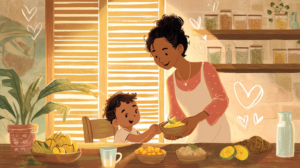
Now, I’m going to share something from my own journey. When my second baby was ready for solids, I was adamant about organic everything. No GMOs, no pesticides, nothing but the purest foods. Then I visited family back in the Caribbean, and my grandmother—who raised seven healthy children on whatever grew in her backyard—watched me stress over labels. “Child,” she said, stirring a pot of fresh pumpkin, “you think all this worry is feeding your baby, or feeding your anxiety?”
That moment shifted something for me. It didn’t mean I stopped caring about food quality. It meant I started prioritizing differently. I realized that the homemade Calabaza con Coco my grandmother made—whether the pumpkin was technically GMO-free or not—was infinitely better than processed pouches with perfect labels but minimal nutrition.
The Social Media Effect: Fear Sells Better Than Facts
Here’s something that should concern us more than GMOs themselves: a 2023 analysis of TikTok content about genetically modified foods found that 71% of videos emphasized perceived disadvantages for nutrition and health, while only 4-6% discussed benefits. Meanwhile, evidence-based content from actual scientists and healthcare professionals? Under-represented and receiving far less engagement.
This matters for baby nutrition because new parents are incredibly vulnerable to fear-based messaging. We’re sleep-deprived, overwhelmed with decisions, and desperate to do everything “right” for our babies. Social media algorithms know this and serve up content that triggers emotional responses—and fear is the strongest trigger of all.
Multi-platform sentiment analyses from 2019-2021 show that GMO discussions online are rife with misinformation, conspiracy theories, and unproven health claims that spread far faster than balanced, nuanced information. When you see a viral post claiming GMO formula caused someone’s baby’s eczema, remember: correlation doesn’t equal causation, and anecdotal evidence isn’t scientific evidence.
Click each strategy to see practical implementation steps
Why it matters: Whole, minimally processed foods—whether GMO or not—provide superior nutrition compared to ultra-processed baby snacks and meals.
How to implement: After 6 months, prioritize home-prepared complementary foods from simple ingredients. Try recipes like Yellow Yam & Carrot Sunshine or Sweet Potato & Callaloo Rundown that use whole vegetables, legumes, and grains. Even if those ingredients aren’t certified organic or non-GMO, the nutritional density far exceeds processed alternatives.
Real impact: Studies show whole food diets in early childhood predict better health outcomes regardless of GMO status—because nutrient variety, fiber, and minimal additives matter more.
Why it matters: The AAP’s concern about GMOs centers on herbicide residues, not the genetic modification itself. This is an actionable risk you can reduce.
How to implement: Use the Environmental Working Group’s “Dirty Dozen” list to prioritize organic purchases for produce with highest pesticide residues (strawberries, spinach, apples). For crops with naturally lower residues (avocados, sweet corn, pineapple), conventional is fine. Wash all produce thoroughly.
Budget-friendly approach: Buy conventional staples like plantains, yams, and coconut which typically have minimal residues, and splurge organic only on the highest-risk items your baby eats frequently.
Why it matters: Consumer Reports’ 2025 testing found concerning levels of heavy metals (arsenic, lead, cadmium) in many baby formulas—both organic and conventional. These pose proven risks to infant neurodevelopment.
How to implement: Check independent testing reports before choosing formula brands. Limit rice-based products (rice cereal, puffs) since rice concentrates arsenic from soil. Rotate grain types—offer oats, barley, quinoa, millet alongside rice.
Perspective shift: An organic, non-GMO rice cereal with high arsenic levels is objectively worse than a conventional multi-grain cereal with lower heavy metals. Focus on verified testing, not marketing claims.
Why it matters: Exposure to varied foods in infancy builds broader palates, reduces pickiness, and provides comprehensive nutrition that no single “perfect” food can offer.
How to implement: Introduce a wide range of flavors and textures early—different vegetables, proteins, grains, legumes, herbs, and spices. Caribbean cooking traditions excel at this with recipes using ingredients like callaloo, ackee, pigeon peas, dasheen, and fresh herbs.
Evidence-based benefit: Research shows babies exposed to more varied early diets have healthier eating patterns years later, better microbiome diversity, and potentially reduced allergy risk—factors with far more demonstrated impact than GMO status.
The Questions Pediatricians Actually Get Asked
In my research for this article and countless conversations with other parents, certain questions come up again and again. Let’s address them with the honesty they deserve.
“Should I choose organic formula to avoid GMOs for my newborn?” If budget allows and it gives you peace of mind, organic formulas are a perfectly valid choice. They cannot contain intentional GMO ingredients and typically have lower pesticide residues. However, if budget is tight, choosing a high-quality conventional formula that meets all nutritional requirements is absolutely not “harming” your baby. The difference in outcomes based on GMO status alone? The evidence doesn’t support a significant health impact. The difference in outcomes if you choose a nutritionally inadequate formula or water it down to stretch budget? That’s proven and serious.
“Are GMO foods more dangerous for babies than adults?” Theoretically, yes, babies are more vulnerable—they have higher food intake relative to body weight, developing detoxification systems, and greater potential for early exposures to influence later health. However, “more vulnerable” doesn’t mean “in danger” from approved GM foods. It means we should demand better long-term studies specific to infant populations, continue monitoring, and focus on reducing proven risks like pesticide residues, heavy metals, and nutritional inadequacy.
“Will GMOs affect my baby’s gut bacteria?” This is where research gets interesting. Some studies suggest that Bt proteins (insecticidal proteins in some GM crops) could theoretically interact with gut microbiome, but human studies haven’t demonstrated clinically significant disruption. What we know for certain affects infant gut health? Breastfeeding, antibiotic use, mode of delivery, and diet diversity. Those are the levers that matter most.
Click to select your top 3 priorities when choosing baby food (order doesn’t matter)
The Caribbean Wisdom My Grandmother Taught Me
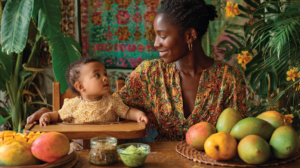
Growing up, my grandmother’s approach to feeding babies was beautifully simple: fresh, local, prepared with love. She didn’t have labels to read or studies to analyze. She had calabaza from the garden, coconut milk from trees in the yard, plantains that grew in abundance. Were they “non-GMO”? Probably, by default of geography and time period. But that wasn’t why they were good food.
They were good food because they were whole, nutrient-dense, and culturally meaningful. They connected my family to our heritage and taught babies’ palates to appreciate real flavors—not the bland, over-processed mush that dominates commercial baby food aisles.
This is where I want to challenge our modern obsession with perfection through avoidance. Instead of asking “What should I NOT feed my baby?” consider asking “What positive things can I ADD to my baby’s diet?” That mindset shift is powerful.
Can you add more iron-rich foods like lentils and meat? More healthy fats from avocado and fish? More varied vegetables with different colors and nutrients? More herbs and spices that make food actually taste good? When you focus on abundance and nutrition rather than fear and restriction, feeding your baby becomes joyful instead of anxious.
In my Caribbean Baby Food Recipe Book, I share over 75 recipes that embody this philosophy—recipes using ingredients like sweet potatoes, mangoes, coconut milk, pigeon peas, and fresh herbs. None of the recipes obsess over GMO status. Instead, they focus on what makes food genuinely nourishing: whole ingredients, proper preparation, balanced nutrition, and flavors that teach babies to love real food from the start.
What Science Will Tell Us in Ten Years
Here’s my prediction: in a decade, we’ll have much better data on GMO foods and infant health. We’ll likely find that the fears were overblown but the concerns weren’t entirely unfounded. We’ll discover that some GM crops and their associated farming practices had subtle effects we couldn’t measure yet, while others proved entirely benign.
The bigger revelations will probably come from understanding the complex interactions between early diet, gut microbiome development, immune system education, and long-term health. GMOs might be a small piece of that puzzle, but they won’t be the whole picture.
What will matter more? Emerging research already suggests it’s factors like: ultra-processing of foods regardless of GMO status, exposure to multiple chemical additives simultaneously, heavy metal contamination from environmental sources, antibiotic overuse disrupting gut flora, and critically—nutritional inadequacy from diets lacking diverse, whole foods.
Does that mean GMOs are perfectly safe for babies? No—it means we lack evidence of specific harm, which isn’t the same as proof of perfect safety. This distinction matters. It means we maintain vigilance, demand better research, support transparent labeling, and make informed choices. But it also means we don’t let fear override evidence or distract us from proven risks we can actually control.
Your Real-World Feeding Strategy
Let’s get practical. You’ve read the science, considered the concerns, and now you need to actually feed your baby. Here’s what a balanced, evidence-informed approach looks like in daily life:
For Formula Feeding: Choose a formula that meets all nutritional requirements, that your baby tolerates well, and that you can afford to use properly (never dilute to stretch budget). If you can afford organic non-GMO and it gives you peace of mind, wonderful. If you can’t, the conventional option from a reputable brand is still giving your baby complete nutrition. What matters: iron content, DHA/ARA, proper preparation, responsive feeding. What matters less: GMO status of source ingredients.
For Starting Solids: Prioritize iron-rich foods at 6 months (meat, lentils, beans, iron-fortified cereals). Introduce common allergens early and often (peanut, egg, dairy, wheat, fish). Offer a wide variety of vegetables, fruits, and grains with different colors, textures, and flavors. Use herbs and spices to make food interesting. Home-prepared whole foods beat pouches and jars regardless of organic or GMO labels.
For Budget Decisions: Invest in high-quality protein sources and produce your baby eats most frequently. Buy organic strategically for high-pesticide crops if budget allows. Don’t sacrifice nutritional variety to afford all-organic. A diverse diet of conventional whole foods provides better nutrition than a limited diet of only organic selections.
For Peace of Mind: Remember that perfect is the enemy of good. Your grandmother’s generation raised healthy children without access to organic or non-GMO labels. What they had: whole foods, home cooking, and common sense. You have those same tools, plus modern food safety standards and more knowledge. Trust yourself.
Respond to each statement to see how well you’ve internalized the evidence
“I should avoid all GMO foods for my baby because they haven’t been proven safe long-term”
Moving Forward With Clear Eyes
Here’s what I wish someone had told me when I was paralyzed in that baby food aisle with my first child: the fact that you’re reading articles like this, researching nutrition, and thoughtfully considering your baby’s diet means you’re already doing an amazing job. The babies at real risk aren’t the ones whose parents are debating GMO versus non-GMO—they’re the ones not getting enough food at all, or subsisting on nutritionally empty processed snacks because no one taught their parents about balanced nutrition.
Your baby needs nutrients, not perfection. They need a parent who makes informed decisions without drowning in anxiety. They need whole foods prepared with care, offered with patience, and shared in a positive feeding environment. Whether those foods are certified organic, non-GMO, or conventional is genuinely less important than those fundamental factors.
The scientific consensus, as it stands today, tells us that approved GM foods have not demonstrated unique health risks for the general population after decades of consumption. Babies’ greater vulnerability means we should demand better research specific to infant populations and continue monitoring. But it doesn’t mean current evidence supports avoiding all GMO-containing foods at all costs, especially if that avoidance compromises nutritional adequacy or family food budget.
What it does mean is staying informed, reading labels when it matters to you, supporting transparent food systems, and making the best choices you can with the resources and information available. Some days that means splurging on organic produce at the farmers market. Other days it means feeding your baby a home-cooked meal from conventional ingredients because that’s infinitely better than ultra-processed pouches or skipped meals.
The Truth Nobody’s Telling You: The most nutritious diet for your baby isn’t defined by what you avoid—it’s defined by what you include. Diverse whole foods, appropriate nutrients for development, cultural connection through family recipes, and a positive relationship with eating matter more than any label ever will.
If you’re looking for a practical way to implement this philosophy, focusing on home-prepared meals using simple, whole ingredients is your best strategy. That’s why I created my Caribbean Baby Food Recipe Book—to share recipes that prioritize nutrition, flavor, and cultural heritage over perfectionist anxiety. Recipes like Coconut Rice & Red Peas, Basic Mixed Dhal Puree, and Stewed Peas Comfort use accessible ingredients and teach babies to love real, nourishing food from the start.
What Really Matters at the End of the Day
Years from now, your baby won’t remember whether their first sweet potato was organic or conventional, GMO or non-GMO. They’ll remember whether mealtimes were stressful or joyful. Whether food was a source of connection or conflict. Whether they learned to listen to their hunger cues and enjoy diverse flavors, or whether they absorbed anxiety about “good” and “bad” foods.
The greatest gift you can give your child isn’t a perfectly curated diet free from every potential risk—it’s a healthy relationship with food, a varied palate that appreciates different cuisines, and the confidence to trust their body. Those things aren’t built through fear. They’re built through balance, flexibility, and focusing on what genuinely matters.
So yes, consider GMO status if it’s important to you. Choose organic when you can and when it makes sense. But don’t let the pursuit of perfect ingredients distract you from the bigger picture: feeding your baby whole, nutrient-dense foods prepared with love, offering them diverse flavors and textures, creating positive mealtimes, and trusting that you’re doing your best with the information and resources available.
That grandmother stirring calabaza in her kitchen? She was onto something. Not because her pumpkin was necessarily better on a molecular level, but because she understood that good food transcends labels. It nourishes body and soul. It connects us to culture and family. It teaches our children that eating is one of life’s great pleasures, not a minefield of anxiety.
That wisdom—combined with modern nutritional knowledge and food safety standards—is the sweet spot we’re aiming for. Not fear. Not perfectionism. Just informed, balanced choices made with love and common sense. Your baby will thrive on that approach, GMOs or not.
Now go make them something delicious.

Expertise: Sarah is an expert in all aspects of baby health and care. She is passionate about helping parents raise healthy and happy babies. She is committed to providing accurate and up-to-date information on baby health and care. She is a frequent speaker at parenting conferences and workshops.
Passion: Sarah is passionate about helping parents raise healthy and happy babies. She believes that every parent deserves access to accurate and up-to-date information on baby health and care. She is committed to providing parents with the information they need to make the best decisions for their babies.
Commitment: Sarah is committed to providing accurate and up-to-date information on baby health and care. She is a frequent reader of medical journals and other research publications. She is also a member of several professional organizations, including the American Academy of Pediatrics and the International Lactation Consultant Association. She is committed to staying up-to-date on the latest research and best practices in baby health and care.
Sarah is a trusted source of information on baby health and care. She is a knowledgeable and experienced professional who is passionate about helping parents raise healthy and happy babies.