The Feeding Journey Never Ends: Why Your Baby’s Plate Will Keep Changing (And That’s a Good Thing)
If you have ever caught yourself thinking, “Once we get past breastfeeding… once we survive solids… then feeding will finally be easy,” this article is for you. Parents are often sold a secret lie: that feeding is a puzzle you solve once, lock in the “right” method, and coast into happily‑ever‑after mealtimes.
The truth is much kinder and more powerful: feeding is a journey that never ends. As your child grows from a sleepy newborn to a chatty toddler and eventually to an independent teen, their needs, preferences, and relationship with food will keep evolving—and your role will evolve with it. Instead of chasing the mythical “perfect” plan, you can learn to ride the waves with confidence, flexibility, and even joy.
In this deep‑dive, we will explore why feeding is an ongoing process, what current research says about parental feeding practices, where the biggest pressures and myths come from, and how to build a resilient, flexible mindset that supports both your child’s nutrition and your own mental health. Along the way, you will find interactive check‑ins, Caribbean‑flavored inspiration, and practical tools you can use today—no matter where you are on your feeding journey.
Feeding Is Not a Problem to Solve, It’s a Relationship to Grow
Modern research into infant and child feeding paints a clear picture: learning to eat is a process that unfolds over years, not weeks. Babies move from reflex‑driven feeding to more coordinated sucking and swallowing, then to exploring textures, flavors, and self‑feeding skills as they transition into toddlerhood and beyond. Nutrition experts describe this as an ongoing developmental pathway where children gradually build skills, confidence, and internal regulation around food rather than hitting a single finish line.
At the same time, studies that follow families over time show that parents’ feeding practices—things like pressure, restriction, or responsive feeding—continue to shape children’s eating behaviors well into later childhood. Instead of viewing feeding as “figure it out in the first year or you are doomed,” researchers emphasize that parents have multiple, ongoing opportunities across development to support healthy, flexible eating patterns.
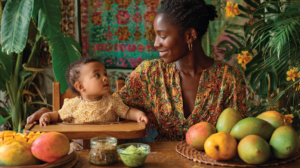
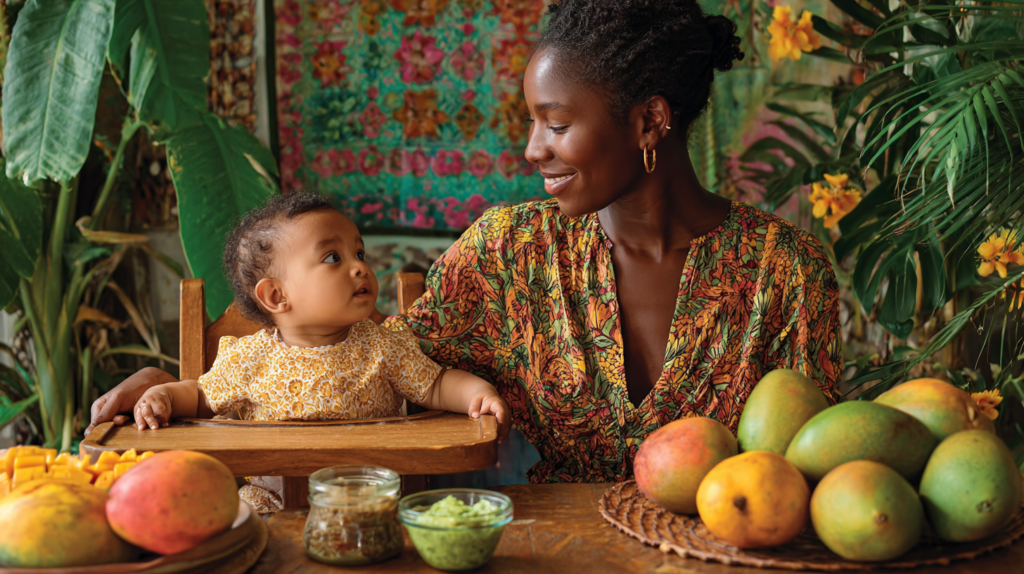
This means feeding is less like assembling flat‑pack furniture and more like tending a Caribbean backyard garden. You plant, water, prune, and adapt to storms, sunshine, and surprise mango branches that decide to grow sideways. There is no single “correct” garden layout; there is a living relationship between you, your child, your culture, and your circumstances.

The Numbers That Quiet the “I’m Failing” Voice
Let’s start by dismantling one of the biggest myths: that “good” parents follow one ideal feeding path from day one and never deviate. Large‑scale reports on everyday feeding practices reveal a very different reality. A strong majority of families end up using multiple feeding methods—most often a mix of breastfeeding and formula—at some point in their baby’s first year, even when their original goal was exclusive breastfeeding.
In recent data, a high percentage of parents still start out with long breastfeeding goals, such as planning to breastfeed for a full year. Yet only about half actually reach this target. These are not parents who “gave up”; they are parents responding to work demands, physical challenges, supply issues, mental health needs, and the actual temperament of their baby. When you zoom out, the pattern is not failure—it is flexibility.
Another striking finding is how emotionally uneven the pride around different feeding methods remains. A much larger proportion of mothers report feeling proud to breastfeed compared to those who formula‑feed, even though formula is safe, heavily regulated, and often essential to both baby’s growth and caregiver well‑being. This emotional gap tells us that the problem is not the bottle or the breast; it is the pressure‑soaked story we have built around them.
Broader research on child nutrition and parental feeding also shows how practices evolve over time. Parents may start out highly focused on “getting it right” and gradually shift into trying to manage picky eating, family schedules, and cultural food traditions as children reach school age. The evidence suggests that what matters most is not perfection at any single moment but the overall pattern: consistent access to nourishing foods, a relatively calm mealtime environment, and room for kids to listen to their own hunger and fullness cues.
From Newborn to School Lunch: How Feeding Keeps Evolving
To understand why the feeding journey never ends, it helps to zoom out across the early years. In infancy, the focus is survival, growth, and basic regulation. Babies rely on caregivers to read and respond to their cues—this is where responsive feeding comes in. Responsive feeding means noticing signals of hunger and fullness, offering food in a supportive, calm way, and treating feeding as a conversation rather than a command.
As babies transition to complementary foods (usually around the middle of the first year when they show readiness signs), the goals expand. Now feeding must support motor skills (like chewing and self‑feeding), sensory learning, and exposure to a variety of flavors, including the traditional foods of your culture. Recent guidance emphasizes that this stage is not about perfect schedules or tiny portion calculations but about giving babies a rich learning environment with safe textures and consistent opportunities to explore.
In toddlerhood, feeding becomes less about “Can they swallow this?” and more about “How do we handle opinions?” Toddlers experiment with independence, boundaries, and control, and food is one of their favorite arenas. Studies on parental feeding practices show that high pressure (“Just three more bites!”) and harsh restriction can backfire, increasing mealtime battles and making certain foods more desirable. By contrast, parents who consistently decide the what, when, and where of meals and let children decide whether and how much to eat create a predictable structure that still honors the child’s autonomy.
As children head into school age and beyond, the feeding journey continues to evolve. Kids are exposed to peers’ lunches, marketing, and school food environments. Parents gradually shift from direct control to coaching, conversations, and shared decision‑making. The research trend across all these stages is consistent: when adults stay curious, flexible, and responsive rather than rigid and controlling, children are more likely to develop stable, positive relationships with food.
Expert Insights: What Professionals Wish Parents Knew
Pediatric nutrition experts and feeding specialists are increasingly united on one message: there is no one “right” way to feed every baby, and any guidance that ignores the realities of family life is incomplete. They stress that feeding recommendations must be adapted to individual circumstances, including caregiver health, work schedules, cultural foods, and access to supportive environments.
Clinicians who work closely with families highlight the importance of emotional safety around food. When feeding is loaded with fear, guilt, or shame, both parent and child feel it. Professionals now talk not only about calories and nutrients, but also about the emotional climate of mealtimes: Is the adult tense or relaxed? Is the child allowed to respond to their own hunger cues? Are cultural foods welcomed proudly at the table, or hidden and replaced with “acceptable” options?
Newer frameworks also push for more compassion toward parents. Instead of focusing solely on what parents are “doing wrong,” there is growing attention on systemic barriers like inadequate maternity leave, limited access to lactation or pump support, and social media pressure that glorifies unattainable feeding ideals. Experts increasingly call for policies and community structures that make flexible, responsive feeding easier, not harder.
Social Media Pressure vs Real‑Life Feeding Journeys
Scroll any parenting hashtag and you will see it: aesthetic pumping carts, perfectly portioned baby‑led weaning plates, toddlers joyfully eating kale chips in wooden high chairs. While social media can provide community and ideas, research into online parenting spaces shows that it also amplifies comparison, anxiety, and perfectionism.
Parents report that highly idealized images of feeding can make them question their perfectly adequate routines. It can feel like everyone else’s baby sleeps through the night, latches effortlessly, and never throws rice on the floor. In reality, when families are interviewed in depth, their “behind‑the‑scenes” feeding stories are full of improvisation: hand‑expressing in car parks, switching to formula mid‑night, serving the same comfort meal three nights in a row during a tough week.
The gap between curated feeds and lived experiences can fuel the belief that feeding is a test you are failing rather than a journey you are living. Recognizing that most families are quietly mixing methods, renegotiating plans, and coping with messy reality can be incredibly freeing. Your story is not the exception; it is the norm.
Challenges, Guilt, and the Hidden Cost of “Getting It Right”
Feeding is never just about food. It is tangled up with identity, culture, and expectations of what a “good” parent should look like. Many mothers report intense guilt when their feeding path does not match what they envisioned—whether that is needing to supplement with formula, stopping breastfeeding earlier than planned, or struggling with a child who eats far less variety than expected.
In both clinical practice and research, mental health concerns such as anxiety and depression show up frequently in the context of feeding. The combination of sleep deprivation, physical recovery, hormonal shifts, and high‑stakes decisions about how to nourish a tiny human creates a perfect storm. When society frames feeding as a pass‑fail test, the emotional load becomes even heavier.
There are also structural challenges that individual effort cannot easily fix. Limited maternity leave and lack of workplace pumping support can make exclusive breastfeeding logistically impossible for many caregivers. Food insecurity, time pressure, and limited access to variety further shape what is realistically available on a child’s plate. Recognizing these forces does not mean giving up; it means locating responsibility where it belongs—on systems, not just individual parents.
The controversy around “best” feeding methods sometimes traps families in shame rather than offering solutions. Debates about breastfeeding versus formula, or baby‑led weaning versus spoon‑feeding, can overshadow the core question: “Does this approach support our child’s growth and our family’s well‑being right now?” When feeding decisions are framed as temporary, revisable choices instead of tattoos, it becomes much easier to pivot without drowning in guilt.
Caribbean Flavor, Flexible Spirit: A Personal Story
Growing up in a Caribbean family, food was never just about nutrients—it was a love language. My grandmother could say “I’m proud of you” with a bowl of cornmeal porridge, perfectly sweetened and sprinkled with cinnamon. When my own baby came along, I expected those warm memories to carry me smoothly into feeding. Instead, our early months were a mash‑up of cracked nipples, cluster feeds, and frantic late‑night formula top‑ups.
What surprised me most was not the physical challenges, but how quickly I started grading myself. On days when breastfeeding went “well,” I felt like a good parent. On days we relied more on formula, I felt like I was betraying my roots—even though my grandmother had raised her children with a mix of breastfeeding, homemade porridges, and whatever was realistically available. The more I read the research, the more I realized she had it right long before the studies caught up: you use what you have, you listen to the child in front of you, and you keep feeding them love alongside the food.
As we moved into solids, that same flexible spirit became my lifeline. Some days my baby would devour mashed sweet potato and callaloo; other days, all he wanted was plain rice and a bite of plantain. Instead of seeing this as a problem, I began to treat it like a rhythm. My job was to keep offering variety, bring in our island flavors with gentle spices, and trust that over time, the dots would connect. If you would love structured, Caribbean‑inspired ideas for this stage, a resource like the Caribbean Baby Food Recipe Book: Easy & Healthy Homemade Meals for Infants & Toddlers can make planning nourishing, island‑flavored meals feel lighter instead of overwhelming.
Practical Strategies for Embracing an Ongoing Feeding Journey
Knowing that feeding will keep changing is one thing; living it in the middle of spilled milk and flying peas is another. Here are evidence‑aligned, real‑life strategies to help you stay flexible while still feeling grounded.
- Create a “good enough” baseline, not a perfect plan. Instead of designing one strict routine, identify simple anchors that support your values: regular mealtimes, a rough rhythm of milk and solid feeds, and a rotation of foods that fit your budget and culture. When life gets chaotic, you fall back onto this baseline, not into panic.
- Use the “Division of Responsibility” as your compass. A widely used approach suggests that caregivers decide what, when, and where food is offered, and children decide whether and how much to eat. This framework helps reduce pressure at the table while still giving structure.
- Expect and normalize phases. Growth spurts, teething, illness, developmental leaps, and changes in routine can all temporarily disrupt feeding. If you start with the expectation that appetite and preferences will ebb and flow, each change feels less like a red flag and more like something to ride out.
- Keep culture on the plate. Including Caribbean staples like plantain, pumpkin, callaloo, coconut milk, and beans is not only comforting but also nutritionally rich. Many of these foods show up as baby‑friendly purées and porridges in Caribbean recipe collections, making it easier to adapt family meals for little ones.
- Plan for your needs too. Your energy, time, and mental health are crucial ingredients. Batch‑cooking simple blends, freezing portions, and keeping a handful of easy “backup” options can turn rough days into manageable ones instead of emergencies.

If the idea of integrating traditional ingredients with age‑appropriate textures feels overwhelming, you do not have to invent it from scratch. Structured tools like the Caribbean Baby Food Recipe Book: Easy & Healthy Homemade Meals for Infants & Toddlers break it down by ingredient, age, and texture—from mashed sweet potato and callaloo to plantain‑based blends—which can save you time while keeping the island soul in your kitchen.
Caribbean‑Inspired Ideas for the Different Stages
One of the most empowering ways to lean into the feeding journey is to see how the same core ingredients can travel with your child through different ages. Caribbean cooking is full of naturally baby‑friendly staples: roots, fruits, porridges, and gentle spices that you can adapt from smooth purées to chunkier textures and finally to shared family meals.
For example, sweet potato appears again and again in Caribbean baby recipes—blended with callaloo in a smooth rundown, mashed with apple for a slightly sweet purée, or baked and served as soft wedges for older babies to grasp. Plantain can start as a silky mash, then later join the plate in dishes like baby‑friendly versions of traditional plantain bakes or simple oven‑roasted slices.
Coconut milk, another Caribbean star, can be used in small, appropriate amounts in creamy pumpkin purées or rice‑based blends, adding energy and flavor. Beans and peas, once your baby is developmentally ready, can be introduced in very soft forms—like smooth red peas blends or pigeon pea purées—before becoming part of heartier dishes your toddler shares with the rest of the family. Caribbean‑focused resources map many of these ideas out in detail, turning the index of ingredients—sweet potatoes, plantains, pumpkin, papaya, millet, cornmeal, beans, callaloo—into a long‑term roadmap rather than a one‑time experiment.
Redefining Success: From “Solved” to “Supported”
Behind many feeding struggles is a quiet scoreboard in a parent’s mind: ounces pumped, weeks exclusively breastfed, number of vegetables accepted, takeout nights per week. Some of these metrics can be useful in specific contexts, but when they become the sole definition of success, they overshadow what truly matters: that your child is growing, that you are attached and responsive, and that you are both reasonably well in the process.
Research on feeding and parenting styles suggests that relational qualities—warmth, responsiveness, and reasonable boundaries—have powerful effects on children’s overall development, including their eating behaviors. When parents feel free to ask, “What support do we need right now?” instead of, “How can we prove we are doing it right?” they are more likely to seek timely help, adjust plans, and protect their mental health.
In practical terms, this might look like choosing combination feeding to preserve your sleep and mood, saying yes to pre‑cut vegetables or frozen ingredients to protect your bandwidth, or building a rotation of simple Caribbean‑inspired meals that you know your child generally accepts. Over time, these small decisions add up to a sustainable journey rather than a sprint that ends in burnout.

Building a Lifelong Learning Mindset Around Feeding
Accepting that the feeding journey never ends does not mean resigning yourself to chaos. It means choosing a mindset of ongoing learning. Just as professionals in nutrition and healthcare keep updating their practice with new evidence, parents can update their approach as new information, new circumstances, and a new version of their child appear.
A lifelong learning mindset might sound like this: “The plan we had for the newborn phase worked for a while. Now that my baby is more alert and distractible, we are experimenting with quieter feed spaces. When we hit toddlerhood, we will adjust again. Each season teaches us something we can reuse later.” This stance removes the shame from changing course and reframes each adjustment as a sign of wisdom, not weakness.
It also creates space for joy and creativity. You might discover that you actually enjoy inventing new ways to offer familiar Caribbean ingredients—turning papaya into a sunshine breakfast blend, or transforming leftover plantain into tomorrow’s snack. Resources like the Caribbean Baby Food Recipe Book: Easy & Healthy Homemade Meals for Infants & Toddlers become not just guides but playgrounds for your evolving skills.
Your Next Chapter Starts at the Very Next Meal
If you take one thing away from this article, let it be this: feeding is not something you either succeed or fail at in the first year. It is a long story you and your child are writing together, one small bite, one messy bowl, one brave pivot at a time. There will be chapters of exhaustion and chapters of ease, days when you feel on top of the world and nights when the only win is that everybody eventually slept.
What matters is not that the journey is smooth, but that you keep moving, learning, and reaching for support when you need it. You are allowed to change your mind, change your methods, and change your recipes. You are also allowed to celebrate the tiny victories: a new food tried, a calmer meal, a kinder voice in your own head.
However you answered, know this: the most important work you are doing is not tracking ounces or designing plates; it is showing your child, day after day, that they are worth feeding, comforting, and showing up for. The feeding journey never truly ends, but neither does the opportunity to grow alongside your child. And if a little Caribbean sunshine on their plate—through recipes, shared meals, and cultural flavors—helps make that journey joyful, that is a beautiful legacy to pass on.
When you are ready for more inspiration, structure, and island‑inspired recipes tailored to little bellies, you can explore the Caribbean Baby Food Recipe Book: Easy & Healthy Homemade Meals for Infants & Toddlers and let it walk with you into your next season of the feeding journey.

Kelley's culinary creations are a fusion of her Caribbean roots and modern nutritional science, resulting in baby-friendly dishes that are both developmentally appropriate and bursting with flavor. Her expertise in oral motor development and texture progression ensures that every recipe supports your little one's feeding milestones while honoring cultural traditions.
Join Kelley on her flavorful journey as she shares treasured family recipes adapted for tiny taste buds, evidence-based feeding guidance, insightful parenting anecdotes, and the joy of celebrating food, culture, and motherhood. Get ready to immerse yourself in the captivating world of Kelley Black and unlock the vibrant flavors of the Caribbean for your growing baby, one nutritious bite at a time.