
Knife Skills for Kids: When and How to Teach Safe Cutting
Is Your Child Ready? Instant Readiness Assessment
Click the characteristics that describe your child right now:
Here’s something that might shock you: seventy-one percent of children between 8 and 12 years old have never held a sharp knife. Not once. While we’re protecting them from potential accidents, we’re simultaneously depriving them of essential life skills that build independence, confidence, and competence in the kitchen. But here’s the truth that changes everything—teaching knife skills doesn’t have to be dangerous. When done systematically, with age-appropriate tools and proper supervision, it becomes one of the most empowering experiences you can offer your child.
The journey from complete novice to confident young cook isn’t about reaching some magical age or waiting for the “perfect moment.” It’s about understanding developmental readiness, choosing the right tools, teaching proper technique, and progressing step-by-step through a proven system. And that journey? It can start as early as age three with the right approach.
The Truth About Starting Ages
Let’s cut through the confusion right now. There’s no universal “right age” to introduce knife skills, because readiness depends on your individual child’s development, not the number on their birthday cake. However, research and expert consensus give us clear guidelines that work for most children when adapted to their unique abilities.
Children as young as 3-4 years old can begin with blunt butter knives, working on soft foods like bananas, cooked sweet potatoes, and avocados. This isn’t about actual cutting—it’s about building the foundational movements, understanding tool respect, and developing hand-eye coordination. Think of it like learning to ride a bike with training wheels. You’re not expecting Tour de France performance; you’re building muscle memory and confidence.
By ages 5-6, many children develop the coordination and focus needed for child-safe knives with serrated edges designed specifically for young hands. These tools can handle slightly firmer foods—strawberries, cucumbers, soft cheeses, and cooked vegetables from dishes like the Caribbean Baby Food Recipe Book’s Batata y Manzana or Calabaza con Coco. The jump from butter knives to these specialized tools represents real progress, and children at this stage often show genuine pride in their advancing abilities.
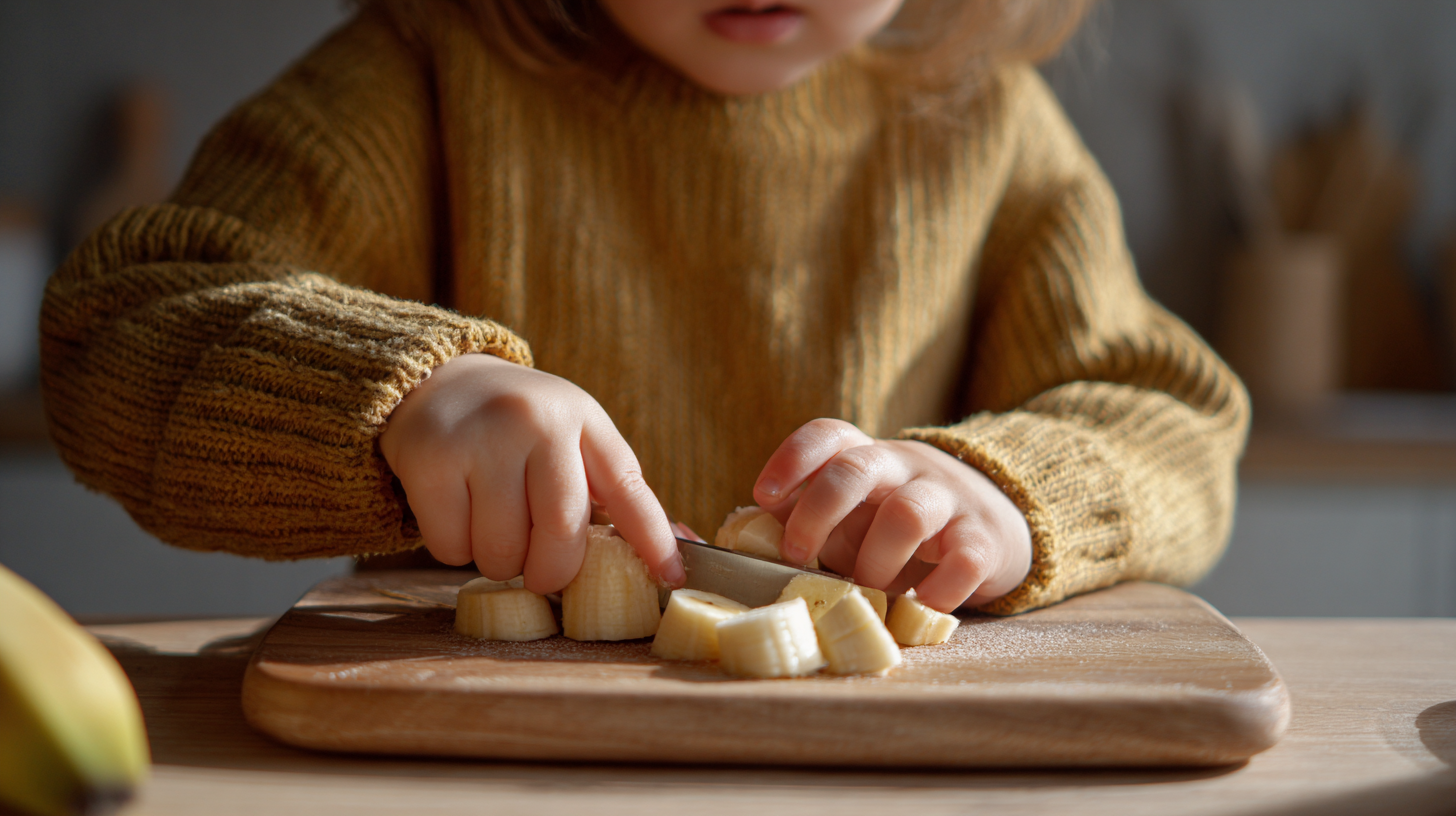
Around age 8, most children are ready for junior chef knives—real knives with shorter blades and handles designed for smaller hands. This is where skill-building accelerates. They can practice proper grip techniques, learn the “claw” hand position, and start understanding how different foods require different cutting approaches. And by age 10-12, with consistent practice and demonstrated responsibility, many children can graduate to adult knives under supervision, handling tasks that would have seemed impossible just a few years earlier.
But here’s what matters more than any age marker: your child’s individual readiness signals. Can they follow multi-step instructions consistently? Do they show patience when tasks take longer than expected? Can they maintain focus for 10-15 minutes? Do they respect safety rules in other areas of life? These indicators matter far more than chronological age.
Perfect Knife Matcher: Find Your Child’s Ideal First Knife
Select your child’s age range:
Choosing Safe, Effective Knives
Walk into any kitchen store today, and you’ll find an overwhelming array of “kid-safe” knives. Some are brilliant. Others are essentially useless toys that frustrate children and teach bad habits. The difference comes down to understanding what makes a knife both safe and functional for learning.
For beginners aged 3-5, butter knives or specialized nylon knives with no sharp edge work perfectly. They allow children to practice the sawing motion and downward pressure needed for cutting without any risk of actual injury. The Curious Chef nylon knife set and similar products have earned strong reputations because they genuinely work on soft foods while being nearly impossible to hurt yourself with.
Crinkle cutters and wavy-edged plastic knives represent the next step up. These tools create satisfying cuts through moderately firm foods, giving children visual feedback that motivates continued practice. The serrated edges grip food effectively, requiring less force than smooth blades, which actually makes them safer because children don’t need to press dangerously hard.
When children show consistent responsibility with plastic knives, lettuce knives—those green-edged tools you might use for salads—make excellent transitional tools. They’re sharp enough to cut most vegetables and fruits cleanly, but the plastic construction and rounded tips minimize injury risk. Many parents report these as the “sweet spot” tools that children use for years.
Junior chef knives deserve special mention because they’re often misunderstood. These aren’t adult knives made smaller—they’re specifically engineered with shorter blades (typically 5-6 inches), lighter weight, and handles shaped for developing hands. Brands like Opinel, Victorinox, and Wüsthof make excellent versions. The key feature to look for is a rounded tip, which dramatically reduces the most common injury risks while maintaining enough sharpness for effective cutting.
Here’s a Caribbean kitchen secret I learned from my grandmother: whatever knife you choose, test it yourself first on the foods your child will actually cut. If you’re struggling to slice a banana with a supposed “kid knife,” your child will become frustrated and develop poor technique trying to compensate. The knife should cut cleanly with moderate pressure and proper technique. Anything less teaches bad habits.
Teaching Proper Technique From Day One
The single biggest mistake parents make isn’t starting too early or choosing the wrong knife—it’s failing to teach proper technique from the very first cut. Children are remarkably good at learning correct methods when they’re beginners, but breaking bad habits later becomes exponentially harder.
Start with the grip. The proper chef’s grip involves grasping the handle firmly with the pinch grip—thumb and index finger pinching the blade just in front of the handle, with the remaining three fingers wrapped around the handle. For young children, this feels awkward initially. They want to grasp the handle like a hammer. Be patient. Demonstrate repeatedly. Make it a game: “Can you make the pinching crab with your fingers?” Physical demonstration beats verbal instruction every time.
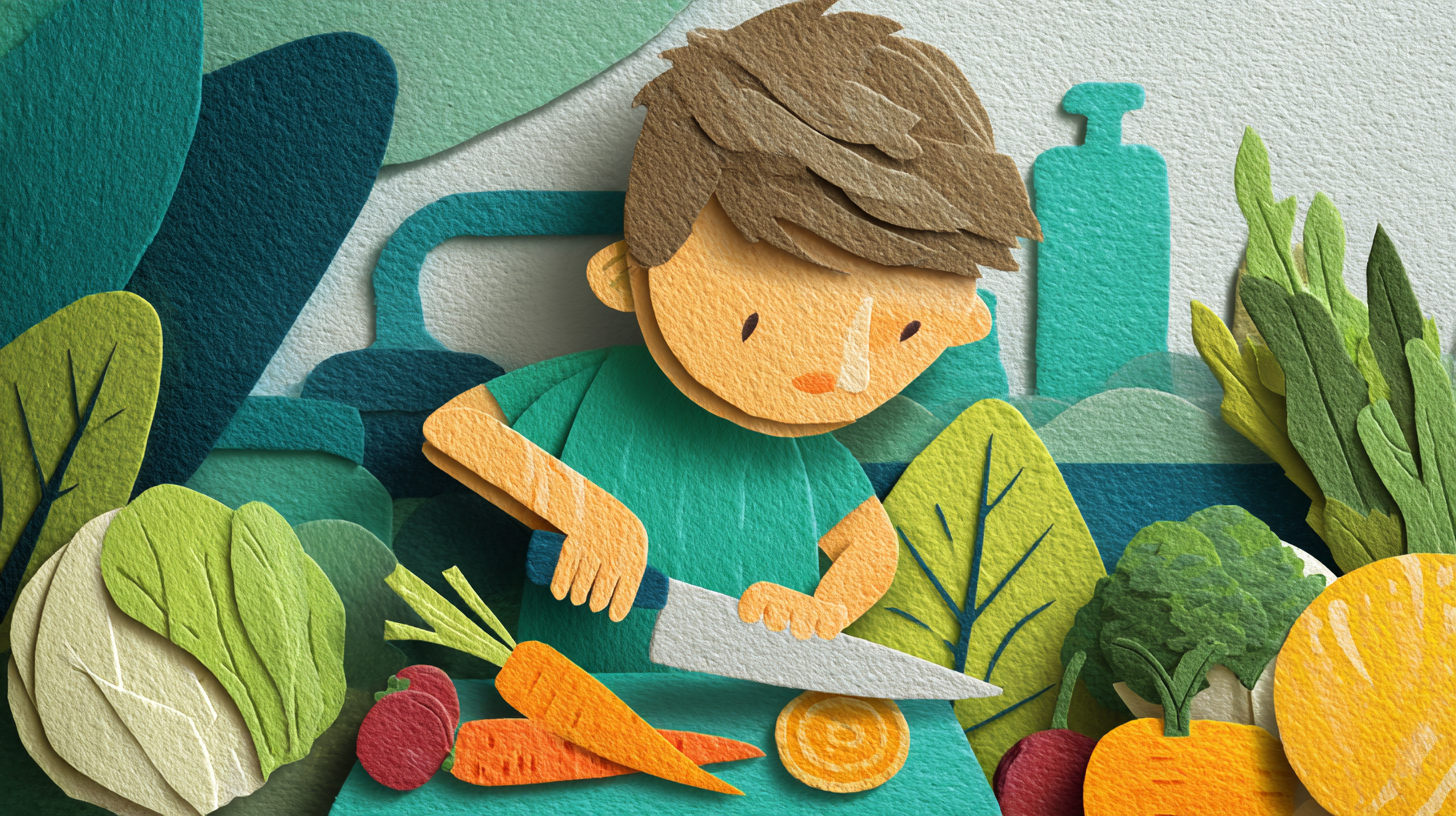
The non-knife hand deserves equal attention. The “claw” technique—curling fingertips under and using knuckles as a guide for the knife blade—prevents the most common cutting injuries. Practice this without any knife first. Use a ruler or cardboard tube to simulate the knife blade, letting it rest against the knuckles while the fingertips stay safely tucked. Children often find this hilarious initially, making animal claw sounds. Perfect. Laughter aids learning.
Cutting motion matters tremendously. Teach the rocking motion for most cuts—the tip of the knife stays on the cutting board while the handle moves up and down in a smooth arc. This controlled motion is safer and more efficient than the hacking, chopping motions children naturally attempt. Practice on soft foods first. Bananas from your Caribbean recipe collection like Papaya & Banana Sunshine make excellent practice materials because they provide immediate visual feedback and taste delicious afterward.
The cutting surface deserves consideration too. Invest in a large, heavy cutting board that won’t slide. Place a damp towel underneath for extra stability. The board should be low enough that your child can press down comfortably without standing on tiptoes. Many families find that working at a table rather than counter height works better for younger children. Use a learning tower or sturdy step stool for counter work, but ensure it’s completely stable.
Speed is the enemy of safety and skill development. Repeat this mantra constantly: “Slow and steady. We’re not racing.” Children who rush make mistakes. They develop sloppy technique. They cut themselves. The goal is consistency and control, not speed. Speed comes naturally later, once proper technique becomes muscle memory.
⚠️ Shocking Knife Safety Myths (Click to Reveal the Truth)
Supervision Guidelines That Actually Work
Supervision is not the same as hovering, and that distinction matters enormously. Over-supervising creates anxiety and prevents the independent problem-solving that builds real competence. Under-supervising invites accidents and missed teaching moments. The balance requires thoughtful calibration based on your child’s demonstrated abilities.
For beginners (ages 3-6 with beginner tools), direct supervision means you’re within arm’s reach, watching every cut, ready to guide hands or stop unsafe actions immediately. You’re coaching constantly: “Remember your claw hand. Good! Now rock the knife gently. Perfect!” This isn’t helicopter parenting—it’s intensive skill instruction, just like teaching someone to drive.
As children demonstrate consistent safe technique (usually after months of regular practice), supervision can become proximate rather than direct. You’re in the same room, checking in frequently, available for questions, but not watching every single motion. This is typically appropriate for ages 7-9 who’ve shown reliability with safe knives. They can prepare simple ingredients—slicing cucumbers, chopping strawberries, cutting soft vegetables—while you’re cooking nearby.
Intermediate-level children (ages 9-12 with proven responsibility) might work with minimal supervision for routine tasks they’ve mastered. They can slice vegetables for salads or prepare ingredients for family meals while you’re in an adjacent room. But—and this is crucial—new tasks, unfamiliar foods, or different knives always require renewed direct supervision. Mastery in one area doesn’t automatically transfer.
Supervision protocols should include clear rules that never vary. Some non-negotiables that expert sources consistently recommend: Knives never leave the kitchen. Cutting only happens at designated surfaces, never over the sink or standing at the refrigerator. Knives are carried with the point down, blade away from the body. When walking with a knife, announce “knife coming through” to alert others. Knives are washed separately and carefully, never tossed in soapy water where they can’t be seen. Dropped knives are never caught—let them fall.
Create a “pause and check” habit. Before every cutting session, conduct a quick safety review: “Show me your grip. Show me your claw. What are we cutting today? Any questions?” This 30-second ritual reinforces fundamentals and catches potential issues before they become problems.
Building Competence Through Progressive Challenge
Skill development follows a predictable progression, but the timeline varies dramatically between children. Some master basic cuts in weeks; others need months. Resist the temptation to compare your child to siblings, friends’ children, or internet examples. Focus on individual progress, celebrate incremental improvements, and maintain realistic expectations.
The progression typically starts with straight cuts on soft, stable foods. Bananas laid flat, strawberries with the green tops removed, cooked sweet potatoes—these provide immediate success and build confidence. Children learn to apply even pressure, coordinate both hands, and appreciate the satisfaction of clean cuts.
Next comes cutting round or unstable foods, which requires the critical safety skill of stabilization. Tomatoes, grapes (halved for safety), apples—these foods want to roll. Teach children to cut a flat side first, creating a stable base, then proceed with remaining cuts. This problem-solving approach builds critical thinking alongside motor skills.
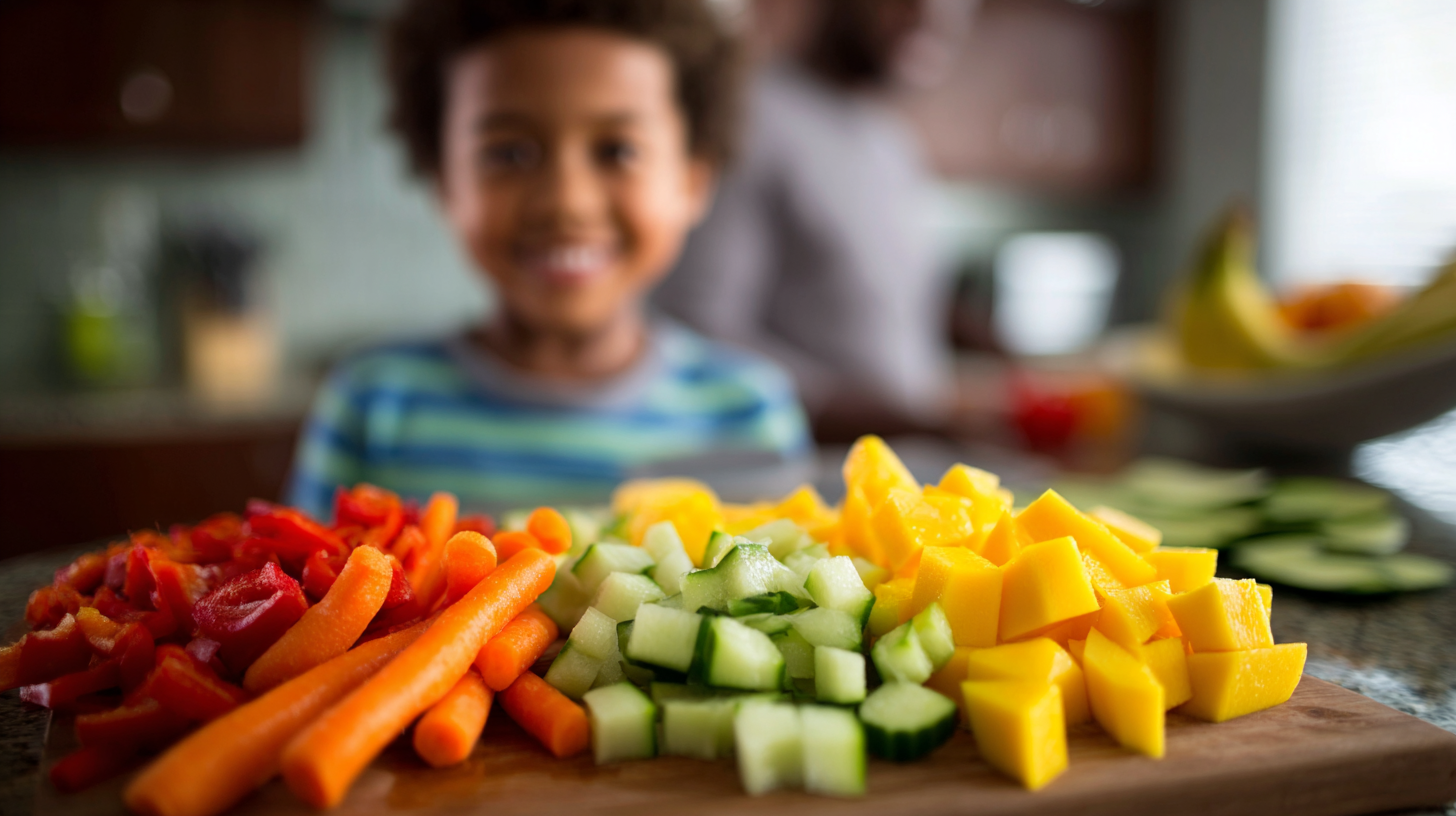
Harder vegetables like carrots, broccoli stalks, and firm squashes represent the next challenge level. These require more force, better technique, and often different approaches. Teaching children to cut carrots at an angle, or to halve round vegetables lengthwise before slicing, introduces strategic thinking. These skills parallel beautifully with Caribbean cooking techniques—preparing ingredients for recipes like Yellow Yam & Carrot Sunshine or Geera Pumpkin Puree requires precisely these competencies.
Advanced skills include dicing (cutting foods into uniform cubes), julienning (thin matchstick cuts), mincing garlic and herbs, and eventually basic knife skills like supreme-ing citrus or breaking down proteins. These techniques emerge naturally over years of practice, not weeks. The timeline extends through pre-teen and teenage years for most children.
Introduce one new skill or challenge at a time. Master it through repetition. Then add the next complexity. This systematic approach prevents overwhelm and builds genuine competence. Keep practice sessions relatively short—15-20 minutes for younger children, 30-45 minutes for older ones. Quality practice beats marathon sessions every time.
✅ Your Child’s Knife Skills Development Tracker
Click each skill as your child masters it and watch their progress!
Handling the Inevitable Challenges
Let’s be honest about what you’ll face. Teaching knife skills involves setbacks, frustrations, and yes, occasional minor cuts. These aren’t failures—they’re part of the learning process. How you respond determines whether challenges become growth opportunities or reasons to quit.
Frustration happens when children expect immediate mastery but face normal beginner struggles. The carrot won’t cooperate. The tomato squishes instead of slicing. Their hand cramps from gripping too tightly. Validate these feelings: “Yes, this is hard. It’s supposed to be hard at first. That’s how you know you’re learning something valuable.” Share your own cooking frustrations. Model persistence.
Fear responses vary wildly. Some children approach knives with excessive caution, barely touching the food, making ineffective timid motions. Others show no appropriate caution whatsoever, treating knives like toys. Both extremes require recalibration. For overly cautious children, start with completely blunt tools and extremely soft foods, building confidence through guaranteed success. For overly confident children, emphasize respect through clear consequences—unsafe behavior means practice ends immediately.
Minor cuts will happen eventually. Despite all precautions, most children who cook regularly will experience a small cut at some point. Respond calmly. Treat the injury appropriately (most kitchen cuts need only washing and a bandage). Analyze what happened without blame or drama. “The knife slipped because the cucumber was wet. How could we prevent that next time?” This turns accidents into learning moments rather than traumatic events that end knife practice forever.
Resistance to practice often emerges after initial enthusiasm wanes. The novelty fades; the work remains. Combat this by making knife skills purposeful rather than abstract practice. “We need cucumbers for salad. Want to handle that?” feels different than “It’s knife practice time.” Integrate skills into actual meal preparation. Let children see their contributions appear on the family table.
The comparison trap catches many families. “My friend’s daughter is seven and she’s already using chef knives!” Remember: parenting isn’t competitive. Your child’s journey is unique. Some children develop the focus and motor control for advanced skills earlier; others take longer but eventually reach the same destination. What matters is consistent progress, not relative speed.
Real-World Implementation Strategies
Theory matters less than practical application. Here’s how successful families actually integrate knife skill teaching into daily life without it becoming another stressful obligation.
Weekend breakfast preparation offers ideal practice opportunities. Children can slice strawberries for pancakes, cut bananas for fruit salad, or prepare vegetables for omelets. The relaxed pace and lower-stakes atmosphere reduces pressure. Plus, they get to eat their practice results immediately—powerful positive reinforcement.
Meal prep sessions transform knife practice into family time. Sunday afternoon ingredient preparation for the week ahead becomes collaborative. Children handle age-appropriate tasks while you tackle more complex preparations. This normalizes cooking as a shared household responsibility rather than parent’s exclusive domain. The Caribbean cooking tradition especially values this communal approach—preparing ingredients together for dishes like Cook-Up Rice & Beans or Stewed Peas Comfort becomes cultural transmission alongside skill building.
Special cooking projects provide motivation beyond routine practice. “Let’s make homemade salsa” gives purpose to tomato dicing, cilantro mincing, and onion chopping. “Want to help prepare Thanksgiving dinner?” elevates children’s role to genuine contribution. These milestone moments accelerate skill development through heightened focus and motivation.
Create a designated “kids’ cutting station” with appropriate tools, a good cutting board, and perhaps a lower work surface. This physical space signals that knife work is a real, respected activity, not something squeezed in when convenient. Children take ownership of their workspace and tools.
Documentation matters more than you might expect. Take occasional photos or videos of your child’s cutting work. Review these together every few months. The visible progress from wobbly banana slices to confident vegetable dicing provides powerful motivation during frustrating plateaus. “Look how far you’ve come!” becomes undeniable when evidence exists.
Set concrete, achievable goals. “By your birthday, let’s work toward you making a complete salad independently.” This gives practice direction and creates natural celebration moments when goals are achieved. The journey from “I did it!” to “I can teach someone else” represents profound development.
Your Personalized Practice Plan Generator
Click to reveal your child’s custom weekly knife skills practice schedule:
The Bigger Picture Beyond Cutting
Knife skills teaching transcends the obvious goal of cutting food. The deeper benefits shape character, confidence, and life competence in ways that extend far beyond the kitchen.
Independence development happens naturally. Children who can safely prepare ingredients contribute meaningfully to household functioning. They pack their own lunches. They make snacks without assistance. This practical autonomy builds self-reliance that transfers to other life areas. The child who confidently dices vegetables for dinner approaches school projects and social challenges with similar “I can figure this out” mentality.
Risk assessment skills sharpen through guided knife practice. Children learn to evaluate situations, recognize potential hazards, and make safety-conscious decisions. This calculated risk-taking—different from recklessness—becomes a lifelong asset. They develop judgment about when they need help versus when they can proceed independently.
Fine motor skills and hand-eye coordination improve measurably. The precise control required for safe, effective cutting strengthens the same neural pathways and muscle groups used for writing, art, music, and countless other activities. Occupational therapists sometimes recommend cooking activities specifically for children developing these skills.
Patience and persistence get real-world practice. Mastering knife techniques takes time. Progress comes incrementally. Children learn that worthwhile skills aren’t instantly acquired—a crucial life lesson in our instant-gratification culture. They experience the satisfaction of improvement through sustained effort.
Family connection deepens through shared kitchen work. Cooking together creates conversation opportunities that feel natural and unforced. The side-by-side nature of food preparation removes the intensity of face-to-face discussions, making it easier for children (especially as they age) to open up about their lives. Some of the most meaningful parent-child conversations happen while chopping vegetables together.
Cultural heritage transmission occurs organically in the kitchen. Teaching children to prepare traditional foods—whether that’s Caribbean provisions, family recipes passed down generations, or dishes from your cultural background—connects them to their heritage in tangible, delicious ways. The knife skills become the vehicle for something much larger.
Moving Forward With Confidence
You now understand that teaching knife skills isn’t about waiting until children “are old enough” or crossing your fingers and hoping nothing goes wrong. It’s a systematic, progressive process built on appropriate tools, proper technique, thoughtful supervision, and realistic expectations. The seventy-one percent of children who’ve never held a sharp knife by age 12? That doesn’t have to include your child.
Start where your child is right now. If they’re three years old with zero experience, butter knives and bananas await. If they’re ten but never practiced, assessment and age-appropriate progression still apply. There’s no shame in starting late, just lost opportunity in not starting at all.
Remember that the goal isn’t creating junior chefs (though that’s a delightful outcome if it happens). The goal is raising competent, confident, contributing family members who possess practical life skills. Knife competence is just one component, but it’s a significant one with ripple effects across multiple developmental domains.
The process will be messy. Vegetables will be unevenly cut. Techniques will be forgotten and need re-teaching. Progress will be non-linear. That’s not failure—that’s normal learning. Embrace it. Celebrate small wins. Maintain perspective. Years from now, you’ll watch your teenager confidently prepare meals, and you’ll barely remember the awkward early attempts with blunt knives and wobbly banana slices.
The magic happens in the mundane moments of consistent practice, patient instruction, and gradual mastery. It happens when you choose to spend 15 minutes on a Saturday morning letting your child cut strawberries instead of doing it yourself in 2 minutes. It happens when you bite your tongue as they struggle with a cucumber instead of taking over. It happens through small, repeated choices to invest in their competence.
Make your family meals richer through participation. Use those beautiful Caribbean ingredients and techniques—not just for flavor but as teaching tools. Every child who learns to safely prepare food gains a gift that keeps giving throughout their lifetime. Every parent who patiently teaches these skills builds a legacy beyond any recipe.
Your Family’s Knife Skills Journey Commitment
Select your commitment level to start your journey:
The journey of a thousand meals begins with a single cut. Make that first cut today. Your child’s confidence, competence, and contribution to your family table are waiting.

Kelley's culinary creations are a fusion of her Caribbean roots and modern nutritional science, resulting in baby-friendly dishes that are both developmentally appropriate and bursting with flavor. Her expertise in oral motor development and texture progression ensures that every recipe supports your little one's feeding milestones while honoring cultural traditions.
Join Kelley on her flavorful journey as she shares treasured family recipes adapted for tiny taste buds, evidence-based feeding guidance, insightful parenting anecdotes, and the joy of celebrating food, culture, and motherhood. Get ready to immerse yourself in the captivating world of Kelley Black and unlock the vibrant flavors of the Caribbean for your growing baby, one nutritious bite at a time.