Safe Birthday Parties for Kids with Food Allergies: Your Confidence-Building Host’s Guide
Let’s Start With a Truth Bomb
Click the scenario that sounds most like you right now:
Here’s something nobody tells you when you’re planning your child’s birthday party: that moment when a parent pulls you aside and whispers, “Just so you know, Emma has a severe peanut allergy.” Your heart drops. Your mind races. Suddenly, the Pinterest-perfect party you’d been planning feels like a minefield.
I remember standing in my kitchen last year, staring at the stack of chocolate cupcakes I’d stayed up late making, when I got that exact message. My daughter’s classmate couldn’t eat anything I’d prepared. The shame hit me hard—not because I’d done anything wrong, but because I realized I’d never even thought to ask.
But here’s what I learned that day, and what I’m about to share with you: hosting an allergy-safe party isn’t about perfection. It’s not about becoming a certified allergist or transforming into a professional chef. It’s about showing up with intention, asking the right questions, and creating a space where every child—yes, every single one—feels like they belong at the celebration.
Right now, roughly one in thirteen children lives with food allergies. That’s about two kids in every classroom. Twenty percent of parents say their allergic children miss out on party invitations, with kids skipping an average of four parties every year. But it doesn’t have to be this way. With the right approach, you can throw the kind of party where no child sits on the sidelines, watching others eat cake while they clutch their safe snack from home.
This isn’t just about following rules or checking boxes. This is about the magic that happens when a child with allergies walks into a party and realizes—maybe for the first time—that the host thought about them. That they matter. That they’re not an inconvenience or an afterthought, but a welcomed, celebrated guest.
So let’s do this together. Let’s turn that overwhelm into confidence, that fear into action, and that worry into the most inclusive, joyful celebration your community has seen yet.
The Reality Check: Why This Matters More Than You Think
of children under 18 have at least one food allergy—that’s 1 in 13 kids
of caregivers report their allergic child has skipped activities like birthday parties to avoid allergen exposure
of children with food allergies have faced teasing or bullying over their dietary restrictions
These aren’t just numbers on a page—they’re real children who feel different, left out, and sometimes unsafe in spaces that should feel joyful. When we talk about hosting allergy-friendly parties, we’re talking about changing these statistics, one celebration at a time.
Food allergies have become increasingly common over the past two decades, with peanut allergies alone affecting 2.2% of U.S. children. While recent guidance on early allergen introduction has begun to show promising results in reducing rates for some allergies, the reality is that millions of families are navigating this challenge every single day.
But here’s what makes this even more significant: the emotional and social toll. Children with food allergies don’t just worry about physical reactions—they carry the weight of feeling excluded. They watch other kids blow out candles over a cake they can’t eat. They sit at separate tables. They bring their own food in little containers while everyone else shares pizza.
And parents? They’re exhausted. They’re constantly vigilant, always preparing, forever explaining, and often met with eye rolls or exasperation when they ask about ingredients. The anxiety is real, and it’s relentless.
That’s where you come in. As a host, you have the power to flip this script entirely. You can be the person who makes a child feel normal, included, and celebrated—not in spite of their allergies, but alongside them.
Before the Party: Communication Is Your Superpower
The foundation of any successful allergy-safe party starts weeks before the actual event, with one simple but powerful action: asking.
When you send out invitations—whether they’re fancy printed cards or a quick group text—include a line about dietary restrictions. Make it warm, casual, and shame-free. Something like: “Please let me know if your child has any food allergies or dietary needs—I want to make sure everyone can enjoy the celebration together!”
Notice the tone there? It’s not clinical. It’s not burdensome. It’s inviting and inclusive, signaling to parents that you genuinely care and that sharing this information won’t make them a bother.
✅ Your Pre-Party Communication Checklist
Click each item as you complete it—watch your confidence grow!
Once you know which guests have allergies, here’s where the real conversation begins. Don’t just collect the information and move on—engage with it. Call or message the parents directly and ask specific questions:
- What are the specific allergens we need to avoid?
- How severe is the allergy? Is airborne exposure a concern, or just ingestion?
- Are there particular brands or ingredients you trust?
- Would you prefer I provide safe options, or would you feel more comfortable bringing food for your child?
- What does your child’s emergency plan look like, and how can I support it?
This conversation serves multiple purposes. First, it gives you the information you need to plan safely. Second, it shows the parents that you’re taking this seriously, which builds trust. And third, it often reveals that parents are incredibly grateful and willing to help—many will offer to bring safe treats, suggest reliable brands, or even assist with meal prep.
Here’s a tip from my own experience: share your planned menu about a week before the party. Send a simple message like, “Hi! Just wanted to run the party menu by you. I’m planning to serve X, Y, and Z. Does this work for Emma, or should I adjust anything?” This gives parents time to review, ask questions, or offer alternatives, rather than discovering issues when they arrive.
And here’s something I wish someone had told me earlier: most allergic families don’t expect you to overhaul your entire party. They just want to know you care enough to try. Sometimes, the best solution is a collaborative one where you provide some safe options and they supplement with items they know are safe. There’s no shame in that—it’s practical, kind, and takes pressure off everyone.
The Menu: Crafting an Inclusive Spread Everyone Can Enjoy
Let’s address the elephant in the room: you don’t have to become a gourmet allergen-free chef to host a successful party. You just need to think strategically and be willing to make a few smart swaps.
Start by identifying the most common allergens—often called the “Big Nine” in the United States: milk, eggs, peanuts, tree nuts, soy, wheat, fish, shellfish, and sesame. If you’re hosting a party with multiple children who have different allergies, focus on creating a menu that naturally avoids as many of these as possible.
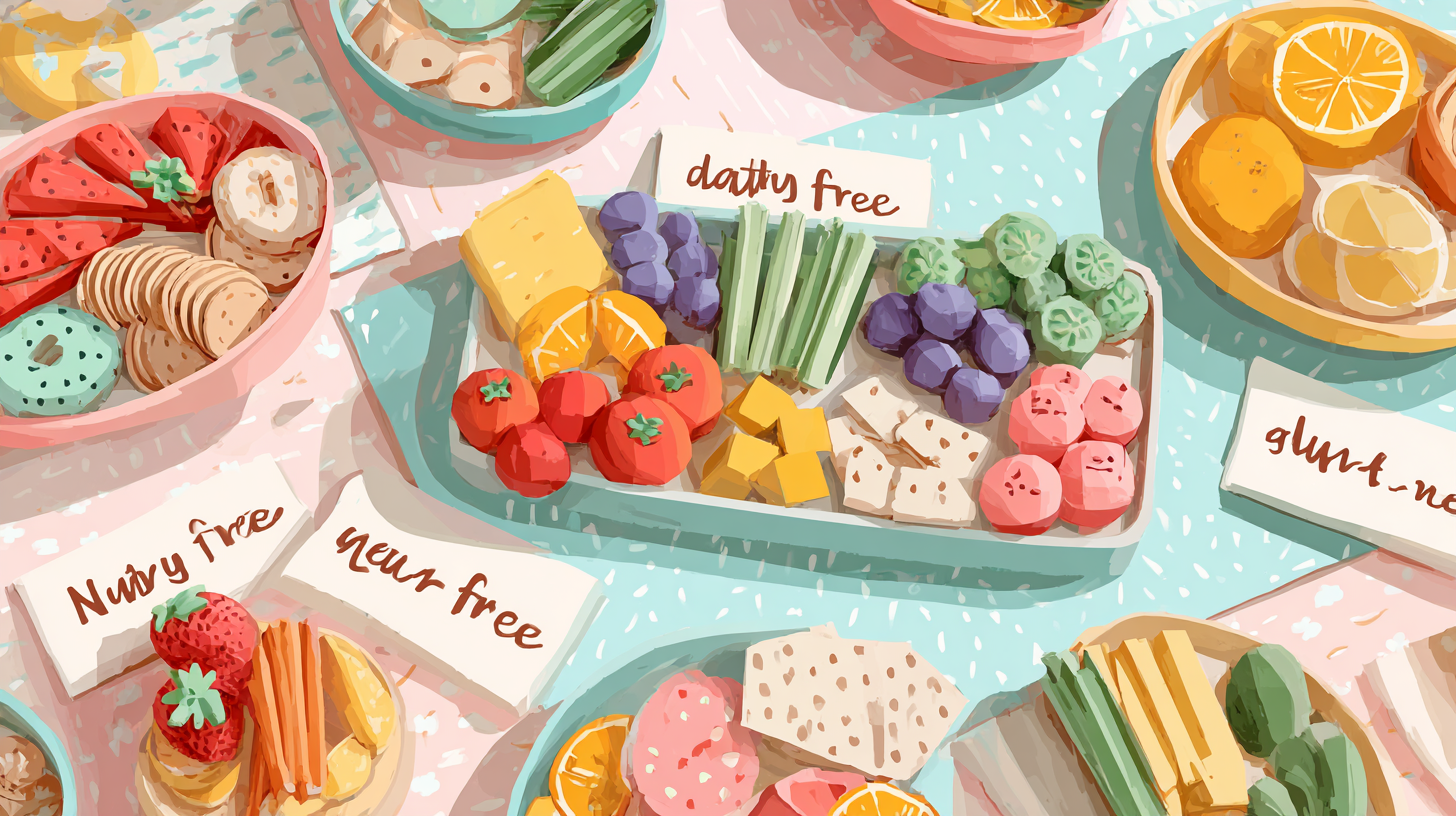
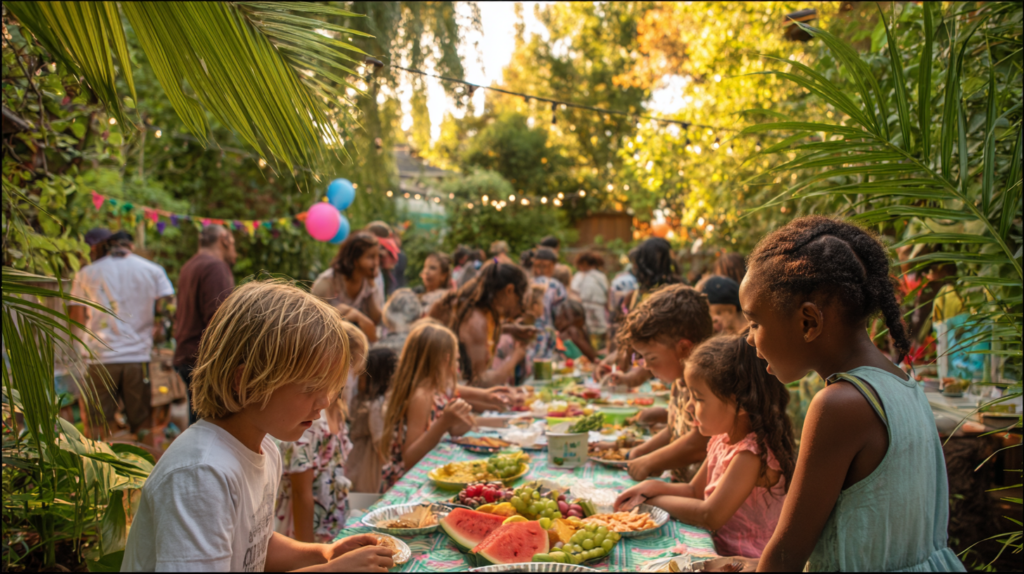
One of the simplest approaches? Build-your-own food stations. Think taco bars with corn tortillas, seasoned ground meat or beans, shredded lettuce, tomatoes, and dairy-free cheese options. Or a fruit and veggie platter with safe dips. These setups let kids customize their plates while giving parents control over what their children consume.
For many island families, creating allergen-friendly celebrations connects beautifully with traditional ingredients. Growing up, my grandmother always said the best party food was the simplest—fresh fruits, roasted root vegetables, and dishes made from scratch where you knew every single ingredient. That wisdom applies perfectly here. When you’re working with whole foods like sweet potatoes, plantains, rice, beans, and tropical fruits, you’re naturally creating options that are free from many common allergens. The Caribbean Baby Food Recipe Book features over 75 recipes built on these principles, and many translate beautifully to party menus—dishes like Coconut Rice & Red Peas, Calabaza con Coco, or simple fruit blends that celebrate authentic island flavors while keeping ingredients transparent and safe.
Safe or Not? The Allergy-Friendly Food Game
Test your knowledge! Click on foods that are typically safe for most common allergies (peanut, tree nut, dairy, egg):
Pre-packaged snacks can be your best friend at allergy-safe parties. Brands are increasingly labeling products as “free from” specific allergens, and many list allergen information clearly on packaging. Stock up on individually wrapped items like applesauce pouches, fruit cups, pretzels (check for wheat allergies), and allergen-free cookies. Keep the packaging visible so parents can verify ingredients themselves.
When it comes to the birthday cake—arguably the centerpiece of any party—you have several options. You can order from a dedicated allergen-free bakery (many cities now have them), bake at home using allergen-free recipes, or create a “cupcake bar” where each child gets their own clearly labeled treat. Some hosts even move away from cake entirely, opting for fruit kabobs, rice crispy treats made with safe ingredients, or even a donut tower with various allergen-free options.
Here’s a personal story: for my daughter’s sixth birthday, we had three kids with different allergies—one dairy, one egg, one peanut. Instead of trying to find one cake that worked for everyone, I made a “sundae bar” with dairy-free ice cream, regular ice cream, fresh fruit, safe chocolate chips, and sprinkles. Each child could build their own dessert, parents could supervise their own kids, and honestly? It was the hit of the party. Kids loved the autonomy, and parents appreciated the transparency.
Pro Tip: Label Everything
Create small tent cards for each food item listing the ingredients or allergens it contains. Use phrases like “Contains: dairy, eggs” or “Free from: top 8 allergens.” This empowers parents to make quick, confident decisions without having to ask about every single item.
Don’t forget about cross-contamination. If you’re serving both allergen-containing foods and safe foods, use separate serving utensils and keep them clearly separated on the table. Some hosts designate one entire table as the “allergy-safe zone” with only verified safe foods, separate from the main spread. This creates a space where allergic kids and their parents can relax and enjoy without constant vigilance.
Beyond Food: Creating an Inclusive Party Atmosphere
Here’s something that surprised me when I started hosting allergy-friendly parties: the food, while important, is only part of the equation. The real magic happens when you shift the entire party culture away from food-centricity and toward experiences that every child can share equally.
Think about traditional birthday parties. So much revolves around eating—cake time, snack time, pizza time, candy bags. For a child with allergies, each of these moments can feel isolating. But when you design a party where food is just one element among many engaging activities, suddenly allergies become far less central to the experience.
Start by planning activities that have nothing to do with food. Set up craft stations where kids can decorate picture frames, create slime, or paint ceramic figures they can take home. Organize outdoor games like relay races, treasure hunts, or water balloon tosses. Hire an entertainer—a magician, face painter, or balloon artist—whose performance becomes the party’s centerpiece rather than the meal.
I learned this lesson powerfully at a party we attended last spring. The host had created an entire “science experiment” theme with baking soda volcanoes, slime-making stations, and a bubble machine. The cake was served, sure, but it was almost an afterthought because the kids were so engrossed in their activities. My friend’s son, who has multiple severe allergies, told his mom afterward that it was the first party where he “forgot about being different.” That’s the goal.
10 Non-Food Party Activities Kids Absolutely Love
Click each card to reveal an inclusive activity idea that puts the focus on fun, not food:
DIY Slime Station
Set up a table with glue, contact solution, and food coloring. Kids make their own slime to take home in small containers.
Outdoor Scavenger Hunt
Create lists of items for kids to find in your yard or park. First team to complete wins a non-food prize!
Craft Corner
Set up painting, bracelet-making, or decorating plain tote bags. Every child leaves with something they created.
Dance Party Freeze Game
Play music and have kids dance. When music stops, they freeze. Last one moving is out. Pure fun, zero food!
Face Painting Station
Hire a face painter or do simple designs yourself with safe, hypoallergenic paint. Kids love becoming tigers, butterflies, or superheroes.
Another crucial element: goodie bags. Traditional party favors are often loaded with candy and treats that allergic kids can’t have. Switch this up entirely. Fill bags with small toys, stickers, bubbles, sidewalk chalk, playing cards, or art supplies. Not only are these safer for allergic kids, but honestly, they’re often more appreciated by all parents who’d rather not deal with the sugar rush aftermath anyway.
If you do want to include treats in goodie bags, use individually wrapped items from brands that clearly label allergen information, and include a printed ingredient list in each bag so parents can review before their child digs in.
Here’s something else to consider: timing. Many experienced hosts suggest keeping parties shorter—90 minutes to two hours—which naturally reduces the focus on food. A quick, activity-packed party means less time sitting around eating and more time engaging in experiences that everyone can enjoy equally.
Emergency Preparedness: The Safety Net Every Host Needs
Let’s talk about the part that makes many hosts nervous: what if something goes wrong? What if there’s an allergic reaction on your watch?
First, take a breath. Serious reactions are rare, especially when you’ve done the groundwork of communicating clearly and planning carefully. But being prepared for the possibility is part of hosting responsibly.
Before the party, ask parents of allergic children about their emergency action plans. Where will they keep the child’s EpiPen or other medications? Do they expect to stay at the party to supervise, or are they comfortable leaving if you know the protocol? What are the signs of a reaction you should watch for?
If parents are staying (which many do, especially for younger children), make sure they know where you’ll be throughout the party and that they should feel empowered to step in at any moment. If they’re dropping off, get explicit written instructions about emergency procedures, medication locations, and contact information.
Keep a basic first aid kit accessible, and know where the nearest phone is to call 911 if needed. Some hosts create a small “allergy station” near the food area with hand wipes, sanitizer, and a copy of emergency contacts—visible but not alarmist.
One of the most important steps? Brief any other adults who’ll be helping at the party. If grandparents, older siblings, or friends are assisting, make sure they know which children have allergies and understand the basics of cross-contamination prevention. A well-meaning helper who doesn’t know the situation could inadvertently create a problem.
Quick Response Guide
If a child shows signs of an allergic reaction (hives, swelling, difficulty breathing, vomiting), immediately notify the parents if present, administer the child’s EpiPen if trained and authorized, and call 911. Do not wait to see if symptoms improve—severe reactions can escalate rapidly.
Here’s the truth: in all my years of hosting and attending allergy-aware parties, I’ve never witnessed a serious reaction. Why? Because when hosts take allergies seriously, communicate clearly, and create safe environments, the risks drop dramatically. Your careful planning makes all the difference.
Real Families, Real Stories: What Inclusive Hosting Looks Like in Action
Let me share some real scenarios from parents and hosts who’ve navigated this successfully, because sometimes the best learning comes from seeing how others have done it.
Maria, a mom from Orlando, told me about hosting her son’s seventh birthday with five kids who had various allergies in attendance. Instead of stressing about a complex menu, she chose a “build your own pizza” party. She provided individual pre-made crusts (some gluten-free, some regular), dairy-free cheese, regular cheese, and a variety of toppings. Each child built their own personal pizza, which she baked in batches. Parents helped their own kids navigate their restrictions, and every child left feeling like they’d made something special. The party cost less than ordering pizza delivery, took less time than she’d feared, and was a massive hit.
Then there’s James, a dad in Seattle, who hosted a “carnival” themed party in his backyard. He set up game stations—ring toss, bean bag throw, duck pond—where kids earned tickets for prizes. The food was simple: hot dogs (with a few veggie dogs for variety), pre-packaged chips, and whole fruit. The birthday cake was a small one just for the family to enjoy at home later; at the party, he served dairy-free ice cream bars from a brand he’d verified with all the parents beforehand. He said the beauty of it was that kids were so engaged with the games that food barely registered as important. The allergic children never felt singled out because everyone was doing the same activities.
My own turning point came when I hosted my daughter’s party last year and invited her classmate with severe dairy and egg allergies. I called the mom ahead of time, and she offered to bring cupcakes for her daughter. But I thought, why should this child have different cupcakes? So I researched, found an allergen-free bakery in our area, and ordered cupcakes that were free from the top eight allergens. They weren’t just “allergy cupcakes”—they were the party cupcakes, for everyone. And you know what? Not a single kid noticed they were different. They were delicious, beautifully decorated, and everyone ate them happily. But that little girl’s face, when she realized she got to eat the same cupcake as everyone else, without asking, without special accommodation—that’s an image I’ll never forget.
These stories share a common thread: the hosts didn’t aim for perfection. They aimed for inclusion. They asked questions, made reasonable accommodations, and created environments where allergic children felt valued rather than burdensome.
The Caribbean Connection: How Island Traditions Can Guide Allergy-Friendly Hosting
There’s something beautifully relevant about Caribbean cooking traditions when it comes to allergy-friendly party planning, and it took me years to realize it.
Growing up in a Caribbean household, our celebrations always centered around fresh, whole ingredients. My grandmother’s party table featured rice and peas, roasted breadfruit, callaloo, fried plantains, fresh mango slices, and homemade sorrel drink. There were no processed snacks, no mystery ingredients, no “what’s in this?” moments. Everything was made from scratch, and you knew exactly what you were eating.
This approach naturally avoids many common allergens. When you’re working with ingredients like rice, beans, ground provisions (root vegetables like cassava, yam, and sweet potato), plantains, and fresh fruits, you’re creating dishes that are often free from dairy, eggs, tree nuts, and wheat without even trying. Many traditional Caribbean dishes use coconut milk as a base rather than dairy, making them naturally lactose-free.
The principles from the Caribbean Baby Food Recipe Book translate beautifully to party menus for children of all ages. Recipes like Coconut Rice & Red Peas, Calabaza con Coco (pumpkin with coconut milk), or Simple Metemgee Style Mash showcase how authentic island flavors provide proper nutrition while keeping ingredients transparent and allergen-friendly. When parents ask, “What’s in this?” you can answer with a short list of whole foods rather than a paragraph of unpronounceable additives.
One of my favorite party tricks? A tropical fruit platter. Arrange sliced mango, pineapple, papaya, watermelon, and grapes on a large platter. Serve with a side of lime wedges for squeezing. It’s colorful, naturally sweet, refreshing, requires no cooking, and is safe for nearly every common allergy. Kids love it because it feels special and exotic, and parents love it because it’s healthy and transparent.
Or consider a “rice bowl bar” inspired by Caribbean flavors—white rice as the base, with toppings like seasoned black beans, diced tomatoes, shredded lettuce, diced avocado, and a mild tomato sauce. Kids build their own bowls, you control the ingredients, and it’s filling, nutritious, and naturally free from most major allergens. You could even add a small side of fried plantain slices for something special.
The wisdom here is simple: when you cook from scratch with whole, recognizable ingredients, you automatically create safer, more inclusive food. You’re not reading labels because you know what’s in it—you put it there. And somehow, the food often tastes better, costs less, and feels more meaningful.
Expert Insights: What Allergists and Food Safety Professionals Want You to Know
The American Academy of Allergy, Asthma & Immunology (AAAAI) emphasizes that effective allergy management in social settings relies on proactive communication and clear individualized action plans. Their guidance for event planning centers on three pillars: awareness, preparation, and education.
Dr. professionals in the field consistently recommend that hosts take allergies seriously without creating an atmosphere of fear. The goal is “mindful inclusion,” where allergies are acknowledged and managed but not allowed to dominate the party’s emotional tone. Children pick up on adult anxiety, so approaching this with calm confidence helps everyone feel more comfortable.
Recent educational handouts developed by the AAAAI Adverse Reactions to Foods Committee provide age-appropriate guidance for caregivers and patients. These resources emphasize empowering children to understand their own allergies while also educating peers about inclusion and safety.
One insight that emerged from recent research on children and adolescents with food allergies: social isolation is one of the most challenging aspects of living with allergies. A prospective study found that many allergic children experience anxiety around social eating situations and may avoid gatherings altogether. The research reinforces that inclusive party hosting isn’t just about physical safety—it’s about emotional wellbeing and social development.
Food safety professionals recommend what they call the “5 T’s” for allergy-safe event hosting:
- Talk: Communicate openly with parents about allergies and concerns
- Table: Read food labels carefully and know what’s on your table
- Touch: Prevent cross-contact through separate utensils and surfaces
- Train: Brief all helpers and adult supervisors about allergy protocols
- Treatment: Know the emergency plan and be prepared to act if needed
Experts also note that many hosts overestimate the difficulty of accommodation. In most cases, simple swaps or additions—not complete menu overhauls—are sufficient. The key is intentionality, not perfection.
Addressing the Tough Questions: Challenges and How to Navigate Them
Let’s be honest: even with the best intentions, hosting allergy-friendly parties comes with challenges. Here are the most common concerns hosts express, and practical ways to address them.
“What if I accidentally expose a child to their allergen?”
This is the fear that keeps many people from hosting at all. The truth is, when you’ve communicated clearly with parents, labeled foods properly, prevented cross-contamination, and followed the child’s action plan, you’ve done your due diligence. Parents of allergic children don’t expect perfection—they expect effort and honesty. If you’re unsure about an ingredient, say so. If a parent prefers to bring their own food, respect that. Your job isn’t to be an allergy expert; it’s to be a thoughtful, communicative host.
“Won’t other kids complain if I don’t serve typical party foods like pizza and cake?”
In my experience, kids are far more flexible than we give them credit for. When you serve food that’s tasty and presented appealingly, they don’t care whether it’s “traditional” party food. The key is variety and flavor. A taco bar, build-your-own rice bowl, or pasta station can be just as exciting as pizza. And if you’re worried about cake, remember: allergen-free baked goods have come a long way. Many are indistinguishable from regular versions.
“This sounds expensive. I’m already on a tight budget for the party.”
Allergy-friendly doesn’t have to mean expensive. In fact, some of the most allergy-safe foods—rice, beans, fresh fruit, vegetables—are among the most affordable options. Where costs can creep up is with specialty items like allergen-free baked goods or pre-packaged snacks. But you can balance this by making more from scratch, focusing on naturally safe whole foods, or asking parents to contribute specific items. Remember Maria’s build-your-own-pizza party? She spent less than she would have on delivery, and it was completely accommodating.
“What if I have multiple kids with different allergies? How do I manage that?”
This is where the “safe zone” approach really shines. Create one table or area that’s free from all major allergens—fruits, veggies, rice dishes, pre-packaged items you’ve verified. Then have a separate area with other foods clearly labeled. This way, parents can guide their children to the appropriate area without confusion. You’re not trying to create one item every single person can eat; you’re creating a spread with options for everyone.
“Should I make my whole party allergen-free, or just provide options?”
This depends on the severity and number of allergies you’re accommodating. If you have one child with a mild dairy allergy, providing dairy-free options alongside regular items might work fine. But if you have a child with severe airborne peanut allergies, you’d want to make the entire party peanut-free. When in doubt, ask the parents. They know their child’s needs and can guide you toward the safest approach.
Looking Forward: The Future of Inclusive Celebrations
Here’s what gives me hope: the culture around food allergies is changing. Five years ago, requesting allergen information at a party felt like an imposition. Today, it’s becoming expected. Schools are implementing allergy policies. Restaurants are training staff. And hosts—wonderful, caring hosts like you—are stepping up to create spaces where all children belong.
We’re seeing trends that point toward even more inclusive celebrations in the future. More venues are offering “allergy-friendly party packages” with trained staff and verified safe food options. Packaged food brands are improving labeling and creating dedicated allergen-free products. Technology is helping too—apps now exist that let you scan barcodes to check for specific allergens, making grocery shopping for parties much easier.
There’s also a growing movement toward non-food party favors and experience-based celebrations, which naturally reduces allergy risks while often creating more memorable parties anyway. The Pinterest-perfect parties of tomorrow might not center on elaborate dessert tables at all, but on interactive experiences, creative activities, and genuine connection.
Perhaps most importantly, we’re raising a generation of children who are learning about allergies, inclusion, and empathy from a young age. When my daughter’s classmate brings her own cupcake to school parties, the other kids don’t question it or make her feel different—they just accept it as part of who she is. That cultural shift, multiplied across millions of families and classrooms, is creating a world where inclusive hosting won’t feel like extra work—it’ll just be how we do things.
Your Action Plan: Putting It All Together
So here we are. You’ve learned the statistics, the strategies, the stories, and the safety protocols. Now it’s time to take all this information and turn it into action.
Start small if you need to. You don’t have to host the most elaborate allergy-friendly party ever on your first try. Just commit to asking about dietary needs. Just try one allergen-free recipe. Just label your foods. Each small step builds your confidence and your skill set.
Remember that perfect phrase I mentioned earlier? “I want to make sure everyone can enjoy the celebration together.” Let that be your north star. When you make decisions from that place—from genuine care and inclusion—the details fall into place.
Create your invitation with that question about allergies. Make those follow-up phone calls. Plan a menu that’s transparent and safe. Set up activities that don’t revolve around food. Brief your helpers. Prepare for emergencies. And then, on party day, take a deep breath and trust that you’ve done the work.
You know what’s going to happen? That child with allergies is going to walk into your home or party venue, and for once, they won’t feel different. They’ll feel celebrated. Their parents will relax instead of hovering anxiously. The party will flow naturally, filled with laughter and play, and at the end, everyone—allergic kids included—will leave with full bellies, goodie bags, and genuine smiles.
And you? You’ll feel something powerful. Pride, certainly. Relief, probably. But more than anything, you’ll feel the deep satisfaction of knowing you created something meaningful. You didn’t just throw a party. You built a community moment where every child mattered, where every family felt welcomed, and where inclusion wasn’t a buzzword but a lived experience.
That’s what this is really about. Not the perfect menu or the flawless execution, but the heart behind it. The decision to see a child’s dietary restriction not as an inconvenience but as an opportunity—an opportunity to show that child they belong, to model inclusion for all the kids watching, and to create the kind of celebration that reflects the world we want to live in.
The Moment That Makes It All Worth It
I want to leave you with one final image, because it’s the one that keeps me committed to this approach.
At my daughter’s last birthday party, there was a moment—just a fleeting second—that I’ll carry with me forever. All the kids were sitting around our patio table, eating cupcakes I’d ordered from that allergen-free bakery. The girl with dairy and egg allergies was right in the middle of the group, frosting on her nose, laughing at something her friend said.
Her mom caught my eye from across the yard. She didn’t say anything. She just mouthed two words: “Thank you.”
That’s the moment. That’s what we’re creating when we choose inclusion over convenience, when we plan with intention, when we communicate with care. We’re creating moments where children don’t have to feel different, where parents can let their guard down, where celebration is truly shared.
You have the power to create that moment. The research, the strategies, the recipes—they’re all just tools. The real magic is in your decision to care, to try, to show up for every child who walks through your door.
So go ahead. Send that invitation with the allergy question. Make that phone call to a parent. Try that allergen-free recipe. Plan those non-food activities. Brief your helpers. Label your foods. And then throw the party with confidence, knowing you’ve done something remarkable.
You haven’t just hosted a birthday party. You’ve created a space where every child belongs. And in a world that often makes allergic kids feel like outsiders, that’s not just good hosting—that’s revolutionary kindness.
Now go make some magic happen.

Kelley's culinary creations are a fusion of her Caribbean roots and modern nutritional science, resulting in baby-friendly dishes that are both developmentally appropriate and bursting with flavor. Her expertise in oral motor development and texture progression ensures that every recipe supports your little one's feeding milestones while honoring cultural traditions.
Join Kelley on her flavorful journey as she shares treasured family recipes adapted for tiny taste buds, evidence-based feeding guidance, insightful parenting anecdotes, and the joy of celebrating food, culture, and motherhood. Get ready to immerse yourself in the captivating world of Kelley Black and unlock the vibrant flavors of the Caribbean for your growing baby, one nutritious bite at a time.
- The Feeding Revolution: Why Your Everyday Meals Are Changing the World - October 13, 2026
- Your Feeding Story Matters More Than The “Perfect” One Online - October 12, 2026
- Looking Forward: Stepping Into Your Confident Feeding Future - October 11, 2026