
Navigating School Lunch with Food Allergies: A Parent’s Real-World Advocacy Guide
Because your child deserves to feel safe and included at the lunch table, not terrified of it.
Tap what sounds like you. Watch your anxiety “pulse” shift as we build your advocacy toolkit.
If your chest tightens every time you picture your child in a chaotic cafeteria, you are not being dramatic — you are reading the room exactly right. Food allergies affect about one in thirteen children, which means the average classroom holds at least two kids whose immune systems can turn a “normal” lunch into an emergency in seconds. That’s not a cute statistic; that’s a safety brief.
And yet, here’s the quiet revolution: more and more parents are discovering that the cafeteria doesn’t have to feel like a minefield. With the right combination of Section 504 protections, clear communication systems, cafeteria safety routines, and a firm-but-collaborative relationship with school administration, families are building school days where their kids can focus on spelling tests and silly jokes instead of survival plans.
In this guide, you’ll walk through the entire journey — from “I’m not even sure if my child qualifies for a 504” to “We have a written, legally enforceable plan that spells out exactly what happens at lunch, on field trips, and when something goes wrong.” Along the way, you’ll get practical scripts, checklists, and even a few Caribbean-flavored ideas to help your child experience food as joy, not danger.
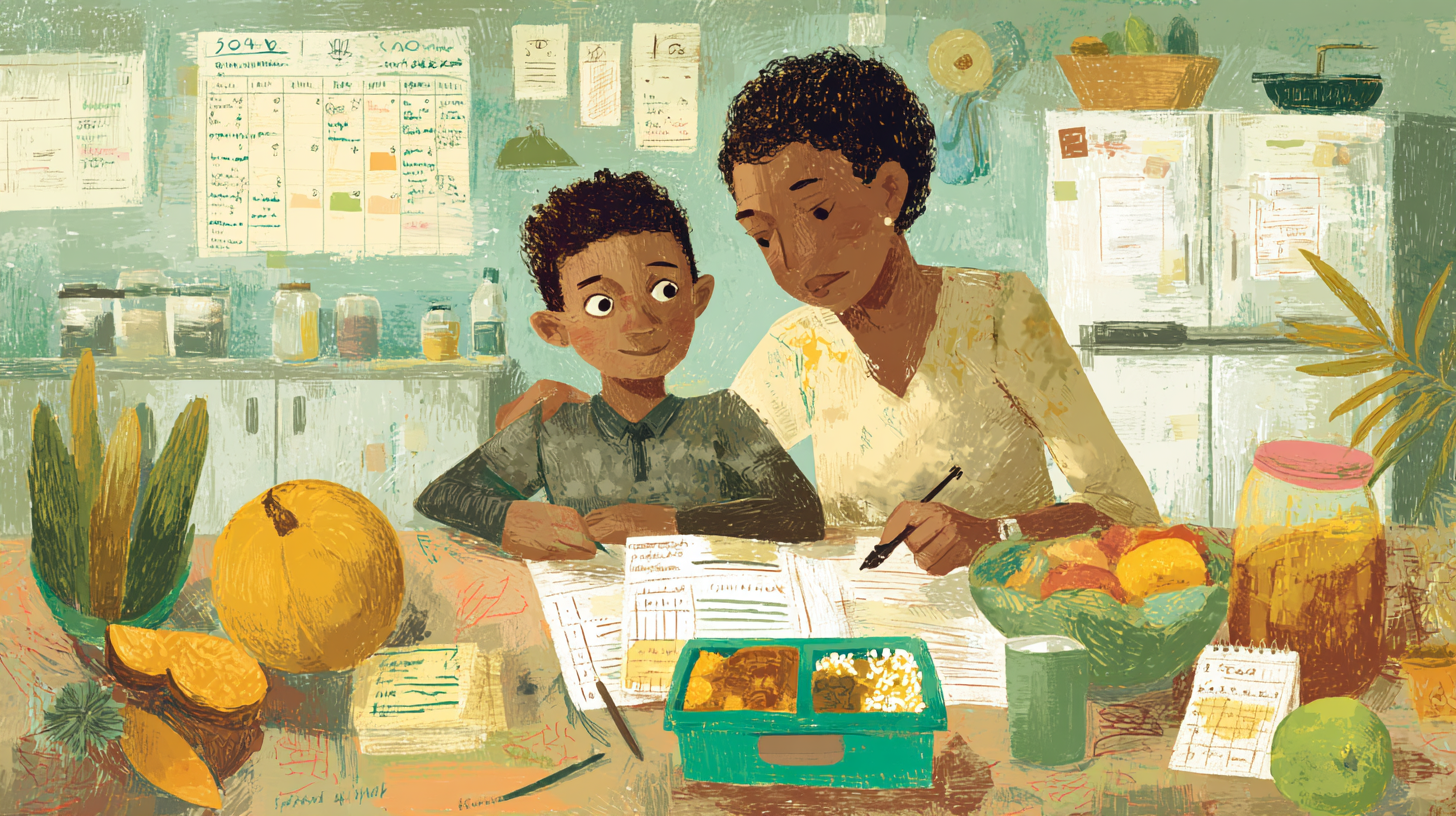
Why School Lunch Is Ground Zero for Food Allergy Safety
School is the one place where your child eats regularly without you, surrounded by other kids’ food, shared surfaces, and adults who may or may not recognize an allergic reaction quickly. Research shows that a significant portion of children with food allergies have experienced reactions at school, and a notable share of first-time reactions actually happen there. That means school lunch is not just “one more meal” — it’s a high‑risk environment that needs a specific plan.
Add to that the social pressure of the lunch table: trading snacks, birthday treats, after‑school clubs, and team pizza days. Children with allergies not only face medical risk; they are also at higher risk of bullying and exclusion related to their allergy. When the cafeteria is poorly managed, kids can end up isolated at the “allergy table,” left out of celebrations, or mocked for “being difficult” about food.
The good news is that the landscape is changing. National health agencies have issued voluntary guidelines for schools, and disability rights rules make clear that serious food allergies can qualify as a disability under civil‑rights law. Section 504 plans allow you to move from “We hope everyone remembers” to “Here is the written agreement describing exactly how the school keeps my child safe and included, especially at lunch.”
That’s the estimated number of children living with food allergies, roughly two per classroom in many schools.
Studies report that a notable share of food-allergic kids have had reactions on school grounds, often around meals and snacks.
Many food-allergic children report being teased or excluded because of their condition, especially around shared meals.
Once you see the numbers, you understand why “We’ll just be careful” isn’t enough. Cafeteria safety needs structure: clear cleaning routines, food-label transparency, staff training, and fast access to epinephrine. Just like fire drills, these systems should be practiced, not improvised.
Section 504: Your Child’s Legal Safety Net at School
Let’s strip away the legal jargon: a Section 504 plan is a civil‑rights agreement between your family and the school that says, “My child has a condition that substantially limits a major life activity (like eating, breathing, or participating in school life), and here is how the school will level the playing field.” For serious food allergies, that playing field is often the cafeteria.
A 504 plan is not a favor and not a “reward” for good grades or behavior. It’s a legal protection that applies regardless of academic performance. Even if your child is a straight‑A student, they are still entitled to accommodations that make lunch, classroom activities, and school events safe and accessible.
In practice, many strong plans layer several documents together: the 504 plan itself (the legal backbone), an Individual Health Plan (IHP), an anaphylaxis emergency action plan, and specific cafeteria and transportation procedures. Together, they should define how the school prevents exposure, how staff recognize and treat reactions, and exactly who does what in daily routines.
- ○ Written diagnosis from an allergist describing your child’s allergy and anaphylaxis risk.
- ○ Clear notes on how the allergy limits major life activities (eating, breathing, safe participation).
- ○ Draft list of needed accommodations, especially for lunch, snacks, bus, and field trips.
- ○ Name and contact for the school’s 504 coordinator or equivalent administrator.
- ○ Discussion started with the school nurse or health office about emergency procedures.
When you request a 504 evaluation, you don’t have to walk in as a legal expert. What truly moves the needle is specific evidence: medical documentation, a clear description of risk, and concrete examples of where your child’s safety or participation is currently limited (for example, “no safe hot entrée options,” “birthday treats with no notice,” or “after‑school clubs serving unsafe snacks without supervision”).
In meetings, think of yourself less as a “begging parent” and more as your child’s project manager. Your role is to help the team see where risk lives and to offer realistic solutions: ingredient labels, safe meal options, trained staff in the cafeteria, clear cleaning routines, and written rules around food in classrooms and on trips. You’re not there to make everyone’s life harder — you’re there to keep a child alive and included.
Designing Cafeteria Safety That Actually Works
Cafeteria policies are where many plans quietly fail. It’s common to see “peanut‑free tables” on paper without clear instructions for who cleans those tables, how food is checked, or what happens when a child sits in the wrong spot. Real protection comes from layered safeguards: safe food access, contamination control, trained adults, and inclusion.
A thorough plan usually touches multiple points: menus with clear allergen labeling, a list of safe choices for your child, a backup “safe foods” box stored at school, cleaning procedures that remove allergens instead of just spreading crumbs, and cafeteria staff trained to recognize early signs of reaction and use epinephrine promptly. Each layer catches what the previous one might miss.
There’s also the social side: being stuck at a lonely “allergy table” can make kids feel punished for their allergy. Some families work with schools to turn that table into a “safe zone” where friends can join if their food meets simple rules, or they build other inclusion strategies (like seating charts, mixed‑group days, or special roles for the allergic child that don’t revolve around avoidance alone).
Tap one scenario at a time and notice where your 504 plan might be too vague.
For each “hot spot,” your 504 plan can name specific actions: separate serving utensils for allergen‑containing dishes, staff trained not to encourage food sharing, cleaning products that actually remove allergens, and backup coverage for days when regular cafeteria staff are out. The more concrete the language (“Cafeteria staff will…”), the less room there is for confusion.
If your child brings food from home, it’s still worth addressing cafeteria practices. Even a perfectly safe lunch from your kitchen can become risky if it’s placed on a contaminated table, handled with sticky hands, or eaten near airborne crumbs when kids are messy with certain foods. Safety is less about banning everything and more about predictable systems.
Communication Strategies That Keep Everyone on the Same Page
A beautifully written 504 plan can still fall flat if no one remembers what it says at 11:45 a.m. on a hectic Tuesday. That’s where communication systems come in: how school staff are trained, how you exchange information with the school, and how your child learns to speak up without feeling like a burden.
Think in layers of communication. One layer is staff training — cafeteria workers, teachers, substitutes, bus drivers, and coaches all need to know the basics: your child’s allergens, early signs of reaction, and when to use epinephrine. Another layer is parent‑school communication: you might have agreements about advance written notice for any food used in the classroom, holiday events, or clubs, plus annual or mid‑year check‑ins on how the plan is working.
Finally, there’s child‑level communication. Even younger kids can learn a simple script: “I’m allergic to [allergen]. I can’t eat that.” Many parents practice these lines at home — sometimes around the dinner table, sometimes as playful role‑plays — so it feels natural in the noisy cafeteria. Over time, kids move from “Mom told them” to “I can say this for myself,” which is a powerful shift.
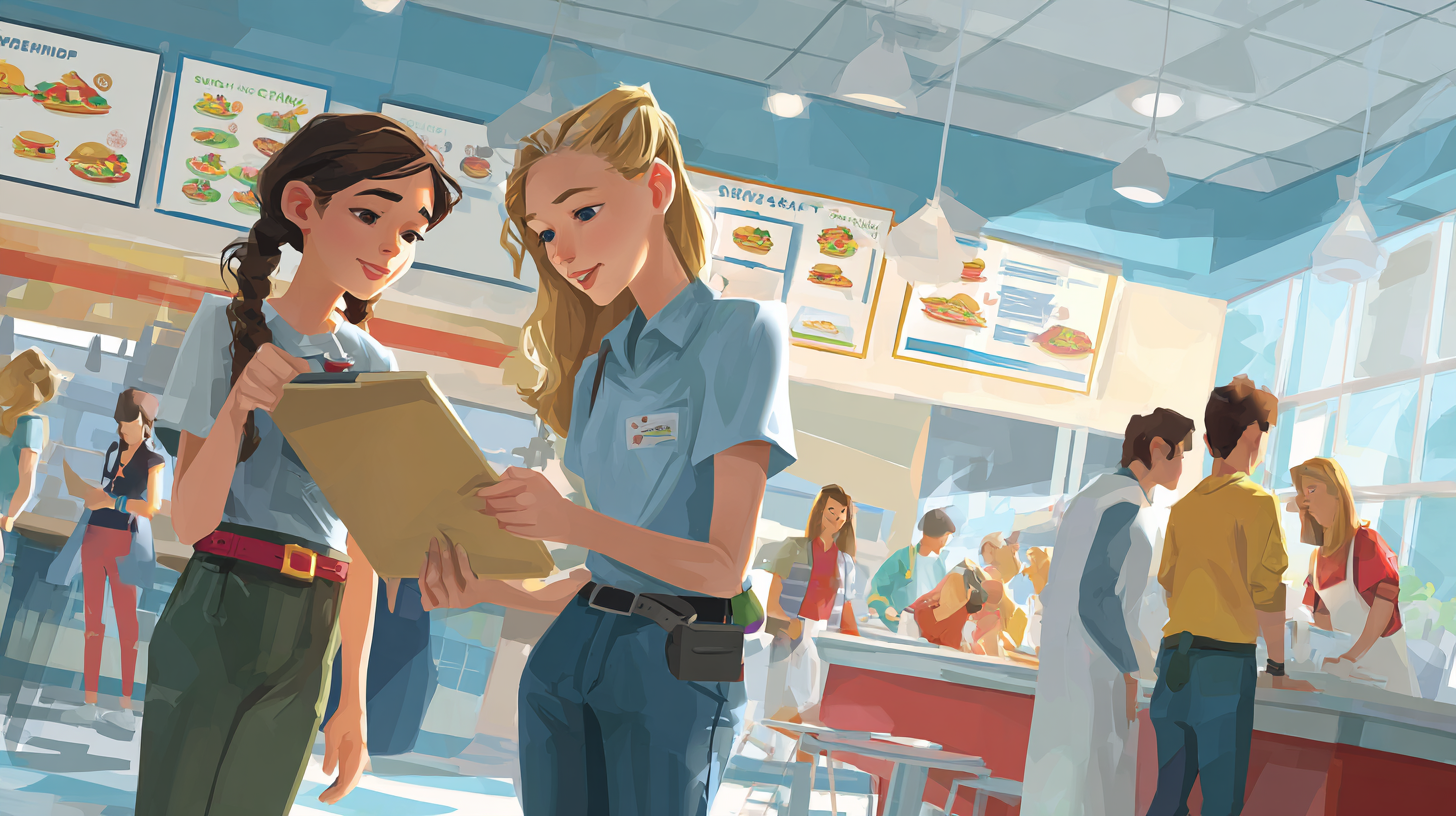
Working with Administrators Without Burning Bridges
Here’s the part many parents dread: pushing for safety without becoming “that parent” everyone complains about in the staff room. But the truth is, seasoned administrators understand that allergies are a serious liability and a human responsibility. When you come prepared — calm, specific, and persistent — you’re not being difficult; you’re helping them do their job well.
Start by requesting your 504 evaluation or review in writing, addressed to the 504 coordinator or principal. Outline your child’s diagnosis, basic risks, and two or three concrete concerns (for example, no safe hot lunch options, no formal training for cafeteria staff, or unclear protocols when substitutes are in charge). Clear, focused emails tend to get better responses than emotional walls of text, even when your feelings are absolutely valid.
In meetings, notice who seems aligned with you. Often, the school nurse and one or two administrators become your internal allies. Ask questions like, “From your perspective, what feels most realistic to implement in the cafeteria this month?” and “What support do staff need to feel confident handling a reaction?” This moves the discussion from theory to logistics — where real change happens.
Tap the one that feels closest to you. You’ll get a tailored next step.
Some parents reach a point where informal talks aren’t enough. If school staff resist writing a 504 plan for a child with documented risk of anaphylaxis, or if agreed‑upon accommodations are repeatedly ignored, families sometimes file formal complaints or request district‑level reviews. You don’t have to start there, but it can be reassuring to know that you have options beyond “hope and wait.”
Tough Trade-Offs: Bans, “Allergy Tables,” and Peer Reactions
When fear is high, the instinct is often to ban everything that looks dangerous. Some schools try sweeping bans on peanuts, tree nuts, or other allergens. While this can reduce exposure in certain contexts, experts point out that broad bans can be hard to enforce, create a false sense of security, and sometimes generate resentment from other families who feel their children’s preferences are being overly restricted.
On the other extreme, some administrators push back on any restrictions at all, insisting that “kids need to learn to live in the real world.” That phrase may sound reasonable, but it ignores the reality that young children cannot reliably self‑manage life‑threatening conditions without adult systems in place. The “real world” also includes clear menu labeling, staff training, and emergency protocols — why shouldn’t school?
The sweet spot is usually a personalized, layered approach: targeted restrictions where they matter most (for example, limiting nuts at your child’s table or in their classroom), cleaning protocols that work, and inclusive practices that keep your child socially connected. Instead of imagining your child sitting alone at an “allergy jail table,” imagine a safe zone where a rotating circle of friends can join them with simple, clear rules everyone understands.
Peer education also matters. Some schools include age‑appropriate lessons on allergies, kindness, and why “just a little bite” can be extremely dangerous. When classmates understand that your child’s EpiPen is not a toy but a lifeline, they’re more likely to support safety rules rather than undermine them.
Caribbean Kitchen, Allergy‑Safe Lunchbox
As a Caribbean parent, there’s a special kind of ache watching your child sit at the edge of the lunch table while other kids eat cheesy pizza or neon snacks, knowing you’ve packed a carefully safe meal full of flavors that taste like home. It can feel like you’re constantly choosing between culture and safety — but you don’t have to.
Allergy‑safe doesn’t have to mean boring or bland. Many Caribbean staples adapt beautifully into school‑safe lunches, especially when you control the ingredients at home. Soft sweet potato, pumpkin, plantain, beans, and coconut‑based dishes can be turned into child‑friendly meals or leftovers that travel well in a thermos. Think of a smooth pumpkin and coconut mash, or a mild sweet potato and callaloo blend that your child recognizes instantly as “our food.”
If you’re looking for structured ideas, recipes like Calabaza con Coco (pumpkin with coconut milk), Sweet Potato Callaloo Rundown, or Coconut Rice with Red Peas can be adapted into allergy‑aware versions with your allergist and dietitian’s guidance. These dishes are naturally rich, comforting, and familiar — a big emotional win when your child already feels different because of their allergy.
Once your allergy team has cleared specific ingredients for your baby or toddler, you can start building a library of safe, Caribbean‑inspired meals that grow with them. A resource like the Caribbean Baby Food Recipe Book: Easy & Healthy Homemade Meals for Infants & Toddlers can help you turn staples like sweet potato, plantain, coconut milk, and beans into nourishing purees and soft meals that later transition beautifully into school lunches once your child is older and cleared for those ingredients.

Many Caribbean recipes are naturally rich in plant‑based ingredients and flexible seasoning, which makes them easier to adapt for allergies when compared with heavily processed convenience foods. You might swap a traditional family curry for a very mild, coconut‑based version or transform rice‑and‑peas into a blended, toddler‑friendly dish before gradually adding more textures as your child grows.
As you experiment, keep your medical team in the loop, especially around highly allergenic ingredients. Layer the cultural joy — the smell of pumpkin and thyme, the sweetness of ripe plantain — on top of a rock‑solid allergy plan, rather than treating culture and safety as competing forces. Your child can grow up knowing that their heritage is something to savor, not something that puts them at risk.
For structured inspiration, the index of the Caribbean Baby Food Recipe Book includes ideas built around sweet potato, pumpkin, plantain, millet, beans, and coconut milk — all starting from baby purees and family meal bonuses. Once your allergist gives the green light for specific foods, those same dishes can evolve into the “from‑home lunch” your child proudly opens in the cafeteria.
Real-Life Examples of Strong School Lunch Protections
To make this concrete, imagine three different families navigating school lunch with life‑threatening allergies — and how their approaches transform risk into routine.
In one school, a first‑grader with a severe peanut and tree nut allergy has a 504 plan that outlines a clearly designated safe table where any classmate can sit as long as their food meets simple, communicated rules. Cafeteria staff receive annual training on cleaning protocols and epinephrine use, substitute folders highlight the child’s plan, and menus are labeled with clear allergen icons. Instead of feeling quarantined, the child feels like their table is a natural part of the cafeteria rhythm.
In another district, a middle‑schooler with multiple food allergies and asthma has a plan that integrates cafeteria, classroom, and sports: coaches are trained on emergency procedures, after‑school clubs follow the same food rules as the school day, and the student has a safe meal option available whenever hot lunch is served. Their parent checks in once per term with the 504 team to review what’s working and what needs a tweak.
Finally, picture a Caribbean family whose child has outgrown some infant allergies but still has a high‑risk reaction to a core ingredient like egg or dairy. Their 504 plan includes a note that the child brings culturally familiar, home‑cooked lunches — perhaps leftover Cook‑Up Rice or a mild pumpkin and coconut dish — and specifies that staff must not pressure the child to eat shared treats or “just have a bite” of unfamiliar food. The plan also embeds anti‑bullying language that addresses teasing about “weird food” as well as allergy jokes.
These scenarios all share a pattern: detailed written plans, trained adults in every setting where food appears, and a family that treats advocacy as ongoing collaboration instead of a one‑time event. None of them are perfect, but all of them are much safer than hoping everyone simply remembers.
At home, you can mirror this sense of structure in your kitchen. Mapping out a weekly rotation of safe, flavorful meals — from pumpkin‑coconut purees to soft rice‑and‑peas or plantain‑based dishes — can make packing lunches feel less like a scramble and more like a rhythm. A guide such as the Caribbean Baby Food Recipe Book: Easy & Healthy Homemade Meals for Infants & Toddlers can support you in building those rhythms early, so that by the time school starts, “safe lunch from home” is already a familiar part of your child’s world.
From Overwhelm to a Simple, Powerful Plan
If this all feels like a lot, you’re not alone. Many parents describe the early allergy years as a blur of late‑night Googling, emergency room memories they’d rather forget, and a constant hum of fear during school hours. The turning point isn’t when the fear magically disappears — it’s when you have a plan on paper, real humans trained to follow it, and a child who starts to believe, “I can be safe here.”
Think of your advocacy journey less like passing a single exam and more like learning to dance a new step. At first it’s clumsy and awkward, but with each conversation, each meeting, and each little win (like seeing your child eat safely with their classmates), it becomes part of who you are as a parent. You grow into the version of yourself who knows how to ask hard questions, say no when needed, and celebrate every safe, ordinary school day.
And here’s the quiet, shocking truth many veteran allergy parents share: once your systems are in place, you may discover that your family has built stronger communication, deeper cultural traditions, and a sharper sense of what really matters than you would have without the allergy. The very thing that once kept you up at night becomes the reason you slowed down, cooked from scratch, and demanded that schools treat your child’s life with the seriousness it deserves.
Tap one focus for this week and get a small, doable action you can take — no extra hours required.
As you put your micro‑plan into action, remember that you don’t have to fix everything at once. Maybe this week is about sending that first 504 request email. Next week might be about scheduling a quick chat with the cafeteria manager. Another week might be devoted to practicing “no thank you, I’m allergic” with your child over sweet plantain at dinner.
And while you’re building those systems, keep nurturing joy at the table. When you fill your home — and your child’s lunchbox — with safe foods that taste like love and culture, you send a powerful message: “Your life is worth protecting, and your joy is worth protecting too.” If you’re ready for more concrete inspiration, the Caribbean Baby Food Recipe Book: Easy & Healthy Homemade Meals for Infants & Toddlers is a natural next step for turning island ingredients into everyday meals that are both nourishing and allergy‑aware, in partnership with your medical team.
One day, sooner than you think, you’ll look up at the clock, realize lunchtime has come and gone, and notice something new: you didn’t hold your breath this time. Not because the risk is gone, but because you’ve built something stronger — a plan, a team, and a child who knows that their safety and belonging are non‑negotiable.

Kelley's culinary creations are a fusion of her Caribbean roots and modern nutritional science, resulting in baby-friendly dishes that are both developmentally appropriate and bursting with flavor. Her expertise in oral motor development and texture progression ensures that every recipe supports your little one's feeding milestones while honoring cultural traditions.
Join Kelley on her flavorful journey as she shares treasured family recipes adapted for tiny taste buds, evidence-based feeding guidance, insightful parenting anecdotes, and the joy of celebrating food, culture, and motherhood. Get ready to immerse yourself in the captivating world of Kelley Black and unlock the vibrant flavors of the Caribbean for your growing baby, one nutritious bite at a time.
- The Feeding Revolution: Why Your Everyday Meals Are Changing the World - October 13, 2026
- Your Feeding Story Matters More Than The “Perfect” One Online - October 12, 2026
- Looking Forward: Stepping Into Your Confident Feeding Future - October 11, 2026