Your Baby’s First Bite Could Save the Planet (And Your Wallet)
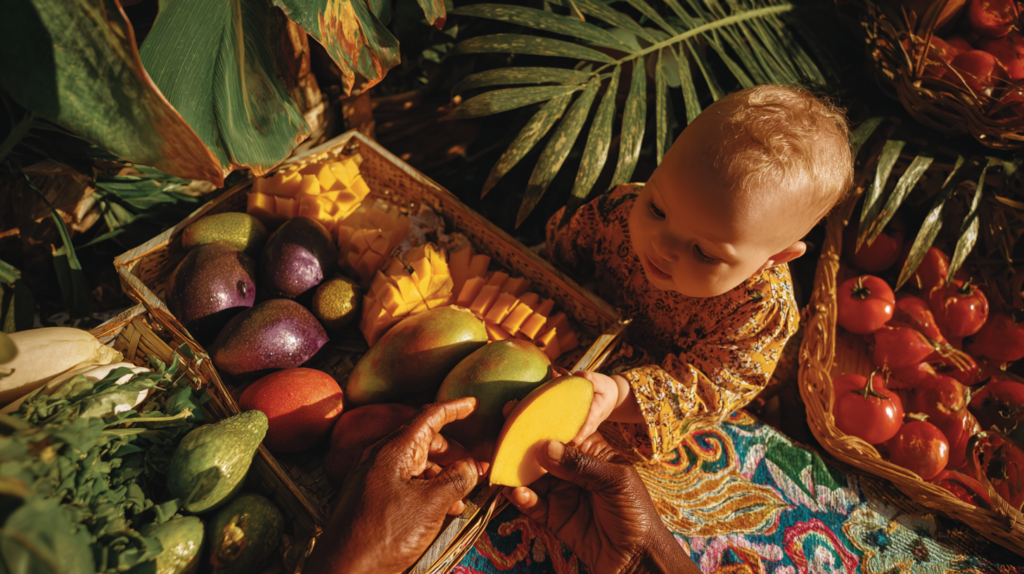
Last Saturday morning at our local farmers market, I watched a grandmother hand her seven-month-old grandson a slice of perfectly ripe mango. The juice ran down his chin, his eyes widened with delight, and in that moment, something bigger was happening than just a baby trying fruit for the first time. That mango traveled thirty miles from a local farm, not three thousand. It was picked two days ago, not two months. And somewhere between that baby’s delighted squeal and the farmer’s proud smile, I realized we’re missing something crucial about how we feed our littlest humans.
Here’s what nobody tells you: the choices you make at six months old don’t just shape your baby’s palate—they shape their entire relationship with the planet. Every butternut squash you roast in October, every strawberry you mash in June, every conversation at a farm stand while your baby watches from the carrier—it’s all teaching them something profound. And the shocking part? It might be easier and cheaper than the conventional route.
Discover Your Season’s Superfoods
Your baby’s feeding journey starts with your climate. Select your current season:
Perfect timing!
The truth is, we’ve been conditioned to think baby food comes in jars from supermarket shelves. But our grandmothers knew something we’ve forgotten: babies thrive on whatever’s growing nearby, picked when it’s actually ripe, prepared with love in your own kitchen. And now science is catching up to what they always knew.
The Hidden Truth About Baby Food
Research from 2024 reveals something that should make every parent pause: approximately 60% of commercial baby foods sold in major U.S. retailers fail to meet international nutritional guidelines set by the WHO. Even more alarming? Nearly 100% of these products use at least one misleading marketing claim. Some displayed up to eleven prohibited claims on a single package.
But here’s where it gets interesting. The global baby food packaging market alone hit $69.22 billion in 2023, projected to reach $106.75 billion by 2029. We’re spending billions on packaging while the actual nutrition inside fails our standards. Meanwhile, commercial formula feeding for just six months generates between 226-288 kg of CO2 emissions—roughly the equivalent of driving 600 miles.
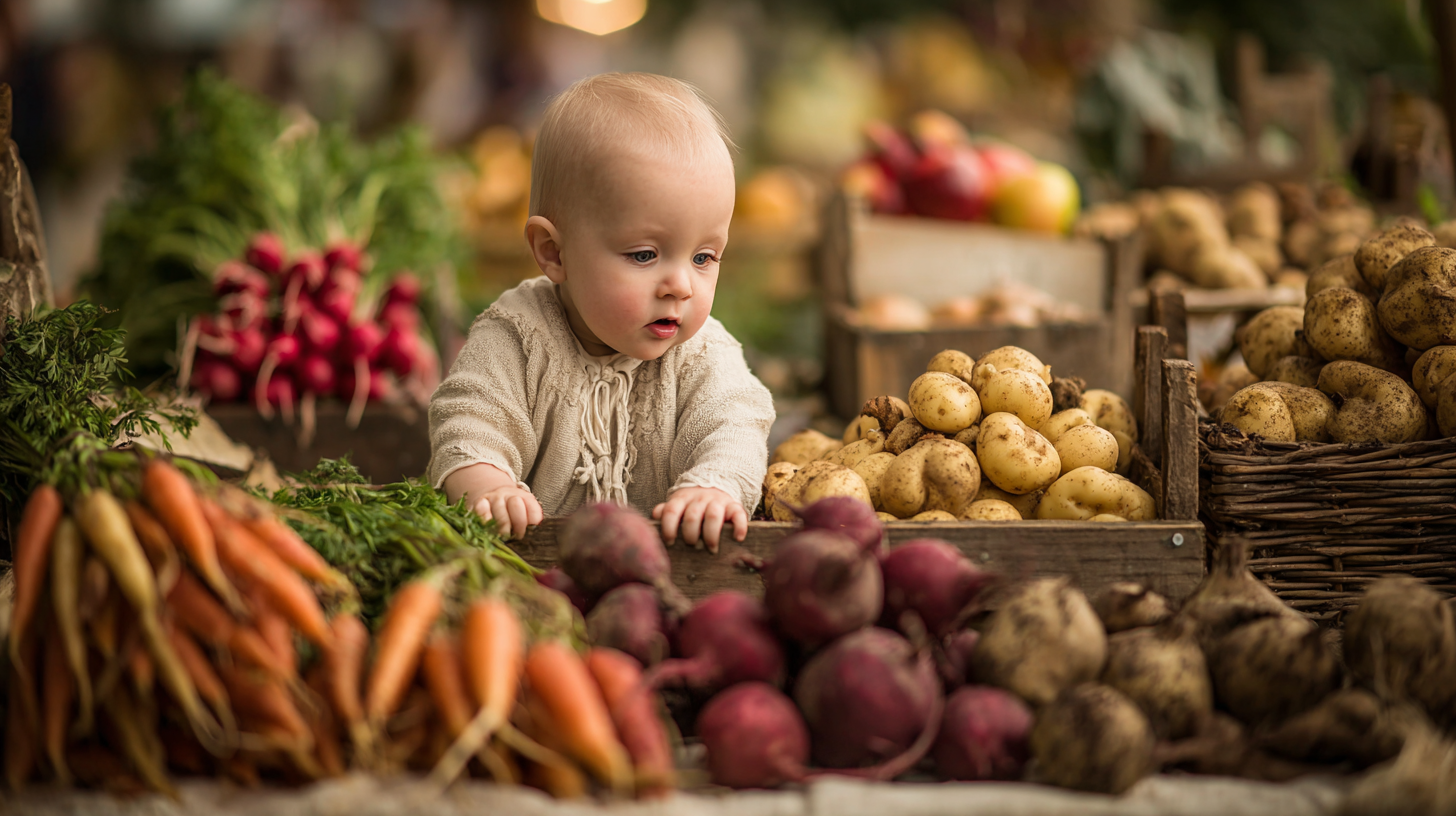
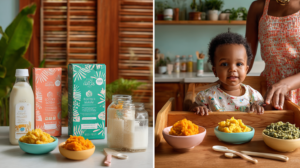
The alternative? A local butternut squash from October’s harvest, steamed and mashed with a bit of coconut oil. No packaging. No food miles. No misleading claims. Just nutrition that’s been perfected over thousands of years of evolution, grown in soil your baby might someday play in. And if you’re wondering how to incorporate these seasonal ingredients into your baby’s diet with confidence, the Caribbean Baby Food Recipe Book offers over 75 recipes using seasonal ingredients like pumpkin, sweet potato, and fresh fruits—all developed with both nutrition and cultural richness in mind.
Calculate Your Baby’s Food Carbon Footprint
Select your typical weekly baby food choices:
Weekly Carbon Impact
0 kg CO2
What Seasonal Really Means
When my daughter was seven months old, I made a rookie mistake. It was January in the Northeast, and I proudly served her mashed strawberries I’d bought at the supermarket. They were pale, flavorless, and had traveled from Mexico. She made a face that clearly said, “Mom, what is this nonsense?” Three months later, I brought home strawberries from a farm fifteen minutes away. Deep red, bursting with flavor, picked that morning. She couldn’t get enough.
Seasonal eating isn’t about following rules—it’s about working with nature’s rhythm instead of against it. When produce is in season locally, it’s been allowed to ripen naturally, developing full nutrient density and flavor. The vitamin C content in that local strawberry can be up to 50% higher than its imported counterpart. The antioxidants are more concentrated. The natural sugars are more balanced.
But beyond nutrition, something magical happens with taste. Babies are sensory learners with taste buds three times more sensitive than ours. When they experience a perfectly ripe peach in August, they’re not just eating fruit—they’re learning what peach is supposed to taste like. They’re developing a calibrated palate that will serve them for life. Research shows that children exposed to a variety of fresh vegetables before age two demonstrate significantly greater willingness to eat vegetables later in childhood. We’re not just feeding them; we’re programming their preferences.
The Farmers Market Strategy
The first time I took my six-month-old to the farmers market, I felt like I needed a battle plan. Carrier? Check. Diaper bag? Check. Cash? Check. But what I didn’t expect was how much easier it would be than navigating a conventional grocery store with a baby.
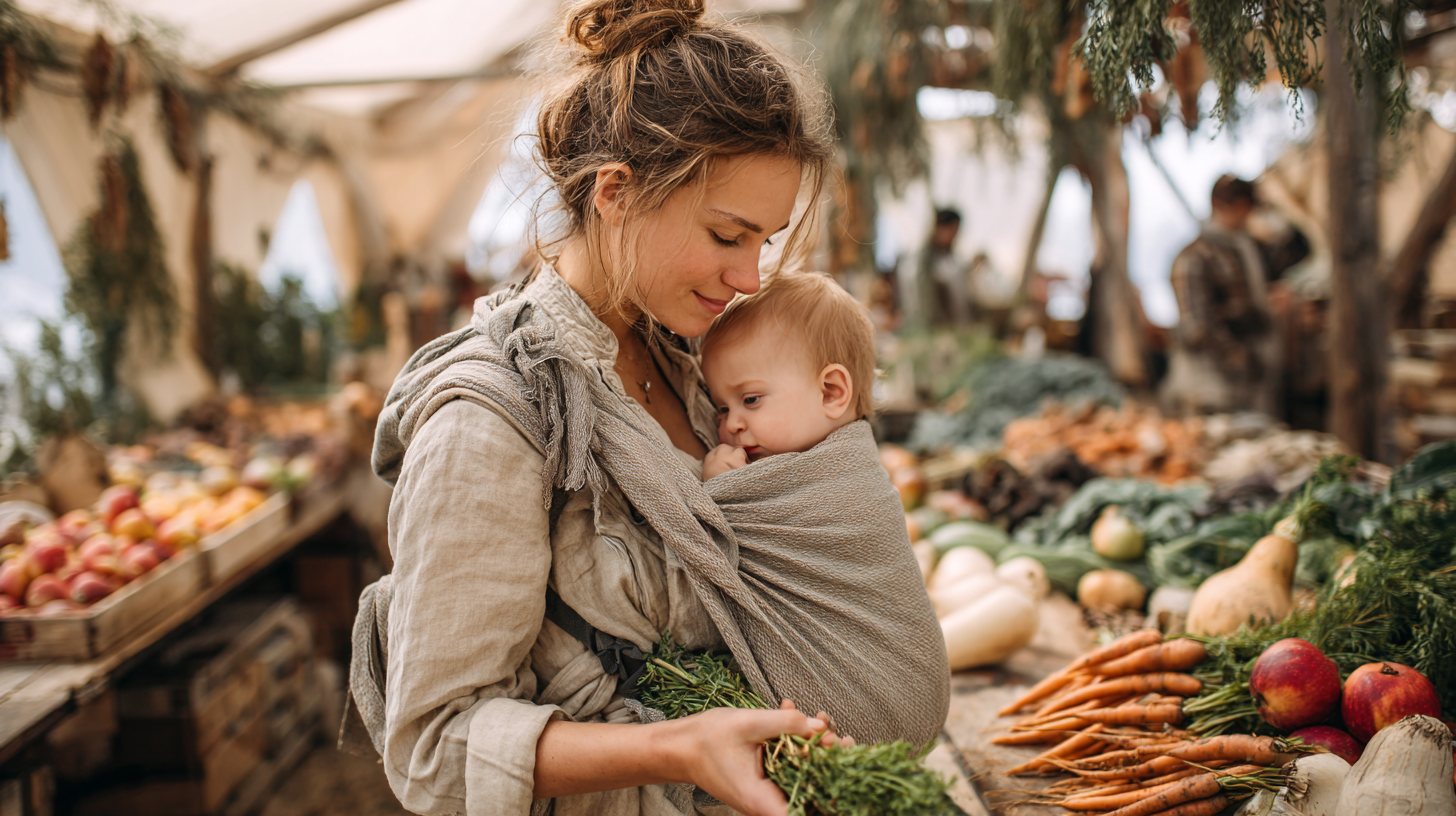
Here’s what actually works: arrive early, ideally within the first hour. The produce is freshest, vendors are energized and more talkative, and the crowds are manageable. Wear your baby in a carrier rather than wrestling with a stroller through narrow aisles. This keeps your hands free and your baby engaged with everything happening around them.
According to Nationwide Children’s Hospital, locally sourced foods are often fresher and more nutrient-dense than those traveling long distances, providing children with higher levels of vitamins, minerals, and antioxidants essential for growth. But beyond the nutrition, there’s an education happening. Your baby is watching you interact with the people who grew their food. They’re hearing you ask questions: “When was this picked?” “How do you prepare this for babies?” “What’s coming in next week?”
Create what I call a “market passport” in your mind—three new items to explore each visit. This keeps you from getting overwhelmed while gradually expanding your baby’s palate. Sample when offered. Farmers love sharing taste tests, and your baby benefits from the exposure. I’ve found that offering samples of unfamiliar items increases acceptance dramatically. The Food Literacy Center notes that 10-15 exposures to new produce are typically needed before children develop preferences, making regular market visits particularly valuable.
The $20 Market Challenge
You have $20 at the farmers market. Build a week’s worth of baby meals!
Great choices!
The cost savings surprise most parents. Yes, farmers market produce might cost slightly more per item than conventional supermarket options. But here’s the economics nobody talks about: you’re buying whole foods that you’ll prepare yourself, eliminating the “convenience tax” built into processed baby food. A single butternut squash for $5 yields 8-10 baby servings. Those organic pouches? $2-3 each for a single serving. You do the math.
Teaching Through Feeding
My friend Sarah does something brilliant: she narrates her food choices aloud to her ten-month-old daughter. “I’m choosing these tomatoes because they grew nearby, which means they’re super fresh and didn’t need to travel on a truck.” Her daughter doesn’t understand the words yet, but she’s absorbing the values—that food comes from specific places, that proximity matters, that choices have reasons.
This is what sustainability educator Kate Bratskeir calls “values-based food literacy.” In her book on sustainable food shopping, she emphasizes that involving children in grocery and farmers market shopping builds self-reliance, independence, and autonomy. But it goes deeper. When you let your toddler hand the farmer money for carrots, when you allow them to touch different squash varieties and compare textures, when you bring home vegetables still covered in soil—you’re teaching systems thinking without a single lecture.
Farm to Early Care and Education programs have documented this impact. As of 2021, 81% of surveyed early childhood education sites participated in farm-based activities. These programs showed increased ability to identify fruits and vegetables, greater willingness to try target produce, and increased consumption among participating children. But the ripple effects extended to families: parents reported increased local food purchases for home use and expanded home gardening activities.
The Shocking Truth About Food Miles
Click each food to reveal how far it traveled to your baby’s bowl:
January Banana
2,500 Miles
From Ecuador to your table, traveling by boat, truck, and warehouse storage
Local Alternative: Stored apples (50 miles)
Winter Strawberries
1,500 Miles
From California or Mexico greenhouses, picked unripe for travel
Local Alternative: Frozen local berries (30 miles)
Supermarket Broccoli
1,800 Miles
From industrial farms, spending 5-7 days in transit and storage
Local Alternative: Fall/spring farmers market (15 miles)
The environmental education here is subtle but powerful. Climate change will define your baby’s future in ways we’re only beginning to understand. Teaching them that food comes from nearby farms, that seasons matter, that choices have environmental consequences—this isn’t preachy; it’s practical. It’s equipping them with a framework for understanding their relationship to the planet.
The Caribbean Connection
Growing up in a Caribbean household, seasonal eating wasn’t a conscious choice—it was just how food worked. My grandmother didn’t call it “local” or “sustainable.” She called it common sense. You ate what was ripe. You bought from your neighbor who farmed. You prepared everything fresh because refrigeration was limited.
What I’ve realized as a parent is that this traditional approach to feeding babies contains profound wisdom. Caribbean feeding practices emphasize ground provisions—root vegetables like sweet potato, yam, and cassava that grow abundantly in local soil. These foods are nutrient-dense, filling, affordable, and perfectly suited for babies transitioning to solids. A simple mash of boiled yam with a little coconut oil provides complex carbohydrates, fiber, and healthy fats. No fancy equipment needed. No ingredient list to decode.
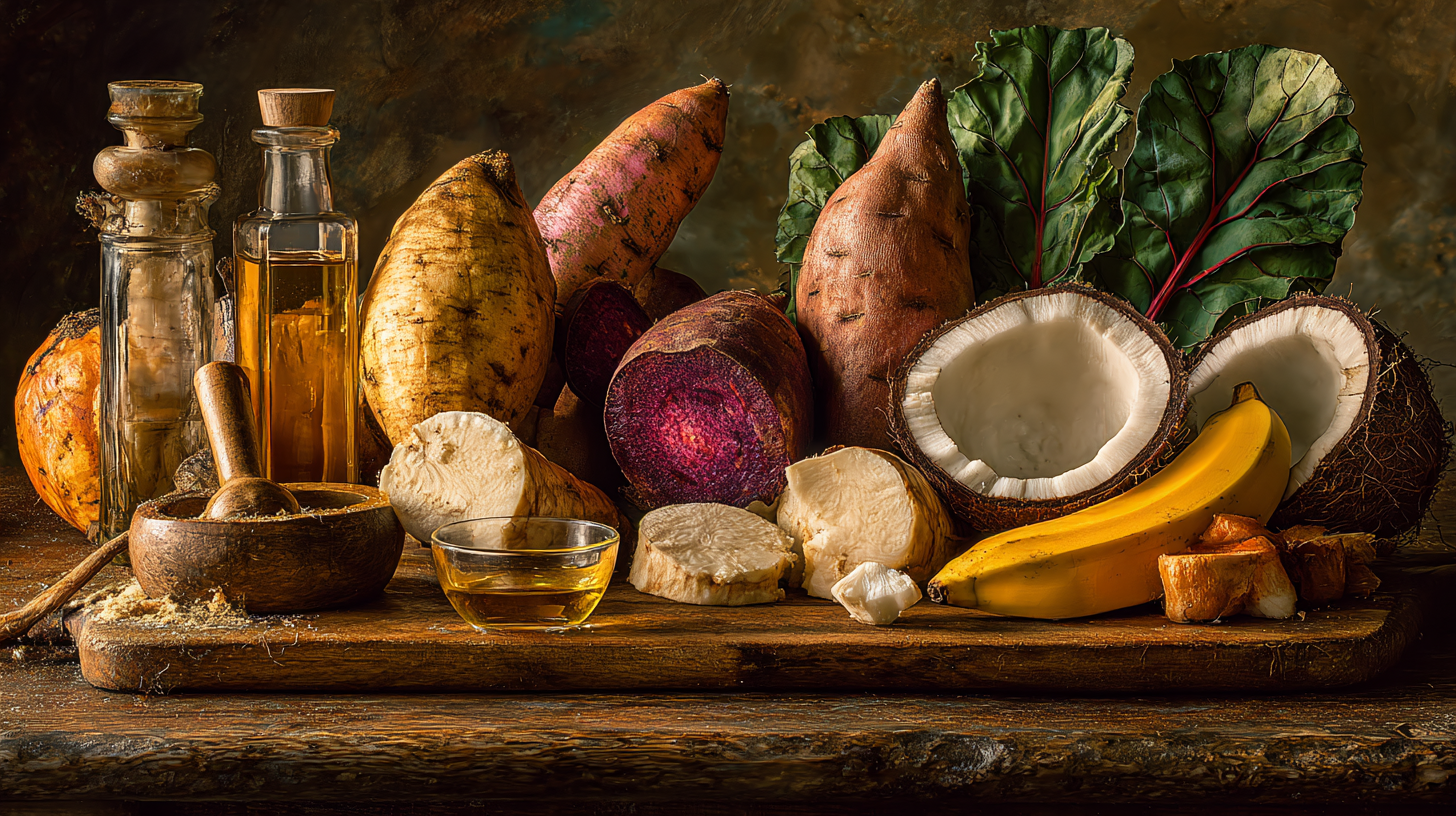
The recipes in the Caribbean Baby Food Recipe Book bridge this traditional wisdom with modern nutritional science. Take the Sweet Potato & Callaloo Rundown—it combines iron-rich leafy greens with beta-carotene-packed sweet potatoes, all cooked in coconut milk for healthy fats. Or the Yellow Yam & Carrot Sunshine, which pairs local root vegetables with seasonal carrots. These aren’t complicated recipes; they’re time-tested combinations that happen to check every nutritional box pediatricians recommend.
This cultural approach to feeding also teaches something crucial: food is about more than nutrients. It’s about connection, tradition, and identity. When you prepare plantain porridge for your baby the way your grandmother made it, you’re passing down more than a recipe. You’re saying: this is who we are, this is where we come from, this matters.
Make the Swap: Seasonal Alternatives
Click each swap to discover the benefits of seasonal eating:
Flavorless, picked green, high food miles
Peak flavor, vine-ripened, local
$2.50/serving, plastic waste, preservatives
$0.50/serving, no waste, fresh
Pale, expensive, low nutrients
Sweet potatoes, beets, carrots in-season
The Cost Reality
Let’s talk money, because that’s where most sustainability conversations fall apart. People assume eco-conscious feeding is a luxury. I thought so too, until I actually tracked my spending for three months.
Conventional baby food budget (6-12 months): roughly $150-200 per month on pouches, jars, and prepared foods. Seasonal market-based feeding: $60-80 per month on whole produce that I prepared myself. The difference? Over $1,000 in the first year alone. And that’s before considering that seasonal eating extends naturally to toddlerhood, while commercial baby foods create dependency on processed convenience items.
The key is strategic shopping. Root vegetables in fall and winter (sweet potatoes, butternut squash, carrots) are dirt cheap when in season and store for weeks. Summer stone fruits and berries are affordable when local and can be frozen in bulk. Spring greens and peas are abundant. You’re not fighting against nature’s calendar; you’re riding its wave of abundance.
There’s also a hidden cost in commercial baby food that nobody discusses: the normalization of processed taste. When babies grow up on pouches that all taste vaguely sweet and uniform, they struggle with the complex flavors and varied textures of real food. The cost of that pickiness—both in parental stress and in trying to reverse those preferences—is substantial. Seasonal feeding from the start avoids this entirely. When roasted beets are the sweetest thing your eight-month-old knows, they think beets are candy. That’s a win that compounds for decades.
Overcoming the Obstacles
I’d be lying if I said this was always easy. There are real challenges to seasonal, local feeding, and pretending they don’t exist helps nobody.
Challenge one: time. Whole food preparation requires more hands-on work than opening a pouch. My solution? Batch cooking on Sunday afternoons. I roast three types of vegetables, cook a pot of beans, prepare a grain. Everything gets portioned into glass containers or silicone freezer trays. Twenty minutes of focused prep yields a week’s worth of meals. It’s actually less time than daily trips to the store for packaged options.
Challenge two: knowledge. Not all parents feel confident preparing whole foods for babies, especially around textures, cooking methods, and safety. This is where resources matter. The Caribbean Baby Food Recipe Book includes not just recipes but also preparation guidance, texture progressions, and safety notes. You don’t need to be an expert—just willing to learn as you go.
Challenge three: seasonal gaps. Winter in northern climates presents real limitations on local fresh produce. But seasonal eating doesn’t mean you never eat anything that traveled. It means making strategic choices. Frozen local berries from summer. Stored apples, potatoes, and squash that keep well. Root vegetables that thrive in cold weather. And yes, occasionally supplementing with thoughtfully chosen imports when local options are genuinely unavailable.
Challenge four: access. Not everyone has a farmers market within easy reach. But local can be relative. A regional grocery co-op that sources from nearby farms. A CSA (Community Supported Agriculture) box delivered to your neighborhood. Even larger supermarkets increasingly feature local sections. The goal isn’t perfection; it’s moving in a better direction from wherever you currently are.
What You’re Really Teaching
Here’s what I’ve come to understand after two years of seasonal feeding with my daughter: this isn’t really about vegetables. It’s about teaching a way of seeing the world.
When your toddler knows that strawberries come “when it’s warm outside,” they’re learning that food exists in relationship to environment. When they recognize the farmer who grows their apples, they’re learning that food is connected to people, not factories. When they help you choose the ripest peach by smell, they’re learning to trust their senses over marketing claims.
Your Family’s Value-Building Tracker
Select the values you’re teaching through seasonal feeding:
Your Teaching Impact
These are the skills that matter for the future your child will inherit. Climate resilience. Critical thinking about consumption. Understanding that cheap and convenient often means someone or something else paid the real cost. I don’t need to lecture my daughter about carbon footprints—she’ll understand it intuitively because she grew up seeing food as something rooted in specific places and seasons.
And here’s the unexpected gift: this approach makes you a more conscious consumer too. When you start paying attention to what’s in season for your baby, you notice it for yourself. When you develop relationships with farmers, you start asking questions about all your food. The values you’re trying to teach your child end up teaching you too.
Your Starting Point
You don’t have to overhaul everything tomorrow. Sustainable feeding isn’t an all-or-nothing proposition. Start wherever you are.
If you’ve never been to a farmers market: go once this month. Just observe. Let your baby see the colors and activity. Buy one thing—whatever looks good. Take it home and figure out how to prepare it. That’s your starting point.
If you’re already shopping at markets but defaulting to commercial baby food: choose one meal per day to prepare fresh. Maybe it’s breakfast—a simple fruit mash or porridge. Maybe it’s dinner—a steamed vegetable with healthy fat. One meal creates momentum for the next.
If you’re ready to go all-in: invest in some basic gear (a steamer basket, glass storage containers, silicone freezer trays), dedicate a Sunday afternoon to batch cooking, and commit to a month of seasonal eating. Track how much money you save. Notice how your baby responds. Pay attention to how it changes your own relationship with food.
The recipes in resources like the Caribbean Baby Food Recipe Book can guide this progression. Start simple with single-ingredient purees like the Calabaza con Coco (Pumpkin & Coconut Milk) or Sweet Potato & Callaloo Rundown. As you gain confidence, progress to more complex combinations. The book’s month-by-month spice journey helps you gradually introduce flavors aligned with what’s seasonally available.
Remember: our grandmothers fed babies this way not because they were trying to save the planet, but because it was practical, affordable, and made sense. We’re not inventing something new—we’re returning to something old that we temporarily forgot. The planet-saving part is just a bonus.
The Compound Effect
That moment at the farmers market—the grandmother handing her grandson a slice of ripe mango—keeps replaying in my mind. Because it wasn’t just a snack. It was an inheritance.
Every choice you make about feeding your baby compounds over time. The pouches you don’t buy today means less plastic in landfills and oceans decades from now. The local farmer you support this year means that farm still exists when your child has children. The palate you develop in these early months shapes food choices for a lifetime. The values you model become the lens through which your child sees their role in the world.
We like to think that teaching sustainability requires elaborate lessons and conscious lectures. But babies learn by watching, tasting, experiencing. They learn from the farmer’s smile when you return week after week. From the soil on carrots you rinse together. From the way a peach smells when it’s actually ripe. From hearing you say “thank you” to the person who grew their food.
These small moments—seemingly insignificant in isolation—accumulate into a worldview. And that worldview, multiplied across millions of children, becomes the future we’ve been trying to create through policy and activism and protest. It starts at the farmers market on a Saturday morning. It starts with a slice of mango.
Your baby’s first bite could save the planet. But more importantly, it could teach them that they’re part of a planet worth saving. That food connects them to soil, seasons, and community. That their choices matter. That caring for the earth isn’t a sacrifice—it’s the most delicious, practical, beautiful way to live.
So go to the market. Buy what’s ripe. Prepare it with love. Feed your baby real food from real places grown by real people. And know that you’re doing something bigger than just feeding a child. You’re planting seeds—in their body, their mind, and their understanding of what it means to live well on this earth.
The revolution starts at breakfast. Make it a good one.

Kelley's culinary creations are a fusion of her Caribbean roots and modern nutritional science, resulting in baby-friendly dishes that are both developmentally appropriate and bursting with flavor. Her expertise in oral motor development and texture progression ensures that every recipe supports your little one's feeding milestones while honoring cultural traditions.
Join Kelley on her flavorful journey as she shares treasured family recipes adapted for tiny taste buds, evidence-based feeding guidance, insightful parenting anecdotes, and the joy of celebrating food, culture, and motherhood. Get ready to immerse yourself in the captivating world of Kelley Black and unlock the vibrant flavors of the Caribbean for your growing baby, one nutritious bite at a time.
- The Feeding Revolution: Why Your Everyday Meals Are Changing the World - October 13, 2026
- Your Feeding Story Matters More Than The “Perfect” One Online - October 12, 2026
- Looking Forward: Stepping Into Your Confident Feeding Future - October 11, 2026