
The 6-Second Window: Why Every Caregiver Needs to Master EpiPen Training Before It’s Too Late
⏱️ How Fast Can Anaphylaxis Strike?
An allergic reaction can escalate from “something’s wrong” to life-threatening in mere minutes. Let’s see how quickly time slips away in an emergency.
This is how long you might have to recognize symptoms, find the EpiPen, and administer it correctly.
Three years ago, I sat across from a grandmother at a community center in Kingston, tears streaming down her face as she shared her story. Her grandson had a severe peanut allergy, and she’d been caring for him since he was a baby. She had two EpiPens in her purse, a written action plan from the doctor, and she’d watched the training video at least five times. But when the moment came—when her grandson took a bite of a cookie at a neighbor’s house and his face started swelling—she froze. Her hands trembled so badly she dropped the EpiPen twice. By the time she finally administered it, precious minutes had slipped away.
That conversation changed everything for me. Because here’s what nobody tells you about EpiPen training: watching a video isn’t enough. Reading the instructions isn’t enough. Even holding the device and looking at it carefully isn’t enough. When your child’s lips are turning blue and they’re struggling to breathe, your brain doesn’t work the same way it does when you’re calm. Every caregiver in your child’s life needs hands-on practice, repeated refreshers, and the kind of confidence that only comes from actual muscle memory.
According to recent clinical research, fewer than one-third of caregivers can correctly administer an auto-injector on their first attempt without structured training—and delay in epinephrine administration remains a leading factor in fatal and near-fatal anaphylactic reactions. Yet 6-8% of children have food allergies, and food is the primary trigger for anaphylaxis in pediatrics. If your child is at risk, every single person who spends time with them—parents, grandparents, babysitters, teachers, coaches, even your neighbor who occasionally watches them for an hour—needs to know how to save their life in under six minutes.

The Hidden Truth About Anaphylaxis Nobody Mentions
Let me share something that shocked me when I started researching this: anaphylaxis doesn’t always announce itself with dramatic, obvious symptoms. Yes, sometimes a child’s throat closes rapidly and the emergency is unmistakable. But often, it starts quietly. A few hives on the arm. A complaint about a tummy ache. A slight wheeze that could be mistaken for asthma. And then—within minutes—it spirals into a full-blown crisis involving multiple body systems: skin, breathing, heart, and gut.
Current guidelines from organizations like NIAID and AAAAI emphasize that epinephrine must be given “sooner rather than later,” even when initial symptoms appear mild, because progression is unpredictable. The earlier epinephrine is administered, the better the outcome. But here’s the challenge: many caregivers hesitate. They think, “Maybe it’s not that serious. Maybe I’m overreacting. What if I give the injection and it wasn’t really needed?” This hesitation—this second-guessing—can cost lives.
Epinephrine has no absolute contraindications in true anaphylaxis. Translation: if you’re genuinely worried it might be anaphylaxis, give the injection. The risk of not giving it far outweighs any potential side effect of giving it. Recent studies show that 7-20% of anaphylactic reactions require more than one dose of epinephrine, which is why experts recommend that families always have two auto-injectors available and accessible at all times.
The EpiPen Technique That Actually Works in Real Emergencies
Here’s what every caregiver needs to master, and I mean truly master—not just nod along while watching a video. The technique has five critical steps, and missing even one can mean the difference between a properly delivered dose and a dangerous fumble.
Step one: Recognize the emergency. Use your written anaphylaxis action plan (you should have one from your allergist) to identify when symptoms require epinephrine. This isn’t the time to debate or wait—when in doubt, give it.
Step two: Position your child. If they can breathe better sitting up, let them sit. If not, lay them flat with legs slightly elevated. Never make them stand or walk—anaphylaxis can cause sudden drops in blood pressure.
Step three: Prepare the auto-injector. Pull it out of its carrier tube. Form a fist around the middle of the device—never put your thumb or fingers over either end. Remove the blue safety cap by pulling straight up (don’t twist). The orange tip is where the needle comes out.
Step four: Administer the injection into the outer mid-thigh. You can inject through clothing if needed. Place the orange tip against the thigh at a 90-degree angle and push down firmly until you hear a click. Hold it there for three full seconds—count out loud if it helps—then remove. The needle will retract automatically.
Step five: Call emergency services immediately, even if your child seems to improve. Massage the injection site for 10 seconds to help absorption. Keep the used auto-injector to show paramedics. And here’s the critical part many people miss: monitor your child continuously and be ready to give a second dose if symptoms don’t improve within 5-15 minutes or if they worsen.
Structured training programs that include hands-on practice with trainer devices (non-functional demo units) significantly improve both speed and accuracy. In one randomized study, caregivers who received multimodal training—video plus hands-on demonstration—showed dramatically higher correct technique rates and maintained those skills for months afterward. This isn’t about reading a pamphlet; it’s about physically practicing the motion until your hands know what to do even when your brain is panicking.
Symptom Assessment: Does This Need Epinephrine?
Select all the symptoms your child is experiencing. We’ll tell you whether this situation requires immediate epinephrine.
What Happens After You Give the Injection
Administering the EpiPen isn’t the end of the emergency—it’s the beginning of the next critical phase. The moment that needle retracts, you need to call emergency services. Don’t wait to “see how they do.” Don’t call your doctor’s office first. Call emergency services immediately and say clearly: “My child is having anaphylaxis. I’ve given epinephrine. We need an ambulance.”
Current guidelines recommend observation in an emergency department for 4-6 hours after epinephrine administration, sometimes longer for high-risk cases. This is because biphasic reactions—a second wave of symptoms that occurs hours after the initial reaction—happen in a meaningful percentage of cases. Some research suggests these secondary reactions can occur outside standard observation windows, which makes that follow-up medical evaluation absolutely essential. Your child might seem completely fine 20 minutes after the injection, but medical professionals need to monitor them properly.
While waiting for help, keep your child as calm and still as possible. If they’re lying down and breathing comfortably, don’t move them unnecessarily. If they’re sitting and breathing better that way, support them in that position. Keep the used auto-injector to show paramedics—it helps them understand timing and dosage. And watch closely for any worsening symptoms. If breathing becomes more difficult, if hives spread, if your child becomes unresponsive, you may need to administer your second EpiPen.
Here’s something that surprised many families I’ve spoken with: after the emergency is over and your child is safe, you’ll need prompt follow-up with an allergist. That visit is for reviewing what triggered the reaction, discussing strategies to avoid future exposure, refining your emergency action plan, and replacing your used auto-injectors. Many families also benefit from psychological support—for both the child and caregivers—because experiencing a severe allergic reaction can be traumatic.
Training Every Single Caregiver in Your Child’s Life
This is where most families drop the ball, and I say that with zero judgment because it’s genuinely hard. Your child doesn’t just spend time with you. They’re with grandparents, babysitters, daycare providers, teachers, coaches, friends’ parents, Sunday school leaders, and maybe even a neighbor who occasionally watches them for 30 minutes. Every single one of these people needs hands-on EpiPen training. Not “I saw the video once” training. Not “I read the handout” training. Actual, physical, practiced-with-a-trainer-device training.
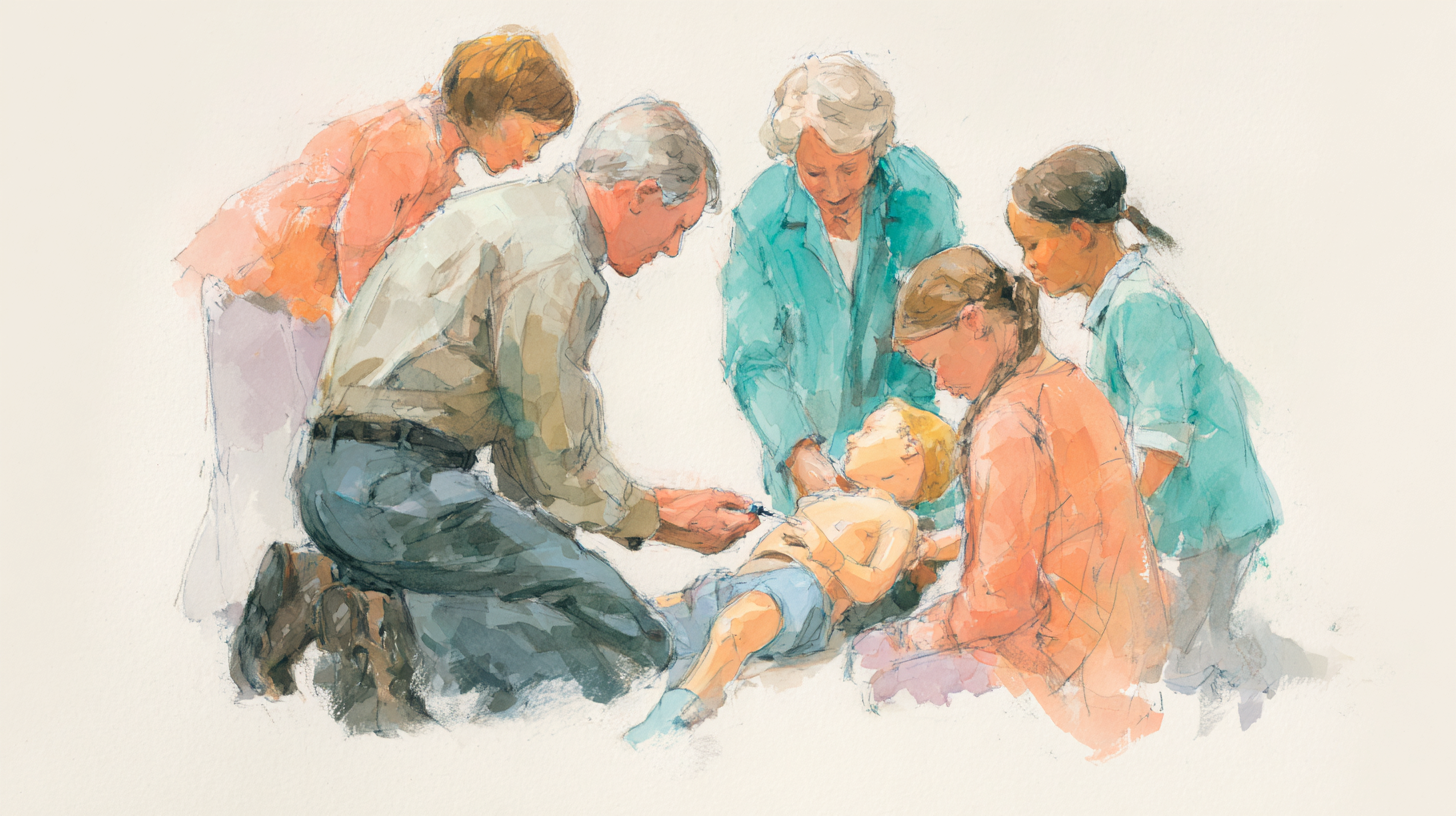
Start with a family training session. Gather everyone who regularly cares for your child—both sets of grandparents, regular babysitters, anyone who might be alone with your child. Get trainer devices from your pharmacy or allergist (many provide them free). Walk through each step while everyone watches, then have each person perform a return demonstration on the trainer. Watch their hands. Correct their grip. Make sure they can do it smoothly and confidently.
For school and childcare settings, schedule a meeting with teachers, administrators, and school nurses. Provide copies of your child’s emergency action plan with photos of your child and clear symptom checklists. Ask about their policies for storing personal auto-injectors and whether stock epinephrine is available. In many regions, schools now have stock epinephrine programs, which provides an extra safety net if your child’s personal devices aren’t immediately accessible. Some schools require all staff to complete annual anaphylaxis training, but don’t assume—verify it.
For activities and sports, coaches and activity leaders need the same level of preparation. I know a mother who laminated wallet-sized cards with her daughter’s photo, allergens, symptoms, and step-by-step EpiPen instructions. She gives one to every coach, camp counselor, and party host. It’s a simple, brilliant system that ensures the information travels with her daughter.
Schedule refresher training at least once a year, ideally every six months. Skills fade without practice. Even experienced caregivers benefit from periodic reviews. And whenever your child moves to a new classroom, joins a new team, or spends time with someone new, that person needs training before they’re ever alone with your child.
Interactive Training Tracker: Who’s Ready?
Click each step as you complete it to track your family’s readiness. Let’s make sure everyone in your child’s care circle is trained.
The Expiration Date Crisis Nobody Talks About
Let me tell you about a problem that’s more common than you’d think: expired EpiPens. A study examining patient carrying habits found that many families either don’t have their auto-injectors with them, have only one device instead of two, or are carrying expired medications. Auto-injectors typically have a shelf life of 12-18 months from the date of manufacture, and they need to be replaced before that expiration date.
Epinephrine degrades over time, especially when exposed to heat and light. An expired auto-injector might still deliver some medication, but you cannot count on it to deliver a full, effective dose when your child’s life depends on it. You need fresh, unexpired devices everywhere your child spends time: at home, at school, in your car (though extreme temperatures are a concern), in your diaper bag or child’s backpack, at grandparents’ houses, and anywhere else they regularly go.
Here’s a system that works: set calendar reminders six weeks before each auto-injector expires. That gives you time to call the doctor for a new prescription, deal with insurance, and pick up or order the new devices. When new ones arrive, rotate them strategically. Put the newest devices in the locations that are hardest to replace—like school, where you might need to schedule a meeting to hand-deliver them. Use slightly older (but still unexpired) devices in your home supply where you can swap them out more easily.
Create a simple tracking spreadsheet or use your phone’s notes app. List each location where you store auto-injectors and the expiration date of the devices there. Check this list monthly. Some families use apps specifically designed to track medication expiration dates, which send push notifications as deadlines approach.
Cost is a real barrier for many families. Auto-injectors can be expensive, and needing multiple sets adds up quickly. Explore your insurance coverage carefully—some plans cover them fully, others require copays or prior authorization. Ask your allergist about patient assistance programs offered by manufacturers. Some programs provide free or reduced-cost devices to families who meet certain income requirements. Generic versions of epinephrine auto-injectors have also become available in recent years, often at lower price points.
How Close Are You to Expiration?
Check your EpiPen now and select how much time is left until the expiration date. We’ll tell you what action you need to take.

Real-World Scenarios and How to Handle Them
Theory is one thing. Real life is messier, scarier, and full of variables nobody mentioned in the training video. Let me walk you through some scenarios that real families have faced, because seeing how others navigated these moments might help you feel more prepared.
Click Each Scenario to Reveal What Happened
These are real situations families have faced. Each one teaches an important lesson about preparation.
What happened: A 7-year-old with a tree nut allergy went on a class trip to a nature center. The teacher had his EpiPen in her bag, but when another parent offered the class cookies she’d baked, the child took one without asking. Within minutes, he complained of an itchy mouth and his lips started swelling.
What saved him: The teacher had practiced EpiPen administration just two weeks earlier during a school training refresh. She recognized the symptoms immediately, administered the EpiPen within 90 seconds, and called 911. The child recovered fully after hospital observation.
Lesson learned: Field trips are high-risk because routines change and supervision spreads thin. Always ensure the designated adult has the EpiPen on their person—not in a bag 50 feet away—and brief them specifically about the increased risks of food sharing outside school.
What happened: A family attended a birthday party at a friend’s house. The mother had clearly communicated her daughter’s egg allergy to the host, who assured her the cake was egg-free. But the frosting, made with butter cream, contained egg whites—and nobody thought to check.
What saved her: The mother always kept her daughter’s emergency kit within arm’s reach at parties. When her daughter started coughing and said her throat felt “funny” after one bite of cake, mom had the EpiPen out and ready in seconds. She administered it immediately, even though symptoms seemed “mild,” because she trusted her instincts.
Lesson learned: Hidden ingredients are a real danger. Never fully trust that someone else has checked everything, no matter how careful they are. Keep your emergency kit with you always, and don’t wait for severe symptoms—early administration saves lives.
What happened: A 10-year-old boy with a severe peanut allergy was playing basketball when another child opened a peanut butter sandwich courtside. Within minutes of being near the allergen, the boy developed hives and started wheezing. His coach had been trained but panicked and couldn’t remember the steps.
What saved him: The boy’s father had given the coach a laminated instruction card that stayed in the first aid kit. When the coach froze, another parent who’d been trained in EpiPen use grabbed the device and administered it correctly while someone else called 911.
Lesson learned: Even trained people can freeze in emergencies. Having multiple trained caregivers present and written instructions as backup creates redundancy that saves lives. Also, airborne allergen reactions, though less common, are real—always have the EpiPen nearby during activities.
What happened: A family with a child allergic to shellfish went on vacation to the Caribbean. At a beachside restaurant, the child ordered a “safe” dish, but it was prepared on the same grill as shrimp. Cross-contamination led to a severe reaction while they were 20 minutes from the nearest hospital.
What saved him: The parents carried two EpiPens in their beach bag and had researched the nearest hospital before the trip. When symptoms started, they administered the first EpiPen immediately and began driving toward the hospital while calling ahead. A second dose was needed during the drive, which they gave without hesitation.
Lesson learned: Travel requires extra planning. Always know where the nearest emergency medical facility is, carry multiple auto-injectors, and be prepared to give second doses if symptoms don’t improve or worsen. When far from help, early and decisive action is even more critical.
Building a Food-Safe Life With Joy, Not Fear
Living with food allergies doesn’t mean living in constant terror. Yes, vigilance is necessary. Yes, you’ll check ingredient labels until your eyes glaze over. Yes, you’ll have hard conversations with well-meaning grandparents who “just want to give the baby a little taste.” But you can also build a joyful, flavor-filled food life for your family that honors both safety and culture.
I’ve watched Caribbean families navigate this beautifully. They adapt beloved recipes to avoid allergens while keeping the soul of the dish intact. They teach their children to speak up proudly about their allergies rather than feeling ashamed. They create celebration foods that are both safe and delicious, proving that dietary restrictions don’t mean bland, boring meals.
When you’re introducing solid foods to babies and toddlers, the approach matters. Current guidelines actually recommend introducing common allergens early and often (around 6 months, once a few first foods are tolerated) to potentially reduce the risk of developing allergies. If you’re concerned about how to introduce foods like eggs, fish, or nuts safely—especially if allergies run in your family—talk with your pediatrician or allergist about the best approach for your specific situation.
For families wanting to share their cultural food heritage while navigating allergies, resources exist to help you make safe modifications without losing authenticity. Recipes like the ones in the Caribbean Baby Food Recipe Book—including allergen-friendly options like Coconut Rice & Red Peas, Sweet Potato & Callaloo Rundown, and Plantain Paradise—show how to build rich, nourishing flavor profiles using safe ingredients. The cookbook also includes sections on allergy introduction tips, helping you confidently share island flavors while keeping your little one safe.
Build traditions around safe foods. Create special “allergy-friendly” versions of holiday dishes that become family favorites. Teach your child to cook and bake their own safe treats. Connect with other families managing food allergies—online communities and local support groups can be lifelines when you’re feeling overwhelmed or isolated.
The Confidence That Comes With Practice
Remember that grandmother I mentioned at the beginning—the one who froze during her grandson’s reaction? I ran into her again about a year later. She told me that after that terrifying day, she committed to training like her grandson’s life depended on it. Because it did. She attended every training session offered by the local allergy foundation. She practiced with trainer devices until she could do it with her eyes closed. She even bought a small medical kit for her purse with a trainer device inside, and she’d practice whenever she had a quiet moment—waiting in the doctor’s office, sitting in her car before grocery shopping.
When her grandson had another reaction months later—this time from cross-contamination at a restaurant—she didn’t freeze. Her hands didn’t shake. She pulled out the EpiPen, administered it correctly within seconds, and calmly called 911. Her grandson is fine. And she told me something I’ll never forget: “The fear doesn’t go away, but the confidence grows bigger than the fear. That’s what practice gives you.”
That’s what I want for you. Not the absence of fear—fear in these situations is appropriate and keeps us vigilant. But confidence that’s bigger than the fear. Confidence that comes from knowing every caregiver in your child’s life has practiced and can act decisively. Confidence that comes from having unexpired auto-injectors everywhere they’re needed. Confidence that comes from written action plans and trained communities and repeated refreshers.
The data backs this up. Educational interventions that combine video training with hands-on practice significantly improve caregiver technique and confidence, with benefits lasting months. School-based programs that train all staff members—not just nurses—show better outcomes because more people can respond quickly. When caregivers feel prepared, they act faster, make fewer errors, and ultimately save more lives.
Your Action Plan Starting Today
You don’t have to do everything at once, but you do need to start. Today. Not next week. Not after you finish this article and move on to the next thing on your to-do list. Right now, before this moment of motivation fades, take one concrete action toward better preparation.
If you haven’t yet, schedule hands-on EpiPen training for yourself and your partner with your allergist or through a local allergy organization. Call them this week. Get trainer devices and practice at home until the motion feels automatic. Then schedule training for grandparents, babysitters, and anyone else who cares for your child regularly.
Check the expiration dates on every auto-injector you own right now. Every single one—at home, at school, in your car, in grandma’s diaper bag. If any are within two months of expiring, call your doctor today for new prescriptions. Set calendar reminders to check again in three months, then regularly every few months afterward.
Create or update your written anaphylaxis action plan. It should include your child’s photo, known allergens, a clear symptom checklist that indicates when to give epinephrine, step-by-step administration instructions, emergency contact numbers, and any other relevant medical information. Make multiple copies—one for each location where auto-injectors are stored—and laminate them so they’re durable.
Schedule a meeting with your child’s school, daycare, or activity leaders to review emergency protocols. Bring copies of the action plan, updated emergency contacts, and if possible, a trainer device to offer hands-on practice. Ask about their policies for field trips, substitute teachers, and how they handle emergencies when the school nurse isn’t available.
Join a food allergy support community, either locally or online. These communities share resources, offer emotional support, discuss the latest research, and help you feel less alone in this journey. Organizations like FARE (Food Allergy Research & Education) provide excellent educational materials and maintain directories of local support groups.
Talk to your child about their allergies in age-appropriate ways. Even young children can learn to identify their allergens, understand they need to ask before eating anything, and recognize when they don’t feel right. Older children can learn to carry their own auto-injectors and eventually self-administer. Empowering your child with knowledge and skills—rather than just fear—helps them navigate the world more confidently.
And here’s the most important action of all: practice. Not once. Not twice. Practice until every caregiver can demonstrate correct EpiPen technique smoothly and without thinking. Practice until pulling out the device and administering it becomes muscle memory. Practice until confidence replaces panic. Because in an emergency, you don’t rise to the occasion—you default to your training.
- Check EpiPen expiration dates today
- Schedule hands-on training for all caregivers
- Create or update written action plans
- Order trainer devices for practice
- Meet with school/childcare providers
- Set calendar reminders for expiration tracking
- Join a food allergy support community
- Practice technique monthly with trainer devices
When Every Second Counts, Preparation is Everything
That 6-second window I mentioned at the beginning—the time it takes for an allergic reaction to escalate from mild to severe—isn’t really about the clock. It’s about the countless moments before the emergency that determine whether you’re ready. It’s about the training sessions you schedule, the practice you put in, the expiration dates you track, the conversations you have, and the confidence you build one repetition at a time.
Anaphylaxis is terrifying, unpredictable, and potentially fatal. But it’s also treatable when epinephrine is given quickly and correctly. You can’t control whether your child will have an allergic reaction. You can’t control whether it will happen at home where you’re prepared or at a birthday party where you’re not. But you can control whether every single person in your child’s life knows how to save them when it matters most.
That grandmother’s story stays with me because it represents what so many families experience—the gap between having the tools and knowing how to use them effectively under pressure. Closing that gap requires intention, repetition, and a commitment to ongoing training that extends beyond your immediate family to every caregiver in your child’s community.
The magic isn’t in the device itself, though epinephrine is genuinely life-saving. The magic is in the prepared caregiver who recognizes symptoms early, acts without hesitation, and delivers that medication correctly because they’ve practiced enough times that their hands remember even when their brain is flooded with adrenaline and fear.
So let me ask you directly: who in your child’s life isn’t trained yet? Who has an expired EpiPen sitting in a drawer? What action are you going to take today—right now—to close one of those gaps? Because the emergency won’t wait for you to be ready. The emergency will happen on a random Tuesday at a friend’s house or during a weekend soccer game or at a restaurant you thought was safe. And when it does, the only thing that matters is whether the person holding that EpiPen knows exactly what to do with it.
Your child is counting on you. Not someday. Not when it’s convenient. Now. While there’s time to learn, practice, and prepare. While there’s space to make mistakes with trainer devices instead of real emergencies. While you can build the kind of confidence that’s bigger than fear and creates safety nets strong enough to catch your child when allergens slip through despite your best efforts.
Start today. Train everyone. Practice regularly. Check those expiration dates. And know that every moment you invest in preparation is a moment that could save your child’s life when seconds are the difference between tragedy and recovery. That’s not an exaggeration. That’s not fear-mongering. That’s the simple, powerful truth that every family with food allergies lives with—and the reason why EpiPen training for every caregiver isn’t optional.
It’s essential.

Kelley's culinary creations are a fusion of her Caribbean roots and modern nutritional science, resulting in baby-friendly dishes that are both developmentally appropriate and bursting with flavor. Her expertise in oral motor development and texture progression ensures that every recipe supports your little one's feeding milestones while honoring cultural traditions.
Join Kelley on her flavorful journey as she shares treasured family recipes adapted for tiny taste buds, evidence-based feeding guidance, insightful parenting anecdotes, and the joy of celebrating food, culture, and motherhood. Get ready to immerse yourself in the captivating world of Kelley Black and unlock the vibrant flavors of the Caribbean for your growing baby, one nutritious bite at a time.
- The Feeding Revolution: Why Your Everyday Meals Are Changing the World - October 13, 2026
- Your Feeding Story Matters More Than The “Perfect” One Online - October 12, 2026
- Looking Forward: Stepping Into Your Confident Feeding Future - October 11, 2026