
When Your Dinner Plate Started Lying to You: The Shocking Truth About Portion Distortion
️ Before We Begin: The Portion Reality Check
Let’s see how well you really know your portions. Click to reveal what has actually happened to common foods over the decades:
Here’s something that’ll make you pause mid-bite: that “normal” dinner plate sitting in your cupboard? It’s been quietly getting bigger, and so has everything we pile onto it. We’re living through what researchers call “portion distortion”—a silent shift that’s been happening right under our noses for the past fifty years. And friend, it’s affecting how our children learn to eat, how much we consume without thinking, and why so many of us feel like we’re fighting a losing battle with food.
The average American now consumes 513 more calories daily than we did in 1970. That’s not because we suddenly became greedier or lazier. It’s because our entire food environment changed—and took our perception of “normal” right along with it.
But here’s where it gets interesting for us parents: we’re not just dealing with our own distorted portions. We’re teaching the next generation what “enough” looks like. And if we don’t understand how we got here, how can we possibly guide our babies toward healthier relationships with food?
The Great American Portion Expansion
Let’s travel back to 1957. A muffin weighed 1.5 ounces. It was a modest breakfast item, something you’d enjoy with coffee. Fast forward to today, and that same muffin tips the scales at 8 ounces—more than five times larger. The calories? They ballooned from around 210 to well over 500. This isn’t just about muffins getting a bit bigger. This is a fundamental transformation of our food landscape.
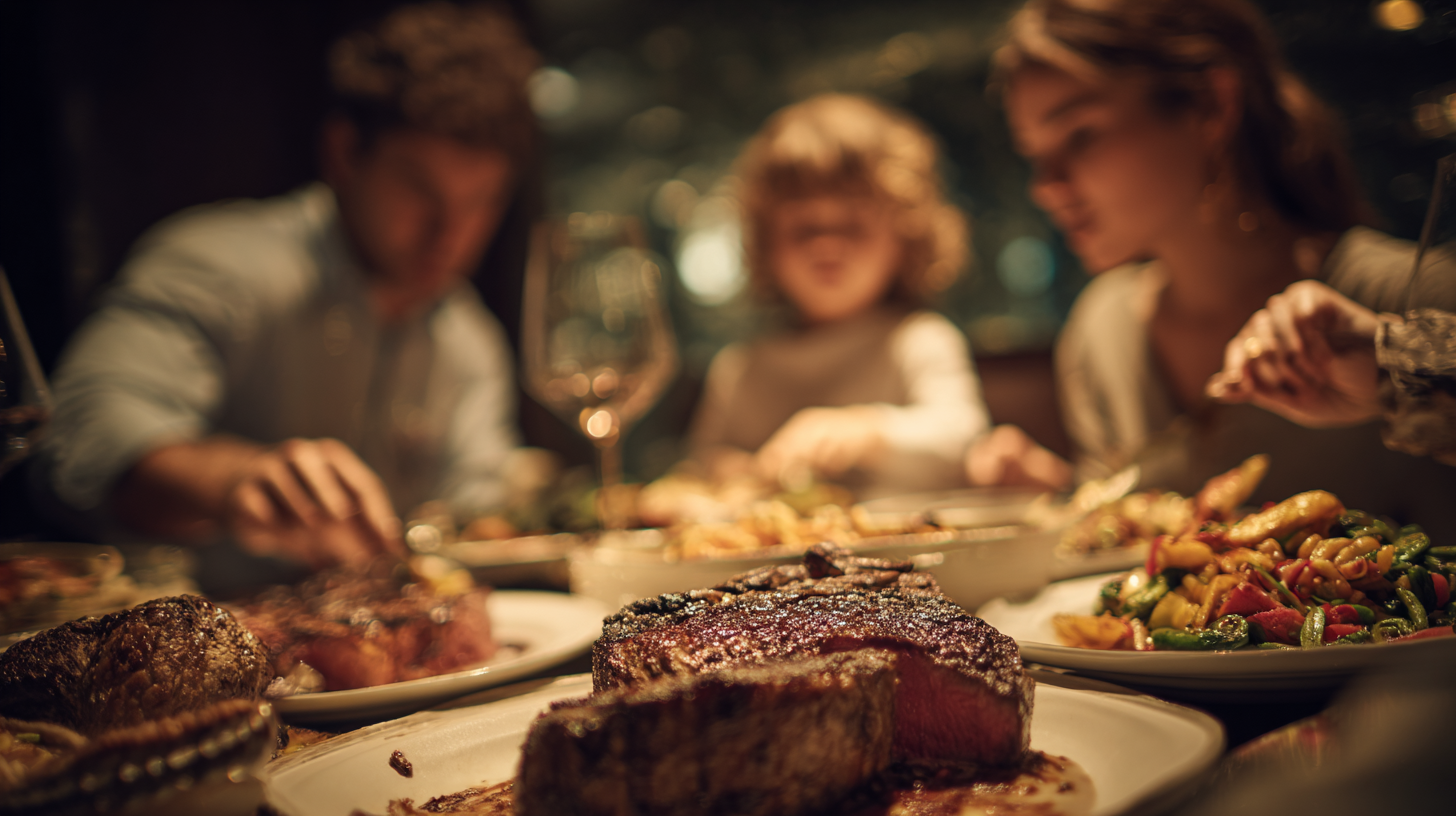
Research from the NIH documents how portions for items like snack foods and restaurant meals have grown since the 1970s and 1980s. Bagels expanded from 3 inches to over 6 inches in diameter. Restaurant servings of classics like spaghetti and meatballs literally doubled between 1980 and now. Even our plates got bigger—dinner plates grew from 9 inches to 12 inches, which might not sound dramatic until you realize that’s a 78% increase in surface area.
The shift wasn’t accidental. It was driven by economic pressures, the rise of value-based marketing, and the explosion of fast food culture. Restaurants discovered they could charge more for larger portions while the actual food cost increase was minimal. Consumers felt they were getting better deals. It seemed like everyone won. Except, of course, our waistlines and our health.
Restaurant portions doubled since 1980
Extra daily calories consumed vs. 1970
Increase in dinner plate surface area
And here’s the kicker: less than 45% of breakfast servings match reference portion sizes. For lunch and dinner, the alignment is even worse. We’ve completely lost our baseline for what an appropriate serving actually looks like. When I think about introducing solids to my own baby, I realize I’m working against decades of conditioning that whispers “more is better.” That’s a heavy inheritance to break.
Restaurant Reality vs. What Your Body Actually Needs
⚖️ The Portion Comparison Challenge
Can you guess which serving is the recommended portion? Click each food to see the shocking comparison:
Walk into any chain restaurant, and you’re immediately confronted with a disconnect between what’s on your plate and what nutrition experts recommend. A single restaurant pasta dish often contains three to four servings of what the USDA considers appropriate. That chicken breast? It’s frequently twice the recommended 3-ounce portion. The side of rice could feed two people comfortably.
According to recent data, 75% of American restaurant diners now desire smaller portions at lower prices. This is a massive cultural shift. People are waking up to the reality that bigger isn’t always better, especially when it comes with a side of guilt and sluggishness. But restaurants are slow to adapt because they’ve built entire business models around the “value meal” concept.
The problem isn’t just about eating out occasionally. It’s about how restaurant portions reset our home expectations. When you regularly see massive servings as “normal,” your brain recalibrates. You start plating similar amounts at home. Your children watch and internalize these cues. Before long, everyone in the family is eating portions that far exceed their nutritional needs—and no one even realizes it.
The truth that keeps me up at night: if we’re raising babies who grow up thinking a restaurant-sized portion is standard, we’re setting them up for a lifetime of overconsumption. And unlike us, they won’t have memories of smaller portions to contrast against. This becomes their only reality.
Teaching Portion Awareness When Everything Looks Supersized
So how do we teach our children about appropriate portions when we’re swimming against a cultural tide of supersizing? It starts with re-educating ourselves. We need visual anchors that bypass the distorted norms we’ve absorbed.
Your Personal Portion Guide Builder
Slide to select your child’s age range and discover age-appropriate portion examples:
Visual cues work wonders because they’re concrete and memorable. Teach your children that a portion of cooked rice should look like an ice cream scoop—not a mountain. A serving of meat should be about the size of a deck of cards. Cheese? Think a pair of dice. These aren’t arbitrary comparisons; they’re tools that help us recalibrate our distorted perceptions.
Getting kids involved in the measurement process transforms portion control from a restriction into an educational adventure. Let them scoop their own rice using measuring cups. Have them compare their chicken portion to that deck of cards. Turn grocery shopping into a learning experience where you read labels together and discuss what a single serving actually means versus what the package contains.
I’ve found that introducing Caribbean-inspired portions to babies creates a natural framework for balanced eating. When you’re preparing something like the sweet potato and callaloo recipes from a proper Caribbean Baby Food Recipe Book, you’re working with whole ingredients and traditional serving sizes that haven’t been distorted by commercial pressures. These recipes, featuring ingredients like coconut milk, plantains, and dasheen, teach babies to appreciate real food in appropriate amounts from the very start.
The Portions Master app and similar technologies help families track meals and visually reinforce balanced portions. But technology is just a tool. The real work happens at the dinner table, where you model mindful eating and demonstrate that finishing everything on your plate isn’t always necessary or desirable.
The Cultural Web We’re Caught In
Portion distortion doesn’t exist in a vacuum. It’s woven into the fabric of American food culture, tangled up with ideas about value, hospitality, and abundance. We live in a society that equates large portions with generosity. Hosts feel successful when guests leave stuffed. Parents show love through heaping plates.
The “value for money” mindset drives much of this. Why buy a small coffee when a large is only 50 cents more? Why order a regular burger when you can supersize for a dollar extra? This economic logic makes perfect sense—until you consider the hidden costs of overeating: increased risk of obesity, diabetes, heart disease, and a fundamentally broken relationship with hunger and fullness cues.
Cultural expectations around portion sizes also vary dramatically. In many immigrant communities, including Caribbean households, generous portions signal respect and care. There’s beauty in that tradition—the communal feast, the shared abundance. But we need to distinguish between special occasions and everyday eating. The Sunday pot of stewed peas and rice that feeds the whole family is different from routinely oversized daily portions.
Cultural Portion Perspectives
Different cultures have unique relationships with portion sizes. Click to explore contrasting approaches:
What researchers have found fascinating is that people commonly misjudge serving sizes, aligning their perceptions more with commercial packaging than nutritional guidelines. This confusion is compounded by conflicting messages from government, brands, and social circles. One source tells you a serving of pasta is half a cup; another shows you a plate piled high. Your friend posts a massive “healthy” smoothie bowl on social media with three times the recommended fruit serving. Everyone’s confused, and that confusion leads to overconsumption by default.
Breaking free requires conscious effort and community support. When you’re the only family ordering smaller portions or splitting restaurant meals, it feels awkward. When you’re teaching your toddler that the kids’ meal is actually enough food, you’re swimming against a tide of supersized happy meals and extra-large everything.

Social Media’s Double-Edged Influence
Social media has become an unexpected battleground in the portion wars. On one hand, it perpetuates unrealistic portions—think massive “foodie” plates designed more for Instagram than nutrition. Those towering burger and milkshake combos, the overflowing brunch spreads, the “challenge” meals that dare you to finish an obscene amount of food.
But here’s where it gets interesting: social media interventions that expose people to visual norms of recommended portion sizes actually work. Studies show that when adolescents and young adults see properly portioned meals regularly in their feeds, their self-reported desired portion sizes decrease significantly. The peer influence that once normalized supersizing can be redirected toward healthier patterns.
The MyPlate educational model, which organizes a balanced plate with visual proportions for vegetables, protein, grains, and fruits, reached 76% familiarity among Americans in 2024—a record high. This is partly thanks to social media amplification. Parents, nutritionists, and health advocates share MyPlate guides, portion control tips, and realistic meal photos. Slowly, the visual landscape is shifting.
When I scroll through my feed and see another parent sharing their toddler’s properly portioned dinner—maybe some mashed plantain, a small portion of seasoned chicken, and steamed callaloo—it normalizes appropriate serving sizes in a way that abstract nutrition guidelines never could. It tells me: this is what real, everyday feeding looks like. Not the massive portions, not the pristine, unattainable “food art,” but simple, adequate nourishment.
If you’re creating content or even just posting family meals, consider the power you hold. Every time you share a balanced, appropriately portioned plate, you’re contributing to a visual culture that can counteract decades of distortion. You’re showing other parents that enough is truly enough.
The Path Forward: What’s Actually Changing
Portion Progress Tracker
How far have we come in addressing portion distortion? Track the positive changes:
Restaurant Adaptation
Consumer Awareness
Policy Changes
Portion Control Products
Based on market trends, consumer surveys, and policy implementation data from 2023-2025
Despite the overwhelming scale of portion distortion, there are genuine reasons for optimism. Restaurant trends are shifting toward smaller, customizable portions. Chains are experimenting with “half portions” and “bowls” that allow diners to control serving sizes. This isn’t purely altruistic—it’s driven by consumer demand. When 75% of your customers say they want smaller portions, you listen or lose business.
The portion control packaging market, which includes single-serving packages and pre-portioned meals, reached $3.5 billion in 2023 and is projected to hit $5.8 billion by 2032. That growth reflects a real desire among consumers to manage intake without constant vigilance. These products aren’t perfect—they often involve more packaging waste—but they serve a purpose in helping people re-learn appropriate serving sizes.
Food-based dietary guidelines are also evolving. The USDA and health organizations now emphasize both qualitative guidance and specific portion sizes in their consumer education. Schools are adopting programs that teach children to balance their plates using visual models. The more we normalize these conversations, the less stigmatized and challenging they become.
Predictions suggest that mindful eating will continue gaining traction, driven by economic pressures (people can’t afford to waste food or overeat), health trends (awareness of metabolic health), and even pharmaceutical interventions (weight management medications are changing how people relate to hunger and fullness). All of these factors are creating momentum toward more reasonable portions.
But here’s the critical piece: individual families are where the real change happens. Policy and market trends matter, but your daily choices matter more for your children. When you consistently model appropriate portions, involve kids in food preparation, and teach them to listen to their bodies rather than clean their plates automatically, you’re creating a lasting shift that transcends cultural pressures.
Practical Steps You Can Take Tomorrow
Talking about portion distortion is one thing. Actually changing behavior in your home is another. So let’s get concrete. Here are strategies you can implement starting with your next meal:
Use smaller plates and bowls. This isn’t about tricking yourself; it’s about leveraging visual perception. When a healthy portion fills a smaller plate, it looks abundant rather than meager. Research consistently shows that people eat less when using smaller dinnerware without feeling deprived.
Pre-portion snacks and treats. Instead of eating chips directly from the bag, measure out a single serving into a bowl. This creates a natural stopping point and helps you visualize what a serving actually looks like. Over time, this becomes automatic.
Split restaurant meals or immediately box half. When eating out, ask for a to-go container when your meal arrives and set aside half before you start eating. This prevents the “clean plate” reflex and gives you lunch for tomorrow. Win-win.
Teach the “hand method” for portions. Your palm represents a protein portion. Your fist is about a serving of vegetables or grains. Your thumb is roughly a serving of fats. These cues travel with you everywhere and work for different body sizes.
Cook at home more often. Restaurant and takeout portions are the most distorted. Home cooking gives you complete control. When you’re making meals inspired by recipes like the Coconut Rice and Red Peas or the Simple Metemgee Style Mash from a Caribbean Baby Food Recipe Book, you’re working with traditional proportions that haven’t been supersized for profit.
Practice mindful eating. Slow down. Put your fork down between bites. Check in with your hunger and fullness cues. Teach your children to do the same. This isn’t about restriction; it’s about connection—reconnecting with your body’s actual needs rather than external portion cues.
Stock your kitchen with visual measurement tools. Measuring cups, food scales, and portion control plates aren’t about obsession. They’re about education. Use them consistently for a few weeks, and you’ll internalize what appropriate portions look like. Then you can eyeball it with accuracy.
Focus on food quality, not just quantity. When you’re eating nutrient-dense whole foods—vegetables, fruits, whole grains, lean proteins, healthy fats—appropriate portions become more satisfying. The highly processed, calorie-dense foods that dominate American eating require larger volumes to feel filling, perpetuating the portion distortion cycle.
For parents introducing solids to babies, this is your opportunity to start fresh. Babies haven’t yet learned distorted portion norms. They eat based on genuine hunger and stop when satisfied—unless we interfere. Respect their cues. Don’t force them to finish bottles or bowls. Model appropriate portions from the beginning, and you’ll be giving them a tremendous gift: an intact relationship with their hunger and fullness signals.
The Caribbean Connection: A Different Portion Philosophy
There’s something powerful about looking to traditional food cultures when trying to escape modern portion distortion. Caribbean cuisine, with its emphasis on fresh, whole ingredients and communal eating, offers lessons worth considering.
Traditional Caribbean meals weren’t built around massive individual portions. They were about shared pots—a big cook-up of rice and peas, a stew of callaloo and dasheen, fresh fish seasoned with thyme and scotch bonnet. Everyone took what they needed, and the emphasis was on variety and balance rather than volume. Portions were generous but not excessive, and meals were nutrient-dense rather than calorie-dense.
When you prepare Caribbean-inspired baby food—things like the Calabaza con Coco (pumpkin with coconut milk), the Yellow Yam and Carrot Sunshine, or the Cornmeal Porridge Dreams—you’re working with ingredients that naturally create satisfying, appropriately sized servings. These foods are rich in fiber, complex carbohydrates, and healthy fats that support genuine satiety without requiring huge volumes.
What I appreciate about recipes from a proper Caribbean Baby Food Recipe Book is that they teach babies early on that food can be flavorful, satisfying, and nutritionally complete in moderate portions. You’re not relying on added sugars, excessive salt, or empty calories to create appeal. The natural flavors of sweet potato, mango, plantain, and seasoning like ginger and cinnamon provide richness and satisfaction.
This approach also connects babies to food traditions that value quality over quantity. When you introduce a child to properly seasoned foods with real ingredients from the start, you’re building a palate that appreciates nuance and doesn’t require excessive amounts to feel satisfied. That’s a foundation that serves them for life.
Where Responsibility Really Lies
One of the most heated debates around portion distortion is about responsibility. Is this an individual failing—people lacking willpower or education? Or is it a systemic problem requiring regulation and industry accountability?
The truth is uncomfortable: it’s both. Yes, individuals have agency and can make informed choices. But we also live in an environment deliberately engineered to encourage overconsumption. Food companies profit from larger portions. Restaurants build business models around them. Marketing constantly pushes “more for less.” Expecting individuals to navigate this landscape without support is like throwing someone in the ocean and blaming them for struggling to swim.
The most effective approaches combine personal responsibility with structural change. Individuals can learn about portions, measure food, cook at home, and teach their children. But we also need clearer labeling, standardized serving size definitions, restaurant transparency about calorie and portion information, and policies that don’t incentivize overconsumption.
As parents, we can’t wait for systemic change to protect our children. We have to act now with the tools we have. But we can also advocate for better policies, support restaurants and brands that offer appropriate portions, and refuse to accept “bigger is better” as an immutable truth.
The goal isn’t perfection. It’s progress. It’s teaching your children that food is nourishment, not entertainment or emotional regulation or a measure of value. It’s showing them that enough is truly enough—and that satisfaction comes from eating well, not eating until you’re uncomfortably full.
Building a Healthier Food Future
✨ Your Family Portion Pledge
What’s one portion-related change you’ll commit to this week? Click to see examples and get inspired:
The journey away from portion distortion isn’t about deprivation or rigid rules. It’s about reclaiming your relationship with food and teaching your children to eat in a way that genuinely serves their bodies and health. It’s about recognizing that the past fifty years of portion inflation don’t have to define the next fifty.
Every meal is an opportunity. Every snack is a teaching moment. When you measure out that ice cream scoop of rice, when you split that restaurant entree, when you pack appropriately portioned lunches for your kids, you’re not just managing portions—you’re rebuilding food culture one plate at a time.
The most beautiful thing about starting early with babies is that they haven’t internalized any of the distortions yet. They’re working with pure biological cues. If we can protect and honor those cues, if we can model sanity around portions rather than the excess that surrounds us, we give them something invaluable: the ability to trust their own bodies.
This isn’t a quick fix. Cultural shifts take time, and undoing decades of conditioning requires patience and consistency. But it’s happening. More restaurants are offering smaller portions. More consumers are demanding them. More families are cooking at home and taking control of their food environment. The portion pack market is growing because people want help managing intake. Awareness is rising.
You’re part of that shift. Every time you question whether that portion is really appropriate, every time you teach your child to stop when satisfied rather than when the plate is empty, every time you prepare a balanced, properly portioned meal with real ingredients—like those flavorful Caribbean recipes featuring sweet potatoes, coconut, plantains, and whole grains—you’re contributing to a healthier future.
The plates in your cupboard might be bigger than your grandmother’s, but what you put on them is still your choice. The restaurant might serve you twice what you need, but you can take half home. Your child might be surrounded by supersized portions everywhere else, but at your table, they can learn what enough truly looks like.
That’s not just managing portion distortion. That’s raising a generation that won’t need to.
So here’s my challenge to you: Look at tonight’s dinner plates before you fill them. Really look. Are the portions aligned with nutritional needs, or are they echoes of a distorted culture? Make one small adjustment. Use a smaller plate. Measure the rice. Add more vegetables. Whatever feels manageable.
Then do it again tomorrow. And the next day. Small, consistent actions create lasting change. Your children are watching. They’re learning not from what you say, but from what you do. Show them that enough can be abundant. Show them that satisfaction doesn’t require excess. Show them that food is meant to nourish, not overwhelm.
Because when we finally break free from portion distortion, we don’t just change what’s on our plates. We change our entire relationship with food, with our bodies, with nourishment itself. And that’s a legacy worth creating—one properly portioned meal at a time.

Kelley's culinary creations are a fusion of her Caribbean roots and modern nutritional science, resulting in baby-friendly dishes that are both developmentally appropriate and bursting with flavor. Her expertise in oral motor development and texture progression ensures that every recipe supports your little one's feeding milestones while honoring cultural traditions.
Join Kelley on her flavorful journey as she shares treasured family recipes adapted for tiny taste buds, evidence-based feeding guidance, insightful parenting anecdotes, and the joy of celebrating food, culture, and motherhood. Get ready to immerse yourself in the captivating world of Kelley Black and unlock the vibrant flavors of the Caribbean for your growing baby, one nutritious bite at a time.
- The Feeding Revolution: Why Your Everyday Meals Are Changing the World - October 13, 2026
- Your Feeding Story Matters More Than The “Perfect” One Online - October 12, 2026
- Looking Forward: Stepping Into Your Confident Feeding Future - October 11, 2026