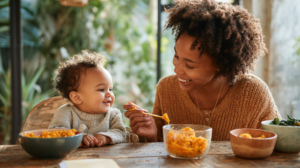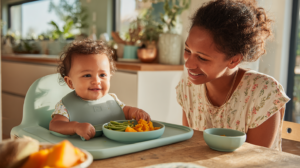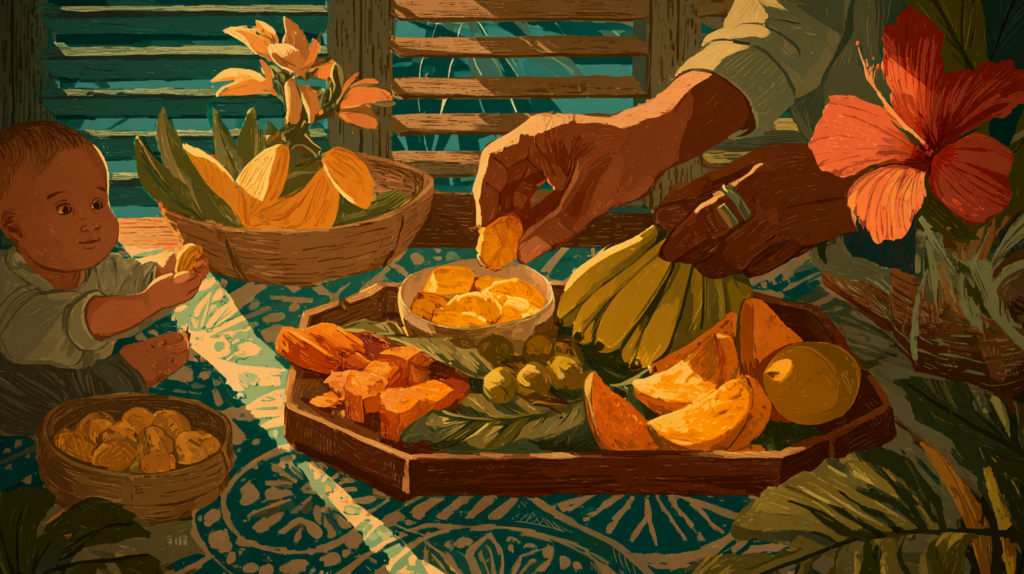
When Your Baby’s Ready for Real Food (And How You’ll Actually Know)
Here’s what nobody tells you at the pediatrician’s office: that moment when your baby reaches for your jerk chicken isn’t just cute—it’s a signal. A biological nudge that says, “I’m ready for more than this mush you’ve been feeding me.”
Three months ago, my cousin Shari called me in a panic. Her ten-month-old daughter Maya was still eating nothing but smooth purees, and every time Shari tried introducing anything with texture, Maya would gag and refuse to eat. The pediatrician had just told her Maya should’ve been eating table foods months ago. But here’s the truth: nobody had told Shari what the actual signs looked like. Nobody explained the progression. And definitely nobody warned her about the narrow window between 7 and 9 months that researchers now call the “texture introduction critical period.”
This isn’t one of those things where you can just wing it and hope for the best. The science is clear: babies who don’t transition to varied textures before 9 months are significantly more likely to become picky eaters at age 7. Not just a little fussy—we’re talking refusing entire food groups, limited diets, and mealtime battles that last for years.
But the good news? Your baby will tell you exactly when they’re ready. You just need to know what you’re looking for.
️ Is Your Baby Ready? The Real Readiness Quiz
Check all the signs you’re currently seeing. Be honest—this is just for you.
The Truth About That 6-Month Mark
Everyone says “start solids at 6 months,” but that’s actually the beginning of a much longer journey. Starting solids and being ready for table foods are two completely different milestones—and confusing them is where parents get stuck.
When Maya turned six months, Shari did everything right. She started with smooth sweet potato puree. Then mashed avocado. Then that fancy organic baby food that costs more per ounce than her own dinner. But here’s what happened: she stayed there. For four months, Maya ate nothing but perfectly smooth purees, and every time Shari tried to progress, Maya rejected it.
Recent research from a 2024 nationwide birth cohort study found something shocking: the timing of when you introduce food pieces—not purees, but actual pieces of food with texture—directly correlates with neurodevelopmental outcomes. Babies who experienced varied textures earlier showed better oral motor development, more adventurous eating patterns, and stronger self-feeding skills.
The progression should look like this: you’ve got maybe 4-6 weeks on smooth purees before you need to start thickening things up. By 7 months, there should be small, soft lumps. By 8-9 months, your baby should be managing soft finger foods. And by 12 months? They should be eating modified versions of what the family eats.
But if you’re thinking, “My baby’s been on purees for five months and seems fine,” here’s the uncomfortable truth: they might not be fine in three years when they refuse anything that isn’t perfectly smooth or uniformly textured.
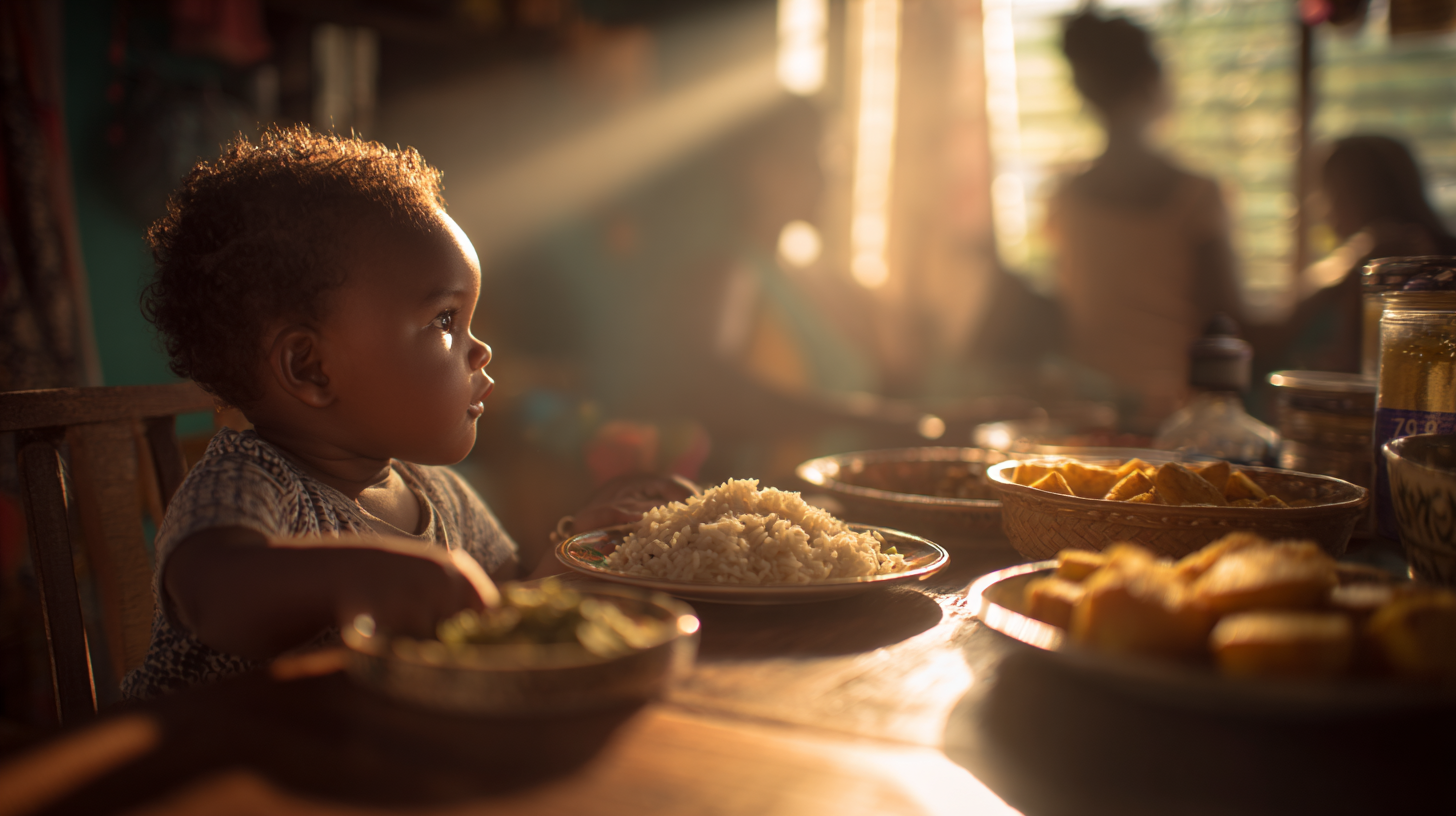
The Texture Progression Nobody Explains
This is where most parenting guides fail you. They’ll say “progress textures gradually,” but they won’t tell you what that actually means when you’re standing in your kitchen with a nervous baby and a bowl of food.
Let me paint you a picture from my own experience: When I started my niece on solids, I thought “thicker purees” meant… well, thicker purees. So I made her sweet potato mash and thought I was progressing. But there’s a massive difference between thick-smooth and actual lumpy texture. The first time I gave her real lumps—tiny soft pieces of steamed carrot in her mash—she looked betrayed. Gagged a little. Spit it out.
But here’s what I learned: that gagging? That’s not choking. That’s her learning. That’s her oral motor system figuring out how to move food around, how to mash it with her gums, how to position it for swallowing. If I’d panicked and gone back to smooth purees, I would’ve taught her that gagging means retreat—instead of teaching her that gagging means “adjust and try again.”
Your Texture Progression Roadmap
Click each stage to see exactly what it looks like in practice:
Duration: 2-4 weeks maximum
What it looks like: Completely smooth, yogurt-like consistency. Think sweet potato whipped until silky, or avocado mashed until there’s no chunks whatsoever.
Caribbean example: Perfectly smooth Calabaza con Coco puree that slides off a spoon.
Your goal: Get comfortable with spoon-feeding OR let baby explore self-feeding with pre-loaded spoons. Don’t camp out here.
Duration: 2-3 weeks
What it looks like: Mashed with a fork, not blended. Think mashed banana with tiny soft pieces, or well-cooked yam roughly mashed.
Caribbean example: Yellow yam mashed with fork, some small soft lumps visible. Or ripe plantain mashed—not pureed.
Your goal: Introduce the concept that food has texture. Baby’s tongue learns to move food around instead of just swallowing.
Duration: This is not optional. Must happen before 9 months.
What it looks like: Ground meat crumbles, small soft pieces of cooked vegetables, shredded chicken. Foods that need chewing but are soft enough to gum.
Caribbean example: Shredded stewed chicken with gravy, tiny pieces of steamed callaloo, ground beef from a mild picadillo.
The science: Research shows babies who don’t experience lumpy textures before 9 months are 3x more likely to have feeding difficulties later.
Your goal: Don’t delay this stage. Even if baby gags a little, that’s learning, not danger.
What it looks like: Small pieces of whatever the family is eating, cut appropriately. Steamed vegeta ble strips, flaky fish, well-cooked pasta, soft beans.
Caribbean example: Small pieces from your Cook-Up Rice with beans, shredded jerk chicken (mild version), soft festival pieces.
Your goal: Baby starts eating what the family eats, just modified. This is where the magic happens—they’re at the table with you.
What it looks like: Your dinner, minus the salt and spicy pepper. They’re eating what you eat, just adapted.
Caribbean example: Stewed peas (before adding scotch bonnet), rice and peas with shredded chicken, steamed fish with ground provisions.
Your goal: Eliminate “baby food” as a concept. They’re a member of the family table now.
The Safety Conversation We Need to Have
Let’s talk about the fear that keeps parents stuck on purees: choking. It’s real, it’s valid, and it’s also deeply misunderstood.
When I first gave my nephew a piece of steamed carrot—properly soft, appropriate size—my sister-in-law nearly had a heart attack. “He’s going to choke!” she said, hand already reaching to sweep his mouth. But here’s what was actually happening: he was gagging. And gagging is not choking.
Gagging is loud, active, and self-resolving. Choking is silent, passive, and requires intervention. Gagging is actually your baby’s safety mechanism working perfectly—it means their body is learning where food should be in their mouth and how to handle it.
The CDC updated their guidelines in March 2025, and here’s what they emphasize: proper food preparation is everything. It’s not about avoiding all solid foods—it’s about preparing foods correctly and avoiding specific high-risk items.
The real choking hazards aren’t “all solid foods.” They’re specific things: whole grapes, raw carrots, hot dogs, hard candies, popcorn, nuts, and anything small, hard, and round. But a properly steamed carrot stick that’s soft enough to squish between your fingers? That’s not a choking hazard—that’s appropriate food for a 7-month-old.
Safe or Not? The Food Safety Game
Test your knowledge! For each food, decide if it’s safe or unsafe for a 9-month-old (prepared correctly):
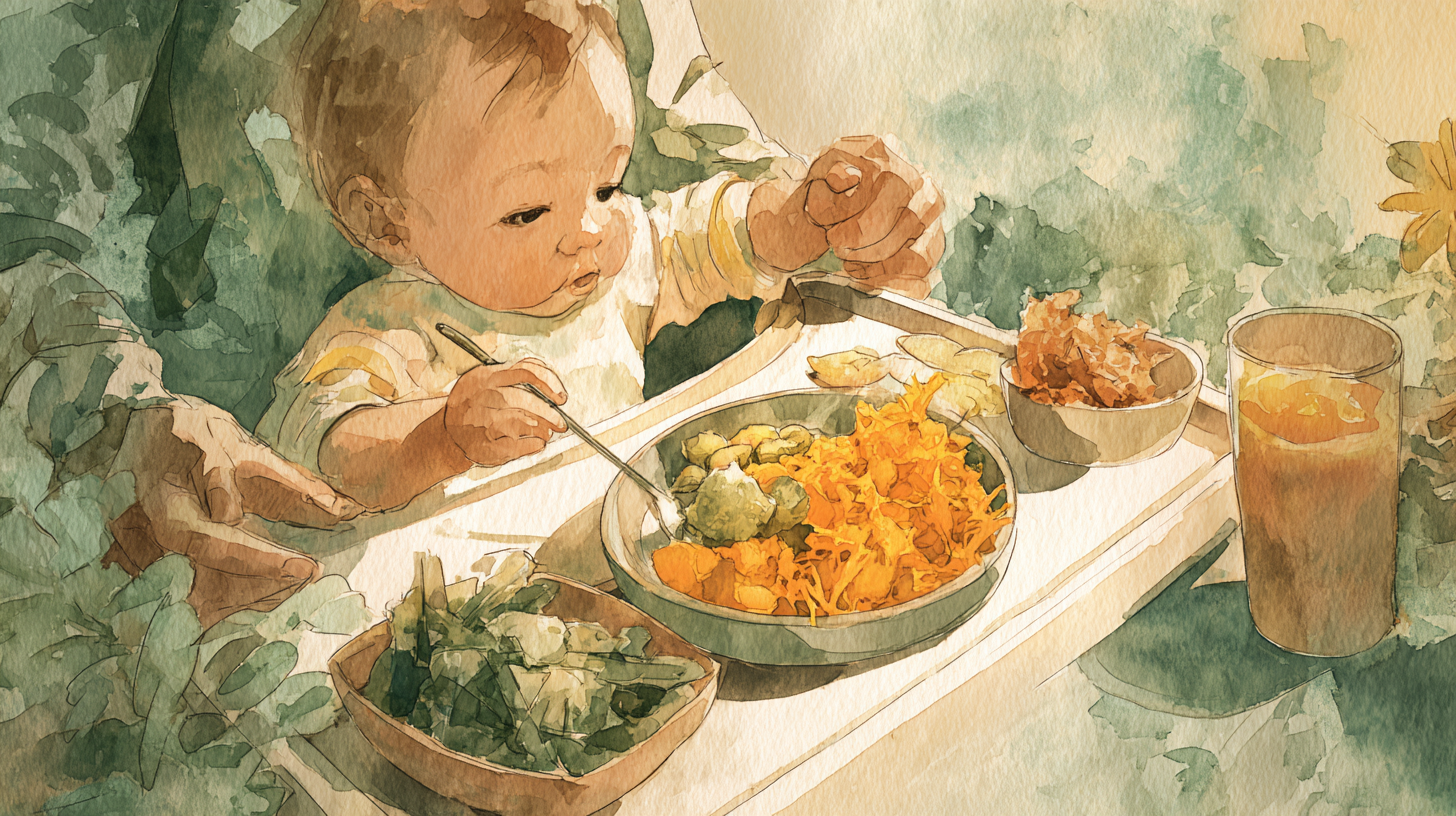
Making Family Meals Actually Work
Here’s where the Caribbean approach to feeding babies gets it right: we don’t make separate meals. We adapt what we’re cooking.
Last Sunday, my family made stewed chicken with rice and peas. For the adults, there was scotch bonnet pepper and proper seasoning. For ten-month-old Maya (yes, Shari finally got her eating table foods!), we pulled out chicken before adding the hot pepper, shredded it finely, and gave her some rice and peas on the side. Same meal. Different modification. Zero extra cooking.
The research backs this up beautifully. A 2025 study published in *Frontiers in Nutrition* found that children who regularly eat with their families from the start of complementary feeding show 12% lower obesity risk, better nutrient intake, and significantly less food fussiness. But here’s the key: they need to be eating the same foods, just modified appropriately.
The mistake most parents make is thinking they need to cook completely separate baby meals. That’s exhausting, unsustainable, and actually counterproductive. Your baby learns to eat by watching you eat. They learn food is enjoyable by seeing your enjoyment. They learn what “normal” food looks like by experiencing it at the table with you.
️ Family Meal Makeover
See how easy it is to modify Caribbean family meals for babies. Click to reveal the baby-friendly version:
Classic Jamaican Sunday dinner—rich, flavorful, perfect for the whole family.
For baby (8+ months):
- Remove portion before adding scotch bonnet pepper
- Shred beef or chicken into tiny pieces
- Mash some kidney beans with fork (not all—leave some whole for texture practice)
- Cut dumplings into small, manageable pieces
- Thin gravy slightly with low-sodium broth if needed
Baby gets the authentic flavors from thyme, scallion, and garlic without the heat. Find more recipes like this in our Caribbean Baby Food Recipe Book.
Aromatic, warming, and full of Caribbean flavor.
For baby (10+ months):
- Use mild curry powder (or make your own blend with turmeric, cumin, and a tiny bit of curry)
- Set aside baby’s portion before adding hot pepper
- Shred chicken thoroughly—no chunks that could be difficult
- Serve with plain rice or rice cooked in coconut milk
- Include some soft potato pieces from the curry
Baby experiences the complexity of curry flavors in a developmentally appropriate way.
Creamy, comforting breakfast that’s basically made for babies already!
For baby (6+ months):
- Cook until very smooth and creamy
- Reduce sugar significantly (babies need very little added sugar)
- Add cinnamon, nutmeg, and vanilla for flavor depth
- Thin with breast milk, formula, or coconut milk to appropriate consistency
- Can add mashed banana or papaya for natural sweetness
Literally the same meal, just less sugar. That’s it. Get the full recipe in our cookbook featuring 75+ Caribbean-inspired baby recipes.
Fried fish with tangy pickled vegetables—a Jamaican classic.
For baby (10+ months):
- Steam or bake the fish instead of frying for baby’s portion
- Flake fish carefully, checking multiple times for any bones
- Skip the vinegar-heavy escovitch sauce
- Offer small pieces of steamed carrot and bell pepper from the veggies
- Serve with ground provision or rice on the side
Baby gets the nutritional benefits of fish without the frying or intense acidity.
The Milestone Timeline That Actually Matters
Forget the Instagram-perfect feeding journey. Here’s what the real progression looks like, backed by actual developmental science:
At six months, your baby should be able to sit with support and bring hands to mouth. That’s it. That’s the baseline. They don’t need to grab the spoon perfectly or eat without making a mess. They just need those two fundamental skills.
By seven to eight months, you should be seeing them reach for food, maybe try to feed themselves (messily), and start developing that pincer grasp—the thumb and finger coordination that lets them pick up smaller pieces.
The nine-month mark is critical. This is where the research gets really specific. A 2024 review on children’s oral texture perception found that the 7-9 month window is when babies’ oral motor systems are primed for learning new textures. Miss this window, and you’re not just delaying progress—you’re potentially creating long-term eating difficulties.
By 12 months, your baby should be eating modified versions of family foods, self-feeding with hands (and attempting utensils), and participating in family meals. Not perfectly. Not neatly. But participating.
✅ Track Your Baby’s Progress
Check off each milestone as your baby achieves it. Watch your progress bar fill up!
Sits with minimal support and brings hands/objects to mouth deliberately
Eating smooth and mashed textures, showing interest in watching others eat
Successfully eating lumpy textures without excessive gagging or refusal
Developing pincer grasp, can pick up small soft foods between thumb and finger
Eating soft chopped foods, attempting self-feeding with hands
Participating in family meals, eating modified versions of family foods
Eating most table foods (modified appropriately), self-feeding majority of meal
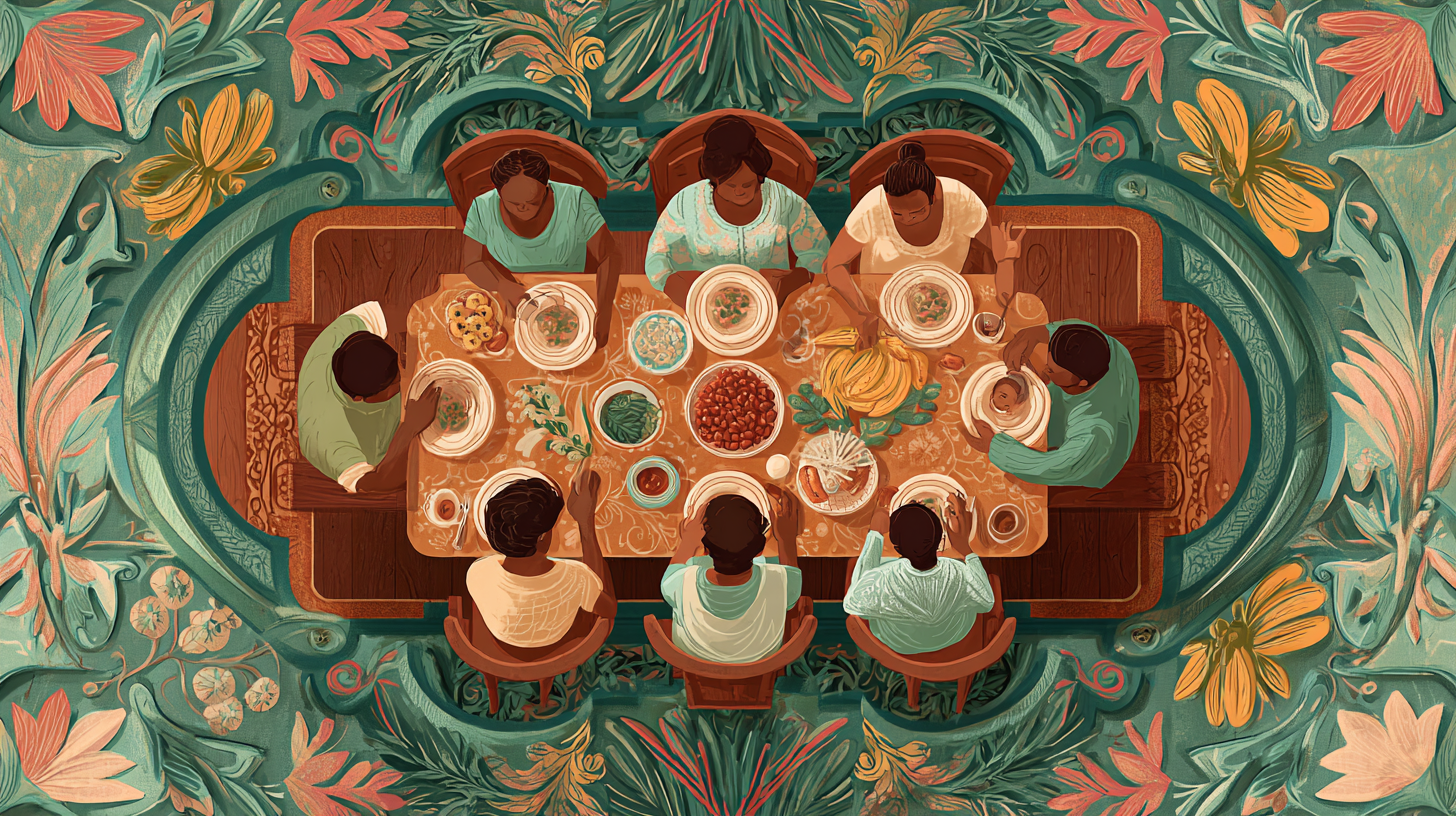
When Something’s Actually Wrong
This is the section I wish existed when my cousin was panicking about Maya. Because sometimes, it’s not just a matter of going slow or trying again tomorrow. Sometimes, there’s actually something that needs professional attention.
The difference between “my baby’s taking time to adjust” and “my baby needs a feeding evaluation” isn’t always obvious. But there are specific red flags that researchers and pediatric feeding specialists say you shouldn’t ignore.
Consistent gagging on all textures beyond 9 months—not just occasional gagging while learning, but distressed, repetitive gagging every single time—that’s a sign to get help. Refusing to progress beyond purees at 10+ months despite multiple gentle attempts over weeks. Packing food in their cheeks and not swallowing, which can indicate oral motor difficulties. Extreme distress at the sight or smell of textured foods, which might signal sensory processing challenges.
And here’s one that often gets missed: if your baby’s weight gain starts faltering during the transition to solids, that needs attention. The transition shouldn’t cause weight loss or failure to gain appropriately.
Red Flag Assessment
Check any signs you’ve observed with your baby. This is for your awareness—not a diagnosis:
What This Actually Looks Like in Real Life
Let me tell you how Maya’s story ended—because it’s not perfect, but it’s real.
After that pediatrician appointment that sent Shari into a spiral, she came to me. We sat down with Maya (who was 10 months by then and still only eating smooth purees) and we started with something simple: mashed banana with tiny, tiny soft lumps. Maya gagged a little. Made a face. Spit some out.
And Shari almost quit right there. But I reminded her: gagging is learning. So we tried again the next day. And the next. Within a week, Maya was managing small lumps without distress. Within two weeks, she was eating shredded chicken. Within a month, she was sitting at the dinner table eating modified versions of what everyone else was eating.
Was it smooth? No. Was it linear? Absolutely not. Some days Maya ate well, other days she refused everything. Some meals were successful, others ended in frustration and a backup pouch of puree.
But here’s what changed everything: Shari stopped making separate baby meals. She started putting Maya in the high chair at the family table for every meal. Even if Maya only ate three bites, she was there, watching, learning, participating. And slowly, Maya started reaching for what was on other people’s plates. Started getting excited about rice and peas because that’s what everyone else was excited about.
Now at 14 months, Maya eats everything. Jerk chicken (mild version). Rice and peas. Steamed callaloo. Fried plantain. Festival. All the foods that make up her family’s food culture, modified appropriately for her age.
Your Next Step Starts Tomorrow Morning
Here’s what I want you to do: stop waiting for the perfect moment. Stop waiting until your baby seems “ready enough” or until you feel confident enough. The research is clear—the window of optimal texture introduction is narrow, and delaying it doesn’t make it easier. It makes it harder.
Tomorrow morning, whatever you’re making for breakfast, make a version for your baby. If you’re having ackee and saltfish, give baby some scrambled egg with a tiny piece of fish (bones meticulously checked). If you’re having cornmeal porridge, make it a little thicker than you normally would and let baby try that texture. If you’re having toast and avocado, let baby have some too—just cut it appropriately.
Start where you are. Use what you have. Progress from there.
The goal isn’t perfection. It’s not Instagram-worthy high chair photos of your baby neatly eating color-coordinated foods. The goal is raising a child who sits at the family table, eats the family’s food, and doesn’t grow up thinking “kid food” is a separate category from “real food.”
Your baby will tell you when they’re ready for each step. You just need to offer the opportunity, manage the safety aspects, and trust the process. The magic isn’t in special baby foods or perfect timing—it’s in consistency, exposure, and family meals shared together.
And if you’re worried you don’t have enough appropriate recipes or you’re not sure how to modify your favorite Caribbean dishes for your baby’s stage, that’s exactly why I created our Caribbean Baby Food Recipe Book. Seventy-five recipes, organized by age, with clear modifications and family meal adaptations. Every recipe designed to introduce authentic Caribbean flavors while meeting developmental nutrition needs—from first purees through toddler meals.
Because at the end of the day, feeding your baby isn’t about following rigid rules or achieving milestones on an exact schedule. It’s about nourishing their body, introducing them to their culture’s flavors, and creating the foundation for a lifetime of healthy, joyful eating.
Start tomorrow. Your baby’s ready. And so are you.

Kelley's culinary creations are a fusion of her Caribbean roots and modern nutritional science, resulting in baby-friendly dishes that are both developmentally appropriate and bursting with flavor. Her expertise in oral motor development and texture progression ensures that every recipe supports your little one's feeding milestones while honoring cultural traditions.
Join Kelley on her flavorful journey as she shares treasured family recipes adapted for tiny taste buds, evidence-based feeding guidance, insightful parenting anecdotes, and the joy of celebrating food, culture, and motherhood. Get ready to immerse yourself in the captivating world of Kelley Black and unlock the vibrant flavors of the Caribbean for your growing baby, one nutritious bite at a time.
- The Feeding Revolution: Why Your Everyday Meals Are Changing the World - October 13, 2026
- Your Feeding Story Matters More Than The “Perfect” One Online - October 12, 2026
- Looking Forward: Stepping Into Your Confident Feeding Future - October 11, 2026