
When Your Baby’s Gums Say “No Thanks” to Dinner: The Teething and Feeding Survival Guide
Check all the symptoms your little one is experiencing right now:
Three a.m. You’re standing in your kitchen, bleary-eyed, watching your baby—who was happily eating sweet potato just yesterday—now screaming at the mere sight of a spoon. The food? Untouched. Your sanity? Hanging by a thread. Sound familiar?
Here’s what nobody tells you in those glossy parenting books: teething doesn’t just mean your baby gets teeth. It means meals become battlegrounds, nutrition becomes a puzzle, and you become a combination of chef, detective, and magician all rolled into one exhausted package. But here’s the beautiful truth hiding in this chaos—you’re not doing anything wrong. Your baby isn’t being difficult. Those tiny gums are genuinely hurting, and eating might feel about as appealing as chewing on sandpaper.
When researchers studied infant teething patterns, they discovered something eye-opening: up to 65% of mothers reported poor feeding as a primary symptom during teething episodes. That’s not a small number—that’s the majority of us wandering around, worried sick about whether our babies are getting enough nutrition while simultaneously dodging flying bowls of oatmeal. Another study found that 44% of caregivers noticed weight changes during teething periods. The struggle is real, documented, and you’re certainly not alone in this.
But instead of waiting for this phase to magically pass—which it will, eventually, after what feels like an eternity—let’s talk about how to navigate it right now. Because your baby still needs nutrition, your baby still wants to eat (somewhere under all that discomfort), and you still deserve to feel like a capable parent instead of a helpless bystander.
The Truth About Teething: What’s Really Happening in That Tiny Mouth
Let’s start with understanding the enemy. Teething typically begins between 4 and 7 months, though some babies are early bloomers and others are fashionably late. By around 30 months, your little one will have a full set of 20 primary teeth. That’s a lot of teeth breaking through tender gum tissue, and each one brings its own special brand of discomfort.
Think about it this way: imagine someone told you that a hard object was going to push through your skin from the inside. That’s essentially what’s happening in your baby’s mouth, over and over again for about two years. The gums swell, turn red, become tender, and sometimes even develop small bruises. Medical experts confirm that these symptoms—the drooling, the irritability, the disrupted sleep—are genuine physiological responses to inflammation and discomfort.

Here’s where it gets tricky for feeding: that same mouth that’s hurting is the same mouth you’re trying to put food into. When your baby clamps those gums shut and turns away from the spoon, they’re not rejecting you or the food—they’re protecting a sore spot. Pediatric dentistry research shows that over 80% of caregivers report changes in eating patterns during active teething, with babies preferring liquids over solids and cold foods over warm ones.
But here’s the part that might surprise you: teething symptoms can overlap with actual illness. This is crucial because while your baby might genuinely be uncomfortable from teething, if the refusal to eat persists for more than a few days, or if they’re also running a high fever or showing signs of dehydration, you need to check with your pediatrician. Teething alone doesn’t cause high fevers or severe diarrhea—those are signs something else might be going on.
The Cold Hard Truth (Pun Intended): Temperature Is Your Secret Weapon
When my neighbor’s baby was going through her first teething episode, she discovered something by accident. She’d left a bowl of mashed banana in the fridge too long, and when she finally offered it to her screaming infant out of desperation, the baby actually ate it. Not just ate it—demolished it. That’s when it clicked: cold numbs pain.
Pediatric experts consistently recommend cold foods as a first-line strategy for soothing teething pain while maintaining nutrition. The temperature temporarily numbs the inflamed gums, providing relief that allows babies to actually eat. Here’s what works in the real world:
Chilled purees are your best friend during this phase. Take whatever your baby normally eats—sweet potato, pears, applesauce, even that calabaza con coco from Caribbean-inspired baby food recipes—and serve it slightly chilled. Not frozen solid, but cool enough to provide relief. The texture remains familiar, which is important because teething already disrupts enough of your baby’s world.
Yogurt and cottage cheese become superstars during teething episodes. They’re soft, they’re cold, they go down easily, and they pack serious nutritional value. If your baby is used to warm meals, this might take some adjustment, but hunger eventually wins. One mother in a pediatric feeding study reported that her son would only eat cold yogurt for an entire week during his worst teething episode—and his pediatrician confirmed he was getting adequate nutrition from it along with continued breastfeeding.
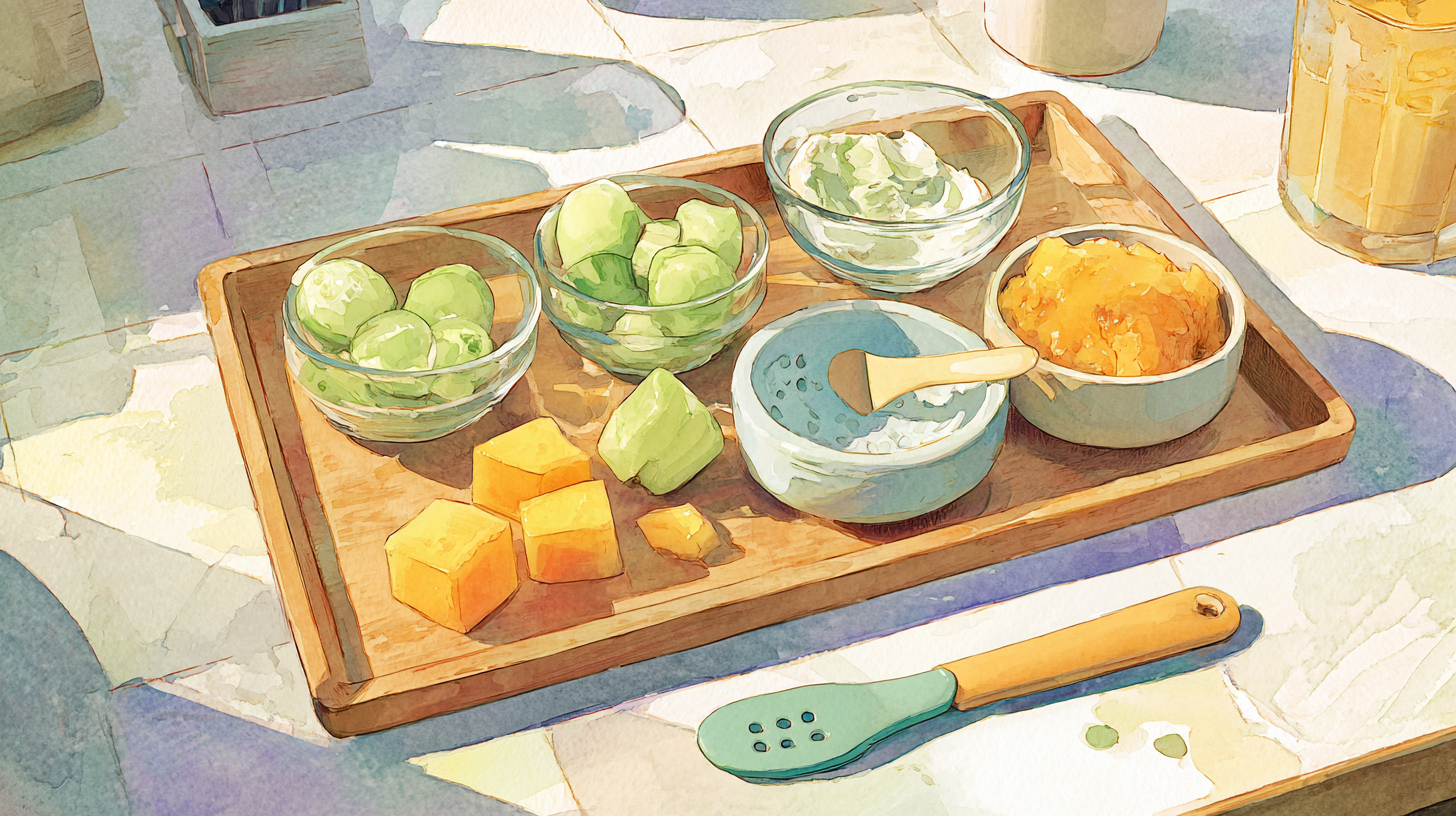
Mesh feeders filled with frozen fruits have changed the game for countless parents. Fill them with chunks of mango, banana, or even frozen breastmilk, and let your baby gnaw away. The mesh prevents choking while allowing your baby to work those sore gums and actually get some nutrition in the process. It’s multitasking at its finest—pain relief and feeding combined.
Cold cucumber sticks—thinly sliced and slightly chilled—work surprisingly well for babies who are already doing baby-led weaning. The coolness soothes, the act of gnawing provides counter-pressure that feels good on emerging teeth, and cucumbers are safe and nutritious. Just make sure they’re cut appropriately to minimize choking risk.
When Spoons Become the Enemy: Alternative Feeding Strategies
Sometimes the problem isn’t the food—it’s the delivery method. A spoon scraping against already tender gums can feel terrible, and babies quickly learn to associate that silver thing coming toward their face with discomfort. This is where creativity becomes essential.
Let your baby self-feed more during teething episodes. Yes, this means more mess. Yes, this means food will end up in places you didn’t know food could reach. But when babies control what goes in their mouths and how it gets there, they can avoid their sorest spots and eat at their own pace. Soft finger foods like avocado chunks, pieces of very ripe banana, or small portions of that sweet potato and callaloo rundown recipe can work beautifully.
Frequency matters more than quantity during peak teething times. Instead of three larger meals, offer smaller amounts more frequently throughout the day. Think of it as grazing rather than dining. When your baby’s gums hurt less—often after a dose of pediatrician-approved pain reliever kicks in, or first thing in the morning before the day’s activities aggravate sore spots—they might eat more readily. One study on infant feeding patterns during teething found that babies often compensated for decreased solid food intake by nursing or bottle-feeding more frequently, which is perfectly fine for maintaining hydration and nutrition.
Don’t force it. This is perhaps the hardest advice to follow because every parenting instinct screams at you to make sure your baby eats. But forcing food when a baby is in genuine pain creates negative associations with eating that can last far beyond the teething phase. Pediatric feeding specialists emphasize that healthy babies will not let themselves starve—they’ll eat when the discomfort is manageable and when they’re truly hungry.
Pain Management: The Uncomfortable Conversation Nobody Wants to Have
Let’s address the elephant in the room: sometimes, you need to manage the pain before you can manage the feeding. This isn’t about masking symptoms or over-medicating your baby—it’s about providing humane relief so they can function, eat, and maintain their nutrition.
Click on the emoji that best describes your baby’s current state:
Acetaminophen (Tylenol) and ibuprofen (Motrin, Advil) are the most commonly recommended pain relievers for teething babies, always used according to your pediatrician’s guidance and appropriate for your baby’s age and weight. Recent surveys of parents managing teething found that over 80% used these medications, and pediatricians generally consider them safe when used appropriately. The key phrase there is “used appropriately”—this means correct dosing, not exceeding recommended frequencies, and not using them continuously for days on end without medical consultation.
Timing the medication can be strategic. If you notice your baby eats better about 30-45 minutes after receiving pain relief, then giving a dose before anticipated meal times might help. Some parents find that a dose before bedtime helps their baby sleep better, which indirectly helps with daytime feeding since a well-rested baby copes better with discomfort.
Topical teething gels are more controversial. Many pediatric dentists advise caution or complete avoidance of products containing benzocaine due to potential side effects. Instead, they recommend non-medicated approaches or the oral pain relievers mentioned above. Always check with your healthcare provider before putting anything directly on your baby’s gums.
Gum massage—done gently with clean fingers—can provide surprising relief. The counter-pressure feels good to many babies, and it’s something you can do anytime, anywhere. Wrap your finger in a clean, cool, damp washcloth and let your baby gnaw on it while you gently massage their gums. Some babies love this; others hate it. Follow your baby’s cues.
The Nutrition Panic: What If They’re Not Eating Enough?
This is where most parents spiral. Your baby has been refusing meals for three days. They’re living on breastmilk, a few crackers, and sheer determination. You’re calculating calories in your head at 2 a.m., certain that your child is going to waste away before your eyes. Take a breath. Let’s talk reality.
Short-term decreases in solid food intake during teething episodes are normal and generally not dangerous. If your baby is still drinking adequate fluids—whether that’s breastmilk, formula, or a combination—they’re getting calories and hydration. The 44% of parents who reported weight changes during teething? Many found that their babies bounced back quickly once the acute teething episode passed.
Track what your baby actually consumed in the last 24 hours:
Watch for signs of adequate hydration rather than obsessing over food volume. Is your baby producing wet diapers regularly? Are their lips moist? Are they still somewhat active and alert despite being uncomfortable? These are better indicators of overall well-being than whether they ate their entire bowl of cereal.
Nutrient density becomes crucial during these periods. When your baby does eat, make it count. This isn’t the time for empty calories or foods that fill them up without providing nutrition. Think avocados, sweet potatoes, eggs (if already introduced and tolerated), yogurt, and small amounts of nut butters (if age-appropriate and no allergies). That Caribbean-inspired cookbook I keep mentioning? Recipes like the coconut rice and red peas or the yellow yam and carrot sunshine are perfect examples—packed with nutrients, soft enough for sore gums, and flavorful enough to tempt a reluctant eater.
Breastfeeding or formula should continue as normal, or even increase during teething episodes. Many babies regress temporarily to wanting more liquid nutrition, and that’s okay. Breast milk and formula are nutritionally complete for babies under one year, and they remain important sources of nutrition even after solids are introduced. Some babies will nurse more frequently for comfort and nutrition during teething—this is normal and actually quite smart of them.
Real Talk: When It’s More Than Just Teething
Sometimes what looks like teething is actually something else, or teething coincides with another issue. This is the distinction that keeps pediatricians up at night and causes parents endless confusion. Teething can cause discomfort, fussiness, and mild temperature elevation. But teething alone doesn’t cause high fevers (over 101°F), severe diarrhea, significant vomiting, or complete refusal of all liquids for extended periods.

If your baby has refused food and drink for more than 24 hours, if they’re showing signs of dehydration (decreased wet diapers, sunken fontanelle, extreme lethargy), if they have a high fever, or if you simply feel that something is off—trust that instinct and call your healthcare provider. Recent studies on infant teething emphasize the importance of not attributing all symptoms to teething and missing actual illness that needs treatment.
Ear infections often emerge during teething periods, possibly because the increased drooling and hand-to-mouth activity spread bacteria. These can cause pain that gets worse with lying down or sucking, which looks a lot like teething but won’t improve with cold foods or gum massage. If your baby has feeding refusal plus pulling at their ears, or if they seem worse at night, consider an ear infection.
Oral thrush can also interfere with feeding and cause gum discomfort. If you notice white patches in your baby’s mouth that don’t wipe away easily, or if the gum redness seems excessive and patchy rather than evenly distributed, mention this to your pediatrician.
The Caribbean Kitchen Wisdom: Foods That Soothe and Nourish
My grandmother had a saying: “Feed the belly and the spirit together.” During teething, this wisdom becomes especially relevant. Yes, you need to get calories into your baby, but comfort matters too. Caribbean baby food traditions offer some beautiful solutions that combine both.
Coconut-based foods provide healthy fats and a naturally soothing texture. Cold coconut rice pudding (made baby-appropriate with less sugar and salt than the adult version) can be incredibly appealing to a teething baby. The cool, creamy texture soothes while the coconut provides medium-chain fatty acids that are easily digestible and nutritious.
Ripe plantain, mashed and slightly chilled, offers natural sweetness and a smooth texture that doesn’t require much chewing. It’s starchy enough to be satisfying, soft enough not to hurt, and sweet enough to tempt a reluctant eater. You can find variations like the mala rabia pure (plantain and guava) in comprehensive Caribbean baby food resources, which combine familiar flavors with appropriate textures for sore gums.
Root vegetables—sweet potato, malanga, yam—are teething superstars. They can be cooked until very soft, mashed or pureed to whatever texture your baby tolerates that day, and served cold or at room temperature. They’re nutritionally dense, naturally slightly sweet, and gentle on irritated mouths. The Caribbean Baby Food Recipe Book includes over 75 recipes featuring these ingredients, many of which can be adapted for teething babies by adjusting temperature and texture.
When does your baby seem least bothered by teething pain? Click all that apply:
Fruit purees with natural pectin—like mango, papaya, or guava—can be especially soothing when served cold. The natural enzymes in these fruits may even have mild anti-inflammatory properties, though admittedly the main benefit is that they taste good and provide vitamins and hydration.
The Shocking Truths Nobody Tells You About Teething and Feeding
Creating Your Personalized Teething Feeding Plan
Here’s the reality: what works for your neighbor’s baby might not work for yours. What worked last week might not work today. Teething is dynamic, babies are individuals, and the intersection of the two requires flexibility and creativity.
Start by observing patterns. When does your baby seem most comfortable? For many babies, it’s first thing in the morning before the day’s activities have aggravated their gums. For others, it’s after a dose of pain reliever has kicked in. Some babies eat better after a cool bath when they’re relaxed. Track these patterns over a few days and schedule more substantial feeding attempts during these windows.
Build a “teething menu” of foods you know your baby will accept even when uncomfortable. This isn’t the time for aspirational feeding goals—this is survival mode. If your baby will only eat cold mashed avocado and yogurt for three days straight, that’s actually a pretty nutritious combination. Keep these go-to foods stocked and ready.
Adjust textures as needed. Some babies want smoother purees during teething because they’re easier to swallow without much mouth movement. Others want more texture because the act of chewing provides counter-pressure that feels good. Pay attention to what your baby reaches for and what they reject—they’re telling you what they need.
Don’t abandon routines entirely, but be flexible within them. Continue offering meals at regular times, but don’t force completion. The routine provides security and structure; the flexibility within it reduces stress for everyone.
Your Survival Toolkit: What to Have Ready Before the Next Tooth
Because trust me, there will be a next tooth. And another one after that. And then some molars, which deserve their own special circle of teething hell. Here’s what to keep on hand:
Multiple mesh feeders (they get lost, they get disgusting, you’ll want backups). Freeze different fruits and vegetables in portion sizes ready to pop into the feeder. One parent I spoke with keeps a dedicated teething section in her freezer with pre-portioned banana chunks, mango pieces, and even frozen breastmilk cubes.
Soft, age-appropriate feeding spoons with cool handles. Some babies reject spoons during teething but will accept these because the material and temperature feel better in their mouths.
A variety of cold, soft foods that can be prepared quickly. Think: yogurt, cottage cheese, applesauce, well-mashed beans, soft-cooked vegetables. Having these ready means you can respond quickly when your baby shows interest in eating.
Your pediatrician’s recommended pain reliever in the correct dosage for your baby’s current weight. Keep it stocked and know the maximum daily dosing so you don’t have to think about it at 2 a.m.
Clean washcloths that can be dampened and chilled for gum massage or gnawing. Keep several in rotation so you always have a cold, clean one ready.
A reliable baby food resource that includes soft, soothing recipes you can fall back on. That Caribbean Baby Food Recipe Book I mentioned? It includes sections specifically designed for different textures and ages, which means you can find something appropriate whether your baby wants smooth purees or more textured foods. Plus, the nutrient-dense ingredients mean even small amounts pack a nutritional punch.
Beyond Survival: What This Phase Teaches You
Here’s something that doesn’t get said enough: this difficult phase is teaching you essential parenting skills that you’ll use for years. You’re learning to read your baby’s cues, to problem-solve under pressure, to trust your instincts, and to adapt when plans fall apart. These are the same skills you’ll need when your toddler refuses vegetables, when your preschooler becomes suddenly picky, when your teenager claims they’re “too stressed to eat.”
You’re also learning that your baby is resilient. They won’t break from a few days of reduced eating. They’ll eat when they can, and they’ll catch up when they feel better. This knowledge—that your child’s body knows what it needs—will serve you throughout their entire childhood.
The patience you’re developing now, the creativity in finding solutions, the ability to stay calm when your baby is rejecting everything you offer—these aren’t just teething skills. These are life skills, parenting skills, human skills.
Moving Forward: When the Tooth Finally Breaks Through
One morning you’ll wake up, and something will feel different. Your baby will smile, and you’ll see it—a tiny white edge breaking through the gum. The irritability will decrease. The eating will improve. And you’ll feel like you can breathe again.
Then, roughly four to eight weeks later, the process will begin again with another tooth. But here’s the beautiful part: you’ll know what to do. You’ll have strategies that worked. You’ll have foods stocked in your freezer. You’ll have the confidence that comes from having survived this before.
Each tooth gets a little easier because you’re becoming an expert in your specific baby’s needs. You’ll know whether they prefer cold foods or room temperature, whether they eat better in the morning or evening, whether they want smooth or textured foods when uncomfortable. This knowledge is powerful, and you earned it through the long days and frustrating meals of early teething.
Maintain the positive feeding associations you’ve worked so hard to build. Even during peak teething discomfort, keep mealtimes as pleasant and pressure-free as possible. The goal isn’t just getting through teething—it’s getting through it while preserving your baby’s positive relationship with food and eating.
Trust the process. Trust your baby. Trust yourself. Those gums will heal, those teeth will come in, and eating will return to normal. What you’re doing right now—offering comfort, providing options, staying patient through the refusals—is enough. You’re doing enough. Your baby is getting enough. This will pass.
And when you’re standing in your kitchen at midnight, holding another rejected bowl of food, remember this: somewhere, another parent is doing exactly the same thing. You’re not alone in this frustrating, exhausting, temporary phase. Teething happens to virtually every baby, feeding struggles during teething happen to the majority of parents, and on the other side of it, you’ll have a baby with teeth and the hard-won knowledge of how to feed them through difficult times.
So yes, your baby’s gums might be saying “no thanks” to dinner right now. But with cold foods, strategic timing, pain management, and a whole lot of patience, you’ll find ways to work with those sore gums instead of against them. And one day—probably sooner than you think—this will all be a memory, a story you tell other exhausted parents who are right where you are now. Until then, keep that freezer stocked with cold fruit, those mesh feeders clean, and remember: you’ve got this, even when it doesn’t feel like it.

Kelley's culinary creations are a fusion of her Caribbean roots and modern nutritional science, resulting in baby-friendly dishes that are both developmentally appropriate and bursting with flavor. Her expertise in oral motor development and texture progression ensures that every recipe supports your little one's feeding milestones while honoring cultural traditions.
Join Kelley on her flavorful journey as she shares treasured family recipes adapted for tiny taste buds, evidence-based feeding guidance, insightful parenting anecdotes, and the joy of celebrating food, culture, and motherhood. Get ready to immerse yourself in the captivating world of Kelley Black and unlock the vibrant flavors of the Caribbean for your growing baby, one nutritious bite at a time.
- The Feeding Revolution: Why Your Everyday Meals Are Changing the World - October 13, 2026
- Your Feeding Story Matters More Than The “Perfect” One Online - October 12, 2026
- Looking Forward: Stepping Into Your Confident Feeding Future - October 11, 2026