When the Birthday Cake Becomes a Battleground: Raising Food-Confident Kids in a Peer-Pressure World
Your Food Pressure Reality Check
Click the situation that sounds most like your household right now:
Three weeks ago, my friend Keisha called me in tears. Her seven-year-old daughter Maya came home from a birthday party and refused dinner. When Keisha finally coaxed it out of her, Maya whispered: “The other kids said I’m weird because I brought cassava chips instead of Doritos. They said my lunch smells funny.”
That one moment—that single comment from another child—undid months of Keisha teaching Maya about balance, about enjoying Caribbean foods, about making choices that feel good in her body. Because here’s what we often forget: nutrition knowledge means nothing if your child doesn’t have the confidence to use it when you’re not there.
And that’s exactly what this is about. Not creating little food police who judge everyone’s plates. Not raising kids so rigid they can’t enjoy a slice of pizza at a party. But building genuine food confidence—the kind that lets them navigate a friend’s kitchen, a school cafeteria, or a sleepover without abandoning everything you’ve taught them or feeling like an outsider.
The Hidden Cost of Food Peer Pressure
Let me share something that research from 2024-2025 reveals: by ages 9-10, peer influence on children’s food choices becomes more than six-fold stronger than sibling influence. Read that again. The friend sitting next to your child at lunch has more power over what goes on their plate than their older brother they’ve looked up to their entire life.
And it gets more complex. Nearly one-third of parents report feeling judged by other parents based on what their children eat. So we’re not just dealing with kid-to-kid pressure—we’re navigating a whole ecosystem of food anxiety that trickles down from stressed parents to confused kids.

But here’s where it gets interesting—and hopeful. Children who exhibit more empathy and kindness are more likely to maintain healthier eating habits as teenagers. It’s not about being the “perfect eater.” It’s about raising compassionate humans who can tune into their own needs while respecting others’ choices.
The truth is, food peer pressure doesn’t start and end at the lunch table. It lives in the comments section of TikTok videos. It’s in the group chat where someone shares what they ate and everyone weighs in. It’s when your child opens their lunchbox and suddenly feels like their Caribbean-inspired meals—the same plantain and callaloo that made them smile at breakfast—become something to hide.
The Secret Social Food Situations Quiz
How would your child handle these real scenarios? Click each situation to reveal what research says about effective responses:
Building Food Autonomy From the Ground Up
Let’s get one thing straight: food autonomy doesn’t mean letting your six-year-old eat cookies for breakfast or giving a toddler free rein in the pantry. It means creating a structure where you lead, and within that structure, they decide.
This is called the Division of Responsibility in Feeding, and it’s endorsed by the Academy of Pediatrics for good reason. Here’s how it works in real life:
You decide: What food is available, when meals and snacks happen, where eating occurs.
Your child decides: Whether to eat what you’ve provided, how much to eat.
Sounds simple, right? But here’s where parents usually stumble. We get nervous. We start offering substitutes when they don’t eat what we served. We pressure them to take “just three more bites” of vegetables. We restrict dessert until they finish their protein. And with every one of those moves—made from love, I know—we chip away at their ability to listen to their own hunger cues.
Your Family’s Autonomy-Building Journey
Track your progress as you build food confidence together. Click each stage as you complete it:
Age-Appropriate Autonomy Milestones
Ages 3-5: The Foundation Years
What autonomy looks like: Choosing between two vegetable options you’ve prepared. Deciding whether they want the banana sliced or whole. Saying “I’m full” and you respect it without coaxing more bites.
Social skill building: “We have snack time at 3pm every day. Your friends might eat differently, and that’s okay. Everyone’s family has different food rules.”
Ages 6-8: Expanding Independence
What autonomy looks like: Helping select recipes from your family cookbook, measuring ingredients, deciding their portion sizes from foods you’ve served.
Social skill building: Role-playing party scenarios. “What could you say if someone asks why you’re not eating the cake? Let’s practice together.” Introducing phrases like “I’m saving room for later” or “I might try that another time.”
Ages 9-12: Peer Influence Peak
What autonomy looks like: Making independent lunch decisions from options you’ve discussed. Understanding that one meal doesn’t define their health. Having conversations about food marketing and peer pressure.
Critical milestone: By age 12, your child should have enough knowledge and practice to make reasonable choices when you’re not there. This doesn’t happen by accident—it’s built through years of supported decision-making.
The Caribbean Advantage in Food Confidence
Here’s something I’ve noticed in Caribbean households that the research is finally catching up to: we’ve been building food confidence through cultural pride for generations. When a child understands that their grandmother’s callaloo recipe connects them to generations of wisdom, when they know the story behind why we soak our beans overnight, when they’ve helped their parent pound green seasoning—food becomes more than fuel. It becomes identity.
And here’s the beautiful thing about identity: it’s a lot harder to shame someone out of something they’re proud of than something they’re uncertain about.
Last month, I watched a ten-year-old named Jamal handle a lunchroom situation like a master diplomat. When a classmate wrinkled their nose at his curry chicken, Jamal didn’t get defensive or hide his food. He smiled and said, “My dad makes this every Saturday. It’s a Trinidadian thing. We use geera and fresh thyme from our garden. You probably wouldn’t like it because you’re not used to it, and that’s cool.”
Notice what he did there? He owned his food culture, acknowledged difference without judgment, and moved on. That’s food confidence. And it started years earlier, when Jamal’s parents involved him in cooking, told him the stories behind their recipes, and never once suggested that Caribbean food was somehow “less than” mainstream options.
When you’re introducing flavors from Caribbean baby food recipes early—the sweet potato and callaloo rundown, the plantain paradise, the coconut rice and peas—you’re not just feeding their body. You’re anchoring them in something bigger than peer approval.
The Language That Changes Everything
Words matter more than we realize, especially when it comes to food. Every time you label a food as “good” or “bad,” “healthy” or “unhealthy,” you’re teaching your child that eating becomes a moral issue. And when eating becomes moral, social eating becomes a minefield of shame and judgment.
Here’s what I started saying instead, and the shift was remarkable:
Instead of “That’s bad for you,” try: “Some foods our bodies need more of, and others we enjoy but don’t need as much.”
Instead of “You can’t have candy,” try: “We save sweet treats for after lunch when your belly has other food to work with.”
Instead of “Good job eating your vegetables!” try: “I noticed you tried the okra today. How did it taste to you?”
See the difference? One approach creates judgment and restriction. The other creates curiosity and autonomy. One makes your child dependent on your approval. The other teaches them to tune into their own experience.
The Peer Pressure Response Simulator
Your child faces this at a friend’s house: Everyone’s reaching for seconds of dessert before finishing dinner, and your friend says, “Come on, your mom’s not here. She won’t know!” How well does each response handle this moment?
The Truth: We often think food confidence means always making the “healthiest” choice. But real confidence is having the flexibility to navigate different situations without losing yourself or judging others. Sometimes that means saying no. Sometimes it means saying yes to connection and flexibility.
When Food Becomes a Bridge, Not a Wall
I want to tell you about Marcus, an eight-year-old whose parents implemented something brilliant. Once a month, they let Marcus choose a friend to bring for “Sunday cook-up.” The friend helps Marcus and his dad make a traditional Guyanese meal—maybe cook-up rice, maybe pepperpot, maybe something simpler like plantain and eggs.
Here’s what happened: Marcus’s friends started asking when it was their turn. The same kids who might’ve teased him about his lunch were now begging their parents to let them come learn how to make roti. Marcus’s food confidence skyrocketed because he became the expert, the cultural ambassador, the kid with the cool weekend tradition.
Food stopped being a point of difference and became a bridge.
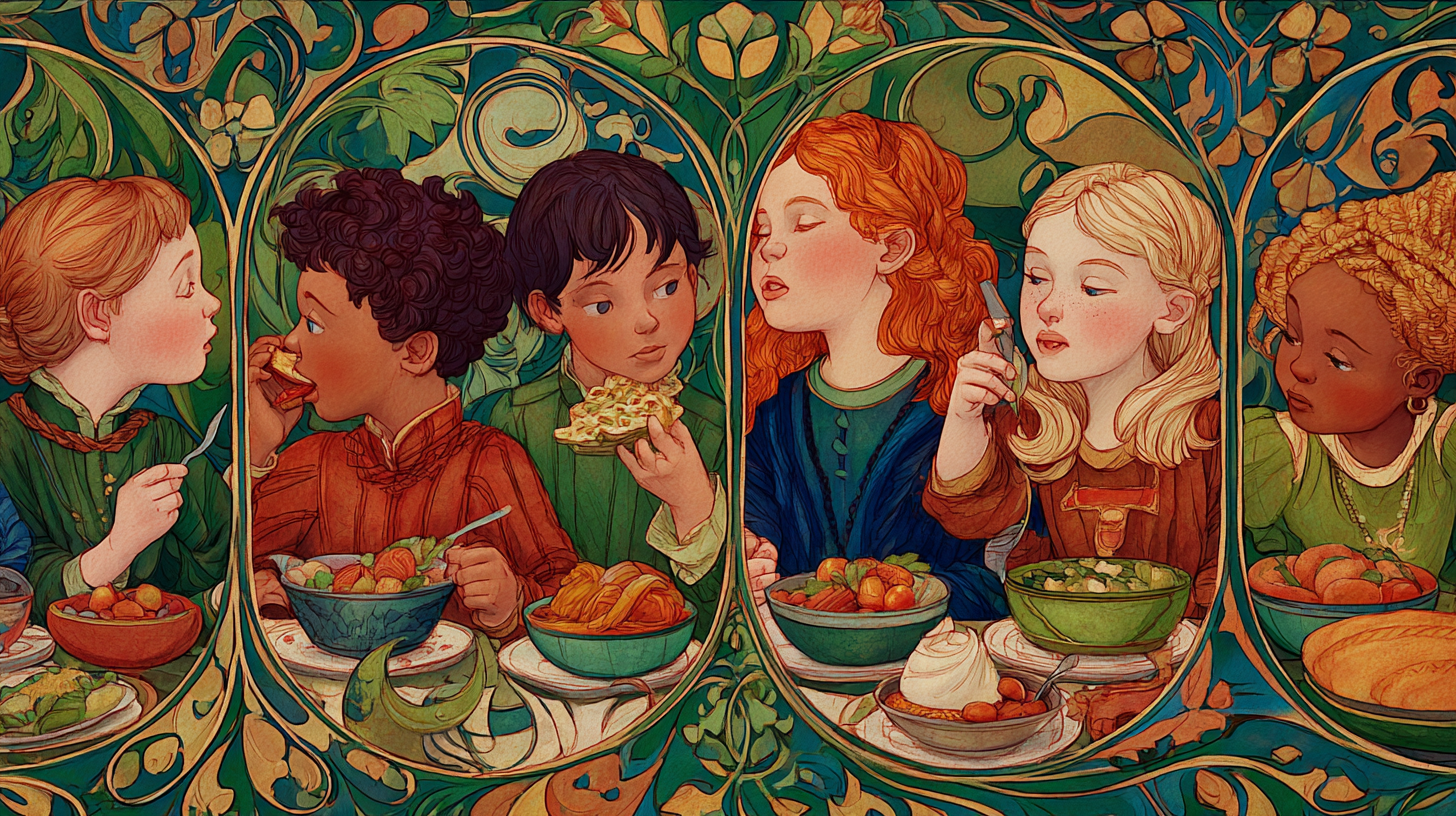
This is the shift we’re aiming for—from protecting our kids from peer pressure to equipping them to handle it with grace. And sometimes, the best defense is inviting people in.
The Uncomfortable Truth About Control
Let me share something that might sting a little: every time you restrict a food at home, you make it more powerful. Research from the past twenty years consistently shows that restricting access to palatable foods increases children’s behavioral response to those foods. Translation: the more you say “no cookies,” the more your child obsesses over cookies and gorges when they finally get access at a friend’s house.
This doesn’t mean keeping a candy buffet in your kitchen. It means rethinking the all-or-nothing approach many of us inherited.
One family I know keeps a “sometimes foods” basket that’s restocked weekly with a set amount of treats. The kids can access it whenever they want during the week, but when it’s gone, it’s gone until next week. No begging. No bribing. Just a clear boundary with autonomy built in.
What happened? The first week, the kids devoured everything in two days. The second week, they made it last four days. By the third week, there were still treats left at the end. They stopped hoarding and sneaking because scarcity was removed from the equation.
The paradox of food autonomy is this: the more control you give your child within a structured environment, the less controlling food becomes over them.
Social Media: The Peer Pressure That Never Sleeps
Here’s something that keeps me up at night: children and adolescents now encounter food marketing approximately 30-189 times per week, predominantly featuring high-sugar and fast-food products. That’s not occasional influence—that’s a constant bombardment of carefully crafted messages designed to make your child feel like they need these foods to fit in.
And here’s the thing about social media peer pressure: it’s not just strangers. It’s their friends posting what they eat, influencers they trust showing off mukbangs and food challenges, algorithms that learn exactly which food content gets them scrolling.
So what do we do? The same thing we do with in-person peer pressure, but adapted: we build media literacy alongside food literacy.
Try this conversation starter: “You know that video where they eat the huge burger? What do you think that company wants you to feel? Why do you think they paid that person to post it?”
Or this one: “When you see your friend post about getting Starbucks every day, do you think that’s really what they eat all the time, or just what they post about?”
You’re teaching them to question the narrative. To understand that curated content isn’t reality. To recognize manipulation without becoming cynical.
One teenager I spoke with said her mom’s media literacy conversations were more valuable than any nutrition lecture because “now I can see what they’re trying to do, and it just looks desperate.” That’s the goal—giving your child the analytical tools to see through manufactured pressure.
The Role-Play That Actually Works
I know, I know. Role-playing feels awkward. But here’s what research tells us: children who’ve practiced responses in low-stakes environments can access those scripts when they’re actually under pressure. The key is making it feel natural, not like a pop quiz.
Try this approach during a car ride or while cooking together:
“Hey, I was thinking about when you go to Jordan’s birthday party next week. There’ll probably be cake and candy and all kinds of stuff. What do you think you’ll do if someone says something about what you’re eating or not eating?”
Let them answer first. Don’t jump in with the “correct” response. If they struggle, offer options: “Some kids say ‘I’m good’ or ‘Maybe later’ or ‘I’m gonna try a little bit.’ What feels right to you?”
The magic is in the ownership. When your child generates their own language, they’re infinitely more likely to use it than if you script every word for them.
Your Family Food Confidence Action Plan
Click each strategy you’re ready to implement this week:
Your Commitment:
Select the strategies you’ll focus on this week. Remember: small consistent steps build bigger confidence than overwhelming changes.
When It All Comes Together
Six months after Maya’s birthday party incident—remember Keisha’s daughter from the beginning?—something remarkable happened. Maya came home from school and told her mom about a new girl from India who brought “different lunch” and was sitting alone.
“So I sat with her,” Maya said. “And I told her about how kids used to say stuff about my food too, but now they’re used to it. Some even ask to trade sometimes. I tried her roti, and it was really good, just different spices than how you make it.”
That moment—when your child becomes the bridge-builder instead of the target—is what we’re working toward. It doesn’t happen overnight. It’s built through hundreds of small moments of autonomy support, cultural pride, and practiced confidence.
The beautiful truth is that children who develop food autonomy don’t just navigate peer pressure better. They develop empathy. They learn that different doesn’t mean wrong. They build the kind of confidence that extends far beyond the lunch table into every area of their lives.
Because at the end of the day, teaching your child to handle food peer pressure isn’t really about food at all. It’s about raising a human who knows their own mind, respects their own body, honors their own culture, and extends grace to others doing the same.
Your Next Right Step
If you’re feeling overwhelmed right now, I get it. This is a lot. But here’s what I know to be true: you don’t need to overhaul everything overnight. You need to take one small step that moves you in the right direction.
Maybe that step is having one conversation about food rules at an upcoming party. Maybe it’s trying neutral language about food for a week and noticing what shifts. Maybe it’s involving your child in meal planning, starting with recipes that connect them to their heritage—those Caribbean dishes that tell the story of where your family comes from.
Whatever it is, start there. Because clarity doesn’t come from waiting for the perfect plan. It comes from doing. From trying. From learning what works for your unique child in your unique family.
Remember Marcus and his Sunday cook-ups? That started with one invitation to one friend. Remember Maya becoming the bridge-builder? That started with her mom validating her feelings instead of dismissing them and then, slowly, building her daughter’s pride in her food culture.
Small steps. Consistent direction. That’s how we raise food-confident kids.
The peer pressure isn’t going away. The social media bombardment isn’t slowing down. The birthday parties and school cafeterias and sleepovers will keep happening. But with the right foundation—autonomy within structure, cultural pride, practiced responses, and trust in their own bodies—your child can navigate all of it without losing themselves.
And on the days when they do cave to pressure or make choices you wouldn’t have chosen for them? That’s not failure. That’s data. That’s a conversation opportunity. That’s your chance to remind them that one meal, one snack, one party doesn’t define anything—it’s the overall pattern that matters.
Because here’s the thing nobody tells you about raising food-confident kids: it’s not about perfection. It’s about resilience. It’s about coming back to center after you’ve been pulled off course. It’s about knowing that belonging doesn’t require betraying your values, and that you can honor both your body’s needs and your social connections.
That’s the gift we give our children when we teach them to navigate food peer pressure with confidence and grace. We teach them that they belong—to themselves first, and then to the world around them. And that? That’s worth more than any perfectly balanced plate.
So start where you are. Use what you have. Build one small brick of food confidence at a time. Before you know it, you’ll look up and realize you’ve built something remarkable: a child who can think for themselves, honor their heritage, and move through the world with the kind of quiet confidence that changes everything.
That’s the journey. And you’re already on it.

Kelley's culinary creations are a fusion of her Caribbean roots and modern nutritional science, resulting in baby-friendly dishes that are both developmentally appropriate and bursting with flavor. Her expertise in oral motor development and texture progression ensures that every recipe supports your little one's feeding milestones while honoring cultural traditions.
Join Kelley on her flavorful journey as she shares treasured family recipes adapted for tiny taste buds, evidence-based feeding guidance, insightful parenting anecdotes, and the joy of celebrating food, culture, and motherhood. Get ready to immerse yourself in the captivating world of Kelley Black and unlock the vibrant flavors of the Caribbean for your growing baby, one nutritious bite at a time.
- The Feeding Revolution: Why Your Everyday Meals Are Changing the World - October 13, 2026
- Your Feeding Story Matters More Than The “Perfect” One Online - October 12, 2026
- Looking Forward: Stepping Into Your Confident Feeding Future - October 11, 2026