When One Child Eats Everything and the Other Only Eats Beige: Your Survival Guide to Multi-Child Mealtimes
How to Honor Individual Food Journeys Without Losing Your Mind (or Making Three Different Dinners)
What’s Your Sibling Mealtime Reality?
Click the scenario that sounds most like your dinner table tonight:
Here’s something nobody tells you when you’re dreaming about those picture-perfect family dinners: having more than one child at the table doesn’t just double the joy—it multiplies the complexity. Exponentially.
Last Tuesday, I watched my friend Michelle serve dinner to her three kids. The oldest ate her curry chicken with gusto, asking for seconds. The middle child carefully picked out every piece of vegetable like she was defusing a bomb. The youngest? He took one look at his plate and announced he’d rather eat the napkin. And Michelle—beautiful, patient Michelle—just closed her eyes and took a deep breath that could’ve powered a meditation retreat.
If you’ve got multiple children who eat like they’re from different planets entirely, you’re not alone. And more importantly, you’re not doing anything wrong. Because here’s the truth that research has finally confirmed: 60-84% of eating differences between siblings are genetic. Yes, genetic. That means even if you served identical meals with identical approaches, your children would still develop different food preferences because their bodies are literally wired differently.
The Science Nobody Warned You About
Remember when you thought you’d cracked the code with your first child? You introduced foods systematically, followed all the rules, and felt like a feeding champion. Then child number two arrived and threw your entire playbook out the window.
The Gemini twin cohort study—which followed 4,804 British twins—revealed something that should be printed on every hospital discharge paper: children’s appetitive traits are largely determined before they take their first bite of solid food. One twin can have high food responsiveness (eager to eat, finishes quickly) while their identical twin has high satiety responsiveness (satisfied with small amounts, loses interest quickly).
Think about that for a moment. Twins. Same womb, same birthday, same everything—and still completely different eaters. So when your 3-year-old will only eat five foods while your 5-year-old tries everything, it’s not because you’ve somehow failed the 3-year-old. Their taste perception, sensory processing, and satiety signals are operating on different channels.
The Caribbean Kitchen Connection: This biological diversity is actually celebrated in Caribbean food culture, where family meals naturally include variety. Take a traditional Sunday meal—you’ve got rice and peas, stewed chicken, fried plantains, callaloo, and macaroni pie all on the same table. This deconstructed approach isn’t just cultural tradition; it’s brilliant feeding strategy. Everyone can build their plate according to their preferences while still sharing the same meal.
And if you’re introducing your little ones to those authentic island flavors—the ones that connect them to your heritage—having recipes designed for different developmental stages becomes even more important. That’s exactly why resources like the Caribbean Baby Food Recipe Book include age-specific adaptations and family meal versions. When one child is ready for bold flavors like Geera Pumpkin Puree while another still needs simpler tastes, having that flexibility built into your recipes saves your sanity.
Discover Your Children’s Eating Personalities
Understanding your children’s inherent eating styles helps you stop fighting biology and start working with it. Click each eating personality to see if it describes one of your children:
(Tap to reveal traits)
(Tap to reveal traits)
(Tap to reveal traits)
(Tap to reveal traits)
The Comparison Trap (And Why It’s Destroying Your Dinner)
Let’s talk about the elephant at the dinner table—or rather, the words that slip out even though you know better.
“Why can’t you eat like your brother?”
“Look how nicely your sister is trying her vegetables.”
“If he can do it, so can you.”
These comparisons feel like motivation. They feel like you’re encouraging growth. But here’s what research actually shows: comparisons between siblings create shame, not change. When a child hears that they should eat like their sibling, what they actually hear is “You’re not good enough as you are.”
And the impact runs deeper than the current meal. Studies on sibling dynamics reveal that children who experience frequent comparisons around eating develop more negative food relationships, increased anxiety at mealtimes, and—paradoxically—become more resistant to trying new foods, not less.
The Comparison Replacement Game
Catch yourself using comparisons? Here’s how to flip the script. Click each comparison to see a better alternative:
✅ Say instead: “Everyone’s body tells them how fast to eat. I notice you like to take your time with meals, and that’s perfectly okay. We’ll have family time at the table together.”
✅ Say instead: “I see this food is new to you. There’s no pressure to eat it today. It might become a favorite someday, or it might not—either way is fine.”
✅ Say instead: “Your body knows how much food it needs. I trust you to listen to your hunger signals.”
✅ Say instead: Stay neutral about all eating. Keep conversation focused on non-food topics during meals.
But here’s where it gets tricky: research also shows that siblings naturally model each other’s behavior. Older siblings become informal “feeding assistants,” encouraging younger siblings to try new foods. Each unit increase in maternal pressure to eat results in a 39% increase in encouragements delivered by siblings.
So how do you leverage positive sibling influence without falling into the comparison trap? The key is organic modeling versus directed comparison. When your adventurous eater naturally tries new foods at the table without fanfare or praise, their sibling observes this behavior in a low-pressure context. That’s powerful. But the moment you point it out—”See how your brother eats his vegetables? Why don’t you try?”—you’ve transformed natural observation into pressured comparison.
The One-Meal-With-Safe-Foods Revolution
Let me tell you about my cousin in Trinidad. She’s got four kids, ages 2 to 10, and every single one eats differently. The 10-year-old will devour curry crab and dumpling. The 7-year-old likes her rice and chicken but nothing “mixed up.” The 4-year-old exists mainly on provisions and cheese. And the 2-year-old? Well, he’s still figuring out this whole solid food situation.
She could make four different meals. She could become a short-order cook. She could lose her mind. Instead, she does something brilliant: she serves one family meal, but she structures it so everyone has options.
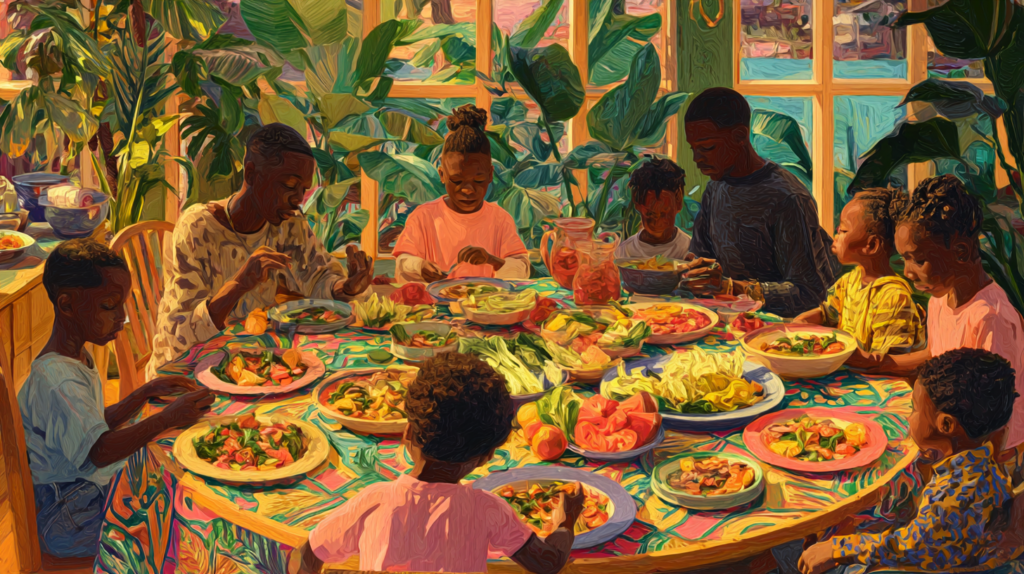
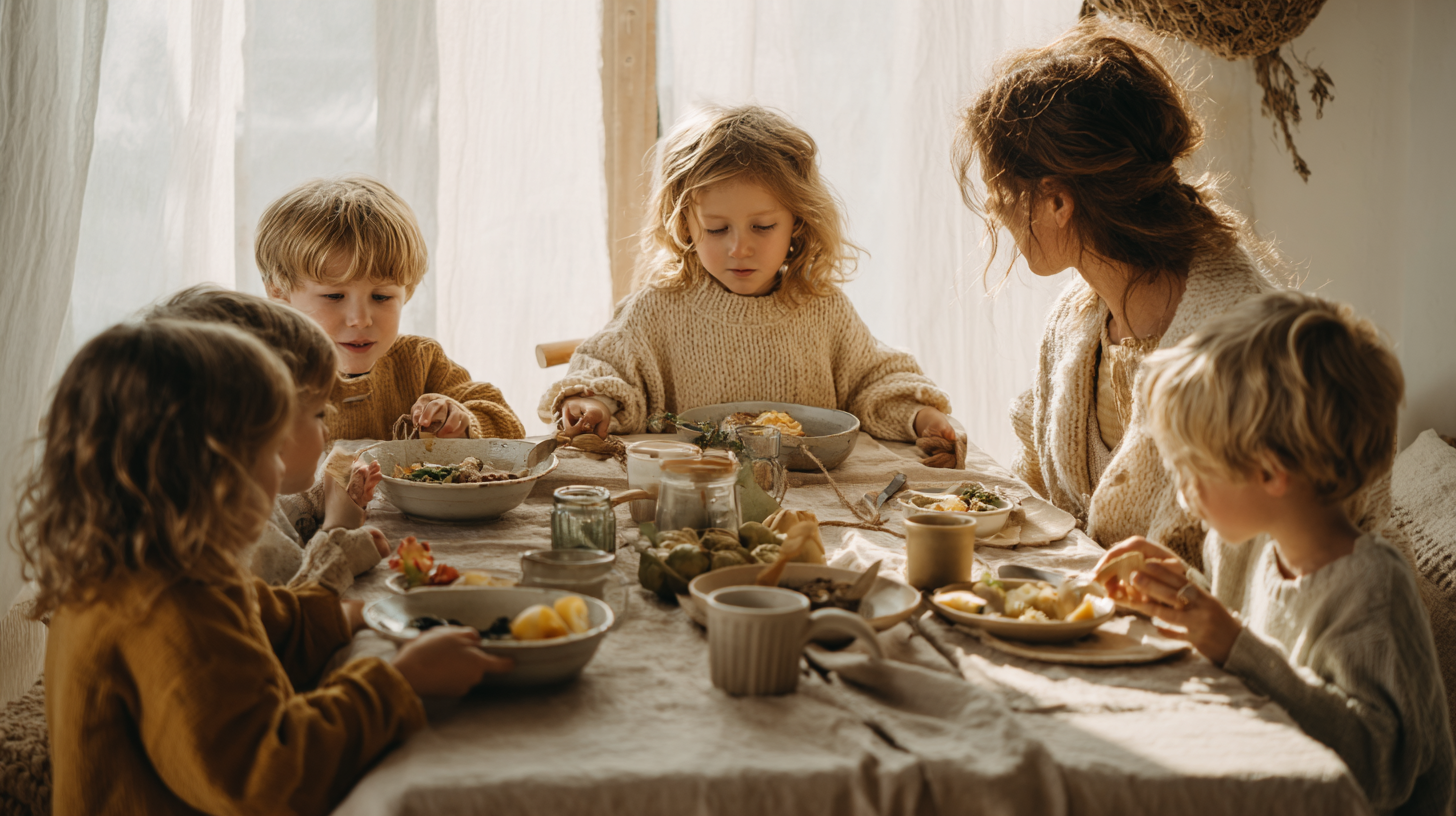
Sunday lunch might be stewed chicken, rice and peas, fried plantains, steamed cabbage, and provision. Everything served family-style, everyone taking what they want. The picky eater takes rice and plantain. The adventurous eater loads up on everything. The middle children pick and choose. And nobody’s making separate meals.
️ Build Your Own One-Meal Strategy
Select your meal challenge to get a customized approach:
Strategy for Extreme Picky Eaters:
The Rule: Always include 1-2 reliably accepted foods as part of the regular meal—not as “special” foods.
Example: If your picky eater reliably accepts plain pasta and cheese, serve pasta salad for the family (with vegetables, protein, dressing) alongside a bowl of plain buttered pasta. Don’t label it as “yours”—it’s just another dish on the table.
Why it works: Picky eater has safe options without feeling singled out. Other children can also take plain pasta if they want. Everyone’s eating components of the same meal.
Caribbean adaptation: If rice is a safe food, serve pelau for the family with plain rice available. Or if plantain works, include both fried plantain and the more complex dish using plantain.
Strategy for Twins with Different Eating Patterns:
The Rule: Serve identical plates family-style and allow each child to self-regulate without comment.
Example: Taco bar with seasoned meat, plain chicken, tortillas, cheese, lettuce, tomatoes, sour cream all separated. Twin A loads everything. Twin B takes chicken, cheese, and tortilla. You say nothing about the difference.
Why it works: Eliminates the “he got” comparison because everyone has access to identical options. You’re not making twin A’s meal and twin B’s meal—you’re serving components everyone can access.
Caribbean adaptation: Deconstructed roti meal with curry separately from roti, or build-your-own rice and peas bowl with components separated.
Strategy for Texture-Sensitive Children:
The Rule: Serve sauces, gravies, and mix-ins on the side. Keep foods separated on the plate.
Example: Stewed chicken with gravy served separately. Rice without things mixed in. Vegetables not touching other foods. Sauces in small bowls for dipping rather than poured over.
Why it works: Texture-sensitive children can control exactly what touches what. Other children can combine foods as they prefer. Same meal, different assembly.
Caribbean adaptation: Serve provisions plain with stewed meat on the side rather than cooked together. Callaloo separate from rice rather than mixed. This actually aligns with how many Caribbean meals are traditionally served anyway!
Strategy for Wide Age Ranges:
The Rule: Modify texture and seasoning rather than making different meals.
Example: Making curry chicken? Take out toddler’s portion before adding heat. Mash their portion with a fork while older kids get regular pieces. Same meal, appropriate modifications.
Why it works: Toddler sees family eating “the same thing,” building positive associations with family meals. You’re not making a separate toddler meal—you’re adapting the family meal.
Caribbean resource: The Caribbean Baby Food Recipe Book includes age-specific versions of traditional recipes like Callaloo Smooth for younger babies (6-8 months), Sweet Potato & Callaloo Rundown for 8+ months, and family meal versions so everyone can enjoy similar flavors at their developmental level.
This approach—sometimes called deconstructed family meals—honors the biological reality that your children have different appetites, preferences, and needs while maintaining the social and cultural benefits of shared mealtimes. You’re not being a short-order cook; you’re being strategic about meal structure.
The Division of Responsibility (When You’ve Got Multiple Responsibilities)
If you’ve been in the parenting trenches long enough, you’ve probably heard of Ellyn Satter’s Division of Responsibility. The basic framework is elegant: parents decide what, when, and where to serve food. Children decide whether and how much to eat.
But here’s what the parenting books don’t tell you: implementing this with multiple children who eat differently feels like conducting an orchestra where half the musicians are playing jazz, a quarter are playing classical, and the rest are banging on pots.
The magic—and the challenge—of Division of Responsibility with multiple children is maintaining that structure consistently across different eaters. Your job doesn’t change based on who’s eating what. You still provide regular meals and snacks (the when). You still decide what foods to offer (the what). You still determine where meals happen (the where—at the table, not wandering around).
What changes is resisting the urge to micromanage each child’s whether and how much differently based on their eating patterns.
The Temptation: Pressure your light eater to “just take three more bites” while telling your enthusiastic eater “that’s enough, save room for later.” This feels like responsive parenting—you’re meeting each child’s needs, right?
The Reality: You’ve just undermined both children’s ability to self-regulate. The light eater learns to ignore their fullness. The enthusiastic eater learns to distrust their hunger. Both get the message that you don’t trust their bodies’ signals.
The Better Way: Maintain the boundaries for everyone. Serve meals at regular times. Offer balanced foods. Let each child eat according to their own internal cues, even when those cues look dramatically different.
Your Division of Responsibility Implementation Tracker
Check off each milestone as you implement it with your multi-child household. Watch your confidence grow!
When Siblings Notice (And Say Something)
You can implement all the strategies in the world, but eventually, this will happen:
“Mom, why does he only eat chicken nuggets?”
“She never tries anything new. Why do I have to?”
“That’s not fair—he got different food than me!”
Your children will notice that their siblings eat differently. They will comment. They will sometimes use food differences as ammunition in the eternal sibling warfare. And how you respond in these moments shapes not just mealtime dynamics, but your children’s understanding of acceptance, difference, and bodily autonomy.
Response Scripts for Sibling Food Comments
Click each scenario for age-appropriate responses:
For older children (7+): “Just like some people have blue eyes and some have brown eyes, people also have different taste preferences. It’s part of what makes each person unique. Your brother’s eating journey is different from yours, and that’s okay.”
Follow-up if needed: “Fair doesn’t mean everyone eats the same things. Fair means everyone gets to listen to what their body needs.”
Private follow-up with encouraging child: “I notice you want to help your sister try new foods. The best way to help is actually to not say anything about her eating—just enjoy your own food. She learns by watching, not by being told.”
Later conversation: “I heard you say something unkind about your brother’s eating. In our family, we respect each person’s relationship with food. How would you feel if someone made fun of something about your body?”
The goal isn’t to pretend differences don’t exist. Children are observant—they’re going to notice. The goal is to frame those differences as normal variations rather than moral judgments. One child isn’t “good” for eating vegetables while another is “bad” for refusing them. They simply have different preferences, different sensory experiences, different biological wiring.
And when you model this acceptance at the dinner table—responding to questions matter-of-factly, refusing to make food differences a big deal, keeping the focus on family connection rather than food performance—you’re teaching your children something that extends far beyond eating. You’re teaching them that differences are normal, that bodies are trustworthy, that people don’t have to be the same to share a table.
The Cultural Food Preservation Challenge
Now let me address something that hits differently when you’re raising children in the diaspora, or trying to pass down cultural food traditions: what happens when one child embraces your heritage foods and another won’t touch them?
This isn’t just about dinner. It’s about identity. Connection. Belonging.
My friend Kenesha makes amazing Jamaican food—curry goat, oxtail, festival, the works. Her oldest daughter eats it all. Her youngest? Won’t even try it. And Kenesha feels this in her chest, like her youngest is rejecting more than just food. Like she’s rejecting culture, heritage, family.
But here’s what I’ve learned both from research and from watching families navigate this: forced food acceptance doesn’t create cultural connection—it creates food aversion and resentment. The more you pressure a child to eat cultural foods “because this is who we are,” the more those foods become associated with stress, conflict, and shame.
The Long Game with Heritage Foods: Children’s food preferences evolve dramatically from toddlerhood through adolescence. The child who refuses curry at age 4 may request it at 14. The path isn’t linear, but early repeated exposure—even without consumption—plants seeds for future acceptance.
Research shows children may need up to 20 neutral exposures to a food before accepting it. For cultural foods that might taste, smell, or look unfamiliar, that number can be even higher. Exposure doesn’t mean eating—it means being present at the table while others eat it, seeing it prepared, smelling it cooking, having it available on the table without pressure.
So when you’re serving traditional meals—whether that’s Guyanese pepperpot, Trini doubles, Haitian griot, Dominican mangú, or Puerto Rican mofongo—and one child eagerly eats while another refuses, you serve both children. You keep serving those foods regularly. You talk about them positively. You share stories about making them with your grandmother. You involve children in age-appropriate preparation (even if they’re not eating yet).
And you trust the process.
When my cousin’s daughter wouldn’t touch provision, she kept including it at meals without pressure. She involved her daughter in peeling yam (sensory exposure). She told stories about digging up dasheen with her own mother. She maintained family meals where provision appeared regularly. At 6, her daughter started trying tiny bites. At 8, she ate it willingly. At 10, she asks for it.
That’s four years of patient, consistent, low-pressure exposure. Four years of trusting that connection to heritage foods would develop when her daughter was ready. And it did.
Building that early foundation is easier when you have culturally-relevant recipes designed for different developmental stages. Starting babies on adapted versions of traditional foods—like Sweet Potato & Callaloo Rundown for 8+ months or Plantain Paradise for 6+ months—introduces those flavors during the crucial early acceptance window. But even if you missed that window, it’s never too late to start regular, pressure-free exposure.
Your Personalized Multi-Child Mealtime Action Plan
Based on everything we’ve covered, click to generate your customized next steps:
Your Personalized Action Steps:
- This Week: Identify your children’s eating personalities (Explorer, Cautious Taster, Sensory Sensitive, or Speed Eater) and write them down. Understanding their inherent patterns removes judgment.
- Next 3 Days: Audit your mealtime language. Notice when you make comparisons, praise one child’s eating, or pressure another. Just observe without judgment.
- Starting Tomorrow: Implement one-meal-with-safe-foods approach. Include 1-2 reliably accepted foods at every meal as part of the regular menu, not as “special” foods.
- This Month: Establish consistent meal and snack times for all children. Stick to them for at least 2 weeks before evaluating.
- Practice Daily: When siblings comment on each other’s eating, use neutral response scripts. “Everyone’s body likes different things” becomes your mantra.
- Cultural Foods: If preserving heritage food traditions, commit to regular exposure without pressure. Serve those foods weekly, involve children in preparation, share stories—but release outcome expectations.
- Long-term Goal: Shift your measure of success from “what my children ate” to “did we have a pleasant meal together as a family?” Connection matters more than consumption.
What Success Actually Looks Like
Let’s recalibrate expectations, because I think we’re all measuring the wrong things.
Success isn’t all your children eating the same foods in the same amounts. That’s not how biology works.
Success isn’t your picky eater suddenly loving vegetables after you implement these strategies. Changing eating patterns takes time—months or years, not days.
Success isn’t eliminating all mealtime challenges. Multiple children at one table will always create some chaos, some mess, some disagreement. That’s family life.
Success is this:
Your children sit down at the table together. One eats everything on their plate. Another eats half. The third eats only the rice and beans. And instead of stress, pressure, comparison, or conflict—there’s conversation. There’s connection. There’s acceptance that different bodies need different things.
Success is you serving one family meal with options, everyone taking what works for them, and you keeping your peace because you’ve released the outcome. You’ve done your job (providing food at regular times). They’re doing theirs (deciding what and how much to eat).
Success is your children learning that differences are normal, that bodies are trustworthy, that love isn’t conditional on food performance.
And maybe—maybe—years from now, success is your pickiest eater requesting one of those foods they refused for years. Not because you forced it, but because you didn’t. Because you created space for their food journey to unfold at their pace, without shame, without comparison, without pressure.
The Moments That Matter Most
Last Sunday, I sat at Michelle’s table again—the friend I mentioned at the beginning with three wildly different eaters. Something had shifted since that previous dinner where I watched her take that deep breath of desperation.
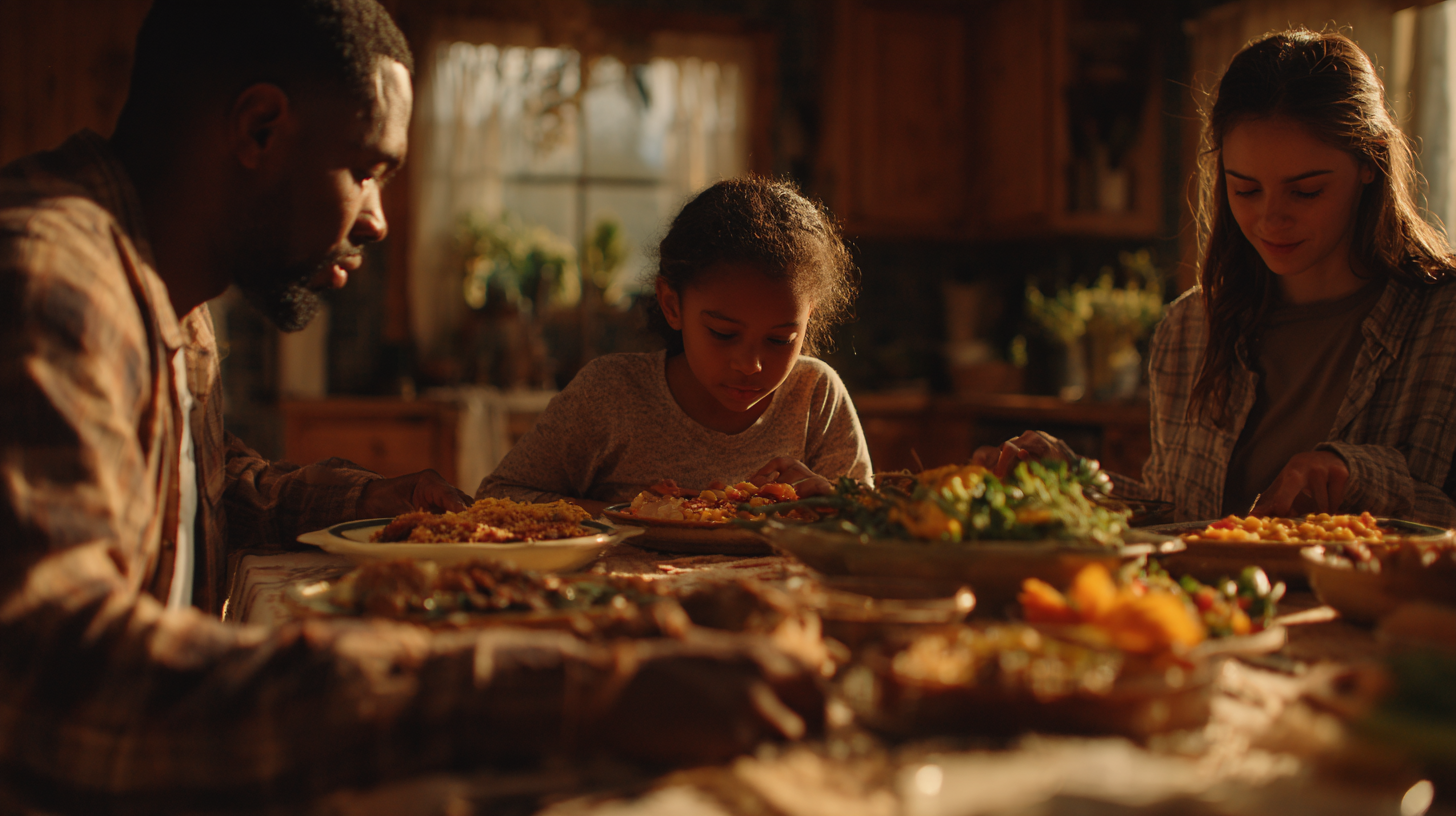
She served curry chicken, rice and peas, fried plantains, and steamed cabbage. Family style, everything in serving dishes on the table. The oldest still ate everything enthusiastically. The middle child still picked around vegetables. The youngest took rice, plantain, and cheese (which Michelle had quietly included as a side).
But here’s what was different: Michelle didn’t say a single word about anyone’s eating. No praise for the oldest. No pressure for the middle child. No exasperated comments about the youngest. She asked about school. She told a funny story about work. She laughed at her husband’s terrible joke.
And her children? They ate—or didn’t eat—according to their own needs. They talked. They laughed. They were present at that table in a way that has nothing to do with food and everything to do with belonging.
After the kids left the table, Michelle looked at me and said, “I finally get it. I can’t control what they eat. But I can control whether dinner feels like a battle or feels like family. And I choose family.”
That’s what this is really about. Not getting your different eaters to eat the same way. But creating a table where difference is expected, accepted, and met with love rather than anxiety.
Your children’s eating journeys will unfold in their own time, at their own pace, according to their own biological wiring. Some will be adventurous from the start. Some will take years to expand their preferences. Some will eat enthusiastically; others will eat cautiously. All of that is normal. All of that is okay.
What they’ll remember isn’t whether you made them eat their vegetables. They’ll remember whether the dinner table felt like a safe place to be themselves. Whether their body’s signals were trusted or overridden. Whether differences were celebrated or criticized. Whether family meals were about connection or control.
So tonight, when you sit down with your different eaters—the adventurous one and the cautious one, the volume eater and the bird eater, the one who loves your cultural foods and the one who’s not ready yet—take a breath. Serve your meal. Trust their bodies. Keep your peace.
And remember: you’re not failing because they eat differently. You’re succeeding by honoring that they’re different people, with different needs, on different journeys. All sharing the same table. All belonging to the same family. All learning that love isn’t conditional on food performance.
That’s the meal that really matters. And that’s the one you’re serving every single day, whether you realize it or not.
One More Thing: On the hardest days—when one child refuses everything, another demands seconds immediately, and the third is having a meltdown because their foods are touching—remember this isn’t about the food. It’s about building humans who trust themselves, respect differences, and know they’re loved unconditionally. That work doesn’t happen in a single meal. It happens slowly, consistently, one dinner at a time. You’re doing that work. And it matters more than you know.
Now go set that table. Your different eaters are waiting—and they’re perfect exactly as they are.

Kelley's culinary creations are a fusion of her Caribbean roots and modern nutritional science, resulting in baby-friendly dishes that are both developmentally appropriate and bursting with flavor. Her expertise in oral motor development and texture progression ensures that every recipe supports your little one's feeding milestones while honoring cultural traditions.
Join Kelley on her flavorful journey as she shares treasured family recipes adapted for tiny taste buds, evidence-based feeding guidance, insightful parenting anecdotes, and the joy of celebrating food, culture, and motherhood. Get ready to immerse yourself in the captivating world of Kelley Black and unlock the vibrant flavors of the Caribbean for your growing baby, one nutritious bite at a time.
- The Feeding Revolution: Why Your Everyday Meals Are Changing the World - October 13, 2026
- Your Feeding Story Matters More Than The “Perfect” One Online - October 12, 2026
- Looking Forward: Stepping Into Your Confident Feeding Future - October 11, 2026