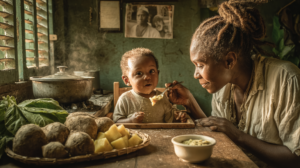
When Baby’s Diaper Tells a Story You Didn’t Sign Up For
You just introduced sweet potato to your baby yesterday. Today? Three diapers before 10 AM, each one looser than the last. Your mind races: Is this normal? Food allergy? Should I call the doctor? Did I do something wrong?
Here’s what nobody tells you when you’re eagerly spooning that first bite of solids into your baby’s mouth: their digestive system is about to go on the wildest rollercoaster ride since you discovered pregnancy insomnia. And you? You’re about to become a diaper detective, analyzing colors, textures, and frequencies like you’re solving a medical mystery.
But here’s the truth that will save you countless worried texts to your pediatrician and midnight Google spirals: not all loose stools are created equal. Some are your baby’s gut saying “Hey, this is new and I’m figuring it out!” Others are red flags waving frantically, demanding your attention.
The problem? Most of us have never been taught the difference. We’re navigating this messy (literally) transition with nothing but outdated advice from well-meaning relatives and conflicting information from parenting forums. It’s time to change that.
Are You a Diaper Detective? Let’s Find Out!
Answer these quick questions to discover your poop-panic level
1. When you see a slightly looser diaper after introducing a new food, you:
The Truth About Your Baby’s Changing Digestive System
Let me paint you a picture from my own journey. When my little one started solids, I was so excited. I’d read all the books, prepped my homemade Caribbean purees, and felt ready to conquer this milestone. Then came day three of sweet potato, and suddenly we were going through diapers like they were going out of style.
I spiraled. Was it the sweet potato? Did I introduce it too early? Was my baby allergic? I called my aunt in Trinidad, who told me to rub coconut oil on baby’s belly. I texted my pediatrician’s after-hours line. I Googled until my eyes crossed.
Want to know what was actually happening? My baby’s gut microbiome was throwing a welcome party for solid food—complete with some growing pains. Their digestive system, which had only ever processed breast milk or formula, was suddenly meeting complex carbohydrates, fiber, and entirely new bacterial strains. The microbiome was literally reorganizing itself in real-time.

Research shows that between 4 and 9 months—right when we’re introducing solids—the infant gut undergoes its most dramatic transformation. Firmicutes bacteria populations jump from about 25% to 53% of gut bacteria. Actinobacteria and Proteobacteria populations decrease. This isn’t a gentle adjustment. This is a full-scale renovation of your baby’s internal ecosystem.
And you know what accompanies massive construction projects? Mess. Lots of it.
Normal digestive adjustment looks like: Stools that are softer or slightly looser than before, increased frequency (but not explosive diarrhea), changes in color based on what you’re feeding, possible gas and mild fussiness, and symptoms that improve within a few days.
Your baby should still: Be wetting at least 4-6 diapers per day, acting relatively happy and playful, showing interest in food, having normal sleep patterns, and producing tears when crying.
Think of it like this: if your baby’s gut was a quiet library for the first six months, you just opened the doors to a bustling marketplace. There’s going to be some adjustment noise. That’s not just normal—it’s necessary.
Food Intolerance vs. Illness: Spotting the Real Culprit
Here’s where things get tricky, and honestly, where most of us parents get completely turned around. We introduce plantain one day. The next day, baby has loose stools. We immediately blame the plantain and swear it off forever. But what if baby was actually coming down with a stomach bug that had nothing to do with our perfectly mashed Plantain Paradise recipe?
Food intolerance and viral illness can look frustratingly similar in the diaper. But there are tell-tale differences once you know what to look for.
The Symptom Sorter: Intolerance or Illness?
Click on a symptom to reveal what it typically indicates
GI Symptoms ONLY
Click to reveal
Fever Present
Click to reveal
Consistent Timing
Click to reveal
Explosive, Watery Stools
Click to reveal
Mucus in Stool
Click to reveal
Vomiting + Diarrhea
Click to reveal
Pro tip: Take notes! Patterns emerge when you track what you’re seeing.
Let me share a story that perfectly illustrates this confusion. My cousin introduced her baby to my cookbook’s Coconut Rice & Red Peas recipe on a Tuesday. By Wednesday afternoon, baby had loose stools. She immediately blamed the coconut milk and vowed never to give it again. Thursday morning, baby woke up with a fever and a runny nose. Turns out, she’d picked up a cold from her older sibling’s daycare—the timing with the coconut rice was pure coincidence.
How do you avoid this trap? Look at the full picture, not just the diaper. Is baby acting sick in other ways? Are siblings or daycare friends ill? Has baby been putting everything in their mouth lately (hello, teething and oral exploration phase)? Context is everything.
When to Hit Pause on New Foods (And When to Keep Going)
This is the question that keeps parents up at night: “Do I stop? Do I continue? What if I’m making things worse?”
I’m going to give you clear, actionable guidance based on both pediatric recommendations and real-world experience. Consider this your decision-making flowchart.
STOP introducing new foods immediately if:
- Baby has 6+ extremely watery stools in 24 hours (moderate to severe diarrhea)
- You see blood in the stool, especially if it’s bright red or looks like raspberry jelly
- Baby shows signs of dehydration (fewer than 4 wet diapers daily, no tears when crying, sunken fontanelle, dry mouth, lethargy)
- There’s persistent vomiting alongside diarrhea (can’t keep liquids down)
- Baby develops hives, facial swelling, breathing difficulties, or other allergic symptoms
- High fever accompanies the digestive symptoms (over 102°F/38.9°C)
- Baby seems to be in significant pain—arching back, pulling knees to chest, inconsolable crying
- Symptoms persist beyond 3-5 days without improvement
PAUSE but don’t panic if:
- Stools are looser than usual but baby is otherwise acting normal
- Frequency increases slightly (from 1-2 to 3-4 daily) but stools aren’t watery
- You see consistent mucus in stools over 2-3 days
- Baby seems a bit more gassy or fussy after eating specific foods
- You’re introducing a common allergen (eggs, dairy, wheat) and want to observe closely
In “pause” situations, here’s your action plan: Hold off on introducing anything new for 2-3 days. Continue offering foods baby has already tolerated well. Keep breastfeeding or formula feeding on demand. Monitor hydration by counting wet diapers. Track symptoms to identify patterns. If things improve, gradually reintroduce the suspected food to see if symptoms return (this is called a “rechallenge” and helps identify true intolerances).
KEEP GOING if:
- Stools are softer but formed, and baby is thriving in every other way
- Changes in stool are mild and temporary (resolving within 24-48 hours)
- Baby is excited about food, sleeping well, meeting milestones, and generally happy
- The only “symptom” is that diapers look different than they did during exclusive milk feeding
Remember: your baby’s digestive system is SUPPOSED to change as their diet diversifies. If we stopped every time a diaper looked different, we’d never get past rice cereal. The goal isn’t perfect, identical stools every single day—that’s actually unrealistic. The goal is a baby who’s hydrated, growing, and adapting well overall.
Should I Stop New Foods? Decision Tree
Answer these questions to get your personalized action plan
Has baby had 6 or more extremely watery stools in the past 24 hours?
Keeping Baby Hydrated: Your Most Important Job Right Now
Listen, you can mess up a lot of things in parenting and your baby will be fine. You can introduce foods in the “wrong” order (spoiler: there is no wrong order). You can skip the fancy organic pouches. You can serve store-bought baby food from a jar.
But hydration? That’s non-negotiable. When diarrhea shows up—whether from food adjustment, intolerance, or illness—your number one priority becomes keeping enough fluid in your baby to prevent dehydration.
Here’s what scares me: many well-meaning parents accidentally make hydration worse. They offer plain water (which doesn’t contain the electrolytes needed for absorption). They give juice (which can actually worsen diarrhea due to high sugar content). They withhold breastmilk thinking they should “rest the gut.”
Let’s get you crystal clear on what actually works.
For babies under 6 months: Breast milk or formula is your complete hydration solution. Offer more frequent feeds, even if they’re shorter sessions. Don’t introduce water or other liquids unless your pediatrician specifically recommends it.
For babies 6+ months experiencing diarrhea: Continue breastmilk or formula as the foundation (this is 80% of your hydration strategy). Offer small amounts of oral rehydration solution (ORS like Pedialyte) between feeds—about 50-100 mL after each large watery stool. If baby won’t take ORS plain, freeze it into ice cube shapes or mix tiny amounts with pureed fruit to make it more appealing. Avoid plain water, juice, sports drinks, and soda.
Hydration checkpoint—count these signs:
- Wet diapers: Should have at least 4-6 in 24 hours (count them!)
- Tears when crying: Present and visible
- Mouth and tongue: Moist, not dry or sticky
- Soft spot (fontanelle): Should NOT be sunken
- Eyes: Should look normal, not sunken or with dark circles
- Energy level: Baby should be alert and responsive, not lethargic
- Skin elasticity: When you gently pinch skin on belly or arm, it should bounce back immediately
Pro tip from my own Caribbean upbringing: my grandmother used to make coconut water ice pops when we had tummy troubles. Turns out, she was onto something. Coconut water contains natural electrolytes (potassium, sodium, magnesium) that support hydration. For babies over 8-9 months who are eating well and experiencing mild digestive upset, small amounts of natural coconut water (not the sugary processed kind) can be offered alongside breast milk or formula. But please—ORS is still the gold standard when diarrhea is more than mild. Coconut water is a nice addition, not a replacement.
When my little one went through a particularly rough patch with a stomach virus at 10 months, I felt so helpless. She didn’t want to eat, barely wanted to nurse, and I was spiraling into panic mode. The pediatrician told me something I’ll never forget: “Your only job right now is keeping her hydrated. Everything else is bonus. Feed her ice chips, breastmilk, ORS—whatever she’ll take. The food will come back when she feels better.”
That permission to simplify? Game-changing. I stopped worrying about balanced meals and nutrition diversity and focused only on fluids. Within 48 hours, she turned a corner. Three days later, she was back to demolishing my Yellow Yam & Carrot Sunshine like nothing ever happened.
24-Hour Hydration Status Checker
Quick assessment of baby’s hydration right now
Medical Guidance: When Your Gut Says “Something’s Not Right”
I’m going to share something with you that took me way too long to learn: your parental intuition is data. It’s not anxiety. It’s not overreacting. It’s pattern recognition happening at a subconscious level that picks up on subtle changes that might not yet meet official “red flag” criteria.
If something feels off about your baby, even if you can’t articulate exactly what it is, that matters. Don’t let anyone—including your own inner critic—talk you out of trusting that instinct.
That said, I’m also going to give you concrete medical guidance so you know exactly when that gut feeling should translate to immediate action.
Call your pediatrician TODAY (same-day appointment) if:
- Diarrhea is moderate (6+ loose stools in 24 hours) and lasting more than 24 hours
- You see blood in the stool, even if it’s just streaks
- Baby has a fever over 100.4°F (38°C) for babies under 3 months, or over 102°F (38.9°C) for older babies
- You notice signs of mild dehydration starting (fewer wet diapers, less active than usual)
- Baby refuses to eat or drink for more than 6-8 hours
- Vomiting accompanies the diarrhea and has lasted more than 12 hours
- Baby seems to be in pain—crying inconsolably, arching back, pulling legs up
- You see persistent mucus in stools for more than 2 days
- Baby has been exposed to anyone with confirmed gastroenteritis
Go to urgent care or ER immediately if:
- Baby shows moderate to severe dehydration (sunken fontanelle, no tears, very dry mouth, fewer than 3 wet diapers in 24 hours, lethargy)
- Baby has bloody diarrhea that looks like raspberry jelly or is profuse
- You see signs of allergic reaction (hives, facial swelling, difficulty breathing, extreme fussiness)
- Baby is under 3 months with any fever
- Baby is extremely lethargic and difficult to wake
- Vomiting is forceful/projectile and baby can’t keep down any fluids
- Baby has a very distended (swollen, hard) abdomen
- Your instinct is screaming that something is seriously wrong
Schedule a routine follow-up if:
- Mild symptoms persist beyond 5-7 days without worsening
- You’ve noticed a consistent pattern between specific foods and symptoms
- Baby seems to have chronic loose stools without other concerning signs
- You want to discuss food introduction strategy or get reassurance
- Baby’s growth seems to have slowed (dropping percentiles on growth chart)
Let me tell you about the time I almost didn’t call the pediatrician because I didn’t want to seem like “that parent.” My son had been having loose stools for about four days. Nothing dramatic—he was still playing, eating okay, sleeping fine. But something just felt… off. I couldn’t even explain what it was. My partner said I was probably overthinking it.
I called anyway. Turns out, he had giardia—a parasitic infection he’d picked up from a community pool. It wasn’t showing dramatic symptoms yet, but my unconscious mind had picked up on subtle changes in his energy level and appetite. The pediatrician praised me for calling when I did, before things got worse.
That experience taught me that “overreacting” isn’t actually a thing when it comes to your child’s health. Best case scenario, you get reassurance and peace of mind. Worst case, you catch something early. There’s literally no downside to making the call.
Real Talk: What the First Few Weeks Actually Look Like
Nobody prepares you for the reality of this transition. Instagram shows you smiling babies with clean bibs taking perfect first bites. What they don’t show you is the explosive diaper blowout that happened thirty minutes later, or the three outfit changes before noon, or the internal panic spiral every time something looks different in the diaper.
So let me paint you an honest picture of what normal—truly normal—looks like during those first weeks of food introduction.
Week 1-2 of solids: Expect stools that look partially digested. You might literally see pieces of whatever you fed—carrot chunks, bits of green beans, undigested sweet potato. This is completely normal. Baby’s digestive system is learning to break down these new food matrices. Frequency might increase slightly. Colors will vary wildly based on what you’re offering (dark green after spinach, orange after sweet potato, reddish after beets). There might be more gas than usual as gut bacteria adjust.
Week 3-4: Things start regulating. Stools begin to form a bit more (but still softer than adult stools). You’ll notice less undigested food passing through. Frequency may stabilize to a new “normal” for your baby—which might be 2-3 times daily, or once every other day. Both can be fine. Baby’s belly might seem less distended after meals.
By week 6-8: You’ve found your groove. You can differentiate between your baby’s “normal solid food poop” and “something’s actually wrong” poop. You’re less anxious about every diaper. You’ve figured out which foods seem to move quickly through baby’s system and which bind things up a bit.
Throughout all of this, you should see a baby who is: generally happy and playful, interested in food (even if still messy and learning), sleeping reasonably well, producing adequate wet diapers, and growing along their growth curve.
What you don’t need to see: perfect, formed stools that look like miniature adult poops. Babies aren’t little adults. Their digestive systems are immature and still developing. We’re aiming for “functionally working” not “textbook perfect.”
When I started introducing Caribbean foods to my babies using my cookbook recipes, I was nervous. Would the spices be too much? Would the coconut milk cause issues? Would plantain digest properly? The first time I offered Coconut Rice & Red Peas, I was on high alert for any sign of distress.
You know what happened? Nothing dramatic. Baby’s stool was a bit softer the next day. By day three, everything normalized. Within two weeks, that dish became a favorite, and baby’s digestive system handled the complexity like a champ. But those early days required trust—trust in the process, trust in my baby’s adaptability, and trust that not every change meant catastrophe.
Pattern Detective Challenge
Can you spot the concerning pattern? Test your new knowledge!
Scenario A:
Monday: Introduced mashed avocado
Tuesday: One slightly looser stool, baby happy and playing
Wednesday: Stool back to normal texture
Thursday: Started offering avocado again, no changes
Scenario B:
Monday: Introduced egg yolk
Tuesday: 6 watery diapers, baby very fussy
Wednesday: 8 watery diapers, only 2 wet diapers all day, baby lethargic
Thursday: Baby refuses to eat or drink
Scenario C:
Monday: Started sweet potato puree
Tuesday-Friday: Stools are orange-tinted and slightly softer, 2-3 per day
Saturday: Baby eating well, sleeping well, producing 5 wet diapers daily
Sunday: Stools starting to firm up slightly
Scenario D:
Monday-Wednesday: Baby has cold with runny nose
Thursday: Started offering oatmeal + loose stools begin
Friday: Still has runny nose + 4 loose stools + baby still playing
Saturday: Cold improving, stools normalizing
Your Personalized Action Plan Moving Forward
Alright, we’ve covered a lot. Your brain might feel full, maybe even a little overwhelmed. So let’s distill everything into a simple, actionable framework you can actually use when you’re elbow-deep in another diaper change, wondering if you should panic or proceed.
The Daily Check-In (30 seconds each morning):
Ask yourself these three questions:
- Is baby hydrated? (Count those wet diapers, check for tears and moist mouth)
- Is baby acting like themselves? (Energy level, appetite, sleep, interaction)
- Are symptoms staying stable or improving? (Not rapidly escalating)
If you can answer “yes” to all three, you’re in the safe zone. Continue observing and carry on with your day. If any answer is “no” or “I’m not sure,” refer back to the guidance in this article for next steps.
The Food Introduction Framework:
Keep it simple. Introduce one new food at a time (you don’t have to wait 3 days unless you’re concerned about allergies). Offer it 2-3 times within a few days to assess tolerance. Watch for patterns, not isolated incidents. Document foods and symptoms if you’re seeing concerning patterns. Trust the process—baby’s gut is more adaptable than you think.
And please, for the love of all things holy, don’t let social media fear-mongering rob you of the joy of this experience. Babies have been eating solid foods for literally all of human history. Your homemade Caribbean-inspired purees with their whole

Kelley's culinary creations are a fusion of her Caribbean roots and modern nutritional science, resulting in baby-friendly dishes that are both developmentally appropriate and bursting with flavor. Her expertise in oral motor development and texture progression ensures that every recipe supports your little one's feeding milestones while honoring cultural traditions.
Join Kelley on her flavorful journey as she shares treasured family recipes adapted for tiny taste buds, evidence-based feeding guidance, insightful parenting anecdotes, and the joy of celebrating food, culture, and motherhood. Get ready to immerse yourself in the captivating world of Kelley Black and unlock the vibrant flavors of the Caribbean for your growing baby, one nutritious bite at a time.
- The Feeding Revolution: Why Your Everyday Meals Are Changing the World - October 13, 2026
- Your Feeding Story Matters More Than The “Perfect” One Online - October 12, 2026
- Looking Forward: Stepping Into Your Confident Feeding Future - October 11, 2026