
The Screen Time Truth Every Parent Needs to Hear (And What to Do About It)
Quick Self-Discovery: What’s Your Mealtime Reality?
Tap the statement that sounds most like your household right now:
Here’s something nobody tells you when you become a parent: there will come a day when you find yourself negotiating with a two-year-old who refuses to eat unless Bluey is playing. And in that moment—exhausted, worried they haven’t eaten all day, watching the clock because bedtime is in an hour—you’ll hand over that tablet and feel relief mixed with a gnawing sense of am I messing this up?
I get it. Because 89% of us are right there with you, screens glowing at the dinner table while our toddlers mechanically open their mouths between episodes. But here’s the thing that changed everything for me: what if this isn’t actually a failure of willpower or parenting—but a sign that something deeper is happening with how our children are learning to eat?
The truth about distraction feeding isn’t what most articles will tell you. It’s not simply “screens bad, no screens good.” The real story is far more interesting, more hopeful, and actually gives us a path forward that doesn’t involve parent guilt or cold dinners.
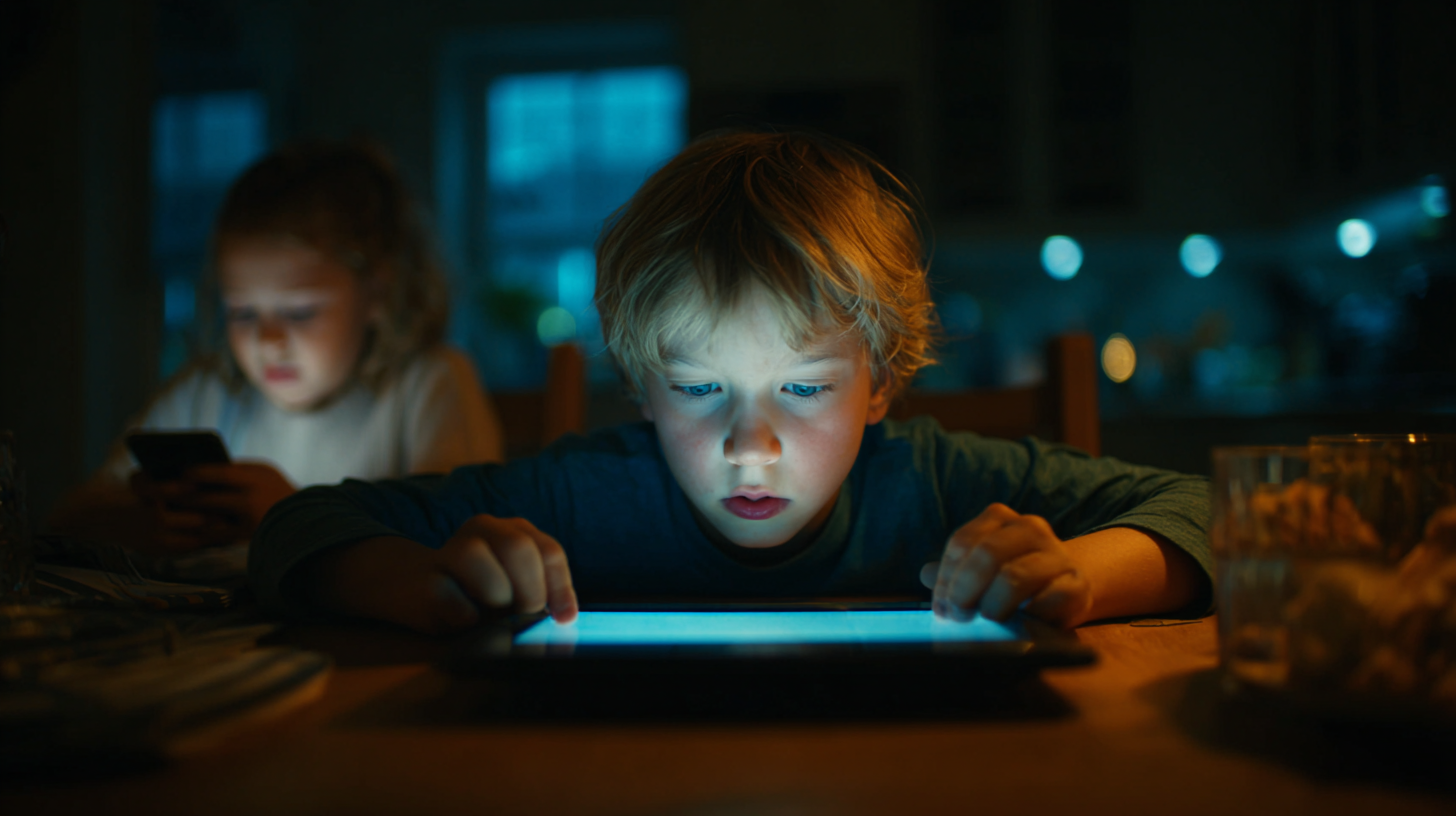
What’s Really Happening When Screens Meet Spoons
Let me paint you a picture of what I learned from feeding therapists and pediatricians who’ve spent years studying this: when your child’s eyes are locked on that screen, their brain is essentially in two places at once. And here’s the kicker—the food sensory experience completely disappears.
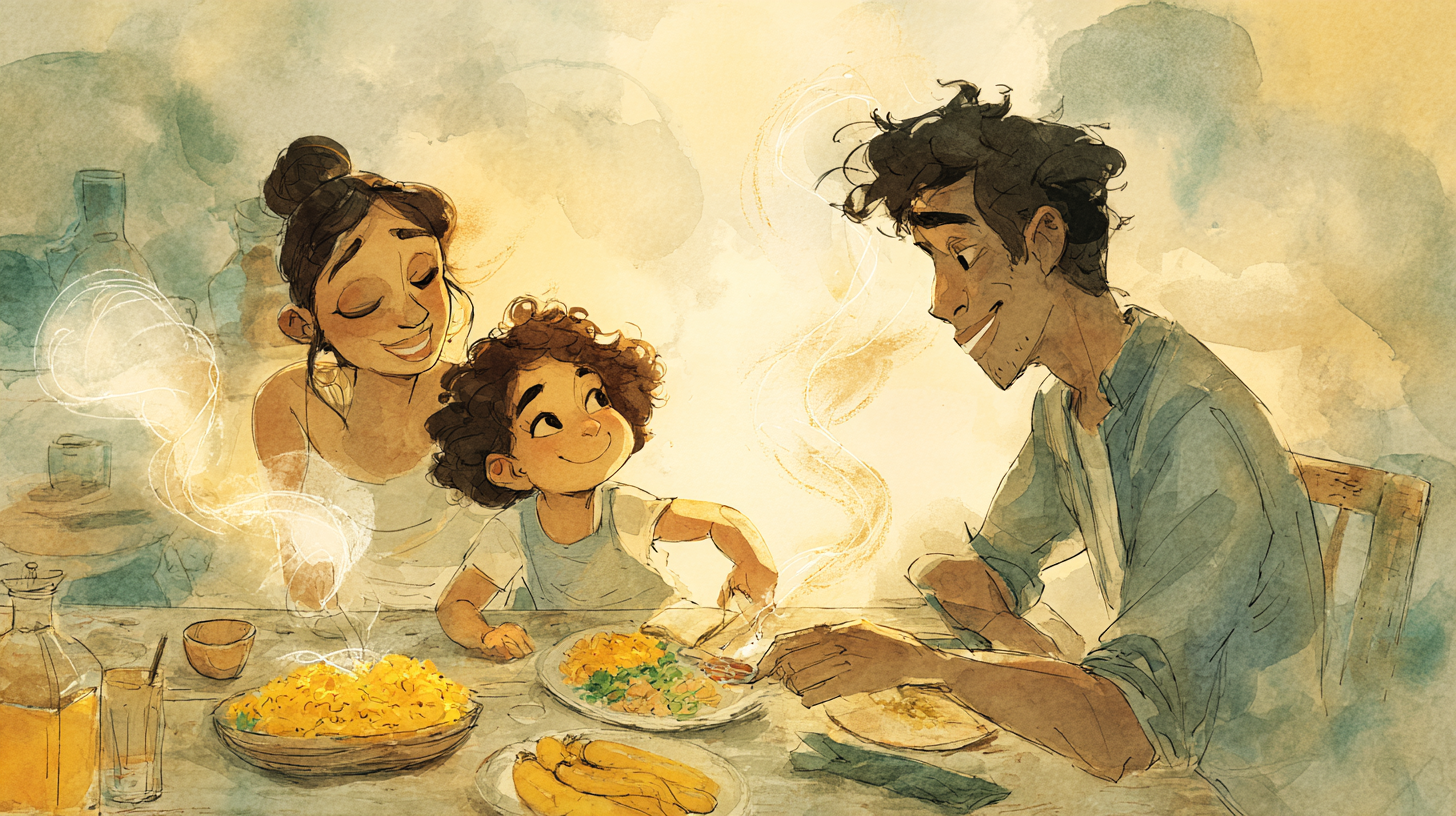
Think about how you learned food was delicious. It wasn’t just taste. It was the steam rising from your grandmother’s pot, the satisfying squish of mashed plantain between your fingers, the anticipation building as you watched someone cook. Every meal was a full-body experience that taught you about hunger, fullness, and the pure joy of eating.
When screens dominate mealtime, children miss this crucial developmental process. Their natural hunger signals—those internal whispers saying “I’m hungry” or “I’m satisfied”—get completely overridden by external stimulation. Recent research from 2024 found that children exposed to mealtime screens show diminished sensory experiences, reduced communication with caregivers, and something professionals call “sensory deprivation” that affects how they relate to food for years to come.
The Shocking Truth: When researchers objectively measured infant and toddler screen time in 2023, they found many children under two years exceed screen time guidelines despite recommendations for zero screens—not because parents don’t care, but because the challenges are real and the solutions weren’t clear.
But here’s where it gets interesting. Some feeding therapists actually do use distraction therapeutically—for children with severe autism who only eat one food, for example. The difference? It’s targeted, temporary, and under professional guidance. It’s not the same as routinely using screens because dinner would otherwise be a battle.
The Hidden Cost Nobody Talks About
Here’s something that broke my heart when I learned it: every meal is supposed to be a conversation. Not just words—though those matter too—but a back-and-forth where your child’s body says “I’m hungry” and food appears, where they signal “I’m full” and you respect that, where they make a face at something new and you respond with encouragement, not pressure.
Research published just this year found that parental technology use during mealtime doesn’t just affect feeding—it increases dysregulation in children and disrupts the fundamental parent-child bond being built at the table. When mothers are distracted during feeding, they show significantly lower sensitivity to infant cues, which can lead to something called “mindless feeding” where natural satiety signals are missed entirely.
The Eating Competence Checker
Tap each item your child currently does at mealtimes (no judgment—this is just information):
And then there’s the long game. A 2023 dose-response meta-analysis confirmed what researchers have been seeing for years: childhood obesity risk increases with increased screen time through multiple pathways. It’s not just about eating more while distracted—though that happens. It’s about children losing touch with their internal compass that says “enough.”
But here’s what gave me hope: a 2017 study found that children whose mothers ate with them and ate the same food refused fewer foods and were significantly easier to feed compared with children exposed to distractions during meals. The solution isn’t perfection—it’s connection.
Why We Started Using Screens in the First Place (And Why That Makes Sense)
Before we dive into solutions, let’s acknowledge something important: you didn’t randomly decide to parent this way. Pediatricians and feeding specialists identify specific triggers that lead to distraction feeding—and every single one is completely understandable.
Maybe your toddler went through a phase where they ate almost nothing for days, and the pediatrician’s weight chart made your stomach drop. Maybe mealtimes had become hourlong battles that left everyone in tears. Maybe you’re juggling work-from-home chaos and a toddler who won’t sit still, and screens bought you fifteen minutes of peace to heat up food and breathe.
Here’s something that helped me let go of the guilt: research from 2024 found that parental guilt about screen time exists almost independently of actual screen hours used. Parents who feel guilty about their kids’ screen use are more stressed and less likely to report positive relationships with their kids—creating a vicious cycle where the very tool we used to reduce mealtime stress starts generating guilt that increases our overall family stress.
Real Talk: The fact that you’re reading this article means you care deeply about your child’s relationship with food. That’s already half the battle. The other half isn’t about never making mistakes—it’s about having a path forward when things feel stuck.
The Framework That Changes Everything
Let me introduce you to something that completely shifted how I think about feeding: the Division of Responsibility. It’s not new—feeding expert Ellyn Satter developed it years ago—but it’s revolutionary in its simplicity.
Here’s the framework: You decide what food is served, when it’s served, and where. Your child decides whether to eat and how much. That’s it. But here’s why it’s powerful: it fundamentally removes the pressure that makes mealtimes a battlefield in the first place.
Think about it. When you’re trying to get your toddler to eat “just three more bites,” you’re taking on their job. When you’re bargaining with dessert or threatening consequences, you’re crossing that line of responsibility. And when you’re using screens to keep them eating past their natural fullness, you’re overriding the very signals we want them to trust.
Chicago Feeding Group explains it beautifully: when parents provide warm, consistent awareness of their child’s needs, children learn they are safe. This promotes self-regulation associated with less fussiness during mealtimes and prevents using food as a soothing mechanism. But this entire system breaks down when screens enter the equation, because how can your child tune into their body’s signals when their attention is completely captured by something external?
Now, I know what you’re thinking: “But my child won’t eat ANYTHING without screens!” And I hear you. But here’s the thing research shows us: short-term intake matters far less than long-term eating competence. A child who eats less at one meal while learning to recognize their own hunger will develop healthier relationships with food than a child who consistently overeats while distracted.
This reminds me of when my cousin started introducing her baby to Caribbean flavors. She was worried at first—would baby eat callaloo? Would the subtle spices be too much? But by following this framework and trusting her daughter’s appetite, she discovered her little one actually loved the same foods the family ate. If you’re looking for ways to bring authentic island flavors into your feeding journey while respecting your child’s natural appetite cues, the Caribbean Baby Food Recipe Book has over 75 recipes designed specifically for this approach—nutrient-dense foods like sweet potato and callaloo, plantain, and coconut rice that the whole family can enjoy together.
The Transition: How to Actually Move Away from Screens
Here’s where theory meets reality. Because knowing screens aren’t ideal is one thing—figuring out how to stop using them when your toddler has come to expect them is entirely another.
The good news? Feeding therapists who work with the most extreme cases have developed strategies that actually work. And the secret is this: gradual beats cold turkey every single time.
️ Your 4-Week Transition Roadmap
Tap each week to reveal your action steps:
The key insight from feeding therapists is this: let your child have some control in the transition. Have them choose which meal to try screen-free first. Ask them to pick one stuffed animal friend to eat with them as a “transition object.” These small choices give them agency in a change they didn’t ask for.
And here’s what nobody tells you: it’s going to feel worse before it feels better. Those first few screen-free meals might involve eating very little. They might involve some protests. Your toddler has learned a pattern, and patterns take time to shift. But research from 2021 found that sensory-based feeding treatment for toddlers with food refusal was effective for improving mealtime behavior—and the foundation of that treatment is removing distractions and helping children tune back into their bodies.
Making Mealtimes Actually Enjoyable
Here’s something that changed my entire approach: the goal isn’t silent, perfectly behaved children eating everything on their plates. The goal is connection, exploration, and gradually building positive associations with food and family time.
So what does that actually look like? Some days it’s singing silly songs about vegetables. Other days it’s letting your toddler help prepare food—washing vegetables, stirring a pot with you, arranging food on their plate. Research shows that children who participate in food preparation are more likely to try new foods, and there’s something magical about a child eating something they “made.”
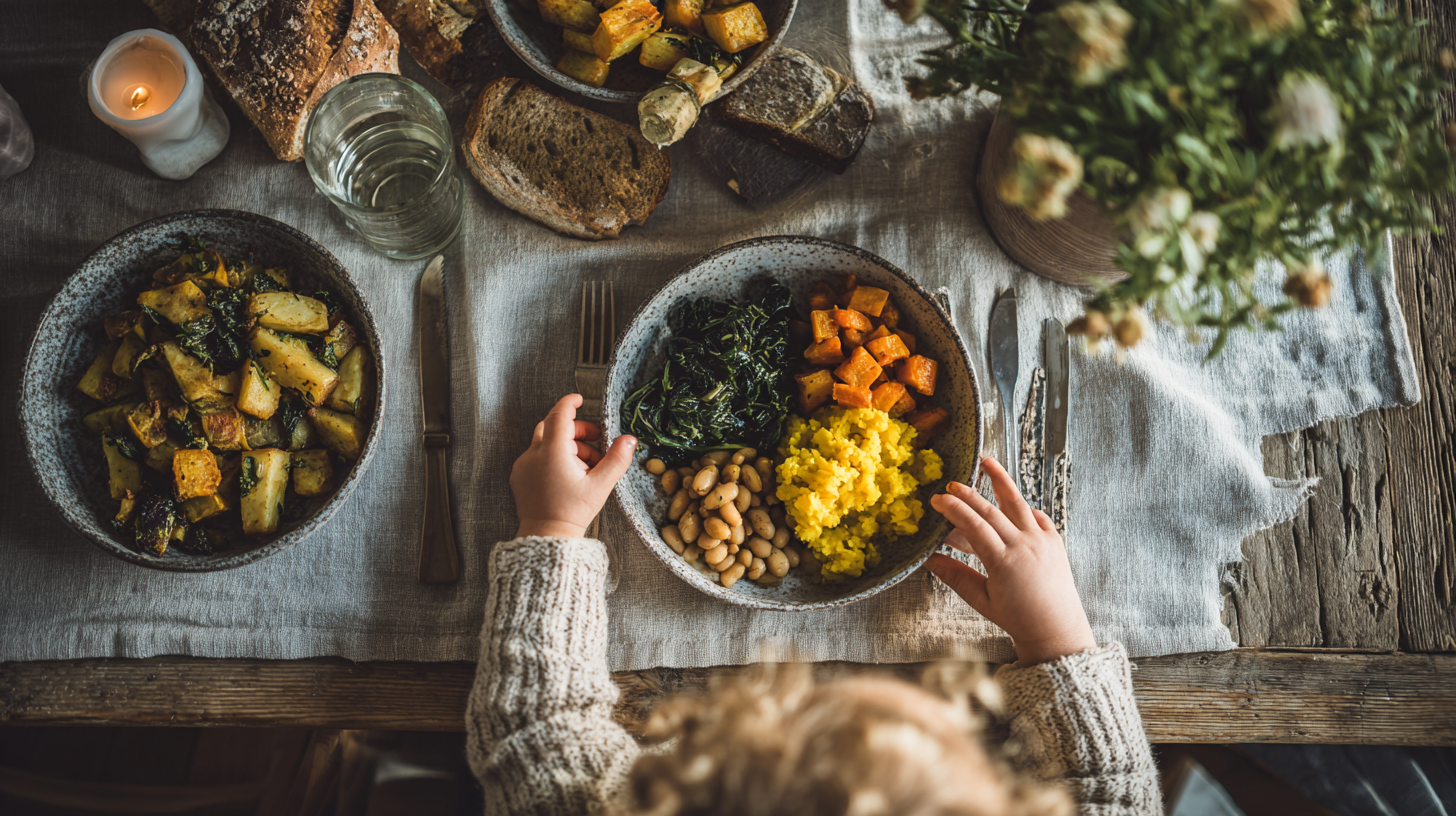
One approach that works beautifully with Caribbean cooking is involving kids in the sensory experience of ingredients. Let them smell the coconut milk before you pour it. Touch the bumpy skin of a christophine. Watch the vibrant color of pumpkin as you cube it. These aren’t chores—they’re invitations into the world of food that screens completely block out.
And here’s a secret from my own kitchen: kids are far more likely to try family foods than special “kid meals.” When you’re eating the same delicious coconut rice and red peas or sweet potato and callaloo that your toddler has (just adjusted in texture for their age), mealtimes become naturally more engaging. You’re not a short-order cook—you’re a family eating together.
Caribbean Wisdom: In island culture, food is never just fuel—it’s story, heritage, connection. That slow-cooked pot of peas and rice your grandmother made? It carried conversations, laughter, arguments resolved over shared plates. That’s what we’re fighting to preserve when we put down the screens: not perfect nutrition, but the irreplaceable magic of eating together.
When Things Don’t Go According to Plan
Let’s talk about reality for a second. Because I can give you all the research and strategies in the world, but some days you’re going to use screens at dinner. Some weeks will look nothing like the “ideal” we’re describing here. And that’s okay.
The research on screen time effects published in 2025 acknowledges something important: moderate device use can actually improve a child’s mental health, and context matters significantly. The behavior of adult caregivers during viewing, the content watched, and whether screens are in the background all influence outcomes. It’s not the occasional screen that causes problems—it’s the pattern of always needing them to eat.
So here’s my invitation: aim for progress, not perfection. Maybe your goal is 5 screen-free meals per week, keeping 2 “backup” meals where screens are okay. Maybe you start with just breakfast being screen-free and build from there. Maybe some months you slide backward and need to start over. All of that is normal, human, and completely workable.
Your Personal Action Priority
Based on where you are right now, what feels like the most doable first step?
One thing that helps is having go-to meals that are naturally engaging for kids. Foods with interesting textures, bright colors, and flavors that evolve as they chew—these naturally capture attention in a way bland “kid food” doesn’t. This is where Caribbean ingredients shine: the natural sweetness of plantain, the vibrant orange of pumpkin, the creamy comfort of coconut milk. These aren’t foods that need screens to be appealing—they’re appealing on their own.
If you’re looking for specific recipes designed to engage young eaters—with recipes like Cornmeal Porridge Dreams, Plantain Paradise, or Yellow Yam & Carrot Sunshine that have textures and flavors babies naturally find interesting—the Caribbean Baby Food Recipe Book has over 75 options complete with family meal adaptations so everyone eats together.
What This Really Means for Your Family
Here’s what I want you to understand: this isn’t about achieving some Instagram-perfect family dinner where everyone sits quietly and eats kale. This is about something much deeper—teaching your child to trust their body, to find joy in food, to associate mealtimes with safety and connection rather than battles and pressure.
A 2018 study on family meals found that adolescents who have frequent family meals report greater family connection, parental monitoring, and communication. Parents who share meals with their family experience lower stress and depression levels and enjoy better self-esteem. But here’s the thing: those benefits don’t magically appear when your kids are teenagers. They’re built, meal by meal, starting now.
When you sit down together—even for 15 minutes, even if your toddler eats three bites and asks to be done—you’re building something that will matter far more than whether they finished their vegetables tonight. You’re building a relationship where food is joyful, where the table is a safe place, where family connection happens naturally.
And in ten years, when your teenager actually wants to eat dinner with you and share what’s happening in their life? That foundation was built in these toddler years, in these moments where you chose connection over convenience, even when it was hard.
The Bigger Picture: Research shows that controlling feeding practices, including distraction, limit children’s opportunities to exercise self-control, impeding the development of self-regulation. But the opposite is also true: when you give children appropriate autonomy around eating, they learn to regulate not just their appetite, but their emotions, their behavior, their entire sense of self. That’s what we’re really building here.
Your Next Meal Starts Now
So here’s where we land. You don’t need to throw out your tablet or promise never to use screens again. You don’t need to transform your entire feeding approach overnight. You just need to take one small step toward a pattern that serves your family better in the long run.
Maybe that’s choosing tomorrow’s breakfast to be screen-free. Maybe it’s sitting down with your toddler instead of multitasking during dinner. Maybe it’s letting them help you cook one meal this week, touching ingredients and seeing food as something to explore rather than something to endure.
The beautiful thing about children is how resilient they are. They adapt, they learn, they bounce back. That pattern of needing screens to eat? It was learned, which means it can be unlearned. Not overnight, not without some bumps, but absolutely, definitively possible.
✨ The 3-Day Mealtime Reset Challenge
Ready to try something different? Here’s your micro-challenge:
Pick just ONE meal for the next 3 days to try screen-free:
Tip: Choose the meal when you’re least stressed and have the most patience. Set yourself up for success!
And here’s what I’ve learned from my own journey and from watching other families navigate this: the wins come quietly. One day your toddler will actually tell you they’re full. Another day they’ll try a new food without any pressure. Eventually, they’ll ask “What are we having for dinner?” with genuine curiosity instead of dread.
These aren’t dramatic transformations. They’re small, ordinary moments that mean everything. The kind of moments that get lost when screens dominate the table. The kind of moments that, years from now, you’ll remember as the times that mattered most.
Because at the end of the day, this isn’t really about screens at all. It’s about being present. It’s about connection. It’s about teaching your child that they can trust themselves, that food is something to enjoy, that family meals are a place of safety and belonging.
And that? That’s worth putting down the tablet for.
Want More Support on Your Feeding Journey?
Join hundreds of Caribbean parents raising adventurous eaters who love real, flavorful food.
Get the Caribbean Baby Food Recipe Book →75+ recipes | Family meal adaptations | Authentic island flavors | Perfect for responsive feeding

Kelley's culinary creations are a fusion of her Caribbean roots and modern nutritional science, resulting in baby-friendly dishes that are both developmentally appropriate and bursting with flavor. Her expertise in oral motor development and texture progression ensures that every recipe supports your little one's feeding milestones while honoring cultural traditions.
Join Kelley on her flavorful journey as she shares treasured family recipes adapted for tiny taste buds, evidence-based feeding guidance, insightful parenting anecdotes, and the joy of celebrating food, culture, and motherhood. Get ready to immerse yourself in the captivating world of Kelley Black and unlock the vibrant flavors of the Caribbean for your growing baby, one nutritious bite at a time.
- The Feeding Revolution: Why Your Everyday Meals Are Changing the World - October 13, 2026
- Your Feeding Story Matters More Than The “Perfect” One Online - October 12, 2026
- Looking Forward: Stepping Into Your Confident Feeding Future - October 11, 2026