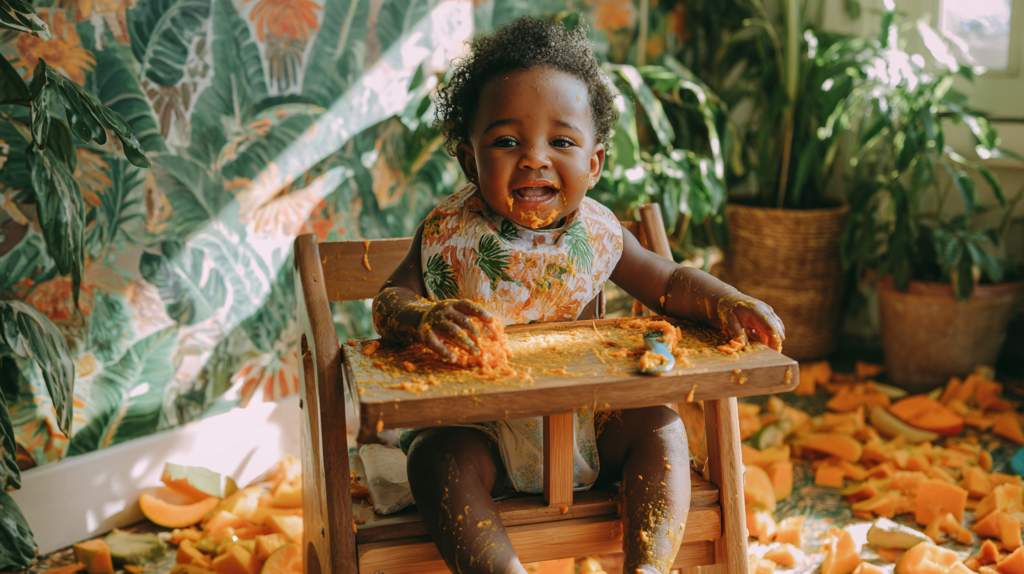
The Messy Truth About Self-Feeding: Why Your Kitchen Floor Looks Like a War Zone (And Why That’s Actually Perfect)
Here’s what nobody warned me about: that magical moment when my nine-month-old gleefully hurls a perfectly good sweet potato puree across the kitchen—and my mother-in-law’s voice echoes in my head saying, “Just feed the child yourself, nuh?”
I stood there, sweet potato dripping from the ceiling (yes, the ceiling), asking myself the same question you’re probably asking right now: Is encouraging independence really worth turning my dining area into a food-splattered crime scene three times a day?
The shocking truth? That mess isn’t just acceptable—it’s essential. And by the end of this article, you’ll understand why the parents who obsess over keeping mealtimes spotless might actually be holding their children back from crucial developmental milestones.
Discover Your Self-Feeding Personality
Click your biggest mealtime struggle to reveal your feeding approach style:
The Development Secret Hiding in Your Highchair
Two months ago, I watched my friend Maya meticulously wipe her daughter’s hands between every single bite. Clean highchair, clean baby, clean floor. Impressive, right? Except her eighteen-month-old still couldn’t hold a spoon properly while my “messier” approach had my younger baby already grasping utensils and self-feeding soft foods.
The difference? I understood something researchers have been trying to tell us for years: mess equals learning. When babies squish Caribbean-inspired foods like sweet potato and callaloo between their fingers, they’re not just making a disaster—they’re building neural pathways that connect sensory experiences with motor control.
According to recent research, professional feeding guidance can increase infant self-feeding rates from 15% to 40% within just one month. But here’s what shocked me most: this improvement happened independently of motor development changes. Translation? Your confidence and technique matter just as much as your baby’s physical readiness.
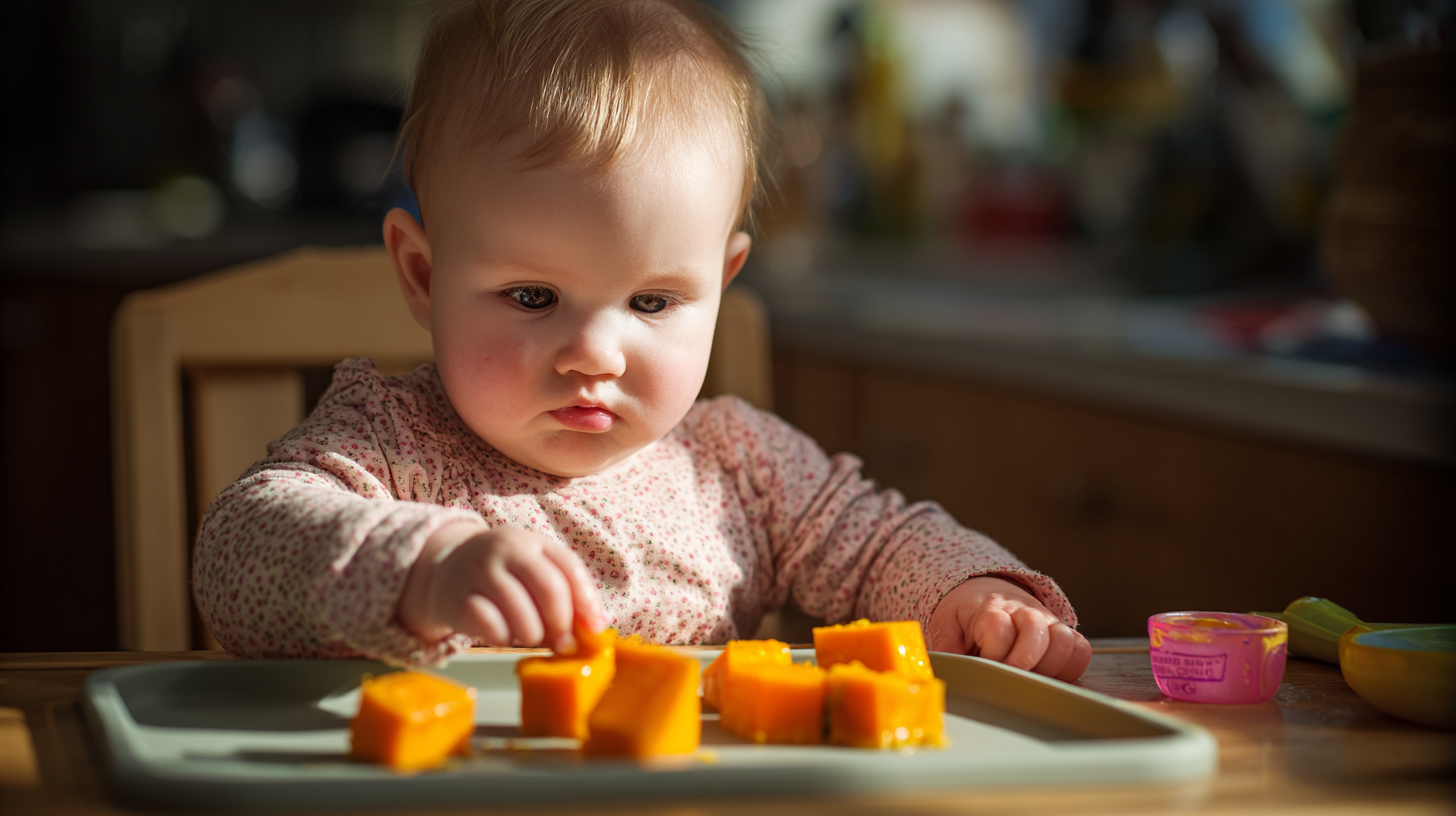
Think about it. When we constantly intervene, wipe, and control the feeding process, we’re essentially telling our babies: “You can’t do this.” But when we step back—armed with the right strategies—something magical happens. They prove us wrong.
Decoding Developmental Readiness
Last week, a mama in my community asked, “My baby just turned six months. Should she be using a spoon already?” I nearly spit out my sorrel juice because this question reveals our biggest misconception: feeding development isn’t about age—it’s about readiness.
Here’s the truth nobody tells you: some six-month-olds are ready to self-feed finger foods, while others aren’t ready until seven or eight months. And that’s completely normal.
Is Your Baby Ready? Quick Assessment
Select all the skills your baby demonstrates:
The real markers of readiness include sitting independently, developing hand-eye coordination, bringing objects to the mouth, and showing genuine interest in food. Notice what’s missing from that list? A specific age.
My own journey taught me this lesson. I started offering pre-loaded spoons around six months—just placing them on the tray without pressure. Some days, my baby grabbed them enthusiastically. Other days, they became flying projectiles. Both responses gave me information about where we were developmentally.
For utensils specifically, here’s the progression that actually works:
6-9 months: Pre-loaded spoons placed on the tray. Your baby might wave it around, bang it, or actually get some food in their mouth. All of this is practice.
10-12 months: Formal utensil introduction begins. Offer two spoons—one for them to hold and explore, one for you to actually feed with.
15 months: Introduce a fork as that pincer grasp strengthens. Foods like soft pieces of plantain or ripe mango are perfect for fork practice.
18-24 months: Expect increasing precision, though mess remains normal. This is when your child transitions from “attempting to self-feed” to “primarily self-feeding.”
The Cup Confusion Nobody Warned You About
Can I be honest? I wasted $47 on sippy cups before learning they’re actually not recommended by feeding therapists. Forty-seven dollars!
Here’s why: sippy cups pool liquid around the teeth (hello, cavities) and don’t promote the mature oral motor patterns babies need to develop. The better approach? Skip sippy cups entirely and go straight to open cups and straw cups simultaneously around six months.
The Two-Cup Strategy:
Open Cup (6+ months): Start with tiny amounts—1-2 ounces max. Hold the cup to your baby’s lips at mealtimes. Yes, there will be spills. That’s literally the point. They’re learning cause and effect, lip positioning, and swallowing coordination.
Straw Cup (9-12 months): Use a squeezable straw cup initially. Squeeze gently to push liquid to the top of the straw, demonstrating the sucking motion. Straw drinking actually promotes better oral motor development than sippy cups because it requires more complex tongue and cheek movements.
By 12-15 months, increase open cup opportunities while using straw cups for snacks and outings. By 18-24 months, most toddlers can drink from an open cup with minimal spillage.

I remember the first time my baby successfully drank from an open cup. Water dribbled down her chin, soaked her bib, and she looked absolutely triumphant. In that moment, I realized: this isn’t about keeping her dry. It’s about building her confidence that she can do hard things.
Managing Mess Without Losing Your Mind
Listen, I’m Caribbean. My grandmother would have an absolute fit seeing food on the floor. In our culture, wasting food isn’t just messy—it feels disrespectful. So I get it. The mess anxiety is real.
But here’s what changed everything for me: reframing mess from “wasteful chaos” to “productive learning.” Every dropped piece of food represents hand-eye coordination practice. Every smear on the highchair tray is sensory exploration. Every clothing stain is evidence that your baby is actively participating in their nutrition.
The Mess-to-Mastery Calculator
How messy is too messy? Slide to see what’s normal:
Now, let me share my actual mess-management toolkit—the strategies that let me encourage independence without turning my kitchen into a complete disaster zone:
The Setup: Large washable mat under the highchair (I use an old shower curtain—works brilliantly). Water-resistant bib with a deep pocket. Wet cloth within arm’s reach. Most importantly? Adjust your expectations before the meal even starts.
The Timing Strategy: Practice self-feeding during low-stress times. Weekend breakfast when you’re not rushing? Perfect. Tuesday morning when you’re already running late? Maybe just do a quick parent-led feeding that day. There’s no award for making yourself miserable.
The Food Hack: Start with less messy foods while building skills. Roasted vegetable sticks, toast fingers, and chunks of ripe fruit create way less chaos than yogurt or pasta. Save the truly messy foods for days when you have the emotional bandwidth.
The Caribbean Advantage: Traditional foods like provisions (ground provisions, that is—yam, dasheen, eddoes) are actually perfect for self-feeding practice. They’re soft enough to gum, naturally sized for little hands, and way less messy than many Western baby foods. You’ll find age-appropriate preparations for all of these in the Caribbean Baby Food Recipe Book, with over 75 recipes that consider both nutrition and practical feeding skills.
The Independence-Assistance Balance
Here’s where most parents (including me, initially) get stuck: we think it’s all-or-nothing. Either we spoon-feed everything, or we completely step back. But the magic happens in the in-between.
I call it the “side-by-side strategy.” While your baby practices with finger foods or a pre-loaded spoon, you simultaneously offer bites from your spoon. They get autonomy AND adequate nutrition. Revolutionary, right?
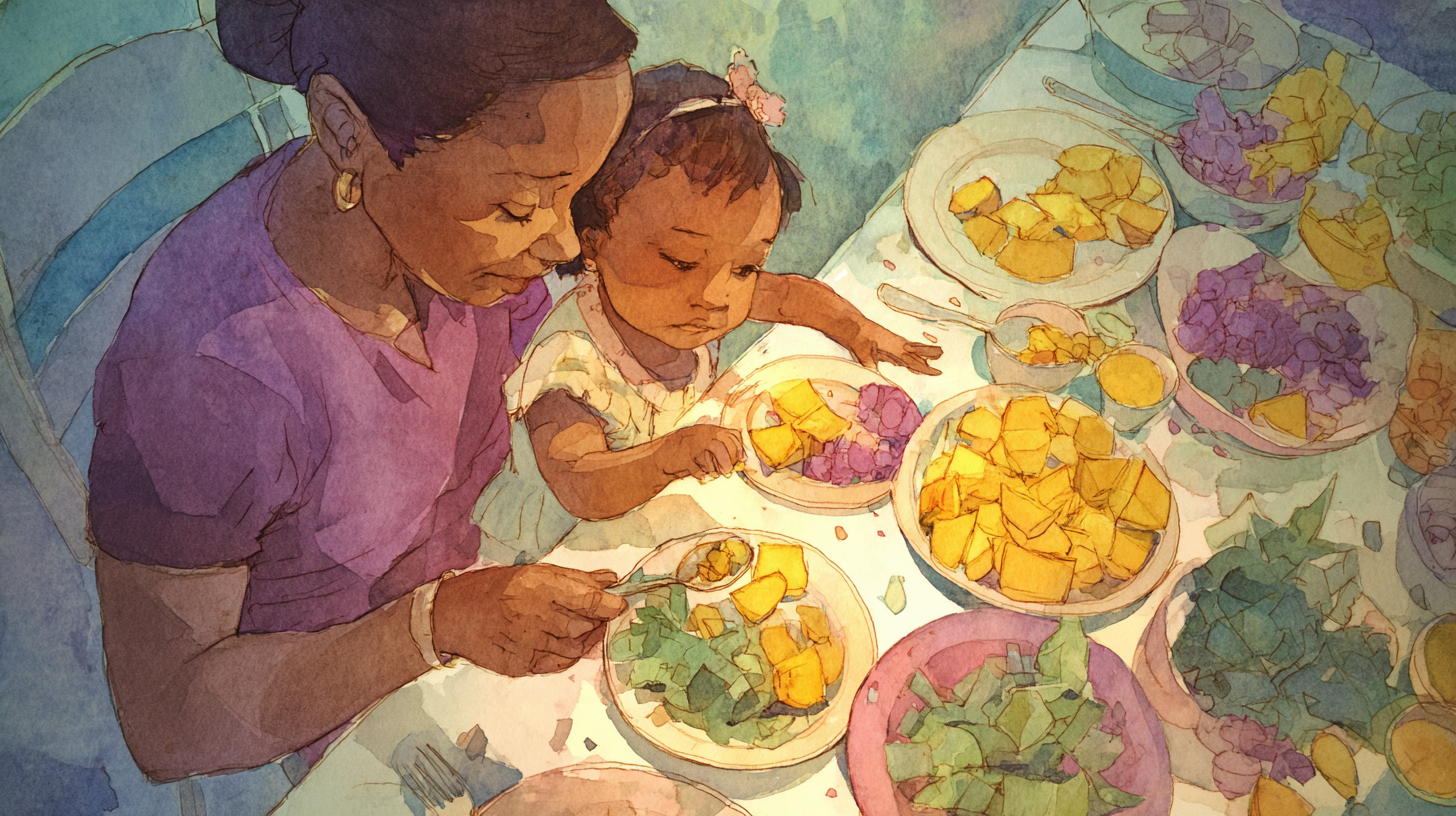
Think of it like this: you wouldn’t throw a non-swimmer into the deep end and call it “independence.” You’d stay nearby, offer support when needed, and gradually reduce assistance as skills develop. Feeding works the same way.
Real-world example from last Thursday: I made a simple callaloo and sweet potato mash. I put some on my daughter’s tray for her to explore with her hands. I pre-loaded a spoon and left it nearby. And yes, I also fed her some bites myself to ensure she got adequate nutrition. By the end of the meal, she had practiced multiple feeding skills, eaten well, and I hadn’t stressed about whether she was “doing it right.”
Your Self-Feeding Progress Tracker
Check off the milestones you’re working on this week:
The research backs this up beautifully: responsive feeding—where caregivers recognize and respond to hunger and satiety cues while supporting autonomy—produces better outcomes than either extreme control or complete hands-off approaches.
When Caribbean Culture Meets Modern Feeding Science
My Trinidadian aunt once told me, “We didn’t have all this ‘baby-led weaning’ business, and we turned out fine.” And you know what? She’s right. Caribbean children have been successfully fed for generations.
But here’s the thing: traditional Caribbean feeding wisdom and modern feeding science aren’t enemies—they’re actually aligned. Our cultural practice of eating together as a family? Research now shows this promotes better self-feeding skills through modeling. Our provision-based foods that are naturally soft and easy to grasp? Turns out they’re developmentally perfect.
What we’re doing now isn’t rejecting our culture—it’s honoring it while adding new understanding about how children develop feeding skills. We can make pelau with ingredients sized appropriately for baby hands. We can offer pre-loaded spoons of seasoned rice and peas. We can practice responsive feeding while maintaining our cultural food identity.
The beauty of resources like the Caribbean Baby Food Recipe Book is that they bridge this gap—traditional foods prepared with developmental stages in mind, so you don’t have to choose between culture and best practices.
The Resistance Phase
Nobody warns you about this part: just when you think you’ve figured it out, your previously enthusiastic self-feeder suddenly refuses to touch food.
It happened to me around 16 months. My daughter, who had been happily feeding herself for months, suddenly wanted me to feed her every bite. I panicked. Had I done something wrong? Was she regressing?
Turns out, this is completely normal. Feeding development isn’t linear—it’s more like a dance with advances, plateaus, and yes, occasional backwards steps.
Remove All Pressure: Continue offering foods without forcing. The more you push, the more they resist.
Check for Medical Issues: Teething, reflux, or illness can temporarily affect feeding. When in doubt, consult your pediatrician.
Maintain Structure: Keep consistent meal and snack times in the same location. Predictability helps during uncertain phases.
Offer Choices: “Do you want the mango or the banana?” Autonomy reduces power struggles.
Model, Model, Model: Ensure your child sees you and siblings eating enthusiastically. Mirror neurons are powerful.
Trust the Process: Temporary setbacks don’t erase progress. Your child hasn’t forgotten how to self-feed—they’re just navigating something else right now.
We got through that phase. You will too. The key is maintaining offerings without pressure, trusting your child’s internal hunger cues, and remembering that feeding development happens over months and years—not days.
Your Kitchen Floor Is a Classroom
So here we are, back where we started: standing in a kitchen that looks like a sweet potato explosion happened. Except now, instead of seeing chaos, you see something different.
You see your baby’s hand reaching with increasing accuracy. You notice their lips closing around that spoon with more precision than last week. You observe them signing “more” or reaching deliberately for the cup—evidence that they’re not just eating, they’re learning.
The truth about self-feeding that nobody tells you upfront? It’s not really about the food at all. It’s about raising a human who trusts their body’s signals, who feels capable of doing hard things, who doesn’t need you to do everything for them.
Yes, encouraging independence is messier in the short term. But the alternative—a child who’s still dependent on you for every bite at three, four, five years old—is messier in the long term. Not just for your schedule, but for their development of autonomy, confidence, and self-regulation.
Every single day you step back and let them try, you’re casting a vote for the kind of eater—and human—they’re becoming. A person who explores new textures without fear. A person who honors their hunger and fullness. A person who participates joyfully in family meals rather than needing to be coaxed, bribed, or force-fed.
Is it worth the mess? Ask yourself this: when your child looks at you with pride gleaming in their eyes after successfully getting that spoonful of cornmeal porridge to their mouth (even though most of it is on their face), does the sweet potato on your ceiling really matter?
The magic isn’t in keeping things clean. The magic is in the mess itself—the beautiful, frustrating, developmental mess that transforms helpless infants into capable humans, one splattered meal at a time.
So tomorrow morning, when you’re setting up that highchair, remember: you’re not just preparing a meal. You’re creating a learning environment. That mat under the chair? It’s not protecting your floor—it’s protecting your child’s right to develop at their own pace, in their own messy, magnificent way.
And when your well-meaning relatives question why you’re “letting” your baby make such a mess, you can smile knowing that you’re giving your child something far more valuable than a spotless kitchen: the foundation for a lifetime of healthy, independent eating.
Because at the end of the day, the only mess that really matters is the one we create by not trusting our children to learn. Everything else? It washes off.
Now go ahead—hand over that spoon. Your kitchen floor can take it.

Kelley's culinary creations are a fusion of her Caribbean roots and modern nutritional science, resulting in baby-friendly dishes that are both developmentally appropriate and bursting with flavor. Her expertise in oral motor development and texture progression ensures that every recipe supports your little one's feeding milestones while honoring cultural traditions.
Join Kelley on her flavorful journey as she shares treasured family recipes adapted for tiny taste buds, evidence-based feeding guidance, insightful parenting anecdotes, and the joy of celebrating food, culture, and motherhood. Get ready to immerse yourself in the captivating world of Kelley Black and unlock the vibrant flavors of the Caribbean for your growing baby, one nutritious bite at a time.