Diet Culture Detox: How to Protect Your Child from Harmful Food Messages (Without Losing Your Mind)
One quiet evening, a seven-year-old pushed away a perfectly good dinner and whispered, “If I eat carbs at night, my belly will grow.”[web:11][web:44][web:22] That sentence did not come from a pediatrician, a parent, or a Caribbean grandma with her pot of rice and peas on the stove; it came straight from a TikTok video, echoed in the school playground like a new playground rule.[web:10][web:22][web:13]
For many parents, that is the moment the heart drops, the fork pauses mid-air, and a simple question appears: “When did childhood get so crowded with diet talk?”[web:9][web:11] This article is a deep, practical guide to detoxing diet culture from a child’s world—not by wrapping them in bubble wrap, but by giving them media literacy, body respect, and a home environment that feels more like a warm island kitchen than a nutrition exam.[web:1][web:8][web:48]
Tap the sentence that feels closest to your home and get a tailored nudge for your next tiny step.[web:48][web:56]
Diet culture is not just about weight-loss products on TV; it is a belief system that worships thinness, moralizes food as “good” or “bad,” and treats bodies like projects to be constantly managed and improved.[web:44][web:37] Research describes how this mindset equates being smaller with being healthier, more disciplined, and even more worthy, while ignoring genetics, stress, racism, poverty, and other forces that shape health.[web:44][web:35] For children, diet culture trickles down as playground teasing about being “fat,” influencers promising abs if they “eat clean,” and relatives declaring that a child needs to “watch that belly” before they even hit puberty.[web:11][web:10][web:56]
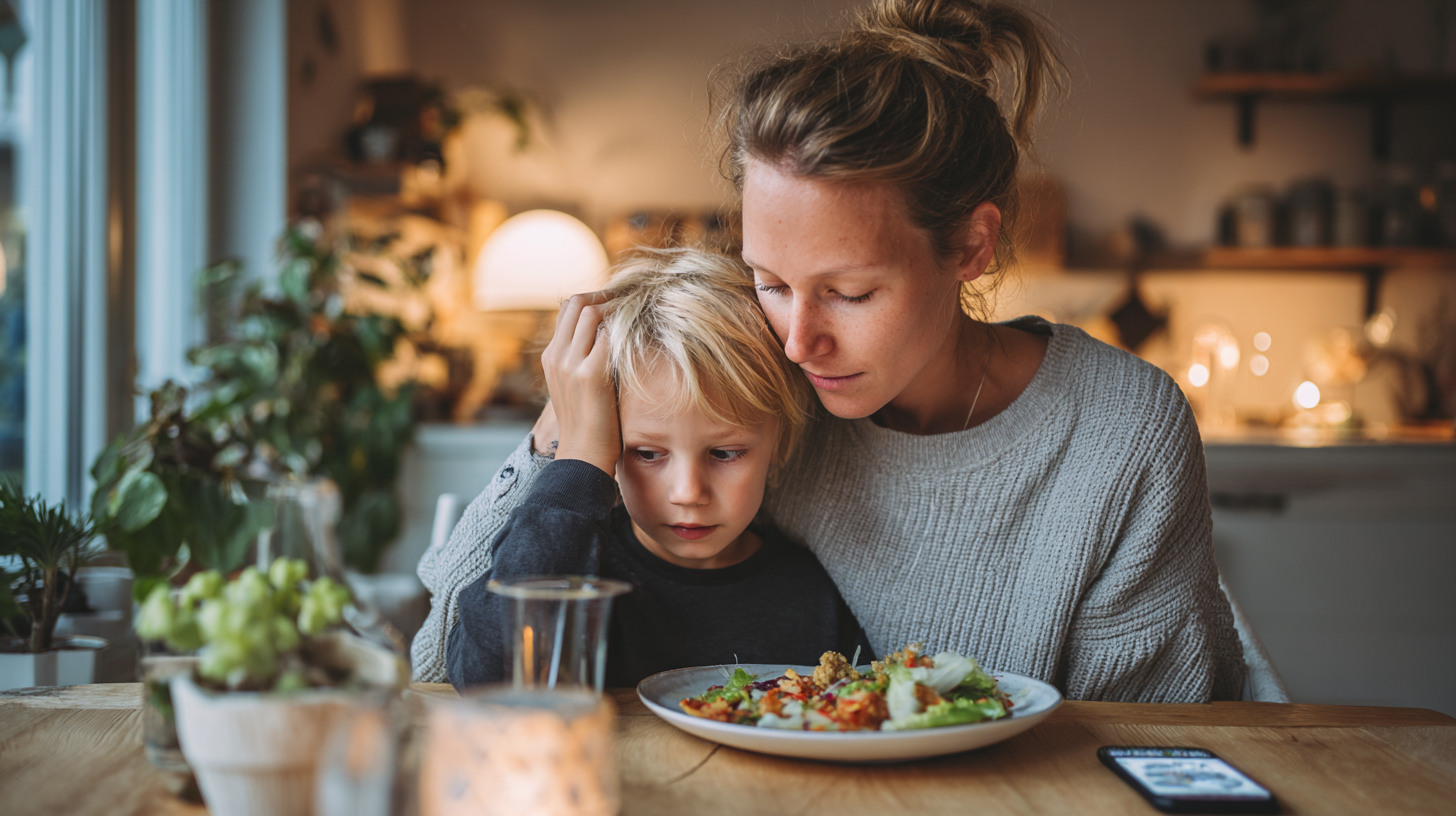
A nurturing relationship with food and body starts at home, even when the outside world is loud.
The good news is that parents do not have to choose between “never mentioning health” and “turning dinner into a nutrition lecture.”[web:48][web:45] When families shift from weight-focused talk to curiosity, connection, and skills like media literacy, children show higher body esteem, less weight bias, and fewer dieting behaviors—even in preschool.[web:1][web:8][web:7] That is the heart of a diet culture detox: not perfection, but building enough protective layers that harmful messages hit something soft and thoughtful instead of sinking straight into a child’s self-worth.[web:6][web:11][web:50]
The Hidden Feed Raising Our Kids
Right now, children are absorbing food and body messages from at least four powerful feeds: family talk, school health lessons, medical visits, and a 24/7 stream of digital content.[web:21][web:22][web:24] Surveys show that 40–60% of girls aged 6–12 already worry about gaining weight or “being fat,” and similar concerns are growing among boys.[web:11][web:9] One large survey found that about one in five children and adolescents engage in disordered eating behaviors such as dieting, bingeing, or compensatory behaviors, long before anyone would call it an eating disorder.[web:16][web:7]
Social media has poured gasoline on this worry.[web:22][web:10] Reviews of dozens of studies across many countries find that more time on appearance-focused social platforms is consistently linked with body dissatisfaction, unhealthy dieting, and worse mental health outcomes in adolescents.[web:22][web:12] TikTok analyses show that diet-industry and wellness content—“What I eat in a day,” transformation videos, detox teas, and extreme gym routines—are algorithmically pushed to young users, glorifying thinness and hyper-lean “fitspo” bodies.[web:10][web:14] Many teens now say directly that social media makes their body image worse, and those spending several hours a day online are significantly more likely to report body-image struggles and disordered eating symptoms.[web:19][web:22]
At the same time, health systems are scrambling to respond to rising childhood obesity and cardiometabolic risk.[web:21][web:24] The American Academy of Pediatrics released a major guideline recommending earlier and more intensive treatment for higher-weight children, including behavior programs, medications, and even bariatric surgery for some teens.[web:21][web:26] While the guideline warns clearly that weight stigma damages children and that clinicians must avoid shaming, critics worry that heavily weight-focused conversations can accidentally reinforce diet culture and trigger disordered eating in already vulnerable kids.[web:26][web:27]
The result is a confusing swirl for families: “eat healthy” messages mixed with transformation reels, growth charts mixed with “summer body” posts, wellness mixed with weight obsession.[web:22][web:36] That is why parents who intentionally create body-positive and weight-inclusive homes—especially those blending cultural food traditions, like Caribbean kitchens filled with plantain, coconut, and rice—become a crucial counterweight to this noisy feed.[web:34][web:48][web:50]
Spotting Diet Culture Hiding in Plain Sight
Before a parent can detox diet culture, it helps to spot how subtle it can be.[web:44][web:50] Diet culture is not only a teenager counting calories on an app; it is also a grandparent saying “Are you sure you need seconds?” a coach telling kids to “earn” their snacks with laps, or a toddler being told that fries are “naughty.”[web:48][web:56] Over time, these small comments teach children that food is a moral test and bodies are always on trial.[web:6][web:7]
Tap an option in each scenario to see whether it leans toward diet culture or body respect.[web:44][web:48]
Scenario: Your aunt says at Sunday dinner, “You are getting so big! Better slow down on those dumplings.”[web:48][web:56]
Research links parental and family pressure about weight with more body dissatisfaction and disordered eating in children.[web:56][web:6]
Researchers describe diet culture as a system that assigns moral value to foods, bodies, and movement, where “clean eating” and weight loss are framed as proof of self-control and success.[web:44][web:37] Even health campaigns can slide into diet culture when they focus on weight status instead of behaviors, or when BMI charts are delivered to families with no attention to stigma and mental health.[web:21][web:26][web:24] In one parenting trial, parents given a traditional nutrition booklet ended up with children who showed more weight bias than children whose parents received a body-image–focused program, showing how even well-meant nutrition messaging can accidentally teach kids to judge larger bodies.[web:1][web:8]
Anti-diet and weight-inclusive experts push back by centering body respect, intuitive eating, and size diversity rather than thinness as a goal.[web:39][web:37][web:53] They emphasize that opposing diet culture does not mean ignoring health; it means decoupling health from appearance, dismantling shame, and recognizing that health is shaped by stress, sleep, safety, and access to nourishing foods as much as by any one plate of rice and peas.[web:35][web:34][web:50] For Caribbean and diaspora families, that often includes reclaiming traditional foods—like callaloo, plantain, and coconut-based dishes—that diet culture has unfairly labeled as “too heavy” or “too starchy.”[web:34][web:35]
Training Tiny Myth-Busters: Media Literacy Around Food
Shielding a child completely from social media and advertising is almost impossible, but teaching them how those systems work is incredibly protective.[web:22][web:43] Media-literacy programs where children and parents learn together—such as family-based food advertising curricula—have shown improvements in kids’ nutrition knowledge, critical thinking, and even home fruit-and-vegetable intake.[web:43][web:49][web:52] Social media literacy programs for teens that unpack filters, algorithms, and the business of “influencing” also improve body image and reduce internalization of unrealistic body ideals.[web:4][web:22]
In one social media literacy trial, early adolescents who completed classroom lessons about how social media manipulates images and promotes appearance comparison reported better body-image-related outcomes than peers who had regular lessons.[web:4][web:22] Teens who understand that platforms tend to show more extreme, engaging content—meaning heavily edited bodies, rigid diets, and dramatic before-and-after videos—are less likely to blame their own bodies for not measuring up.[web:10][web:14][web:23] Youth who learn to recognize persuasive techniques in food ads, such as cartoons, bright colors, and vague “natural” claims, become less swayed by junk-food marketing and more selective about what they believe.[web:46][web:49][web:43]
Use this with a child: tap a message to reveal what is really going on underneath.[web:22][web:46]
Turning this decoder into a weekly ritual can be powerful: pausing a YouTube video or TikTok, asking “What is this trying to sell us?” and “How does this make your body feel?” helps children link media exposure with emotion instead of silently absorbing it.[web:22][web:46][web:55] Families who practice this kind of co-viewing and debriefing—rather than silent monitoring—have children who feel more empowered and less alone in navigating online pressure.[web:55][web:23] Over time, kids start to volunteer their own critiques, like “That filter does not look real” or “That ad is just trying to make us feel bad so we buy the shake,” which is exactly the kind of internal voice that protects them when parents are not in the room.[web:22][web:43]

When kids learn to decode food and body messages, social media becomes less of a trap and more of a classroom.
Building a Body-Positive (and Culture-Positive) Home Base
Studies on body image in childhood are remarkably consistent on one point: what adults say and do around food and bodies at home matters deeply.[web:6][web:56][web:7] Children whose parents criticize their weight, restrict food for weight reasons, or frequently diet themselves are more likely to report body dissatisfaction and disordered eating symptoms.[web:56][web:11] In contrast, when parents model body respect, avoid weight-based teasing, and focus on how bodies feel and function rather than how they look, children show more positive body image and healthier relationships with food.[web:6][web:9]
Parenting programs like “Confident Body, Confident Child” give a clear blueprint for this.[web:1][web:8] When parents were coached to use body-positive language, avoid labeling foods as “good” or “bad,” and practice responsive feeding instead of pressure or restriction, their preschoolers developed higher body esteem and less weight bias than children of parents who just got standard nutrition advice.[web:1][web:8] That difference matters; it shows that “eat more vegetables” is not enough, and that the emotional tone around food—shame or curiosity, fear or joy—shapes how kids think about every bite.[web:7][web:48]
Tick the phrases you have heard at home (from anyone); watch your “detox progress” rise as you commit to replacing them.[web:56][web:48]
Replacing these phrases does not mean ignoring health; it means swapping shame-based scripts for body-literate ones.[web:45][web:48] Instead of “You do not need that much rice,” a parent might say, “Let us check in with your belly—are you still hungry, or is this just looking extra tasty?” shifting focus to internal cues and away from weight.[web:1][web:7] Instead of “I feel so fat,” an adult might say, “My clothes feel tight today; my body has been through a lot, so I am going to give it some extra care,” modeling respect instead of self-attack.[web:6][web:54]
Food culture at home is another powerful antidote to diet culture, especially in families with rich culinary traditions.[web:34][web:35] In many Caribbean homes, the smell of sweet potato roasting with a hint of nutmeg, or callaloo bubbling in coconut milk, is not just about nutrients; it is about belonging, story, and joy.[web:34][web:35] When children are invited to mash plantains, taste a spoonful of mango puree, or sprinkle coconut on their porridge, they learn that food is connection, not a math problem.[web:48][web:1] For parents who want structured ideas for baby-friendly versions of these flavors, resources like the Caribbean Baby Food Recipe Book: Easy & Healthy Homemade Meals for Infants & Toddlers can make it easier to serve nourishing sweet-potato, mango, plantain, and bean-based meals without falling into “good” and “bad” labels.[web:34][file:57]
Studies reviewing children’s affect, body, and eating habits show that when positive emotions and family warmth surround meals, kids have better body image and more flexible, intuitive eating patterns.[web:7][web:6] That might look like turning dinner into a slow conversation about everyone’s day instead of a negotiation about vegetables, or letting a child help decide whether the peas go in the rice or on the side.[web:48][web:1] These small choices tell kids, “Your body and preferences matter,” which quietly pushes back against diet culture’s message that external rules know better than their own cues.[web:7][web:37]
When Diet Culture Shows Up at School or the Doctor
Even in the most body-positive home, children still move through schools, sports teams, and clinics that may not be on the same page yet.[web:21][web:24] Some schools still weigh students in front of classmates or send BMI report cards home, practices that have been criticized for increasing stigma without clearly improving health behaviors.[web:21][web:27] Coaches may use weigh-ins, “fat tests,” or public comments about players’ bodies, and healthcare visits may focus heavily on weight charts instead of sleep, stress, or mental health.[web:26][web:56]
Recent pediatric guidelines try to tackle this by warning clinicians explicitly about the harms of weight stigma and urging person-first, nonjudgmental language.[web:21][web:24] However, there is still a tension between treating obesity as a disease—sometimes with aggressive methods like medication and surgery—and avoiding a slide into diet culture for children and teens.[web:26][web:27] Commentaries argue that any conversation about weight should be paired with screening for eating disorders and discussion of social determinants like access to safe play spaces and affordable fresh foods.[web:35][web:34][web:26]
Parents can advocate gently but firmly in these settings.[web:48][web:54] That might look like requesting private weigh-ins if medically needed, asking teachers not to comment on students’ bodies, or suggesting that school health classes focus more on media literacy and skills (like cooking simple meals) instead of calorie counting.[web:43][web:52] Some family-centered media literacy programs have already partnered with schools to embed lessons on food marketing and body image into the curriculum, showing that change is possible when parents, educators, and researchers work together.[web:55][web:43]
A Gentle 7-Day Diet Culture Detox Plan for Families
Large studies and intervention trials are clear on this: parents do not need to overhaul everything at once to make a difference.[web:1][web:4][web:43] Small, specific adjustments—especially around language, media habits, and how food is framed—add up over time and can significantly buffer children from body dissatisfaction and dieting pressure.[web:7][web:22] The most powerful changes are usually not dramatic “challenges” but quiet, sustainable tweaks woven into everyday life.[web:6][web:48]
Choose one day to start; tap different days anytime the family is ready for the next tiny shift.[web:1][web:48]
Retire one common phrase like “good/bad food” and replace it with “every food has a job.”[web:48][web:44]
Watch 10 minutes of your child’s usual content together and use the decoder questions from above.[web:22][web:46]
Cook one simple heritage dish—maybe mashed plantain, coconut-scented sweet potato, or mango puree—and talk about its story, not its calories.[web:34][web:35]
Try a family dance session where nobody talks about “burning off” food, only joy, rhythm, and silliness.[web:6][web:7]
Before the next appointment or school meeting, script a few phrases to advocate for private, respectful body talk.[web:21][web:54]
Spend one full day giving kids compliments only about character, skills, and creativity, not appearance.[web:9][web:45]
Ask everyone what made their bodies feel happy this week—food, rest, movement, or connection—and listen without fixing.[web:7][web:6]
Many families find that food culture changes most quickly when children are invited into the kitchen.[web:48][web:1] Letting a toddler sprinkle cinnamon on roasted sweet potato wedges or helping an older child mash beans for a Caribbean-inspired spread makes nutrition tactile instead of abstract.[web:34][web:35] For parents who want more structured recipes with those island flavors, a resource like the Caribbean Baby Food Recipe Book: Easy & Healthy Homemade Meals for Infants & Toddlers can bridge the gap between cultural pride and practical, age-appropriate meals built around mangoes, coconut milk, plantains, beans, and sweet potatoes.[web:34][file:57]
Families also report that media habits feel less adversarial when rules are co-created.[web:23][web:22] Instead of sudden bans, parents can sit with their tweens and teens to agree on guidelines such as unfollowing accounts that trigger body shame, favoriting content about music, art, or sports, and taking regular “algorithm resets” by intentionally engaging with diverse, body-positive creators.[web:19][web:22][web:10] Young people who feel involved in these decisions are more likely to see them as acts of self-care rather than punishments.[web:23][web:55]
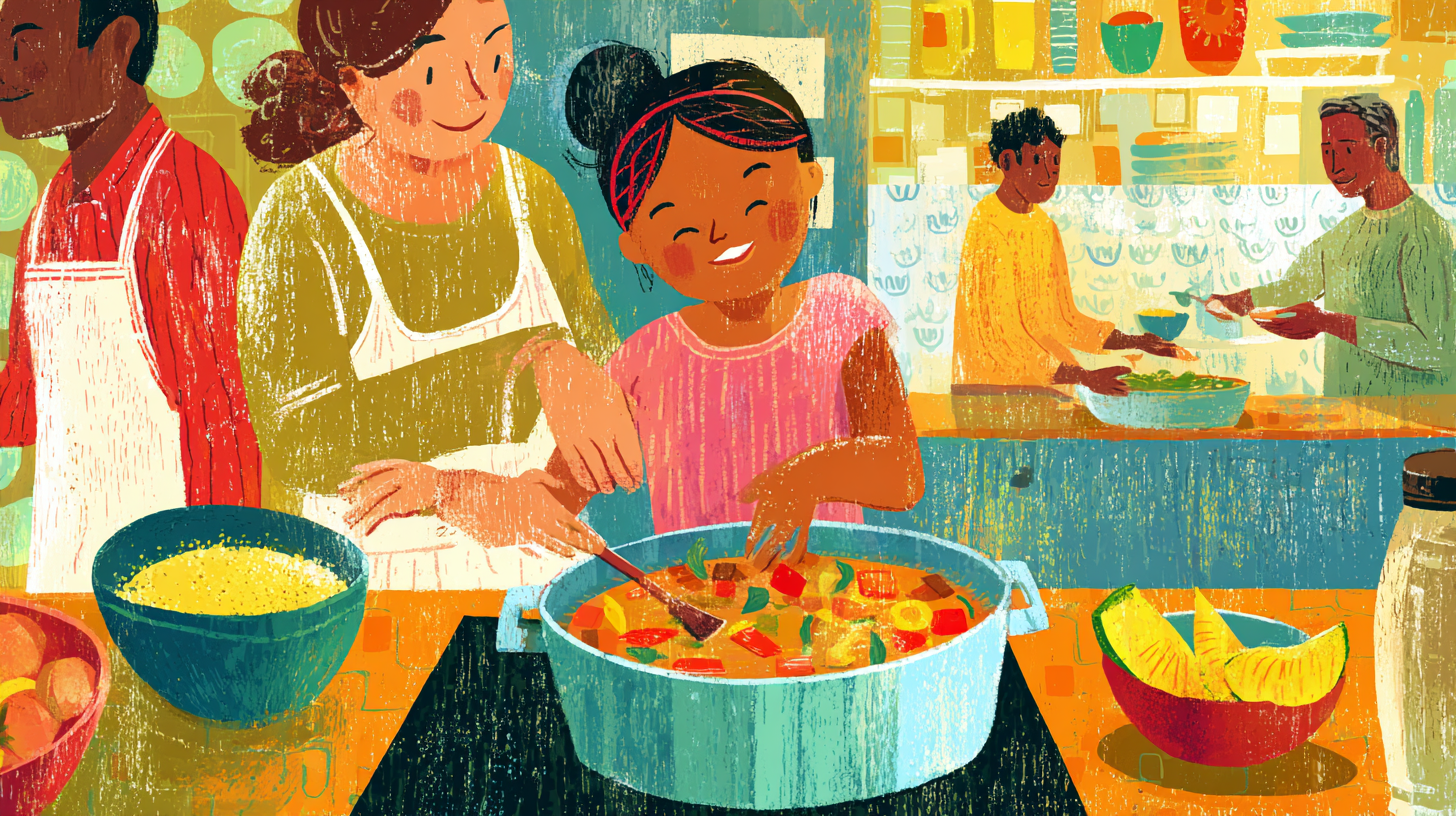
Inviting kids into the kitchen turns nutrition into connection and gives them a joyful language around food.
Your Next Small Brave Move
Underneath the statistics and guidelines, there is a simple truth: children remember how adults made them feel about their bodies far more than what was served on any single plate.[web:6][web:9] The ultimate “detox” is not a perfect pantry; it is a child who knows that their worth is not up for debate when their body changes, when a friend teases them, or when a video tells them they should shrink to belong.[web:11][web:50] That kind of grounded self-worth is built slowly, in hundreds of small conversations and choices.[web:7][web:48]
The most powerful parents in this space are rarely the ones who never make a misstep; they are the ones who repair out loud.[web:54][web:48] When an adult catches themselves saying, “Ugh, my stomach looks huge,” and then later says, “That was not kind to my body; it has done so much for me,” children witness what it looks like to unlearn diet culture in real time.[web:6][web:7] When a family decides together that Sunday dinner is for laughter, stories, and second helpings if anyone is still hungry, kids experience nourishment as community, not a test.[web:1][web:48]
Tap one intention; get a custom encouragement you can reread on the tough days.[file:57][web:6]
For families with little ones just starting solids or exploring new textures, this journey can start as early as that first spoon of mashed mango or coconut-kissed sweet potato.[web:34][web:7] Introducing babies to a rainbow of flavors, especially from their own culture, lays both nutrition and identity foundations that diet culture cannot easily shake.[web:34][web:35] Resources such as the Caribbean Baby Food Recipe Book: Easy & Healthy Homemade Meals for Infants & Toddlers give parents a structured way to say, “In this family, we season our lives with flavor, not fear.”[web:34][file:57]
Years from now, a grown child may not remember the exact age when social media first suggested that their body should take up less space.[web:22][web:11] What will be remembered is the way a parent laughed with them over spilled coconut milk, the way an adult gently challenged a cruel meme, and the way their home felt like a place where every body at the table belonged.[web:6][web:48][web:50] That is the quiet, radical work of a diet culture detox—and it is work that can start with one sentence, one meal, and one brave, imperfect step taken today.[web:1][web:7][file:57]

Kelley's culinary creations are a fusion of her Caribbean roots and modern nutritional science, resulting in baby-friendly dishes that are both developmentally appropriate and bursting with flavor. Her expertise in oral motor development and texture progression ensures that every recipe supports your little one's feeding milestones while honoring cultural traditions.
Join Kelley on her flavorful journey as she shares treasured family recipes adapted for tiny taste buds, evidence-based feeding guidance, insightful parenting anecdotes, and the joy of celebrating food, culture, and motherhood. Get ready to immerse yourself in the captivating world of Kelley Black and unlock the vibrant flavors of the Caribbean for your growing baby, one nutritious bite at a time.
- The Feeding Revolution: Why Your Everyday Meals Are Changing the World - October 13, 2026
- Your Feeding Story Matters More Than The “Perfect” One Online - October 12, 2026
- Looking Forward: Stepping Into Your Confident Feeding Future - October 11, 2026