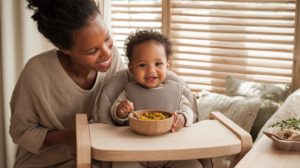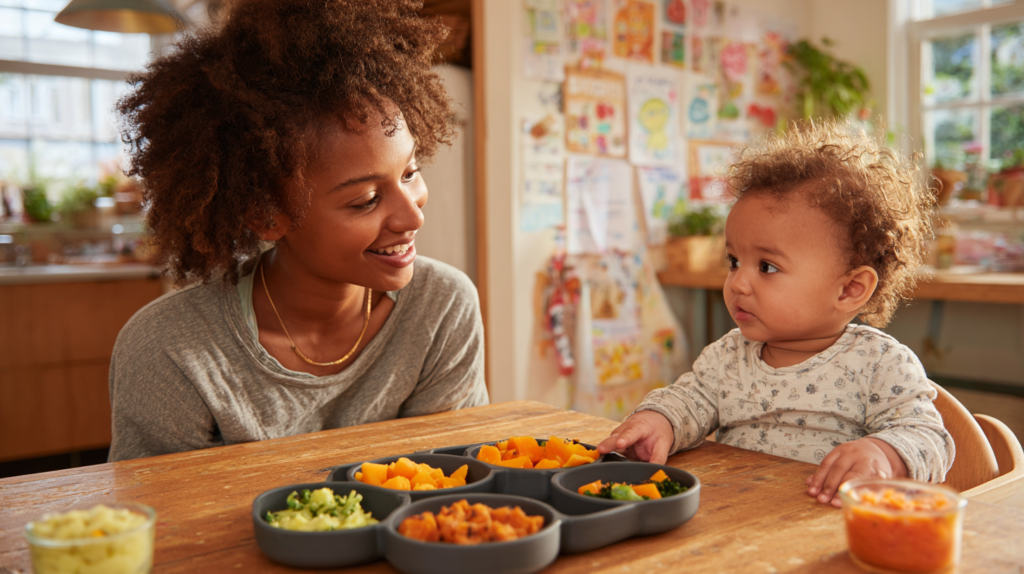
Baby Feeding Challenges & Solutions: Is Your Little One Really a Picky Eater?
Turn stressful mealtimes into calm, colorful, Caribbean‑flavored moments of connection – using science, stories, and simple daily habits that actually work.
If your baby clamps their lips shut, flings pumpkin purée like confetti, or survives on three “approved” foods, you are not a bad parent – you are a parent in the most researched, misunderstood, and emotionally charged season of feeding. Modern studies show that roughly one in four young children will be labeled “picky” at some point, and in some groups more than half of parents report worries about how their child eats. Yet very few are ever taught how normal this phase can be, or when it quietly crosses the line into something more serious.
This guide breaks down what is happening on your baby’s plate – and in their tiny nervous system – from the first spoonfuls to the fiercest food standoffs. You will see where the science is clear, where experts disagree, and how to turn numbers and guidelines into warm, real‑life routines in your kitchen, whether you are steaming dasheen in Trinidad, roasting sweet potatoes in Toronto, or mashing plantain in New York.
Along the way, you will meet practical tools: quick self‑checks to spot red flags early, mini‑quizzes to reflect on your feeding style, a progress tracker for repeated exposures, and even a Caribbean flavor matcher to help you serve island‑inspired meals your baby can grow into. And yes, there will be hope for the child who currently screams at the sight of anything green.
What “Picky Eating” Really Means (And What It Doesn’t)
Let’s start with some straight talk: “picky eating” is not one single medical diagnosis. It is a cluster of behaviors – rejecting many foods, preferring a narrow menu, fighting new textures or flavors, and often insisting on specific brands or presentations. Many babies move through some of this as they grow; appetite drops after the explosive growth of the first year, and a natural caution around new foods appears as they start walking and exploring their world.
Researchers often separate everyday picky eating from more serious feeding disorders. On the more extreme end is avoidant/restrictive food intake disorder, where a child’s intake is so limited it leads to poor growth, nutrient deficiencies, or major distress and disruption in daily life. In between those extremes sit many children who seem fussy but are still growing well, active, and occasionally brave enough to try something new, especially when pressure is low and the environment feels safe.
The confusing part? Studies around the world use different checklists and definitions, so prevalence numbers vary widely. Some surveys find around a fifth to a quarter of young children fit criteria for picky eating, while others, especially in preschool settings, report rates well over half. What doesn’t change is the emotional weight: parents across cultures describe guilt, worry, and mealtime tension, even when growth charts look fine.
- Normal phase: rejects some foods, appetite varies by day, still has a decent list of accepted foods, overall growth is steady.
- Watch closely: eats only very specific brands or textures, refuses whole food groups, long battles at every meal.
- Seek help promptly: signs of weight loss or poor growth, panic at the table, gagging or choking often, or a diet limited to a handful of “safe” items.
Use these as conversation starters with your pediatrician or feeding specialist, not as a replacement for medical advice.
The Numbers Behind the Nerves: How Common Is Picky Eating?
Over the last decade, large birth‑cohort and preschool studies have followed thousands of children to understand just how widespread picky eating really is. When researchers check in at multiple ages – around 18 months, 3 years, and 6 years – a pattern appears: the highest rates of pickiness cluster in the toddler and preschool years, and then gradually ease for many children as they reach school age. That means what feels endless in the moment is usually part of a broader developmental story.
Some analyses pooling many studies together estimate that around one in five children in the first two years of life can be considered picky by research standards. In individual groups, that number rises closer to one in three when parents are asked directly about concerns. Among preschoolers, prevalence jumps even higher in some countries, reflecting how quickly food battles can escalate once children discover the power of “no.”
The impact on nutrition is usually subtle but noticeable. Across multiple studies, picky eaters tend to eat fewer fruits and vegetables, and sometimes fewer protein‑rich foods, while favoring familiar starches and ultra‑processed options if they are available. A small but real proportion of these children trend toward lower weight or are at higher risk for micronutrient shortfalls, especially when their accepted list of foods stays narrow for years rather than months.
| Aspect | What research is seeing |
|---|---|
| How many children? | Roughly one in five in early toddlerhood, sometimes more than one in three when parents are directly asked about concerns. |
| When is it worst? | Peak fussiness commonly shows up between 18 months and 3 years, then eases for many by early school age. |
| Nutrition impact | Lower intake of fruits and vegetables and a slightly higher chance of underweight for some persistent picky eaters. |
| Parent stress | High across almost all studies – even when growth is fine, the daily emotional weight at the table is heavy. |
A Caribbean mom once told me in a clinic waiting room, “My son rejects callaloo, pumpkin, rice – all the foods I grew up on. I feel like I’m failing my culture and my child at the same time.” That heartbreak is as real as any growth chart.
Use these scenarios to sharpen your instincts. Tap a card to see how feeding specialists would usually frame it.
Only eats 5–10 familiar foods, but growth is steady
Is this just a picky phase?
Gags, cries, or panics when new textures appear
Should you wait it out?
Loves snacks all day, barely touches main meals
Is this common toddler behavior?
Dropping on the growth chart with very few accepted foods
Does this need specialist support?
Why Babies Become Picky: The Hidden Drivers
Behind every plate pushed away is a tangle of biology, temperament, skills, and family history. When researchers zoom in, they consistently see a mix of intrinsic and extrinsic factors. On the inside are things like sensory sensitivity – how strongly a child experiences textures, smells, and tastes – as well as temperament traits such as anxiety or emotional intensity. A highly sensitive baby may notice the graininess of dasheen mash or the slight fibers in callaloo long before an easygoing sibling does.
Skill development also matters. Babies who do not get gradual practice moving from smooth purées to thicker mash and soft pieces can struggle with chewing and safely handling new textures later. If they have had negative experiences – like frequent gagging, choking episodes, or reflux discomfort – their brain may start to associate solid food with danger, even if medical issues have been resolved. In those cases, what looks like stubbornness is often self‑protection.
On the outside, mealtime environment and feeding style play a major role. Studies find that when parents feel anxious about intake, they are more likely to pressure, bribe, or insist on “just three more bites.” Ironically, pressure usually backfires: children eat less in the moment, become more suspicious of the food being pushed, and may lock into power struggles. Conversely, structured routines, family meals, and calm repetition – without threats or rewards – are strongly associated with more adventurous eating over time.
What the Experts Are Saying Right Now
Across pediatrics, nutrition, and occupational therapy, there is now broad agreement on a few big ideas. First, picky eating in the early years is common and often temporary, but ignoring it entirely can allow unhelpful patterns to harden. Second, parents need help separating “developmentally normal” from “needs assessment,” so they can act early when something is off without pathologizing every refusal. Third, the goal is not to force variety at any cost, but to protect nutrition, growth, and the parent–child relationship.
Many clinicians frame feeding around a “division of responsibility”: caregivers decide what, when, and where food is offered; the child decides whether and how much to eat from what is on offer. When parents stick to this division, avoiding pressure, coaxing, or food‑based bribes, children are more likely to stay in tune with their own hunger and fullness cues. Over‑controlling approaches, on the other hand, are linked to higher stress and, in some research, to higher weight and more emotional eating down the line.
Experts are also clearer than ever that some children need specialized support. When selective eating comes with poor growth, intense distress, or co‑occurring conditions like autism or oral‑motor delays, feeding therapists, speech‑language pathologists, and occupational therapists can assess chewing, swallowing, sensory processing, and mealtime skills. Instead of simplistic “just let them cry it out at the table” advice, families are guided through graded exposure, sensory play, and gentle skill‑building.
Choose the statement that feels closest to you most days. You might recognize a bit of each – that’s normal. Go with your gut.
From Research to Real Life: Early Strategies That Work
Research is powerful, but it only changes your kitchen if it can slip into the chaos of real life – the 6 p.m. meltdowns, the mashed banana on the floor, the sibling chanting “ice cream” in the background. When you line up expert guidance and everyday experience, a set of early strategies consistently rises to the top. These approaches support both typical picky eaters and more sensitive children, and they can be adapted whether your pantry holds rice and peas, cassava, or quinoa.
1. Practice responsive feeding from the start. Aim to keep your job and your baby’s job separate. Your job: offer balanced meals and snacks at predictable times, in a relaxed environment. Your baby’s job: decide what and how much to eat from what is offered. This does not mean becoming a short‑order cook; it means including at least one “safe” item they usually accept on the plate alongside new or less‑preferred foods, then stepping back and letting them explore.
2. Progress textures instead of parking on purées. Studies repeatedly link very delayed texture advancement with later texture refusal. Once your baby shows signs of readiness for solids – good head control, sitting with support, bringing objects to their mouth – the journey goes more smoothly when you gradually thicken purées and move to soft lumps and finger foods. Think soft cubes of sweet potato, tiny pieces of ripe plantain, or well‑cooked pumpkin with a hint of coconut milk for extra calories and flavor.
3. Use repeated, low‑pressure exposure. A single rejection is not a verdict; some children need ten, fifteen, or even more neutral exposures before a food shifts from “suspicious” to “safe.” Exposure can mean the food on the table, on a sibling’s plate, or in a shared dish, even if your baby only touches it at first. The key is that your reaction stays calm; no eye‑rolling, no threats, no disappointed sighs that teach your child this moment is a test.
4. Anchor meals in connection, not performance. Babies and toddlers are exquisitely tuned to your tone. When meals are the only time they get your full attention, food battles can become a shortcut to intense interaction, even if it’s negative. Protecting some meals as “family time” – where stories, laughter, or a simple blessing happen regardless of intake – helps rewire the table from a battlefield into a safe harbor.
5. Use “food chaining” to expand variety. Instead of jumping from plain white rice to a heavily seasoned callaloo dish, build gentle bridges. If your child likes mashed sweet potato, you might next try a blend with a small amount of pumpkin, then sweet potato with callaloo folded through, before eventually serving the callaloo more visibly. Each step is only slightly different from the last, keeping their nervous system inside the zone of “I can handle this.”
Caribbean‑inspired baby recipes make this especially fun. A child who already enjoys Plantain Paradise‑style mash might later accept a smoother version of Mangú Morning, and eventually nibble on tiny tastes of the family’s full plantain dish. That slow layering of flavor and texture respects both tradition and temperament.
If you are looking for ready‑made, nutritionally balanced ideas that follow this gentle progression, a resource like the Caribbean Baby Food Recipe Book: Easy & Healthy Homemade Meals for Infants & Toddlers can save hours of planning. It walks through Caribbean staples – sweet potato, plantain, pumpkin, beans, millet, coconut milk and more – in baby‑friendly forms, so you are not reinventing the wheel at every meal.
Common Challenges, Real Risks, and Big Myths
With so much online noise, it helps to name a few myths that research keeps quietly debunking. One persistent myth is that “if you’re strict enough, no child will be picky.” In reality, biology and temperament can make some children far more cautious around food than others, and hardline tactics usually increase anxiety rather than compliance. Another myth is that picky eating always leads to being underweight; while some children do struggle with low weight, others stay solidly on their growth curve, especially if their safe foods are energy‑dense.
On the risk side, persistent extreme selectivity – especially when it wipes out entire food groups like fruits and vegetables or proteins – can set the stage for nutrient gaps. Iron, zinc, vitamin A, and fiber can all be harder to hit when a plate is dominated by refined starches and processed snacks. For a small subset of children, long‑term limited diets contribute to stunting or other growth concerns, particularly in settings where fortified foods and supplements are less accessible.
There is also a quieter risk that does not show up on lab work: mealtime conflict can erode the emotional bond around food. A child who associates the table with stress may eat more in secret later, develop a tense relationship with their body, or swing between restriction and overeating as they grow. Food is not just fuel; it is culture, celebration, and comfort. Protecting that bigger picture matters as much as grams of protein on Tuesday night.
Pick a “problem food” in your mind – maybe callaloo, pumpkin, or green papaya. Each time you honestly offer it without pressure, tap a step. Watch how your mindset shifts.
Caribbean‑Inspired Ways to Support a “Picky” Baby
If you are raising your baby on island flavors – or you simply love Caribbean food – you have a secret superpower: familiar dishes that can be gently adapted for tiny taste buds. Many traditional meals already combine complex carbohydrates, plant‑based protein, and healthy fats, which is exactly what growing bodies need. The key is adjusting texture, seasoning intensity, and portion size, then using those recipes as part of your long‑game against picky eating.
Root vegetables like sweet potato, yam, dasheen, and eddoes can be steamed and blended into silky purées for beginners, then mashed with soft lumps, and finally served in more textured dishes as your child’s chewing improves. Plantain is another hero ingredient; ripe plantain can be turned into gentle mashes reminiscent of Plantain Paradise or Mangú Morning, then later folded into family dishes like Pastelón‑style bakes in bite‑sized pieces. Even callaloo or spinach, often rejected when served as a visible green “mass,” can be introduced first as Sweet Potato & Callaloo Rundown‑style blends where the familiar sweetness helps soften suspicion.
Grains and cereals are just as versatile. Dishes similar to Amerindian Farine Cereal, Ti Pitimi Dous (sweet millet cereal), or Cornmeal Porridge Dreams can be prepared in thinner, smoother forms for younger babies, then thickened gradually as skills and confidence grow. Coconut milk adds richness and calories for those on the lower end of the growth curve, while spices like cinnamon, nutmeg, ginger, and a whisper of allspice can be layered in stepwise to shape a flavor profile that matches your family table.
If you want these ideas laid out step‑by‑step, with clear age guidance and cultural notes, the Caribbean Baby Food Recipe Book: Easy & Healthy Homemade Meals for Infants & Toddlers is built around exactly this logic. You will find recipes such as Calabaza con Coco, Coconut Rice & Red Peas, Papaya & Banana Sunshine, and Green Papaya Pleasure in baby‑friendly versions, plus family meal bonuses so you can cook once and feed everyone.
Choose the mood that feels most like your little one this week. Get a gentle flavor direction you can adapt with recipes.
The Future: How Early Choices Shape Later Eating
One of the most hopeful findings from long‑term research is that early feeding patterns are not destiny. Children who start out highly selective can, with time and support, become flexible eaters, and children who eat everything at nine months can still go through a suspicious toddler phase. What matters most is the overall pattern: steady, diverse exposure; a respectful division of responsibility; and attuned responses when true red flags appear.
At the same time, habits you practice now do echo into later childhood. A child who learns that vegetables are always battled over may view them as punishment food, while a child who has smelled callaloo simmering gently from infancy and seen it on the table, even if rejected for years, is far more likely to eventually try it. Likewise, a baby who has been allowed to honor their fullness is more likely to stay in touch with hunger and satiety cues as a teenager navigating buffet lines and late‑night snacks.
Experts expect future guidelines to lean even more into personalization – considering cultural foods, neurodiversity, mental health, and digital influences. Apps and online courses are already offering structured exposure programs and parent coaching, and social media has turned feeding specialists into daily companions for many families. The opportunity – and challenge – will be filtering this ocean of advice through your own values and your child’s unique wiring.
Your Next Tiny Step From Here
If you are reading this after yet another dinner where your baby refused everything but crackers, exhaled in frustration, and maybe even cried in the kitchen, you are not alone. Parents from Kingston to London to Miami are whispering the same questions into their pillows: “Is this my fault? Is my child okay? Will they ever eat normally?” The reassuring answer, grounded in research and in countless family stories, is that most picky eating is a chapter, not the whole book – and even in tougher cases, early, gentle action can rewrite the story.
The bigger truth is that feeding your baby is not just about nutrients; it is about forming memories. The way your mother mashed yam with a drizzle of coconut milk, the smell of stewed peas on Sundays, the clatter of spoons at a family lime – these are part of what you are passing on. Your baby does not need you to be perfect; they need you to stay present, curious, and willing to try again tomorrow with one small adjustment.
That might mean deciding to stop counting bites and focus on rhythm instead. It might mean offering callaloo every Tuesday without comment, or planning one new Caribbean‑inspired baby recipe each week from a resource that respects both culture and science. Tools like the Caribbean Baby Food Recipe Book: Easy & Healthy Homemade Meals for Infants & Toddlers can become quiet anchors, giving you ideas and confidence when your own creativity runs low.
Pick the option that feels most doable this week. You will get a tailored encouragement and one simple action.
However you leave this page, remember this: your baby’s worth is not measured in ounces consumed, and your success as a parent is not defined by whether they ate the broccoli tonight. You are learning together. Every small, responsive choice you make – from offering that unfamiliar spoonful again, to turning down the volume on your own anxiety – is a quiet vote for the kind of relationship you want your child to have with food, their body, and their culture for years to come.

Expertise: Sarah is an expert in all aspects of baby health and care. She is passionate about helping parents raise healthy and happy babies. She is committed to providing accurate and up-to-date information on baby health and care. She is a frequent speaker at parenting conferences and workshops.
Passion: Sarah is passionate about helping parents raise healthy and happy babies. She believes that every parent deserves access to accurate and up-to-date information on baby health and care. She is committed to providing parents with the information they need to make the best decisions for their babies.
Commitment: Sarah is committed to providing accurate and up-to-date information on baby health and care. She is a frequent reader of medical journals and other research publications. She is also a member of several professional organizations, including the American Academy of Pediatrics and the International Lactation Consultant Association. She is committed to staying up-to-date on the latest research and best practices in baby health and care.
Sarah is a trusted source of information on baby health and care. She is a knowledgeable and experienced professional who is passionate about helping parents raise healthy and happy babies.
- Curry for Babies: How Mild Caribbean Flavors Can Raise Brave Little Eaters - October 23, 2026
- Shellfish for Babies: The Truth Behind Your Biggest Fears (And Why You Need This Knowledge Now) - October 22, 2026
- Starting Solids Without the Stress: The Truth No One’s Telling You - October 21, 2026