Baby Myths & Facts: Why “Organic” Doesn’t Mean “Pesticide‑Free” (And What Smart Parents Do Instead)
In 10 seconds, see how close your current beliefs are to reality.
Most parents quietly assume that the word “organic” on a baby food pouch is a force field against pesticides. The myth feels comforting, especially when it is 2 a.m., the baby finally stopped crying, and that pouch is the only thing between you and a meltdown. This little slider below will show whether your gut feeling matches what food safety data and organic standards actually say.
On the day organic baby snacks first landed in the pantry at home, there was this huge sigh of relief. It felt like someone had wrapped the baby’s food in a bright green “safety” sticker. No matter what else the day threw at the family — blowouts, skipped naps, that mysterious stain on the sofa — at least the food felt “clean.”
Then, later, reading through pesticide monitoring reports and organic farming research, the illusion cracked just a bit. Organic baby foods are usually a safer bet for keeping pesticide exposure low, but the label does not magically erase every trace of pesticides from the plate. This article unpacks that tension so you can stop guessing, stop doom‑scrolling, and start making confident, practical choices for your baby — even on the most sleep‑deprived days.
What “Organic” Actually Promises (And What It Doesn’t)
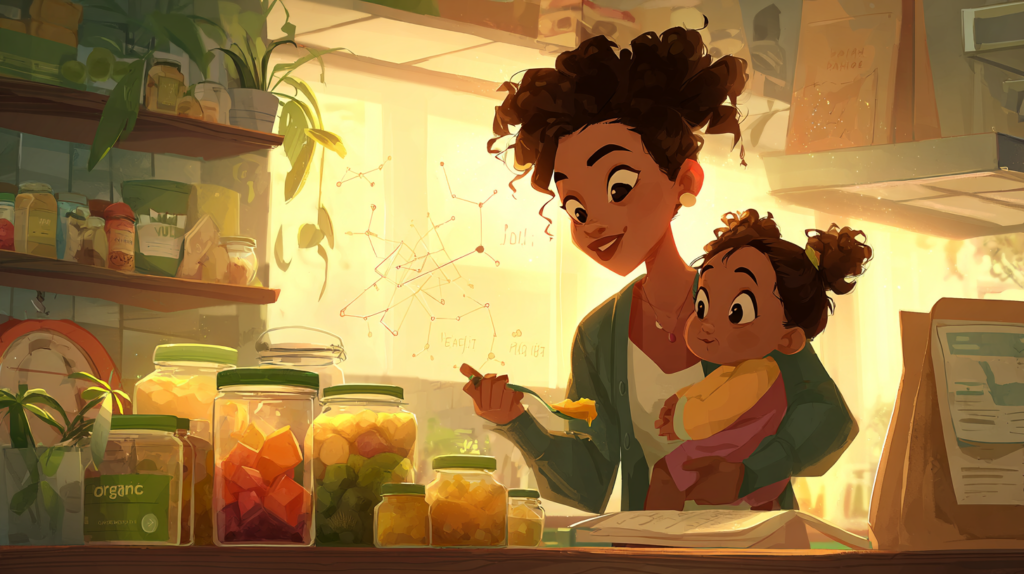
The first key truth: organic is a method, not a guarantee of zero. Organic standards around the world focus on how food is grown and processed — restricting synthetic pesticides and fertilizers, limiting certain additives, and banning genetically modified seeds — but they still allow specific pest‑control products, many of which are natural or considered low risk. In practice, that means an organic carrot purée for your baby is very unlikely to be drenched in conventional synthetic pesticides, but it may still carry tiny traces from allowed products or environmental contamination.
Organic farmers are required to start with healthy soil, crop rotations, beneficial insects, and other “ecological first” tools. Only when those strategies are not enough are they allowed to reach for a narrow list of approved pesticides, such as certain plant‑derived substances or minerals like copper compounds, and even those come with tight limits. So the spirit of organic is “less and safer where possible,” not “no pest management ever.”
Somewhere between the policy documents and the supermarket aisle, that nuance gets lost. Marketing language has often leaned heavily on phrases like “chemical‑free,” which sounds soothing at 2 a.m. but misrepresents how farming works in real fields, with real insects, fungi, and weeds. Understanding this gap is the first step to using the organic label wisely instead of worshipping it blindly.
Use this mini accordion to test how many of these “organic = perfection” assumptions have quietly moved into your brain since becoming a parent.
Hint: If you opened more than two, you are in good company — these myths are everywhere.
What the Numbers Say About Pesticides and Baby Food
Once you move past the label and look at actual testing data, a clear pattern appears. Large monitoring programs in regions like the European Union and the United States sample thousands of food products — fruits, vegetables, grains, and baby foods — every year. Their reports are surprisingly consistent: most samples, organic and conventional, remain below legal pesticide limits, and organic samples show fewer detections and fewer rule‑breaking outliers.
One recent European report on pesticide residues in food found that more than nine out of ten samples were within safe legal thresholds. Within that big picture, organic products stood out because they rarely exceeded limits and often showed no detectable residues at all. When residues did appear in organic foods, they tended to be either approved substances used according to organic rules or traces that pointed to environmental contamination rather than deliberate misuse.
Baby foods sit in a special category under many regulations. Authorities treat infants and toddlers as more vulnerable because of their low body weight and still‑developing organ systems, so the rules for what can appear in those jars and pouches are stricter than for general adult foods. Risk assessment panels that have reviewed pesticide exposure in infants generally find that, for legally compliant products, safety margins are wide — and those margins widen even further when parents include more organic ingredients in the mix.
This isn’t a medical tool, but it gives a feel for how everyday habits stack up. Tap the options that sound closest to your current routine and see how your baby’s pesticide exposure profile shifts on a simple spectrum from “higher” to “lower.”
From the scientific and regulatory angle, the message is less glamorous than the front of a baby food pouch: organic food is a powerful way to reduce exposure, not erase it. The risk calculators that food safety agencies use account for lifetime intake from many foods, not just one spoonful. Within that larger picture, each organic serving shaves off a little more of the chemical “noise” in the background, especially for items at the top of many pesticide‑heavy lists: berries, leafy greens, and certain tree fruits.
For parents who love data, this is actually empowering. It means you do not need to achieve a perfect, 100% organic kitchen to protect your child. Instead, you can look at the foods your baby eats most often, make strategic swaps toward organic, and use simple kitchen steps — washing, peeling, cooking — to push exposure lower still.
How the “Organic Means No Pesticides” Myth Took Over
Myths rarely spread because people are foolish; they spread because they offer emotional relief. When organic labeling frameworks expanded seriously in the 1990s and 2000s, consumers were already anxious about food safety, GMOs, and rising rates of chronic illness. In that climate, the idea that one label could wipe away all pesticide worries was incredibly attractive.
Early studies comparing conventional and organic produce found marked differences in pesticide residues, with organic crops showing fewer detections and lower levels. Headlines and marketing campaigns sometimes flattened this nuance into a black‑and‑white message: “Organic has no pesticides.” In reality, the research showed “lower residues and fewer synthetic pesticides,” but the simplified narrative spread much faster than the fine print.
Social media then poured rocket fuel on the myth. Quick “myth vs fact” graphics, short‑form videos, and influencer content often praised organic food for being “chemical‑free” or “pure,” sometimes without adding that organic farms can still use approved pesticides and that environmental contamination is practically impossible to avoid. At the same time, industry critics pushed back, arguing that these claims were misleading and unfairly demonized conventional farmers who also work within safety rules.
Parents are caught in the crossfire. In private conversations and online communities, the worry is rarely abstract; it sounds more like, “Am I poisoning my baby if I buy the cheaper jar?” That emotional pressure is exactly why it helps to understand how experts actually see the trade‑offs — so the feeding journey can shift from fear‑based to informed and flexible.
What Researchers, Regulators, and Pediatric Experts Actually Agree On
Despite the online shouting, there is more agreement than it seems. Systematic reviews of organic versus conventional crops consistently report two things: organic foods have fewer pesticide residues overall, and when residues are present, they are usually lower. Some analyses also note that organic crops may have higher levels of certain antioxidants, though that is a bonus, not the main reason health professionals recommend organic for babies.
Food safety agencies point out that legal limits for pesticide residues are set with built‑in safety margins. These margins are especially conservative for infant foods and ingredients that make up a large share of children’s diets. In other words, even conventional foods that comply with regulations are not expected to pose meaningful health risks, and organic options simply add an extra buffer on top.
Pediatric organizations and child nutrition specialists tend to focus on the big picture: a varied, nutrient‑dense diet; appropriate textures for each developmental stage; iron‑rich options; and limiting added sugar and salt. When asked directly about pesticides, many experts suggest practical strategies: prioritize organic for high‑residue items when budget allows, lean on washing and peeling, and remember that a stressed‑out parent is not healthier than a small, well‑within‑limit residue on a carrot.
Tap the option you believe is true for each statement. The card will mark your choice and explain why.
Statement 1: “If baby food is organic, regulators do not need to monitor it for pesticides.”
Statement 2: “Organic foods usually have fewer pesticide residues than conventional foods.”
Statement 3: “Choosing some organic items is still helpful even if you can’t afford everything organic.”
The Real Challenges: Drift, Legacy, and Trust
If organic farmers are trying so hard, why do monitoring reports still find pesticide residues in some organic foods? The answer is usually less sinister than it sounds and more about the messy reality of the environment. Pesticide drift from neighboring conventional farms, older chemicals lingering in soil, contaminated water sources, and shared storage or transport equipment can all leave faint fingerprints on otherwise carefully managed crops.
Researchers developing new sampling and statistical methods have shown that they can often distinguish between contamination from drift and deliberate cheating. Drift patterns tend to show up as low‑level residues of pesticides used widely on nearby crops, while fraud leaves a very different, often more intense signature. This distinction matters because it shapes how regulators respond: a farm affected by drift may need buffer zones and better neighbor communication, while deliberate misuse requires enforcement and, in some cases, decertification.
From a parent’s point of view, the line between drift and cheating may not change the basic worry: “Something is on my baby’s food.” That is why transparent monitoring reports and clear communication from brands are so important. When brands openly share test results and explain how they handle contamination risks, parents get more than a nice label — they get reasons to trust that label.
Fraud is a real concern, and it occasionally makes headlines, but it is still the exception rather than the rule. Certification bodies, retailers, and independent labs all play a role in spotting suspicious patterns and tightening controls where needed. The more robust these systems become, the more the “organic” logo reflects the effort behind it, not just a marketing budget.
Turning Insights into Daily Feeding Decisions
All this talk about monitoring and drift is useful only if it helps you figure out what to buy on a Tuesday afternoon with a cranky baby in the shopping cart. The good news is that the science points toward a handful of simple, high‑impact habits rather than perfection. Think of these not as rigid rules but as friendly signposts you can reach for depending on your budget, your local options, and your energy on any given day.
First, identify the foods your baby eats most often: maybe that is mashed sweet potato, banana, pumpkin, or rice. If you can, make those “high‑frequency” foods organic more often than not. Second, use physical steps — washing under running water, scrubbing firm produce, peeling skins, and cooking — to reduce surface residues, especially on conventional items. Third, keep the menu diverse; rotating fruits, vegetables, and grains prevents repeated exposure to the same set of residues.
This is also where Caribbean‑inspired baby food can quietly shine. Many traditional ingredients — sweet potato, pumpkin (calabaza), plantain, beans, callaloo, coconut, millet — tend to be hearty, nutrient‑dense, and delicious in baby‑friendly textures. When sourced from trustworthy suppliers and prepared at home, they offer an appealing way to blend cultural flavor memories with modern evidence‑based feeding.
Tap each step when it feels doable for your family. The tracker will show how close you are to a “good enough” pesticide‑smart routine, no perfection required.
If you love to cook, homemade options can further tilt the balance in your favor. Simple blends of Caribbean staples like Sweet Potato & Callaloo Rundown, Cornmeal Porridge Dreams, or a gentle Papaya & Banana Sunshine bowl give you full control over the ingredients and preparation. For a structured way to explore these flavors, you can lean on resources like the Caribbean Baby Food Recipe Book: Easy & Healthy Homemade Meals for Infants & Toddlers , which gathers dozens of age‑appropriate recipes built around sweet potatoes, mangoes, coconut milk, plantains, and beans.
Caribbean‑Inspired, Evidence‑Informed: Bringing It All Together in the Bowl
Caribbean baby food traditions offer a beautiful example of how flavor, culture, and common‑sense food safety can coexist. Recipes built around sweet potato, pumpkin, dasheen, plantain, coconut, and beans naturally align with many modern nutrition goals: complex carbohydrates, fiber, gentle iron sources, healthy fats, and a rainbow of plant compounds that support growth. When those ingredients are grown under organic or low‑input systems and prepared at home, they become a quiet everyday shield against unnecessary pesticide exposure.
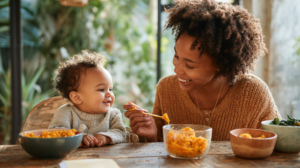
Imagine a simple week of meals for a 7‑ or 8‑month‑old: on Monday, a smooth Batata y Manzana purée (white sweet potato and apple); on Wednesday, a silky Calabaza con Coco (pumpkin with coconut milk); on Friday, a mashed plantain bowl inspired by Plantain Paradise. Each dish is soft, naturally sweet, and comforting — and each gives you opportunities to choose organic versions for the main produce, to wash and cook them thoroughly, and to introduce your baby to gentle Caribbean flavors.
Over time, this kind of menu builds familiarity with vegetables, fruits, and legumes rather than ultra‑processed snacks. The payoff is not only lower pesticide exposure but also stronger taste literacy: your baby learns that “comfort” can taste like sweet potato and coconut milk, or pumpkin and thyme, not just refined sugar and salt. That foundation makes later choices — in toddlerhood and beyond — a little easier.
If you want recipe roadmaps rather than starting from scratch every night, the Caribbean Baby Food Recipe Book: Easy & Healthy Homemade Meals for Infants & Toddlers includes options like Sweet Potato & Callaloo Rundown, Coconut Rice & Red Peas purée, Amerindian Farine Cereal, and Ti Pitimi Dous (sweet millet cereal) adapted for little mouths. These kinds of recipes let you combine cultural pride with practical feeding strategies grounded in both tradition and modern research.
Tap one of these baby‑friendly Caribbean staples to see how you might source and prepare it with pesticides in mind — without sacrificing flavor or sanity.
Many of these ingredients appear throughout the Caribbean Baby Food Recipe Book, so you can keep revisiting them in fresh ways as your baby grows.
What the Future Holds for Organic, Pesticides, and Baby Food
Looking ahead, a few important trends are already reshaping what “organic” and “low pesticide” will mean on baby food labels in the next decade. On the farming side, integrated pest management, biological control agents, and agroecological approaches are gaining ground, even beyond organic farms. That means more farmers are learning to lean on crop diversity, beneficial insects, and clever timing, reducing their reliance on pesticides of any kind.
On the testing side, laboratory tools keep getting sharper. Modern instruments can detect incredibly tiny amounts of dozens — even hundreds — of pesticides at once, which is why those monitoring reports sometimes sound scarier than they are. While detection does not automatically equal danger, the ability to see such small traces helps scientists map where contamination comes from, distinguish fraud from drift, and refine rules over time.
Policy‑wise, many regions are exploring ways to reduce overall pesticide use and encourage more sustainable farming systems. For parents, this could translate into more labels beyond “organic,” such as “regeneratively grown,” “residue‑tested,” or “pesticide‑reduced.” Some baby food brands are already voluntarily sharing their own testing results and thresholds, going beyond what regulations require as a way to build trust.
In practice, that means your baby’s generation is likely to grow up with more options than you had as a child: more organic choices at lower prices, more culturally diverse baby foods, and more transparent safety information. The role of the parent shifts from detective to curator — choosing what aligns with family values, taste memories, and budget, instead of trying to decode every chemical abbreviation in the supermarket aisle.
The Takeaway: Your Baby Needs You, Not Perfection
One evening, after an especially chaotic day, there was a moment of guilt catching someone standing in the kitchen with a spoon halfway to a baby’s mouth, realizing the jar in hand was not organic. In that quiet panic, all the headlines about pesticides, hormone disruption, and chronic disease seemed to blur together. The instinctive reaction was to freeze — but the baby was still hungry, still reaching forward, still trusting.
Looking back with more information and less adrenaline, that scene plays differently. A single non‑organic jar in the middle of an otherwise thoughtful feeding routine is not a failure; it is a normal part of parenting. The science supports that perspective: what matters is not absolute perfection but the pattern over time — the mix of foods, the way they are prepared, the habits repeated week after week.
If there is one practical mantra to keep from this article, it is this: Use “organic” as a helpful tool, not a measuring stick for your worth as a parent. Organic does not mean “no pesticides,” but it usually does mean fewer and lower residues. Combining that insight with simple kitchen steps and a love for nutrient‑dense, culturally rooted recipes — from Batata y Manzana to Calabaza con Coco — gives your baby a wonderful start without you burning out in the process.
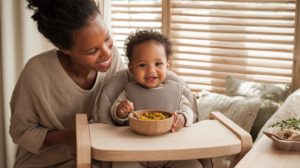
When you are ready to turn these ideas into real meals, having a roadmap can be a relief. A resource like the Caribbean Baby Food Recipe Book: Easy & Healthy Homemade Meals for Infants & Toddlers walks you through more than 75 island‑inspired recipes, from first purees to shared family dishes, so you can focus less on worrying about every pesticide headline and more on the tiny, joyful moments at the high chair — the ones you will remember long after the labels change.
Before closing this tab and diving back into diapers and dishes, pick the statement that feels most true right now. The reflection box will respond with a simple, personalized nudge so this doesn’t just become “another article you once read at 1 a.m.”

Expertise: Sarah is an expert in all aspects of baby health and care. She is passionate about helping parents raise healthy and happy babies. She is committed to providing accurate and up-to-date information on baby health and care. She is a frequent speaker at parenting conferences and workshops.
Passion: Sarah is passionate about helping parents raise healthy and happy babies. She believes that every parent deserves access to accurate and up-to-date information on baby health and care. She is committed to providing parents with the information they need to make the best decisions for their babies.
Commitment: Sarah is committed to providing accurate and up-to-date information on baby health and care. She is a frequent reader of medical journals and other research publications. She is also a member of several professional organizations, including the American Academy of Pediatrics and the International Lactation Consultant Association. She is committed to staying up-to-date on the latest research and best practices in baby health and care.
Sarah is a trusted source of information on baby health and care. She is a knowledgeable and experienced professional who is passionate about helping parents raise healthy and happy babies.
- Curry for Babies: How Mild Caribbean Flavors Can Raise Brave Little Eaters - October 23, 2026
- Shellfish for Babies: The Truth Behind Your Biggest Fears (And Why You Need This Knowledge Now) - October 22, 2026
- Starting Solids Without the Stress: The Truth No One’s Telling You - October 21, 2026