Caribbean Diet for Babies: The Hidden Nutritional Gold Your Pediatrician Never Told You About
Discover Your Baby’s Caribbean Nutrition IQ
Before we dive in, let’s see how much you really know about Caribbean baby nutrition. Click to reveal the shocking truth:
Tap to reveal: What percentage of Caribbean children under 5 are actually overweight?
6.6% are overweight – higher than the global 5.7% average! This is why starting with the RIGHT nutrition from 6 months matters more than you think.
Tap to discover: Can traditional Caribbean foods actually prevent chronic disease in babies?
YES! Foods like callaloo, dasheen, and plantain are nutrient powerhouses that can help combat both undernutrition AND the rising obesity epidemic when introduced correctly.
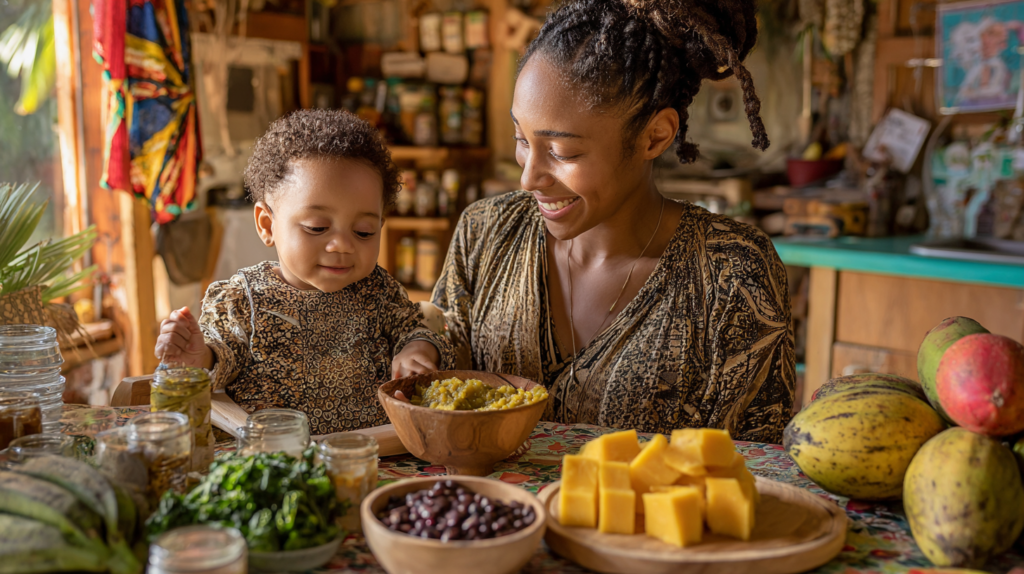
I remember the first time I tried to feed my baby store-bought purees. Bland. Colorless. Nothing like the vibrant food we grew up eating. My grandmother looked at me like I’d lost my mind. “You feeding that child prison food?” she said, stirring a pot of dasheen in coconut milk that smelled like home.
That moment changed everything. Because here’s what nobody tells you in those pristine pediatric offices: Caribbean foods aren’t just culturally important—they’re nutritionally superior when it comes to building healthy, thriving babies. But there’s a catch. And it’s a big one.
The Caribbean is facing what health experts call a “double burden”—undernutrition in some pockets and skyrocketing childhood obesity in others. About 11.8% of Caribbean children under 5 are stunted, while 6.6% are overweight. The wild part? Both problems often exist in the same communities, sometimes even the same households. And it all starts with what we feed our babies from that critical 6-month mark.
The truth is, we’re at a crossroads. On one side, we have incredible traditional foods—plantain, callaloo, yam, dasheen, pumpkin, coconut milk, fresh fish, and tropical fruits that our ancestors thrived on. On the other, we’re bombarded with ultra-processed baby foods, sugary drinks, and imported convenience products that are quietly reshaping our children’s health futures. Social media doesn’t help either—studies show children see massive volumes of marketing for nutrient-poor foods on platforms like YouTube, Instagram, and TikTok, normalizing junk food before they can even read.
But here’s where it gets interesting. When you understand how to harness Caribbean staples the right way—backed by WHO guidelines, modern nutrition science, and that ancestral wisdom your grandmother holds—you can give your baby an advantage that goes far beyond just “eating healthy.” You’re programming their taste preferences, their metabolic health, their relationship with food, and their connection to culture. All before they turn two.
This isn’t about going back to outdated practices or blindly following tradition. It’s about taking the absolute best of Caribbean food culture and merging it with evidence-based infant feeding guidelines to create something extraordinary. Something that protects your baby from both malnutrition and obesity. Something that makes them excited to eat vegetables because they taste like actual food, not cardboard.
Ready to learn what really works? Let’s dig in.
Why Caribbean Foods Are Secretly Nutrition Superstars
The Caribbean Superfood Myth-Buster
Click each myth to reveal the science-backed truth:
Let’s talk about what makes Caribbean baby nutrition different—and frankly, better—than the bland rice cereal paradigm most pediatricians still push.
The magic lies in the combination. Traditional Caribbean eating patterns naturally blend complex carbohydrates from ground provisions (roots and tubers), plant-based proteins from peas and beans, nutrient-dense leafy greens like callaloo, healthy fats from coconut and fish, and an array of tropical fruits bursting with vitamins. When you translate this to baby-appropriate textures and seasonings, you create meals that hit every nutritional target while training your baby’s palate to prefer real, whole foods.
Consider callaloo, often called Caribbean spinach. This leafy green is ridiculously high in folate (critical for brain development), vitamin A (essential for vision and immunity), iron (prevents anemia), and calcium. One serving can provide more nutrition than an entire jar of commercial baby food. Yet most parents don’t even think to puree it for their six-month-old because nobody told them it was an option.
Or take plantain—green, yellow, or ripe. It’s a nutritional chameleon. Green plantain acts like a complex carbohydrate with resistant starch that feeds good gut bacteria. Yellow plantain offers a balance of starch and natural sugars with decent vitamin C and potassium. Ripe plantain becomes sweeter, easier to digest, and even more baby-friendly. All three stages have a place in your baby’s diet, adapted to their developmental stage.
Then there’s the genius of coconut milk and ground provisions cooked together—a practice seen across Jamaica, Trinidad, Guyana, Haiti, and the Dominican Republic. The fat in coconut milk isn’t just flavor; it’s nutrition delivery. Fat-soluble vitamins (A, D, E, K) need fat to be absorbed. When you cook pumpkin, sweet potato, or dasheen in coconut milk, you’re not just making it taste incredible—you’re making those vitamins bioavailable. This is ancestral nutritional science at work.
The WHO emphasizes that complementary foods for 6-23 month-olds need to be nutrient-dense, meaning they pack maximum nutrition into small volumes. Caribbean staples naturally excel at this. A few spoonfuls of mashed yam with a touch of coconut milk delivers more sustained energy than crackers or puffs ever could. A small bowl of callaloo blended into porridge provides iron, folate, and calcium that powdered cereals struggle to match, even when fortified.
And here’s something most parents miss: texture progression matters as much as nutrition. Caribbean cooking naturally offers incredible texture variety—smooth dasheen purees, slightly chunky mashed plantain, stringy callaloo, grainy rice and peas. Babies who experience varied textures early (starting smooth at 6 months and gradually increasing by 8-10 months) are less likely to become picky eaters. They learn to chew properly, reducing choking risk. They develop the oral motor skills needed for speech. This isn’t just about food—it’s about developmental milestones.
Want to explore authentic Caribbean baby recipes that nail these nutritional principles? The Caribbean Baby Food Recipe Book breaks down over 75 island-inspired recipes with exact age recommendations, texture guides, and nutrition notes so you never have to guess.
The Double Burden Nobody Talks About
Caribbean children under 5 affected by stunting (chronic undernutrition)
Caribbean children under 5 who are overweight (higher than global average of 5.7%)
People experiencing hunger across Latin America and the Caribbean (2023 UN report)
Here’s the uncomfortable truth: the Caribbean faces a paradox. In Haiti and pockets of poverty across the region, babies suffer from stunting—chronic undernutrition that permanently affects brain development and physical growth. Meanwhile, in more urbanized areas of Jamaica, Trinidad, and the Dominican Republic, childhood obesity rates are climbing fast, setting kids up for diabetes and heart disease before they hit puberty.
The wild part? Both problems often stem from the same root cause: a shift away from traditional whole foods toward cheap, ultra-processed alternatives.
Think about what’s happened over the past few decades. Imported processed foods—sugary breakfast cereals, instant noodles, packaged snacks, sweetened fruit drinks—became status symbols. “Modern” and “convenient.” Meanwhile, preparing traditional foods like dasheen, callaloo, or fresh fish was seen as old-fashioned, time-consuming, lower-class. Parents started giving babies commercial cookies and crackers instead of mashed plantain. Sweetened juices instead of fresh fruit. Processed meats instead of home-cooked beans.
The result? Babies fill up on empty calories—lots of sugar, refined carbs, and unhealthy fats, but missing the protein, iron, zinc, and vitamins they desperately need. They get fat but malnourished at the same time. Their growth slows. Their immunity weakens. And their taste preferences get wired to crave junk.
Regional health authorities now openly call this the “nutrition transition,” and it’s accelerating. A 2023 FAO–PAHO report found that about 74% of Latin American and Caribbean populations don’t have access to healthy diets, with ultra-processed food consumption rising sharply. Childhood overweight jumped from around 6% to 8.6% region-wide between 2012 and 2022, with the Caribbean seeing some of the steepest increases.
Social media makes it worse. Research shows that children see massive amounts of marketing for sugary drinks, fast food, and snacks on YouTube, TikTok, and Instagram—platforms Caribbean families use heavily. Food influencers (often unknowingly) normalize feeding babies and toddlers packaged snacks, branded cereals, and convenience foods. The algorithm rewards bright packaging and catchy jingles, not nutrient density or long-term health.
But here’s the opportunity hidden in this crisis: the window to reverse this trend is small, and it opens at 6 months.
WHO guidelines are crystal clear—what babies eat from 6 to 24 months shapes their metabolic programming, taste preferences, and eating behaviors for life. Babies introduced to whole foods, diverse flavors, and appropriate textures become children who actually like vegetables, understand hunger cues, and self-regulate intake. Babies raised on ultra-processed foods become kids who reject anything that doesn’t come in a brightly colored package.
The solution isn’t to abandon Caribbean food culture—it’s to reclaim it with intention. Use plantain, not potato chips. Callaloo, not canned spinach with added salt. Coconut milk and pumpkin, not boxed mac and cheese. Fresh mango, not fruit punch. You’re not just feeding your baby; you’re voting for their health future with every spoonful.
Island-by-Island: What Your Baby Should Actually Be Eating
️ Explore Traditional Baby Foods by Caribbean Island
Click your island (or the one you’re most curious about) to discover traditional baby-friendly staples:
Jamaican Baby Food Essentials
Key Staples: Yellow yam, sweet potato, pumpkin, plantain, callaloo, coconut milk, cornmeal, and ackee (12+ months only)
Signature Dishes (Baby-Adapted): Cornmeal porridge with coconut milk, mashed yellow yam and carrot, plantain puree, callaloo and sweet potato blend
Pro Tip: Jamaican babies traditionally get early exposure to thyme, scallion, and mild allspice—perfect for flavor development without heat!
Trinidadian Baby Food Essentials
Key Staples: Dasheen (taro), pumpkin, split peas, dhal, baigan (eggplant), caraille (bitter melon in small amounts), and coconut milk
Signature Dishes (Baby-Adapted): Geera (cumin) pumpkin puree (12+ months), smooth baigan choka, basic mixed dhal, dasheen bush puree
Pro Tip: Trini cuisine introduces babies to curry flavors early (mild curry after 12 months). Start with plain dhal and pumpkin, then gradually add spices.
Guyanese Baby Food Essentials
Key Staples: Eddoes, cassava (farine), sweet potato, split peas, pumpkin, green papaya, and cassareep (12+ months, minimal amounts)
Signature Dishes (Baby-Adapted): Metemgee-style mash (eddoes and coconut milk), cook-up rice smoothed, farine cereal, split pea puree
Pro Tip: Guyanese cooking leans heavily on coconut milk and ground provisions—perfect for baby brain development!
Haitian Baby Food Essentials
Key Staples: Pitimi (millet), sweet potato, lalo (jute leaves), pigeon peas, breadfruit, pumpkin, and lambi (conch, 12+ months)
Signature Dishes (Baby-Adapted): Ti pitimi dous (sweet millet cereal), lalo and squash puree, cornmeal and pigeon pea blend
Pro Tip: Haitian cuisine emphasizes millet and jute leaves—both rare in other Caribbean islands and loaded with nutrients!
Dominican Baby Food Essentials
Key Staples: Batata (white sweet potato), platano (plantain), yautía (malanga), calabaza (pumpkin), guandul (pigeon peas), and zapote
Signature Dishes (Baby-Adapted): Mangú (mashed plantain), batata y manzana, chenchén con leche (cracked corn with milk), mala rabia (plantain and guava)
Pro Tip: Dominican recipes use a lot of plantain at all ripeness stages—perfect for introducing complex carbs early!
Puerto Rican Baby Food Essentials
Key Staples: Malanga, sweet potato, calabaza (pumpkin), platano, guava, fresh corn, and sofrito (modified for babies)
Signature Dishes (Baby-Adapted): Calabaza con coco (pumpkin coconut puree), majarete (corn pudding), guava and cheese blend (12+ months)
Pro Tip: Puerto Rican baby food leans sweet-savory—introducing this balance early helps prevent picky eating!
Every Caribbean island has its own food identity, but they all share core principles: ground provisions (root vegetables), coconut-based preparations, legumes, leafy greens, and tropical fruits. The differences lie in specific ingredients and flavor profiles. Understanding your island’s traditional baby foods helps you make better choices and honor your heritage.
Across all islands, the pattern is consistent: babies were traditionally fed mashed or pureed versions of family foods, gradually increasing texture and complexity. There was no separate “baby food” industry until recently. Infants ate what the family ate, adjusted for their developmental stage. This approach naturally encouraged dietary diversity, flavor acceptance, and nutritional adequacy.
Modern research backs this up completely. Studies on complementary feeding show that babies introduced to family foods (appropriately modified) have better nutrient intake, less picky eating, and healthier growth patterns than those fed exclusively commercial baby foods. The 2024 systematic review of food-based dietary guidelines for Latin America and the Caribbean found that countries now emphasize continued breastfeeding, dietary diversity, and limiting ultra-processed foods—all principles baked into traditional Caribbean infant feeding.
The Caribbean Baby Food Recipe Book organizes recipes by island, so you can easily find dishes specific to your culture—whether you’re making Jamaican Yellow Yam & Carrot Sunshine, Trini Geera Pumpkin Puree, Haitian Ti Pitimi Dous, or Dominican Mangú Morning.
How to Actually Do This: The Practical Gameplan
Your 6-Month to 24-Month Caribbean Feeding Roadmap
Click each stage to reveal exactly what to feed and when:
Alright, theory is great, but let’s get practical. You’ve got a hungry six-month-old, a pot, and some yam. What do you actually do?
Start with one ingredient at a time. Peel and steam or boil until soft. Mash with breast milk, formula, or a tiny bit of coconut milk (just enough to smooth it out). Offer a few spoonfuls once a day. Watch for any allergic reactions (rash, vomiting, diarrhea) over the next 2-3 days before introducing the next food.
Once your baby tolerates single ingredients—plantain, sweet potato, pumpkin, carrot, callaloo—start combining them. Callaloo + pumpkin is a powerhouse blend (iron, vitamin A, fiber). Plantain + coconut milk mimics traditional porridge textures. Yellow yam + carrot offers natural sweetness babies love.
Between 8-10 months, thicken up. Stop blending everything into baby-food mush. Leave soft lumps. Babies need to learn to move food around their mouths and chew (even without teeth—those gums are strong!). This is when you introduce protein: mashed kidney beans, split pea puree, lentils, shredded chicken, flaked fish (triple-check for bones), and egg.
A traditional Jamaican approach might be mashed yellow yam with a bit of steamed fish mixed in. Trini parents might offer dasheen cooked in coconut milk with a spoonful of dhal blended in. Haitian families introduce ti pitimi (millet cereal) mixed with mashed pigeon peas. Guyanese babies get metemgee-style mashes—eddoes, plantain, and coconut milk all cooked together and mashed. These aren’t just recipes; they’re nutrition strategies proven over generations.
By 12 months, your baby should eat family food (with modifications). That means if you’re making rice and peas, you scoop out baby’s portion before adding salt. If you’re making callaloo, you puree a small amount without the salted meat or hot pepper. If you’re frying plantain, you bake or steam baby’s portion instead.
This is where most parents panic—”But I use scotch bonnet in everything!” Yes, and that’s fine for YOU. For baby, build the base dish mild, then add heat to adult portions after. Cook your stewed peas with thyme, scallion, coconut milk, and kidney beans. Take out baby’s portion. Then add scotch bonnet, salt, and garlic to the rest. Everyone wins.
And here’s something huge: responsive feeding matters more than the perfect recipe. Watch your baby’s cues. If they turn their head away, don’t force it. If they open their mouth like a baby bird, keep going. Let them touch, squish, and explore food. It’s messy, yes, but it builds healthy eating behaviors.
The Caribbean Baby Food Recipe Book includes detailed texture progression guides, age-by-age feeding schedules, and modification tips so you never have to guess if a dish is appropriate. Recipes like Cornmeal Porridge Dreams, Coconut Rice & Red Peas, Baigan Choka Smooth, and Majarete Cream all come with clear instructions on when and how to serve them safely.
The Flavor Revolution: Why Boring Food Creates Picky Eaters
Your Baby’s Flavor Exposure Journey
How many unique flavors have you introduced? Track your progress:
Let me tell you a secret that the baby food industry doesn’t want you to know: bland food creates picky eaters. Not genetics. Not personality. Bland, repetitive, flavorless mush in the first year of life.
Research is unambiguous on this. Babies who are exposed to a wide variety of flavors and textures between 6-12 months are significantly more likely to accept vegetables, try new foods, and have diverse diets as children. Babies fed only bland rice cereal, plain purees, and unseasoned chicken become toddlers who refuse anything green, reject spices, and live on chicken nuggets and pasta.
This is where Caribbean feeding practices have a massive advantage. Traditional Caribbean food is inherently flavorful—not from salt or sugar, but from herbs, spices, and cooking techniques. Thyme. Scallion. Bay leaf. Coconut. Ginger. Allspice. Cinnamon (in sweet dishes). Mild curry powder (after 12 months). Cumin (geera). These flavors train babies’ palates to expect and enjoy complexity.
The beauty is that you don’t need hot peppers to achieve this. You can make incredibly flavorful Caribbean food for babies using only the aromatic base ingredients. A Jamaican-style porridge made with coconut milk, a hint of vanilla, cinnamon, and nutmeg is leagues more interesting than plain oatmeal. A Trini-inspired pumpkin puree cooked with a tiny bit of garlic, thyme, and coconut milk beats jarred squash every time. A Haitian millet cereal flavored with cinnamon and a touch of coconut introduces depth without overwhelming.
And yes, you can introduce common allergens this way too. Peanut? Make a mild peanut-based porridge (not whole nuts, but smooth peanut butter thinned out). Egg? Scramble it with a pinch of thyme and mix into mashed plantain. Fish? Flake boneless fish into dasheen puree. Introducing allergens early (between 6-12 months) actually reduces allergy risk, and doing it within flavorful, culturally relevant dishes makes it easier.
I’ll never forget watching my son try callaloo for the first time. He made a face—not disgust, just surprise. Then he opened his mouth for more. By 10 months, he was devouring it. At two years old, he requests “green puree” (callaloo and pumpkin) over macaroni. Why? Because we never taught him that vegetables are punishment food. They were always just food—delicious, normal, everyday food.
Contrast that with parents who feed only commercial purees labeled “Stage 1: Carrots” and “Stage 2: Sweet Potato” with zero seasoning. Those babies grow into kids who think food should be one-note, sweet, and soft. They reject texture. They refuse flavor. They become the children who eat only beige foods and make dinner a battleground.
Don’t let that be your kid. Use the foods you grew up eating. Let them taste what coconut milk does to rice. What thyme does to yam. What cinnamon does to plantain. Every new flavor is a vote for future adventurous eating.
What the Research Actually Says (And Why Your Pediatrician Might Be Wrong)
Let’s get into the science, because too many Caribbean parents are being told to ignore their food culture by well-meaning but misinformed healthcare providers.
The 2023 WHO complementary feeding guidelines—the gold standard for infant nutrition globally—emphasize several key points that align perfectly with traditional Caribbean feeding:
- Start complementary foods at around 6 months while continuing breastfeeding up to 2 years or beyond
- Offer nutrient-dense foods, particularly those rich in iron, zinc, calcium, vitamin A, and healthy fats
- Increase dietary diversity rapidly, introducing a variety of food groups
- Progress textures according to the baby’s developmental stage, not age alone
- Avoid added sugars, salt, and ultra-processed foods
- Practice responsive feeding, respecting the baby’s hunger and fullness cues
Now, map those guidelines onto Caribbean foods. Callaloo, fish, and beans = iron and zinc. Pumpkin, sweet potato, and mango = vitamin A. Coconut milk and fatty fish = healthy fats. Ground provisions and legumes = diverse food groups. Traditional cooking = real, minimally processed food.
The problem is many pediatricians in the Caribbean (and diaspora communities) were trained on outdated Western infant feeding models that prioritize commercial cereals, jarred purees, and a fear of “exotic” foods. They’ll tell you to start with rice cereal (low in iron unless fortified, bland, unnecessary). They’ll warn you against coconut milk (essential for brain development). They’ll discourage early spice introduction (actually beneficial for flavor acceptance).
Meanwhile, a 2024 systematic review specifically examining food-based dietary guidelines in Latin America and the Caribbean found that updated national guidelines now encourage breastfeeding continuation, dietary diversity, use of local foods, and restriction of ultra-processed products. Countries are actively moving away from the bland rice cereal model and back toward culturally appropriate complementary feeding.
A separate 2020 study on maternal feeding styles in Caribbean populations found that breastfeeding during the first year was associated with better infant satiety responsiveness when starting solids—meaning those babies were better at self-regulating intake and recognizing fullness. This supports the practice of extended breastfeeding alongside complementary foods, not rushing to wean.
Research on early flavor exposure shows that babies introduced to vegetables and varied flavors before 12 months are more likely to accept those foods later. This has been demonstrated across cultures. A baby eating Jamaican callaloo at 7 months will likely eat spinach, kale, and chard as a child. A baby eating only bland sweet potato puree might not.
And here’s a critical point about the nutrition transition: studies tracking dietary patterns in the Caribbean show that as families moved away from traditional diets rich in ground provisions, legumes, and leafy greens toward diets heavy in refined grains, processed meats, and sugary drinks, rates of childhood obesity, diabetes, and anemia increased. The path back to health runs directly through the foods your grandparents ate.
If your pediatrician tells you Caribbean foods are “too much” for a baby, ask them what specific nutrient concern they have. If they can’t give you a science-based answer (and “that’s not what we usually do” isn’t science), trust your research and your culture.
Navigating the Traps: What To Actually Avoid
Caribbean Baby Food Red Flags
Click to reveal what you should genuinely avoid (and why):
What about salt and bouillon cubes?
AVOID until age 2. Babies’ kidneys can’t handle added salt. Traditional foods are flavorful enough without it. Use herbs, coconut milk, and natural vegetable/meat flavors instead of stock cubes.
Can babies have hot peppers (scotch bonnet, etc.)?
NO. Hot peppers can irritate baby’s digestive system and are unnecessary. Build dishes with aromatic spices (thyme, scallion, garlic, ginger) and add heat to adult portions separately.
What about honey and “bush tea”?
NO HONEY before age 1 (botulism risk). Bush teas often contain added sugar and unnecessary herbs—babies don’t need them. Stick to breast milk, formula, or small amounts of water after 6 months.
Are sweetened condensed milk and evaporated milk okay?
NO. Sweetened condensed milk is loaded with sugar. Evaporated milk is not nutritionally appropriate as a breast milk/formula replacement. Use coconut milk in cooking, but breast milk or formula remains primary until 12+ months.
Not all traditional practices are beneficial. Some were born out of necessity or misinformation, and it’s okay to leave them behind.
Never add salt, sugar, or bouillon cubes to baby food before age 2. I know your grandmother did it. I know it “tastes better.” But babies’ kidneys and metabolic systems can’t handle it, and early salt/sugar exposure programs lifelong cravings. Babies don’t need food to taste like adult food—they have no reference point. A plain mashed plantain tastes amazing to a six-month-old.
Skip the hot peppers entirely. Scotch bonnet, habanero, bird peppers—none of them belong in baby food. They can cause stomach pain, reflux, and digestive distress. All the flavor of Caribbean food can be achieved with thyme, scallion, garlic, ginger, bay leaf, allspice, cinnamon, and nutmeg. Save the heat for after age 3 (or later, depending on your child’s tolerance).
Avoid honey before age 1. This is non-negotiable. Honey can contain botulism spores that are harmless to older children and adults but potentially fatal to infants. This includes “bush honey” or “raw honey.” None of it. Use mashed ripe banana or pureed dates for natural sweetness instead.
Be cautious with “bush tea” and herbal drinks. Many Caribbean families give babies herbal teas for colic, constipation, or sleep. Some herbs are safe; many are not studied in infants. Worse, these teas are often sweetened with sugar or condensed milk. Unless prescribed by a pediatrician familiar with herbal medicine, skip them. If baby is constipated, offer pureed prunes, extra water, or adjust their diet. If they’re colicky, check feeding technique and burping practices.
Don’t use evaporated or condensed milk as a primary milk source. Some families dilute these for bottle-feeding when formula is expensive. This is dangerous—neither provides adequate nutrition for infant growth. If breastfeeding isn’t possible and formula is unaffordable, speak to a healthcare provider about assistance programs. Using inappropriate milk substitutes can cause malnutrition, anemia, and developmental delays.
Limit juice and sugary drinks completely. Even “natural” fruit juice is concentrated sugar without the fiber. Babies don’t need juice—they need whole fruit. A six-month-old can have mashed mango, papaya, or banana. A ten-month-old can have soft fruit pieces. Juice teaches them to prefer sweet drinks over water and contributes to tooth decay and obesity.
Watch for choking hazards. Whole grapes, chunks of hard vegetables, whole nuts, and large pieces of meat are dangerous. But so are traditional foods if not prepared correctly. Ackee should be fully cooked and mashed until 12+ months. Fish must be meticulously deboned. Plantain should be soft and cut small. Callaloo should be finely chopped or pureed for younger babies.
The Caribbean Baby Food Recipe Book includes comprehensive safety notes, allergen information, and age-specific modifications so you can confidently prepare traditional dishes without guesswork or risk.
Your Baby’s Health Future Starts Now
Here’s the truth nobody tells you: the most important nutritional window of your child’s entire life is happening right now. Not when they’re teenagers. Not when they start school. Right now, between 6 and 24 months.
What your baby eats during this period shapes their metabolic programming, their gut microbiome, their immune system, their taste preferences, their relationship with food, and even their risk for chronic diseases decades from now. Every spoonful is casting a vote for their future health.
Caribbean foods offer you an incredible advantage. They’re nutrient-dense, culturally rich, and naturally aligned with global infant feeding guidelines when prepared appropriately. You don’t need expensive imported organic purees. You don’t need fancy baby food makers. You need plantain, yam, pumpkin, callaloo, coconut milk, beans, and a pot. That’s it.
But you have to be intentional. You have to resist the convenience trap of ultra-processed snacks. You have to push back against social media trends that normalize feeding babies junk. You have to ignore the outdated advice from well-meaning relatives who think sugar water helps with gas or that babies need juice.
You have to trust that the food your ancestors thrived on—when prepared with modern knowledge about texture, allergens, and nutrient needs—is not only good enough, it’s superior.
I think about my son now, at three years old, eating callaloo without complaint. Requesting “rice and peas” for dinner. Choosing mango over candy. And I realize that every mashed plantain, every spoonful of pumpkin and coconut milk, every bite of dasheen I gave him between 6 and 24 months was an investment. Not just in his nutrition, but in his identity, his health, and his future.
You have the same opportunity with your baby. Don’t waste it on bland, overpriced, nutrient-poor commercial baby food. Give them the gift of real food, vibrant flavors, and cultural connection.
Because when they’re twenty years old, thriving, healthy, and confident in the kitchen, they’ll thank you. And when they have children of their own, they’ll pass these same foods—these same traditions—forward.
That’s the power of feeding your baby well. It echoes across generations.
Start today. Open your pantry. Pull out that yam. And let’s build a healthier Caribbean, one baby at a time.

Expertise: Sarah is an expert in all aspects of baby health and care. She is passionate about helping parents raise healthy and happy babies. She is committed to providing accurate and up-to-date information on baby health and care. She is a frequent speaker at parenting conferences and workshops.
Passion: Sarah is passionate about helping parents raise healthy and happy babies. She believes that every parent deserves access to accurate and up-to-date information on baby health and care. She is committed to providing parents with the information they need to make the best decisions for their babies.
Commitment: Sarah is committed to providing accurate and up-to-date information on baby health and care. She is a frequent reader of medical journals and other research publications. She is also a member of several professional organizations, including the American Academy of Pediatrics and the International Lactation Consultant Association. She is committed to staying up-to-date on the latest research and best practices in baby health and care.
Sarah is a trusted source of information on baby health and care. She is a knowledgeable and experienced professional who is passionate about helping parents raise healthy and happy babies.
- The Weight That Keeps You Up at Night: Finding Peace When Your Baby Looks “Too Skinny” - October 1, 2026
- Messy Eater, Healthy Baby: How Much Mealtime Chaos Is Actually Normal? - September 30, 2026
- Cultural Feeding Practices: A Caribbean Parent’s Guide to Flavorful First Bites - September 29, 2026