
Your Child’s Relationship with Food: The Quiet, Life-Long Gift You’re Giving Every Day
One day, your child will be in their own kitchen—maybe in a tiny apartment, maybe in a busy house full of toddlers—opening the fridge after a long, exhausting day. The way they talk to themselves in that quiet moment (“What do I feel like? What does my body need? Do I deserve to enjoy this?”) is being shaped right now at your dinner table.
This isn’t just about getting more broccoli in or keeping sugar “under control.” Decades of research show that the routines, words, and emotions around family meals today echo into your child’s future health, confidence, and happiness with food. They influence everything from disease risk and mental health to whether your grown child eats alone in shame…or joyfully shares a pot of soup with their own little ones.
The beautiful part? You do not need perfect meals, organic everything, or a fancy Pinterest pantry. You only need a long‑term vision, some gentle structure, and a willingness to see each imperfect meal as an investment in your child’s food future. Let’s walk through what the science says—and how to turn it into everyday, Caribbean‑flavored, real‑parent action you can actually stick with. 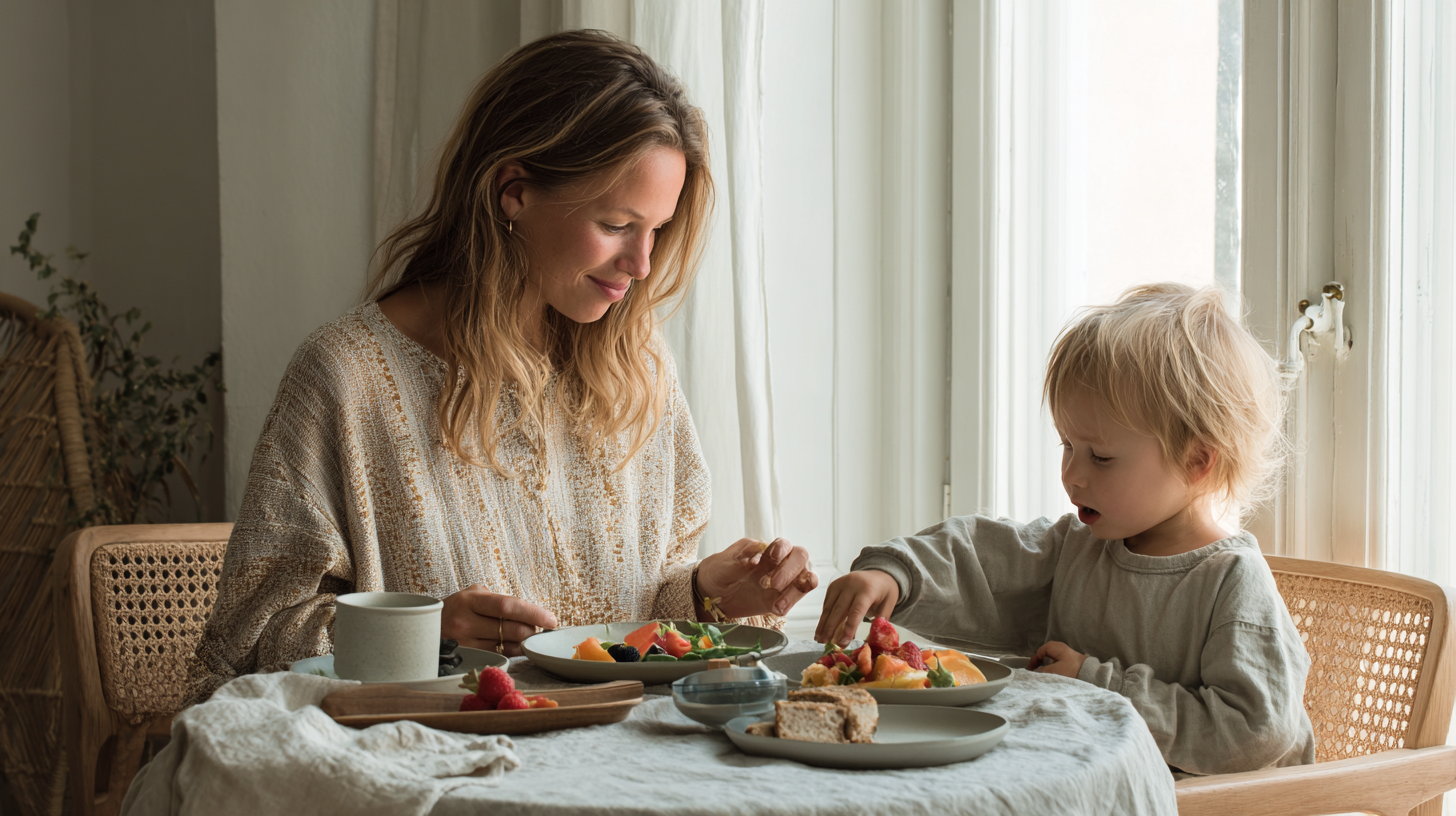
What “Relationship with Food” Really Means (And Why It Outlives Any Meal Plan)
When experts talk about a child’s “relationship with food,” they’re not just measuring how many vegetables they eat. They’re looking at how the child thinks, feels, and acts around eating—hunger and fullness awareness, flexibility, curiosity about new foods, emotional tone at the table, and whether they trust their own body or feel guilt and fear with every bite.
Long-term studies show that this relationship doesn’t appear out of nowhere; it is shaped mostly by family factors: how caregivers feed (pressure, restriction, structure, or responsiveness), the emotional climate of meals, access to food, and parents’ own eating attitudes. Children who grow up with responsive feeding, regular family meals, and calm exposure to a variety of foods are more likely to carry healthier patterns, better diet quality, and lower emotional and behavioral difficulties into adolescence and adulthood.
Historically, caregivers were encouraged to focus on “good behavior” and “clean plates”: finish everything, ignore your fullness, don’t waste food. Modern research calls this out as short‑term thinking. What looks like a “successful” meal (an empty plate) can quietly teach a child to override hunger and fullness cues, raising the risk of overeating and disconnection from their body later in life. The new focus is on responsive feeding—offering structure and choice while letting the child listen to their internal signals.
The Long Game: What Research Says About Lasting Impact
Longitudinal research has followed families for years and found a clear pattern: early eating habits and food environments track forward. Children who consistently eat a balanced variety of foods, enjoy regular family meals, and practice self‑regulation around eating tend to have lower risks of obesity, diabetes, and cardiovascular disease later in life. Their benefits are not only physical; healthier childhood eating patterns also align with better mental health and cognitive performance.
On the flip side, when food is scarce or chaotic—such as in food insecurity—children are more likely to experience behavioral difficulties, academic struggles, and long‑term health challenges. Shifts into and out of food insecurity have been linked to lasting changes in emotional well‑being and school performance, showing just how deeply basic access to food shapes a child’s life path.
Family meal research adds another hopeful layer: it isn’t only how often you sit together, but also what the experience feels like. Higher family meal frequency predicts better diet quality, lower obesity, less food fussiness, and fewer conduct problems in children. When those meals are emotionally warm—not full of fighting over bites or weight comments—kids also show fewer emotional and peer problems. That means your simple Tuesday rice-and-beans dinner, shared together, is doing more than filling bellies; it’s quietly anchoring their future.
From “Clean Plate” to Inner Compass: The Shift Toward Intuitive Eating
Many parents today grew up hearing, “Finish everything on your plate” or “You’re lucky to have food, don’t waste it.” Those messages were often rooted in love and survival, especially in Caribbean and immigrant families where food represented hard work and resilience. But research now shows that heavy pressure to eat and strict restriction can backfire: children become less responsive to their own hunger and fullness cues and more likely to overeat or develop emotional eating patterns.
Intuitive eating offers a different path. In simple terms, it means eating in response to internal cues—hunger, fullness, satisfaction—instead of rules or guilt. Studies show that when parents themselves lean toward intuitive eating, they are less likely to use controlling feeding practices and more likely to create calmer, more flexible home food environments. New reviews even find direct associations between parent and child intuitive eating: caregivers who trust their own bodies tend to raise children who trust theirs.
This doesn’t mean turning meals into a free‑for‑all. Instead, think of it like this: you provide the structure (what, when, where), your child provides the wisdom (if and how much). Over time, this division of responsibility builds a powerful inner compass. Rather than needing you to say “you’ve had enough,” your child learns to feel that in their own body—a skill that will serve them when they’re stressed at university, traveling, or living on their own salary.
The Hidden Influences: Mood, Stress, and Screens
Newer studies are using real‑time methods to track how parent mood and context shift feeding choices throughout the day. When caregivers are stressed, rushed, or overwhelmed, they are more likely to lean on pressure (“Just eat it!”), rewards (“If you finish, you get cookies”), or distractions (tablets and TVs) to get through meals. These strategies may reduce conflict in the moment, but over time they weaken a child’s connection to internal cues and increase emotional eating.
That dynamic may feel familiar if you’ve ever handed over a snack just to stop a meltdown in the grocery store, or put on a cartoon so dinner could be eaten in peace. The research doesn’t shame you for those moments; instead, it helps you see patterns. If emotional soothing with food becomes the default, children start to associate eating with calming every big feeling, which can evolve into stress‑eating habits later.
The good news: small shifts matter. Even gradually moving from “Eat while you watch” to “We eat first together, then you can watch something,” or from “Hush with a cookie” to “Let’s breathe, then we’ll talk about a snack” starts to rewrite those patterns. You’re not aiming for zero meltdowns; you’re aiming for more moments where food is food, and feelings are allowed to be feelings.
When Life Is Not Instagram-Perfect: Food Insecurity, Inequity, and Real-World Pressures
It’s impossible to talk about a child’s food relationship without talking about money, time, and access. Studies on food insecurity show that children living in households where food runs out or is unpredictable are more likely to struggle with behavior, learning, and long‑term health. They might eat quickly when food is available, hide snacks, or feel deep anxiety about whether there will be enough next time.
Many families in the Caribbean and diaspora know this intimately: grocery prices climb, healthy options are limited, work hours are long, and ultra‑processed foods are often the cheapest, fastest choice. Research on neighborhood food environments finds that children’s eating habits are heavily shaped by what’s nearby—corner shops, fast‑food chains, and the absence of fresh produce, for example. This means your child’s relationship with food is built not only in your kitchen, but also in your wider community.
While you cannot fix food systems on your own, you can still make powerful moves inside your reality. Even low‑cost staples like dried beans, local pumpkin (calabaza), sweet potatoes, or plantains can anchor nourishing meals and baby purees. Resources like “Basic Mixed Dhal Pure,” “Calabaza con Coco,” or “Cook‑Up Rice & Beans Smooth” in Caribbean‑inspired baby food collections show how traditional dishes can be adapted for infants and toddlers without expensive ingredients.
If you’d love step‑by‑step guidance on turning familiar island staples into baby‑friendly meals, a resource like Caribbean Baby Food Recipe Book: Easy & Healthy Homemade Meals for Infants & Toddlers can give you over 75 ideas built around things you already find in Caribbean kitchens—sweet potatoes, coconut milk, plantains, beans, and more.
Five Shocking (But Reassuring) Truths About Feeding and the Future
As the data around feeding grows, a few truths stand out—some surprising, all oddly comforting for exhausted parents who worry they’re “ruining everything.”
- “Perfect” plates matter less than consistent patterns. Research repeatedly shows that everyday patterns—family meal routines, exposure to a variety of foods, supportive language—carry more weight than what happened at last Thursday’s chaotic dinner. Your child’s future is shaped by the rhythm, not the one-off off-key note.
- Pressure and restriction often create the very problems you fear. Controlling sugar too tightly can actually increase your child’s obsession with sweet foods, while forcing bites can make them more resistant and less tuned in to their body. The fear of “spoiling” them can accidentally fuel overeating and sneak eating later.
- Your mood at the table might matter more than the menu. Newer studies show that stressed, distracted, or emotionally checked‑out parents are more likely to lean on counterproductive strategies. Over time, kids remember how it felt to eat with you far more than whether the veggies were roasted or steamed.
- Children can learn to love foods you didn’t grow up with. Taste education and gentle exposure work—even for picky eaters and kids with developmental differences. Small, repeated, pressure‑free tastes of new flavors can expand their world in ways that support long‑term diet quality.
- Your relationship with your own body quietly sets the tone. When children see you skipping meals, calling yourself “fat,” or labeling foods as “good” and “bad,” they internalize those rules. When they see you eating enough, enjoying variety, and speaking kindly about your body, they’re more likely to develop an intuitive, respectful relationship with theirs.
Turning Research Into Everyday Rituals (With a Caribbean Twist)
Knowing the data is one thing; stirring it into your actual Tuesday is another. The goal is not to create a rigid “scientific” household but to weave evidence‑based habits into routines that feel like you, your culture, and your child’s unique personality. Here are simple ways to translate the findings into daily life—Caribbean‑flavored where it fits.
- Make family meals a non‑negotiable anchor, not a gourmet performance. Even if it’s just cornmeal porridge or a quick “Cook‑Up Rice & Beans Smooth” style bowl, sitting down together without screens a few times a week sends a powerful message: meals are for connection and care, not stress and shame.
- Offer variety the way the islands do: colorful and familiar. Use local or familiar produce—pumpkin (calabaza), callaloo, sweet potato, plantain, papaya, mango—to build baby purees and family dishes. Recipes inspired by things like “Papaya & Banana Sunshine,” “Sweet Potato & Callaloo Rundown,” or “Zaboca and Green Fig Blend” let your child taste the Caribbean in safe, age‑appropriate ways.
- Keep sweets in context, not in charge. Instead of making dessert the prize, occasionally serve a small treat alongside the meal. Over time, this teaches your child that sweets are one part of eating, not the main event or forbidden treasure.
- Give words to sensations: “What is your belly saying?” Help your child name hunger (“Is your tummy starting to whisper or shouting?”), fullness (“Does your belly feel comfortably full or too tight?”), and satisfaction (“Did that food feel good in your body?”). This builds the emotional and body vocabulary behind intuitive eating.
- Use culture as a comfort, not pressure. Share stories about how grandma made cassava porridge or Sunday rice and peas, not as guilt (“We never wasted food back home”) but as identity (“In our family, we gather and share”). Food becomes a bridge, not a burden.
For step‑by‑step help turning these ideas into real baby meals, from Amerindian Farine Cereal to pumpkin with coconut milk purees, explore Caribbean Baby Food Recipe Book: Easy & Healthy Homemade Meals for Infants & Toddlers . It organizes recipes by age and region so you can move confidently from simple purees to textured meals that grow with your child.
Real-Life Story Time: The Night I Stopped Bargaining With Dessert
There was a night—not my finest—when I found myself whisper‑bargaining over a plate of callaloo and rice. My toddler sat there, suspiciously poking at every green leaf like it was a tiny enemy soldier. I heard my own voice say, “If you eat three more bites, you get ice cream.” It slipped out of my mouth like a reflex. And in that split second, I watched the whole dynamic flip: the vegetables became the chore, the ice cream became the prize, and I became the negotiator in a food courtroom.
Later that week, I dug into the research I’d been reading anyway and realized how often “finish this, then dessert” teaches kids that some foods are mere hurdles and others are the real reward. It doesn’t help them listen to hunger; it helps them perform for prizes. So the next time we had Sunday rice and peas with yellow yam and carrot, I tried something new. I served a tiny piece of sweet treat on the same plate. No bargaining. No drama. Just food.
You know what happened? My toddler ate some rice, some carrot, some treat, then came back for more rice. Not every night looks like that, of course. But that moment reminded me that the science isn’t cold; it’s deeply kind. It nudges us away from power struggles and toward trust, both in our kids and in ourselves as caregivers doing the best we can with the tools we have.
Supporting Special Situations Without Losing the Bigger Picture
Some families face extra layers: allergies, diabetes, sensory issues, or feeding therapy. Research on adolescents with conditions like type 1 diabetes shows just how complex the food relationship can become when every bite feels high‑stakes. There are higher rates of disordered eating behaviors and food preoccupation, especially when messages at home or in clinic focus heavily on “good” vs. “bad” foods or perfection.
This is where responsive feeding and intuitive eating ideas must be blended carefully with medical nutrition guidance. The goal is not to ignore necessary limits (an allergy is non‑negotiable, for example) but to deliver those limits with as much compassion and body trust as possible. That might mean saying, “Your body does best when we avoid this food, but you still deserve food joy. Let’s find flavors that feel exciting and safe,” instead of “You can’t have what everyone else has, so you get the ‘diet’ version forever.”
For children in feeding therapy or recovering from long‑term tube feeding, family‑based interventions that emphasize variety, trust, and caregiver support can lead to lasting improvements in both eating and family life. Taste education programs that gently expose kids to new textures and flavors—sometimes using small sips of chocolate‑inspired drinks, smooth pumpkin purees with coconut milk, or spiced but mild porridges—can reduce stress on both sides of the table.
Your Next 7 Days: Tiny Experiments That Shape a Lifetime
Research makes one thing clear: children learn by repetition and experience, not lectures. So instead of trying to overhaul everything overnight, consider these small, science‑backed experiments you can run over the next week.
- Day 1: Add one extra family meal this week, phones away. Keep the food simple; focus on connection.
- Day 2: At one meal, avoid all pressure language (“Just one more bite”). Notice how your child eats when you stay quiet.
- Day 3: Introduce a tiny taste of a new food—maybe calabaza with coconut milk or a bit of mashed green fig—and calmly offer it again later in the week, no expectations.
- Day 4: Catch one negative body comment in your head and swap it for something kinder—about yourself or your child.
- Day 5: Move dessert (if you have it) to be served alongside the meal rather than after negotiation.
- Day 6: Invite your child to help with one step—washing a mango, stirring porridge, sprinkling cinnamon on “Ti Pitimi Dous”-style cereal.
- Day 7: Ask your child, “What did your belly like best this week?” and simply listen.
The Legacy You’re Quietly Building, One Bite at a Time
One day, your child will not remember whether the pumpkin was organic or whether the plantain was perfectly ripe. They will remember the way you sighed with relief when you finally sat down with them. The way you laughed when the coconut milk boiled over. The way you said, “Listen to your belly,” instead of “You don’t need that much.” Those moments are how you’re teaching them to care for themselves long after you are no longer in the kitchen with them.
The science is clear: responsive, calm, connection‑focused feeding lowers the risk of chronic disease, disordered eating, and body hatred. Regular family meals, gentle exposure to a variety of foods, and parents who are willing to question old “clean your plate” scripts combine into a powerful protective shield for your child’s future physical and emotional health. You won’t see all the results tomorrow, but you are casting a long, protective shadow over their adulthood with every small choice.
If you want a companion on that journey—especially one that honors Caribbean flavors and traditions while staying age‑appropriate—keep exploring resources like Caribbean Baby Food Recipe Book: Easy & Healthy Homemade Meals for Infants & Toddlers . Think of each recipe—Batata y Manzana, Sweet Potato & Callaloo Rundown, Yellow Yam & Carrot Sunshine—not just as food, but as a love letter to your child’s future relationship with eating and with themselves.
You don’t need to be the perfect parent to give your child a beautiful relationship with food. You only need to be a curious one, willing to keep learning, keep listening, and keep showing up at the table. That, more than anything else, is the gift they’ll carry for the rest of their lives.

Kelley's culinary creations are a fusion of her Caribbean roots and modern nutritional science, resulting in baby-friendly dishes that are both developmentally appropriate and bursting with flavor. Her expertise in oral motor development and texture progression ensures that every recipe supports your little one's feeding milestones while honoring cultural traditions.
Join Kelley on her flavorful journey as she shares treasured family recipes adapted for tiny taste buds, evidence-based feeding guidance, insightful parenting anecdotes, and the joy of celebrating food, culture, and motherhood. Get ready to immerse yourself in the captivating world of Kelley Black and unlock the vibrant flavors of the Caribbean for your growing baby, one nutritious bite at a time.
- The Feeding Revolution: Why Your Everyday Meals Are Changing the World - October 13, 2026
- Your Feeding Story Matters More Than The “Perfect” One Online - October 12, 2026
- Looking Forward: Stepping Into Your Confident Feeding Future - October 11, 2026