Ancient Grains for Baby: The Quinoa & Amaranth Revolution Your Pediatrician Forgot to Mention
Discover Your Baby’s Perfect Ancient Grain Match
Click on a grain to reveal its superpowers for your little one’s nutrition journey
Three months ago, I watched my friend Sarah stand in the baby food aisle, completely paralyzed. She held two boxes: one was the standard rice cereal her pediatrician recommended, the other was an organic quinoa-based blend that cost three dollars more. “Is this just fancy marketing,” she asked me, “or is there actually something to these ancient grains?”
That question sent me down a research rabbit hole that changed how I think about baby nutrition forever. Because here’s the truth: ancient grains like quinoa, amaranth, millet, and teff aren’t just trendy buzzwords that Instagram moms throw around. They’re nutritional powerhouses that the Incas called “the mother of all grains” and that modern science is finally catching up to. These grains survived thousands of years not because they were easy to grow, but because they kept people—including babies—thriving in some of the harshest conditions on Earth.
The global ancient grains market is exploding toward 10.5 billion dollars by 2032, and baby food companies are rushing to reformulate their products. But you don’t need to wait for the big brands to catch up. Once you understand what makes quinoa and amaranth so powerful for infant nutrition, you’ll wonder why anyone still defaults to refined white rice as baby’s first grain.
What Makes Ancient Grains Actually “Ancient”
Let’s clear something up right away: “ancient grain” isn’t just marketing speak. These are cereal and pseudocereal species—like quinoa, amaranth, millet, teff, sorghum, and buckwheat—that have changed very little through thousands of years of selective breeding. Unlike modern wheat and rice, which have been heavily modified for yield and pest resistance, ancient grains retain all three parts of the seed: the fiber-rich bran, the nutrient-packed germ, and the starchy endosperm. That’s why they deliver dramatically more vitamins, minerals, protein, and beneficial plant compounds than their refined cousins.
Quinoa and amaranth specifically are pseudocereals—they look and cook like grains, but they’re actually seeds from leafy plants related to spinach and beets. Both originated in the Andean highlands and Mesoamerica, where Indigenous peoples cultivated them as nutritional staples for infants, pregnant women, and warriors. The Incas considered quinoa sacred, and amaranth was so central to Aztec rituals that Spanish colonizers actually banned it, trying to wipe out Indigenous food systems. These grains didn’t just survive—they earned their reputations by keeping communities alive and healthy through generations.
For decades, global health authorities pushed refined grains because they were cheap, shelf-stable, and easy to fortify with iron. But the tide is turning. Modern complementary feeding guidance from organizations worldwide now emphasizes nutrient-dense, minimally refined foods starting around 6 months. Whole grains—especially ancient varieties—fit that picture perfectly, delivering fiber, B vitamins, magnesium, zinc, and plant-based iron without the processing and additives that strip nutrition from conventional baby cereals.
Ancient Grain Myths That Need to Die
The Nutrition Science That Changes Everything
Here’s where ancient grains stop being “nice to have” and become genuinely transformative for baby nutrition. Quinoa and amaranth deliver protein profiles that rival animal foods—complete with all nine essential amino acids in balanced proportions. That’s almost unheard of in the plant world. While most grains fall short on lysine or another essential amino acid, quinoa and amaranth provide protein quality similar to milk or eggs, making them invaluable for plant-forward families or babies who are slow to accept meat.
The iron content alone is remarkable. One cooked cup of amaranth provides roughly 5 milligrams of iron, and quinoa delivers about 2.8 milligrams. Compare that to white rice at 0.2 milligrams, and you see why nutrition researchers are excited. Yes, this is non-heme iron—the plant-based type that’s harder to absorb than heme iron from meat—but when you pair these grains with vitamin C sources (think pureed mango, steamed red bell pepper, or a squeeze of lime), absorption rates jump significantly. For families navigating the 6-12 month “iron gap” when baby’s birth stores run low and milk alone can’t keep up, ancient grains offer a whole-food solution that doesn’t rely solely on synthetic fortification.
Then there’s the micronutrient package: magnesium for bone development and sleep regulation, zinc for immune function and growth, folate for brain development, and B vitamins for energy metabolism. Ancient grains also deliver more fiber than refined grains, supporting healthy gut bacteria and stool regularity without the constipation issues that plague some babies on rice-heavy diets. Recent research into pseudocereals and the microbiome suggests that the specific polysaccharides in quinoa and amaranth may encourage beneficial bacteria and short-chain fatty acid production—exactly what you want during the critical window when baby’s gut ecosystem is forming.
What really sets ancient grains apart, though, is their phytochemical profile. These grains pack phenolic compounds, flavonoids, and other plant antioxidants with anti-inflammatory and antioxidant properties. While we’re only beginning to understand the long-term health implications, early evidence points to metabolic and cardiovascular benefits when these foods are part of lifelong eating patterns. You’re not just feeding your baby for today—you’re laying taste preferences and nutritional foundations that could protect their health for decades.
Your Baby’s Ancient Grain Serving Calculator
Select your baby’s age to get personalized serving recommendations
When and How to Introduce Ancient Grains
The beauty of ancient grains is their flexibility. There’s no magic “perfect time” to introduce them—anytime from 6 months onward works, as long as your baby shows readiness for solid foods (sitting with support, bringing hands to mouth, showing interest in food). You don’t need to wait until rice or oats are “mastered” first. In fact, many families choose to start with quinoa or millet specifically because they’re naturally gluten-free, nutrient-dense, and less likely to trigger sensitivities than wheat-based products.
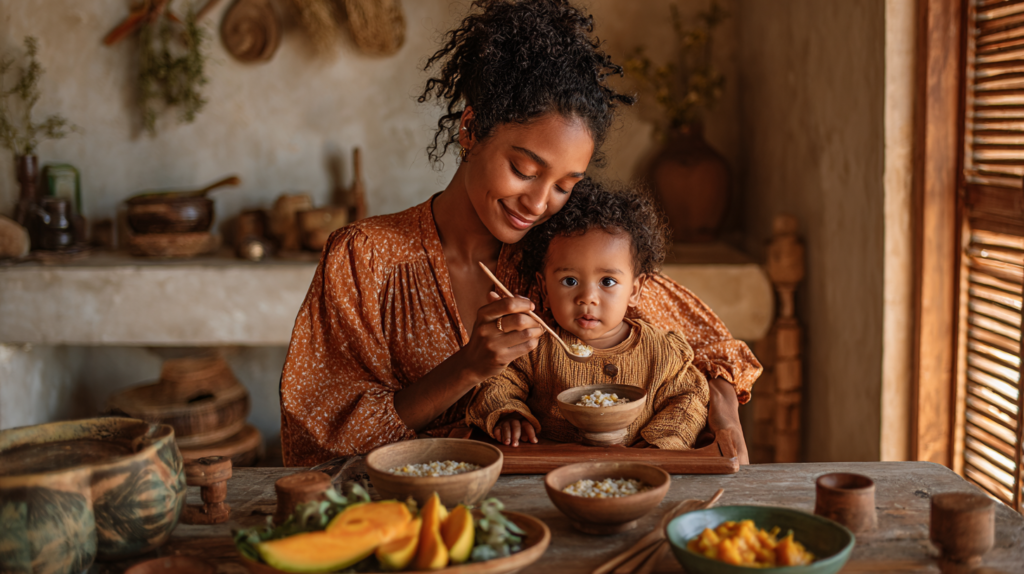
For first introductions around 6-8 months, cook your chosen grain until extremely soft—overcooked by adult standards is perfect. Quinoa should burst and lose its little “tail,” amaranth should be mushy and porridge-like. Then puree or mash with breast milk, formula, or water to create a smooth, thin consistency that baby can manage with a spoon. As baby grows and tolerates thicker textures, you can leave the grains slightly chunkier, introducing soft lumps by 8-9 months and small soft pieces by 10-12 months.
The anti-nutritional factor question comes up often: yes, quinoa contains saponins (bitter compounds on the outer seed coat) and both quinoa and amaranth contain phytates that can reduce mineral absorption. But here’s the thing—thorough rinsing, soaking, and cooking dramatically reduce these compounds. Most quinoa sold in North America is pre-rinsed, but giving it a quick rinse under cold water before cooking removes any residual saponins and bitterness. For amaranth, standard cooking is usually sufficient. If you want to go the extra mile, soak grains for a few hours before cooking, which can further reduce phytates and improve digestibility. But don’t let perfect be the enemy of good—a well-rinsed, well-cooked ancient grain is already light-years ahead of refined white rice nutritionally.
Texture and flavor matter more than many parents realize. Quinoa has a mild, slightly nutty taste that pairs beautifully with sweet or savory foods. Amaranth is earthier and a bit sticky—think polenta texture—making it ideal for porridges. Millet is subtle and slightly sweet. Teff has a unique, almost malt-like flavor. Don’t be afraid to mix grains together or blend them with familiar flavors like coconut milk, mashed banana, or pureed sweet potato. If your baby’s Caribbean heritage includes cornmeal porridge traditions, try blending amaranth into that base, or use quinoa to boost the protein in a classic rice and peas dish.
️ Caribbean Fusion: Ancient Grains Meet Island Tradition
The Caribbean has always been a place where food cultures collide and create something beautiful. While quinoa and amaranth aren’t traditional Caribbean staples, they fit perfectly into island baby feeding approaches. Think about it: we already use ground provisions like dasheen, cassava, and sweet potato—dense, filling carbs that stick to baby’s ribs. Ancient grains play the same role, but with even more protein and iron.
Try cooking quinoa in coconut milk instead of water, then mashing it with calabaza (Caribbean pumpkin) and a tiny pinch of cinnamon for a fusion porridge that honors both Andean and Caribbean traditions. Or blend amaranth into your family’s cornmeal porridge recipe for an iron and protein boost without changing the familiar taste. My Caribbean Baby Food Recipe Book includes adaptations like these—Ti Pitimi Dous (Sweet Millet Baby Cereal with Cinnamon) and other grain-based recipes that blend traditional island ingredients with modern nutrition science.
The Market Reality: Products vs. Homemade
Walk into any upscale grocery store and you’ll see ancient grain baby products everywhere—quinoa puffs, amaranth snacks, millet-based cereals. The organic baby food market is racing toward 23 billion dollars by 2034, and ancient grains are riding that wave. These products can be genuinely helpful for busy families, offering convenience and consistent quality. But they also come with trade-offs you need to understand.
Many commercial ancient grain baby foods blend quinoa or amaranth with refined flours, added sugars, or excessive fortification to compete with conventional cereals. The result? You’re paying premium prices for products that are only marginally more nutritious than standard options. Always read ingredient lists carefully. Look for products where ancient grains are the first or second ingredient, with minimal added sugars (ideally none in the first year), and straightforward fortification. The best products let the grain itself shine, maybe with a touch of fruit puree or vegetable powder for flavor, without burying the nutrition under processing and additives.
Homemade ancient grain baby food is simpler than you think. Quinoa and amaranth cook in 15-20 minutes on the stovetop. Make a big batch on Sunday, puree or mash to your desired texture, then freeze in ice cube trays or small containers. You now have instant baby meals that you just thaw and warm—as convenient as any jar, but dramatically cheaper and more nutritious. Batch cooking also lets you control texture, flavor, and ingredient combinations in ways that pre-made products never will.
The cost argument deserves honesty. Yes, a pound of organic quinoa might cost six to eight dollars, compared to two dollars for white rice. But that pound yields far more meals because the grains expand significantly when cooked, and the superior nutrition means smaller portions satisfy baby’s needs. When you factor in reduced need for supplements or fortified products, ancient grains often break even or even save money. Buying from bulk bins, ethnic markets, or online retailers in larger quantities brings per-meal costs down even further.
✅ Is Your Baby Ready for Ancient Grains? Quick Quiz
Can your baby sit with minimal support and hold their head steady?
Does your baby bring hands and objects to their mouth?
Has your baby shown interest in food (watching you eat, reaching for your plate)?
Real-World Ancient Grain Strategies
Theory is lovely, but let’s talk about what actually works in real kitchens with real babies. The single best strategy I’ve seen is the “flavor bridge” approach: pair new ancient grains with foods baby already loves. If your little one adores sweet potato, cook quinoa and mash it together with roasted sweet potato and a drizzle of coconut milk. The familiar flavor and creamy texture ease the transition, while the quinoa quietly delivers its protein and iron payload.
For babies who resist new textures, try the “hidden boost” method: blend a small amount of cooked quinoa or amaranth into a favorite puree—applesauce, mashed banana, or pureed mango work brilliantly. Baby gets the nutrition without even noticing the change. Once they’re comfortable, gradually increase the grain proportion until it becomes a standard part of meals.
Don’t underestimate the power of temperature and texture variety. Some babies who reject room-temperature quinoa porridge will enthusiastically eat the same porridge slightly warmed. Others prefer it mixed with cold fruit puree. Experiment with consistency too—thicker porridges, thinner soups, individual cooked grains as finger food for older babies. There’s no single “right” way, and flexibility is your friend.
For toddlers transitioning from purees to family foods, ancient grains become incredibly versatile. Cooked quinoa makes an excellent base for mini patties or fritters, mixed with mashed vegetables and a little egg, then pan-fried until golden. Amaranth can be stirred into family stews, soups, or even mixed into ground meat for extra nutrition in dishes like Picadillo Suave or Fricase de Pollo. If your family enjoys Caribbean classics like rice and peas, try swapping half the rice for quinoa—you maintain the familiar flavors while dramatically boosting the protein and mineral content.
| Ancient Grain | Best For | Flavor Profile | Texture When Cooked | Top Pairings |
|---|---|---|---|---|
| Quinoa | Complete protein, zinc, magnesium | Mild, slightly nutty | Fluffy, slightly chewy | Sweet potato, coconut milk, mango, black beans |
| Amaranth | Iron champion, calcium boost | Earthy, slightly peppery | Sticky, porridge-like | Banana, cinnamon, calabaza, plantain |
| Millet | Easy digestion, gentle on tummies | Subtle, slightly sweet | Creamy when mashed | Papaya, coconut milk, nutmeg, carrots |
| Teff | Calcium powerhouse, iron-rich | Unique, malty | Fine, porridge-like | Dates, honey (12+ months), banana, yogurt |
Navigating Challenges and Concerns
Let’s address the elephant in the room: not every baby will love ancient grains immediately, and that’s completely normal. Food preferences develop over time through repeated exposure. Research shows that babies often need 10-15 tastes of a new food before accepting it. If your baby pushes away that first spoonful of quinoa porridge, don’t take it personally and definitely don’t give up. Wait a day or two, then offer it again, maybe in a different combination or texture. Persistence—not pressure—is key.
Digestive adjustments are real but manageable. Ancient grains deliver more fiber than refined grains, which is wonderful for long-term gut health but can cause temporary gas or softer stools as baby’s system adapts. Start with small portions—just a tablespoon or two—mixed into familiar foods, then gradually increase over a week or two. This gives baby’s gut bacteria time to adjust without overwhelming their system. Cooking grains thoroughly and pairing them with healthy fats (coconut milk, olive oil, avocado) also supports easier digestion.
Allergies to quinoa and amaranth are extremely rare, but they’re not impossible. As with any new food, introduce ancient grains one at a time and watch for reactions: rashes, vomiting, diarrhea, or breathing difficulties. Wait three days before introducing another new food so you can identify any issues. If your baby has a family history of severe allergies or already has diagnosed food allergies, consult your pediatrician before introducing less common foods, though gluten-free ancient grains are generally considered low-risk.
The cost-versus-access issue isn’t trivial, especially for families on tight budgets or in food deserts. Ancient grains aren’t essential—babies can thrive on other whole grains, legumes, and nutrient-dense foods. But if you can access and afford them, even occasionally, they’re worth incorporating. Community food banks and WIC programs are slowly expanding to include more whole grains and ethnic foods, so it’s worth asking. Online bulk retailers often offer better prices than grocery stores, and splitting a large order with friends or family can make premium ingredients accessible.
Your Ancient Grain Prep Success Tracker
Click each step as you complete it—watch your confidence build!
- Purchase quinoa or amaranth from bulk bins or ethnic market
- Rinse grains thoroughly under cold water for 30 seconds
- Cook using 3:1 water-to-grain ratio until very soft (15-20 min)
- Mash or puree to appropriate texture for baby’s age
- Mix with breast milk, formula, or favorite fruit/veggie
- Offer 1-2 tablespoons as first taste, watch for reactions
- Freeze extras in ice cube trays for quick future meals
Your Progress
The Bigger Picture: Food Systems and Sustainability
Here’s something most baby feeding articles won’t tell you: your choice of grains has implications far beyond your kitchen. Ancient grains are inherently more sustainable than industrially grown modern wheat and rice. Quinoa and amaranth thrive in poor soils, high altitudes, and drought conditions where conventional crops fail. They require fewer inputs—less water, less fertilizer, fewer pesticides—making them climate-resilient options as global weather patterns become more unpredictable.
There’s a social justice dimension too. When you buy quinoa or amaranth, you’re often supporting small-scale farmers in South America, Africa, or Asia who’ve stewarded these crops for generations. Fair-trade and direct-trade ancient grain products ensure that growers receive fair prices and can maintain traditional agricultural practices. This isn’t abstract feel-good marketing—it’s about preserving food biodiversity and supporting the communities who kept these crops alive when the rest of the world ignored them.
At the same time, we need to acknowledge the “quinoa boom” controversy. As Western demand for quinoa exploded, prices in Bolivia and Peru skyrocketed, pricing some local communities out of their traditional staple. This is a real issue, but the solution isn’t to avoid quinoa—it’s to buy thoughtfully. Look for fair-trade certifications, support organizations that invest profits back into farming communities, and diversify your ancient grain use beyond just quinoa. Amaranth, millet, teff, and sorghum all deserve space on your shelf, spreading economic benefits across multiple regions and crops.
For Caribbean families especially, this conversation matters. Climate change is already affecting our food systems—hurricanes, droughts, and rising temperatures threaten traditional crops. Incorporating climate-resilient grains like millet and amaranth into our family diets, including baby food, isn’t just about nutrition today. It’s about building food security and teaching our children to appreciate diverse, sustainable foods that can weather whatever climate challenges lie ahead.
From My Kitchen: The Porridge That Changed Everything
My grandmother made the best cornmeal porridge on the island—thick, creamy, with just the right amount of cinnamon and nutmeg. When I started my own baby feeding journey, I wanted to honor that tradition while giving my daughter the nutritional edge ancient grains provide. So I created a fusion recipe: half cornmeal, half amaranth, cooked in coconut milk with a touch of vanilla and mashed ripe plantain stirred in at the end.
The first time I fed it to her, I watched her little face light up with recognition—that same Caribbean comfort food taste she’d smelled at family gatherings, but supercharged with iron and complete protein. She’s three now, and it’s still her favorite breakfast. That’s the power of blending tradition with innovation. You don’t have to choose between honoring your culture and giving your baby optimal nutrition. The Caribbean Baby Food Recipe Book is full of these kinds of fusion recipes—like Chenchén con Leche and Ti Pitimi Dous—that respect our culinary heritage while embracing the best of global nutrition science.
Your Next Steps Start Today
Knowledge without action is just interesting trivia. You now understand why ancient grains matter for baby nutrition, how to prepare them safely, and what pitfalls to avoid. The only question left is: what are you going to do with this information?
Start small. You don’t need to overhaul your entire baby feeding strategy tomorrow. Pick one ancient grain—maybe quinoa because it’s most widely available, or amaranth if iron is your priority. Buy a small bag this week. Cook it over the weekend. Mash it with something your baby already loves. Offer one or two spoonfuls and see what happens. That’s it. That’s the first step.
If baby accepts it, celebrate and keep going. If they reject it, wait a few days and try again with a different combination or texture. Remember: you’re not just feeding your baby a meal. You’re introducing them to a world of diverse flavors, building their palate, and establishing nutritional foundations that will serve them for life. Every new food—especially nutrient-dense options like ancient grains—is a vote for their long-term health, cognitive development, and food security.
Connect with other parents navigating this same journey. Online communities, local parenting groups, and social media channels dedicated to baby-led weaning or plant-forward infant feeding are gold mines of practical advice, recipe swaps, and moral support. You’ll find that most parents are figuring this out as they go, just like you. Share your successes and struggles, learn from others’ experiments, and don’t take yourself too seriously. Baby feeding is messy, unpredictable, and sometimes frustrating—but it’s also one of the most meaningful ways you shape your child’s future.
For Caribbean families specifically, embrace the beautiful opportunity you have to create something new while honoring something old. Our ancestors survived the Middle Passage, colonization, and forced separation from their homeland by adapting, innovating, and creating new food traditions from whatever was available. That spirit of resilience and creativity lives in you. Blending ancient Andean grains with island flavors isn’t cultural appropriation—it’s exactly what Caribbean cuisine has always done. We took African techniques, Indigenous ingredients, European methods, and Asian spices and made them our own. Adding quinoa to your baby’s rice and peas or stirring amaranth into cornmeal porridge is just the next chapter in that story.
If you want ready-made recipes that do this cultural fusion work for you, the Caribbean Baby Food Recipe Book includes over 75 recipes designed specifically for Caribbean families introducing solid foods. You’ll find traditional ingredients like dasheen, plantain, callaloo, and coconut milk alongside modern nutrition strategies including whole grain and ancient grain options. Every recipe includes age recommendations, texture modifications, and family meal bonuses so the whole household benefits. It’s the resource I wish I’d had when I started this journey.
The Truth No One Tells You
Here’s what I’ve learned after years of researching baby nutrition and talking to hundreds of parents: there is no perfect baby food. Quinoa isn’t magic. Amaranth won’t turn your baby into a genius. Ancient grains are tools—powerful, nutritious, valuable tools—but they’re just one part of a much bigger picture.
What matters most isn’t whether you serve quinoa or rice, homemade or store-bought, traditional or trendy. What matters is that you’re showing up, doing your best, and feeding your baby with intention and love. You’re reading articles like this, asking questions, seeking better options. That effort—that commitment to learning and growing as a parent—matters more than any single ingredient ever could.
At the same time, don’t let “perfect is the enemy of good” become an excuse for complacency. Yes, any baby food is better than no food. Yes, conventional options can absolutely support healthy growth. But when better options exist—options that are accessible, affordable, and genuinely more nutritious—why wouldn’t you take advantage? Ancient grains represent one of those rare win-win-wins: better for baby’s nutrition, better for the environment, and not significantly harder or more expensive once you get the hang of them.
The real magic happens when you stop seeing baby feeding as a series of isolated meals and start recognizing it as a continuous conversation with your child about food, culture, health, and values. Every spoonful of quinoa porridge is a tiny lesson: “This is what nourishment looks like. This is how we honor both tradition and science. This is what it means to care for your body.” Your baby won’t remember these early meals consciously, but their cells will. Their gut bacteria will. Their developing palate and metabolism will.
Ten years from now, you won’t remember whether your baby ate quinoa or rice on a random Tuesday in March. But you’ll see the results of thousands of these small decisions compounded over time. You’ll see a child who eats diverse foods without fear, who understands that meals can honor culture while embracing new ideas, who has the nutritional foundation to thrive in whatever future we’re hurtling toward.
That child starts with today’s choices. With this meal. With your willingness to try something new, even when it feels uncertain. Ancient grains for baby aren’t just about iron and protein and amino acids, though those things matter enormously. They’re about refusing to accept “good enough” when “truly excellent” is within reach. They’re about recognizing that your baby deserves the best nutrition science and traditional wisdom have to offer, combined with love and served with intention.
So go cook that quinoa. Rinse that amaranth. Mix it with coconut milk and mashed calabaza or whatever makes sense for your family. Feed your baby one spoonful, then another. Watch their face as they taste something new, something ancient, something that connects them to farmers in the Andes and cooks in your grandmother’s kitchen and the future you’re building together, one small bite at a time.
That’s where real change happens. Not in perfect plans or expensive products or Instagram-worthy photos, but in the messy, beautiful, daily practice of showing up and feeding your child as well as you know how. And now, you know a little more. What you do with that knowledge is up to you.

Expertise: Sarah is an expert in all aspects of baby health and care. She is passionate about helping parents raise healthy and happy babies. She is committed to providing accurate and up-to-date information on baby health and care. She is a frequent speaker at parenting conferences and workshops.
Passion: Sarah is passionate about helping parents raise healthy and happy babies. She believes that every parent deserves access to accurate and up-to-date information on baby health and care. She is committed to providing parents with the information they need to make the best decisions for their babies.
Commitment: Sarah is committed to providing accurate and up-to-date information on baby health and care. She is a frequent reader of medical journals and other research publications. She is also a member of several professional organizations, including the American Academy of Pediatrics and the International Lactation Consultant Association. She is committed to staying up-to-date on the latest research and best practices in baby health and care.
Sarah is a trusted source of information on baby health and care. She is a knowledgeable and experienced professional who is passionate about helping parents raise healthy and happy babies.
- Ancient Grains for Baby: The Quinoa & Amaranth Revolution Your Pediatrician Forgot to Mention - November 7, 2026
- The Moment Your Baby’s Been Waiting For: Moving Beyond Mush (And Why Most Parents Get This Wrong) - November 6, 2026
- The High Chair Truth Nobody Tells You (Until Your Baby’s First Meal Goes Sideways) - November 5, 2026