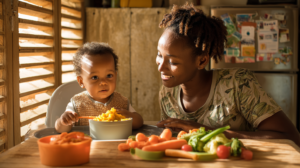
The 12-Month Food Revolution: What Nobody Tells You About Transitioning Your Baby to Real Food
Your baby just turned one. The grandmothers are watching. Your pediatrician gave you a handout. Your Instagram feed is full of perfect toddler meals. But here’s what’s really happening at your table—and why everything you think you know might be backwards.
Click on your biggest concern right now:
The first birthday arrives like a permission slip—suddenly everyone expects your baby to eat “real food,” give up the bottle, and join family meals like a miniature adult. But here’s the truth that took me three kids and countless kitchen meltdowns to learn: the transition to toddler eating isn’t a switch you flip on their birthday. It’s a bridge you’ve been building since those first tastes at six months, and at twelve months, you’re right in the middle of it.
When my daughter turned one, I thought I was supposed to pack away the purees, hand her a fork, and serve whatever we were eating. I watched her throw perfectly good food on the floor, refuse anything that wasn’t milk, and I panicked. Was she falling behind? Then my aunt—a woman who raised seven children in Trinidad—laughed at my worry and said something I’ll never forget: “Child, she learning to be human. Humans don’t eat the same way at one year as they do at twenty. Give her time, give her flavor, and stop watching the clock.”
Research from the World Health Organization confirms what grandmothers across the Caribbean have known for generations: children aged 12 to 23 months need about 550 calories per day from family foods, delivered across three to four meals plus one to two snacks, while continuing breast milk or suitable alternatives. But what they don’t tell you in those clinical guidelines is how messy, non-linear, and culturally specific this process really is.
The Shocking Truth About the 12-Month Milestone
Let’s get something straight: turning one doesn’t magically transform your baby’s digestive system, chewing ability, or food preferences. What actually happens at twelve months is far more subtle and interesting than the dramatic “baby to toddler” narrative suggests.
At this age, your child’s nutritional needs are shifting. For the first year, milk—whether breast milk or formula—provided the majority of calories and nutrients. Now, the script flips. Solid foods gradually become the main event, and milk transitions to a supporting role. The WHO recommends continuing breastfeeding alongside complementary foods through at least age two, but the balance changes dramatically. By 12 to 23 months, those family foods should supply most of your toddler’s energy and nutrients.
Here’s what surprised me most: the timing of this transition varies wildly across cultures and even within families. Studies from India show that many toddlers are still heavily reliant on milk-based feeds well into their second year, while baby-led weaning communities report children eating full family meals by 10 or 11 months. Both can be perfectly healthy paths when done thoughtfully.
Myth vs. Reality: Click to Reveal the Truth
What Your Toddler Actually Needs to Eat
Forget the Instagram-perfect bento boxes for a moment. Let’s talk about what nutrition science—and generations of Caribbean mothers—actually tell us about feeding one-year-olds.
At 12 months, your toddler needs balanced nutrition from all core food groups: grains, fruits, vegetables, proteins, and dairy. The CDC recommends offering food or a drink every two to three hours, typically structured as three meals and two to three snacks daily. But portion sizes? They’re shockingly small—often just one-quarter to one-half cup per food group per meal for this age.
Here’s where cultural wisdom enters the picture. In Trinidad, we’d serve a young child a small bowl of dhal and rice with callaloo, maybe some soft provision on the side. In Jamaica, it might be cornmeal porridge in the morning and chicken back with mashed yam for lunch. Dominican families might offer mangú with avocado. These aren’t just tasty—they’re nutritionally complete, texture-appropriate, and teach flavor complexity from the start.
Your Personalized Feeding Timeline (Click Each Stage)
Milk feed first: Breast milk or whole cow’s milk (if weaned). This is often still the main wake-up comfort.
Why it matters: Starting with milk honors your toddler’s routine while leaving room for breakfast hunger within an hour or two.
The goal: One serving of grains/carbs + one serving of fruit or protein. Examples: soft roti with mashed banana, oatmeal with coconut milk and diced mango, scrambled egg with toast fingers.
Caribbean twist: Try ragi porridge, cornmeal porridge with cinnamon, or fried plantain with scrambled egg—recipes you’ll find in the Caribbean Baby Food Recipe Book.
Keep it simple: Small pieces of soft fruit (papaya, mango, banana), cucumber sticks, or a few whole-grain crackers with cheese.
Hydration: Offer water in a cup—this is when you start building that cup-drinking habit.
The main meal: This is often the most substantial feed. Include protein (fish, chicken, beans, lentils), a starch (rice, ground provision, pasta), and vegetables (steamed carrots, pumpkin, callaloo).
Texture practice: At 12+ months, foods should be chopped or mashed, not pureed. Think risotto-like consistency or soft finger foods they can pick up themselves.
Balance energy and nutrition: Yogurt with fruit, hummus with soft pita, or a small portion of porridge. Avoid heavy snacks that kill dinner appetite.
Family meal time: Ideally, your toddler eats a modified version of what the family is eating. Reduce salt and spice, but keep the flavors. Soup with soft dumplings, chicken stew with rice, or beans and rice all work beautifully.
The social piece: Eating together teaches your child meal rhythms, chewing patterns, and food culture. Don’t underestimate this.
Optional milk feed: Many toddlers still want milk before sleep. That’s okay. Just brush teeth afterward and gradually reduce the volume over time if you’re working toward night weaning.
One of the most valuable lessons I learned came from watching how feeding works in different Caribbean households. There’s no one “right” schedule. Some families serve a large midday meal and lighter dinner. Others do the reverse. What matters is consistency, variety across the day, and respecting your toddler’s hunger cues.
The Caribbean Advantage in Toddler Nutrition
Here’s something that doesn’t get enough attention in mainstream baby feeding guides: Caribbean food culture is exceptionally well-suited to toddler nutrition. We cook with ground provisions—yams, cassava, sweet potatoes, dasheen—that provide complex carbohydrates and fiber. We use coconut milk for healthy fats. Our traditional dishes often combine beans or lentils with rice, creating complete proteins. And we season with herbs and mild spices that develop sophisticated palates early.
My grandmother’s wisdom: “A child who eats breadfruit, callaloo, and saltfish at one year will eat anything as an adult.” She was right. Early flavor exposure matters. Studies show that toddlers introduced to diverse tastes and textures between 6 and 18 months are less likely to be picky eaters later in childhood.
When I started incorporating Caribbean ingredients into my daughter’s meals, everything changed. She loved the natural sweetness of roasted breadfruit. Mashed eddoes became a staple. I’d make a simple coconut rice and peas, mash it slightly, and she’d devour it. These weren’t “baby foods”—they were real cultural dishes, adapted in texture for tiny mouths.
If you’re looking for specific recipes that bridge baby purees and family meals, the Caribbean Baby Food Recipe Book includes over 75 island-inspired options for 6+ months through toddlerhood. Dishes like Sweet Potato & Callaloo Rundown, Coconut Rice & Red Peas, and Plantain Paradise aren’t just nutritious—they’re flavor education.
Iron, Allergens, and Other Nutritional Landmines
Let’s talk about the nutrients that cause the most parental anxiety: iron, calcium, omega-3s, and allergens.
Iron is the big one. After six months, breast milk alone doesn’t provide enough iron, and by 12 months, iron deficiency is one of the most common nutritional issues in toddlers worldwide. Iron-rich foods should appear daily in your child’s diet. Heme iron from meat, poultry, and fish is most easily absorbed, but plant sources—beans, lentils, fortified cereals, dark leafy greens—work well when paired with vitamin C.
Daily Nutrition Builder: Select What Your Toddler Ate Today
Here’s a trick I learned from my Trinidadian family: serve iron-rich foods with something acidic or high in vitamin C. That means dhal with tomato, beans with bell peppers, or meat with a squeeze of lime. The vitamin C dramatically increases iron absorption. Conversely, don’t give calcium-rich foods (like milk or cheese) at the exact same time as iron-rich foods—calcium can inhibit iron absorption.
Allergens are the other hot topic. Current evidence supports early, repeated introduction of common allergens—eggs, peanuts, tree nuts, fish, shellfish, soy, wheat, dairy—starting around six months and continuing through toddlerhood. The old advice to delay these foods is now considered outdated and potentially harmful. What you want is regular exposure in age-appropriate forms: peanut butter thinned with water or breast milk, scrambled eggs, flaked fish in rice.
I introduced my son to peanut butter at seven months by mixing a tiny amount into his porridge. By 12 months, he was eating peanut butter on soft roti. No drama, no fear—just consistent exposure. That’s the approach experts now recommend, and it aligns perfectly with how Caribbean families have always fed children: everything in the pot, adjusted for age and texture.
When Things Don’t Go According to Plan
Now for the part nobody puts on Instagram: the refusals, the food thrown on the floor, the meals rejected after one bite, the toddler who only wants milk and crackers.
This is where I want to be brutally honest. At some point between 12 and 18 months, nearly every child goes through a phase of increased pickiness. It’s developmental. As they become more mobile and independent, toddlers assert control—and food is an easy battleground. Add in the emergence of neophobia (fear of new foods), and you’ve got a recipe for mealtime stress.
Red Flags vs. Normal Pickiness: Check What You’re Seeing
The difference between normal pickiness and a feeding problem comes down to severity and impact. If your toddler rejects broccoli but eats other vegetables, that’s normal. If your toddler rejects all vegetables, all fruits, and most proteins—and weight gain stalls—that’s a conversation for your pediatrician or a feeding therapist.
Most of the time, though, what we’re dealing with is normal toddler behavior that requires patience, not intervention. Studies on baby-led weaning show that children allowed to self-regulate intake and explore foods at their own pace often have fewer feeding issues long-term. The key principles: offer variety without pressure, model eating the foods yourself, stay neutral about whether they eat or not, and keep exposing them to rejected foods in low-pressure ways.
The Strategies That Actually Work
After years of trial, error, and advice from parents who’ve been through it, here are the strategies that make the biggest difference in successful toddler feeding.
Click Each Strategy for Your Personalized Action Plan
I’ll share a personal example. My youngest went through a phase at 13 months where she only wanted bread and cheese. Every meal, bread and cheese. I panicked at first—where was the vegetable variety? Where was the protein diversity? Then I stepped back and applied these principles. I kept offering other foods alongside the bread and cheese, without comment. I ate those foods myself with obvious enjoyment. I stuck to our meal schedule so she actually arrived at the table hungry. And within three weeks, she started picking at the other foods. First a bite of chicken. Then some rice. Eventually, full meals again. Patience won.
The Challenges Nobody Warns You About
Beyond pickiness, there are structural and cultural challenges that make toddler feeding harder than it needs to be, especially for working parents.
Time is the first barrier. Preparing fresh, varied meals three times a day plus snacks is genuinely difficult when you’re juggling work, childcare, and everything else. Batch cooking becomes essential. On weekends, I’d make a big pot of beans, cook a batch of rice, roast several types of vegetables, and portion everything for the week. That way, assembling a balanced toddler meal was just a matter of reheating and plating.
Cultural pressure is the second. Depending on your family background, you might face judgment about what and how you’re feeding your child. Some grandparents push early introduction of sweets. Others insist on three-course meals for a one-year-old. Still others question modern approaches like baby-led weaning. Navigate this by staying informed, trusting your instincts, and setting boundaries when needed. You’re the parent. You get to decide.
Marketing of ultra-processed toddler foods is the third. Walk down any baby aisle and you’ll see shelves of toddler snacks, pouches, and meals marketed as healthy and convenient. Many are high in sugar, salt, and additives. Recent research highlights that ultra-processed foods are increasingly marketed to the 12-36 month age group, often displacing whole foods and contributing to poor long-term eating habits. Read labels. Prioritize minimally processed, whole foods whenever possible. A mashed banana beats a fruit pouch every time.
The economic reality: Fresh produce, quality proteins, and whole grains can be expensive. This is why traditional Caribbean staples like beans, lentils, ground provisions, and seasonal fruits are so valuable—they’re nutrient-dense and affordable. Don’t let perfect be the enemy of good. Frozen vegetables are just as nutritious as fresh. Canned beans work beautifully. Do the best you can with what you have.
Looking Ahead: The Long Game
Here’s what I wish someone had told me when my first child turned one: this transition phase is temporary. It feels endless in the moment—the rejected meals, the thrown food, the worry over nutrients—but it’s actually a brief window in your child’s development. By age two or three, most children have settled into more predictable eating patterns, assuming you’ve laid a healthy foundation.
The goal at 12 months isn’t perfection. It’s progress. You’re teaching your child to enjoy food, to eat a variety of flavors and textures, to listen to their hunger and fullness cues, and to participate in family meals. Those are lifelong skills that matter far more than whether they ate their vegetables on any particular Tuesday.
Recent guidelines from organizations like the CDC and WHO increasingly emphasize responsive feeding—tuning into your child’s cues rather than forcing a rigid plan. Some days your toddler will eat like a bird. Other days they’ll pack away adult-sized portions. Growth spurts, teething, illness, and development all affect appetite. Roll with it. Zoom out and look at intake over a week, not a single meal or day.
And remember: global research projects optimal breastfeeding and complementary feeding practices could prevent over 820,000 child deaths annually. The work you’re doing matters. Feeding your toddler well isn’t just about today’s lunch—it’s about setting patterns that protect their health for decades to come.
Your Next Steps Start Right Now
If you’re reading this with a one-year-old at home, here’s what to do today:
- Audit your current feeding schedule. Are you offering meals and snacks at predictable times, or is it chaotic? Structure helps toddlers thrive.
- Check your pantry for easy wins. Stock canned beans, lentils, rice, oats, frozen vegetables, nut butters, and shelf-stable whole grains. These form the backbone of quick, healthy toddler meals.
- Plan one family meal this week where your toddler eats what you eat, adjusted for texture and salt. See how it goes. You might be surprised.
- Let go of one feeding battle. If you’re fighting over vegetables, or milk amounts, or using utensils—pick one thing to release pressure around. Apply the division of responsibility and see what happens.
- Get inspired by flavor. If you haven’t yet explored Caribbean-style toddler meals, grab the Caribbean Baby Food Recipe Book. Recipes like Geera Pumpkin Puree, Ackee Adventure, and Coconut Rice & Red Peas will expand your toddler’s palate while connecting them to rich food traditions.
The transition from baby to toddler eating isn’t a cliff you fall off at twelve months. It’s a gradual slope you’ve been climbing since solids began. Some days you slip backward. That’s normal. What matters is the overall direction—toward variety, toward family foods, toward independence, toward joy at the table.
Your child is learning to be human, just as my aunt said. And humans don’t learn to eat in a day, or a month, or even a year. We learn across a childhood, through hundreds of meals, thousands of bites, and countless moments of discovery. You’re guiding that journey. Trust yourself. Trust your child. And trust the process.
Because one day—sooner than you think—you’ll look across the table and see a child who eats breadfruit and callaloo, who asks for seconds of dhal, who tries new foods with curiosity instead of fear. And you’ll realize: you built that. One messy, imperfect, beautiful meal at a time.

Expertise: Sarah is an expert in all aspects of baby health and care. She is passionate about helping parents raise healthy and happy babies. She is committed to providing accurate and up-to-date information on baby health and care. She is a frequent speaker at parenting conferences and workshops.
Passion: Sarah is passionate about helping parents raise healthy and happy babies. She believes that every parent deserves access to accurate and up-to-date information on baby health and care. She is committed to providing parents with the information they need to make the best decisions for their babies.
Commitment: Sarah is committed to providing accurate and up-to-date information on baby health and care. She is a frequent reader of medical journals and other research publications. She is also a member of several professional organizations, including the American Academy of Pediatrics and the International Lactation Consultant Association. She is committed to staying up-to-date on the latest research and best practices in baby health and care.
Sarah is a trusted source of information on baby health and care. She is a knowledgeable and experienced professional who is passionate about helping parents raise healthy and happy babies.
- The Raw Truth About Raw Vegetables: Why That “Healthy” Carrot Stick Could Be Your Baby’s Biggest Danger - September 27, 2026
- Traditional Purees: Are They Still the Gold Standard for Starting Solids? - September 26, 2026
- Baby Myths & Facts: 10 “Rules” About Baby Food That Are Quietly Holding You Back - September 25, 2026