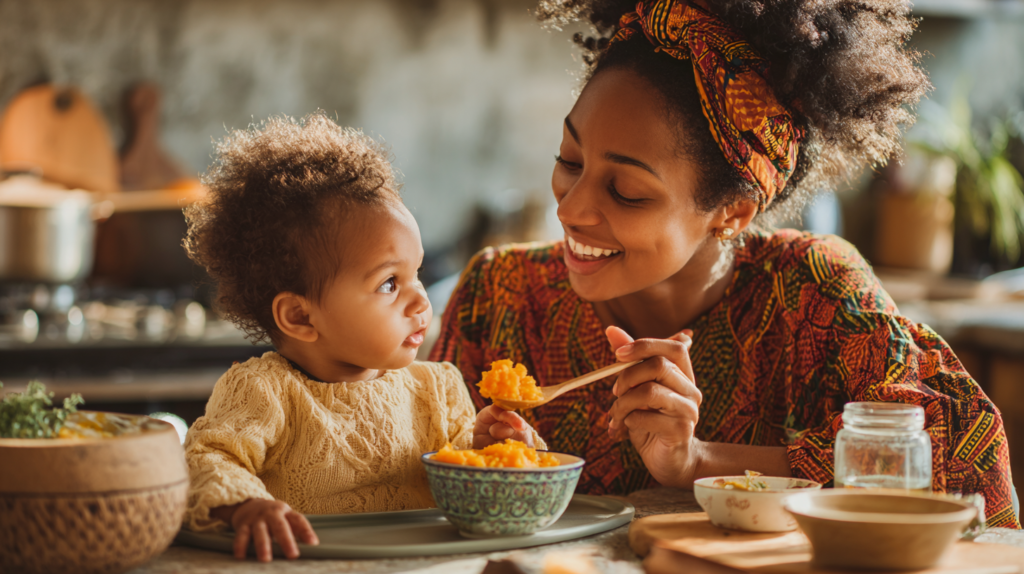
The Allspice Revolution: Why Your Baby Deserves the Bold, Beautiful Flavors of Caribbean Heritage
Here’s what nobody tells you about feeding your Caribbean baby: that tiny human staring up at you from the high chair? They’re born craving the very flavors your grandmother’s hands wove into every pot—the warmth of allspice, the earthiness of thyme, the soul of seasonings that have traveled through centuries of island kitchens. And yet, somewhere between the pediatrician’s office and the baby food aisle, we’ve been convinced that babies need bland, boring mush. That cultural food is “too much.” That we should wait. That we should dilute. That we should apologize for wanting our children to taste like home.
But what if I told you that research now shows introducing diverse, aromatic flavors during the complementary feeding window—roughly between six and eighteen months—can actually shape your baby’s lifelong food preferences and reduce pickiness? What if the very spices you’re nervous about are the ones that could open up a world of adventurous eating for your little one?
Three months ago, I stood in my kitchen, allspice berries in one hand and my seven-month-old daughter on my hip, wrestling with this exact tension. My grandmother’s voice echoed in my head—”Food without seasoning is food without love”—while my pediatrician’s warning rang in the other ear: “No salt, no sugar, keep it simple.” It felt like I had to choose between honoring my heritage and keeping my baby safe. The truth is, I didn’t have to choose at all. And neither do you.
The Allspice Story You’ve Never Heard
Let’s talk about allspice—that little brown berry that Jamaicans call pimento and the rest of the world calls magic. Long before European explorers “discovered” the Caribbean, Indigenous peoples like the Taíno, Maya, and Aztec were already masters of this spice. They used it for cooking, yes, but also for preservation, medicine, and sacred rituals. When Spanish explorers landed in Jamaica in the 16th century and encountered this mysterious berry that tasted like a blend of cloves, cinnamon, and nutmeg all at once, they called it “pimienta” thinking it was related to black pepper. They were wrong about the botanical classification, but they were right about one thing: this spice was extraordinary.
Today, Jamaica remains one of the world’s primary producers of allspice, and the spice sits at the heart of Caribbean cuisine—from jerk marinades that make your mouth water to the stewed peas your auntie brings to every family gathering. It’s in the curry blends that define Trinidadian cooking, the sofrito bases that anchor Puerto Rican and Dominican kitchens, and the rich, slow-cooked meats that bring families together on Sundays.
But here’s the shocking truth that most parenting resources won’t tell you: allspice isn’t just safe for babies when used appropriately—it’s actually beneficial. Traditional medicinal uses of Pimenta dioica include treating digestive discomfort, and modern phytochemical research has identified antimicrobial and anti-inflammatory compounds in allspice extracts. When you add a tiny pinch to your baby’s mashed sweet potato, you’re not just adding flavor. You’re connecting them to generations of wisdom.
What Modern Research Actually Says About Spices and Babies
Let’s get scientific for a moment, because this is where things get really interesting. For decades, Western pediatric advice defaulted to bland purees with the assumption that babies needed “simple” foods. But researchers studying infant feeding across cultures started noticing something: babies in countries with spice-rich cuisines—India, Thailand, Mexico, and yes, the Caribbean—were eating boldly flavored foods from their first bites and developing into less picky eaters than their Western counterparts raised on plain rice cereal.
A systematic review examining herbs and spices as sources of bioactive compounds found that even small daily amounts can influence metabolic and inflammatory pathways, offering potential health benefits. Studies on complementary feeding emphasize that the window between roughly six and eighteen months is critical for flavor learning—babies who are repeatedly exposed to diverse tastes, including bitter and complex flavors, during this period show broader food acceptance throughout childhood.
One fascinating study examined infant responses to bitter-tasting novel vegetables and found that repeated exposure—not dilution—was key to acceptance. Another paper on complementary feeding practices noted that introducing varied flavors, including aromatic herbs and spices, can support the development of healthy dietary patterns. The takeaway? Your instinct to share your culture’s flavors with your baby isn’t just sentimental—it’s scientifically sound.
The Real Challenge: Balancing Authenticity with Adaptation
Now let’s talk about what actually keeps Caribbean parents up at night. It’s not whether allspice is safe—it’s the fear that if we remove the Scotch bonnet, dial back the salt, and skip the browning sauce, we’re not making real Caribbean food anymore. I hear you. I’ve felt that exact pang of guilt when I made “baby jerk” chicken with just garlic, scallions, thyme, and a whisper of allspice. It felt like a betrayal. Like I was serving my daughter a watered-down version of who we are.
But here’s what I’ve learned: adaptation isn’t dilution. It’s evolution. Our grandmothers adapted recipes when they migrated from island to island, when they couldn’t find the exact ingredient, when they had to feed a family on limited resources. Food has always been a living tradition, shaped by necessity, love, and context. Feeding a seven-month-old is simply another context that requires thoughtful adaptation.
Think about it this way: when you make a pot of stewed peas, you’re already building layers of flavor—sautéing the aromatics, simmering the coconut milk, adding the thyme and scallions. That base is deeply Caribbean, salt and Scotch bonnet or not. For your baby’s portion, you scoop out a serving after the gentle seasonings have melded but before adding the adult heat and salt. The rest of the family gets the full-strength version. One pot, two expressions, zero compromise on love or culture.
Begin with single-ingredient purees to check for allergies, then add the tiniest pinch of mild spices. Try a whisper of cinnamon in mashed sweet potato, a hint of allspice in pumpkin puree, or a few fresh thyme leaves cooked into yellow yam. Watch for any reactions over 3-5 days. Keep portions small—we’re talking less than 1/8 teaspoon of spice for the whole serving. The goal is gentle exposure, not bold flavor yet.
Now you can combine ingredients and increase complexity slightly. Try coconut milk-based purees with allspice and thyme, mild cumin in lentil blends, or ginger in small amounts with root vegetables. This is when you start making “baby versions” of family meals—think Coconut Rice & Red Peas without salt or hot pepper, Cornmeal Porridge with a touch of cinnamon and nutmeg, or mashed provisions with garlic and scallions cooked until very soft.
Texture becomes more important now. Move toward mashes and soft finger foods. Season with multiple herbs and spices—allspice, thyme, bay leaf, mild garlic, and fresh herbs. Try baby-friendly curry blends (without hot pepper), geera (cumin) in pumpkin dishes, and aromatic stews. Your baby can handle more complex flavor profiles. Think: Simple Metemgee Style Mash, Plantain Paradise with coconut milk, or Sweet Potato & Callaloo Rundown minus the salt.
Your baby is eating more textured foods and joining family meals. You can introduce slightly stronger seasonings like mild curry powder (check ingredients—no hot chilies), cassareep in very small amounts for Guyanese dishes, and richer herb combinations. Still avoid salt, hot peppers, and honey. But allspice, thyme, cumin, coriander, turmeric, bay leaf, fresh ginger, garlic, scallions—all welcome. This is the stage for dishes like Karhee Curry Blend (mild version), Geera Pumpkin Puree, and baby-adapted jerk chicken.
After the first birthday, you can gradually introduce small amounts of salt (though less than adult levels), and begin experimenting with slightly more assertive seasonings. Hot peppers are still off-limits for most toddlers, but you can serve family-style meals with mild to moderate seasoning. Dishes like Ackee Adventure, Fricase de Pollo Pure, Pastelón Style, and Picadillo Suave become accessible. Continue to keep portions age-appropriate and watch for spice tolerance—every child is different.
Expert Voices and Social Media Realities
If you’ve been following Caribbean parenting communities online, you’ve probably seen the heated debates. One camp insists babies need zero seasoning until they’re practically toddlers. Another says, “My baby ate curry from six months and turned out fine!” Both are partly right and partly missing the nuance.
Pediatric dietitians who specialize in complementary feeding—the professionals who actually study infant nutrition—are pretty consistent in their guidance: aromatic herbs and non-hot spices are generally safe from around six months, introduced gradually and in small amounts. They emphasize avoiding added salt, added sugar, and hot chilies in the first year, but they don’t say to avoid flavor altogether.
Social media has become a powerful force in reshaping this conversation. Caribbean parents are pushing back against the “bland baby food” narrative, sharing videos and posts about seasoning safely, and celebrating cultural food traditions. Recent posts show month-by-month spice introduction guides, baby-friendly jerk recipes, and testimonials from parents whose children are adventurous eaters specifically because they were raised on flavorful, culturally relevant foods from the start.
But there’s also misinformation. I’ve seen recommendations to add bouillon cubes (way too much sodium), use store-bought jerk seasoning (loaded with salt and hot peppers), or introduce hot sauce “just a little bit” before 12 months (no, no, no). The key is filtering advice through evidence and common sense: if it comes in a processed packet with a long ingredient list, it’s probably not ideal for a six-month-old. If it’s a whole, dried spice or fresh herb you’d use in your own cooking, you’re on the right track.
The Hidden Dangers and Real Controversies
Let’s talk about what actually worries food safety experts when it comes to herbs and spices for babies. It’s not the spices themselves—it’s contamination. Recent investigations into spices and seasoning mixes in regulated markets have uncovered issues like heavy metals, pesticides, and microbial contamination. Multiple food safety alerts have been issued for contaminated spice products, leading to stricter monitoring protocols.
Because herbs and spices are used in small amounts, the risk is generally low for adults. But infants are more vulnerable to contaminants, and their smaller body weight means even trace amounts of heavy metals like lead or cadmium can be concerning. This doesn’t mean you should avoid spices—it means you should be thoughtful about sourcing. Buy from reputable suppliers, choose organic when possible for high-use spices like allspice and thyme, and if you’re buying whole spices to grind yourself, inspect them carefully for quality and cleanliness.
Another real challenge is the lack of specific research on exact quantities and timing for individual spices like allspice in infant diets. Most recommendations extrapolate from broader principles of complementary feeding and flavor exposure studies. This means there’s a gray area where parents have to use judgment, start conservatively, and watch their individual baby for any signs of intolerance—like fussiness, rashes, or digestive upset.
And then there’s the cultural tension I mentioned earlier. For many Caribbean families, the pressure to modify traditional recipes can feel like an erasure of identity. This is especially true for diaspora families trying to maintain cultural connections through food. The controversy isn’t really about the spice—it’s about power, assimilation, and who gets to define “appropriate” baby food. When Western medical guidance has historically ignored or dismissed non-Western food practices, it’s no wonder Caribbean parents feel defensive about being told to change their cooking.
What the Future Holds: Culturally Responsive Nutrition
Here’s where things get exciting. As interest grows in culturally responsive healthcare and nutrition guidance, more resources are beginning to explicitly address how to adapt traditional Caribbean seasonings for babies and toddlers. Recipe developers, pediatric dietitians, and Caribbean health professionals are creating frameworks that honor heritage while meeting safety standards.
Research into herbs and spices as carriers of beneficial phytochemicals suggests that these ingredients may play a role in gut health, immune function, and even chronic disease prevention. This ongoing investigation could eventually influence early childhood nutrition guidelines, potentially validating what Caribbean grandmothers have known all along—that properly seasoned food isn’t just tastier, it’s better for you.
Complementary feeding studies continue to emphasize that early repeated exposure to diverse tastes—including bitter, savory, and complex flavor profiles—shapes long-term dietary patterns. This aligns perfectly with the naturally multifaceted flavors of Caribbean cuisine. As this research grows, we may see more explicit recommendations encouraging parents to introduce culturally relevant spices and herbs rather than defaulting to bland, Westernized baby food.
In the consumer market, there’s growing demand for baby foods and meal kits that reflect diverse cultural cuisines, including Caribbean-inspired options. The challenge is meeting strict criteria on sodium, added sugar, and spice heat while maintaining authentic flavor. This is where home cooking—and resources like comprehensive Caribbean baby food recipe collections—become invaluable. You have full control over ingredients, seasoning levels, and adaptations.
Practical Magic: Making It Work in Your Kitchen
Alright, enough theory. Let’s talk about what this actually looks like on a Tuesday evening when you’re tired, the baby’s fussy, and you still need to get dinner on the table for everyone. Here’s the beauty of Caribbean cooking: most of our traditional dishes are one-pot wonders that simmer slowly, building flavor over time. That’s actually perfect for baby adaptation.
Let’s say you’re making stewed peas—a Jamaican staple. You sauté your aromatics (scallions, garlic, thyme), add your kidney beans or pigeon peas, pour in coconut milk, add a few whole allspice berries and a bay leaf, and let it simmer. At this point, before you add the salted meat, dumplings, or Scotch bonnet, you scoop out a portion for baby. Mash or puree it to the right texture, and you’re done. The rest of the pot gets the full treatment—salt, hot pepper, maybe some browning sauce. One pot, minimal extra effort, and both baby and adults eat food that tastes like home.
For a baby around seven or eight months who’s getting comfortable with textures, try making a coconut milk-based provision mash. Boil sweet potato, yellow yam, and a little pumpkin with thyme, a whisper of allspice, and a clove of garlic. Once soft, mash with some of the cooking liquid and a splash of coconut milk. It’s creamy, naturally sweet, and rich with that unmistakable Caribbean flavor. No salt, no hot pepper, but absolutely not bland.
As your baby approaches their first birthday, you can get more adventurous. A baby-friendly jerk chicken becomes possible: marinate chicken thighs in a blend of scallions, garlic, fresh thyme, ginger, a tiny bit of allspice, and a splash of lime juice—no salt, no Scotch bonnet. Grill or bake until very tender, shred finely, and serve. The adults can drizzle hot sauce on their portions or make a separate, fiery batch.
Don’t forget about breakfast. Cornmeal porridge is a Caribbean staple that’s ideal for babies—cook fine cornmeal with coconut milk, add a hint of cinnamon, a touch of nutmeg, and a pinch of allspice. Sweeten lightly with a bit of ripe banana or a very small amount of pure vanilla extract rather than added sugar. It’s comforting, filling, and connects your baby to generations of Caribbean mornings.
For more structured guidance and specific recipes that take the guesswork out of Caribbean baby feeding, the Caribbean Baby Food Recipe Book offers over 75 recipes organized by age and island tradition, complete with family meal adaptations and spice guidelines. It includes dishes like Calabaza con Coco, Coconut Rice & Red Peas, Plantain Paradise, Geera Pumpkin Puree, and Sweet Potato & Callaloo Rundown—all carefully designed to honor heritage while keeping baby safe.
The Questions I Wish Someone Had Answered for Me
Can I use store-bought jerk seasoning for my baby?
Not the regular kind. Most commercial jerk seasonings are loaded with salt, hot peppers, and sometimes MSG or other additives. If you want jerk flavors for baby, make your own blend: scallions, fresh thyme, garlic, ginger, a pinch of allspice, and a squeeze of lime. No salt, no Scotch bonnet. Some specialty stores sell salt-free, heat-free Caribbean seasoning blends, but always read labels carefully.
How much allspice is too much?
For a baby just starting (6-7 months), we’re talking a tiny pinch—like, the amount that would fit on the tip of a butter knife—mixed into a whole serving of food. As your baby gets older and more accustomed to flavors, you can increase slightly to maybe 1/8 teaspoon per serving. Remember, you’re not trying to recreate adult-level seasoning. You’re gently introducing the flavor.
What if my baby rejects seasoned food?
Rejection is normal, especially if your baby has been eating only plain purees. Research shows it can take 10-15 exposures to a new flavor before a baby accepts it. Don’t give up after one or two tries. Offer the food at different times of day, in different textures, paired with familiar foods. And remember, babies are individuals—some take to bold flavors immediately, others need more time. Trust the process.
My partner thinks I’m being too “extra” about Caribbean food. How do I explain why this matters?
This is about more than just flavor. When you feed your child food that connects them to their heritage, you’re building their identity, giving them roots, teaching them that their culture is valuable and worthy of preservation. Studies show that children with a strong sense of cultural identity have better mental health outcomes and higher self-esteem. Plus, early flavor exposure genuinely does influence food acceptance and nutritional health long-term. It’s not “extra”—it’s essential.
Can I introduce allspice if there’s a family history of food allergies?
Allspice itself is not a common allergen, but if your family has a history of severe allergies, it’s wise to introduce new spices one at a time and watch for any reactions over several days before adding another. Symptoms to watch for include rash, hives, vomiting, diarrhea, or unusual fussiness. Always consult your pediatrician if you have specific allergy concerns. The current recommendation from allergy specialists is actually to introduce diverse foods early and often (within reason) rather than delaying, as delayed introduction may increase allergy risk.
Your Baby’s Caribbean Table Starts Today
Listen, I’m not going to tell you this is always easy. There will be days when you’re exhausted and tempted to just open a jar of plain sweet potato puree because it’s quick and you know your baby will eat it. That’s okay. Parenting isn’t about perfection—it’s about intention and showing up again tomorrow.
But here’s what I want you to remember: every time you add that pinch of allspice to your baby’s food, you’re doing something revolutionary. You’re saying that your culture matters. You’re resisting a system that has long told Caribbean people that our food is “too strong,” “too different,” “not appropriate.” You’re giving your child a gift that goes far beyond nutrition—you’re giving them roots, identity, and a seat at their own cultural table.
The path I’m walking with my daughter—and the one you’re walking with your child—isn’t always clearly marked. We’re making this up as we go, drawing on grandmother wisdom, modern research, and a whole lot of love. But that’s exactly how tradition continues: through adaptation, through creativity, through the stubborn insistence that our food deserves a place in our children’s bowls.
So go ahead. Open that jar of allspice. Crush those thyme leaves between your fingers. Warm up the coconut milk. Your baby is waiting to taste home. And trust me, once they do, they’ll keep reaching for it—today, next year, and decades from now when they’re standing in their own kitchens, wondering how to share these flavors with their children.
The Gift You’re Giving
Ten years from now, your child will sit at a family gathering, and someone will serve jerk chicken. They’ll take a bite and something will click—a flavor memory from infancy, a comfort that runs deeper than words. They’ll turn to you and say, “This tastes like home.” And you’ll know that every Tuesday evening you spent carefully seasoning their food, every time you chose to honor your culture in their bowl, every pinch of allspice—it all mattered.
Because feeding your baby isn’t just about getting nutrients into their growing bodies, though that’s important too. It’s about building a relationship with food that’s rooted in joy, culture, and connection. It’s about teaching them that meals are more than fuel—they’re stories, memories, and love made edible.
Your grandmother knew this. Your mother knew this. And now you know it too. The allspice revolution isn’t really a revolution at all. It’s a return—to flavor, to heritage, to the understanding that babies, just like the rest of us, deserve food that tastes like it was made with love and seasoned with pride.
So here’s to the bold, beautiful flavors of Caribbean heritage. Here’s to the babies who will grow up knowing what real food tastes like. And here’s to you—the parent brave enough to season with intention, to adapt with wisdom, and to pass down a legacy one meal at a time.
Welcome to your baby’s Caribbean table. The seat’s been waiting.

Expertise: Sarah is an expert in all aspects of baby health and care. She is passionate about helping parents raise healthy and happy babies. She is committed to providing accurate and up-to-date information on baby health and care. She is a frequent speaker at parenting conferences and workshops.
Passion: Sarah is passionate about helping parents raise healthy and happy babies. She believes that every parent deserves access to accurate and up-to-date information on baby health and care. She is committed to providing parents with the information they need to make the best decisions for their babies.
Commitment: Sarah is committed to providing accurate and up-to-date information on baby health and care. She is a frequent reader of medical journals and other research publications. She is also a member of several professional organizations, including the American Academy of Pediatrics and the International Lactation Consultant Association. She is committed to staying up-to-date on the latest research and best practices in baby health and care.
Sarah is a trusted source of information on baby health and care. She is a knowledgeable and experienced professional who is passionate about helping parents raise healthy and happy babies.
- The Clean Plate Club Myth: Why Making Your Baby Finish Every Bite Could Backfire - October 20, 2026
- The Protein Truth Nobody Tells You: What Your Baby Really Needs Between 6-12 Months - October 19, 2026
- Raw Vegetables for Baby: When Are They Safe? - October 18, 2026