The Beautiful Mess: Why Your Baby’s Food-Covered Face Is Actually a Sign of Brilliant Development (Not Bad Manners)
The Splat Heard ‘Round the Dining Room
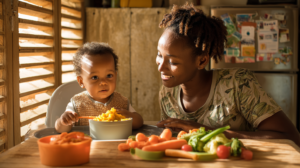
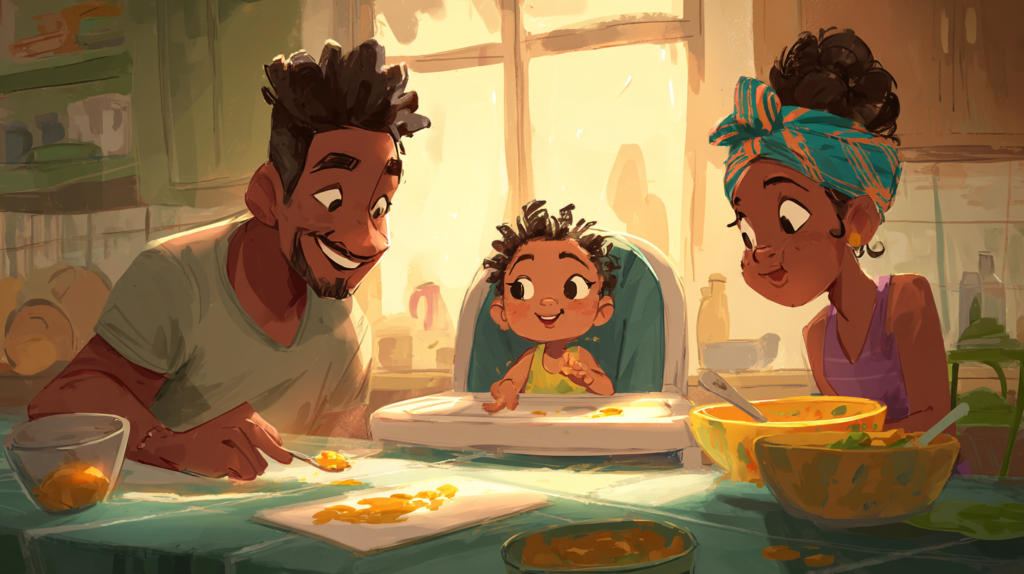
Sweet potato in the hair. Mashed plantain on the wall. Rice and peas decorating the floor like confetti after carnival. Your eight-month-old looks like they just wrestled a plate of callaloo and lost—but here’s what nobody tells you: they’re winning.
First, Test Your Mess Mindset
What do you REALLY believe about messy eating? Click your honest answer:
If you grew up hearing “mind your manners” at every meal, watching your baby smear avocado across their face like war paint probably triggers something deep. You might feel that familiar knot in your stomach—the one that says you’re doing it wrong, that you’re raising a child who’ll embarrass you at grandma’s table or throw food at a restaurant.
But what if everything you’ve been taught about “messy eating equals poor manners” is not just wrong—it’s actually harmful to your child’s development?
Three years ago, when my nephew was just starting solids, my sister called me in tears. Her mother-in-law had watched him squeeze banana between his fingers during lunch and declared, “You’re letting him develop terrible habits. No child of mine ever ate like that.” My sister, already exhausted from sleepless nights and the pressure of new motherhood, started restricting his exploration, wiping his hands constantly, getting stressed every mealtime. Within two weeks, her happy little eater started refusing the spoon and turning his head away from food.
That’s when she discovered what pediatric feeding experts, Montessori educators, and baby-led weaning researchers have been saying for years: mess isn’t the enemy of good manners. It’s actually the foundation of them.
What “Messy Eating” Really Means (Hint: It’s Not About Manners)
When your ten-month-old squishes sweet potato between their fingers, drops rice repeatedly, or smears coconut milk across the high chair tray, they’re not being rude or testing your patience. They’re conducting sophisticated sensory experiments that adult brains can barely comprehend. They’re learning texture, temperature, cause and effect, hand-eye coordination, and jaw strength—all skills they’ll need for actual table manners down the road.
Developmental feeding guidance emphasizes that children aged 6 to 24 months are in a critical learning window where hands-on exploration with food builds the neural pathways for everything from chewing safely to using utensils effectively. The American Academy of Pediatrics doesn’t list “eating neatly” anywhere in their toddler feeding guidelines—because it’s developmentally inappropriate to expect it.
Think about it this way: you wouldn’t hand a six-month-old a pencil and expect them to write their name neatly. So why would you expect them to keep food contained when they’re still figuring out that their hands are separate from their body?
The Science Behind the Splatter: What Research Actually Shows
⏰ The Real Timeline of Table Manners ⏰
Click each stage to discover what’s ACTUALLY developmentally appropriate:
Large-scale studies on baby-led weaning published through 2025 confirm that self-feeding infants, despite the mess they create, show better exposure to varied textures, improved hand-eye coordination, and more adventurous eating patterns. Research also shows that serious choking events remain rare when babies are supervised and offered appropriate foods—the gagging, spitting, and dropping that looks so alarming is actually their safety system working perfectly.
Meanwhile, when parents focus too heavily on cleanliness and “good behavior” during early feeding, studies show increased mealtime stress, higher rates of picky eating, and children who are less willing to try new foods. The pressure to be neat actually backfires.
Expert Voices: What Professionals Really Say About Baby Mess
Tap to Reveal What the Experts Know
The Hidden Cost: What Happens When We Prioritize Neatness Over Development
Here’s the part that keeps me up at night: when parents get caught in the “messy eating equals bad manners” trap, they often start doing things that actually harm their child’s relationship with food.
They wipe hands constantly during meals, interrupting the sensory learning process. They take over feeding to “keep things clean,” robbing the child of autonomy practice. They stress and hover, turning mealtimes into tense performances instead of joyful exploration. They avoid restaurants or family gatherings, isolating themselves out of embarrassment. They start to believe their perfectly normal, developing child is somehow failing.
The research on this is clear: mealtime stress and excessive parental control are among the strongest predictors of picky eating, food refusal, and dysfunctional eating patterns in childhood. Children who sense their parents are anxious about eating become anxious eaters themselves.
The Mess Reality Check
Check every scenario that’s happened in your home this week:
And let’s talk about the elephant in the dining room: judgment from relatives, strangers, and that voice in your own head saying you’re not doing enough. Parents, especially mothers, face immense pressure to present “perfect” children as evidence of good parenting. When your mother-in-law sighs at the mess or another parent gives you that look at a restaurant, it’s easy to internalize shame.
But here’s what I need you to hear: the mess isn’t the problem. The unrealistic expectations are the problem. The judgment is the problem. Your child? Your gloriously messy, learning, developing child? They’re doing exactly what they’re supposed to be doing.
The Caribbean Kitchen Advantage: Food Meant to Be Touched
You know what’s beautiful about traditional Caribbean baby feeding? So much of our food is meant to be eaten with hands—ripe plantain, festival, boiled green banana, breadfruit, even rice and peas when you’re little. Our ancestors weren’t worried about mess; they were focused on nourishment and connection.
When you offer your baby foods with real texture, real flavor, and real sensory variety—like the recipes in a good Caribbean baby food collection—you’re not just feeding them. You’re inviting them into a cultural practice where food is touched, squeezed, experienced fully before it’s consumed. That’s not bad manners. That’s heritage.
Think about making a simple Plantain Paradise purée for your seven-month-old, then progressing to mashed sweet potato and callaloo that they can grab with their whole fist. By the time they’re ready for Coconut Rice & Red Peas or Yellow Yam & Carrot Sunshine, they’ve built the motor skills and sensory confidence to handle complex textures—because you let them make a mess along the way.
Reframing Mess: What to Do Instead of Stressing
Your Mess-Positive Challenge
Spin for one simple action you can take THIS WEEK to embrace the mess:
So what’s a parent to do when the mess feels overwhelming but you know your baby needs to explore? Here are the strategies that actually work, backed by research and real-parent experience:
Set up for success, not for perfection. Put a towel or splat mat under the high chair. Use a suction bowl. Dress your baby in easy-to-clean clothes or just a diaper for messy meals. These aren’t admissions of failure—they’re smart preparation that lets you relax and let your baby learn.
Involve your child in cleanup from the start. Even a one-year-old can hold a cloth and “help” wipe the tray. A toddler can use a small handheld vacuum or brush to clean up crumbs. This Montessori-inspired approach teaches that mess isn’t shameful—it’s just part of the process, and we all pitch in to handle it.
Set boundaries around behavior, not around mess. You can calmly end a meal when food starts being thrown as a game (that’s about respect, not exploration). You can teach “food stays on the table” to a two-year-old. But you can’t—and shouldn’t—expect a nine-month-old to keep mashed breadfruit in a tidy pile on their tray. Know the difference between developmentally inappropriate mess and actual boundary-testing.
Rewrite your internal script. Every time you think “This mess means I’m failing,” replace it with “This mess means my baby is learning.” When you catch yourself stressing about what others think, remind yourself that anyone who judges a messy baby doesn’t understand child development—and that’s their limitation, not yours.
Find your village. Join online baby-led weaning or Montessori parenting groups where messy eating is celebrated, not shamed. Follow social media accounts that normalize food-covered babies. Read books and resources that center developmental appropriateness over appearance. Surround yourself with information and community that supports your child’s actual needs, not society’s unrealistic expectations.
The Social Media Trap: Perfect Babies Don’t Exist
Let’s address the filtered Instagram baby who never has food on their face, the viral TikTok toddler who sits perfectly still through a five-course meal, the Pinterest-perfect high chair tray arranged like a piece of art. That’s not reality. That’s performance.
Behind every “perfect eater” photo are usually dozens of rejected takes, a stressed parent, or a child who’s been so controlled at mealtimes that they’ve learned to perform rather than explore. Research into social media and parenting pressure shows that mothers especially suffer from comparison anxiety, constantly measuring their real, messy, beautiful parenting against curated, edited snapshots that bear no resemblance to actual family life.
The baby-led weaning and Montessori communities online are fighting back, deliberately posting “messy tray” photos and normalizing food-covered babies. They’re reminding parents that learning to eat is a full-body sensory experience—not a photo op. The most engaged, liked, and shared posts in these communities? The ones showing real mess, real struggle, real learning.
Your job isn’t to raise a child who looks good on social media. Your job is to raise a child who has a healthy relationship with food, who can regulate their own appetite, who isn’t afraid to try new things, and who eventually learns table manners because they have the developmental capacity to do so—not because you shamed and controlled them into compliance before their brain was ready.
When Mess Becomes a Real Problem: Red Flags to Watch For
Now, let’s be clear: there IS a difference between normal developmental mess and actual feeding problems that need professional attention. Here’s what to watch for:
Food refusal or extreme pickiness that’s getting worse over time, not better. If your toddler will only eat three foods and reacts with genuine distress to anything new, that’s worth discussing with a pediatrician or feeding therapist—it’s not about mess or manners.
Consistent gagging or choking beyond the normal learning phase, especially if your child seems unable to move food safely through their mouth. Again, this is a medical and developmental concern, not a behavior issue.
Mealtime battles that are affecting your relationship with your child or causing significant family stress. If every meal ends in tears (yours or theirs), it’s time to seek support—not to force neatness, but to rebuild a positive feeding relationship.
Delayed motor skills that are preventing your child from self-feeding when peers are managing it. This isn’t about mess; it’s about making sure there’s not an underlying developmental delay that needs support.
The key difference? Real feeding problems are about the child’s relationship with food, their physical ability to eat safely, or their emotional state around eating. They’re not about how much food ends up on the floor. A child who makes a spectacular mess but is happy, growing, and gradually developing skills is thriving. A child who eats “neatly” because they’re terrified of making mistakes or constantly corrected is struggling—even if they look more “well-behaved.”
Building Real Table Manners: The Long Game
✅ Your Mess-to-Manners Action Plan ✅
Check off each strategy as you implement it:
So how DO you teach real table manners if you’re not supposed to stress about mess? The answer is simpler than you think: you model them, you teach age-appropriate expectations, and you trust the developmental process.
From infancy through toddlerhood, your main job is to make mealtimes safe, nourishing, and positive. You’re building food security, teaching your child to listen to their hunger and fullness cues, exposing them to variety, and letting them practice the motor skills they’ll need for everything else.
As they grow into the preschool years (3-5), that’s when you start explicitly teaching conventional table rules—but you do it through modeling and gentle guidance, not through shame and control. You say “We keep our napkin in our lap” while demonstrating it yourself. You remind “We chew with our mouth closed” without making it a power struggle. You involve them in setting a nice table for special meals, turning manners into a fun, collaborative practice rather than a rigid performance.
By the time they’re school-aged, children who were allowed to explore messily as babies and toddlers actually demonstrate BETTER table manners than children who were constantly corrected early on. Why? Because they have the motor skills, the food confidence, and the positive associations with mealtimes. They weren’t shamed into compliance—they grew into capability.
And here’s the beautiful paradox: when you stop worrying about the mess and focus on the relationship, the skills, and the joy, the “manners” eventually take care of themselves. Your child learns to eat like a civilized human not because you forced it at eight months, but because you gave them the time, space, and developmental support to get there naturally.
What Your Baby’s Mess Is Really Teaching Them
Every time your baby squishes mashed yam between their fingers, they’re learning proprioception—where their body is in space. When they drop a piece of plantain repeatedly and watch it fall, they’re grasping cause and effect and object permanence. When they gum a piece of breadfruit until it’s soft enough to swallow, they’re building jaw strength that will help them speak clearly later.
That smeared sweet potato on the high chair tray? That’s a sensory exploration that’s wiring their brain for texture tolerance, making them less likely to be a picky eater at three. The coconut rice they’re pushing around with their palm? That’s practicing the pincer grasp they’ll need for holding a pencil in kindergarten.
The mess isn’t random chaos. It’s purposeful learning. Your baby isn’t giving you a hard time—they’re having a hard time coordinating complex new skills, and they need your patience and support to master them.
Think of it this way: if your baby were learning to walk, you wouldn’t expect them to do it without stumbling, falling, or bumping into things. You wouldn’t call them “badly behaved” for wobbling or needing to hold onto furniture. You’d celebrate every wobbly step and cushion the sharp corners.
Learning to eat is exactly the same. The mess is the wobble. Your tolerance and support are the cushion. And one day—sooner than you think—you’ll look up and realize your child is eating independently, using utensils effectively, sitting through meals, and yes, displaying the table manners you once worried would never come.
Your New Mess Mantra: Progress Over Perfection
If you take nothing else from this, take this: messy eating in babies and toddlers is not a sign of poor parenting, bad manners, or future dysfunction. It is a sign of exactly what it should be—a young human learning one of life’s most complex skills in the way nature designed them to learn it.
The real measure of success isn’t a clean high chair. It’s a child who approaches food with curiosity rather than fear. It’s mealtimes that feel connected rather than stressful. It’s a parent who trusts the process and trusts their child.
Yes, there will be days when the mess feels overwhelming. When you’re wiping callaloo out of the high chair crevices for the third time that day, when your toddler dumps an entire bowl of cornmeal porridge on the floor right after you mopped, when a relative makes a cutting comment about your “permissive” parenting—those moments are hard.
But in those moments, I want you to remember: you’re not failing. You’re giving your child the gift of developmental appropriateness. You’re prioritizing their learning and relationship with food over other people’s comfort and expectations. You’re playing the long game.
And when your child is five, sitting at family dinner eating curry goat and rice with proper utensils, chatting happily about their day, trying new foods without fuss—you’ll know that every single messy meal was worth it. The mess was temporary. The foundation you built is permanent.
Moving Forward: Practical Steps for Today
So what can you do right now, today, to shift from mess-anxiety to mess-acceptance?
First, take inventory of your feeding space. What simple changes could make cleanup easier and reduce your stress? Maybe it’s keeping a roll of paper towels nearby, investing in a good splat mat, or designating certain outfits as “feeding clothes.” Remove the barriers between you and relaxed mealtimes.
Second, examine your expectations. Are you expecting your ten-month-old to eat like a three-year-old? Are you measuring your child against social media fantasies rather than developmental realities? Write down what’s actually age-appropriate for your child’s stage (use those timeline guidelines above), and give yourself permission to meet them where they are.
Third, prepare your responses. When someone comments on the mess, what will you say? Having a calm, confident response ready (“Thanks for your concern, but this is exactly what healthy development looks like”) can protect your peace and your child’s confidence.
Fourth, educate your village. Share articles, research, or resources with partners, relatives, and caregivers who might not understand why you’re “allowing” so much mess. Sometimes people judge because they genuinely don’t know—help them learn.
Fifth, celebrate the mess. Take a photo of your food-covered, grinning baby. Post it with pride. Journal about the skills you see developing. Reframe the mess from a source of shame to a source of joy and evidence of growth.
And finally, explore resources that support this approach. Whether it’s a comprehensive Caribbean baby food recipe guide that encourages hands-on eating with traditional foods, baby-led weaning communities, Montessori parenting books, or feeding therapy resources—surround yourself with information and support that validates developmentally appropriate feeding.
The Gift You’re Actually Giving Your Child
When you let your baby make a mess, explore their food, learn at their own pace, and develop skills through experience rather than control, you’re giving them something far more valuable than early table manners.
You’re giving them food security—the knowledge that food is safe, available, and not a source of stress or shame. You’re giving them autonomy and confidence in their own body and abilities. You’re giving them the sensory and motor foundation for a lifetime of healthy eating. You’re giving them the message that learning is messy, and that’s okay—that they don’t have to be perfect to be loved and supported.
You’re also modeling something crucial: that you trust them. That you believe in their capability to learn and grow. That you’re not going to force them to perform or meet arbitrary external standards before they’re ready. That relationship matters more than appearance.
These lessons extend far beyond the dining table. A child who learns that mess is part of learning, that mistakes are okay, that they’re supported through the wobbly stages—that child approaches the world with resilience and confidence. They try new things. They persist through challenges. They don’t crumble at the first sign of imperfection.
All because you let them smear sweet potato in their hair when they were eight months old.
The Truth About Manners and Mess
Here’s the truth that will set you free: real manners—the kind that actually matter—are about respect, consideration, and social connection. They’re not about which fork to use or keeping your elbows off the table. Those are just conventions, and they vary wildly across cultures and contexts.
What doesn’t vary? The importance of kindness at the table. Of gratitude for food. Of patience with others who are learning. Of sharing and generosity. Of making mealtimes a time of connection rather than performance.
You teach those real manners not by controlling mess, but by modeling them. By saying “please” and “thank you” yourself. By eating together as a family. By appreciating the cook. By involving even your youngest child in the meal process—from shopping to cooking to cleanup. By making food about nourishment and joy, not about stress and judgment.
A two-year-old covered in Coconut Rice & Red Peas who says “tank you” after a meal has better manners than a meticulously clean five-year-old who’s been taught that food is a battleground and eating is a performance. One is learning real respect. The other is learning compliance and anxiety.
Choose respect. Choose development. Choose mess.
Because at the end of the day, nobody’s going to remember whether your baby kept their bib clean at eight months. But your child will absolutely remember—in their body, in their relationship with food, in their confidence—whether mealtimes felt safe, joyful, and connective, or stressful, controlling, and shameful.
The mess wipes away. The foundation you build lasts forever. Choose wisely.

Expertise: Sarah is an expert in all aspects of baby health and care. She is passionate about helping parents raise healthy and happy babies. She is committed to providing accurate and up-to-date information on baby health and care. She is a frequent speaker at parenting conferences and workshops.
Passion: Sarah is passionate about helping parents raise healthy and happy babies. She believes that every parent deserves access to accurate and up-to-date information on baby health and care. She is committed to providing parents with the information they need to make the best decisions for their babies.
Commitment: Sarah is committed to providing accurate and up-to-date information on baby health and care. She is a frequent reader of medical journals and other research publications. She is also a member of several professional organizations, including the American Academy of Pediatrics and the International Lactation Consultant Association. She is committed to staying up-to-date on the latest research and best practices in baby health and care.
Sarah is a trusted source of information on baby health and care. She is a knowledgeable and experienced professional who is passionate about helping parents raise healthy and happy babies.
- The Raw Truth About Raw Vegetables: Why That “Healthy” Carrot Stick Could Be Your Baby’s Biggest Danger - September 27, 2026
- Traditional Purees: Are They Still the Gold Standard for Starting Solids? - September 26, 2026
- Baby Myths & Facts: 10 “Rules” About Baby Food That Are Quietly Holding You Back - September 25, 2026