Creating Food Traditions That Last: Building a Family Food Culture Worth Inheriting
Click to discover what your childhood food memories reveal about your family’s hidden traditions…
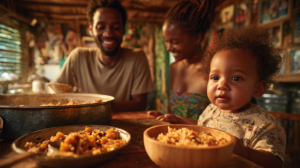
Here’s something most parenting advice won’t tell you: your child won’t remember the expensive toys you bought them or the pristine playroom you maintained. But they will remember the way your kitchen smelled on Saturday mornings. They’ll remember the stories told between bites of dinner. They’ll remember the ritual of licking the spoon after you made that special cake together.
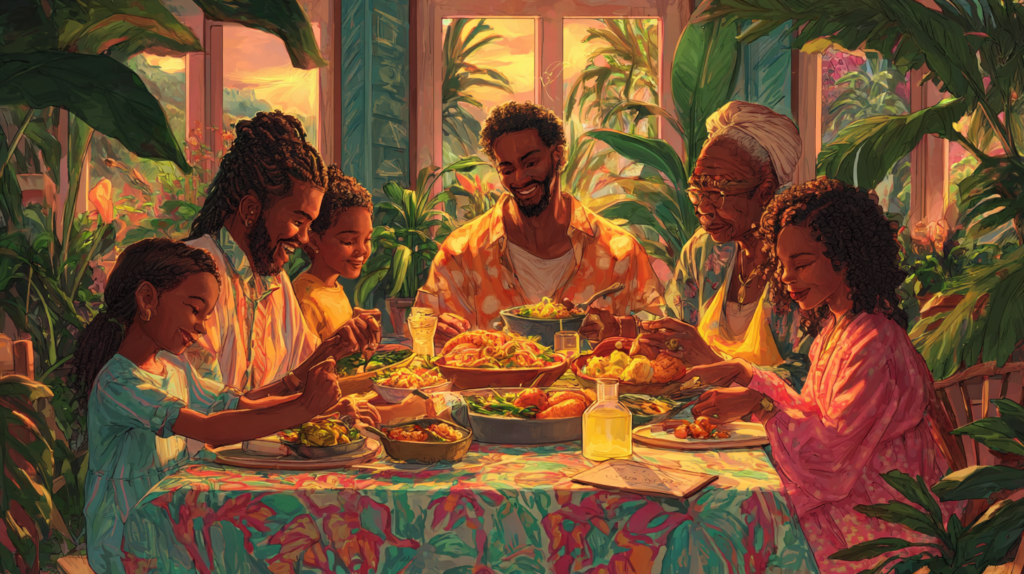
I learned this truth not from a parenting book, but from my own grandmother’s kitchen in Kingston, where the scent of curry goat simmering on the stove wasn’t just about feeding hungry bellies—it was about weaving together past, present, and future with every stir of the pot. When she passed down her recipe for coconut rice and peas, she wasn’t just sharing measurements and cooking times. She was handing me an inheritance more valuable than gold: belonging.
Family food traditions aren’t about perfection or Pinterest-worthy presentations. They’re about creating anchors in the chaos of modern life—small, repeated moments that tell your children, “This is who we are. This is where you come from. This is home.”
The Hidden Crisis: Why We’re Losing Our Food Culture
In 2023, researchers discovered something alarming: one in four Americans ate all their meals alone the previous day. That’s a 53% increase since 2003, and the trend is accelerating fastest among younger generations. We’re not just eating alone—we’re losing the connective tissue that holds families together.
But here’s where it gets interesting. The problem isn’t that we don’t want connection. It’s that we’ve been sold a lie: that family meals are about the food itself, about checking a box that says “good parent.” We’ve turned dinner into another task on an endless to-do list, another place where we can fail if the chicken is dry or the vegetables are overlooked.
The truth? Family food traditions aren’t meal preparation—they’re relationship investments. Every repeated ritual, every recipe passed down, every story told over a shared plate deposits into an emotional bank account that your children will draw from for the rest of their lives.
The Research Backs This Up: Studies consistently show that families who eat together three or more times per week see improved mental health outcomes, greater resilience, and stronger emotional bonds. The American Academy of Pediatrics now recommends regular family dinners as preventive medicine for childhood development.
Yet we’re moving in the opposite direction. Fast food, solo eating, and the fragmentation of family time have eroded what was once automatic. Our grandparents didn’t need to “make time” for family meals—they were simply how life was structured. Today, we have to fight for them.
The Architecture of Lasting Food Traditions
Creating food traditions that endure requires understanding their structure. Meaningful family food culture rests on four pillars: ritual consistency, sensory anchors, narrative threads, and participatory ownership. Let’s break down each one.
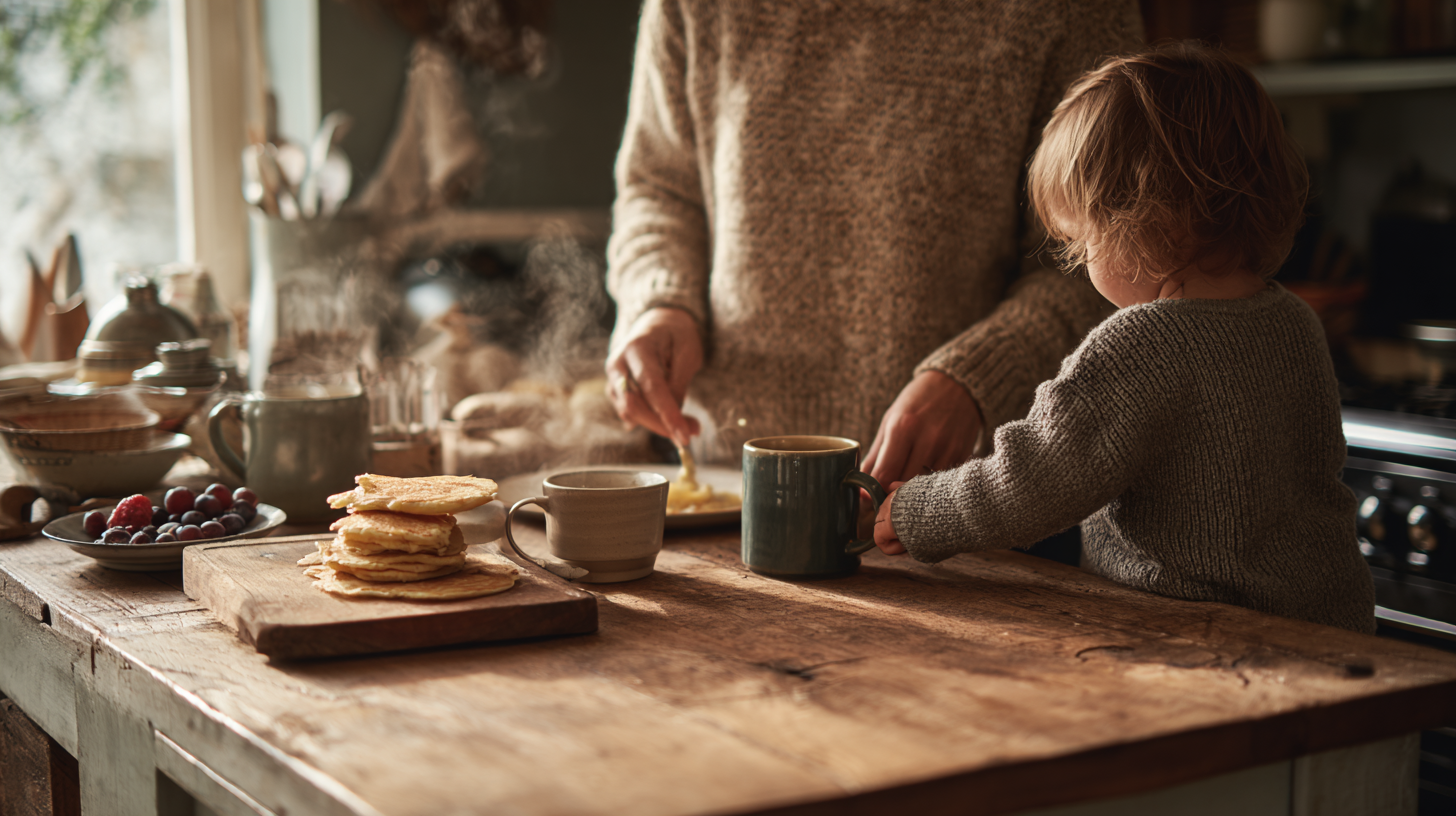
Ritual Consistency doesn’t mean rigid schedules—it means creating dependable patterns. Maybe it’s Pancake Saturday, where every Saturday morning involves flour dust on the counter and syrup-sticky fingers. Maybe it’s Worldwide Wednesday, where you explore a different culture’s cuisine each week. The magic isn’t in what you do—it’s in the predictable repetition that becomes a touchstone for your family.
One mother I know started “Meatless Monday” when her daughter was three. Fifteen years later, her daughter—now in college—texts her every Monday asking, “What are you making?” The tradition outlasted childhood because it became part of their family’s identity.
Select your current reality to see how small changes create massive memories…
Sensory Anchors are what make traditions stick in memory. Our brains are wired to remember experiences tied to smell, taste, touch, sound, and sight. This is why my grandmother’s curry recipe isn’t just ingredients—it’s the sizzle of onions hitting hot oil, the earthy scent of fresh thyme, the vibrant yellow of turmeric staining the wooden spoon.
When you’re building traditions, think multi-sensory. Play specific music during meal prep. Use your hands to knead dough together. Tell the same stories in the same way. These sensory details become triggers that instantly transport your children back home, no matter where life takes them.
Narrative Threads transform meals from fuel into legacy. Every family recipe has a story—where it came from, who made it first, why it matters. When you share these stories, you’re doing something profound: you’re placing your children within a larger narrative that extends before them and will continue after them.
My great-grandmother made a simple coconut cornmeal porridge every Sunday. Nothing fancy. But she’d tell us about making it as a child in rural Jamaica, using coconut milk she’d pressed herself, sweetening it with cane sugar her father grew. That porridge became a portal to another time, another place—a direct link to ancestors we’d never meet.
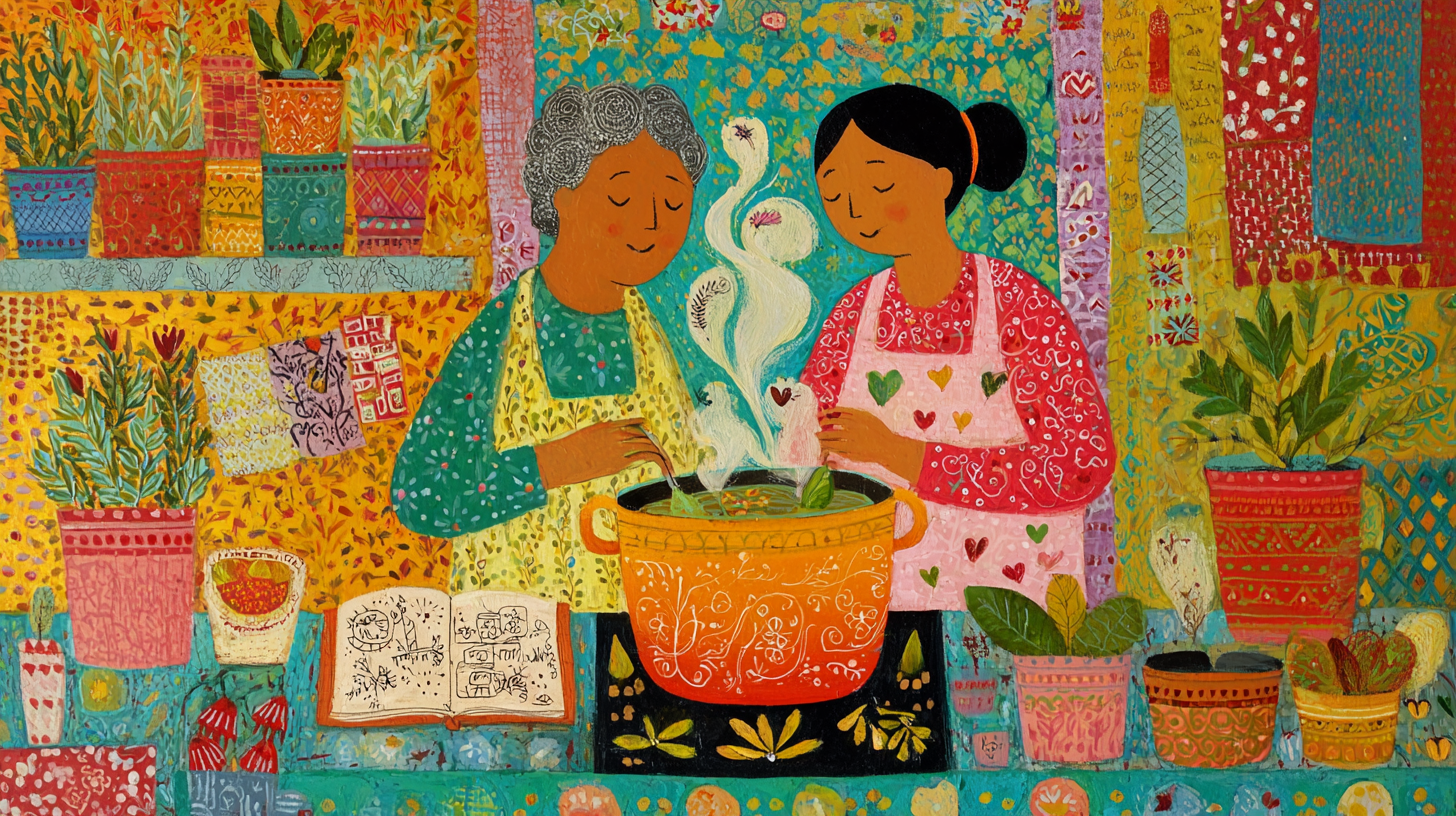
Participatory Ownership means letting your children help shape traditions, not just receive them. Kids who participate in choosing recipes, helping cook, or deciding which traditions to keep are far more likely to continue those traditions into adulthood.
Here’s where many parents get stuck. We wait for the perfect moment, the perfect recipe, the perfect schedule. But traditions aren’t built in perfection—they’re built in doing. They’re created by walking, by trying, by failing and adjusting and trying again.
Starting From Scratch: Your First Tradition Toolkit
Let’s get practical. You’re convinced that food traditions matter, but your current reality looks like rushed dinners, takeout containers, and everyone eating at different times. Where do you even begin?
Start absurdly small. I mean it. Don’t try to overhaul your entire family eating pattern overnight. Pick one meal, one day per week. That’s it. Make it non-negotiable and make it doable.
Here are proven starter traditions that work even for the busiest families:
- Sunday Breakfast Ritual: Choose one breakfast dish and make it every Sunday. Let kids help in age-appropriate ways. A 2-year-old can stir batter. A 5-year-old can crack eggs (messily). A 10-year-old can manage the whole process with supervision. The recipe doesn’t matter—consistency does.
- Wednesday World Tour: Every Wednesday, explore food from a different culture. Use it as a chance to teach geography, history, and empathy. Make it interactive—let kids pick the country, help research the dish, taste-test the results. If you want to introduce your little ones to bold, authentic flavors early, the Caribbean Baby Food Recipe Book offers over 75 recipes perfect for babies 6 months and up, featuring dishes like Sweet Potato & Callaloo Rundown and Coconut Rice & Red Peas.
- Friday Pizza from Scratch: Making pizza from scratch sounds intimidating, but it’s actually forgiving and fun. Kids love pounding dough, spreading sauce, choosing toppings. The mess is part of the magic. Fifteen years from now, they won’t remember the store-bought version—they’ll remember flour fights and oddly-shaped pizzas and laughter.
- Monthly Birthday Cake Tradition: Pick one special recipe and make it for every family birthday. Same cake, same singing ritual, same candles. The predictability becomes precious. You’re creating a through-line that connects all your celebrations.
Discover which heritage tradition category speaks to your family’s story…
The key is sustainability. A tradition you can maintain monthly is infinitely more valuable than an ambitious weekly plan you’ll abandon by February. Start where you can succeed, then build from there.
Passing Down Recipes: More Than Ingredients
Here’s what nobody tells you about recipe transmission: the written recipe is the least important part. My grandmother’s curry goat recipe card says “season to taste” and “cook until done.” Completely useless if you don’t know what “seasoned” tastes like in her kitchen or what “done” looks like to her eye.
Real recipe transmission happens through observation, participation, and repetition. It’s apprenticeship, not instruction manual. This is why cooking together matters so much more than cooking for your children.
Create what I call “Cooking Dates”—one-on-one time where you make something with each child individually. No distractions, no rushing. Let them ask questions. Share the stories. Explain the why behind the what. “We add the bay leaves because your great-grandmother always said they bring depth to the flavor. I don’t know if that’s scientifically true, but I know I can taste when they’re missing.”
Document as you go, but not obsessively. Take a few photos. Write down the stories in a family recipe book. But don’t let documentation replace participation. The goal isn’t a perfect archive—it’s embodied knowledge that lives in your children’s hands and hearts.
Pro Tip for Caribbean Families: Traditional Caribbean cooking is often done “by feel” rather than precise measurement—a cooking style passed through demonstration. If you’re raising little ones with island roots or want to introduce those bold, comforting flavors, having written recipes adapted for babies can bridge that gap. The Caribbean Baby Food Recipe Book includes over 75 age-appropriate recipes plus “Family Meal Bonus” versions, so you can introduce heritage foods like Ackee, Plantain Paradise, and Cornmeal Porridge from 6 months onward.
Consider creating a digital or physical “Family Recipe Archive” where each recipe includes not just ingredients, but:
- Who taught it to you and when
- The story behind the dish
- Memories associated with making or eating it
- Tips and tricks not captured in standard instructions
- Photos of the process and the people involved
- Variations different family members have created
This transforms a recipe collection into a family narrative—something worth preserving and passing down.
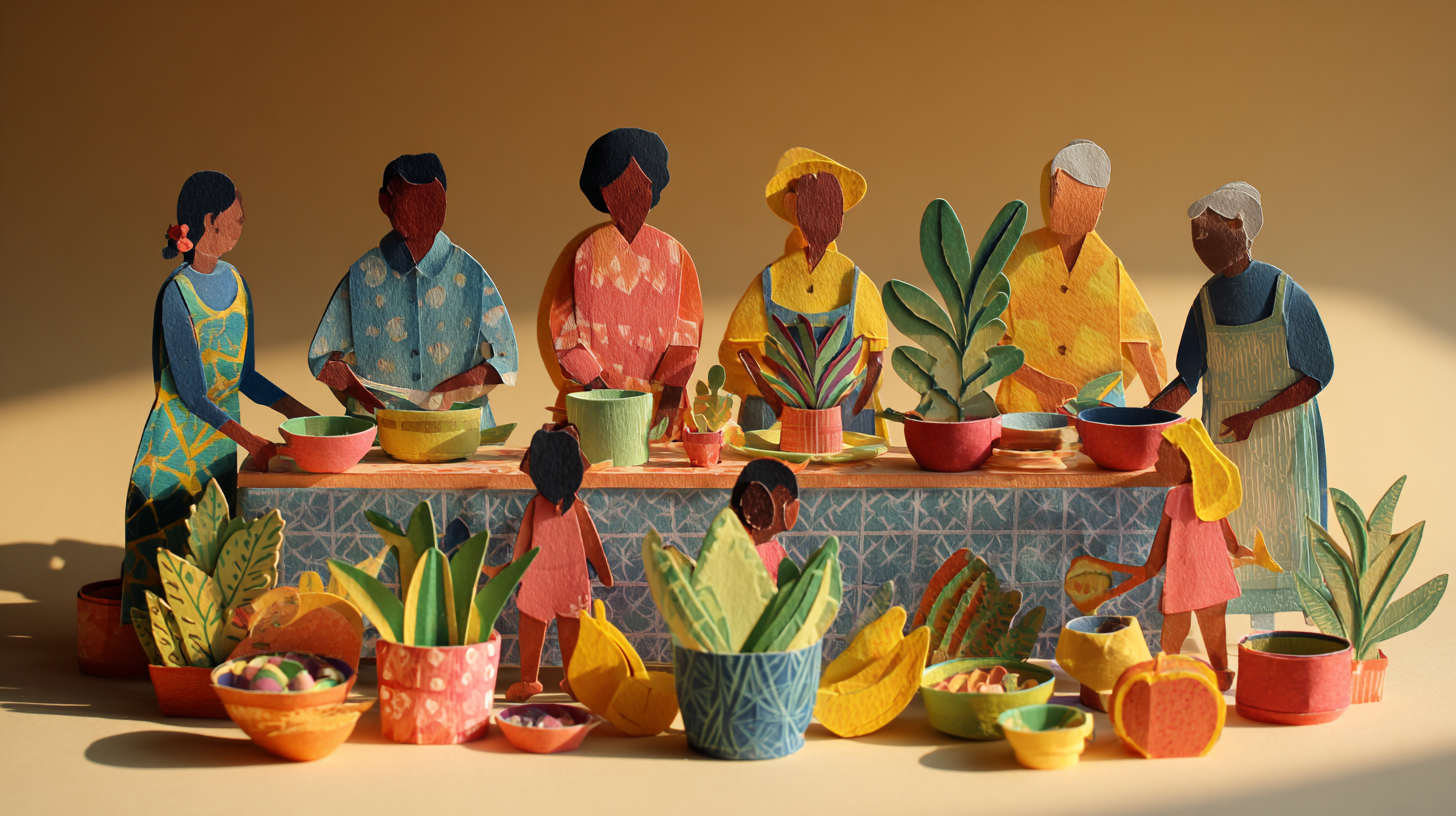
Celebrating Heritage Without Perfection
Let’s address the elephant in the kitchen: you might not feel qualified to pass down traditions. Maybe you didn’t grow up with strong food culture yourself. Maybe your family’s traditions feel “ordinary” compared to others. Maybe you barely know how to cook, let alone create meaningful rituals around it.
Here’s the liberating truth: you don’t need to be an expert chef or have an elaborate family history to create meaningful food traditions. You just need to start.
Some of the strongest food traditions are born not from heritage, but from intentionality. Stepfamilies, adoptive families, families formed through choice rather than blood—they create traditions with the same power as multigenerational recipes because the meaning comes not from authenticity but from consistency and love.
If you’re reconnecting with heritage you didn’t grow up with, that’s beautiful. Research your family’s food history. Ask older relatives. Experiment with traditional dishes. But don’t let the pressure of “getting it right” paralyze you. Your version of your grandmother’s recipe, even if it’s not exactly how she made it, still carries her legacy forward.
And if your heritage cuisine feels inaccessible—ingredients you can’t find, techniques you don’t understand—adapt without guilt. The spirit of a tradition can transcend its exact form. A Jewish family might make latkes with sweet potatoes instead of regular potatoes. A Nigerian family in Minnesota might substitute local greens for traditional vegetables. These aren’t betrayals—they’re evolutions.
What kind of tradition-builder are you? Click to discover your recipe personality…
Remember: your children won’t know the difference between “authentic” and “adapted” unless you tell them. What they’ll remember is whether you showed up consistently, whether the food was made with care, and whether the table felt like a place of belonging.
Navigating the Real Barriers: Time, Pickiness, and Chaos
Let’s get brutally honest about the obstacles. Research from 2023 shows families struggle with three primary barriers to regular shared meals: time scarcity, conflicting schedules, and children’s limited food preferences. These aren’t small problems—they’re legitimate challenges that can derail even the best intentions.
The Time Trap: You’re exhausted. Both parents work. After-school activities scatter everyone across town at dinnertime. The idea of cooking a meaningful meal feels laughable when you’re choosing between sleep and survival.
Here’s the reframe: food traditions don’t require elaborate cooking. They require consistent presence. Your tradition can be Sunday breakfast sandwiches assembled together. It can be Thursday night “fridge buffet” where everyone makes plates from leftovers but eats together. It can be Saturday morning market trips followed by smoothies made from what you bought.
Lower the bar for complexity. Raise the bar for consistency. A simple meal eaten together regularly beats an elaborate meal eaten sporadically every single time.
The Pickiness Problem: Your child will only eat beige foods. They refuse to try new things. Family meals become battlegrounds instead of bonding.
Stop fighting. Seriously. Family food traditions aren’t about forcing children to eat specific foods—they’re about creating positive associations with shared meals. Serve family-style so kids can choose what and how much to eat. Include at least one food you know they’ll accept at every meal. Remove pressure and moralization around eating.
The goal is pleasant memories, not clean plates. A child who eats only bread and butter at a weekly family dinner, but experiences laughter, stories, and connection, is getting exactly what they need from the tradition. The varied eating will come later. The positive memories you create now set the foundation.
The Chaos Factor: Toddlers throw food. Teenagers roll their eyes. Someone’s always on their phone. The idealized family meal feels impossibly far from your reality.
Here’s your permission slip: messy traditions are still traditions. Interrupted stories still connect. Imperfect attempts still matter. Don’t wait for some future version of your family where everyone cooperates perfectly. Build traditions with the family you have right now, chaos and all.
Some families ban phones at the table. Others allow them but require a “favorite moment from today” check-in from everyone first. Some families light candles to mark the meal as special. Others play specific music. There’s no single right way—only what works for your unique family dynamic.
The Social Media Truth: Perfection is Poisoning Our Tables
A 2025 study analyzing #familymeals on Instagram revealed something troubling: the curated, idealized portrayals of family dining create unrealistic expectations that leave real families feeling inadequate. Every perfectly styled plate, every smiling, compliant child, every spotless kitchen misleads us into believing that’s what family food culture should look like.
It’s a lie that’s stealing our traditions before we even start building them.
Real family meals involve spilled milk, rejected food, sibling bickering, and parents who are too tired to be patient. They involve burnt offerings and forgotten ingredients and “dinner” at 8:30 PM because that’s when everyone finally got home. They involve kids who refuse to sit still and babies who smear food in their hair.
And they’re still worth it. The connection doesn’t come from perfection—it comes from showing up.
Social media has also created hidden pressures around food performance. Parents feel they must document and share family meals to prove they’re “good parents.” This transforms the meal from an experience into a performance, destroying the very intimacy traditions are meant to create.
Cook with your phone in another room. Let the meal be messy. Let the memories be private. Not everything needs to be shared, documented, or validated by likes. Some of the most powerful traditions are the ones only your family knows about.
Future-Proofing Your Food Legacy
Your children are growing up in a food landscape radically different from the one you knew. Delivery apps, meal kits, climate-altered ingredient availability, virtual restaurants—the future of food is transforming rapidly. How do you create traditions flexible enough to adapt while maintaining their core meaning?
The key is focusing on the structure, not the specifics. If your tradition is “Pizza Friday,” the method of making pizza might evolve (maybe it becomes virtual cooking with grandparents on video call, or using new alternative flours, or ordering from a favorite local spot when life gets overwhelming), but the dedicated together time remains constant.
Build adaptability into your traditions from the start. Create categories rather than rigid requirements. “Weekly family cooking night” can adapt to different schedules, dietary needs, and life circumstances while maintaining its essence.
Experts predict several trends that might affect family food traditions in coming years:
- Hybrid dining experiences where some family members participate virtually while others gather physically
- Increased emphasis on food literacy and heritage preservation as reaction to industrial food systems
- Greater flexibility and customization within shared meals to accommodate diverse dietary needs and preferences
- Integration of technology for recipe sharing, virtual cooking, and maintaining food traditions across distance
Choose your commitment level to build lasting food traditions starting today…
The traditions you create today are the memories your grandchildren will treasure tomorrow. Think about that for a moment. The simple act of making pancakes together on Saturday mornings might become the story your daughter tells her children about what home felt like. The recipe you adapted from your heritage might travel through generations, accruing stories and meaning with each iteration.
You’re not just feeding your family—you’re creating heirlooms. Edible heirlooms that carry love, identity, and belonging in every bite.
Your Invitation to Begin
So here we are, at the end of all these words and ideas. And maybe you’re feeling inspired, or maybe you’re feeling overwhelmed. Maybe you’re thinking, “This sounds beautiful, but I don’t know where to start.”
Start with this: this week, pick one meal to share with your family. Just one. It doesn’t have to be elaborate. It doesn’t have to be perfect. It just has to happen.
Cook something simple together, or order something special. Turn off the TV. Put away the phones. Light a candle if you want to make it feel significant. Tell one story from your childhood. Ask one question about everyone’s day. That’s it. That’s the seed from which entire forests of tradition can grow.
Because here’s what I know to be true after years of watching families succeed and struggle with this: the families who build lasting food traditions aren’t the ones with the best recipes or the most time or the perfect kitchens. They’re the ones who decide that this matters and then show up consistently, imperfectly, determinedly.
They’re the ones who understand that every time they choose to cook together, eat together, share stories together, they’re making a deposit in an account that will pay dividends for generations. They’re the ones who know that the most important ingredient in any family recipe isn’t on the spice rack—it’s presence.
Your children are watching. Not to see if you’re a perfect chef or a flawless parent. They’re watching to see if you show up. If you make time. If you create space for connection in a world that constantly pulls families apart.
And years from now, when they’re adults cooking in their own kitchens, they won’t remember whether your food was restaurant-quality. They’ll remember that it tasted like home. They’ll remember that the table was a place of belonging. They’ll remember that you cared enough to create traditions, to pass down stories, to build a food culture that told them: you matter, your heritage matters, this family matters.
That’s the gift. That’s the inheritance. That’s what lasts.
So go ahead. Open your kitchen to mess and laughter and learning. Pull out that recipe card or search for a new one. Call your grandmother or your aunt or that family member who knows the old ways. Start small but start today. Cook with intention. Eat with presence. Create with purpose.
Build your family’s food culture one meal, one recipe, one shared moment at a time. Because the traditions that last aren’t built in grand gestures—they’re built in tiny, repeated acts of love disguised as dinner.
Your family’s food story is waiting to be written. Pick up the spoon. Let’s begin.
Ready to Create Your Food Legacy? Whether you’re starting from scratch or reconnecting with your roots, having the right recipes makes all the difference. If Caribbean flavors call to you, the Caribbean Baby Food Recipe Book is your gateway to introducing authentic island traditions from your baby’s very first bites—with 75+ recipes designed for ages 6 months and up, featuring ingredients like plantain, coconut milk, sweet potato, and traditional spices adapted for little ones. Start building food memories that will last generations.

Kelley's culinary creations are a fusion of her Caribbean roots and modern nutritional science, resulting in baby-friendly dishes that are both developmentally appropriate and bursting with flavor. Her expertise in oral motor development and texture progression ensures that every recipe supports your little one's feeding milestones while honoring cultural traditions.
Join Kelley on her flavorful journey as she shares treasured family recipes adapted for tiny taste buds, evidence-based feeding guidance, insightful parenting anecdotes, and the joy of celebrating food, culture, and motherhood. Get ready to immerse yourself in the captivating world of Kelley Black and unlock the vibrant flavors of the Caribbean for your growing baby, one nutritious bite at a time.
- You Are Enough: A Love Letter to Every Feeding Parent - October 4, 2026
- Imperfect Feeding: Why Messy, Real-Life Parenting Is Exactly What Your Child Needs - October 3, 2026
- Your Child’s Relationship with Food: The Quiet, Life-Long Gift You’re Giving Every Day - October 2, 2026