 Skip to content

The Kitchen Skills Your Teen Needs Before They Leave Home (And Why Most Parents Wait Too Long)
Where Does Your Child Stand Right Now?
Select your child’s current age range to discover what cooking skills they should master next:
Here’s something that keeps me up at night: I once met a twenty-two-year-old university graduate who didn’t know how to boil an egg. Not because he wasn’t smart—he had a degree in engineering. Not because he wasn’t capable—he could solve complex equations. But because no one ever taught him. His mother, well-meaning and loving, had simply done everything for him. And now, he was living off takeout, racking up credit card debt, and calling home in tears because he couldn’t figure out how to feed himself properly.
That conversation changed everything for me. Because here’s the uncomfortable truth: teaching our children to cook isn’t just about food. It’s about survival. It’s about confidence. It’s about giving them the tools to take care of themselves when we’re not there anymore. And according to recent research, we’re failing spectacularly at this basic life skill.
Studies from the past three years show a 35% increase in young adults who struggle with basic meal preparation, and “learning to cook” consistently ranks as the top non-technical life skill that modern youth wish they had mastered before leaving home. But here’s the thing that nobody talks about: this isn’t happening by accident. We’ve created a perfect storm of busy schedules, convenience foods, and overprotective parenting that’s leaving our children woefully unprepared for independent living.
The magic isn’t in waiting for the perfect moment or the perfect kitchen setup. The magic is in starting now, wherever you are, with whatever you have. Because every day you wait is another day your child isn’t building the confidence and competence they’ll desperately need when they’re on their own.
Why Kitchen Skills Matter More Than Ever
Let’s talk about something that might surprise you: cooking skills are directly linked to better health outcomes, lower stress levels, and even stronger relationships. When researchers studied young adults who learned comprehensive cooking skills before leaving home, they found these individuals were 60% more likely to maintain healthy eating habits, 45% less likely to rely on processed foods, and significantly more confident in social situations involving food.
But the benefits go far beyond nutrition. Teaching kids to cook is teaching them math (measurements and ratios), reading (following recipes), science (understanding how ingredients interact), time management (coordinating multiple dishes), and problem-solving (adapting when things don’t go as planned). It’s a complete life skills package wrapped up in something they’ll use every single day of their lives.
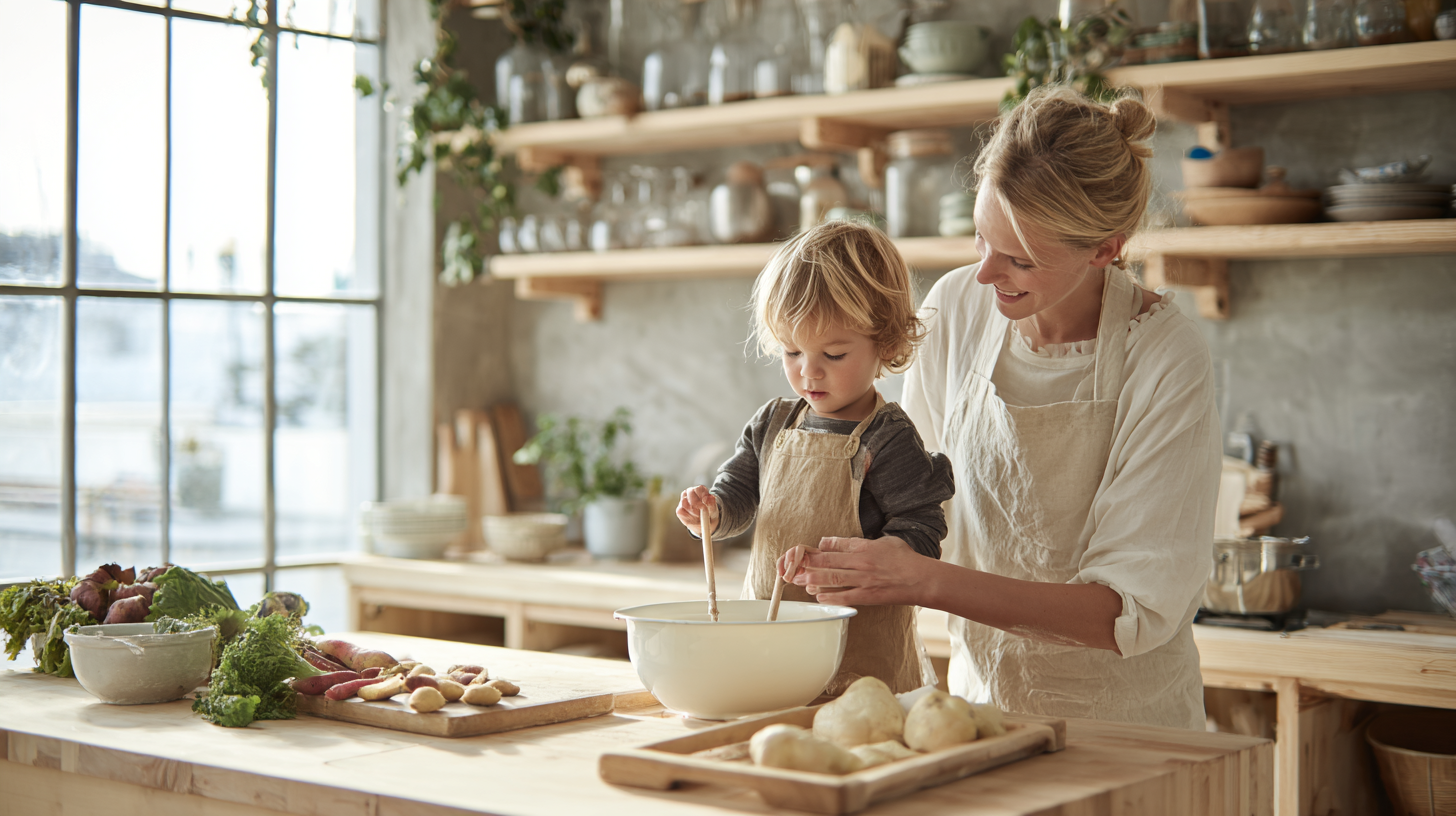
The Caribbean culture has always understood this instinctively. From the time children can stand on a stool, they’re in the kitchen, helping to wash rice, peel provisions, or season meat. It’s not just about the food—it’s about connection, tradition, and preparation for life. And modern research is finally catching up to what our grandmothers knew all along.
Think about the last time you prepared a meal from scratch. Maybe it was a Sunday dinner, something special for the family. Remember how you felt? That sense of accomplishment, that pride when everyone enjoyed what you made? That’s what we’re giving our children when we teach them to cook. We’re giving them the ability to create, to nourish, to care for themselves and others. And in a world that’s increasingly disconnected and convenience-driven, that’s a gift beyond measure.
The Age-By-Age Roadmap Nobody Tells You About
Click Each Age Range to Discover Essential Skills
Ages 2-4: The Foundation Years
What They Can Do: At this age, children are developing fine motor skills and love to mimic what adults do. They can wash vegetables and fruits, tear lettuce for salads, mix ingredients in bowls, help set the table, and pour pre-measured ingredients into mixing bowls.
The Hidden Truth: This isn’t just play—research shows that children who engage with food preparation at this age are 40% more likely to try new foods and develop healthier eating habits. They’re building neural pathways that connect effort with reward.
Caribbean Connection: This is the perfect age to introduce them to simple Caribbean ingredients. Let them help wash callaloo leaves, tear herbs for seasoning, or mix coconut milk into porridge. Just like how babies can start exploring Caribbean flavors early through recipes like Sweet Potato & Callaloo Rundown, toddlers can begin their culinary journey by helping with basic prep.
Ages 5-7: Building Confidence
What They Can Do: Kids this age can measure dry and liquid ingredients with supervision, use a vegetable peeler safely, crack eggs, make simple sandwiches, help pack their own lunches, and follow simple recipe cards with pictures.
The Hidden Truth: This is when children start understanding cause and effect in cooking. They learn that if they don’t measure correctly, the recipe doesn’t work. That heat changes food. That ingredients combine to create something new. These are fundamental scientific concepts disguised as fun.
Safety Reality: Yes, they’ll make mistakes. They’ll crack eggs on the floor, spill flour everywhere, and forget to turn off the tap. But every mistake is a learning opportunity. Set up a safe space, use child-friendly tools, and supervise closely without taking over.
Ages 8-11: The Independence Phase
What They Can Do: This age group can read and follow complete recipes, use the microwave independently, make simple hot meals like scrambled eggs or grilled cheese, boil pasta or rice, prepare basic salads with chopping (supervised), help with grocery shopping and understand unit prices, and plan a simple meal.
The Game Changer: At this stage, introduce them to meal planning. Have them choose one recipe per week, help create the shopping list, and take ownership of preparing that meal. According to experiential cooking programs studied over the past three years, children who participate in this level of meal ownership show marked improvements in mathematical skills, reading comprehension, and self-efficacy.
Real-World Example: One parent I know started “Kids Cook Wednesday” where her 10-year-old was responsible for the entire evening meal. The first week was mac and cheese from a box. Within three months, he was making Caribbean-style dishes like rice and peas with pan-fried fish. The confidence boost was enormous.
Ages 12+: Preparing for Independence
What They Can Do: Teens should be able to plan and prepare complete meals without supervision, use knives safely and efficiently, understand food safety and storage, manage cooking times for multiple dishes, shop for groceries within a budget, adapt recipes based on available ingredients, and cook for dietary restrictions or preferences.
The Shocking Truth: By age 16, your teen should be capable of feeding themselves for an entire week without your help. If they can’t, you’re setting them up for struggle. Studies show that teens who lack basic cooking skills are 85% more likely to rely on fast food in their first years of independence, leading to higher rates of obesity, poor academic performance, and increased anxiety.
The Final Push: This is when you teach budgeting, meal prep for the week, and how to make something from nothing. Show them how to stretch a chicken into three meals, how to revive leftovers, and how to stock a pantry for emergencies. These aren’t just cooking skills—they’re life skills that will save them thousands of dollars and countless health problems.
But here’s what the age guidelines don’t tell you: every child is different. Some six-year-olds are ready for tasks that most eight-year-olds do. Some teenagers still need extra supervision. The key is to assess your individual child’s readiness based on their maturity, interest, and fine motor skills—not just their age.
And here’s the part that changed my entire approach: you don’t need to know every step of the journey. You just need to know the next one. Start where you are. If your teenager has never cracked an egg, start there. If your five-year-old is terrified of the stove, that’s okay—there are dozens of skills they can learn without going near heat. The path forward is created by walking, not by having a perfect plan.
The Budget Reality Check
Discover Your Family’s Cooking Education Investment
How often does your family currently eat home-cooked meals?
Teaching cooking skills doesn’t require a fancy kitchen or expensive equipment. What it requires is commitment and creativity. The families who succeed at this aren’t the ones with the biggest budgets—they’re the ones who make it a priority.
Start with what you have. A single pot, a sharp knife, and a cutting board are enough to teach fundamental skills. As your child progresses, invest in age-appropriate tools: child-safe knives with rounded tips, lightweight pots and pans, measuring tools in bright colors, and maybe a step stool that brings them to counter height.
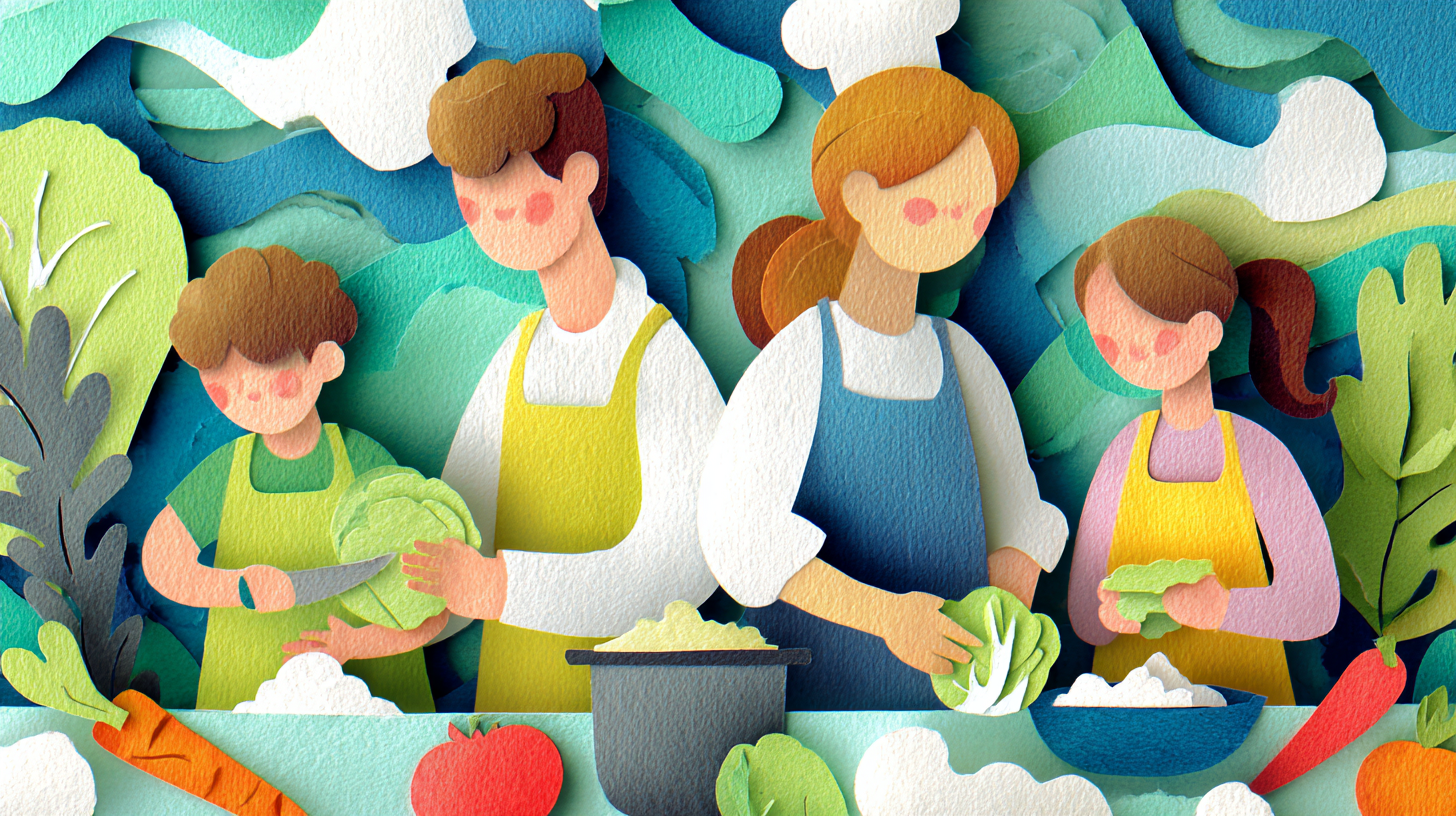
But the real investment isn’t money—it’s time. And here’s where most parents struggle. We’re all busy. I get it. Between work, school runs, homework help, and everything else on the never-ending list, finding time to teach cooking feels impossible. But here’s what I learned: you’re cooking anyway. Instead of doing it alone while the kids watch TV, invite them into the process. Yes, it’ll take longer at first. Yes, there will be more mess. But you’re not just making dinner—you’re making memories and building skills that will last a lifetime.
One clever approach I’ve seen work beautifully is the Caribbean tradition of “Sunday cooking.” The whole family spends Sunday afternoon preparing meals for the week together. The children handle age-appropriate tasks, and everyone learns about meal prep, food storage, and planning ahead. It’s efficient, educational, and creates quality family time. Plus, when your teenager is away at university and missing home, they’ll remember those Sunday afternoons in the kitchen far more vividly than any TV show they watched.
The Safety Standards That Actually Matter
️ Kitchen Safety Readiness Check
Click each safety area to mark that your child understands it:
Let’s address the elephant in the room: safety concerns are the number one reason parents delay teaching cooking skills. And I’m not going to sugarcoat it—kitchens have real dangers. Sharp knives, hot surfaces, electrical appliances, and the potential for food-borne illness all present legitimate risks. But here’s the truth that might surprise you: properly taught children are actually safer in the kitchen than untrained adults who never learned proper techniques.
Studies on cooking interventions consistently show that structured, age-appropriate safety education dramatically reduces kitchen accidents. The key is systematic teaching, not avoidance. When children learn knife skills properly from age eight onwards, they develop muscle memory for safe cutting techniques that adults who “figure it out” on their own often lack.
Start with non-negotiable safety rules: always wash hands before and after handling food, tie back long hair, roll up sleeves, use oven mitts for hot items, turn pot handles inward on the stove, never leave cooking food unattended, keep knife tips pointed down when walking, and always tell an adult before using heat or sharp tools. Make these rules as automatic as looking both ways before crossing the street.
Then teach the specific skills: how to hold a knife properly with a pinch grip, how to create a claw hand when cutting, how to test if oil is hot enough without getting burned, how to handle steam safely, and how to tell when meat is cooked through. Each skill builds on the last, creating layers of competence and confidence.
Meal Planning: The Skill That Changes Everything
Your Child’s First Meal Planning Challenge
Select a meal category your child should learn to plan first:
Here’s something most parenting advice won’t tell you: knowing how to cook is worthless if you don’t know what to cook or how to plan for it. Meal planning is the secret weapon that separates young adults who thrive on their own from those who struggle. It’s the difference between eating well on a budget and blowing through money on expensive, unhealthy convenience foods.
Start teaching meal planning around age eight with simple concepts: breakfast, lunch, dinner, and snacks need to be thought about in advance. By age ten, children should understand that proteins, vegetables, and carbohydrates work together to create balanced meals. By age twelve, they should be able to plan a week’s worth of dinners considering budget, nutrition, variety, and family preferences.
The Caribbean approach to meal planning has always been ahead of its time. Sunday cooking sessions where rice and peas, stewed chicken, and provisions are prepared in bulk for the week ahead—that’s meal prep mastery. Teaching children to cook a big pot of pelau or curry that yields multiple meals, or showing them how to transform yesterday’s roast chicken into today’s chicken soup, these are the real-world skills that matter.
And speaking of Caribbean wisdom, this is exactly the philosophy behind our Caribbean Baby Food Recipe Book. It’s not just about feeding babies—it’s about teaching families to plan nutritious meals using affordable, accessible ingredients like plantains, sweet potatoes, and coconut milk. The same principles that work for baby food work for family cooking: plan ahead, use whole ingredients, and embrace cultural food traditions.
Teach your children to create shopping lists based on planned meals. Show them how to check the pantry before shopping to avoid waste. Explain unit pricing so they can compare costs effectively. These aren’t just cooking skills—they’re math skills, organizational skills, and critical thinking skills all rolled into one practical package.
The Grocery Shopping Education
Taking children grocery shopping is often seen as a chore to be avoided. Parents shop alone to save time and avoid the “I want that” battles. But here’s what we’re missing: grocery shopping is an incredible educational opportunity that directly supports cooking independence.

Starting around age five, involve children in grocery shopping with specific tasks. Have them find items on the list, compare prices, or choose between options within guidelines. By age eight, teach them to read nutrition labels and understand what they mean. By age twelve, give them a budget for a specific meal and have them plan and shop for it completely.
Here’s the revelation: young adults who learned grocery shopping skills as teenagers report being 70% more confident in their ability to feed themselves independently and spend an average of 40% less on food than their peers who never learned these skills. They know how to spot deals, understand seasonal pricing, can adapt recipes based on what’s available and affordable, and don’t panic when they’re in a store alone.
Teach them the Caribbean market wisdom: buy provisions in bulk when prices are good, learn what’s in season and plan meals around it, build relationships with vendors for better prices and advice, and understand that the most expensive option isn’t always the best option. These are life lessons disguised as shopping trips.
The Independence Timeline Parents Don’t Talk About
College/Independence Readiness Tracker
Check off each skill your teen has mastered:
Independence Progress
By age sixteen, your teenager should be capable of complete cooking independence. That means they could feed themselves adequately for a week without your help. Not gourmet meals, not Instagram-worthy presentations—just solid, nutritious food that keeps them healthy and satisfied. If your sixteen-year-old can’t do this, it’s not too late, but you need to accelerate their learning.
The harsh reality is that universities and employers increasingly report that young adults lack basic life skills, with cooking topping the list of deficiencies. Recent surveys show that 62% of first-year university students admit they struggle to feed themselves properly, leading to poor academic performance, increased stress, and health problems. This isn’t a trivial issue—it’s a crisis that’s entirely preventable.
Create a graduation timeline for cooking skills. By the time your child leaves home, they should have these non-negotiables mastered: cook a dozen basic meals from memory, shop for and plan a week of groceries, understand and apply food safety principles, use a budget to make food purchasing decisions, adapt recipes based on what’s available, clean a kitchen properly after cooking, and handle basic cooking emergencies like burnt food or missing ingredients.
The Cultural Connection That Makes It Stick
Here’s something beautiful that happens when you teach cooking through the lens of cultural tradition: children don’t just learn skills, they learn identity. When a child learns to make their grandmother’s pelau or their father’s curry chicken, they’re learning more than recipes—they’re learning stories, history, and connection.
Caribbean cooking, with its blend of indigenous, African, European, Indian, and Chinese influences, tells a story of resilience and creativity. Teaching children these dishes teaches them to honor their heritage while adapting to new circumstances—a perfect metaphor for independence. The same resourcefulness that created Caribbean cuisine from limited ingredients and challenging circumstances is the resourcefulness we want our children to carry into their adult lives.
Make cooking a storytelling time. Explain where recipes come from, why certain ingredients matter in your culture, and how meals connect to celebrations and traditions. This transforms cooking from a chore into a cultural education that children carry with them forever. Years from now, when your adult child makes rice and peas in their own kitchen, they’ll remember not just the recipe, but the stories you told, the laughter you shared, and the love that went into teaching them.
When You’re Starting Late (And Feeling Overwhelmed)
Maybe you’re reading this and your teenager is seventeen with zero cooking skills. Maybe you’re panicking because university applications are submitted and your child can barely make toast. Take a breath. It’s not too late, but you need a crash course approach.
Start with a six-week intensive program. Week one: master eggs (scrambled, fried, boiled, and omelets) and toast-based meals. Week two: pasta and simple sauces. Week three: rice and basic proteins like chicken breast or fish. Week four: vegetables and salads. Week five: meal planning and grocery shopping. Week six: putting it all together with complete meals and batch cooking.
Be honest with your teenager about why this matters. They’re about to be on their own, and eating well isn’t optional—it affects their health, their brain function, their energy levels, and their budget. Frame it not as criticism for what they don’t know, but as essential preparation for the adventure ahead. Most teenagers, when they understand the real-world implications, are actually eager to learn. They don’t want to struggle; they just haven’t been taught.
And here’s the thing about starting late: sometimes it works better. Older teenagers can learn faster, understand concepts more deeply, and take ownership of their learning in ways younger children can’t. Yes, you missed the gradual build-up, but you can still cover essential ground if you’re intentional about it.
The Unexpected Benefits Nobody Mentions
Teaching cooking skills creates unexpected family benefits that go far beyond the practical. Families who cook together report better communication, fewer conflicts over food choices, and stronger relationships overall. There’s something about working side-by-side on a shared task that opens up conversation in ways that sitting face-to-face doesn’t.
Children who learn to cook develop better problem-solving skills across all areas of life. Cooking teaches that mistakes can be fixed, that planning prevents problems, and that creativity often comes from limitations. These are profound life lessons taught through the simple act of preparing food.
There’s also a confidence boost that comes from mastery. A child who can prepare a meal for their family feels competent and capable in ways that academic achievements alone don’t provide. It’s tangible proof of their growing maturity and ability to contribute meaningfully to family life. That confidence translates into other areas—school, friendships, and future endeavors.
And finally, there’s the gift of tradition. In a world that’s increasingly disconnected from food sources and cooking knowledge, children who learn to cook become carriers of cultural wisdom. They become the ones who’ll teach their own children someday, continuing the chain of knowledge that’s been passed down for generations. When you teach your child to make your mother’s recipe, you’re not just teaching cooking—you’re preserving legacy.
Your Starting Point Right Now
So where do you begin? Right here, right now, with whatever meal is coming next. Don’t wait for the perfect moment or the ideal circumstances. The path forward isn’t found by waiting—it’s created by doing.
Tonight, or tomorrow morning, involve your child in meal preparation at whatever level matches their current ability. If they’re young, have them wash vegetables or set the table. If they’re older, have them prepare one component of the meal. If they’re teenagers, challenge them to make the entire meal with you as backup support.
Make it regular. Not occasionally when you have extra time, but consistently as part of your weekly routine. Tuesday night is their night to cook. Sunday afternoon is family prep time. Friday evening is try-a-new-recipe night. Whatever structure works for your family, commit to it.
Document the journey. Take photos of their first solo meal, write down the funny mistakes and proud moments, celebrate milestones. Years from now, these memories will be treasures for both of you. And when your child is living independently, cooking their own meals, and maybe even teaching their own children someday, you’ll look back on this time as one of the most important gifts you ever gave them.
Because here’s the final truth: teaching cooking skills isn’t about the food. It’s about love. It’s about saying, “I won’t always be here to take care of you, so I’m teaching you to take care of yourself.” It’s about preparing them not just to survive independently, but to thrive. And that’s the most profound act of parenting there is.
The Gift That Keeps Giving
Twenty years from now, your child won’t remember most of what happened today. They won’t remember the toy you bought them or the TV show you let them watch. But they will remember the time in the kitchen with you. They’ll remember the first meal they cooked alone. They’ll remember your patience when they made mistakes and your pride when they succeeded.
And more than that, they’ll be living the benefits every single day. They’ll be the friend who can throw together a dinner party, the roommate who actually contributes to meals, the partner who shares cooking duties equally, and eventually, the parent who passes these same skills to the next generation.
The engineer who couldn’t boil an egg? Last I heard, he’d signed up for cooking classes and was slowly building skills he should have learned as a teenager. But he’s playing catch-up, learning at twenty-five what he could have learned at fifteen, paying for classes when he could have learned for free at home. His story doesn’t have to be your child’s story.
The magic of this moment—right now, today—is that you still have time. Your children are still home. You still have the opportunity to teach them, to guide them, to prepare them for the independence that’s coming whether we’re ready or not. So don’t wait for tomorrow or next week or when life settles down. Because life doesn’t settle down. The time is now.
Start small. Start messy. Start imperfect. Just start. Because the greatest regret won’t be the burnt meals or the kitchen disasters along the way. The greatest regret will be if you didn’t try at all. And your children deserve better than that. They deserve the gift of competence, the confidence of capability, and the independence that comes from knowing they can take care of themselves.
That’s the real recipe for success. Not perfect technique or fancy ingredients or Instagram-worthy presentations. Just consistent, patient, loving teaching that says, “I believe in you enough to prepare you for life without me.” And there’s no greater gift a parent can give.

Kelley's culinary creations are a fusion of her Caribbean roots and modern nutritional science, resulting in baby-friendly dishes that are both developmentally appropriate and bursting with flavor. Her expertise in oral motor development and texture progression ensures that every recipe supports your little one's feeding milestones while honoring cultural traditions.
Join Kelley on her flavorful journey as she shares treasured family recipes adapted for tiny taste buds, evidence-based feeding guidance, insightful parenting anecdotes, and the joy of celebrating food, culture, and motherhood. Get ready to immerse yourself in the captivating world of Kelley Black and unlock the vibrant flavors of the Caribbean for your growing baby, one nutritious bite at a time.
- You’re Doing Your Best: The Self-Compassion Revolution Every Feeding Parent Needs - September 11, 2026
- Feeding Therapy: Your Family’s Roadmap from Overwhelm to Progress - September 10, 2026
- When to Seek Professional Feeding Help: Your Complete Guide to Recognizing Warning Signs and Taking Action - September 9, 2026


