 Skip to content
School-Age Nutrition: The Hidden Truth About What Really Fuels Growing Bodies (And Why Everything You Think You Know Might Be Wrong)
⚡ Your Child’s Nutrition Reality Check
Before we dive deep into this journey together, let’s discover something shocking about your child’s current nutrition situation. Click on what best describes your biggest concern right now:
Here’s What You Need to Know:
Here’s something nobody told me until it was almost too late: the gap between what nutrition experts recommend for school-age children and what actually happens in real life is so massive, it’s terrifying. And I mean that from the bottom of my heart, as someone who’s been in your shoes, staring at another untouched lunchbox wondering where I went wrong.
The truth is this—nearly half of your child’s daily calories could be coming from school, yet most of us are flying blind when it comes to truly understanding what fuels these growing bodies and minds. We’re talking about children who need between 1,800 and 2,200 calories a day by the time they hit ages 11-12, with needs that vary wildly based on their activity level, growth spurts, and individual body composition. But here’s where it gets real: while guidelines tell us kids should get 10-30% of their energy from protein (roughly 19 grams daily for ages 4-8, jumping to 34 grams for ages 9-13), most children are simultaneously consuming too much sodium, added sugar, and saturated fat while falling desperately short on fiber, vegetables, and whole grains.
This isn’t just about numbers on a nutrition label. This is about your child’s ability to concentrate during that math test, their energy on the soccer field, their mood when they walk through the door after school, and honestly—their relationship with food for the rest of their lives.
The School Meal Revolution Nobody’s Talking About
Let me take you back to a moment that changed everything for me. I was standing in the school cafeteria during a volunteer day, watching kids move through the lunch line, and I had an epiphany that knocked the wind out of me. The National School Lunch Program—which serves millions of children daily—has been quietly transforming. We’re talking about specific calorie ranges (550-650 for grades K-5, 600-700 for grades 6-8), strict standards for fruits, vegetables, whole grains, milk, and limits on sodium and saturated fat. These meals are often nutritionally superior to what many kids bring from home, yet there’s this persistent stigma around school lunches.
Here’s the uncomfortable truth that research reveals: universal free meal models—where every single student can access school meals at no cost—don’t just improve participation rates. They improve diet quality and decrease food insecurity. Think about that for a second. When we remove the barrier of cost and stigma, children eat better. Period.
The phased changes happening through school years 2025-26 to 2027-28 are aligning school meal patterns with the 2020-2025 Dietary Guidelines, with updated limits on sodium and sugar, continued emphasis on whole grains and variety. But the challenge? Getting kids to actually eat these nutritionally sound meals when they’ve been bombarded by digital marketing for ultra-processed snacks and sugary drinks since they could swipe on a screen.
Myth Buster: School Meals vs. Packed Lunches
Click each myth to reveal the shocking truth:
School lunches are unhealthy and full of junk food
Kids need expensive sports drinks for after-school activities
My child needs protein bars and supplements to build muscle
Snacking between meals will spoil their appetite
The Digital Food Environment Crisis
This is where things get uncomfortable, and I need you to stay with me because this might be the most important section you read today. Your child’s nutrition environment isn’t just the kitchen, the lunchroom, or even the grocery store anymore. It’s YouTube. It’s TikTok. It’s Instagram. Social media influencers and platforms have become major “food environments” that heavily feature branded snacks, sugary drinks, and fast foods—and our kids are swimming in this content for hours every single day.
Studies show that children and young adolescents exposed to unhealthy food advertising report stronger intentions and desires to consume high-sugar, high-fat products. But here’s where it gets even more complex: these same digital spaces can also channel health education. Adolescents and older children adopt both healthy and unhealthy eating patterns based on how peers present food on social media, online forums, and group chats. It’s a double-edged sword we can’t simply avoid—we have to learn to navigate.
The reality? A majority of parents of young children now use social media to discuss parenting topics, including feeding, which shapes perceptions of what’s “normal” or “good” for school-age nutrition. We’re all influencing each other, for better or worse.
The After-School Hunger Phenomenon
Let me paint you a picture that probably sounds familiar: 3:30 PM. The door flies open. Backpack hits the floor. And before you can say “How was your day?” your child is elbow-deep in the pantry, emerging with an armful of whatever they could grab fastest. This isn’t misbehavior. This isn’t poor impulse control. This is biology.
School-age children expend enormous mental and physical energy throughout the day, and by the time they get home, their bodies are legitimately crying out for fuel. The problem isn’t the hunger—it’s that we often haven’t prepared for it strategically. When we leave after-school snacking to chance, kids gravitate toward whatever’s easiest: chips, cookies, sugary granola bars. Food that gives them a quick hit but leaves them crashed and cranky by dinner time.
The solution that actually works? Planned snacks offered every 3-4 hours with a deliberate mix of macronutrients. We’re talking about combinations like yogurt with fruit, nut butter with banana, hummus with vegetables, or cheese with whole-grain crackers. After sports, the stakes are even higher—snacks like edamame, smoothie bowls, turkey or bean-based options, and fruit with dairy or fortified alternatives help replenish energy and support recovery.
And here’s a Caribbean twist that’s been a game-changer in my own home: incorporating ingredients like sweet potato, plantain, coconut, and beans into after-school snacks. Think mashed sweet potato mixed with a little cinnamon and coconut milk for dipping fruit, or black bean dip with plantain chips. These ingredients aren’t just packed with nutrients—they connect kids to cultural flavors and food traditions that matter. If you’re looking for creative ways to introduce these powerhouse ingredients early (even to younger siblings), the Caribbean Baby Food Recipe Book offers over 75 recipes featuring sweet potatoes, mangoes, coconut milk, plantains, and beans that translate beautifully into school-age snacks and meals.
Build Your Perfect After-School Snack
Choose from each category to discover a personalized snack combo that hits all the nutritional targets:
Your Snack Builder Progress:
Select your protein to begin…
Step 1: Choose Your Protein
Step 2: Add Your Carbs
Step 3: Boost with Extras
✨ Your Perfect Snack Combo:
Youth Sports Nutrition Decoded
If your child plays any kind of sport—soccer, basketball, swimming, dance, you name it—you’ve probably felt that nagging uncertainty about whether you’re doing enough to support their athletic performance. The supplement companies certainly want you to feel that way. They’re banking on your love for your child and your desire to give them every advantage.
But here’s what the experts actually say: basic youth sports nutrition emphasizes consistent hydration and balanced meals rather than supplements. Full stop. No magic powders. No expensive recovery drinks for your 8-year-old who just finished 45 minutes of recreational soccer practice.
The hydration guidance is straightforward and doesn’t require spending a fortune: water throughout the day, about 8-12 ounces shortly before exercise, and small amounts (roughly 4-8 ounces) every 15-20 minutes during vigorous activity. Sports drinks? Reserved for events over an hour or in hot conditions. That’s it. You can also teach your child to monitor their own hydration using simple cues like aiming for light-colored urine and drinking extra fluids after intense play.
What matters infinitely more than supplements is the pattern of eating: regular meals with adequate carbohydrates for energy, protein for growth and repair, and healthy fats for sustained fuel. Think of food as performance fuel, not a reward or punishment system. Your young athlete needs to understand that their body is a machine that requires quality input to produce quality output.
The Peer Influence Puzzle
This is the part where parenting gets really messy, and I’m not going to sugarcoat it. Your child comes home asking why they can’t have Lunchables like everyone else. Or they suddenly refuse the sandwich they loved last week because a friend at school said it was “weird.” Or they want to try the latest viral TikTok food trend that makes your nutrition-conscious heart sink.
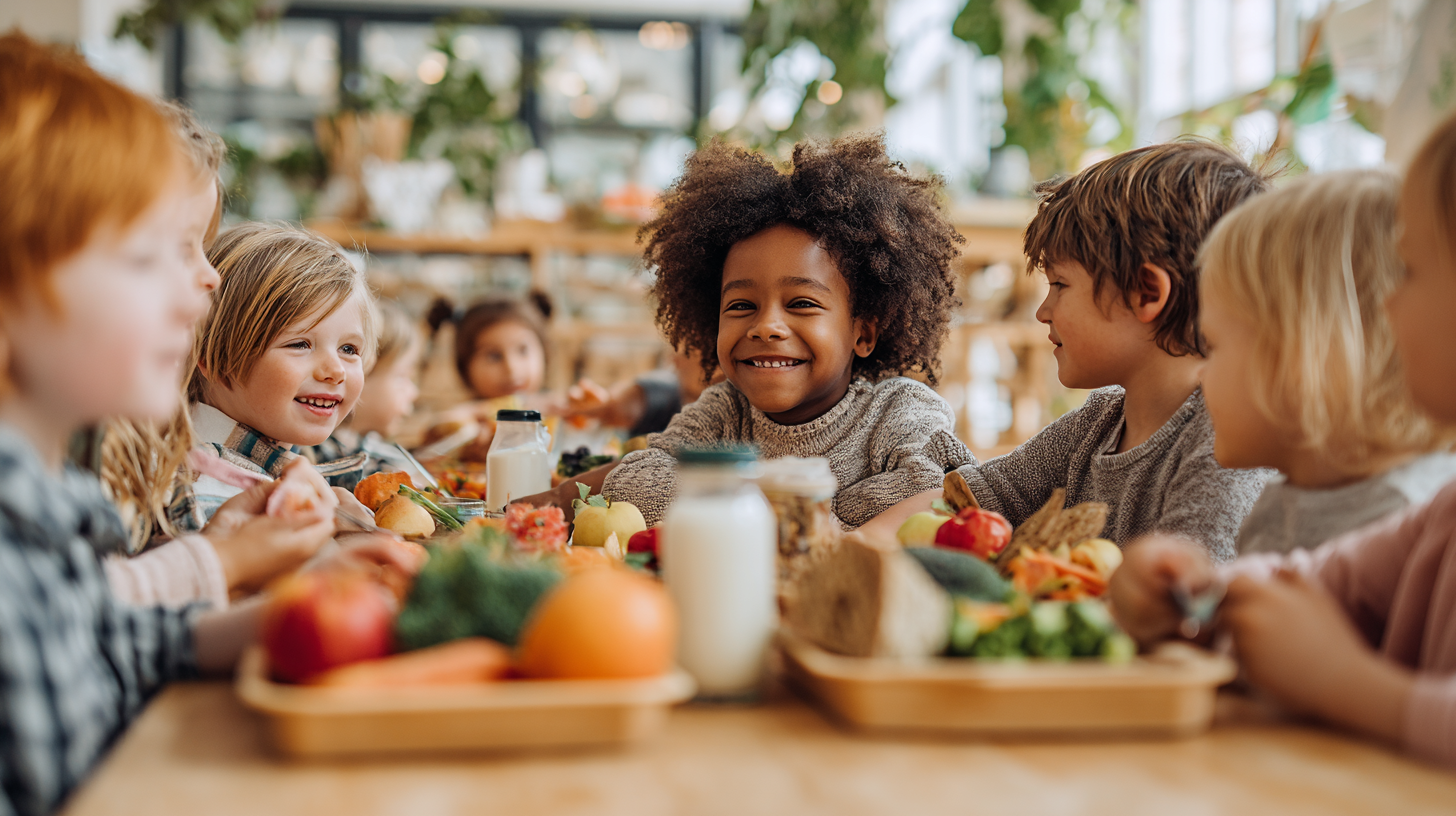
Peer influence on eating behaviors is real, powerful, and intensifies dramatically during the school-age years. But here’s what research tells us that should give you hope: while peer influence can drive kids toward unhealthy choices, it can also be leveraged for good. Children observe and mimic what their peers eat, for better or worse. This means that when schools create environments where healthy eating is normalized—through school gardens, taste-testing events, peer mentoring programs—kids actually become more adventurous and health-conscious.
At home, addressing peer and social influence involves talking with children about food marketing, helping them recognize persuasive tactics online, and reinforcing that bodies and appetites differ. Your job isn’t to control every food choice—it’s to equip your child with the critical thinking skills to make informed decisions that support their own energy and well-being rather than just copying friends or influencers.
One approach that’s worked wonders in my own experience: involving kids in meal planning and preparation. When children understand why certain foods matter—not just “because I said so” but because “this helps your brain focus during tests” or “this gives you energy for soccer practice”—they become partners in their own nutrition rather than adversaries.
The Peer Pressure Response Generator
Click to reveal age-appropriate responses you can teach your child when facing common peer pressure food situations:
When a peer criticizes their lunch:
“Different families eat different foods, and that’s cool. This is what makes me feel good and gives me energy. What’s your favorite lunch?”
Why this works: It acknowledges diversity, reframes food as personal fuel rather than a judgment call, and redirects the conversation positively.
When offered a trade for less nutritious food:
“No thanks, I really like what I have today. But we could share some of mine if you want to try it!”
Why this works: It’s a confident “no” that doesn’t shame the other child, while offering connection through sharing instead of trading.
When they want to try a viral food trend:
“I saw that online too! Let’s learn about what’s actually in it together, and maybe we can make a healthier version at home that still looks cool.”
Why this works: You’re validating their interest while teaching media literacy and offering a collaborative solution that maintains nutritional standards.
When peers question their food choices:
“Nope! I’m just eating foods that make my body and brain work best. My parents and I pick foods that give me energy for [sports/school/hobbies].”
Why this works: It separates healthy eating from diet culture, emphasizes performance and feeling good, and shows parental support without sounding preachy.
The Lunchbox Strategy That Actually Works
If you’ve been packing school lunches for any length of time, you know the soul-crushing disappointment of opening that lunchbox at the end of the day to find everything exactly as you packed it. All that effort. All that nutrition. Completely ignored. It makes you want to throw in the towel and just send them with a bag of chips and call it a day.
But before you do, let me share what I learned from dietitians, pediatric nutrition experts, and honestly, from my own trial and error: the MyPlate pattern is your blueprint. Half the lunch should be fruits and vegetables, a quarter whole grains, a quarter protein, plus dairy or a fortified alternative. But—and this is crucial—it has to be food your child will actually eat.
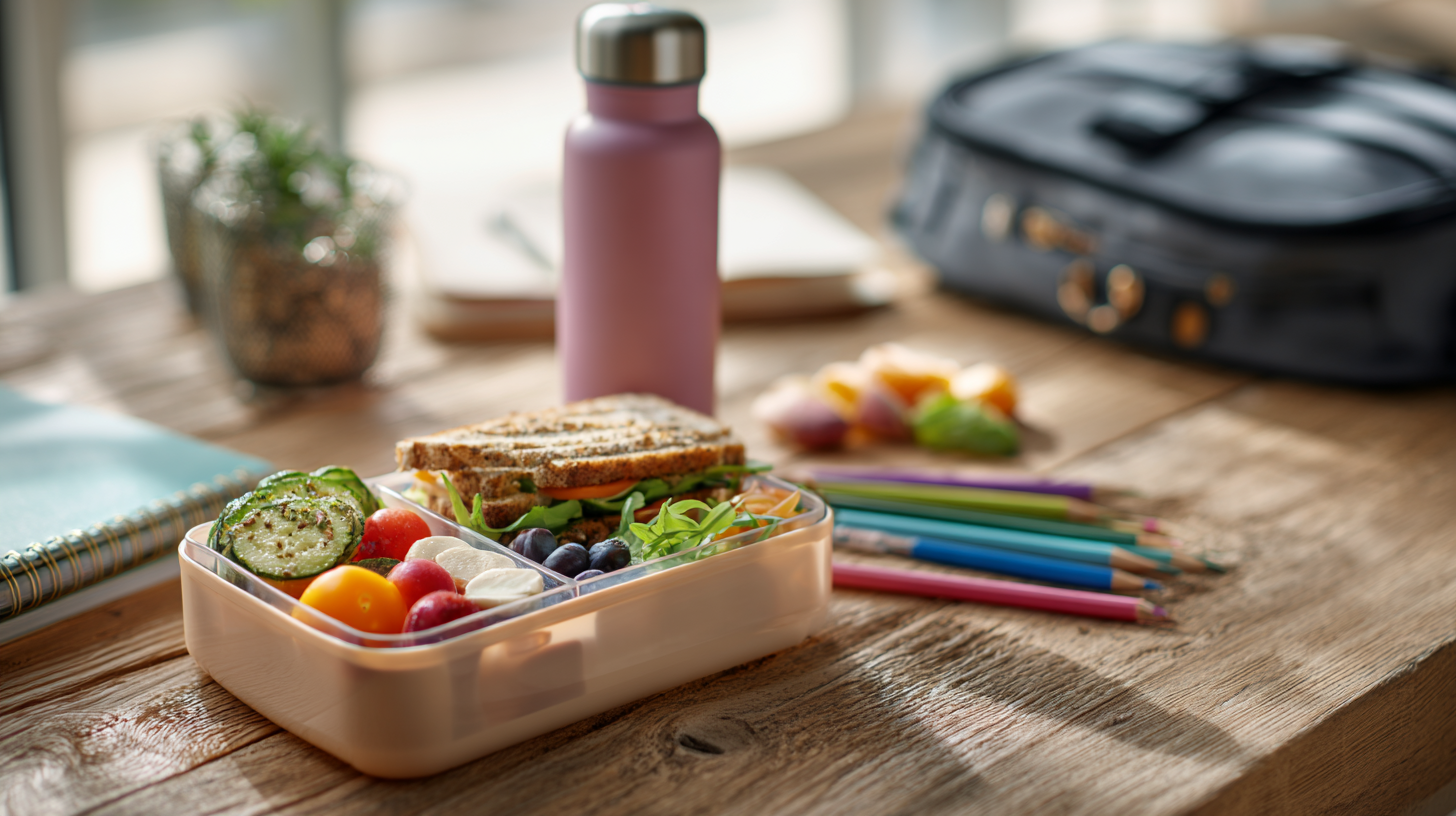
This is where cultural foods become absolute game-changers. Instead of the same old turkey sandwich, what about introducing flavors that connect to your family’s heritage or simply taste incredible? Rice and beans aren’t just nutritious—they’re comforting, filling, and beloved across Caribbean cultures. Sweet potato (batata) can be baked into wedges or mashed with cinnamon. Plantain can be sliced and baked into chips that rival anything in a bag. Small portions of seasoned chicken, fish, or beans bring protein with actual flavor.
The Caribbean Baby Food Recipe Book is full of recipes like Coconut Rice & Red Peas, Sweet Potato & Callaloo, Yellow Yam & Carrot Sunshine, and Basic Mixed Dhal that can easily be adapted for school lunches. These aren’t just for babies—they’re flavor foundations that grow with your family, teaching children to appreciate real food with cultural roots.
Here’s another strategy that flipped everything for me: involve your child in the planning. Sunday meal prep becomes family time where kids help choose fruits, wash vegetables, portion snacks into containers, and assemble parts of their own lunches. When they have ownership, they’re exponentially more likely to actually eat what’s packed.
Navigating School Meals Like a Pro
Let’s talk about making school meals work for your family, because this isn’t an all-or-nothing situation. Many families do a combination: school breakfast, packed lunch. Or school lunch on busy days, packed lunch when you have time. The key is knowing how to evaluate what’s being served and teaching your child to navigate the lunch line strategically.
Most schools now publish their menus online, often with full nutritional information. Review these with your child. Point out the options that align with that MyPlate pattern—the fruits, the vegetables, the whole grain options, the lean proteins. Talk about how to build a balanced tray: “Okay, you’re getting the pizza today (because let’s be real, they’re going to choose pizza sometimes), so make sure you also grab that side salad and an apple, plus milk instead of juice.”
Here’s something that surprised me when I started really paying attention: school meals often include vegetables and whole grains that kids won’t touch at home but will eat at school because their friends are eating them. Use this to your advantage. If your child discovers they actually like roasted broccoli at school lunch, suddenly you have a vegetable success story to build on at home.
For children with allergies, cultural dietary restrictions, or specific health needs, work directly with your school’s nutrition services director. Most programs are remarkably accommodating when families communicate clearly about needs. And if your school participates in universal free meals, take advantage of it without guilt—these programs exist to nourish children, full stop.
of a child’s daily calories can come from school
daily protein needed for ages 4-8
daily protein needed for ages 9-13
optimal gap between meals and snacks
The Challenges Nobody Warns You About
Let’s get brutally honest about the obstacles you’re facing, because pretending they don’t exist doesn’t help anyone. Challenge number one: time. You’re already stretched impossibly thin between work, school pickups, activities, homework help, and trying to maintain some semblance of a household. Meal planning and healthy food prep take time you might not feel you have.
Challenge number two: cost. Fresh produce, quality proteins, and whole grains cost more than ultra-processed convenience foods. That’s not your imagination—that’s the reality of our food system. When families face food insecurity, nutrition guidelines can feel like a cruel joke rather than helpful advice.
Challenge number three: conflicting information. Social media is overflowing with nutrition “experts” who may or may not have any credentials, wellness trends that contradict established science, and diet culture disguised as health advice. How are you supposed to know who to trust?
Challenge number four: the political and policy uncertainty around school meal programs. Debates over universal free meals, funding levels, and program requirements mean that what’s available to your child this year might change next year based on factors completely outside your control.
I’m not going to offer you platitudes or simple fixes because these are complex, systemic problems. What I will say is this: you do the best you can with what you have. Some weeks that means beautiful bento boxes with rainbow vegetables. Other weeks that means choosing the least-processed frozen meals from the grocery store. Both can coexist in a healthy childhood. Progress over perfection, always.
Building Food Literacy Together
Here’s something that transformed my entire approach: instead of just feeding my children, I started educating them about food. Food literacy—understanding where food comes from, how it affects our bodies, how to recognize marketing tactics, how to prepare simple meals—is arguably more valuable than any single “healthy meal” you could provide.
This looks like cooking together on weekends, not Pinterest-perfect baking projects but real meal preparation. Washing rice. Chopping vegetables (with age-appropriate tools and supervision). Seasoning proteins. Tasting as you go. Talking through why we add coconut milk to rice (flavor and creaminess!) or why sweet potato makes a better side dish than fries most days (fiber, vitamins, and sustained energy versus quick crash).
It looks like grocery shopping together and playing “ingredient detective”—reading labels, comparing products, talking about what added sugars actually mean. It looks like starting a small container garden where kids can grow herbs, cherry tomatoes, or lettuce and experience the magic of eating something they planted themselves.
Schools are increasingly implementing these same strategies: taste-testing events, school gardens, cooking classes, physically active nutrition lessons. When you reinforce these concepts at home, it creates a powerful feedback loop. Your child starts to see healthy eating not as rules imposed by adults but as skills and knowledge that serve them.
And here’s where I’ll mention again—if you want a head start on building flavor appreciation and adventurous eating from the earliest ages, the Caribbean Baby Food Recipe Book introduces ingredients like plantain, yam, coconut, callaloo, and aromatic spices in baby-appropriate forms. Starting these flavor profiles early means school-age kids already have a diverse palate and appreciation for nutrient-dense foods beyond chicken nuggets and mac and cheese.
The Path Forward
As we look ahead to the coming years, school nutrition is evolving in ways that should give us hope. The phased implementation of updated meal standards through 2027-28 means continued improvement in what’s offered to children. Advocacy organizations are pushing hard for expansion of universal free school meals, which could fundamentally transform access and eliminate stigma for millions of families.
Digital health tools tailored to parents are becoming more sophisticated and accessible, with web platforms and apps that boost nutrition knowledge and confidence. We’re also likely to see increased policy efforts around regulating unhealthy food marketing to children, especially via social media and influencers, which could begin to level the playing field against the billions of dollars food companies spend targeting young minds.
The integration of nutrition education across subjects and whole-school approaches will continue expanding. More gardens, more cooking classes, more opportunities for kids to connect with real food in meaningful ways. These aren’t just nice extras—they’re reshaping how an entire generation thinks about eating.
For your family specifically, the path forward means staying informed, staying flexible, and staying connected to your child’s evolving needs. What works for your 6-year-old won’t work for your 11-year-old. That’s okay. You’re not supposed to figure this out once and be done—you’re building a foundation of food literacy, body awareness, and healthy habits that will serve them for decades.
Your 7-Day School Nutrition Action Plan
Transform your family’s nutrition one day at a time with these concrete, achievable steps:
Day 1: Audit & Assess
Review this week’s school menu together with your child. Identify 3 balanced options they’re willing to try. Take inventory of your pantry and fridge—what healthy snacks are readily accessible?
Day 2: Snack Prep Session
Spend 30 minutes creating grab-and-go snack packs: portion fruits, cut vegetables, divide nuts or trail mix, portion yogurt cups. Make them as easy to grab as the chips.
Day 3: Hydration Check
Get your child their own reusable water bottle. Teach them the “light yellow urine” hydration test. Set a goal for how many refills per day, especially on sports days.
Day 4: Media Literacy Talk
Watch a food advertisement together. Discuss: “What are they trying to make us feel? Is this food really going to make you happier/cooler/stronger?” Start building that critical eye.
Day 5: Cooking Together
Prepare one meal or batch of snacks together. Let your child take the lead on an age-appropriate task. Talk about why you’re choosing each ingredient and what it does for their body.
Day 6: Cultural Connection
Introduce one new ingredient tied to your family’s heritage or explore a new culture’s cuisine. Make it an adventure. Research it together. Try a simple recipe featuring that ingredient.
Day 7: Reflect & Celebrate
Have a family check-in. What worked this week? What was hard? What do we want to keep doing? Celebrate the wins, no matter how small. Progress over perfection.
Bonus Tips for Success:
- Post your action plan on the fridge where everyone can see it and check off completed days
- Take before and after photos of your pantry/snack organization—visual progress is motivating!
- Create a “win jar” where family members can drop notes about healthy eating victories throughout the week
- Connect with one other parent doing this challenge for accountability and idea-sharing
- Extend the challenge week by week, adding new strategies as previous ones become habits
Your Next Best Step
If you’ve made it this far, you’re already doing something right. You care enough to seek out information, to question, to learn, to try. That matters more than you probably realize. Your child is watching you navigate this complex food landscape, and they’re learning—not just about nutrition, but about how to face challenges, adapt, keep trying even when things are hard.
So here’s what I want you to take away from all of this: school-age nutrition isn’t about perfection. It’s about patterns. It’s not about never eating processed foods—it’s about making sure those foods don’t crowd out the nutrient-dense options that fuel growing bodies and developing brains. It’s not about controlling every bite—it’s about teaching your child to listen to their body, make informed choices, and develop a healthy relationship with food that will serve them long after they’ve left your table.
The next time you’re staring at an empty lunchbox, feeling like you’ve failed, remember this: you’re part of a generation of parents navigating an unprecedented food environment. You’re doing it with more conflicting information, more digital influence, more processed options, and more time pressure than any previous generation faced. And yet, you’re still showing up. You’re still trying. You’re still seeking out evidence-based information and better strategies.
That counts for everything.
Start small. Pick one thing from this article—maybe it’s the strategic after-school snack prep, maybe it’s reviewing school menus with your child, maybe it’s having that first conversation about food marketing. Just one thing. Master it. Then add another. Before you know it, you’ll look back and realize how far you’ve come.
And when you’re ready to go deeper into building those flavor foundations that make healthy eating something your family actually enjoys rather than endures, remember that resources like the Caribbean Baby Food Recipe Book exist to support you—not just for babies, but as a gateway to introducing real, nourishing, culturally rich foods that can transform your entire family’s palate.
Because at the end of the day, what we’re really doing here isn’t just feeding children. We’re building the foundation for how they’ll nourish themselves for the rest of their lives. We’re teaching them that food is fuel, connection, culture, and yes, pleasure. We’re showing them that taking care of their bodies matters. That they matter.
You’ve got this. One lunchbox, one snack, one meal at a time. And I promise you—it gets easier. Not perfect, but easier. Because you’re not just learning to feed a school-age child. You’re learning to raise a human who knows how to nourish themselves, body and soul. And that’s everything.

Kelley's culinary creations are a fusion of her Caribbean roots and modern nutritional science, resulting in baby-friendly dishes that are both developmentally appropriate and bursting with flavor. Her expertise in oral motor development and texture progression ensures that every recipe supports your little one's feeding milestones while honoring cultural traditions.
Join Kelley on her flavorful journey as she shares treasured family recipes adapted for tiny taste buds, evidence-based feeding guidance, insightful parenting anecdotes, and the joy of celebrating food, culture, and motherhood. Get ready to immerse yourself in the captivating world of Kelley Black and unlock the vibrant flavors of the Caribbean for your growing baby, one nutritious bite at a time.
- You’re Doing Your Best: The Self-Compassion Revolution Every Feeding Parent Needs - September 11, 2026
- Feeding Therapy: Your Family’s Roadmap from Overwhelm to Progress - September 10, 2026
- When to Seek Professional Feeding Help: Your Complete Guide to Recognizing Warning Signs and Taking Action - September 9, 2026


