Why Your Baby Rejected That Carrot 14 Times—And Why Tomorrow Might Be Different
Quick Truth Check: Where Are You Right Now?
Before we dive in, let’s figure out where you stand with food rejection. Click what feels most true:
Last Tuesday, I watched my friend Marie scrape an untouched pile of roasted sweet potato into the garbage for the fifth time that week. She looked at me with those tired parent eyes and said, “He hates sweet potato. I’m done trying.”
But here’s what Marie didn’t know—and what changes everything: Her baby didn’t hate sweet potato. His brain simply hadn’t learned to accept it yet. She was five exposures away from a breakthrough, but she’d just thrown in the towel.
This is the heartbreaking truth about food rejection that nobody talks about: Most parents give up right before acceptance happens. They offer a food three, maybe four times, watch their baby refuse it, and conclude, “They just don’t like it.” Meanwhile, research shows that babies need an average of 8-15 exposures before accepting a new food—and some need even more.
The science is clear, but the application? That’s where parents get lost. Because knowing you need “repeated exposure” and actually implementing a strategy that works without losing your mind are two completely different things. And that’s exactly what we’re diving into today—the evidence-based approach that turns repeated rejection into genuine acceptance, without pressure, without battles, without bribing your toddler with cookies.
The Science Nobody Explains Properly
Let me tell you something that might completely shift how you see food rejection: When your baby pushes away that piece of broccoli for the seventh time, something fascinating is happening in their brain that you can’t see.
Food neophobia—the fancy term for rejecting new foods—affects 40-44% of children aged 4-7 years, and it peaks right when your little one starts exploring their world independently. This isn’t pickiness or stubbornness. It’s actually an evolutionary protective mechanism that kicks in around 18 months to 2 years, designed to keep toddlers from eating potentially dangerous things when they start wandering away from constant parental supervision.
But here’s where it gets interesting: Research from 2024 demonstrates that repeated taste exposure to a single vegetable or fruit over 8-10 days significantly increases food acceptance in infants and toddlers aged 4-24 months. The USDA’s systematic review confirmed this with moderate-grade evidence—meaning this isn’t just theory, it’s scientifically validated.
Yet despite these acceptance shifts happening, mothers in research studies often couldn’t perceive the changes occurring in their babies. That’s wild, right? Your baby is literally developing acceptance, and you might not even notice it happening.
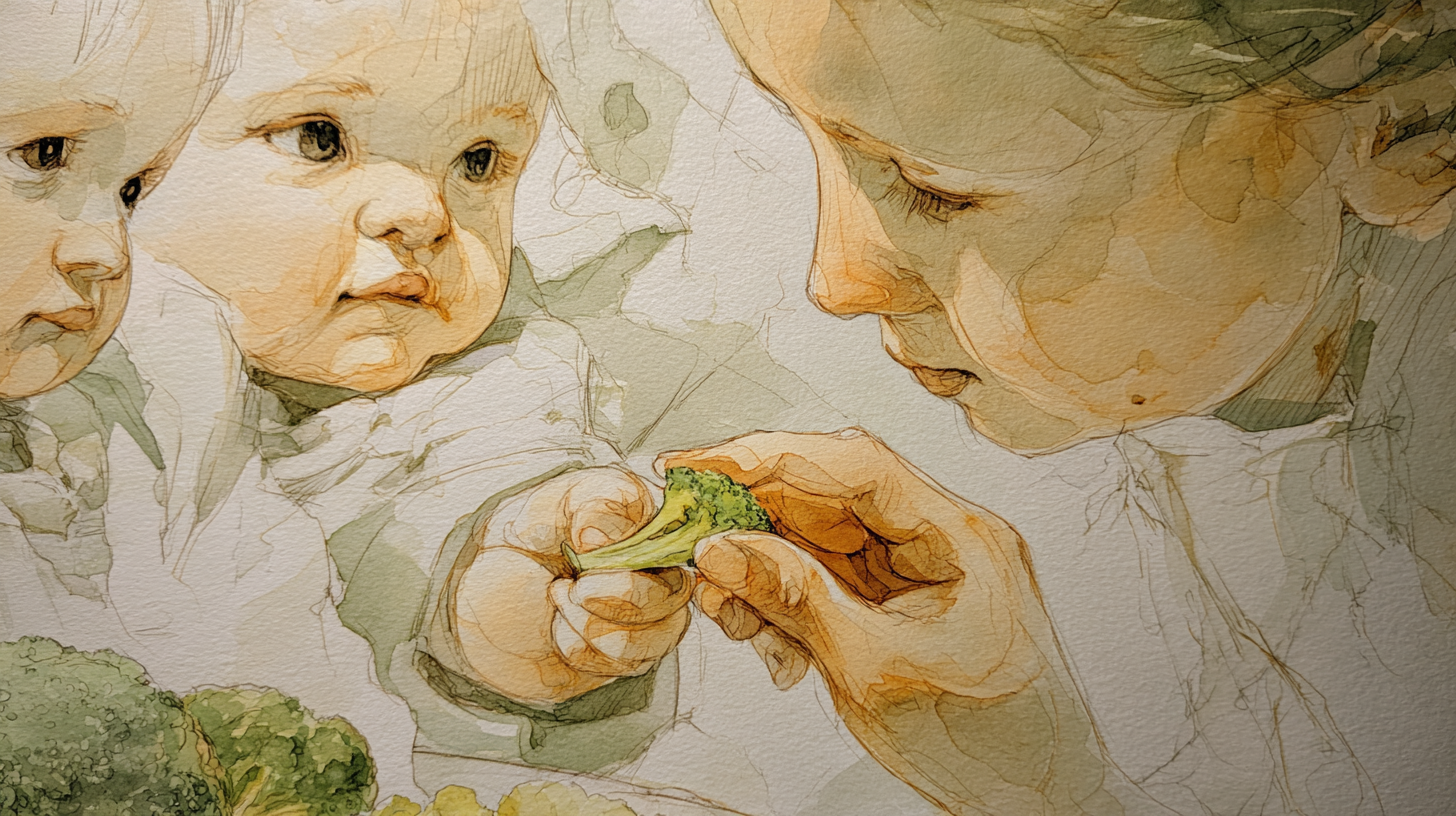
The 15-exposure rule emerged from decades of research showing that consistent, non-pressured offerings over time literally rewire how your baby’s brain perceives foods. Each exposure—even when they don’t eat it—builds familiarity. Think of it like hearing a new song on the radio. The first time, it sounds strange. By the tenth time, you’re humming along.
Why Most Parents Fail (And It’s Not What You Think)
⚠️ The Pressure Trap Calculator
How much pressure are you accidentally applying? Check all that apply:
The biggest mistake isn’t giving up too soon—it’s adding pressure while you wait. Pediatric feeding specialists consistently warn that forcing, bribing, or even enthusiastically encouraging specific bites backfires spectacularly. Research from 2024 confirms that parental pressure does not improve picky eating behaviors in toddlers.
Think about your own eating habits for a second. If someone stood over you demanding you eat something, making disappointed faces when you refused, or promising you dessert if you just ate your vegetables, would that make you suddenly love those vegetables? Of course not. You’d probably start resenting them.
Babies are the same way. The Division of Responsibility model—endorsed by the American Academy of Pediatrics—makes this crystal clear: Parents decide what, when, and where food is offered. Children decide whether and how much to eat. When you cross that boundary and try to control whether or how much your baby eats, you’re working against their natural ability to regulate intake and develop preferences.
My cousin in Trinidad learned this the hard way with her daughter Amara. She spent months trying to get Amara to eat callaloo, using every trick in the book—songs, games, rewards. Nothing worked. Then she attended a workshop on responsive feeding and completely changed her approach. She started simply including callaloo on Amara’s plate alongside foods she already liked, eating it herself with obvious enjoyment, and saying absolutely nothing about whether Amara ate it.
Guess what happened by exposure number eleven? Amara picked up a small piece, tasted it, and asked for more. No pressure. No negotiation. Just patience and science working together.
The Real 15-Exposure Strategy That Actually Works
Alright, let’s get into the practical stuff—the actual strategy that transforms rejection into acceptance. This isn’t just about putting food on a plate fifteen times and hoping for magic. There’s a specific approach that maximizes every single exposure.
Exposure #1-3: Building Visual Familiarity
The first three exposures are about letting your baby’s brain register that this food exists and isn’t threatening. Serve small portions—we’re talking 1-2 tablespoons—alongside foods they already accept and enjoy. Don’t draw attention to it. Don’t ask them to try it. Just let it be there on the plate while you visibly enjoy eating the same food yourself.
If you’re introducing Caribbean flavors like sweet potato or plantain, start with the simplest preparation—steamed or boiled with minimal seasoning. Your baby’s sensory system needs to process the basic flavor profile before you add complexity.
Exposure #4-7: Introducing Interaction
Now you’re building tactile familiarity. Encourage (but never force) your baby to touch, smell, or play with the food. A 2024 study found that food rejection is strongly associated with tactile sensitivity, so giving babies non-eating sensory experiences with foods helps reduce anxiety around them.
Let them squish a steamed carrot between their fingers. Let them watch you cut a bell pepper and examine the seeds inside. Let them help you wash cherry tomatoes in a bowl of water. Every interaction counts as an exposure, even if nothing goes in their mouth.
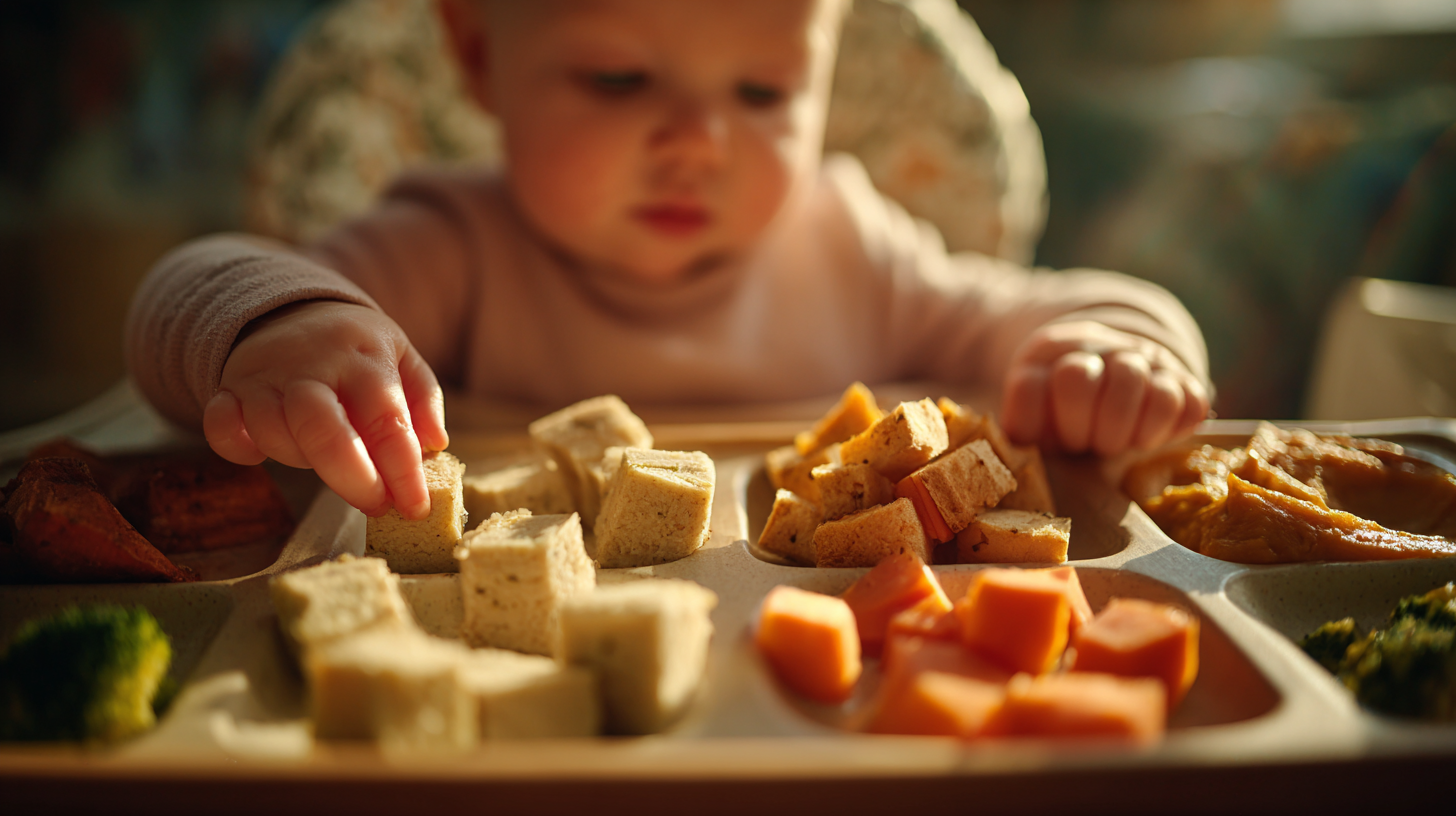
Exposure #8-12: Varying Preparations
This is where most parents miss a crucial opportunity. Research from 2021 showed that repeated exposures work regardless of presentation format—sticks, triangles, grated—but varying preparations can accelerate acceptance because you’re building multiple neural pathways to the same food.
For carrots, try: raw sticks (exposure 8-9), steamed rounds (exposure 10), roasted with slight caramelization (exposure 11), and grated in a salad (exposure 12). Each preparation offers a different texture, temperature, and flavor intensity, expanding your baby’s comfort zone with that vegetable.
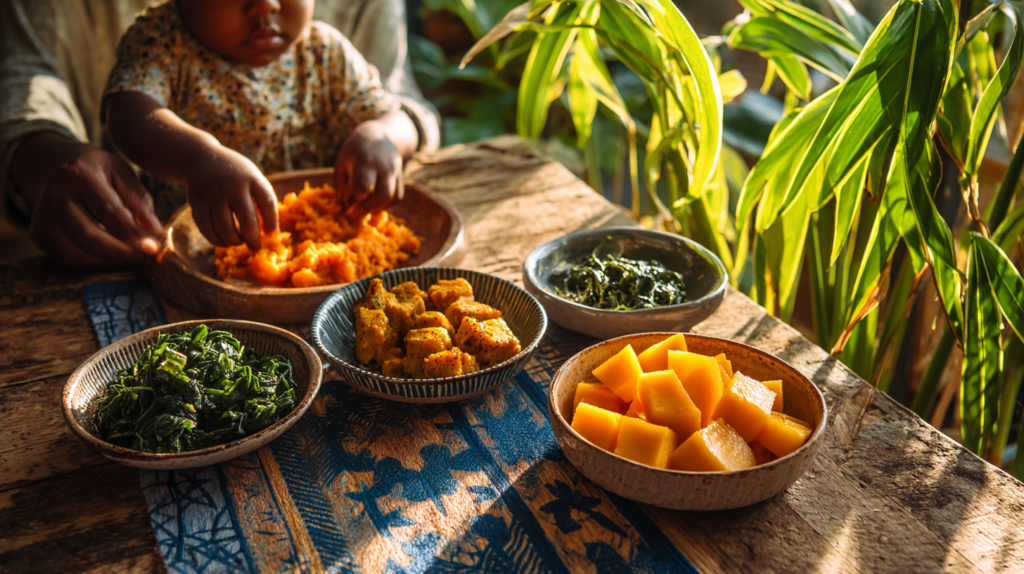
When you’re working with ingredients like calabaza or malanga from Caribbean cuisine, this variety becomes even more powerful. Calabaza can be smooth puree in one exposure, soft cubes in another, and mashed with coconut milk in a third—same vegetable, completely different experiences.
Exposure #13-15: Optimal Timing and Hunger States
By now, you’re in the breakthrough zone. This is when many babies start showing acceptance—taking small tastes, asking questions about the food, or even eating small portions. Make sure you’re offering these exposures when your baby is genuinely hungry, not when they’re tired or already full from snacks.
Experts recommend maintaining 2-3 hours between meals and snacks, offering only water in between. This ensures your baby arrives at the table with real appetite, which naturally increases their willingness to try foods they’re becoming familiar with.
Your Exposure Tracker Game
Pick a food you’re working on and track what’s REALLY happening at each exposure:
The Caribbean Advantage in Food Exposure
Here’s something beautiful about Caribbean food culture that perfectly aligns with the repeated exposure approach: We don’t have a separate “kids menu” mentality. From the time babies start solids, they’re eating what the family eats—just adapted in texture and seasoning.
My grandmother in Jamaica never understood the concept of “picky eating.” She’d mash up a little bit of everything on the table—ackee, callaloo, sweet potato, plantain—and give it to babies to explore. If they didn’t eat much one meal, she’d serve it again the next. And the next. No drama, no pressure. Just consistent exposure to real food with real flavors.
This cultural approach accidentally implemented the science of repeated exposure long before researchers formalized it. And it works because Caribbean ingredients offer incredible variety in textures, flavors, and preparations—perfect for building broad food acceptance.
Take sweet potato, for example. You can serve it steamed and plain (exposure 1-2), mashed with a touch of coconut milk from recipes in our Caribbean Baby Food Recipe Book (exposure 3-4), roasted until slightly caramelized (exposure 5-6), in a warming porridge (exposure 7-8), and eventually in family dishes like cook-up rice or metemgee. Same ingredient, completely different experiences, all building acceptance.
Plantain offers even more versatility. Green plantain has a starchy, potato-like quality when boiled. As it ripens, it becomes sweeter. You can mash it, slice it, puree it, or let older babies hold a soft piece for self-feeding. This natural variety within a single ingredient accelerates the familiarization process.
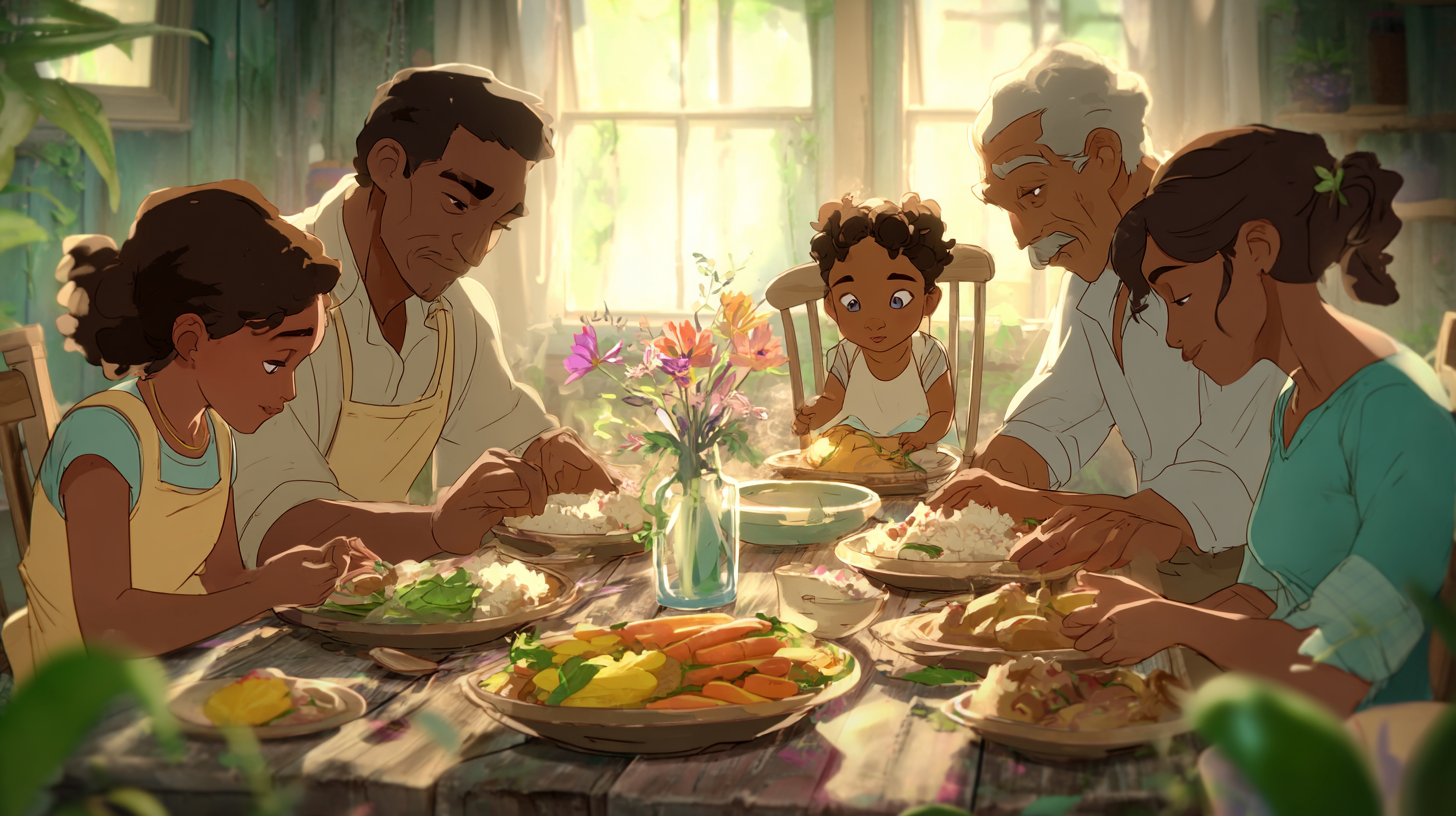
The spices we use—thyme, allspice, cinnamon, bay leaf—introduced gradually from 8 months onward, also build flavor acceptance that prevents bland food dependency. Research from 2021 found that early exposure to varied flavors during complementary feeding has prospective associations with better diet quality in early childhood. Babies who experience diverse tastes early don’t become teenagers who only eat beige food.
What Real Progress Actually Looks Like
Let me share something that might change your entire perspective: Progress doesn’t always look like eating.
When my nephew in Barbados was around 10 months, my sister was trying to get him to accept avocado (zaboca, as we call it). For seven straight exposures, he wouldn’t even look at it. She was ready to give up. But on exposure eight, he picked up a piece, examined it, squished it between his fingers, and put it down. He didn’t eat a single bite.
Most parents would call that a failure. But that was actually a breakthrough. He moved from avoidance to engagement. Two exposures later, he tasted it. Three exposures after that, he was eating it regularly.
This is why tracking matters so much. Research shows mothers often can’t perceive the acceptance shifts happening in their babies because they’re looking for the wrong markers. They’re waiting for eating when they should be celebrating looking, touching, smelling, and exploring.
Real progress markers include:
Visual engagement: Your baby stares at the food, watches you eat it, or points to it. Their brain is actively processing it now instead of dismissing it.
Tactile exploration: They touch it, pick it up, squish it, or bring it close to their face. Even if they drop it immediately, their sensory system just gathered crucial information about texture and temperature.
Oral exploration: They put it in their mouth, even if they spit it out. That single moment of flavor contact with their taste buds is doing neurological work that builds toward acceptance.
Small consumption: They eat a tiny amount—we’re talking a single bite or a few pieces. This isn’t failure because they didn’t finish it. This is success because they consumed it at all.
Understanding these progressive markers completely changes how you experience the repeated exposure journey. Instead of fifteen failed meals, you start seeing fourteen successful steps building toward acceptance.
The Exposure Challenge Game
Ready to commit? Let’s make this fun. Click to reveal your personalized 15-day challenge:
The Mistakes That Reset Your Progress
You can do everything right for eleven exposures and then accidentally sabotage your progress with one well-intentioned mistake. Let me save you from the most common progress killers.
Mistake #1: Commenting on their eating (or not eating)
The moment you say “good job eating your broccoli!” or “why aren’t you trying it?” you’ve introduced pressure. Even positive reinforcement for eating specific foods teaches babies to eat for your approval rather than their own internal hunger and preference cues. Stay completely neutral. If they eat it, your face shows nothing. If they refuse it, your face shows nothing. This is their journey, not a performance.
Mistake #2: Removing the food after they refuse it
If they push away the carrots and you immediately remove the plate, you’ve just confirmed that refusing makes the food disappear. Instead, leave it on their plate for the entire meal. They might ignore it for 20 minutes and then suddenly pick it up. Don’t create an artificial deadline for when they should show interest.
Mistake #3: Only offering it at dinner
If you’re trying to build exposure to a specific food, vary when you serve it. Breakfast, lunch, snack time—different times of day mean different hunger levels and different contexts. Some babies are more adventurous at breakfast when they’re well-rested. Others are more receptive at lunch after morning play has built up appetite.
Mistake #4: Giving up on the food if they gag
Gagging is not choking—it’s a normal protective reflex that happens when babies are learning to manage new textures. A 2021 study found that gagging frequency is associated with texture acceptance challenges, but working through it (safely, with appropriate texture progression) is how babies develop oral-motor skills. If they gag on a texture, offer it softer or smoother next time, but don’t eliminate the food entirely.
Mistake #5: Not eating it yourself
Modeling is one of the most powerful acceptance tools, yet so many parents forget to actually eat the food they’re trying to introduce. Your baby watches everything you do. If you’re pushing broccoli on them while you eat a sandwich, they notice. Sit down, eat the same foods together, and let them observe your genuine enjoyment.
My aunt in Guyana makes an art of this. When she’s introducing something new to her grandbabies, she serves it family-style in the middle of the table and makes a whole production of serving herself, complimenting the flavor, and eating with visible satisfaction. She never tells the babies to eat it. She just makes it look incredibly appealing through her own behavior. Works like magic.
When to Seek Help Beyond the 15-Exposure Rule
Let’s be clear about something important: The 15-exposure rule works for typical food neophobia, which is developmental and temporary. But there are situations where repeated exposure alone isn’t enough, and recognizing those situations matters.
If your baby is rejecting entire food categories (all vegetables, all proteins, all textures beyond puree past 12 months), consuming five or fewer types of food consistently, showing extreme distress around food, or losing weight or failing to gain appropriately, those are red flags that go beyond normal neophobia.
Research from 2024 shows that feeding difficulties manifest initially between ages 1-4 years in 62% of affected children, and 65% of children with feeding difficulties consume five or fewer types of food per day. These aren’t just “picky eaters”—these are kids who need professional evaluation.
Avoidant/Restrictive Food Intake Disorder (ARFID) is a clinical diagnosis that exists on a spectrum with food neophobia. The difference comes down to severity, duration, and impact on growth, nutrition, and functioning. A pediatric feeding specialist, speech-language pathologist, or occupational therapist trained in feeding can help distinguish between normal developmental rejection and something requiring intervention.
There’s also the sensory processing component. That 2024 study on food rejection and tactile sensitivity found that some babies have genuine sensory processing differences that make certain textures, temperatures, or flavors genuinely overwhelming. These kids need sensory integration approaches alongside or instead of simple repeated exposure.
If you’ve done 20+ consistent, pressure-free exposures to multiple different foods with zero progress—not even visual engagement or touching—talk to your pediatrician. If mealtimes are characterized by extreme distress, gagging beyond normal texture learning, or refusal to sit at the table, get professional eyes on it.
The 15-exposure rule is powerful evidence-based strategy for typical development. But it’s not a substitute for clinical assessment when something deeper is happening. Trust your instincts. You know your baby better than anyone.
Beyond Acceptance: Building a Lifetime Love of Food
Here’s the beautiful truth that gets lost in all the research and strategies: This isn’t really about getting your baby to eat broccoli. It’s about teaching them that food is safe, enjoyable, and worthy of exploration. It’s about building a relationship with eating that lasts a lifetime.
When you practice pressure-free repeated exposure, you’re teaching your child to trust their own hunger cues, to approach new experiences with curiosity instead of fear, and to understand that preferences can change and evolve. These lessons extend far beyond the dinner table.
My grandmother—the one who never met a “picky eater”—used to say something in patois that roughly translates to: “Food is love, but force is not love.” She understood intuitively what researchers spent decades proving: The more you push, the more resistance you create. The more you trust the process, the more naturally acceptance unfolds.
Caribbean food culture has always emphasized gathering around the table, sharing from communal dishes, and exposing children to bold, real flavors from the start. There’s wisdom in that approach. When you’re preparing sweet potato rundown, callaloo, rice and peas, or plantain dishes from Caribbean Baby Food Recipe Book, you’re not just feeding your baby—you’re connecting them to culture, to family traditions, to a food identity that’s rich and diverse.
The 15-exposure rule gives you the framework. Caribbean ingredients and cooking traditions give you the variety. Your patience and consistency give it time to work. And your baby’s developing brain does the rest.
So tomorrow, when you put that piece of roasted sweet potato on your baby’s plate for the eighth time and they push it away again, you’ll know something has shifted. You’re not seeing a failure. You’re seeing exposure number eight—right in the zone where acceptance typically emerges. You’re seven or eight exposures away from that moment when they surprise you by picking it up, tasting it, maybe even asking for more.
And when that moment comes—because it will come—you’ll realize that all those exposures weren’t about the food at all. They were about teaching your baby that new things might feel uncomfortable at first, but with time, patience, and zero pressure, uncomfortable becomes familiar, and familiar becomes loved.
That’s a lesson worth fifteen exposures. That’s a lesson worth waiting for.
Your Next Steps Start Tonight
Your 5-Minute Action Plan
Right now, before you close this tab:
- Choose ONE food your baby currently refuses. Write it down.
- Plan exposure #1 for tomorrow’s meal. What will you serve? How will you prepare it?
- Commit to zero pressure. You will offer it. You will eat it yourself with enjoyment. You will say nothing about whether they eat it.
- Create a simple tracking system. A note in your phone, a calendar, a piece of paper on the fridge—somewhere you’ll record each exposure and what happened (looked, touched, tasted, ate).
- Tell yourself this truth: “My job is to offer. My baby’s job is to decide. Progress is happening even when I can’t see it yet.”
Ready to expand your baby’s palate with Caribbean-inspired variety? Grab the Caribbean Baby Food Recipe Book—over 75 recipes featuring sweet potatoes, plantains, mangoes, callaloo, and more. Every recipe is designed for repeated exposure with texture progression and flavor variations built in. Because the best way to prevent picky eating is to expose your baby to real, diverse, flavorful foods from the start.
Three months from now, you’ll be that parent who casually mentions to another exhausted mom at the playground: “Oh, we do repeated exposure. Fifteen times minimum. It’s science-backed.” And she’ll look at you like you just handed her the secret to the universe.
Because honestly? You kind of did.
The journey from rejection to acceptance isn’t linear. Some days will feel like progress. Others will feel like you’re moving backward. But every exposure matters. Every single one is building neural pathways, creating familiarity, reducing fear, and expanding your baby’s willingness to explore.
So take a deep breath. Trust the science. Trust your baby’s brain. Trust that patience and persistence, combined with zero pressure, create the conditions where acceptance naturally emerges.
And when you’re standing at the stove tomorrow, preparing that sweet potato or plantain or callaloo for exposure number twelve, remember: You’re not just feeding your baby. You’re teaching them that new things become familiar, that family shares food with joy, and that they can trust their own body to guide them.
That’s bigger than any single vegetable. That’s parenting magic disguised as patience.
Now go start exposure number one. Your baby’s relationship with food—and with trusting themselves—begins with that single, pressure-free offering.

Kelley's culinary creations are a fusion of her Caribbean roots and modern nutritional science, resulting in baby-friendly dishes that are both developmentally appropriate and bursting with flavor. Her expertise in oral motor development and texture progression ensures that every recipe supports your little one's feeding milestones while honoring cultural traditions.
Join Kelley on her flavorful journey as she shares treasured family recipes adapted for tiny taste buds, evidence-based feeding guidance, insightful parenting anecdotes, and the joy of celebrating food, culture, and motherhood. Get ready to immerse yourself in the captivating world of Kelley Black and unlock the vibrant flavors of the Caribbean for your growing baby, one nutritious bite at a time.
- The Feeding Revolution: Why Your Everyday Meals Are Changing the World - October 13, 2026
- Your Feeding Story Matters More Than The “Perfect” One Online - October 12, 2026
- Looking Forward: Stepping Into Your Confident Feeding Future - October 11, 2026