
When Everything Changes: The Truth About Keeping Your Child Fed Through Life’s Chaos
Discover Your Transition Feeding Challenge
Every family’s transition is unique. Click the change you’re facing right now to uncover what’s really happening at your dinner table.
Here’s something nobody tells you when you’re packing boxes at midnight or preparing a nursery for your second child: your toddler who ate everything last week will suddenly refuse the same meals this week. Not because the food changed. Not because you did anything wrong. But because their entire world just shifted—and their plate became the one place where they could finally say “no.”
I learned this the hard way when we moved from Kingston to Toronto. My daughter, who happily devoured her grandmother’s callaloo and ackee just days before, sat at our new kitchen table pushing around plain pasta like it was poison. The pediatrician said she was healthy. The books said it was “just a phase.” But I knew something deeper was happening. She wasn’t rejecting food—she was processing change the only way a three-year-old knows how.
Research confirms what parents have sensed for generations: major life transitions fundamentally disrupt children’s eating patterns. Studies show that parental stress during significant family changes correlates directly with less structured mealtimes and shifts in feeding practices. When adults are overwhelmed managing logistics, emotional regulation at the dinner table often becomes the first casualty. But here’s what matters: understanding this pattern gives us the power to break it.
The Hidden Connection Between Stress and Your Child’s Plate
Every parent facing a major transition notices the same pattern. Sleep gets disrupted first. Then behavior shifts. And finally—always finally—eating becomes a battleground. Up to 18% of U.S. households with children experienced food insecurity in 2023, and these numbers climb significantly during periods of family upheaval. But even families with abundant food access struggle when life turns upside down.

The fascinating truth researchers have uncovered is that feeding difficulties during transitions aren’t really about food at all. They’re about control, predictability, and emotional safety. When everything else in a child’s world feels uncertain—the house, the routine, the attention they receive—their meals become the one constant they can control. Refusing dinner isn’t defiance. It’s communication.
Families experiencing high stress or household chaos show significantly higher rates of feeding difficulties in children. But the inverse is also true: maintaining even minimal feeding structure during chaos serves as an emotional anchor that helps children regulate their stress response. The family meal, even when it’s imperfect, becomes a daily promise that some things remain stable.
How Stable Is Your Feeding Foundation?
Answer these quick questions to understand your family’s feeding resilience during change.
In the past week, how many meals did your family eat together?
When your child refuses a meal, what’s your typical response?
How predictable are your meal times currently?
What Really Happens When Life Turns Upside Down
Moving disrupts more than just your child’s physical environment—it fractures their sense of place in the world. The kitchen where they helped you stir rice and peas is gone. The high chair positioned by the window overlooking the backyard has been replaced by a different view, different light, different sounds. Every sensory cue that previously signaled “mealtime” has vanished.
Children process this sensory upheaval differently than adults. While we focus on logistics—finding the new grocery store, unpacking the kitchen, establishing new routines—our children are grieving a hundred small losses we don’t even recognize. The way afternoon light hit the dining table. The creaky sound the refrigerator made. The ritual of washing hands in their familiar bathroom before dinner.
New siblings trigger an even more complex emotional response. Research on feeding dynamics shows that older children often regress to earlier eating behaviors when a baby arrives—not because they’re “acting out,” but because they’re unconsciously trying to reclaim the nurturing attention they associate with infancy. The toddler who proudly used utensils suddenly wants to be spoon-fed. The preschooler who ate independently now needs mommy sitting beside them for every bite.
Starting school introduces a different stressor: comparison and social pressure around food. Children who happily ate plantain and callaloo at home suddenly announce they want “normal food” like their classmates eat. They become hyperaware of what makes their lunch different, and different often feels like a problem to a five-year-old desperate to fit in. This isn’t rejection of their culture—it’s a developmentally normal response to new social dynamics.
The Science of Keeping Feeding Steady When Nothing Else Is
Here’s where the research offers genuine hope: even minimal feeding structure during chaos provides measurable benefits to children’s emotional and nutritional well-being. Family meals remain consistently linked with better dietary outcomes and emotional regulation, even when those meals are imperfect, rushed, or non-traditional. The magic isn’t in the meal being perfect—it’s in the meal happening at all.

Experts in pediatric feeding now advocate strongly for what they call “responsive feeding” during transitions. This approach prioritizes emotional connection over nutritional perfection. It means trusting your child’s hunger cues even when they seem “wrong” by normal standards. It means accepting that your typically adventurous eater might survive on five foods for three months—and that’s developmentally appropriate stress response, not failure.
The concept of “anchor routines” has emerged as particularly powerful. Rather than attempting to maintain complex meal rituals during chaos, families benefit most from establishing one simple, repeatable food-related routine that remains constant regardless of other disruptions. This might be Sunday morning pancakes, a nightly bedtime snack shared together, or Wednesday’s special rice and peas that echoes grandmother’s recipe. The specific ritual matters less than its unwavering consistency.
When we moved, I couldn’t recreate our entire Kingston food routine in Toronto. The ingredients weren’t the same, the kitchen layout was different, my stress levels meant elaborate cooking was impossible. But I could make Saturday morning porridge happen. Same pot, same cinnamon smell, same routine of my daughter helping stir. That single anchor point provided more stability than any amount of nutritional perfection could have achieved. If you’re looking for simple, familiar recipes that travel well through transitions, the Caribbean Baby Food Recipe Book offers dozens of comforting options that require minimal ingredients but deliver maximum cultural and emotional connection.
⏰ Your Transition Timeline: What to Expect When
Click each stage to see what’s normal and what you can do.
What’s Happening: Children often eat less overall or cling to only familiar “safe” foods. Appetite decreases as stress hormones increase. This is biology, not misbehavior.
Your Strategy: Prioritize presence over perfection. Serve at least one familiar food at every meal. Don’t fight food battles—connection matters more than consumption right now.
What’s Happening: You’ll see good days mixed with terrible ones. One night they eat everything, the next they refuse meals they loved. This inconsistency IS progress, not regression.
Your Strategy: Establish one non-negotiable anchor meal. Keep meal times predictable even if meal content varies. Start reintroducing variety slowly, one food at a time.
What’s Happening: Appetite typically normalizes. Your child begins accepting the new environment as “home.” Previous food preferences gradually return, though they may look slightly different.
Your Strategy: This is the window to gently expand variety again. Reintroduce foods they rejected during early transition. Celebrate small wins without pressure.
What’s Happening: Most children return to baseline eating patterns, though some preferences may have permanently shifted. That’s okay—taste preferences evolve naturally through all life experiences.
Your Strategy: Evaluate what new routines worked and keep them. Release guilt about the early weeks. Your consistency through chaos built resilience that extends far beyond food.
The Mistakes That Make Everything Harder
In our desperation to maintain normalcy, we often double down on control precisely when we should release it. The research is clear: coercive feeding practices—forcing bites, bribing with dessert, lengthy negotiations—increase dramatically during family stress. And these practices consistently backfire, creating the exact food aversions and power struggles we’re trying to avoid.
I watched myself fall into this trap. As my daughter’s eating became more restricted after our move, I became more controlling. More insistent she try “just one bite.” More anxious about her nutrition. More likely to offer treats as rewards for eating dinner. Every one of these strategies, employed from love and fear, made the problem worse. She sensed my anxiety and it amplified her own, creating a feedback loop where meals became tense performances rather than nourishing connections.
Another common mistake is abandoning all structure in the name of “flexibility.” When everything feels chaotic, some parents swing to the opposite extreme—allowing constant grazing, serving only preferred foods, eliminating any mealtime boundaries. This approach, while well-intentioned, removes the very structure children need to feel secure. Boundaries, even simple ones, communicate safety during uncertain times.
The debate between structure and flexibility during transitions has occupied feeding specialists for years. The emerging consensus? Both matter, but in different ways. Structural elements—when meals happen, where they occur, who’s present—should remain as consistent as possible. Content flexibility—what specific foods are served, portion sizes, how adventurous the menu is—should increase during high-stress periods.
When Feeding Struggles Signal Something Deeper
Sometimes what looks like transition-related picky eating is actually your child communicating psychological distress they lack words to express. The difference lies in intensity and duration. Typical transition feeding challenges improve gradually over 8-12 weeks. They’re accompanied by other signs of adjustment—better sleep, more engagement, returning playfulness.
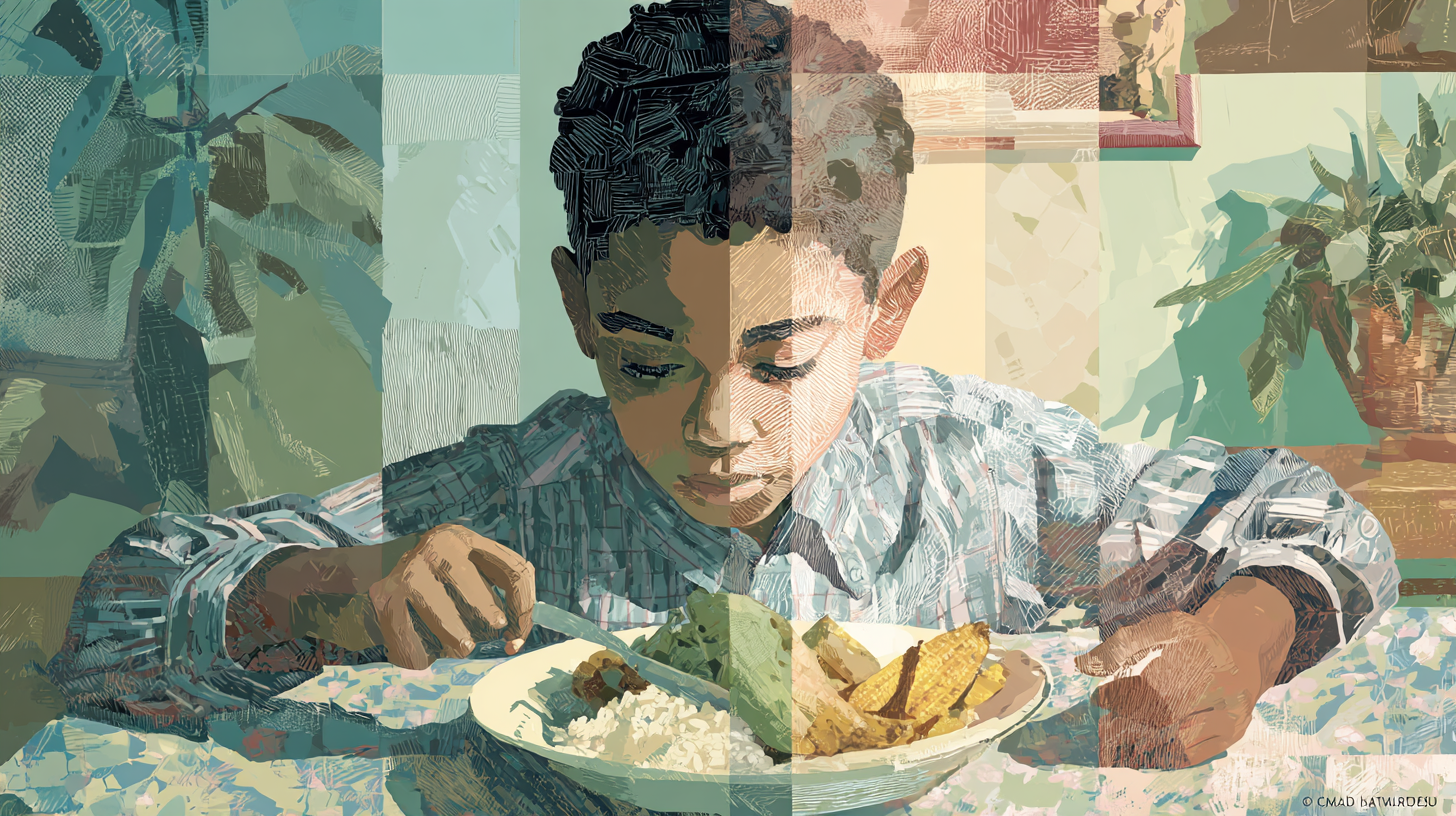
Warning signs that warrant professional support include: sustained weight loss beyond two weeks, complete refusal of entire food groups for more than a month, severe anxiety specifically around mealtimes that doesn’t improve, or feeding restriction accompanied by other concerning behaviors like excessive crying, aggression, or withdrawal.
Food insecurity adds another layer of complexity to transition feeding challenges. Families dealing with economic instability alongside major life changes face compounding stressors. Limited resources force impossible choices between nutritional variety and financial survival. The shame many parents feel about this reality often prevents them from seeking available support. But research confirms that even in food-insecure households, maintaining consistent meal timing and family connection at meals provides protective benefits to children’s wellbeing.
⚓ Create Your Family’s Anchor Meal
Choose the meal moment that feels most achievable to keep consistent, no matter what else changes.
Practical Strategies That Actually Work
The most effective transition feeding strategies share one characteristic: they’re simple enough to maintain when you’re exhausted and overwhelmed. Complexity fails during chaos. Simplicity succeeds.
For Families Moving: Pack a “first meal box” that travels with you in the car, not the moving truck. Include your child’s plate, cup, utensils, and ingredients for one familiar meal. Prepare this meal in your new home on the first night, using the familiar dishware, before anything else is unpacked. This single act of continuity signals safety more powerfully than any words.
For New Sibling Arrivals: Establish special “big kid meals” where the older child gets dedicated one-on-one time with a parent while baby sleeps or another caregiver manages the infant. This doesn’t need to be elaborate—ten minutes of undivided attention while sharing crackers and cheese can feel like a feast to a child suddenly competing for notice. Let them choose the menu and feel powerful in their food decisions.
For School Transitions: Create lunch rehearsals at home before school starts. Practice the routine: washing hands, opening lunch containers, eating in a limited timeframe. This reduces the cognitive load of navigating lunchtime social dynamics while simultaneously figuring out physical logistics. Consider packing one culturally familiar food and one “bridge” food that’s common in school lunches, gradually shifting the ratio as your child’s comfort increases.
The concept of “bridge foods” deserves special attention. These are items that share flavor profiles or ingredients with culturally specific foods but appear more mainstream to anxious young children. Rice and peas can bridge to Spanish rice. Fried plantain can bridge to home fries. Callaloo can be presented alongside or mixed with spinach. These aren’t about hiding heritage—they’re about giving children tools to navigate multiple food cultures simultaneously. Over time, as confidence builds, the bridge becomes unnecessary.
Batch cooking during transitions is survival, not laziness. Preparing large quantities of simple, freezer-friendly meals like rice and beans, mild curry, or cornmeal porridge means you have reliable options during the weeks when cooking feels impossible. The Caribbean Baby Food Recipe Book includes dozens of recipes specifically designed for batch preparation, with ingredient lists that emphasize pantry staples that survive moves and storage.
Decode Your Child’s Stress Signals at Meals
Click each behavior to understand what your child might really be communicating.
What It Might Mean: “I need control over something.” During transitions, children often exert control through food because it’s one domain where they have power.
Your Response: Offer choices within boundaries. “Do you want carrots or cucumber?” gives control without chaos. Don’t force eating, but maintain that meals happen at scheduled times.
What It Might Mean: “I’m seeking comfort and connection.” Frequent food requests often signal emotional hunger, not physical hunger.
Your Response: Offer connection first. “Let’s sit together for five minutes, then we’ll have our regular snack.” Physical closeness often satisfies what they’re really seeking.
What It Might Mean: “I miss the nurturing I used to receive” or “I need reassurance I’m still cared for.” This is especially common with new siblings.
Your Response: Honor the request sometimes without judgment. Feed them a few bites, then gently encourage independence. This meets their emotional need while maintaining age-appropriate expectations.
What It Might Mean: “I’m overwhelmed and meals have become the trigger where all my stress releases.” Food becomes proxy for everything feeling out of control.
Your Response: Reduce mealtime pressure entirely for one week. Serve only preferred foods. Focus solely on calm presence. Once baseline calm returns, gradually reintroduce structure and variety.
The Social Media Reality Check
Social media has become both blessing and curse for parents navigating feeding transitions. Online communities provide real-time support, validation, and practical strategies from parents currently living similar experiences. Studies show these peer connections can significantly reduce parental stress and increase confidence in feeding approaches.
But social media also curates unrealistic expectations. The parent posting their toddler happily eating roasted vegetables on moving day isn’t showing you the three previous rejected meals. The beautiful bento box lunches on the first day of school required three hours of preparation and may have come home untouched. Comparison becomes toxic when we measure our chaotic reality against others’ curated highlights.
The most valuable social media feeding content during transitions comes from accounts that normalize struggle alongside success. Look for voices sharing both wins and failures, discussing the emotional labor of maintaining feeding routines during crisis, and acknowledging that “good enough” feeding is genuinely good enough. Communities that prioritize connection over perfection, flexibility over judgment, and long-term patterns over daily performance serve families better than those promoting rigid ideals.
Looking Forward: What Comes After Survival Mode
Eventually, the crisis passes. The boxes get unpacked. The baby starts sleeping longer stretches. Your child stops crying at school drop-off. And one morning, you realize meals have returned to something resembling normal—though “normal” now looks different than it did before.
This is the moment to reflect, not with judgment but with curiosity. What feeding strategies served your family well during chaos? Which ones created more stress? What new routines emerged that you actually want to keep? Transitions force evolution, and not all changes are losses. Sometimes crisis reveals better ways of doing things that were obscured by comfortable routine.
For my family, Toronto eventually became home. My daughter’s eating not only recovered but expanded beyond what it had been in Kingston. The transition that felt like devastation became a bridge to broader food acceptance. But this transformation took time, patience, and the release of expectations about how it “should” look. Most importantly, it required trusting that maintaining connection mattered more than maintaining control.
Find Your Transition Comfort Recipe
Every family needs go-to meals during upheaval. Click your child’s age to discover simple Caribbean-inspired comfort foods that travel well through change.
Smooth, simple purées
Textured mashable foods
Soft finger foods
Family meal adaptations
The Gift Hidden in the Struggle
Here’s what I wish someone had told me when I was sitting in that new Toronto kitchen, watching my daughter refuse the pasta I’d worked so hard to make feel special: This struggle is temporary, but the skills you’re both developing are permanent.
Children who navigate feeding challenges during major transitions aren’t damaged by the experience—they’re strengthened by it. They learn that routines can break and rebuild. That preferences can shift and return. That food is important but not worth destroying relationships. That their parents remain steady even when their world doesn’t. These are profound lessons that extend far beyond the dinner table.
Parents who survive transition feeding challenges emerge with deeper understanding of their children’s communication patterns, greater tolerance for imperfection, and enhanced ability to distinguish real problems from temporary disruptions. We learn to trust our instincts over external pressure. We discover that our presence matters more than our performance. We realize that feeding our children is about so much more than nutrition—it’s about creating moments of connection that anchor them through life’s inevitable storms.
The next time everything in your life shifts simultaneously and your child stops eating normally, remember: this is communication, not defiance. This is processing, not regression. This is temporary, not permanent. Your job isn’t to force normalcy where none exists. Your job is to maintain connection, offer consistency where possible, and trust that both you and your child possess the resilience to find your way through.
Because feeding during life transitions isn’t really about the food at all. It’s about maintaining the invisible threads of safety and connection that hold your family together when everything else is falling apart. Those threads are stronger than they feel in the moment. And on the other side of chaos, they’ll still be there, tested and proven, ready to support whatever comes next.
For more guidance on building these resilient feeding patterns with culturally grounded recipes that provide both nutrition and emotional comfort, explore the complete collection in the Caribbean Baby Food Recipe Book, with over 75 recipes specifically designed for families navigating the beautiful complexity of raising children across cultures and through change.

Kelley's culinary creations are a fusion of her Caribbean roots and modern nutritional science, resulting in baby-friendly dishes that are both developmentally appropriate and bursting with flavor. Her expertise in oral motor development and texture progression ensures that every recipe supports your little one's feeding milestones while honoring cultural traditions.
Join Kelley on her flavorful journey as she shares treasured family recipes adapted for tiny taste buds, evidence-based feeding guidance, insightful parenting anecdotes, and the joy of celebrating food, culture, and motherhood. Get ready to immerse yourself in the captivating world of Kelley Black and unlock the vibrant flavors of the Caribbean for your growing baby, one nutritious bite at a time.
- The Feeding Revolution: Why Your Everyday Meals Are Changing the World - October 13, 2026
- Your Feeding Story Matters More Than The “Perfect” One Online - October 12, 2026
- Looking Forward: Stepping Into Your Confident Feeding Future - October 11, 2026