The Raw Truth About Unpasteurized Foods: What Every Caribbean Parent Must Know Before Baby’s First Bite
You’re standing in the market. Your mother-in-law swears by fresh, unpasteurized coconut milk straight from the vendor for baby’s porridge. Your social media feed shows influencers giving their six-month-olds raw goat milk. Meanwhile, your grandmother is offering to make fresh cheese from farm milk for your little one. Which choice keeps your baby safe? Click each scenario to reveal the truth:
Three years into motherhood, I thought I had baby feeding figured out. My daughter thrived on homemade Caribbean purees—sweet potato mash, plantain porridge, callaloo blends—all the good stuff from my childhood. Then came the day my cousin visited from the countryside, carrying fresh cow’s milk still warm from morning milking. “This is what we grew up on,” she said with that knowing smile. “None of that store-bought nonsense. Natural milk, straight from the source, just like Granny used to give us.”
Something about her confidence made me pause. The milk looked rich and creamy, nothing like the watery stuff in cartons. Social media had been flooding my feed with “raw milk benefits” posts—influencers claiming superior nutrition, better digestion, allergy prevention. Even some wellness accounts I trusted were jumping on the bandwagon. But then I remembered a conversation from my pediatrician’s office, something about foodborne illness and vulnerable immune systems. That hesitation saved me from making a dangerous mistake that sends hundreds of babies to emergency rooms every year.
Here’s what nobody tells you until it’s almost too late: the “natural is better” movement has created a perfect storm of misinformation around unpasteurized foods, and babies are paying the price. Between late 2023 and mid-2024, a single raw milk outbreak infected 165 people across four states—many of them children whose parents believed they were making the healthier choice. The truth? Unpasteurized foods pose documented, preventable, and sometimes catastrophic risks to infants that have nothing to do with being “too cautious” and everything to do with how babies’ immune systems actually work.
This isn’t about fear-mongering or rejecting traditional foods. Caribbean families have safely fed babies for generations, and many of our cultural practices around infant nutrition are brilliant. But we need to separate evidence-based safety from nostalgia and influencer myths. Today, I’m sharing everything I’ve learned from pediatric nutrition research, food safety surveillance, and yes, some hard lessons from parents who learned these truths the painful way. Whether you’re introducing your baby to island flavors or navigating conflicting advice from family and social media, you need to know exactly which foods pose real danger and which ones are perfectly safe.
What “Unpasteurized” Actually Means for Your Baby’s Body
Let’s start with the science stripped of jargon. Pasteurization is simply a precisely controlled heat treatment that kills dangerous microorganisms—bacteria, viruses, and parasites—without significantly changing food’s nutritional value. It was developed in the early 20th century when milk-borne tuberculosis, typhoid, and other infections were common killers. Since pasteurization became standard practice, these diseases plummeted. This isn’t theoretical; it’s documented public health success.
Unpasteurized foods skip this crucial safety step, which matters enormously for babies because their bodies work differently than ours. Adults have mature immune systems, higher stomach acid levels, and fully developed gut barriers that provide multiple lines of defense against pathogens. When we accidentally consume something contaminated, we might get away with mild symptoms or nothing at all. Babies lack all these protections. Their gastric acid is less acidic, their gut lining is more permeable, and their immune response is still learning how to fight invaders.
This vulnerability means that pathogens like Salmonella, Listeria monocytogenes, E. coli, Campylobacter, and Clostridium botulinum can rapidly progress from intestinal infection to systemic illness in infants. We’re not talking about a day of stomach upset. We’re talking about sepsis—blood infections that shut down organs. We’re talking about bacterial meningitis that can cause permanent brain damage. We’re talking about hemolytic uremic syndrome from certain E. coli strains that destroys kidney function. These are not rare “one in a million” outcomes when infants consume contaminated unpasteurized products; surveillance data shows they happen with disturbing regularity.
⚠️ Reality Check: Between 2007 and 2019, unpasteurized dairy products accounted for the majority of dairy-related outbreak cases and hospitalizations in the U.S. and Canada on a per-serving basis. Meanwhile, foodborne disease surveillance in 2022 showed infections from food-transmitted pathogens rebounding as pandemic behaviors ended, with Salmonella, Campylobacter, and E. coli leading the charge—the same organisms frequently found in raw milk and unpasteurized products.
The tragic irony? Many parents choose unpasteurized products precisely because they want to give their babies “the best.” They hear claims about superior enzymes, beneficial bacteria, and better nutrient absorption. Research shows these claims don’t hold up. Pasteurization doesn’t eliminate nutritional value—it targets pathogens while leaving proteins, fats, vitamins, and minerals intact. The supposed “beneficial bacteria” in raw milk are not the probiotic strains proven to support infant health. In fact, the bacteria raw milk contains are exactly the ones we want to avoid: potential pathogens waiting for the right conditions to multiply.
The Hidden Dangers Lurking in “Natural” Products
These aren’t abstract medical terms—they’re real threats hiding in unpasteurized foods. Click each card to understand what happens when these pathogens enter your baby’s vulnerable system:
Listeria monocytogenes
Found in: Raw milk, soft cheeses, refrigerated smoked seafood, unpasteurized juice
What it does to babies: Crosses from gut to bloodstream, causing sepsis. Can cross the blood-brain barrier, leading to meningitis with seizures, permanent brain damage, or death. Newborns are 10 times more susceptible than healthy adults.
Recent cases: Recurring outbreak analyses show Listeria persists as a major threat, with contaminated dairy repeatedly causing neonatal infections even with modern safety protocols.
Salmonella (non-typhoidal)
Found in: Raw milk, raw eggs, undercooked poultry, unpasteurized juice
What it does to babies: Causes severe diarrhea and high fever, leading to dangerous dehydration. Can spread to blood and bones, causing osteomyelitis. Infants account for disproportionate numbers of severe cases requiring hospitalization.
Recent cases: A 2023-2024 outbreak from raw milk products infected 165 people across four states, with many victims being children. Another outbreak in 2023-2024 was traced to a specific raw milk brand, causing widespread illness.
☠️ E. coli (Shiga toxin-producing strains)
Found in: Raw milk, undercooked ground beef, contaminated produce, unpasteurized cider
What it does to babies: Produces toxins that destroy red blood cells and damage kidney blood vessels, causing hemolytic uremic syndrome (HUS). This leads to acute kidney failure requiring dialysis, and can cause permanent kidney damage or death.
Recent cases: Ongoing surveillance shows E. coli remains a top foodborne threat, with unpasteurized dairy and juice frequently implicated in outbreaks affecting vulnerable populations.
Campylobacter
Found in: Raw milk, undercooked poultry, contaminated water
What it does to babies: Causes bloody diarrhea and severe cramping. In infants, can trigger Guillain-Barré syndrome—a rare but serious condition causing progressive muscle weakness and paralysis.
Recent cases: CDC dashboards consistently show Campylobacter as one of the most common causes of multi-state foodborne outbreaks, frequently linked to unpasteurized dairy and undercooked poultry.
Clostridium botulinum (in honey)
Found in: Honey (not technically unpasteurized, but unprocessed)
What it does to babies: Spores germinate in baby’s immature gut, producing botulinum toxin that causes muscle paralysis. Starts with constipation, weak cry, and poor feeding, then progresses to inability to breathe without mechanical ventilation.
Why babies are vulnerable: Adult intestines prevent spore germination, but babies under 12 months lack this protection. Even “natural” or “raw” honey meant for adults is dangerous for infants.
What makes these risks especially insidious is that contamination is completely invisible. Raw milk from a “clean” farm looks, smells, and tastes identical to contaminated milk. The myth that you can somehow assess safety by appearance or source is exactly that—a myth. Research confirms that even farms with excellent hygiene practices cannot guarantee pathogen-free raw milk. The bacteria exist naturally in cow intestines and on udders; even a trace amount transferred during milking can multiply to dangerous levels during storage.
I’ve heard the argument countless times: “But our grandparents drank raw milk and they survived.” Survivorship bias explains this perfectly. We remember the people who made it through, not the ones who didn’t. Before pasteurization became standard, infant mortality rates were devastatingly high, and foodborne illness contributed significantly. Modern food safety protocols didn’t emerge from overcautious bureaucracy—they developed in response to actual deaths, particularly among the most vulnerable populations like babies, pregnant women, and the elderly.
The Social Media Misinformation Machine
Somewhere between 2020 and now, “natural parenting” influencers hijacked the conversation around infant nutrition, and the results have been genuinely dangerous. TikTok and Instagram are flooded with posts promoting raw milk for babies, claiming it prevents allergies, supports immunity, and provides superior nutrition. Wellness accounts with millions of followers show babies drinking unpasteurized goat milk or eating soft cheeses made from farm-fresh raw milk, framing it as traditional wisdom our ancestors knew but modern medicine has forgotten.
Here’s the problem: these influencers aren’t nutrition scientists or pediatricians. They’re marketers with engagement algorithms that reward provocative content over accuracy. Media analyses from 2024 and 2025 show that raw milk promotion has surged particularly around bird flu (H5N1) detection in dairy cows, with influencers suggesting raw milk somehow protects against viral illness—a claim that’s not only unproven but potentially catastrophic, as raw milk could actually serve as a transmission vehicle for emerging zoonotic diseases.
You’ve probably seen these claims circulating. Let’s examine what the actual evidence says. Click each myth to see what pediatric research reveals:
Reality: No high-quality studies support this claim for infants. Some observational research suggested farm exposure (not specifically raw milk) might correlate with lower allergy rates, but these studies couldn’t control for dozens of other variables. More importantly, even if there were a marginal allergy benefit, it wouldn’t justify the documented risk of life-threatening infection. Pasteurized milk provides identical nutritional benefits without the pathogen exposure.
Reality: CDC evidence confirms raw milk offers no proven nutritional advantage over pasteurized milk. While pasteurization does affect some enzymes, these aren’t essential for infant nutrition—babies produce their own digestive enzymes, and the ones in milk don’t significantly improve nutrient absorption. Meanwhile, proteins, fats, vitamins, and minerals remain intact through pasteurization. You get the nutrition without the risk.
Reality: Raw milk bacteria aren’t the probiotic strains proven to benefit infant health (like Lactobacillus or Bifidobacterium species found in breast milk). Instead, raw milk contains a random mix of bacteria from the cow’s udder and milking environment—some harmless, some potentially deadly. We don’t want babies to ingest random bacteria and “see what happens.” We want controlled, safe nutrition. If you want beneficial bacteria for your baby, breast milk provides them naturally, or you can use research-backed infant probiotics recommended by your pediatrician.
Reality: Infant mortality was staggeringly high before modern food safety and medicine. Our ancestors didn’t have antibiotics, IV fluids, or NICU care when babies developed sepsis or meningitis. Many babies died from foodborne infections that we can now prevent through simple pasteurization. “Traditional” doesn’t automatically mean “safe”—it often just means “what was available before we understood microbiology.”
Reality: Pathogens are invisible, odorless, and tasteless at levels that cause severe illness. Even farms with impeccable hygiene cannot guarantee pathogen-free raw milk because bacteria exist naturally in cow intestines and on udders. Research confirms that “clean” farms still produce contaminated milk regularly. The only reliable safety measure is pasteurization—heat kills what you cannot see, smell, or taste.
The real danger of social media misinformation isn’t just that it spreads false claims—it’s that it targets parents’ deepest instincts to give their babies “the best.” When an influencer frames raw milk as ancestral wisdom and pasteurization as industrial tampering, it creates powerful emotional resonance. Parents already drowning in contradictory advice start to distrust established public health guidance. Add in pandemic-era erosion of institutional trust, and you have a perfect storm where parents genuinely believe they’re protecting their babies by choosing the riskier option.
Public health communicators and pediatricians have responded with counter-campaigns, including TikTok videos from doctors explaining the actual risks and debunking myths. But algorithm-driven platforms reward controversy over accuracy, giving louder megaphones to provocative wellness influencers than to careful scientific explanation. The solution isn’t to dismiss parents’ concerns or shame them for being influenced—it’s to provide clear, evidence-based information that acknowledges why these claims sound appealing while explaining what the research actually shows.
Beyond Milk: Other Unpasteurized Dangers in Caribbean Kitchens
Raw milk gets most of the attention, but several other unpasteurized foods pose serious risks to babies, and some are particularly relevant for Caribbean families introducing traditional foods. Understanding the full landscape helps you make informed choices without eliminating cultural eating patterns entirely.
Unpasteurized Juices and Ciders
Fresh-squeezed orange, grapefruit, or sugarcane juice from roadside vendors can harbor E. coli and Salmonella from contaminated fruit skin or equipment. For babies under 12 months, the American Academy of Pediatrics recommends avoiding juice entirely (pasteurized or not) because it provides empty calories without fiber. After 12 months, if you do offer juice, it must be pasteurized. If you’re making juice at home, wash fruit thoroughly and consume immediately—don’t store it, as bacteria multiply rapidly in juice.
Raw or Soft-Cooked Eggs
Traditional Caribbean preparations sometimes include lightly cooked or raw eggs in porridges or drinks. For babies, eggs must be cooked until both yolk and white are firm—no runny centers, no soft scrambles, no raw egg in smoothies. Salmonella lives inside eggs, not just on shells, so washing doesn’t eliminate risk. Fully cooked eggs are safe and nutritious; undercooked eggs are a documented infection source for infants. When preparing recipes from the Caribbean Baby Food Recipe Book, always ensure eggs reach safe internal temperatures.
Soft Cheeses from Unpasteurized Milk
Some artisanal Caribbean cheeses and imported varieties use raw milk. For babies, the rule is simple: only give cheeses labeled “made from pasteurized milk.” Soft cheeses (feta, queso fresco, brie, camembert) are highest risk for Listeria contamination. Hard cheeses like cheddar are safer even if made from raw milk because their aging process creates conditions inhospitable to bacteria, but for infants, it’s still better to stick with pasteurized versions. Read labels carefully—”artisanal,” “farmhouse,” or “traditional” often signal unpasteurized.
Raw or Undercooked Seafood
Island cultures feature abundant seafood, but raw fish, raw shellfish, and lightly marinated preparations (like ceviche where acid “cooks” the fish) are unsafe for babies. Seafood can carry Vibrio, Salmonella, and parasites that cause severe illness in infants. Cook all fish and shellfish until opaque and flaky, with no translucent centers. Smoked seafood from refrigerated cases (like smoked salmon) also poses Listeria risk unless it’s in a cooked dish. Canned or shelf-stable smoked fish is safer because the canning process provides heat treatment.
Honey (Not Unpasteurized, But Critically Important)
Honey isn’t about pasteurization—it’s about botulism spores that exist naturally in honey and germinate in babies’ immature intestines. Never give honey to babies under 12 months in any form: not in porridge, not mixed with other foods, not as a natural sweetener, not even “just a taste.” This applies to raw honey, processed honey, and everything in between. After 12 months, babies’ digestive systems mature enough to prevent spore germination, making honey safe. Until then, it’s an absolute no.
Unpasteurized Coconut Products: The Exception
Here’s some good news for Caribbean families: fresh coconut water and freshly extracted coconut milk are generally safe because they’re sterile inside the shell. The risk comes from contaminated extraction equipment or storage. Use coconut products immediately after extraction, ensure tools are clean, and refrigerate leftovers promptly. Commercial canned coconut milk is heat-treated during processing, making it safe. Fresh coconut is a nutritious ingredient in many baby food recipes—just maintain good hygiene during preparation.
The pattern across all these foods is the same: raw or minimally processed animal products pose the highest risk because they can harbor pathogens that thrive in these environments. Plant-based foods become risky when contaminated through contact with animal waste, dirty water, or unsanitary equipment. Proper cooking and pasteurization eliminate these risks without eliminating cultural food practices. You can absolutely raise your baby on Caribbean flavors—you just need to apply evidence-based safety principles to traditional preparations.
What Actually Protects Your Baby: Evidence-Based Safety Strategies
Building safe feeding habits doesn’t happen overnight. Use this interactive checklist to track which safety practices you’ve already implemented. Click each item as you confirm it’s part of your routine:
Your Food Safety Progress:
Start checking off practices to see your progress!
The foundation of infant food safety isn’t complicated: choose pasteurized dairy and juice, cook animal products thoroughly, maintain good hygiene, and store foods properly. These four principles prevent the vast majority of foodborne illness in babies. Let’s break down exactly what this looks like in practice for Caribbean families preparing traditional foods.
Shopping Smart: Read every label. “Natural,” “farm-fresh,” “traditional,” and “artisanal” are marketing terms that often signal unpasteurized products. Look for the actual word “pasteurized” on milk, cheese, and juice. In Caribbean markets where labeling may be inconsistent, ask directly whether dairy products are pasteurized. If you can’t confirm, choose commercial brands with clear safety certifications. For meat and seafood, freshness matters—buy from reputable vendors, check for proper refrigeration, and smell for any off odors that signal spoilage.
Preparation Principles: When making recipes that feature ingredients like coconut milk, sweet potatoes, plantains, or dasheen, the good news is these traditional staples are inherently safe when prepared properly. Cook root vegetables until completely soft—this ensures both safety and digestibility for babies. When incorporating dairy, use pasteurized milk or formula. If using coconut milk, extract fresh with clean tools or use commercial canned versions. The Caribbean Baby Food Recipe Book features over 75 recipes specifically designed with these safety principles in mind, so you can introduce authentic island flavors without compromising protection.
Handling Raw Animal Products: This deserves special attention because cross-contamination causes many infant foodborne illnesses. Use separate cutting boards for raw meat/seafood and produce. Wash hands thoroughly with soap for at least 20 seconds after handling raw animal products. Never let raw meat juices drip onto other foods in your refrigerator. Cook meat to safe internal temperatures: poultry to 165°F (74°C), ground meats to 160°F (71°C), and fish until it flakes easily. Visual cues work too—no pink centers in poultry or ground meat, no translucent fish flesh. For babies, err on the side of overcooking rather than undercooking.
Storage and Reheating: Bacteria multiply rapidly at room temperature, so the two-hour rule is non-negotiable: refrigerate perishable foods within two hours of cooking (one hour if ambient temperature exceeds 90°F / 32°C). Store leftovers in shallow containers so they cool quickly. Label with dates and use refrigerated baby food within 2-3 days. When reheating, bring foods to steaming hot (165°F / 74°C minimum) to kill any bacteria that may have multiplied during storage. Stir to eliminate cold spots, and always test temperature before serving.
Navigating Family Pressure and Cultural Expectations
The science is clear, but your mother-in-law bringing raw milk from her village is a cultural and relational challenge that facts alone don’t solve. This is where many parents struggle—not because they don’t understand the risks, but because refusing traditional foods feels like rejecting family wisdom and cultural identity. I get it. I’ve lived it.
Here’s what worked for me: reframing food safety as an extension of traditional values rather than a rejection of them. Caribbean grandmothers didn’t survive by being reckless with babies—they used the best knowledge and resources available to them. Today, we have information they didn’t have about invisible pathogens and immune system development. Using pasteurized milk instead of raw milk isn’t abandoning culture; it’s honoring the fundamental value of protecting our most vulnerable family members with the best tools we now possess.
When family offers unpasteurized products, try this approach: “I know this worked for your generation, and I’m grateful for everything you taught us about Caribbean foods. I’m actually using those same flavors and ingredients, just with some updated safety practices that pediatricians now recommend for babies’ immune systems. Let me show you the recipes I’m using—they’re full of the same plantains, sweet potatoes, and spices we grew up with.” Then share specific examples from your recipe collection that demonstrate you’re not rejecting cultural food—you’re adapting it safely.
For ingredients that truly can’t be safely given to babies (like raw milk or honey before 12 months), be direct but loving: “Thank you so much for thinking of us. I know this milk is from a clean farm, and it would be perfect for the older kids. For the baby, though, the pediatrician was really clear that unpasteurized milk poses infection risks that babies’ immune systems can’t handle yet. After she’s older, we’d love to visit the farm and let her try it then.” Setting boundaries doesn’t require being confrontational—it requires being clear about your baby’s health needs while acknowledging the love behind the offer.
Some families respond better to authority framing: “The pediatrician said absolutely no unpasteurized dairy or honey before 12 months because of infection risk.” Others respond to specific examples: “Did you hear about that outbreak where 165 children got sick from raw milk? I just can’t take that chance.” Choose the approach that fits your family dynamic, but don’t compromise on practices that protect against documented, preventable illness.
When Tradition and Safety Align: The Best of Both Worlds
The beautiful truth that gets lost in all the raw milk controversy is that most traditional Caribbean baby foods are inherently safe and nutritious when prepared correctly. The foundation of island infant nutrition—ground provisions, plantains, coconut, beans, rice, vegetable purees—presents minimal food safety risk compared to unpasteurized animal products. These are exactly the foods that should form the backbone of your baby’s diet, and they connect your child to cultural heritage while providing excellent nutrition.
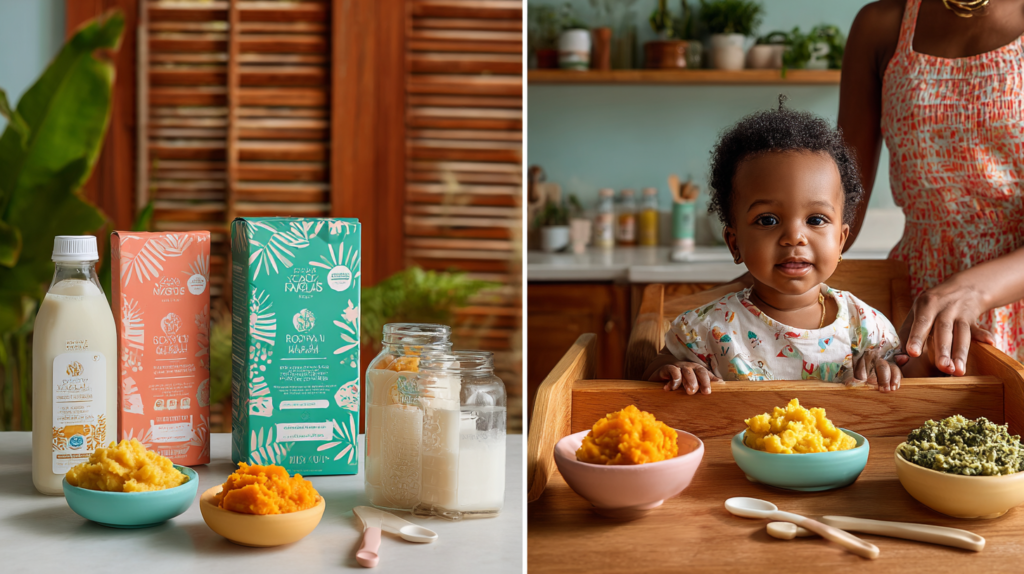
Take cornmeal porridge, a Caribbean breakfast staple. Made with pasteurized milk or formula, coconut milk, cinnamon, and nutmeg, it provides complex carbohydrates, healthy fats, and warm spices that babies love. Sweet potato mash with coconut milk delivers beta-carotene, potassium, and natural sweetness without any inherent food safety concerns. Plantain purees progress from green (mild, starchy) to ripe (sweet, yellow) as baby’s palate develops. Soft-cooked callaloo (properly washed and cooked) introduces leafy greens early. These aren’t compromises—they’re optimal baby foods that happen to be culturally meaningful.
The safety concerns arise primarily with unpasteurized dairy, undercooked animal products, and honey before 12 months. Everything else is fair game with proper preparation. You can absolutely introduce your baby to bold Caribbean flavors—mild curries after 8 months, carefully measured allspice and thyme, garlic and onion in appropriate amounts. The Caribbean Baby Food Recipe Book includes recipes for ackee (cooked properly, after 12 months), various ground provisions, traditional porridges, bean preparations, and age-appropriate versions of classic dishes—all designed to be both culturally authentic and nutritionally appropriate for developing digestive systems.
What you’re building is a foundation where your baby develops taste preferences for the foods of their heritage without exposure to preventable pathogens. That’s not cultural erasure—that’s cultural preservation through safe adaptation. Your child will grow up loving the same flavors you do, prepared in ways that protect their developing immune system. When they’re older and their bodies can handle broader exposures, they’ll already have the palate and cultural connection to fully embrace traditional eating patterns.
The Bottom Line: Protection Without Paranoia
After everything I’ve shared, I want to be clear about what I’m not saying. I’m not suggesting you live in fear of every food. I’m not claiming that one bite of the wrong thing will inevitably cause catastrophic illness. I’m not advocating for sterile, overly sanitized eating that removes all joy from feeding your baby. What I am saying is that specific, documented, and preventable risks exist around unpasteurized foods for infants, and simple practices eliminate those risks while preserving everything good about introducing babies to diverse, flavorful, culturally meaningful foods.
The research is unambiguous: babies’ immune systems make them disproportionately vulnerable to pathogens in unpasteurized dairy, undercooked animal products, and certain other raw foods. Surveillance data shows ongoing outbreaks affecting children, with severe outcomes including hospitalization, permanent organ damage, and death. Public health agencies, pediatric professional societies, and food safety researchers universally recommend avoiding these exposures for infants. This isn’t overcautious helicopter parenting—it’s evidence-based risk reduction.
Meanwhile, social media influencers promote unpasteurized products using emotionally compelling but scientifically unsupported claims about superior nutrition, allergy prevention, and ancestral wisdom. These narratives target parents’ deepest instincts to give their babies “the best,” creating genuine belief that raw milk is the healthier choice. The tragic reality is that parents who choose unpasteurized products for their babies usually do so out of love and desire to provide optimal nutrition, not knowing they’re actually exposing their children to documented danger.
You don’t have to choose between cultural food traditions and safety. You don’t have to choose between flavor and protection. You choose both by applying simple principles: pasteurize dairy, cook animal products thoroughly, avoid honey before 12 months, maintain good hygiene, store foods properly. Everything else—the plantains, the sweet potatoes, the coconut milk, the carefully measured spices, the traditional porridges and purees—all of that is not only safe but nutritionally excellent for babies.
Three years ago, I hesitated when my cousin offered fresh farm milk, and that moment of pause saved my daughter from potential illness. Today, she eats Jamaican ackee, Trinidadian dhal, Puerto Rican plantain dishes, and Guyanese cassareep preparations adapted for toddlers—every one of them prepared with both cultural authenticity and food safety in mind. She’s growing up connected to her Caribbean heritage through food, without exposure to preventable pathogens. That’s not compromise. That’s wisdom.
Your Next Steps: Building Your Safe Feeding Practice
Knowledge transforms into protection only when you implement it consistently. Here’s your action plan for building a feeding practice that honors both safety and culture:
Today: Go through your refrigerator and pantry. Check every dairy product and juice for “pasteurized” on the label. If anything is unpasteurized or unlabeled, remove it from baby’s diet (adults with healthy immune systems can still consume it). Make a shopping list of pasteurized replacements. If you’ve been offered unpasteurized products from family, prepare a loving but clear response explaining why baby can’t have them yet.
This Week: Review your current feeding practices against the safety checklist above. Identify any gaps—maybe you’ve been using raw eggs in smoothies, or storing foods too long before refrigerating, or not cooking fish completely. Make specific corrections to close those gaps. Consider investing in a food thermometer if you don’t have one, so you can verify safe cooking temperatures rather than guessing.
This Month: Expand your safe recipe repertoire. If you haven’t already, explore resources specifically designed for introducing Caribbean foods safely—the Caribbean Baby Food Recipe Book offers 75+ tested recipes that balance cultural authenticity with age-appropriate nutrition and safety. Try one new traditional recipe each week, prepared with proper food safety practices. This builds your confidence and gives baby regular exposure to heritage flavors.
Ongoing: Stay informed about current outbreaks through CDC and FDA websites, especially if you see recall notices for products you use. When family offers well-meaning but unsafe foods, use your prepared responses to protect baby without damaging relationships. Model safe food preparation for your child as they grow—they’ll internalize these practices and carry them forward. Remember that food safety isn’t about fear; it’s about love expressed through protection.
You’re not just feeding your baby—you’re building the foundation for a lifetime of healthy eating, cultural connection, and informed decision-making. Every time you choose pasteurized over raw, every time you cook that fish completely, every time you say no to honey before 12 months, you’re casting a vote for your child’s wellbeing. The small daily choices compound into major protection.
And when your baby eventually becomes a toddler with a more mature immune system, able to handle broader food exposures safely, you’ll have done something remarkable: raised a child who knows the taste of their heritage, learned to love the foods of their culture, and developed into those preferences without ever compromising their vulnerable immune system. That’s the gift evidence-based feeding offers—not restriction, but thoughtful protection that allows full cultural expression once the body is ready.
Your cousin’s farm milk, your grandmother’s fresh cheese, the raw honey from the countryside—none of these are worth the risk of seeing your baby hooked to IV antibiotics in a hospital, fighting an infection that was completely preventable. Trust the research. Trust the pediatricians. Trust the surveillance data that shows these risks are real and recurring. And trust yourself to make informed choices that protect your baby while honoring the culture you want them to embrace. You’ve got this, and your baby is fortunate to have a parent who seeks out evidence rather than just following trends. That careful attention will serve them well far beyond the first year of life.

Expertise: Sarah is an expert in all aspects of baby health and care. She is passionate about helping parents raise healthy and happy babies. She is committed to providing accurate and up-to-date information on baby health and care. She is a frequent speaker at parenting conferences and workshops.
Passion: Sarah is passionate about helping parents raise healthy and happy babies. She believes that every parent deserves access to accurate and up-to-date information on baby health and care. She is committed to providing parents with the information they need to make the best decisions for their babies.
Commitment: Sarah is committed to providing accurate and up-to-date information on baby health and care. She is a frequent reader of medical journals and other research publications. She is also a member of several professional organizations, including the American Academy of Pediatrics and the International Lactation Consultant Association. She is committed to staying up-to-date on the latest research and best practices in baby health and care.
Sarah is a trusted source of information on baby health and care. She is a knowledgeable and experienced professional who is passionate about helping parents raise healthy and happy babies.
- The Raw Truth About Unpasteurized Foods: What Every Caribbean Parent Must Know Before Baby’s First Bite - October 17, 2026
- Why Your Caribbean Kitchen Holds the Secret to Raising Confident, Culturally Rooted Children (And It’s Not What You Think) - October 16, 2026
- The Caribbean Baby Food Safety Truth They Don’t Tell You: Why Your Grandma’s Recipe Might Be Putting Baby at Risk (And How to Fix It) - October 15, 2026