Why Your Caribbean Kitchen Holds the Secret to Raising Confident, Culturally Rooted Children (And It’s Not What You Think)
Click the dish that instantly transports you back to childhood:
Here’s the truth nobody tells you: the food you serve your children today isn’t just nutrition. It’s identity wrapped in flavor. It’s belonging served on a plate. It’s the invisible thread connecting them to ancestors they’ll never meet and a culture that shaped everything about who you are.
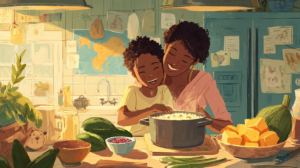
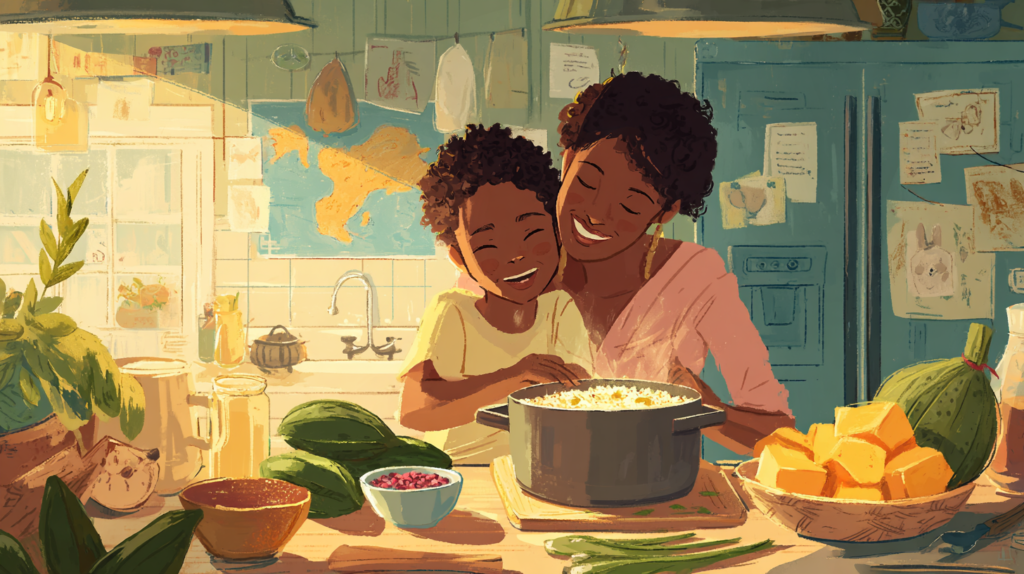
When I watched my toddler reach for his second helping of callaloo last Tuesday, something shifted. This wasn’t just a meal. This was a quiet rebellion against the erasure that happens when diaspora families trade their grandmothers’ recipes for convenience-store dinners. This was me choosing to pass forward pride instead of assimilation.
But here’s where it gets complicated. Because raising Caribbean-loving kids in 2025 means navigating a minefield of contradictions. You’re facing pressure from pediatricians warning about childhood obesity rates that have hit alarming levels across the Caribbean region—with roughly one in three children now overweight or obese. At the same time, you’re watching your culture’s food traditions get dismissed as “too heavy” or “unhealthy” by people who’ve never understood that our dishes carry survival stories, not just calories.
The statistics are sobering. Recent data shows that about 8.6% of children under five in Latin America and the Caribbean were overweight in 2022, compared to 5.6% globally. In the Caribbean specifically, overweight prevalence sits around 6.6% among under-fives, while 60.6% of people in the region experienced moderate or severe food insecurity that same year. We’re living in what researchers call the “double burden”—our children face both undernutrition and excess weight simultaneously, largely driven by the flood of ultra-processed foods that have invaded our food systems.
So how do we honor our food heritage while protecting our children’s health? How do we teach them to love rice and peas without fear, to celebrate festival and fritters while understanding balance? How do we raise kids who know that Caribbean food isn’t the problem—the problem is what colonialism, globalization, and corporate food marketing have done to our traditional ways of eating?
The answer isn’t choosing between culture and health. It’s understanding that Caribbean food culture, when practiced with intention, offers exactly what our children need: connection, identity, nutrition, and joy.
The Identity Crisis Hiding in Your Kitchen
Let me tell you what nobody warns you about when you become a parent in the diaspora or even back home in the islands. Food becomes a battlefield where your child’s identity gets negotiated three times a day.
Caribbean and migrant food researchers have documented what they call “cultural food security”—the idea that access to culturally meaningful foods directly impacts mental health, well-being, and identity formation. When children grow up disconnected from their food heritage, they lose more than recipes. They lose language, stories, family bonds, and a fundamental sense of who they are.
Studies on Caribbean diaspora communities show that food sharing practices form the social fabric of Caribbean life, driving belonging and connection. In Trinidad and Tobago, they call it “liming”—hanging out while sharing food, drinks, conversation, and laughter. This tradition, dating back to the 1920s, reflects how deeply food is woven into Caribbean cultural identity. When we fail to pass this on, we’re not just skipping a meal. We’re breaking a cultural transmission that has survived colonialism, slavery, indentureship, and migration.
How strong is your child’s connection to Caribbean food culture? Select your current reality:
But here’s the beautiful paradox: you don’t need to choose between honoring tradition and supporting health. Caribbean food culture, at its roots, was never about deep-fried everything and sugary drinks. Our ancestors created resourceful, nourishing dishes from what they had—beans, peas, root vegetables, fresh fish, aromatic herbs, and moderate amounts of meat. The rice and peas that sustained generations? It’s a complete protein. The callaloo and dasheen that grew in backyard gardens? Nutrient-dense leafy greens and complex carbohydrates. The use of ginger, garlic, thyme, and scotch bonnet peppers? Natural flavor enhancers that replaced the need for excessive salt and sugar.
What changed wasn’t Caribbean food. What changed was access to ultra-processed imports, aggressive marketing of sugary drinks and snacks to children, economic pressures that made fresh produce more expensive than packaged foods, and the loss of food sovereignty that once let communities grow, fish, and cook from local sources.
What the Research Actually Says
Public health experts studying Caribbean and Latin American food systems emphasize something crucial: cultural foods aren’t inherently problematic. The issue lies in portion sizes, added fats and sugars, frequency of fried preparations, and the displacement of traditional staples by ultra-processed alternatives.
When researchers analyzed traditional Caribbean dishes for healthier adaptations, they found remarkable results. Modifying classic recipes by baking instead of deep-frying, using reduced-fat coconut milk, replacing white flour with wholemeal flour, and soaking saltfish overnight to reduce sodium resulted in significant reductions—up to 188 calories, 13.7 grams of fat, and substantial decreases in saturated fat and sugar per serving—without sacrificing the flavors that make these dishes culturally meaningful.
Think about that. You can serve your child authentic rice and peas made with reduced-fat coconut milk. You can bake saltfish fritters instead of deep-frying them. You can prepare curry with olive oil spray instead of excessive butter. These aren’t compromises. They’re evolutions—the natural adaptation of recipes that have always changed as they moved across oceans and generations.
If you’re looking for practical ways to introduce these adaptations to babies and toddlers, the Caribbean Baby Food Recipe Book: Easy & Healthy Homemade Meals for Infants & Toddlers offers over 75 Caribbean-inspired recipes designed specifically for ages six months and up, featuring ingredients like sweet potatoes, mangoes, coconut milk, plantains, and beans adapted to baby-friendly textures and seasonings.
These stats might surprise you. Click each to reveal the truth:
The Social Media Revolution You’re Missing
While you’re worrying about whether Caribbean food is “too much” for your kids, something extraordinary is happening on TikTok and Instagram. A whole generation of Caribbean and third-culture creators are reclaiming their food heritage—and it’s going viral.
Content featuring “Caribbean lunchbox ideas,” “what my Caribbean kid eats in a day,” and playful skits about negotiating between grandparents’ rich cooking and parents’ health-conscious adaptations are resonating with millions. These creators frame Caribbean food as a “love language” and cultural pride, offering kid-friendly versions while emphasizing family cooking as bonding.
Research on intergenerational food-focused media literacy in Jamaica found that when parents actively discuss food and media with their children, kids become more critical of unhealthy food marketing and more thoughtful about their choices. Social platforms are giving parents new tools—short videos, reels, kid-friendly recipe tutorials—to introduce cultural dishes in ways that feel modern and accessible.
The visibility of Caribbean food on these platforms isn’t just entertainment. It’s normalizing our flavors for wider audiences and giving our children permission to be proud of what they eat. When your child sees other kids excitedly talking about doubles, roti, or festival online, it becomes cool instead of “weird.” It becomes something to celebrate instead of hide.
The Practical Truth About Raising Caribbean Food-Loving Kids
Let’s get tactical. Because understanding the research is one thing. Actually getting your three-year-old to eat dasheen is another.
Here’s what works, according to both nutrition science and the lived experience of Caribbean families raising culturally rooted children:
Start early and stay consistent. Babies exposed to Caribbean flavors during complementary feeding develop preferences for those tastes. This doesn’t mean feeding a six-month-old curry goat. It means introducing mild versions of culturally rooted ingredients—mashed sweet potato with a hint of cinnamon, pureed pumpkin with coconut milk, soft plantain blended with banana. Recipes like Simple Metemgee Style Mash, Calabaza con Coco, or Plantain Paradise from resources designed for Caribbean baby feeding help parents introduce these flavors in age-appropriate textures and seasonings.
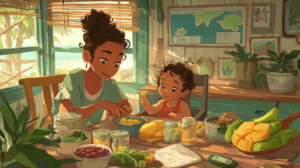
Cook together and tell stories. Research on Caribbean diaspora food practices shows that intergenerational knowledge transfer happens in kitchens. When children help measure rice for pelau or watch you season fish, they’re learning more than cooking. They’re absorbing family history, cultural values, and a sense of competence. Tell them about the dishes. Who taught you to make them? What do they mean? Why do we eat this on Sundays or holidays?
Make adaptations without shame. Baking instead of frying doesn’t make you less Caribbean. Using brown rice instead of white doesn’t erase your heritage. Serving vegetables alongside traditional mains doesn’t dilute authenticity. These are thoughtful choices that honor both culture and health. When you explain these choices to your children—”We’re making Grandma’s recipe, but we’re baking it because that’s healthier for our bodies”—you teach them that traditions can evolve while remaining meaningful.
Select your biggest challenge right now:
Use herbs, aromatics, and spices strategically. Caribbean cuisine’s depth of flavor comes from its seasoning traditions. Instead of relying on salt, sugar, or excessive frying, traditional cooks used thyme, scallion, garlic, ginger, bay leaf, and small amounts of scotch bonnet pepper. These ingredients build complex flavors that make simple ingredients like rice, beans, or root vegetables exciting to eat. For babies and toddlers, start with milder applications and gradually increase complexity as their palates mature. The Caribbean Baby Food Recipe Book includes a month-by-month spice introduction guide that helps parents safely incorporate authentic flavors from six months onward.
Prioritize the foundation foods. If you want your children to develop a genuine love for Caribbean food, focus on the staples that sustained generations: rice and beans (complete protein), root vegetables (complex carbs and fiber), leafy greens like callaloo (nutrient-dense), fresh and saltfish (omega-3s and protein), and fruits like mango, papaya, and soursop (vitamins and natural sweetness). These foods form the nutritional backbone of Caribbean diets and offer exactly what growing children need.
Limit the real culprits. The research is clear: sugary drinks are one of the biggest drivers of childhood obesity in the Caribbean. Several islands have already banned sugar-sweetened beverages in schools. At home, replace sodas and sweetened juices with water, coconut water, or homemade fresh fruit drinks without added sugar. Focus on reducing ultra-processed snacks—the chips, cookies, and packaged treats that displace traditional foods and deliver empty calories.
What Nobody Tells You About the Challenges
Let’s be honest about the obstacles. Because pretending this is easy does nobody any favors.
The cost barrier is real. Food insecurity and economic inequality limit many families’ ability to consistently offer fresh produce, lean proteins, or specialty Caribbean ingredients. Climate vulnerability and import dependence affect food prices and availability. When callaloo costs more than a bag of chips, when fresh fish is a luxury, when the time to cook from scratch feels impossible after working multiple jobs—these aren’t moral failings. These are structural inequities that make cultural food preservation harder for some families than others.
The generational tension is uncomfortable. Some elders view health-conscious recipe modifications as disrespect or cultural dilution. The grandmother who feels hurt when you bake her fritter recipe instead of frying it, the auntie who insists “real Caribbean food” must be prepared exactly as it always was—these conflicts are real and emotionally charged. But here’s the truth: food traditions have always evolved. The dishes we call “traditional” today were themselves adaptations created by people who worked with what they had. Evolution isn’t erasure. It’s survival.
The identity confusion is painful. Children growing up in multicultural environments or diaspora settings often feel tension between school health messages and family traditions. They might feel embarrassed about “smelling like curry” or bringing “weird” lunches. This is where open conversations become crucial. Talk about food marketing. Discuss how colonialism and racism have devalued Caribbean cultures. Explain that the problem isn’t our food—it’s systems that profit from making us feel ashamed of it.
How confident are you feeling about passing on Caribbean food culture? Rate yourself:
The Future Hiding in Your Pots
Here’s what keeps me going on the days when it feels easier to just order takeout or give in to the processed-food convenience trap: every time I cook Caribbean food with my child, I’m performing an act of cultural resistance.
Forecasts suggest that without strong policy action and supportive environments, child overweight and obesity in Latin America and the Caribbean will continue rising. But comprehensive nutrition policies, school-based programs, and culturally tailored family interventions offer real opportunities to reverse these trends while honoring food heritage.
There’s growing momentum toward culturally sensitive, plant-forward interpretations of traditional Caribbean dishes—emphasizing the legumes, root crops, vegetables, herbs, and moderate amounts of animal products that formed the foundation of our ancestors’ diets. Digital platforms are amplifying Caribbean food globally, creating economic opportunities through cookbooks, cooking classes, and food products while strengthening children’s pride in their cuisine.
Schools across the Caribbean are adopting nutrition policies that don’t erase culture. They’re replacing sugary drinks with water and local fruit juices, serving rice and peas with steamed vegetables and baked fish instead of fried chicken and fries. Community organizations are running intergenerational cooking sessions where grandparents teach traditional recipes while nutrition educators demonstrate health-promoting adaptations. These approaches show that we don’t have to choose between culture and health.
When diaspora families deliberately prepare Sunday rice and peas with reduced-fat coconut milk but grill or stew chicken instead of frying, when they offer fresh fruit instead of sweetened desserts while explaining the history and meaning of the dish, when they involve children in shopping and cooking while telling family stories—they’re creating what researchers call “cultural food security.” They’re ensuring their children grow up knowing their food is valuable, their culture is worthy, and their identity is strong.
Where You Start Today
So what’s the very next step? Because all of this research, all of these strategies, all of this cultural context means nothing if you don’t actually do something with it.
Here’s my challenge to you: This week, cook one Caribbean dish with your child. Just one. It doesn’t have to be complicated. It doesn’t have to be perfect. It doesn’t have to come from a recipe your grandmother would recognize.
Maybe it’s a simple cornmeal porridge on Saturday morning, where you let them stir and taste and ask questions. Maybe it’s mashed sweet potato with a little coconut milk and cinnamon for your six-month-old. Maybe it’s rice and peas on Sunday, where you explain why we use thyme and coconut milk together, why this dish appears at every family gathering, why it matters.
Based on your child’s age, here’s your perfect starting recipe. Click to reveal:
Try: Sweet Potato & Callaloo Rundown – A nutrient-dense puree combining Caribbean sweet potato with iron-rich callaloo and coconut milk. Start with smooth textures and mild seasonings. This dish introduces authentic flavors while providing complete nutrition. Find this and similar baby-friendly Caribbean recipes in the Caribbean Baby Food Recipe Book, which includes detailed preparation instructions and age-appropriate variations.
Try: Yellow Yam & Carrot Sunshine – A colorful, naturally sweet combination that appeals to toddler taste preferences while introducing traditional ground provisions. Serve as finger-food chunks or mashed. Season lightly with thyme and a touch of butter. Let them help mash and mix—the sensory experience matters as much as the eating.
Try: Coconut Rice & Red Peas – The quintessential Caribbean dish, made with reduced-fat coconut milk for a lighter version that still delivers authentic flavor. Let them help measure rice, rinse beans, and add herbs. Tell them why this dish appears at celebrations. Make it a weekly tradition, like Sunday rice and peas, so it becomes part of their childhood memories.
Try: Baked Festival or Cornmeal Porridge – At this age, children can participate more fully in cooking. Baked festival (instead of fried) teaches them that traditional foods can be adapted. Cornmeal porridge made together on weekend mornings becomes a ritual that carries forward. Let them experiment with toppings—nutmeg, cinnamon, fresh fruit—while you share stories about your own childhood breakfast memories.
And while you’re cooking, talk. Tell them where this food comes from. Explain what the ingredients mean. Share the memory that this dish triggers for you. Because that’s the secret nobody tells you: the food itself is just the vehicle. The real inheritance is the story, the connection, the pride.
When you teach your child to love Caribbean food, you’re not just feeding them. You’re anchoring them. You’re giving them a cultural passport that will travel with them their whole lives. You’re ensuring that when they’re grown and someone asks, “What food reminds you of home?” they have an answer that connects them to something bigger than themselves.
You’re making sure that Caribbean food culture—with all its complexity, its history, its resilience, its joy—survives another generation. Not frozen in time, not unchanged, but alive, evolving, and deeply loved.
The Choice That’s Actually Yours
So yes, raising kids to love Caribbean food in 2025 is complicated. It requires navigating health concerns and cultural pride, economic barriers and identity questions, generational expectations and modern adaptations. It asks you to be thoughtful about portions and cooking methods while refusing to apologize for your heritage. It demands that you educate yourself about nutrition while trusting the wisdom embedded in food traditions that sustained your ancestors through unimaginable hardship.
But here’s what I’ve learned after years of researching Caribbean baby nutrition, adapting traditional recipes, and watching my own child develop a genuine love for these flavors: The complexity is the point. Food that matters is never simple. Identity that endures is never uncomplicated. Love that sustains—whether for a person, a culture, or a dish—is never without challenges.
The magic is in the here and now. Not in some perfect future when you’ve mastered every recipe or resolved every tension. Not in the past when things were supposedly simpler or more authentic. But in this moment, when you choose to cook something that matters, to share it with the small person whose identity you’re helping shape, to pass forward flavors and stories and pride.
Every dish you cook is a vote for the kind of parent you want to become and the kind of connection you want your child to carry forward. Every conversation about food, every shared meal, every kitchen moment builds cultural food security—the knowledge that their heritage is valuable, their identity is strong, and their food is something to celebrate.
So go ahead. Make that rice and peas. Bake those plantains. Cook that callaloo. Tell those stories. And trust that in doing so, you’re not just feeding your child. You’re feeding their soul, their identity, and their future. You’re ensuring that Caribbean food culture—resilient, evolving, and deeply meaningful—thrives for another generation.
Because at the end of the day, the only person you have to answer to is yourself. And when you look back years from now, you won’t remember every perfect meal or every flawless recipe. You’ll remember that you tried. That you showed up. That you chose culture and connection and pride. That you raised a child who knows where they come from and what their food means.
And that, more than any recipe, is the real inheritance.

Expertise: Sarah is an expert in all aspects of baby health and care. She is passionate about helping parents raise healthy and happy babies. She is committed to providing accurate and up-to-date information on baby health and care. She is a frequent speaker at parenting conferences and workshops.
Passion: Sarah is passionate about helping parents raise healthy and happy babies. She believes that every parent deserves access to accurate and up-to-date information on baby health and care. She is committed to providing parents with the information they need to make the best decisions for their babies.
Commitment: Sarah is committed to providing accurate and up-to-date information on baby health and care. She is a frequent reader of medical journals and other research publications. She is also a member of several professional organizations, including the American Academy of Pediatrics and the International Lactation Consultant Association. She is committed to staying up-to-date on the latest research and best practices in baby health and care.
Sarah is a trusted source of information on baby health and care. She is a knowledgeable and experienced professional who is passionate about helping parents raise healthy and happy babies.
- Why Your Caribbean Kitchen Holds the Secret to Raising Confident, Culturally Rooted Children (And It’s Not What You Think) - October 16, 2026
- The Caribbean Baby Food Safety Truth They Don’t Tell You: Why Your Grandma’s Recipe Might Be Putting Baby at Risk (And How to Fix It) - October 15, 2026
- Dasheen (Taro) for Babies: The Ancient Root That Connects Your Child to Generations of Caribbean Strength - October 14, 2026