Turn Your Dinner Table Into a Global Classroom: The Revolutionary Way to Teach Geography Through Food
Discover Your Family’s Food Geography Journey
Select the regions where your family has roots or wants to explore:
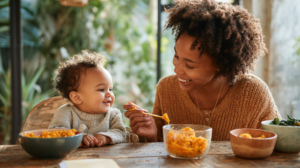
My six-year-old daughter walked into the kitchen last Tuesday morning and asked me something that stopped me cold: “Mama, why do people in different countries eat different foods?” Not “what’s for breakfast” or “can I have candy”—but a genuine curiosity about how food connects to place, culture, and identity. That moment crystallized something I’d been feeling for months: our family meals had become missed opportunities for world exploration.
Here’s what nobody tells you about raising kids in today’s globally connected world: they’re hungry for understanding beyond borders, but traditional geography lessons with maps and flashcards? They bounce right off their brains. Yet when you put a warm bowl of Japanese ramen or Jamaican stew peas in front of them and tell the story of where it comes from, suddenly they’re asking about oceans, climates, trade routes, and why certain ingredients grow in specific places. Food becomes the bridge between abstract geography concepts and lived, sensory experience.
According to UNESCO’s 2025 report on school meal programs, over 418 million children globally now participate in food education initiatives that integrate cultural geography and sustainability lessons. This isn’t just about nutrition anymore—it’s about using food as a lens to understand our world. And for families wanting educational experiences that actually stick, international food education offers something textbooks never could: multisensory, emotionally engaging learning that happens naturally around the dinner table.
What International Food Education Really Means
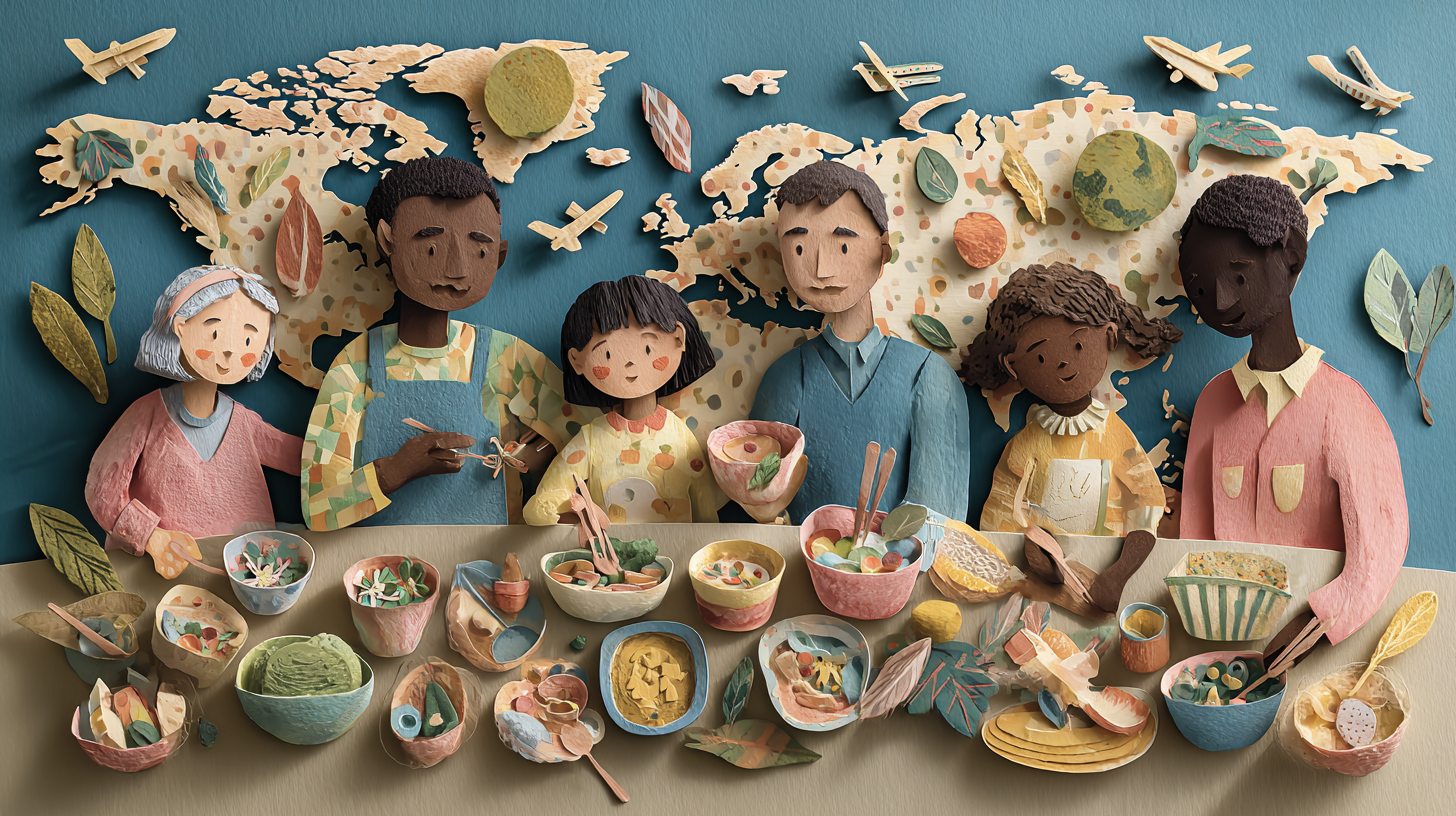
International food education isn’t about becoming a chef or memorizing every country’s national dish. It’s about creating a framework where food becomes the entry point to understanding geography, history, climate, economics, and cultural diversity. When your child learns that coconut milk features prominently in Caribbean, Southeast Asian, and Pacific Island cuisines because coconut palms thrive in tropical coastal regions, they’re simultaneously learning about climate zones, ocean currents, agricultural practices, and cultural adaptation.
This approach has deep historical roots. For generations, food literacy was confined to home economics—teaching kids to cook and follow recipes. But globalization changed everything. As our grocery stores filled with ingredients from six continents and our neighborhoods became more culturally diverse, educators and parents began recognizing food’s potential as a powerful teaching tool for cultural awareness and geographic understanding.
The shift accelerated dramatically in recent years. Between 2022 and 2025, multiple curriculum developers launched family-oriented programs like “Cooking Through Geography” and themed meal kits designed specifically for experiential, hands-on learning through world cuisine. These aren’t just recipe collections—they’re structured educational journeys that use food as the vehicle for exploring our planet’s incredible diversity.
Test Your Food Geography Knowledge
Which of these food-geography connections is TRUE?
The Shocking Truth About Traditional Geography Education
Let me share something that most educators won’t admit: traditional geography teaching is failing our children. A 2015 report highlighted ongoing challenges in geography education across the United States, noting that many students graduate without basic geographic literacy. They can’t locate major countries on a map, don’t understand climate patterns, and have virtually no concept of how geography shapes culture, food systems, and daily life.
But here’s the twist—this isn’t because kids can’t learn geography. It’s because we’ve been teaching it wrong. We’ve treated geography as an abstract, memorization-based subject disconnected from lived experience. Children are expected to care about the location of the Andes Mountains without understanding that those mountains create microclimates perfect for growing quinoa and potatoes, crops that sustained entire civilizations and now nourish families worldwide.
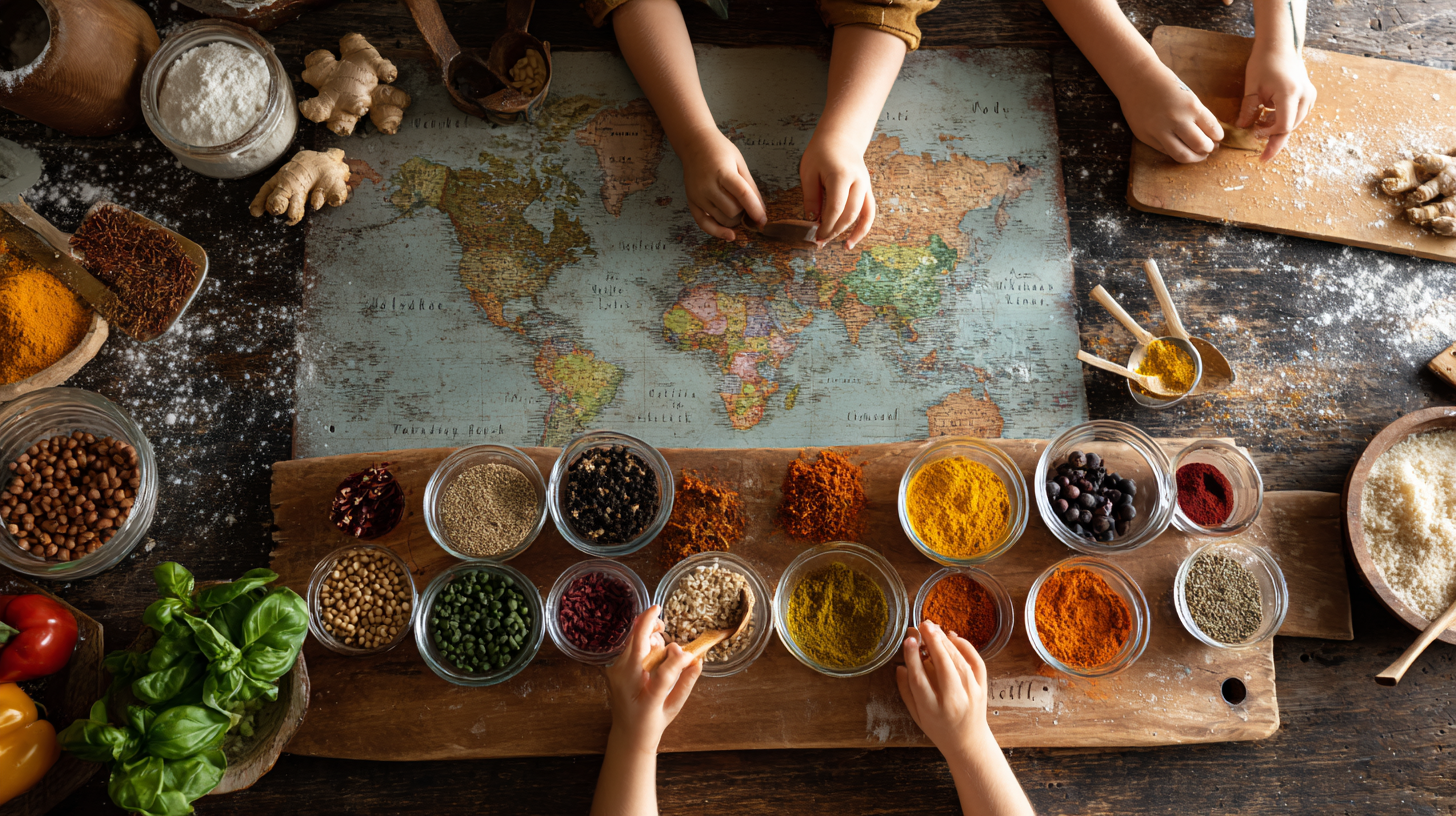
Food-based geography education flips this model entirely. Instead of starting with maps and asking kids to memorize locations, you start with experience—the taste of Ethiopian injera, the aroma of Indian curry, the texture of Brazilian pão de queijo. Then you work backward to the geography: Why is this bread spongy? Because it’s made from teff, a tiny grain that thrives in Ethiopia’s highland climate. Why does this curry have so many spices? Because India’s geographic position made it a historic hub of the spice trade, with diverse regional climates supporting different crops.
Research consistently shows that children gain significant cultural empathy and curiosity when exposed to food-based geography lessons. They’re not just learning facts—they’re developing open-mindedness, critical thinking about food systems, and genuine appreciation for cultural diversity. These are skills that serve them for life, far beyond any standardized test.
The Science Behind Why Food Makes Geography Stick
There’s actual neuroscience behind why teaching geography through food works so powerfully. Human brains are wired to remember experiences that engage multiple senses simultaneously. When your child tastes coconut rice while looking at a map of Jamaica, smelling the thyme and hearing you tell stories about Caribbean markets, their brain creates rich, interconnected memory networks. This is dramatically different from staring at a textbook page about Caribbean geography—one creates lasting neural pathways, the other creates… boredom.
Experts in nutrition, geography, and education have spent years documenting this phenomenon. Leading researchers like Jane Sherman and Nancy Aburto advocate for experiential, family-involved food education that moves beyond traditional classroom settings. Their work emphasizes that multisensory engagement isn’t just more fun—it’s fundamentally more effective for long-term learning and retention.
Social media has amplified this movement remarkably. Educational bloggers and influencers behind initiatives like “Tasty World Tour” share practical examples and enthusiasm for engaging children through international recipes, ingredient exploration, and family meal challenges. These aren’t celebrity chefs—they’re regular parents who discovered that cooking Moroccan tagine or Vietnamese pho with their kids opened conversations about North African desert climates or Southeast Asian river deltas that no textbook could match.
The impact extends beyond knowledge acquisition. When families explore world cuisines together, they’re simultaneously developing practical cooking skills, strengthening family bonds, building cultural competence, and creating positive associations with learning itself. Education stops feeling like work and starts feeling like adventure.
Real Numbers: The Global Movement Toward Food Education
The statistics around international food education reveal a massive shift happening right now. UNESCO’s appointment of Michelin-star chefs like Daniel Humm and Mauro Colagreco as Goodwill Ambassadors brought renewed focus to integrating food education across cultural and biodiversity themes in schools worldwide. This isn’t symbolic—it represents institutional recognition that food literacy matters as much as traditional academic subjects.
School meal programs have evolved dramatically. In 2025, China and Brazil implemented major reforms prioritizing local, fresh foods while restricting ultra-processed products. These programs now explicitly link nutrition with geography and cultural awareness. Students don’t just eat lunch—they learn where their food comes from, why certain ingredients are regional, and how food systems connect to climate and ecology.
Market research shows surging demand for family-friendly educational experiences, including international cooking kits and cultural food festivals hosted by schools and communities. The “Cooking Through Geography” curriculum received notable attention from homeschool families specifically because it provides structured, comprehensive learning without requiring teaching credentials. Parents discover they can effectively teach geography through activities they’re already doing—preparing family meals—with just a bit of intentional framing.
Recent innovations include online tools and apps that map global foods to their origins, letting families “cook around the world” while learning about history and geography simultaneously. The EDGE initiative and similar projects link food geography education to workforce skills and real-world competencies, preparing learners not just for better global citizenship but for careers in increasingly important food systems and sustainability sectors.
Track Your Global Food Journey
How many continents has your family explored through food?
Starting Your Family’s Food Geography Journey
The beautiful thing about international food education is that you don’t need special credentials, expensive materials, or extensive travel. You need curiosity, a willingness to try new things, and a kitchen. Here’s how families are actually implementing this in real, everyday life.
One popular approach uses cookbooks as “passports” to explore world geography and history. You select a country, prepare one of its traditional dishes, and research the geographic and cultural context together. Why does this matter? Because when your child makes Guyanese cook-up rice and discovers it combines Caribbean, African, and Indian influences, they’re learning about colonization, migration, trade routes, and cultural fusion—heavy topics made digestible through delicious, hands-on experience.
Homeschool families have particularly embraced this model. Programs like “Around the World Feast” let children map recipes to continents, use food as metaphors for natural landscapes (rice paddies representing agricultural flatlands, mountain goat cheese representing alpine herding), and explore how climate determines what people can grow and eat. These aren’t supplementary activities—for many families, they’ve become the primary geography curriculum because they work better than traditional methods.
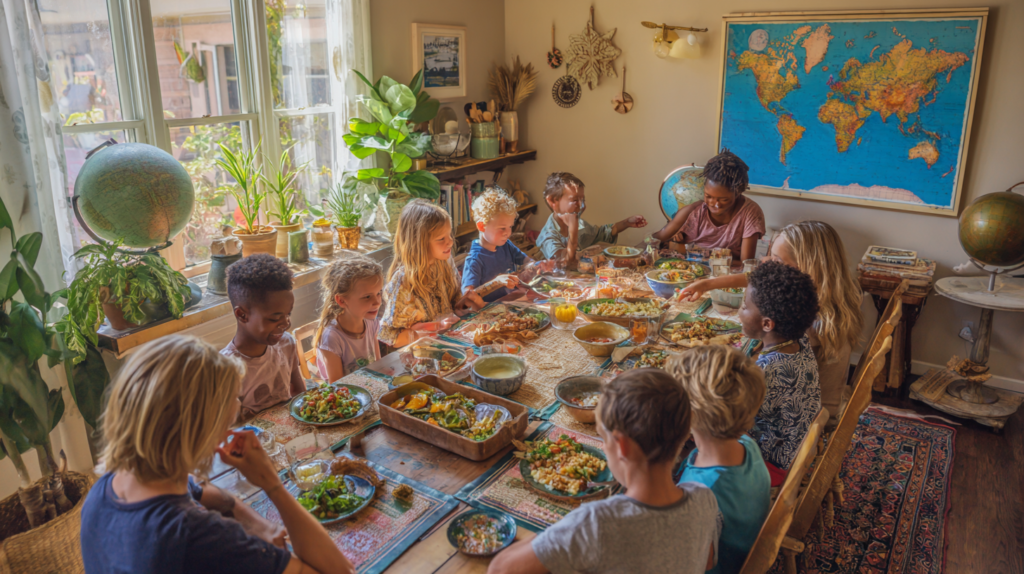
Community involvement amplifies the impact. Schools and neighborhoods increasingly host international potlucks, food fairs, and “world on a plate” challenges. Kids don’t just prepare food—they present their dishes, explain the geographic and cultural context, and learn from other families’ contributions. This creates a powerful learning community where children see their peers as fellow explorers rather than competitors.
If you’re inspired to bring Caribbean flavors specifically into this journey, the Caribbean Baby Food Recipe Book offers over 75 recipes featuring ingredients like sweet potatoes, mangoes, coconut milk, plantains, and beans. While designed for babies 6+ months, many families adapt these recipes for older children, using them as starting points to explore Caribbean geography, history, and the beautiful complexity of island cuisine shaped by indigenous, African, European, and Asian influences.
Daily Life Implementation That Actually Works
Theory is lovely, but let’s talk brass tacks. How do you actually integrate food geography education into your already-busy family life without it becoming another overwhelming project?
Start stupidly small. Don’t commit to cooking meals from 50 countries. Pick one new recipe per week or even per month. Make it a special event—theme night Tuesday, where you cook together, eat together, and spend 15 minutes learning about where the food comes from. Use YouTube videos showing the actual country, pull up Google Earth to see the landscape, find photos of local markets. This isn’t time-consuming; it’s time well spent.
Grocery store trips become field expeditions. When you shop, actively point out ingredient origins. “These mangoes came from Mexico—let’s find Mexico on the map when we get home.” “This package says the quinoa is from Peru—why do you think quinoa grows well in the Andes Mountains?” These micro-lessons accumulate. Within months, your child is independently noticing and asking about food origins.
Connect food to current family events. Planning a vacation? Cook food from that destination beforehand. Has your child made a friend from another culture? Ask that friend’s parents to share a favorite family recipe and its story. These natural connection points make food geography feel relevant rather than academic.
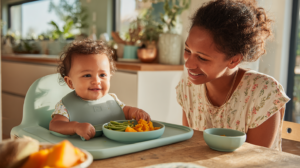
For families with very young children, the process looks different but works similarly. Even toddlers can help with simple tasks like washing vegetables while you explain, “These yams come from the Caribbean, where it’s warm all year.” They absorb more than we realize, and early exposure to diverse foods and concepts builds openness to trying new things later.
Navigating the Challenges Nobody Talks About
Let’s address the elephant in the room: international food education comes with real challenges that enthusiastic articles often gloss over. I’m not going to do that because you deserve honest guidance.
First challenge: access and equity. Not every family can easily find diverse ingredients. Small towns may have limited grocery options, and specialty items can be expensive. This creates a genuine barrier. The solution isn’t to abandon the concept—it’s to adapt creatively. Focus on learning about cuisines even when you can’t perfectly recreate them. Use substitutions and discuss why you’re substituting. “We can’t find cassava here, but sweet potatoes have a similar texture—let’s compare them and talk about which climates support each crop.” The learning isn’t diminished; it’s just different.
Second challenge: cultural sensitivity and the risk of stereotyping. When teaching about world cuisines, there’s danger of reducing complex cultures to simplistic food caricatures. “Chinese food” becomes synonymous with takeout boxes, “Mexican food” becomes only tacos, and suddenly you’re perpetuating stereotypes rather than dismantling them. Combat this by emphasizing regional diversity within countries, acknowledging that food evolves and adapts, and seeking authentic voices when possible. Follow food bloggers from the actual cultures you’re exploring. Read their perspectives. Teach your children that every cuisine is as complex and varied as the one they grew up with.
Third challenge: educator preparation. Most parents weren’t taught geography through food themselves, so we lack models for how to do this effectively. Many feel inadequate to teach concepts they don’t fully understand. Here’s the secret: you don’t need to know everything beforehand. Learn alongside your children. Model curiosity and research skills. “I don’t know why couscous is common in North Africa—let’s find out together!” This co-learning approach is actually more educationally powerful than lecturing from expertise.
Fourth challenge: time and mental load. Parents are exhausted. Adding “educational components” to already stressful meal planning can feel like too much. The key is integration, not addition. You’re already feeding your family. This isn’t about cooking elaborate meals nightly—it’s about occasionally choosing recipes from different cultures and taking a few minutes to contextualize them. One intentional conversation per week creates more impact than daily rushed experiences.
Academic debates in this field focus on balancing cultural specificity with inclusivity and sustainability. How do you honor traditional foodways while acknowledging that many traditional practices may not align with modern nutritional understanding or environmental concerns? There’s no perfect answer, but the question itself becomes an excellent teaching opportunity for older children capable of nuanced thinking.
What the Experts Are Actually Saying
Beyond the challenges, it’s worth understanding what researchers and practitioners have learned about making food-based geography education effective. Chef ambassadors like Daniel Humm and Mauro Colagreco champion food education as a means of preserving tradition while promoting sustainability and biodiversity. Their message: food isn’t just sustenance or culture—it’s an entry point to understanding complex systems like ecology, economics, and climate change.
Educational researchers emphasize that food geography’s unique strength lies in multisensory engagement. You’re not asking children to memorize abstract information—you’re inviting them to taste, smell, touch, see, and hear their way into understanding. This creates what educators call “embodied learning,” where knowledge becomes part of lived experience rather than stored facts.
Critics raise valid concerns about “food tourism”—the risk of treating other cultures’ cuisines as entertainment without genuine respect or understanding. The consensus among thoughtful practitioners is that intentionality matters. Approach world cuisines with humility and genuine curiosity, not performance or novelty-seeking. Frame exploration as learning from others rather than collecting exotic experiences. Teach children that different isn’t weird; it’s just different.
Perhaps most importantly, experts emphasize that effective food geography education always circles back to connection—connection between people and place, between past and present, between self and other. When done well, exploring world cuisines doesn’t make children feel separate from other cultures. It helps them recognize our fundamental interconnectedness and shared humanity.
✅ Building Your Family’s Food Geography Skills
Check off skills your family wants to develop through food exploration:
The Caribbean Connection: A Personal Entry Point
Since I write from a Caribbean perspective, I’d be remiss not to highlight how Caribbean food specifically offers a masterclass in geography education. Caribbean cuisine is, by definition, a geography lesson. These islands sit at the crossroads of indigenous, African, European, Indian, and Chinese influences—each wave of migration and colonization left culinary marks that tell stories of trade winds, plantation economies, and cultural resilience.
When you prepare Jamaican stew peas with its coconut milk, thyme, and Scotch bonnet pepper, you’re exploring tropical agriculture. When you make Trinidadian doubles with their Indian-influenced chickpea filling, you’re learning about the indentured labor system that brought South Asian workers to the Caribbean after slavery’s abolition. When you cook Cuban picadillo with its Spanish roots and African adaptations, you’re studying colonization, revolution, and cultural fusion.
Caribbean food also teaches climate and ecology exceptionally well because the islands showcase how geography shapes possibility. Why do so many Caribbean dishes feature root vegetables like yams, dasheen, and cassava? Because these crops thrive in tropical climates and provided reliable calories when European grains couldn’t adapt. Why is seafood preparation so varied across islands? Because each island’s surrounding waters, coral reefs, and fishing traditions differ based on their specific geographic position.
For families wanting to explore Caribbean geography through food with children of all ages, recipes like those in the Caribbean Baby Food Recipe Book provide authentic flavor profiles using whole, recognizable ingredients. The beauty of starting with baby-adapted recipes is their simplicity—they strip dishes down to essential flavors and ingredients, making them perfect teaching tools for understanding what makes Caribbean food distinctly Caribbean before adding complexity.
Looking Forward: The Future of Food Geography Education
Where is this movement heading? All indicators suggest rapid growth in experiential, transdisciplinary food and geography education for both households and schools. Organizations like UNESCO and the World Food Programme are developing expanded resources for inclusive, locally-adapted food curricula with accompanying professional development for teachers who want to integrate these approaches into their classrooms.
Technology will play an increasing role. Future family programs may extend beyond cooking to include virtual reality experiences simulating global food markets, field trips to urban farms growing traditional crops, augmented reality apps that overlay geographic information onto ingredients, and online exchanges with families in other countries sharing their food traditions in real time.
The cutting edge of innovation blends food learning with sustainability, United Nations Sustainable Development Goals, and culture preservation. Children aren’t just learning where food comes from—they’re learning to think critically about food systems, environmental impact, fair trade, and their role as conscious global citizens. This prepares them not just to understand the world as it is, but to imagine and create the world as it could be.
Perhaps most excitingly, food geography education is moving beyond Western-centric frameworks. Historically, education systems centered European perspectives, treating other cuisines as exotic additions. The emerging model recognizes that every food tradition offers equally valuable geographic, cultural, and scientific learning opportunities. Indian, Nigerian, Vietnamese, Peruvian, and yes, Caribbean cuisines aren’t supplementary—they’re central to understanding human ingenuity, adaptation, and creativity across diverse environments.
Making This Work for Your Family Right Now
You’ve read about theories, statistics, and future possibilities. Now let’s get practical with concrete steps you can take this week—not someday, but now.
Week One Action: Choose one country or region your family will explore this month. Let your children help decide—maybe they’re curious about their heritage, interested in a place they heard about, or drawn to a particular food they’ve tried. Pick one recipe that represents that region and commit to cooking it together on a specific date. Pencil it into your calendar like you would any other appointment.
Before Cooking: Spend 15-20 minutes researching together. Use Google Earth to see the actual landscape. Find YouTube videos showing local markets or home kitchens in that region. Read a children’s book set in that country if your kids are young. The goal isn’t comprehensive knowledge—it’s building context and excitement.
During Cooking: Narrate the geography. “We’re using coconut milk because coconut palms grow near tropical coastlines.” “This spice was so valuable that people sailed across oceans to trade it.” “In this country’s climate, they have two rainy seasons, which is why they can grow rice twice yearly.” Connect every ingredient to place.
After Eating: Don’t let the experience end with the meal. Ask questions that encourage geographic thinking: What ingredients were new to you? Why might people in this region have developed this particular dish? How is this different from what we normally eat, and what might that tell us about their climate or resources? If we wanted to make this dish with only local ingredients, what would we need to substitute?
Follow-Up: Create a simple tracking system—a world map where you mark countries you’ve explored, a journal where kids draw pictures of meals and write what they learned, or a digital photo album with notes. This creates continuity and helps children see their learning accumulate over time.
For families with babies and toddlers who want to establish these patterns early, introducing diverse flavors from the start builds adventurous eaters and curious learners. The Caribbean Baby Food Recipe Book can help you incorporate ingredients like plantains, mangoes, sweet potatoes, and coconut milk from early infancy, creating familiarity with flavors that will support more complex food geography learning as your children grow.
Your Family’s Unique Food Geography Story
Here’s what I’ve learned after years of exploring this with my own family: there’s no single “right way” to do international food education. Your approach will be uniquely yours, shaped by your family’s heritage, interests, resources, and priorities. That’s not a weakness—it’s the whole point.
Maybe you’re a single parent working two jobs, and elaborate cooking sessions aren’t realistic. Your food geography education might be choosing diverse options when eating out and having conversations about where the food comes from. Maybe you’re a homeschool family with flexible schedules and cooking can become a daily educational anchor. Maybe you have teenagers who initially resist “educational” activities but get hooked when they realize this means trying interesting new foods and maybe even planning a future trip to places they’ve cooked from.
The magic isn’t in perfection—it’s in presence. It’s in noticing, questioning, exploring, and connecting. It’s in treating your dinner table not as just a place to refuel, but as a portal to the wider world. It’s in recognizing that the question “where does this food come from?” contains within it all the wonder of geography, history, agriculture, climate, trade, and human creativity.
I think back to my daughter’s question—why do people in different countries eat different foods?—and realize that entire books could be written answering it. But the beautiful thing is, you don’t need to read those books before you start exploring with your children. You learn together, one meal at a time, one question at a time, one shared experience at a time.
The world is vast, diverse, and endlessly fascinating. Your dinner table can become the compass that helps your family navigate it, building not just geographic knowledge but curiosity, empathy, and a sense of connection to people and places near and far. That six-year-old question opened a door in our home. What if you walked through that door with your own family? What worlds might you discover together, right there in your kitchen?
Start tonight. Pick a recipe. Tell a story. Ask a question. Your family’s food geography journey begins with a single, intentional meal.

Kelley's culinary creations are a fusion of her Caribbean roots and modern nutritional science, resulting in baby-friendly dishes that are both developmentally appropriate and bursting with flavor. Her expertise in oral motor development and texture progression ensures that every recipe supports your little one's feeding milestones while honoring cultural traditions.
Join Kelley on her flavorful journey as she shares treasured family recipes adapted for tiny taste buds, evidence-based feeding guidance, insightful parenting anecdotes, and the joy of celebrating food, culture, and motherhood. Get ready to immerse yourself in the captivating world of Kelley Black and unlock the vibrant flavors of the Caribbean for your growing baby, one nutritious bite at a time.
- The Feeding Revolution: Why Your Everyday Meals Are Changing the World - October 13, 2026
- Your Feeding Story Matters More Than The “Perfect” One Online - October 12, 2026
- Looking Forward: Stepping Into Your Confident Feeding Future - October 11, 2026