Traveling with a Baby Who Eats Solids: The Complete Packing List Every Parent Needs
What’s Your Travel Feeding Confidence Level?
Before we dive in, let’s discover what kind of traveling parent you are…
Here’s something nobody tells you until you’re standing at airport security at 5 AM with a screaming baby, three carry-ons, and a container of mashed sweet potato that suddenly looks very suspicious to TSA: traveling with a baby who eats solids is a completely different beast than traveling with one who only takes milk.
When my daughter turned seven months old, I thought I had it all figured out. She was eating solids beautifully at home. I’d mastered the art of preparing purées from Caribbean-inspired ingredients like sweet potato, plantain, and coconut milk. Then came our first family trip to visit relatives in Jamaica. Let’s just say it didn’t go as smoothly as I’d imagined.
The truth is, the baby food industry pulls in over $69 billion globally, yet comprehensive travel guidance for families with solid-eating babies remains shockingly scarce. Most travel tips focus on bottles and breastfeeding, leaving the rest of us scrambling to figure out how to keep our little ones fed, safe, and on some semblance of a routine while navigating airports, time zones, and unfamiliar kitchens.
But here’s what changed everything for me: understanding that feeding your baby while traveling isn’t about perfection. It’s about preparation meeting flexibility. And that’s exactly what we’re going to walk through together.
The Reality Nobody Prepares You For
Before we dive into the practical packing list, let me tell you what actually happens when you travel with a solid-eating baby. Because if you’re anything like I was, you’re probably imagining that your baby will continue eating exactly as they do at home. Sweet summer child. Let me gently shatter that illusion.
Research from pediatric nutritionists reveals that most babies eat significantly less solid food while traveling. They drink more breast milk or formula, become pickier about textures, and may temporarily reject foods they usually love. This isn’t failure on your part. It’s normal adaptation to new environments, different water sources, time zone changes, and the general chaos of being somewhere unfamiliar.
Here’s what actually matters: your baby stays hydrated, gets enough calories from any source (breast milk, formula, or solids), and returns to normal eating patterns within a few days of arriving home. That’s it. That’s the standard.
During our Jamaica trip, my daughter ate approximately three bites of food per day for the first four days. Three. I was convinced I’d broken her somehow. Then on day five, she demolished a plate of mashed yam and suddenly remembered that eating was actually enjoyable. Every parent I’ve spoken to since has shared similar stories. It’s so common that feeding experts now advise parents to plan for reduced solid intake during the first several days of any trip.
The Market Reality: Innovation Meets Travel Chaos
The baby food packaging market is exploding, projected to reach $106.75 billion by 2029. Why? Because companies finally recognize what we parents have been screaming about for years: we need products designed for mobility, not just for home kitchens.
Recent innovations include all-in-one portable bottle warmers with built-in sterilization, like the one released by Papablic that heats milk and sterilizes bottles simultaneously. BPA-free, resealable pouches have transformed how we store and transport baby food. Collapsible silicone bowls and spoons that fit in your pocket are game-changers for restaurant dining.
But here’s the shocking truth: despite all this innovation, most families still resort to bringing ziplock bags of homemade purées in cooler bags because commercial options don’t match their baby’s preferences or dietary needs. The market has grown, but the gap between what’s available and what parents actually need remains substantial.
✈️ How Much Food Should You Actually Pack?
Let’s calculate your personalized packing needs
The Ultimate Packing List: What You Actually Need
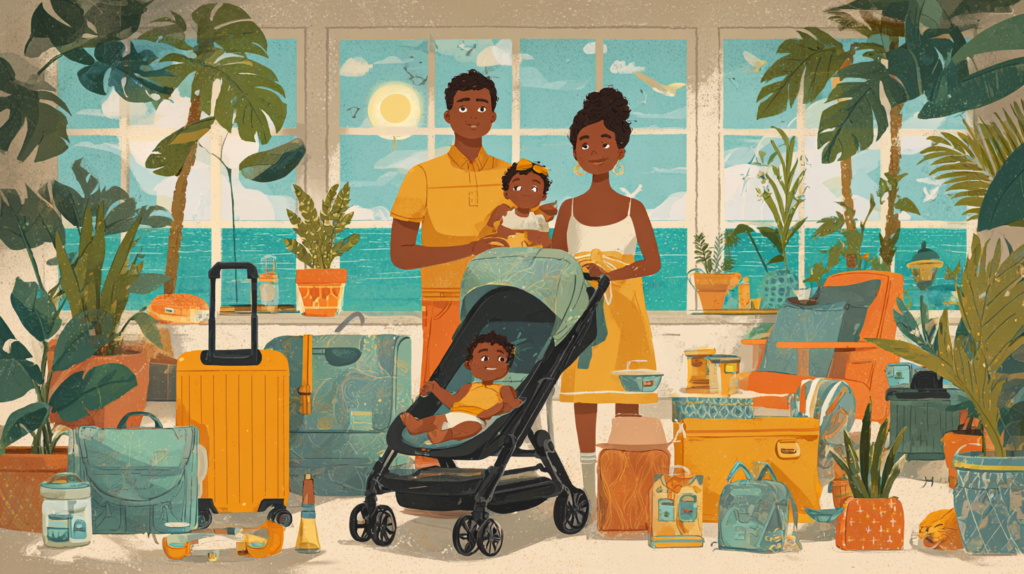
After traveling with my daughter to six different countries across three continents, and interviewing dozens of parents about their travel feeding experiences, I’ve refined this list to include only what genuinely matters. Not what looks cute on Instagram. Not what some travel blog suggested. What actually keeps your baby fed and your sanity intact.
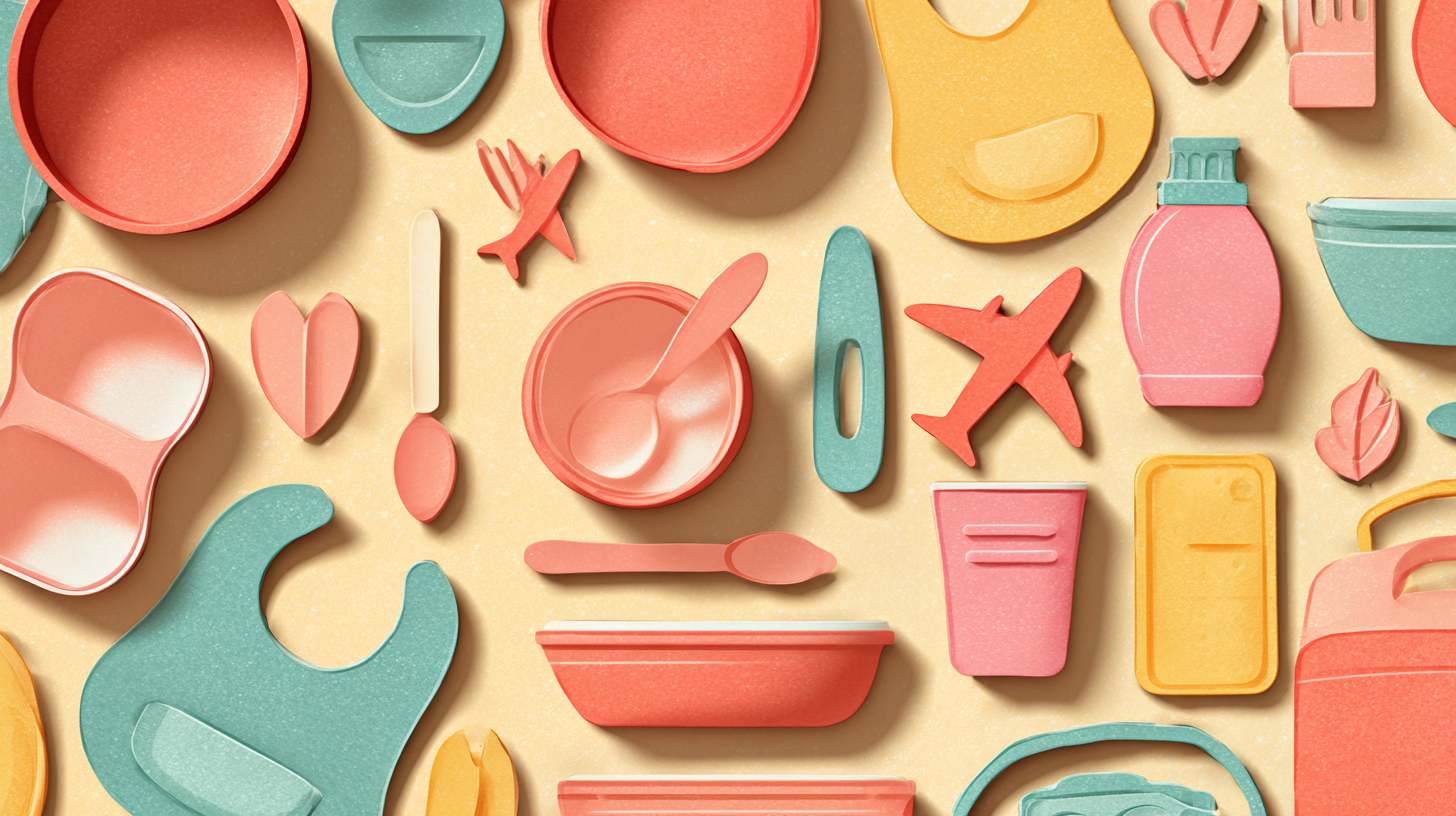
Portable Feeding Equipment (The Non-Negotiables):
- Portable bottle warmer: Even if your baby doesn’t take bottles, this heats up refrigerated purées in restaurants and hotel rooms. Look for USB-rechargeable models that don’t require outlet adapters.
- Collapsible silicone bowls (3-4): These pack flat and can go from freezer to microwave to dishwasher. Get the ones with suction bases if your baby is a thrower.
- Travel utensils set: Include spoons for feeding, a fork for cutting soft foods, and a small spatula for scraping containers clean. Keep them in a dedicated case so you’re not frantically searching your bag mid-meltdown.
- Portable high chair or clip-on seat: Most restaurants claim they have high chairs. Most restaurants lie. A fabric travel high chair that straps onto regular chairs weighs almost nothing and saves you from eating one-handed while balancing a squirming baby.
- Silicone bibs (2-3): The ones with the catch pocket. You’ll rinse these in hotel sinks more times than you can count. Fabric bibs never dry properly when traveling.
- Waterproof changing pad/placemat: This goes under your baby’s setup at restaurants. When they inevitably throw food everywhere, you can just roll it up and deal with it later rather than leaving a hurricane of mashed banana on someone’s table.
Food Storage for Travel (The Practical Reality):
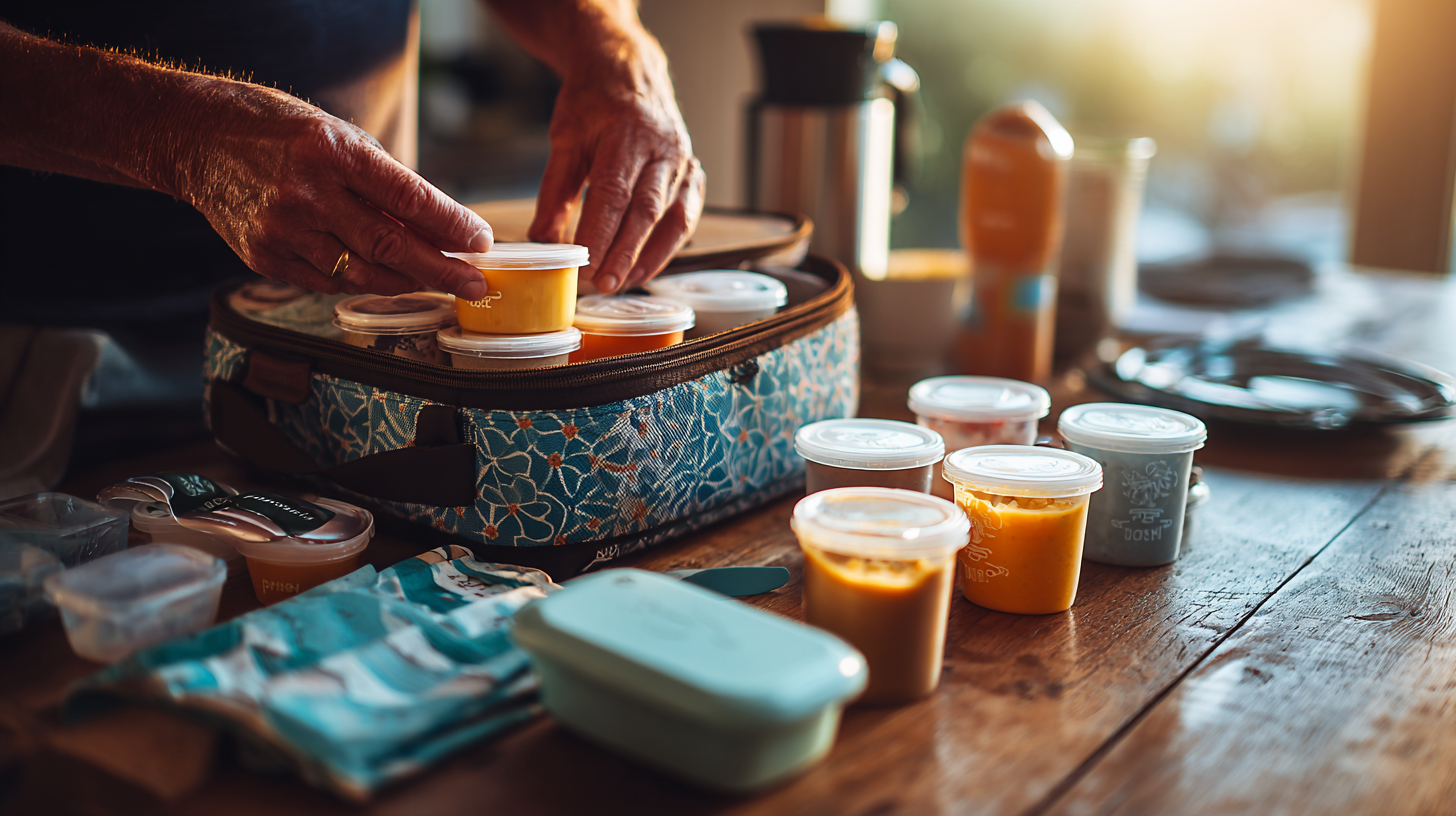
- Insulated cooler bag with ice packs: Get one that holds temperature for at least 8 hours. You’ll use this on planes, in cars, and during day trips. Pack ice packs in checked luggage and ask your hotel to freeze them overnight.
- BPA-free containers with secure lids (8-10): More than you think you need because you won’t always have access to washing facilities immediately. Get various sizes for different food quantities.
- Resealable pouches: These are brilliant for puréed foods. Fill them at home, freeze them, and they act as additional ice packs while thawing into ready-to-eat meals.
- Mason jars with lids (small): These are my secret weapon. They’re glass so no staining or odor retention, they seal perfectly, and you can see exactly what’s inside. Plus, customs officials never question them.
- Disposable spoons and bowls (backup): I resisted these for environmental reasons, but having a backup supply saved me more than once when washing wasn’t possible.
The Food Itself:
This is where most packing guides get it wrong. They tell you to bring enough food for your entire trip. That’s ridiculous unless you’re going somewhere truly remote. Instead, bring transition foods and familiarize yourself with local options.
- Days 1-2 of trip: Pack familiar foods from home. This gives your baby time to adjust to new surroundings while eating something recognizable. Think about recipes like Sweet Potato & Callaloo or Yellow Yam & Carrot blends that travel well and provide solid nutrition.
- Emergency backup meals (3-4): Shelf-stable pouches of foods your baby definitely eats. These are for desperate situations: delayed flights, food poisoning, or days when everything goes wrong.
- Familiar snacks: Whatever your baby reliably eats at home. For us, it was always banana and those little star-shaped puffs. Nothing fancy, just reliable.
- Tropical fruits you can find anywhere: Bananas, papaya, mango, avocado. These are available globally, need minimal preparation, and most babies love them.
Restaurant Strategies That Actually Work
Let me tell you about the time I confidently walked into a beautiful beachside restaurant in Barbados, assuming they’d have something suitable for my nine-month-old. They did not. Everything was fried, heavily seasoned, or contained shellfish. I ended up mashing a plain baked potato with some coconut water from the bar. It was neither glamorous nor Instagram-worthy, but she ate it.
️ Restaurant Reality Check: Choose Your Response
Here’s what experienced traveling parents know about feeding babies in restaurants worldwide:
The Universal Restaurant Strategy: Most restaurants anywhere in the world can provide plain rice, beans, steamed vegetables, or fruit, even if these items aren’t listed on the menu. You just have to ask. Learn the phrases “plain, no salt, no spices” in the local language or have them written on your phone to show servers.
Timing Is Everything: Arrive during off-peak hours. A restaurant at 3 PM is far more accommodating to special requests than one during Saturday dinner rush. Plus, you’ll get faster service before your baby hits meltdown mode.
The Caribbean Advantage: If you’re traveling to Caribbean destinations, you’re in luck. Many traditional foods are naturally baby-friendly. Provisions (ground provisions like yam, dasheen, and cassava) are served everywhere and can be easily mashed. Rice and peas is a staple that provides complete protein. Plantains appear on nearly every menu and are perfect for baby-led weaning.
What to Order for Easy Adaptation:
- Steamed vegetables (request no salt or butter)
- Plain rice or pasta
- Baked or grilled fish (check for bones meticulously)
- Soups (request broth separate from spicy add-ins)
- Fruit plates (confirm nothing is pre-sweetened)
- Scrambled eggs (for babies 8+ months)
- Mashed potatoes or sweet potatoes (request no salt, butter, or cream)
The Equipment You Need in Your Restaurant Bag: A small cutting board, your own utensils, a bowl, and wet wipes (not just for baby, but for wiping down tables and high chairs). Some parents bring a small manual food mill to purée restaurant food on the spot. I found this excessive until the one time I really needed it and didn’t have it.
Maintaining Routines While Everything Changes
The cruel irony of traveling with babies is that babies thrive on routine, and travel destroys routine. But here’s what I learned: you can’t maintain your exact home routine while traveling, and trying to do so will make everyone miserable. Instead, you maintain the framework while staying flexible about the details.
The Truth About Travel Routines Nobody Admits
Ready to hear what really happens with feeding routines when you travel?
What “Maintaining Routine” Actually Means While Traveling:
Timing flexibility: Keep the same meal sequence (breakfast, lunch, dinner, snacks), but don’t stress about exact times. If baby usually eats dinner at 5:30 PM and you’re still at the beach at 6:00 PM, that’s fine. The structure matters more than the schedule.
Environment consistency: Use the same plates, bowls, and utensils from home even in new places. Bring your baby’s regular high chair cover or placemat. These familiar items signal “eating time” regardless of location.
Mealtime rituals: If you sing a specific song before meals at home, sing it while traveling. If you always wash hands with a specific routine, maintain that. The little rituals comfort babies more than location consistency.
The One Non-Negotiable: Hydration. Whatever else falls apart with your routine, make sure your baby drinks enough. Dehydration happens quickly during travel, especially on planes or in hot climates. Offer water or milk more frequently than normal.
Time Zone Adjustments: This deserves its own mention because it wrecks feeding schedules like nothing else. When traveling across time zones, gradually shift meal times by 30 minutes per day rather than jumping straight to new times. Your baby’s body needs time to adjust. Expect eating to be weird for 3-4 days minimum after significant time changes.
Airplane Feeding: The Final Boss Level
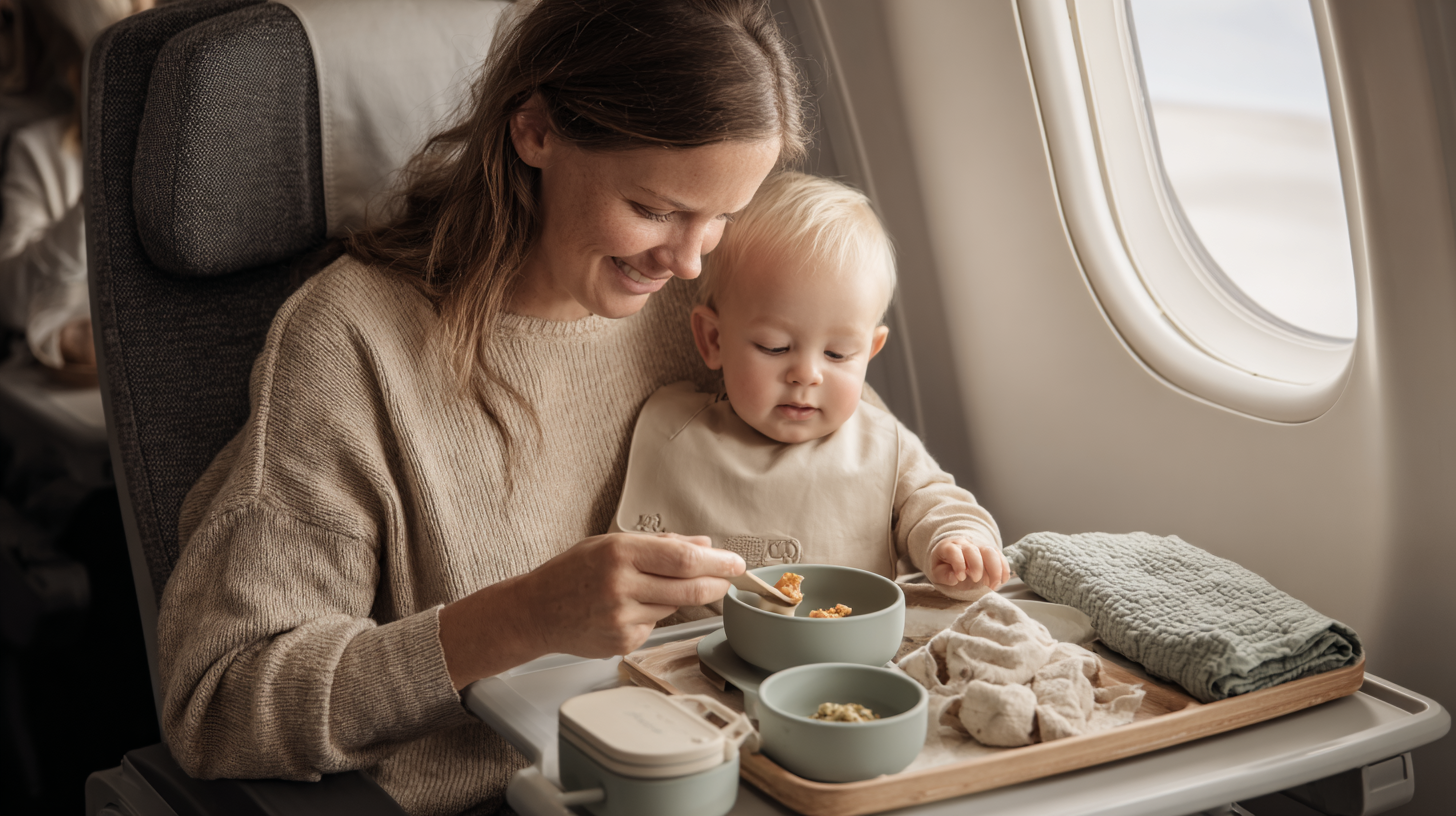
If traveling with a solid-eating baby is challenging, doing it on an airplane is the final boss level. The confined space, pressure changes, limited washing facilities, and judgmental passengers who act like your baby’s existence is a personal affront to their comfort make this particular challenge memorable.
Here’s what works, learned through trial, error, and one particularly memorable transatlantic flight where my daughter launched sweet potato purée across three rows of seats.
The Airplane-Specific Packing List:
- Pre-packaged, pre-portioned meals in sealed containers: One container per feeding, clearly labeled, already opened and checked by security. Don’t bring giant containers you’ll need to portion out mid-flight.
- Way more wet wipes than you think you need: Triple whatever number you’re thinking. Planes don’t have sinks near seats, and you’ll be cleaning baby, yourself, the seat, the tray table, and possibly your neighbor.
- A dedicated spill cloth: Something large enough to cover your lap and baby. When (not if) food goes flying, this contains the damage.
- Foods that don’t stain permanently: This is not the time for beets, blueberries, or curry. Stick with lighter-colored foods that won’t turn everything purple when spilled.
- Finger foods over purées: If your baby can handle them, finger foods cause less chaos than spoon-feeding in tight airplane quarters. Small pieces of soft foods that won’t roll away when dropped.
- A change of clothes for you: Everyone packs extra clothes for baby. Pack extra for yourself too. You’re going to need them.
The Timing Strategy: Feed your baby at the beginning of the flight when you have energy and patience, not when you’re exhausted three hours in. Offer a substantial snack or meal right after takeoff. This usually coincides with babies being interested and alert rather than tired and cranky. Then plan for smaller snacks throughout the flight rather than full meals in cramped conditions.
Pressure Changes and Eating: Some babies refuse to eat during takeoff and landing due to ear pressure. Drinking helps equalize pressure, so offer milk, water, or breast/bottle during these times rather than solids. If your baby is eating solids and suddenly stops mid-flight, check if they’re experiencing ear discomfort before forcing the issue.
What Airlines Actually Provide: Most airlines offer some version of baby food if you request it during booking (usually 24-48 hours in advance). The quality varies wildly. Some airlines provide decent options; others give you a sad jar of something unidentifiable. Always assume you’ll need to bring your own and treat any airline provision as a bonus.
TSA and International Security: In the United States, TSA allows reasonable quantities of baby food through security, including purées, formula, and breast milk in quantities exceeding the standard 3.4-ounce liquid limit. International security varies dramatically. Some countries have similar policies; others are far stricter. Research specific rules for your departure country and connecting airports. Pack baby food in clear containers in an easily accessible part of your bag to speed up security screening.
✅ Your Interactive Pre-Flight Feeding Checklist
Tap each item as you pack it. Watch your readiness score climb!
The Foods That Travel Best (And The Ones That Don’t)
After ruining three suitcases and learning several expensive lessons about what happens to various foods under travel conditions, I’ve developed a very clear hierarchy of what works and what absolutely doesn’t.
Travel Champion Foods (Bring These):
- Bananas: Nature’s perfect travel food. They come in their own packaging, require zero preparation, and are available almost everywhere as backup.
- Sweet potatoes: Once cooked and mashed, they stay good for days, travel well in containers, and babies universally love them. Caribbean Baby Food recipes feature numerous sweet potato combinations that work brilliantly for travel.
- Oatmeal or cereal: Pack the dry ingredients and add water at your destination. Shelf-stable, lightweight, and endlessly versatile.
- Nut/seed butter pouches (if no allergies): These individual pouches last forever, provide good nutrition, and can be eaten alone or mixed with other foods.
- Rice or quinoa: Cooked grains last 3-4 days refrigerated and can be mixed with virtually anything to create complete meals.
- Dried fruits (appropriate size for baby’s age): These don’t spoil, pack light, and provide quick energy and nutrients.
Foods That Seem Like Good Ideas But Aren’t:
- Anything with dairy (unless you have constant refrigeration): Yogurt, cheese, milk-based purées all spoil quickly and can cause serious illness.
- Leafy greens: They wilt instantly, create a soggy mess in containers, and lose all appeal within hours of preparation.
- Berries: They mold, stain everything, and turn to mush under any pressure. Save berries for eating fresh at your destination.
- Anything with strong odors: Your fellow passengers will hate you if you open a container of fish purée on a plane. Just don’t.
- Foods in glass jars you haven’t transferred: The jars add weight, can break, and commercial baby foods often don’t match what your baby actually eats. If you’re bringing jarred foods, transfer to lighter containers.
When Everything Goes Wrong: The Emergency Protocols
Let me tell you about our trip to Puerto Rico. Our flight was delayed six hours. Our cooler bag lost its cold after hour four. My daughter refused every single food we’d packed. The airport had exactly one restaurant serving anything remotely appropriate. And that restaurant ran out of rice.
This is when you discover what truly matters versus what you thought mattered. Here’s your emergency protocol for when travel feeding falls apart:
Priority One: Hydration: If your baby won’t eat solids, make sure they’re drinking enough. Breast milk, formula, or water depending on their age. Dehydration is the actual danger; temporary reduced calorie intake is just inconvenient.
Priority Two: Any Calories: When babies refuse everything, nutritional balance goes out the window. If they’ll only eat puffs and banana for three days straight, that’s what they eat. You’ll restore variety after you get home.
Priority Three: Familiar Comfort: Sometimes babies refuse food because everything else is overwhelming. Offering something extremely familiar, even if it’s not your first choice, can break the refusal cycle.
The Emergency Food Sources Nobody Tells You About: Hotel kitchens will almost always make plain rice or pasta if you explain you have a baby who won’t eat. Grocery stores in most destinations have bananas, bread, and avocados. Pharmacies often stock baby food. McDonald’s, for all its nutritional limitations, exists on six continents and will provide plain hamburger patty or chicken nuggets if you ask.
When to Worry (And When Not To): A baby who eats less than usual for several days but stays hydrated, has regular diapers, and maintains energy is fine. A baby who stops drinking, has significantly reduced diaper output, seems lethargic, or shows signs of dehydration needs medical attention regardless of location.
The Cultural Intelligence Piece
Feeding practices vary dramatically across cultures, and understanding this becomes important when traveling internationally. What you consider appropriate baby food might seem bizarre to locals, and vice versa.
In many Caribbean countries, babies eat more seasoned, flavorful foods earlier than typical Western recommendations suggest. In parts of Asia, babies consume fish and rice as primary first foods. European babies often start with vegetable purées rather than cereals. Latin American families might introduce beans and corn much earlier than North American pediatricians recommend.
None of these approaches are wrong. They’re simply different cultural frameworks developed over generations. When traveling, you’ll encounter these differences directly. Restaurant staff might be confused by requests for completely unseasoned food. Hotel workers might think it’s strange that you’re bringing your own food rather than letting your baby eat local options.
The balance is respecting local food culture while maintaining what works for your family. You don’t need to completely adopt destination feeding practices during a short trip, but remaining open to appropriate local options can actually make travel easier and more enjoyable for everyone.
Your Post-Trip Reset Plan
Here’s what nobody warns you about: the end of the trip. You’ve survived airplane feedings, restaurant adventures, and maintaining some semblance of routine in chaotic conditions. Now you have to transition back to normal life.
Most babies take 3-7 days to fully return to their pre-trip eating patterns. During this time, they might continue being pickier than usual, want more breast milk or formula than before the trip, or reject foods they previously enjoyed. This is normal. This is temporary. This is not your new reality forever.
The Return-Home Strategy:
Immediately reestablish your home routine. Same meal times, same locations, same utensils and dishes. Babies find security in these familiar patterns after the disruption of travel. Offer previously favorite foods without forcing them. Your baby is remembering what they liked before travel threw everything off. Don’t introduce new foods for at least a week after returning. Give your baby’s system time to settle before adding more novelty. Monitor hydration and diaper output more carefully than usual. Travel sometimes disrupts digestion temporarily.
The Debrief That Helps Next Time: While the trip is fresh, write down what worked and what didn’t. Which foods traveled well? Which equipment proved essential versus what you never touched? What would you pack differently next time? This information becomes invaluable for future trips and for other parents you’ll inevitably advise later.
Making Your Next Journey Smoother
The beautiful truth about traveling with babies who eat solids is that it gets easier. Not because babies become less messy or more predictable, but because you become more adaptable. You learn what matters and what doesn’t. You stop trying to control the uncontrollable and start preparing for the things you can actually influence.
That first trip to Jamaica where everything went sideways taught me more than a hundred perfect meals at home ever could. My daughter is now a toddler who’s been to eleven countries and eats airplane meals with the casual confidence of a seasoned traveler. She tries foods in restaurants I would never have imagined offering during that panicked first trip. She adapts to new environments quickly because she’s done it before.
But here’s the thing: she’s not special. Your baby will develop that same adaptability. Every trip builds their capacity to handle change. Every meal in an unfamiliar location teaches them that eating isn’t just something that happens at home in the same chair at the same time every day.
The comprehensive packing list matters. The strategies for airplane feeding and restaurant navigation matter. But what matters most is giving yourself permission to be imperfect at this. You will forget things. Meals will go wrong. Your baby will refuse everything you carefully prepared and then eat half a breadstick at a gas station with the joy of discovering chocolate for the first time.
Travel feeding chaos is not a reflection of your parenting. It’s simply evidence that you’re brave enough to go somewhere new with a tiny human who has opinions about everything and the vocabulary to express exactly none of them clearly.
So pack your bags. Prepare your containers. Research those restaurant phrases. But also pack flexibility, patience, and the understanding that the story you’ll tell later probably won’t be about how perfectly the feeding schedule was maintained. It’ll be about the time your baby rejected every carefully prepared meal and then demolished a plate of plantain at a roadside stand, grinning with the satisfaction of someone who knew what they wanted all along.
The world is waiting. Your baby is ready. And now, so are you.

Kelley's culinary creations are a fusion of her Caribbean roots and modern nutritional science, resulting in baby-friendly dishes that are both developmentally appropriate and bursting with flavor. Her expertise in oral motor development and texture progression ensures that every recipe supports your little one's feeding milestones while honoring cultural traditions.
Join Kelley on her flavorful journey as she shares treasured family recipes adapted for tiny taste buds, evidence-based feeding guidance, insightful parenting anecdotes, and the joy of celebrating food, culture, and motherhood. Get ready to immerse yourself in the captivating world of Kelley Black and unlock the vibrant flavors of the Caribbean for your growing baby, one nutritious bite at a time.
- The Feeding Revolution: Why Your Everyday Meals Are Changing the World - October 13, 2026
- Your Feeding Story Matters More Than The “Perfect” One Online - October 12, 2026
- Looking Forward: Stepping Into Your Confident Feeding Future - October 11, 2026