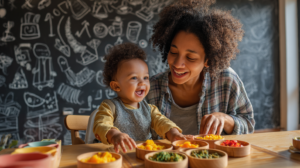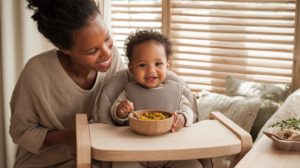
The Truth About What Your Children Will Remember From Your Dinner Table (And Why It’s Not What You Think)
Quick Memory Quiz: What Sticks?
What do you think your child will remember most vividly 20 years from now?
Here’s something that might shock you: when adults recall their childhood meals, almost none of them can tell you exactly what vegetables were on their plate or whether they hit all five food groups. But they can tell you—in vivid detail—how it felt to be at that table.
They remember if their parents were stressed or relaxed. They remember whether mealtimes felt like a battleground or a safe haven. They remember the exact tone of voice used when they refused to eat something. And decades later, these emotional memories shape everything from their relationship with food to how they feed their own children.
Research from experimental studies on food-related memories reveals something profound: recalling a negative eating experience increases feelings of guilt and shame when people encounter food images later—especially for those with restrictive eating histories. These memories don’t just fade. They linger, coloring every food decision that follows. Meanwhile, longitudinal research tracking families from adolescence into parenthood shows that adults who had regular, positive family meals are more likely to maintain healthful dietary patterns and better psychosocial well-being as parents themselves.
Yet, despite this evidence, so many of us are still obsessing over the broccoli while missing the bigger picture entirely.
What Food Memories Really Are
Food memories aren’t snapshots of perfectly plated dinners. They’re emotional imprints—sensory experiences tied to feelings of safety, connection, shame, or pressure. They’re the emotional and sensory memories children carry from everyday and special-occasion meals, which then influence their later food preferences, eating behaviors, and even body image throughout life.
Think about your own childhood for a moment. Can you remember a specific meal where you felt truly at ease? Maybe it was your grandmother’s kitchen on a Sunday afternoon, the smell of coconut rice simmering on the stove, the sound of laughter drifting through open windows. Or perhaps it was a weeknight dinner where nobody rushed you, nobody counted your bites, and nobody made you feel bad about what you didn’t eat.

Those are the meals we remember. Not because of what was on the plate, but because of what was in the air—warmth, acceptance, belonging. On the flip side, many adults can still recall the tight knot in their stomach when they were told they couldn’t leave the table until they finished everything, or the sting of being compared to a sibling who “ate better.”
Over the last few decades, something shifted. Diet culture, rising concerns about childhood obesity, and an explosion of nutrition content on social media have pushed parents toward more control, more monitoring, and exponentially more anxiety around children’s eating. Research shows this intense focus often crowds out the very thing that matters most: emotional connection at the table.
Child-feeding experts now emphasize responsive feeding—allowing children to tune into their own hunger and fullness cues, offering structure without pressure, and above all, prioritizing a calm mealtime environment. Ellyn Satter’s Division of Responsibility model, backed by decades of research, makes this beautifully simple: parents decide what, when, and where food is offered; children decide whether and how much to eat. This trust-based approach has been shown to support healthier BMIs, better self-regulation with food, and significantly reduced eating in the absence of hunger.
The Science Behind Mealtime Emotions
Here’s where it gets fascinating. A comprehensive umbrella review analyzing family mealtime research found that more frequent family meals are predicted not by perfect nutrition, but by a positive mealtime environment and positive attitudes toward meals. Families who eat together more often aren’t necessarily serving gourmet organic fare—they’re creating an atmosphere where everyone actually wants to be there.
Another study examining mealtime emotional climate found that families characterized as “Positive Expressers”—those with high positive and low negative emotion during meals—reported that their children ate more healthy foods compared to families who expressed both positive and negative emotions. The emotional tone of the meal directly influenced what children chose to eat.
Your Mealtime Emotion Tracker
Which emotions show up most often at your family table? (Click all that apply)
Research on parental stress reveals something critical: higher momentary stress is directly linked to more controlling or inconsistent feeding practices—pressure, bribes, using screens as distractions. All of these undermine children’s ability to self-regulate with food. It’s not that stressed parents are failing; it’s that stress itself makes it nearly impossible to create the kind of relaxed, attuned feeding environment children need.
Even screen use plays a role. Studies examining digital technology use during meals found that parental distraction is associated with lower-quality parent–child interactions and more dysregulated child behavior at the table. When we’re scrolling through our phones or answering work emails between bites, we’re not just missing connection—we’re actively eroding the relational quality of the meal.
And here’s what’s particularly striking: longitudinal research from the Avon Longitudinal Study of Parents and Children showed that persistent picky eaters are 18 times more likely to experience meals described as “not enjoyable,” with significantly more adult–child conflict and rushed mealtimes. It’s not the pickiness itself causing the problem—it’s the stress and battles around eating that children remember and carry forward.
The Hidden Cost of Food Battles
Let’s talk about what happens when we turn mealtimes into negotiations, power struggles, or educational lectures about nutrition.
Experts reviewing decades of picky eating research have been clear: while it’s distressing for parents, picky eating rarely leads to serious long-term nutritional problems in otherwise healthy children. But you know what does cause lasting issues? Pressure. Study after study links parental pressure to eat with lower intake of fruits and vegetables and more resistance to food—the exact opposite of what we’re trying to achieve.
⚔️ The Food Battle Counter
How many of these tactics show up at your table? (Check all that apply)
When we pressure children to eat—whether through bribes, threats, or emotional manipulation—we’re actually teaching them to ignore their internal hunger and fullness cues. Research on Satter’s Division of Responsibility model demonstrates that children have lower BMIs and less tendency to eat in the absence of hunger when mothers avoid intruding on their children’s decisions about how much to eat. The study also revealed something startling: girls who were restricted from high-fat, high-sugar snacks showed increasing eating in the absence of hunger and higher BMIs over time. Restriction backfires.
Feeding therapists and occupational therapists across social media platforms have been echoing this message: parental anxiety around growth charts or pickiness creates what they call a “perfect storm”—sensory needs plus pressure plus conflict leads to entrenched mealtime battles that can last for years.
But here’s what we rarely talk about: the emotional aftermath. Adults who grew up with high-pressure feeding often struggle with disordered eating, body image issues, and guilt around food choices. They remember the shame, the stress, the feeling of never being good enough at the dinner table. And many of them unconsciously repeat these patterns with their own children, continuing a painful intergenerational cycle.
What Creates Lasting Positive Memories
So if nutritional perfection doesn’t create positive food memories, what does?
Research on food-evoked nostalgia and comfort foods provides beautiful clarity here: childhood foods and family meals are potent triggers of positive nostalgia, social connection, and well-being in adulthood. The foods that comfort us as adults aren’t necessarily the most nutritious ones—they’re the ones tied to feelings of safety, love, and belonging.
A 2025 study on family dynamics and shared cooking found that these practices play a vital role in strengthening emotional bonds, fostering communication, and improving family cohesion. The act of cooking and eating together—not the nutritional content—was what enhanced psychological flourishing and life satisfaction.
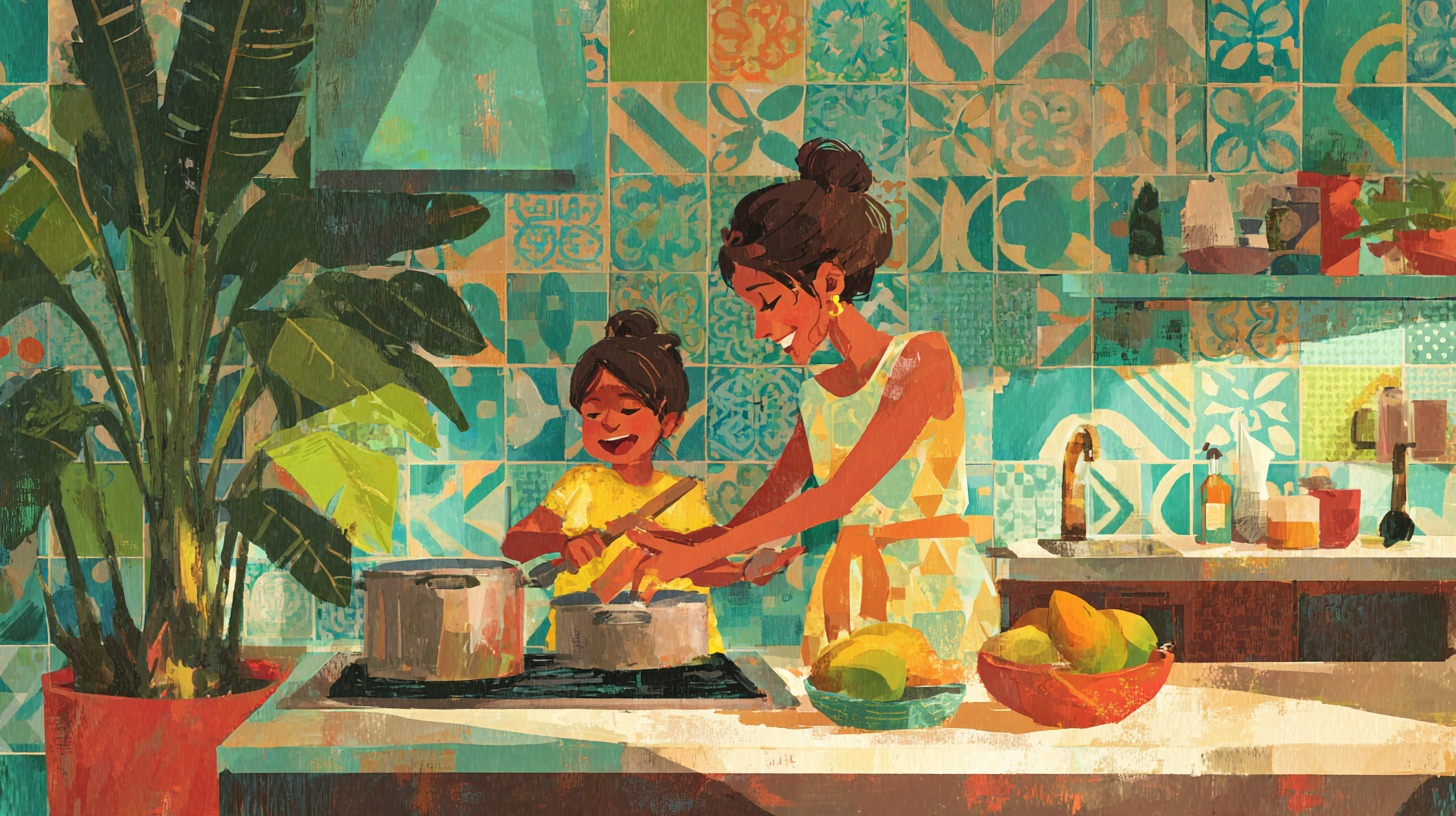
Think about meals infused with culture and tradition. When Caribbean families introduce babies to the warm, earthy flavors of coconut milk, the subtle heat of ginger, or the comforting texture of soft plantain, they’re not just feeding their children—they’re passing down identity, belonging, and love through food. These meals become anchors of cultural memory and family connection. If you’re looking to weave these rich traditions into your child’s earliest food experiences, resources like the Caribbean Baby Food Recipe Book offer authentic, age-appropriate recipes designed to introduce island flavors while supporting proper nutrition—from Sweet Potato & Callaloo Rundown to Coconut Rice & Red Peas purées.
Memory-Making Ritual Selector
Choose your favorite mealtime ritual to start building positive food memories:
Research consistently shows that what children remember fondly are the small rituals that anchored safety and connection to eating: lighting a candle before dinner, a silly song everyone sang, a “rose and thorn” check-in where each person shared the best and hardest part of their day. These simple traditions create predictability, signal that this time is special, and build positive associations that last a lifetime.
Intergenerational studies tracking family meal patterns from adolescence to parenthood reveal something powerful: adults who maintained or started regular family meals reported more healthful dietary patterns and better psychosocial outcomes. But here’s the key—it wasn’t about the food itself. It was about the consistency, the presence, and the emotional quality of being together.
Redefining Mealtime Success
We need to radically shift what we consider a “successful” meal.
Success isn’t a child who eats every vegetable on their plate. Success is a child who feels safe, seen, and accepted at the table—regardless of what or how much they ate. Success is a meal where nobody cried, nobody was shamed, and everyone left the table feeling a little more connected than when they sat down.
Shocking Truths About Food Memories
Click to reveal research-backed truths that might change everything:
One recent study examining what parents consider essential characteristics of family meals found interesting contradictions. While parents valued having everyone present and minimizing distractions, they simultaneously reported high levels of stress about food quality and children’s intake. The meals that parents rated as most successful weren’t the ones with the best nutrition—they were the ones with the best emotional tone.
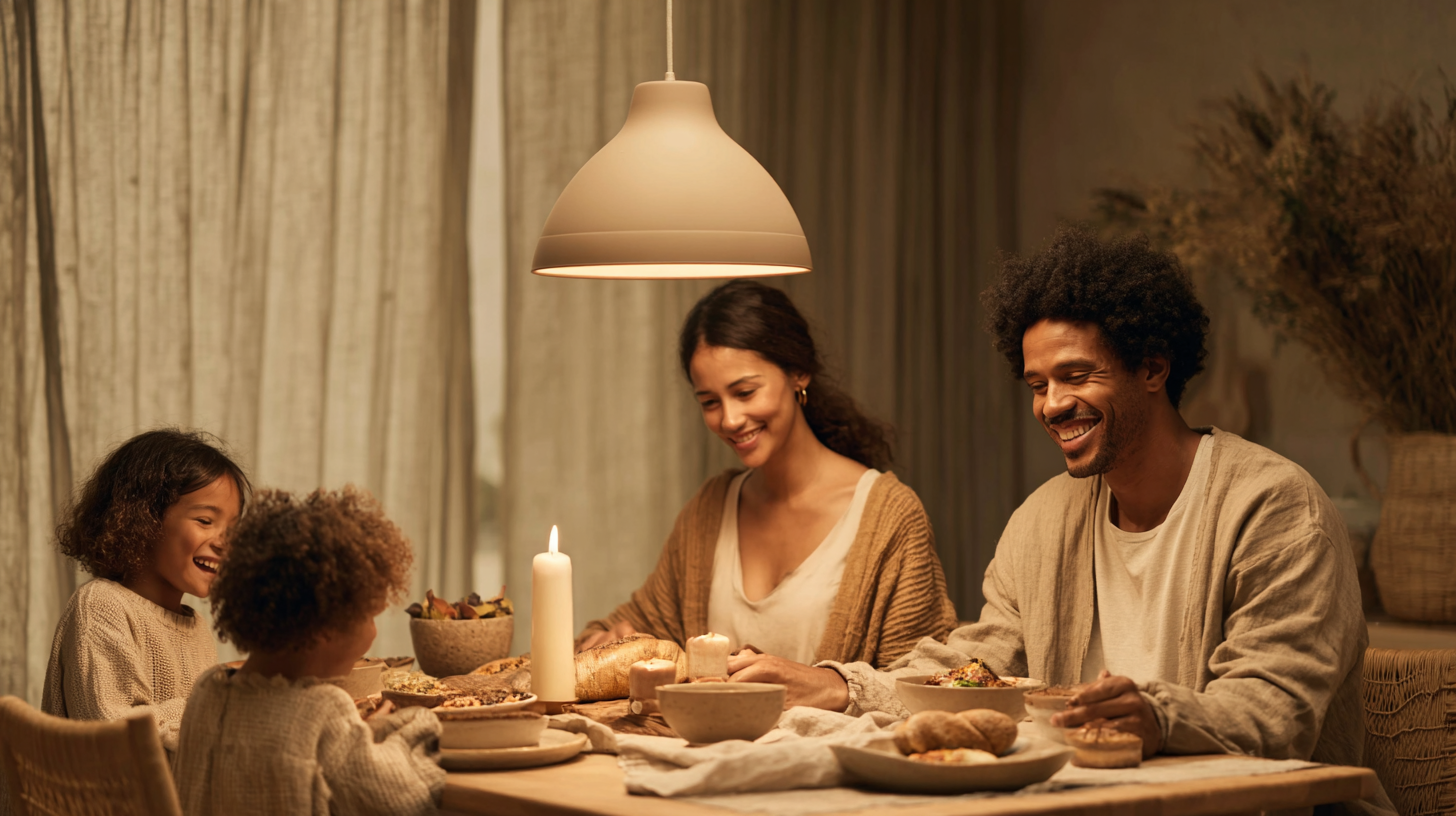
Sensitive feeding—a concept that broadens responsive feeding to include understanding and anticipating the child’s point of view—emphasizes responding sensitively to children’s signals to foster a pleasant and safe atmosphere during mealtimes. This approach helps children associate eating with positive emotions and encourages willingness to try new foods without pressure.
Consider the practical application: instead of “just three more bites,” try, “You don’t have to eat it.” Instead of “no dessert until you finish your vegetables,” serve dessert alongside the meal and let your child decide. Instead of praising your child for eating well, comment on the experience: “This mango reminds me of summers at my grandmother’s house” or “I love how we all get to sit together like this.”
When introducing diverse flavors to babies and toddlers, focus on joy and exploration rather than intake. Offer small tastes of culturally meaningful foods—perhaps the warm spice of cinnamon in sweet millet cereal, the rich creaminess of coconut milk in pumpkin purée, or the subtle tang of tamarind. Resources like the Caribbean Baby Food Recipe Book make this process easier with recipes specifically designed for babies 6+ months, helping you introduce authentic island flavors while honoring developmental readiness and nutritional needs. The memories your child forms aren’t about whether they finished the bowl—they’re about whether food felt like a source of discovery and connection.
Breaking the Cycle
Many of us parent in reaction to our own childhoods. If we were pressured to clean our plates, we might swing to the opposite extreme and never set any boundaries. If we grew up with chaotic, unpredictable meals, we might become rigid about timing and routine. Both extremes miss the mark.
Breaking intergenerational feeding patterns requires honest reflection. What are the food memories you carry? How do they show up at your table today? Research on the intergenerational transmission of family meal practices shows that parents often unconsciously repeat the patterns they experienced—for better or worse. But here’s the hopeful part: awareness creates choice.
Studies examining parents’ early life experiences found that childhood mealtime experiences and significant life transitions deeply influence why and how families eat together as adults. The parents who successfully shifted negative patterns into positive ones shared a few key characteristics: they acknowledged their own food history, they sought support and education, and they made conscious, deliberate choices to do things differently.
This might mean working through your own relationship with food before you can create a neutral, calm feeding environment for your child. It might mean recognizing when your anxiety is speaking louder than your child’s actual needs. It definitely means giving yourself permission to prioritize emotional atmosphere over nutritional perfection—even when every parenting influencer and pediatrician seems to be sending the opposite message.
The Caribbean Kitchen Wisdom
There’s something Caribbean grandmothers have always understood that modern feeding research is only now confirming: food is about so much more than nutrients.
When a Jamaican grandmother simmers cornmeal porridge with coconut milk, nutmeg, and a hint of vanilla, she’s not thinking about protein ratios. When a Trinidadian auntie serves warm dhal with a drizzle of fragrant curry, she’s not calculating vitamins. When a Guyanese mother prepares metemgee—that soul-satisfying blend of ground provisions in coconut milk—she’s feeding more than bodies. She’s feeding belonging, heritage, and love.
This wisdom—that food’s greatest power is in connection, not perfection—is precisely what research now validates. Traditional foodways often prioritize shared meals, multi-generational cooking, and the joy of eating together over rigid nutrition rules. And children raised in these environments often develop healthier, more intuitive relationships with food precisely because the focus is on experience, not control.
When you’re introducing these rich, flavorful traditions to your baby’s palate, you’re not just expanding their food repertoire—you’re laying the foundation for cultural pride and positive food memories. The Caribbean Baby Food Recipe Book includes over 75 recipes that honor this approach, from Simple Metemgee Style Mash to Plantain Paradise to Cornmeal Porridge Dreams. Each recipe is designed to be adapted to your child’s developmental stage while preserving the authentic flavors that make Caribbean cuisine so memorable and meaningful.
Practical Ways Forward
Let’s get concrete. What does this actually look like on a random Tuesday night when you’re exhausted, your toddler is refusing everything, and you’re questioning all your life choices?
First: Lower the stakes. Remind yourself that this single meal—or this entire week of meals—will not determine your child’s future health, intelligence, or character. One study found that mealtime stress itself is more damaging than imperfect nutrition. Take a breath. This doesn’t have to be perfect.
Second: Protect the structure, release the outcome. Offer meals and snacks at predictable times. Include at least one food you know your child accepts alongside the new or less-preferred foods. Then step back. Your job is to offer; their job is to decide. Research on the Division of Responsibility model shows this approach consistently leads to better self-regulation and healthier eating patterns long-term.
Third: Minimize devices—yours and theirs. Studies clearly show that parental technology use during meals erodes interaction quality and increases child dysregulation. Put the phone in another room. Turn off the TV. Be present. This is the time that builds memories.
Fourth: Attend to your own state. Before you call everyone to the table, check in with yourself. Are you stressed? Rushed? Resentful? Your emotional state sets the tone for the entire meal. Research confirms that higher parental stress predicts more controlling feeding. If you need five minutes to decompress, take them. A slightly delayed, calmer meal beats a timely, tense one.
Fifth: Build in small rituals. They don’t have to be elaborate. Light a candle. Ring a bell. Have everyone share one thing from their day. These tiny traditions signal that this time is special, creating the kind of positive associations children carry into adulthood.
Sixth: Talk about food differently. Instead of “good” and “bad” foods, talk about how different foods make us feel—energized, cozy, satisfied. Instead of praising eating, comment on the sensory experience: “This tastes sweet and a little spicy, doesn’t it?” Research shows that helping children develop body awareness and food curiosity supports intuitive eating far better than external rules.
Seventh: Let go of comparison. Your child’s eating doesn’t need to look like their sibling’s, their cousin’s, or the Instagram influencer’s perfect eater. Research on picky eating consistently shows vast developmental variation in food acceptance. What matters is that your child is growing, generally healthy, and not learning to fear food or mealtimes.
Your Next Mealtime Matters
The beautiful—and perhaps intimidating—truth is that every single meal is an opportunity. Not to get the nutrition perfect, but to build trust, safety, and connection around food.
Twenty years from now, your child won’t remember if they ate organic or conventional produce. They won’t remember if you served three vegetables or one. They won’t remember whether meals were Pinterest-worthy or thrown together from leftovers.
But they will remember if mealtimes felt safe. They’ll remember if you were present or distracted. They’ll remember whether food was a source of conflict or connection. They’ll remember if they could trust their own body or if they learned to ignore their hunger and fullness in favor of external rules.
Your Mealtime Commitment
Choose one thing you’ll start doing differently at your next family meal:
Research on responsive and sensitive feeding, along with decades of longitudinal data on family meals, tells us clearly: the most powerful thing you can do for your child’s lifelong relationship with food is to make mealtimes feel emotionally safe.
This doesn’t mean you never have hard days. It doesn’t mean every meal is blissful. It doesn’t mean you won’t occasionally lose your patience or slip back into old patterns. What it means is that you’re aware. You’re intentional. You’re choosing, meal by meal, to prioritize connection over perfection.
And when you do that—when you offer structure without pressure, when you’re present without controlling, when you trust your child’s body and honor their autonomy—you’re creating the kind of food memories that heal rather than harm. You’re breaking cycles. You’re building resilience. You’re teaching your child that they can trust themselves, their body, and the people who love them.
The Legacy You’re Building
Your child is watching. Not just what you put on their plate, but how you show up to the table.
They’re learning whether food is a source of anxiety or nourishment. Whether meals are about control or connection. Whether they can trust their internal signals or must always defer to external rules. Whether they’re worthy of love and acceptance regardless of what or how much they eat.
Studies examining the intergenerational transmission of feeding practices show that these patterns ripple forward. The way you feed your child today influences how they’ll feed their children decades from now. But it also shapes something more immediate and profound: their relationship with their own body, their own hunger, their own worth.
The parents who are getting this right aren’t the ones with the most nutritionally perfect meals. They’re the ones who’ve learned to exhale at the dinner table. The ones who’ve stopped micromanaging every bite. The ones who’ve realized that a relaxed meal where their child ate only crackers and fruit is infinitely more valuable than a tense meal where they were forced to eat vegetables.
Food traditions—whether it’s the comforting warmth of Caribbean stewed peas, the rich satisfaction of coconut rice, or simple scrambled eggs on toast—become vehicles for love when they’re offered freely, without pressure. When we introduce babies to diverse flavors through resources like the Caribbean Baby Food Recipe Book, we’re not just teaching them to eat well. We’re teaching them that food is part of their story, their identity, their family’s love language—and that they can trust themselves to know what and how much their body needs.
This is the work. Not perfect nutrition. Not spotless high chairs. Not Instagram-worthy bento boxes.
The work is showing up—tired, imperfect, human—and choosing, again and again, to make the table a safe place. To let go of the need to control. To trust the process. To prioritize how it feels over how it looks.
Because in the end, that’s what your children will carry with them. Not the vitamins. Not the food groups. Not the organic produce or the homemade purees.
They’ll carry the feeling of being seen, accepted, and loved—exactly as they are—at your family table. And that, more than any nutrient, will nourish them for a lifetime.

Kelley's culinary creations are a fusion of her Caribbean roots and modern nutritional science, resulting in baby-friendly dishes that are both developmentally appropriate and bursting with flavor. Her expertise in oral motor development and texture progression ensures that every recipe supports your little one's feeding milestones while honoring cultural traditions.
Join Kelley on her flavorful journey as she shares treasured family recipes adapted for tiny taste buds, evidence-based feeding guidance, insightful parenting anecdotes, and the joy of celebrating food, culture, and motherhood. Get ready to immerse yourself in the captivating world of Kelley Black and unlock the vibrant flavors of the Caribbean for your growing baby, one nutritious bite at a time.
- The Feeding Revolution: Why Your Everyday Meals Are Changing the World - October 13, 2026
- Your Feeding Story Matters More Than The “Perfect” One Online - October 12, 2026
- Looking Forward: Stepping Into Your Confident Feeding Future - October 11, 2026