The Truth About Caribbean Fruits Your Baby’s Digestive System Has Been Waiting For (And Nobody Told You About Seasons)
What’s Your Baby’s Readiness Score?
Before we dive deep, let’s discover where you are in your Caribbean fruit journey. Click all that describe your situation:
Here’s what nobody talks about when they hand you that generic “start with bananas” advice: your baby’s introduction to solid foods should align with what nature intended. And if you’re raising a Caribbean baby—or simply want to introduce the incredible nutritional powerhouse of island fruits—you’re about to discover why timing with the seasons changes everything.
When my neighbor’s daughter reached six months, she did what most of us do: grabbed whatever was available at the supermarket. Imported apples. Out-of-season strawberries flown in from who-knows-where. Meanwhile, just outside her window, ripe mangoes were dripping from trees, papayas were at their peak sweetness, and guavas were bursting with vitamin C. She was spending more money on less nutrition, all because nobody told her the secret Caribbean grandmothers have known for generations.
The Caribbean isn’t just a place—it’s a living classroom in how seasonal eating supports infant health. Regional nutrition agencies now confirm what traditional families always practiced: introducing local, seasonal fruits from around six months provides superior nutrition while building cultural food identity and protecting against the double burden of malnutrition now affecting Caribbean children. Recent systematic reviews of infant feeding guidelines across Latin America and the Caribbean reveal that while most recommend daily fruit consumption, very few provide the seasonal specificity that makes implementation actually work for busy parents.
Why Season Matters More Than You Think (The Research Nobody Shares)
Let’s get real for a moment. When fruit is in season, it’s at peak nutritional density. That mango in May? It has up to 40% more beta-carotene and vitamin C than the same variety picked early and shipped across continents. Your baby’s developing digestive system doesn’t just benefit from the nutrients—it thrives on the natural sugars, fiber, and bioactive compounds that only reach optimal levels when fruit ripens on the tree.
But here’s where it gets interesting. Caribbean climate allows year-round fruit availability, yet specific fruits peak in distinct seasons that traditional feeders have mapped for generations. In January through March, you’ll find citrus fruits like grapefruit, oranges and tangerines at their sweetest alongside papaya, pineapple and banana. Come May through August, mango season explodes with golden varieties, joined by guava, passion fruit, watermelon and the unique five-finger starfruit. September kicks off a transition with continued guava, returning citrus and golden apple, while late-year months circle back to soursop, sapodilla and the comforting sweetness of sugar apple.
What does this mean for your baby? When you align first fruits with seasonal peaks, you’re giving them the freshest, most affordable, most nutrient-dense options while your family budget thanks you. A 2024 study examining infant food-based dietary guidelines across the region found that most national policies recommend fruit daily but lack practical seasonal guidance, leaving families to improvise—often defaulting to expensive imports when local treasure sits ripe and ready.
Discover Your Perfect Starting Fruit
Not all Caribbean fruits work equally well as first foods. Based on your baby’s current month and texture tolerance, let’s find your ideal match. Select your baby’s age range:
The Seasonal Caribbean Fruit Map Your Pediatrician Wishes They Had Time to Explain
Traditional Caribbean feeding wisdom breaks the year into natural fruit cycles. Understanding this rhythm transforms you from a confused parent staring at the produce section into someone who shops with confidence and cultural connection.
Dry Season Delights (December-April): This is your citrus and melon period. Grapefruit, oranges and mandarins are at their juiciest, while papaya maintains year-round reliability. For babies starting solids in these months, ripe papaya becomes your best friend—naturally soft, easy to digest, and so loaded with digestive enzymes it actually helps baby’s gut adapt to solid foods. February and March add cantaloupe, honeydew and early watermelon, plus the exotic soursop with its creamy, immunity-supporting flesh.
April marks the transition when five-finger starfruit appears—a beautiful, vitamin C-rich option that older babies (10+ months) can grasp as a natural teether once you’ve trimmed the fibrous edges. The French cashew (pomerac/Otaheite apple) also arrives, offering a crisp, mildly sweet option that works beautifully when steamed soft for younger eaters.
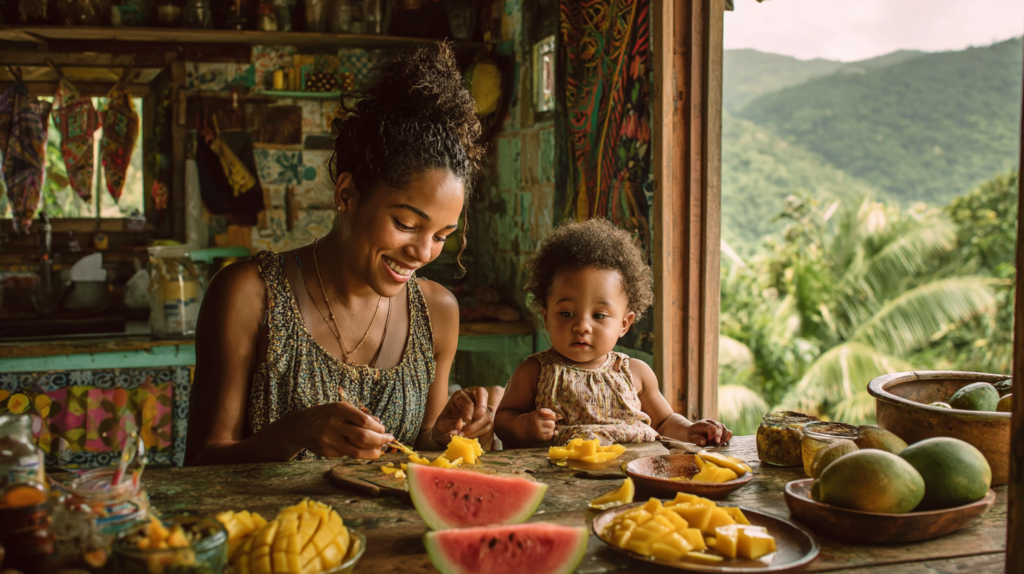
Mango Madness & Rainy Season Riches (May-August): If your baby turns six months anywhere from May to July, you’ve hit the jackpot. Mango season delivers multiple varieties with varying sweetness and fiber content. Julie mangoes, with their minimal fiber, pure gorgeously for young babies. Larger varieties work better for older babies practicing pincer grasp with soft, ripe chunks. The research backs this up—mangoes are rich in beta-carotene (supporting vision development), vitamin A (immune function), and natural prebiotics that feed beneficial gut bacteria.
Watermelon, cantaloupe and honeydew continue through summer, providing hydration during hot months (important since babies get most fluids from milk but benefit from water-rich foods as they increase solids). Guava peaks now too, and while you’ll want to cook and strain it for babies under 10 months due to hard seeds, it’s worth the effort—guava contains more vitamin C per serving than oranges and supports iron absorption from other foods.
Transition & Harvest (September-November): This beautiful shoulder season brings back five-finger starfruit, golden apple (June plum), and sustains the guava abundance. Chenet (genip/skinup) appears for older toddlers who can safely navigate around the large seed. Pomegranate makes a brief showing, though most families wait until after the first birthday to introduce it given the seed structure.
What’s powerful about this period is the overlap—you still have late-season tropical fruits while early citrus begins returning. This natural variety supports the dietary diversity that recent research identifies as critical for Caribbean infants, many of whom don’t meet minimum dietary diversity standards despite the abundance of available produce.
Caribbean Seasonal Wheel: Click Your Current Month
Dry Season
Transition to Wet
Peak Wet Season
Return to Dry
How to Actually Introduce These Fruits (The Part Where Theory Meets Your Kitchen)
Knowing what to feed matters nothing if you don’t know how to prepare it safely. Caribbean grandmothers didn’t have baby food processors—they had knowledge, patience, and techniques that modern baby-led weaning only recently “discovered.”
For smooth puree starters (6-7 months): Ripe papaya, banana, and perfectly ripe mango need minimal intervention. Scoop, mash with a fork, and serve. The natural softness means baby’s gums can handle the texture even before teeth arrive. As your confidence grows, you can blend with a touch of breast milk or formula to reach your preferred consistency. Many families in Trinidad, Jamaica, and throughout the islands have long combined papaya with banana for a “sunshine blend” that babies devour.
Guava requires more work but delivers big rewards. Steam chunks until very soft, then press through a fine-mesh strainer to remove the hard seeds. What remains is a vibrant pink puree packed with immune-supporting nutrients. You’ll find variations of this in the Caribbean Baby Food Recipe Book, which includes over 75 island-inspired preparations including fruit combinations your baby will actually eat.
For texture progression (8-10 months): This is where Caribbean fruits really shine. Soft, ripe mango can be cut into thick strips that baby can hold and gum. The natural texture provides sensory input while the slipperiness challenges developing motor skills—frustrating for baby at first, absolutely crucial for development. Ripe papaya similarly works as finger food, cut into wide strips or offered on a preloaded spoon.
Watermelon and melon present an interesting case. The high water content means they can be slippery choking hazards if cut small. Instead, offer large triangular wedges with rind on (rind acts as a handle), or try the method I learned from a Barbadian grandmother: cut thick circles, remove seeds, and let baby gnaw the flesh while you supervise closely. As baby gets better at managing food, you can progress to rindless chunks—but always larger than baby’s fist to prevent full-mouth stuffing.
For confident eaters (11+ months): Now the fun really starts. Five-finger starfruit, once you’ve trimmed away the fibrous edges, becomes both toy and food. Soursop can be mashed and stirred into oatmeal or offered as soft chunks. Golden apple (June plum), when perfectly ripe, offers a tart-sweet experience that helps develop baby’s palate beyond the typical sweet-only trajectory many Western babies follow.
Want to get really traditional? The Caribbean Baby Food Recipe Book includes recipes like “Papaya & Banana Sunshine” and “Guava Dreams” that marry fruits with complementary flavors—techniques passed through generations and now validated by modern nutrition science showing that flavor variety in infancy predicts better food acceptance in toddlerhood and beyond.
The Double Burden Nobody Warned You About (And How Seasonal Fruits Fight It)
Here’s the uncomfortable truth the research reveals: Caribbean children now face both undernutrition and rapidly rising obesity rates simultaneously. This “double burden of malnutrition” affects countries across the region, with some islands seeing childhood overweight and obesity rates climbing above 30% while micronutrient deficiencies persist.
How does this happen? The nutrition transition. Traditional diets rich in fruits, vegetables, ground provisions and minimally processed foods are being displaced by ultra-processed products, sugary drinks, and imported convenience foods. A regional analysis of young children’s diets found that many Caribbean infants and toddlers consume inadequate fruits and vegetables while simultaneously being exposed to excessive added sugars and processed snacks.
Starting your baby on seasonal Caribbean fruits creates a different trajectory. When mango, papaya, and guava become familiar comfort foods in infancy, you’re programming taste preferences toward whole foods. The natural sugars in fruit come packaged with fiber, water, vitamins and phytonutrients that processed “fruit” snacks simply cannot replicate. Children who grow up eating actual fruit—not fruit-flavored products—show better overall diet quality and lower obesity risk long-term.
But there’s an economic angle too. Climate change and import dependence make fresh produce increasingly expensive for many Caribbean families, especially those in urban areas or smaller islands. Nutrition policy experts now emphasize that making local, seasonal fruits the foundation of infant feeding isn’t just cultural preservation—it’s economic resilience and climate adaptation. When you know that March citrus is abundant and affordable, you plan. When you understand that July mangoes might literally fall into your yard, you preserve and freeze. This is how families stretch budgets while nourishing babies optimally.
Myth vs. Truth: Caribbean Fruit Edition
Click each statement to reveal whether it’s myth or truth:
When Culture Clashes With Modern Guidelines (And How to Navigate It)
You’ll face this. Guaranteed. An auntie will tell you to give coconut water at three months. A neighbor insists banana porridge can start at four months. Your mother-in-law remembers starting solids at three months and “all her children turned out fine.” Meanwhile, international guidelines clearly state six months for complementary feeding, and your pediatrician agrees.
This tension between traditional practices and evidence-based recommendations runs deep in Caribbean infant feeding. Research examining feeding practices across the region found that cultural beliefs, intergenerational knowledge transfer, and community norms often conflict with current medical advice—leaving modern parents caught in the middle, feeling simultaneously disrespectful to elders and anxious about baby’s health.
Here’s how to navigate it: honor the wisdom while updating the timing and method. Yes, Caribbean babies have been eating mango, papaya, and banana for centuries. That part is beautiful and worth preserving. What’s changed is our understanding of infant digestive development, choking risks, and nutrient timing. The gut lining isn’t mature enough for solids before about six months. The tongue-thrust reflex protects against premature feeding. These aren’t cultural preferences—they’re biological realities.
So when Grandma suggests earlier introduction, you can say: “You’re absolutely right that our traditional fruits are perfect for babies. I’m just waiting until the six-month mark that doctors recommend now, and then I’m using your recipes and techniques.” This validates the cultural knowledge (the what) while gently holding your boundary on timing (the when).
Similarly, some traditional practices like adding sugar to fruit purees or giving sweetened fruit juices can be updated. The natural sweetness of ripe mango needs zero enhancement. Offering whole fruit instead of juice preserves fiber and prevents the excessive sugar exposure that contributes to early childhood cavities—now a significant problem across the Caribbean despite high fruit availability.
The Social Media Effect You’re Not Imagining
Open Instagram or TikTok and you’ll find Caribbean parents sharing “island baby” content—babies gumming ripe Julie mangoes, making adorable faces at their first taste of soursop, getting delightfully messy with watermelon. These posts celebrate cultural identity while informally educating a new generation about traditional foods.
Content creators focusing on baby-led weaning increasingly feature tropical fruits, sharing techniques for safely offering slippery mango, preparing avocado (zaboca) for first foods, and introducing the vibrant colors of papaya and guava. This social media nutrition education reaches parents who might never read a formal feeding guideline but will absolutely watch a 60-second video of another Caribbean baby enjoying five-finger starfruit.
The impact is real. When young parents see their peers confidently offering traditional foods, it normalizes practices that might have been fading. It creates community around cultural food preservation. And it pushes back against the commercial baby food industry’s messaging that babies need specially formulated, packaged products when perfectly good mango is literally in season.
But there’s also misinformation risk. Not every TikTok feeding video demonstrates safe preparation. Not every Instagram “island baby” post accurately represents appropriate portion sizes or developmental readiness. This is where verified resources matter—combining the inspiration of social media with evidence-based preparation found in resources like the Caribbean Baby Food Recipe Book, which translates traditional knowledge into safety-tested, age-appropriate formats.
Your Caribbean Fruit Feeding Confidence Tracker
Track your progress as you read. Click each milestone you’ve completed:
The Climate Reality Shaping Tomorrow’s Fruit Availability
We can’t talk about seasonal fruit introduction without addressing the elephant in the room: climate change is actively disrupting Caribbean agriculture and food systems. Rising temperatures, shifting precipitation patterns, stronger hurricanes, and extended droughts are affecting when fruits ripen, how abundantly they produce, and whether traditional varieties survive at all.
Recent research on climate vulnerability and food security in Latin America and the Caribbean confirms that agricultural productivity losses from temperature changes and water scarcity directly threaten the availability of local produce—including the fruits that should form the foundation of infant diets. Some traditional fruit trees are producing less reliably. Seasons are shifting, making old calendars less accurate. And extreme weather events can wipe out entire harvests.
What does this mean for you as a parent? Introducing Caribbean fruits to your baby is also an act of agricultural preservation and climate adaptation. When families continue demanding local, seasonal produce, it supports the small farmers growing these crops. When babies grow up loving guava, mango, and soursop, they become adults who value and protect these food systems. When we choose local over imported, we reduce the carbon footprint of infant nutrition while building resilience.
Public health agencies are increasingly calling for food system approaches that connect infant feeding recommendations with agricultural policy and climate adaptation strategies. The goal: ensure Caribbean children have continued access to the traditional fruits that support their health while addressing the environmental pressures threatening supply.
What Nobody Tells You About the First Year’s Fruit Journey
Here’s what I wish someone had told me before I started: the first year of fruit introduction isn’t about perfection—it’s about exposure, patience, and building relationships with food. Your baby will reject papaya one day and devour it the next. They’ll love mango for three weeks and then refuse it for a month. This is completely normal and actually beneficial for long-term food acceptance.
Research on infant feeding shows that babies often need 10-15 exposures to a new food before accepting it, sometimes more. Caribbean fruits can have strong flavors—the tartness of golden apple, the unique aroma of soursop, the slight bitterness in some guava varieties. Don’t interpret initial rejection as permanent dislike. Keep offering without pressure, and often, acceptance eventually comes.
The beautiful part about seasonal introduction is that it forces variety. You can’t give mango year-round (well, you can buy imported, but that defeats the purpose). So naturally, baby experiences papaya, then transitions to watermelon, then discovers citrus, then celebrates mango season. This rotation prevents the monotony that happens when we rely on the same five supermarket standbys forever.
It also teaches baby—and you—about anticipation and gratitude. Mango season becomes special because it’s limited. You make the most of July mangoes because you know they won’t last. This mindset, started in infancy, counters the entitlement culture of constant availability and creates children who appreciate food.
Building Your Personal Seasonal Fruit Feeding Plan
Theory is wonderful. Implementation is where life happens. So let’s make this practical with a simple framework you can actually use:
Step 1: Identify Your Starting Month
Look at when your baby will be 6-7 months old. That’s your entry point. If it’s January, you’re beginning with citrus season. If it’s June, you’re hitting peak mango time. This determines your first fruits.
Step 2: Source Your Fruits Strategically
Local markets and farmers offer better prices and fresher picks than supermarkets during peak season. Many Caribbean families also have fruit trees in yards or know neighbors who do. Don’t be shy—community fruit sharing is a long tradition. People with overproducing mango trees are often happy to share.
Step 3: Master 3-5 Core Preparations
You don’t need 47 recipes. You need to confidently prepare papaya puree, mango strips, melon wedges, mashed banana, and maybe one cooked fruit option like steamed guava. That’s it. Repetition with slight variation is how babies learn. The Caribbean Baby Food Recipe Book breaks down these core techniques with step-by-step guidance, removing the guesswork.
Step 4: Track What Works (Casually)
You don’t need a detailed spreadsheet. But noting “loved papaya-banana blend” or “made face at soursop but ate it” helps you remember preferences and spot patterns. Some babies lean toward sweeter fruits, others tolerate tart better. This informal tracking informs your shopping and prep.
Step 5: Adjust for Real Life
Missed peak mango season because baby got sick? It’s fine. Papaya is available year-round. Couldn’t find ripe soursop? Banana saves the day. The seasonal framework guides you, but flexibility keeps you sane. Perfect is the enemy of good, especially in infant feeding.
Your Next Step Action Plan
Based on everything you’ve learned, here’s your personalized next step. Click the option that best describes where you are:
Your Baby’s Birthright: More Than Just Nutrition
We’ve covered the research, the techniques, the seasonal timing, and the practical how-to. But let’s end where it matters most: introducing Caribbean fruits to your baby is about identity, belonging, and cultural continuity as much as it is about vitamins and minerals.
When your child grows up knowing the taste of ripe Julie mango, when they recognize soursop and get excited about five-finger season, when they understand that some foods come and go with the months—you’re giving them roots. You’re connecting them to the land, the climate, the agricultural rhythms that sustained their ancestors. In a globalizing world where children everywhere eat the same processed foods, this is resistance. It’s preservation. It’s love.
The nutrition matters enormously. The protection against obesity and malnutrition is real. The budget savings are tangible. But the cultural inheritance? That’s priceless. Every spoonful of papaya, every sticky mango face, every “yuck” followed eventually by “mmm”—these moments are writing your child’s food story, one that connects them to place and people and tradition.
Regional health agencies, nutrition researchers, and policy experts all now recognize that preserving traditional food cultures isn’t nostalgic luxury—it’s public health imperative. The Caribbean faces rising obesity, persistent micronutrient deficiencies, climate disruption, and economic pressures on food systems. In this context, families who choose local, seasonal, traditional foods for their babies are making decisions with impacts far beyond their own kitchens.
So yes, learn the techniques. Follow the safety guidelines. Respect developmental readiness. But also know that you’re part of something bigger. You’re joining generations of Caribbean parents who fed their babies from the land. You’re teaching your child that food can be joyful, cultural, seasonal, and deeply connected to place. You’re voting with your food dollars for agricultural practices that support your community. And you’re setting your baby up for a lifetime of appreciating real food in all its vibrant, messy, seasonal glory.
The mango season will come. The guava will ripen. The citrus will sweeten in winter sun. And your baby—growing stronger, more curious, more adventurous every day—will be ready to taste it all, exactly when nature intended. That’s not just feeding. That’s legacy.

Expertise: Sarah is an expert in all aspects of baby health and care. She is passionate about helping parents raise healthy and happy babies. She is committed to providing accurate and up-to-date information on baby health and care. She is a frequent speaker at parenting conferences and workshops.
Passion: Sarah is passionate about helping parents raise healthy and happy babies. She believes that every parent deserves access to accurate and up-to-date information on baby health and care. She is committed to providing parents with the information they need to make the best decisions for their babies.
Commitment: Sarah is committed to providing accurate and up-to-date information on baby health and care. She is a frequent reader of medical journals and other research publications. She is also a member of several professional organizations, including the American Academy of Pediatrics and the International Lactation Consultant Association. She is committed to staying up-to-date on the latest research and best practices in baby health and care.
Sarah is a trusted source of information on baby health and care. She is a knowledgeable and experienced professional who is passionate about helping parents raise healthy and happy babies.
- The Truth About Caribbean Fruits Your Baby’s Digestive System Has Been Waiting For (And Nobody Told You About Seasons) - October 8, 2026
- Trust Your Baby: The Revolutionary Approach to Intuitive Feeding That No One Talks About - October 7, 2026
- Baby Nutrition Essentials: The Quiet Signs Your Baby Is Not Getting Enough - October 6, 2026