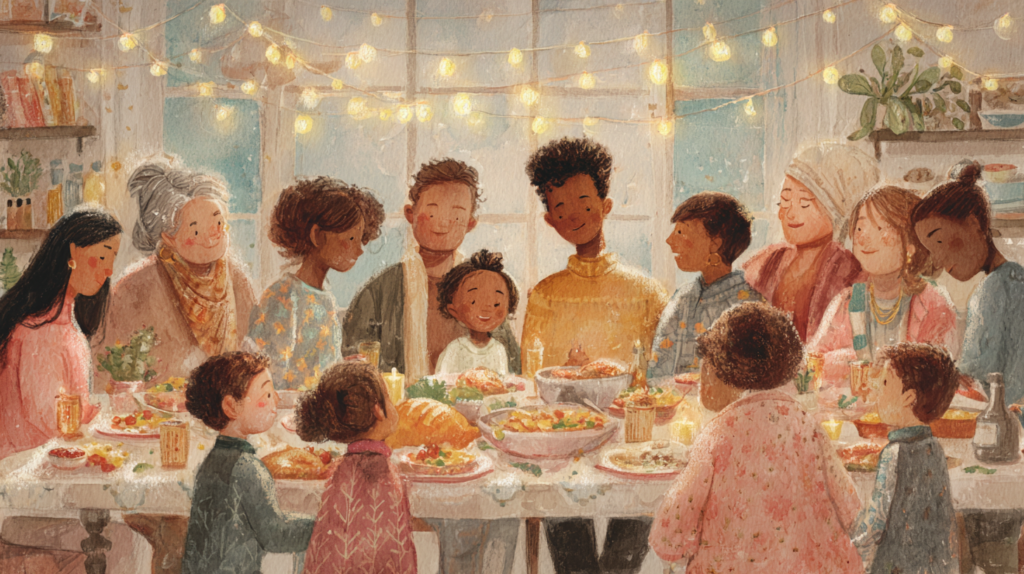
The Table That Holds Everyone: How to Host Gatherings Where Every Guest Feels Safe, Seen, and Fed
Last Christmas, my cousin brought her new daughter-in-law to our family feast—and I watched that sweet woman stand in the kitchen doorway, politely declining every dish we offered. Allergic to nuts, dairy, and shellfish. My heart broke. Not because she couldn’t eat—but because no one had asked. No one had planned. She spent two hours holding a glass of water while we ate, laughed, and made memories around food she couldn’t touch.
That moment changed how I host forever. Because here’s what nobody tells you about inclusive gatherings: the magic isn’t in the menu—it’s in who gets to sit at the table and actually eat.
Click the statements that describe your current approach:
Right now, food allergies affect roughly 8% of children and 10% of adults in the United States, with some countries reporting pediatric rates as high as 11-12%. But the numbers tell only part of the story. Add in celiac disease, religious dietary laws, ethical veganism, and medical conditions like diabetes, and suddenly you’re looking at a reality where almost every gathering includes someone with a restriction. The burden is real: families managing multiple food allergies report significant stress, social isolation, and genuine fear that a shared meal could send someone to the emergency room.
Yet most of us still host the way our grandmothers did—one menu, same dishes, everyone eats the same thing—and we wonder why some guests skip dessert, bring their own Tupperware, or quietly stop attending altogether. The truth? Inclusive hosting isn’t about making everything allergen-free or vegan or kosher. It’s about creating space at your table where safety, dignity, and joy coexist. Where no one has to choose between eating and belonging.
Why This Matters More Than You Think
When researchers followed Irish children with food allergies through their social lives, they documented something heartbreaking: these kids developed elaborate coping strategies—bringing safe snacks to birthday parties, eating beforehand, watching friends enjoy cake they couldn’t touch. They learned to adapt. But they also learned that belonging comes with conditions. That their bodies made them “difficult.” That celebrations weren’t really for them.
Families dealing with multiple allergies describe it as an emotional balancing act—protecting a child’s physical safety while desperately wanting them to feel normal, included, fully part of the celebration. One parent told researchers, “We just want her to blow out candles like everyone else without worrying the frosting might kill her.” That’s not dramatic—that’s daily life for millions of families navigating a food landscape designed for bodies that work differently than theirs.
Canadians identified as vegetarian in 2022—more than double the number from 15 years earlier. Add plant-based eaters, those avoiding gluten, religious observers, and allergy families, and the era of “one meal fits all” is over.
And it’s not just allergies. In my own circle, I’ve got friends who keep kosher, a sister who went vegan after her cancer scare, a nephew with celiac disease, and a colleague whose diabetes means she’s constantly calculating carbs. When I host now, I’m not feeding ten people—I’m feeding ten different sets of needs, histories, and bodies. And you know what? Once I stopped seeing that as a burden and started seeing it as a honor, everything shifted.

The Hidden Dangers Lurking in Your Kitchen
Here’s the part that shocked me when I started researching: cross-contamination is the number one danger at family gatherings for allergic guests. Not intentional ingredients—accidental contact. That wooden spoon you used to stir the peanut sauce, then rinsed and used for the safe vegetable dish? Contaminated. The fryer oil you used for shrimp, then chicken wings? Contaminated. The buffet where someone’s serving spoon drifted from the cheese platter to the fruit salad? You guessed it.
Studies analyzing dining hazards identified three recurring nightmare scenarios: hidden allergens in ingredients nobody thinks to mention (like the fish sauce in your “vegetarian” spring rolls), cross-contamination during prep and serving, and poor communication about what’s actually in each dish. For context, anaphylaxis—the life-threatening allergic reaction everyone fears—can be triggered by trace amounts invisible to the naked eye.
Click each risk to reveal the safer alternative:
When I interviewed parents in my community, one mom told me about the Thanksgiving her sister made a beautiful dairy-free sweet potato casserole for her lactose-intolerant daughter—then topped it with the same spatula she’d used on the cheese-loaded green bean bake. The little girl spent the night in the bathroom. Intent doesn’t matter when proteins transfer at the molecular level.
This is why hospital dietitians and allergy specialists recommend treating your kitchen like a professional one when hosting allergic guests: separate prep areas, clean tools for safe dishes, and a firm rule that allergen-free foods get handled first, served first, and stored separately. It sounds intense because it is. A gathering shouldn’t send anyone to the ER.
How to Ask the Right Questions (Without Making It Weird)
The biggest mistake I made early on? Assuming people would volunteer their dietary needs. They won’t. Most people with restrictions have been made to feel like a burden so many times that they’ve learned to just… quietly manage. They’ll eat beforehand. They’ll bring a sad little container of safe food. They’ll smile and say “I’m not hungry” while everyone else feasts.
Inclusive hosting starts before anyone walks through your door. It starts with asking—directly, kindly, early. Here’s how I do it now: when I send invitations (even a text group chat), I include this line: “I’m planning the menu and want to make sure there’s something delicious for everyone. Do you have any allergies, dietary restrictions, or food preferences I should know about? Seriously—I want you to eat, not just attend.”
That last part matters. Giving people permission to share without guilt changes the entire dynamic. Some will reply immediately. Others need a follow-up: “Hey, I’m finalizing the menu—just double-checking, any foods you avoid?” Use forms, texts, calls—whatever gets you accurate information. Ask about severity too. Someone avoiding dairy because of mild bloating needs different accommodation than someone whose throat closes from trace milk proteins.
Click each item as you complete it—watch your readiness score rise!
Once you have the information, honor it. Don’t minimize, question, or debate someone’s dietary needs. I’ve watched hosts interrogate guests: “Are you REALLY allergic or just avoiding it?” “Can’t you have JUST a little?” “What happens if you accidentally eat it?” Stop. Someone’s body is not a dinner conversation. Their restrictions are not negotiable or up for discussion.
And here’s a culturally sensitive note: for guests following religious dietary laws—halal, kosher, Hindu vegetarianism—understand that these aren’t preferences. They’re identity, faith, and deeply held values. Asking someone to “just try it this once” isn’t hospitality. It’s asking them to violate their core beliefs for your convenience.
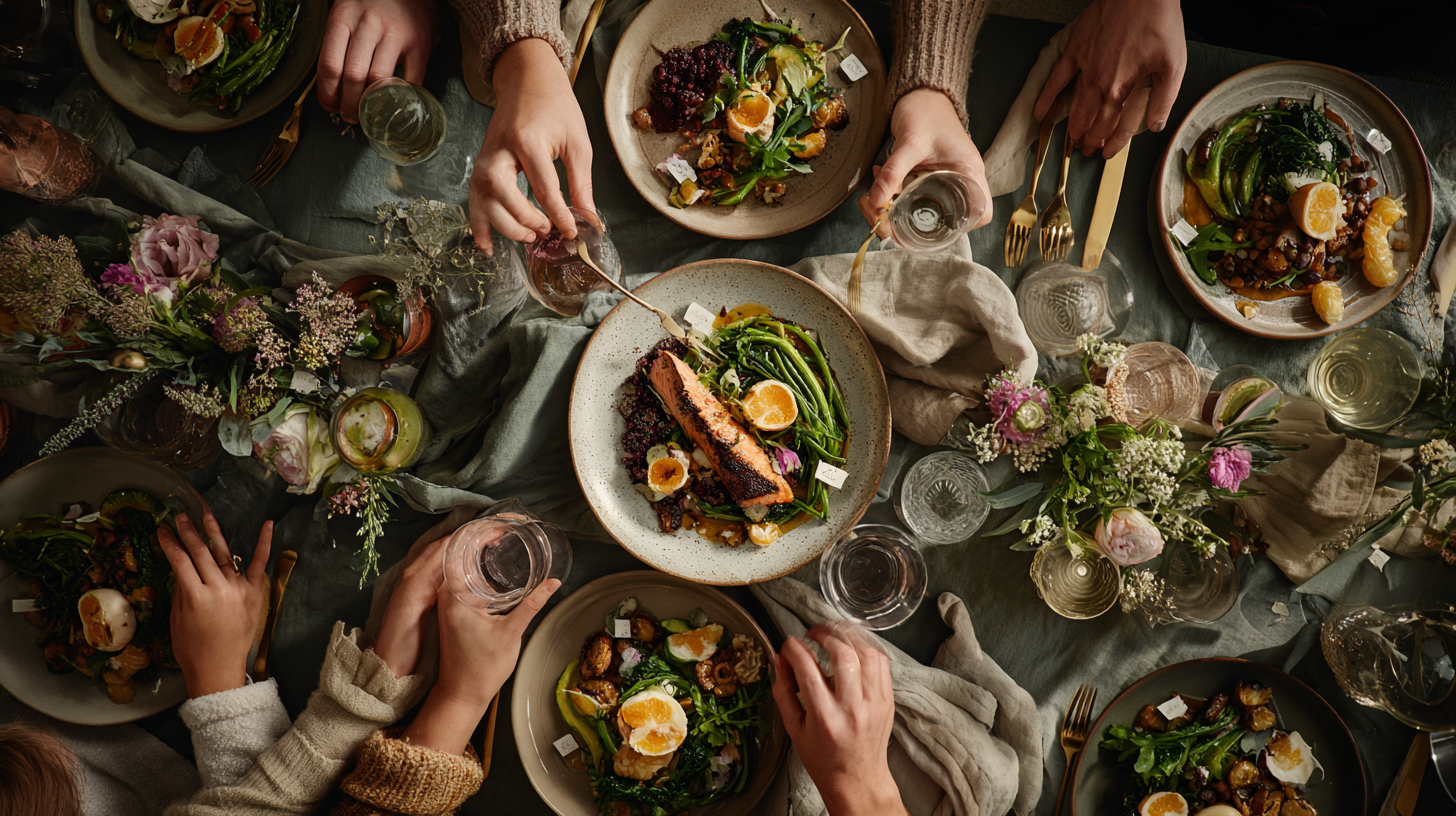
The Art of Menu Planning for Everyone
The secret to inclusive menus? Start with the restrictions and build out, not the other way around. Don’t plan your dream menu then try to retrofit accommodations. That’s how you end up with one sad, boring “safe” dish while everyone else enjoys the real food.
Instead, think about naturally inclusive anchor dishes—foods that work for multiple restrictions without tasting “alternative.” Grilled meats or fish with herb rubs (check: often gluten-free, dairy-free, works for many religious diets). Rice dishes without butter or cream. Roasted vegetables with olive oil and sea salt. Simple doesn’t mean boring. In fact, some of the most beautiful dishes in my Caribbean Baby Food Recipe Book taught me this: foods like Coconut Rice & Red Peas or Calabaza con Coco (pumpkin with coconut milk) satisfy multiple dietary needs while bursting with flavor. When you start with real food—not processed substitutes—inclusive becomes easy.
Then layer in variations. Making a pasta dish? Cook a separate gluten-free portion using the same sauce. Serving tacos? Set up a build-your-own station where people can choose corn or flour tortillas, beans or meat, dairy-based or dairy-free toppings. The buffet-style, choose-your-own-adventure approach naturally accommodates different needs without singling anyone out.
Select your event type to see a ready-made inclusive menu plan:
Kids’ Birthday Party Menu
Main: Build-your-own mini pita pockets (regular and gluten-free pitas) with grilled chicken, hummus, shredded veggies
Sides: Fresh fruit kabobs, veggie sticks with dairy-free ranch, baked sweet potato fries
Dessert: Cupcakes—make 6-8 allergen-free (no eggs, dairy, nuts) using coconut milk and flax eggs. Frost separately and label clearly
Drinks: Water, 100% juice boxes, dairy-free chocolate milk option
Pro tip: Let birthday child blow out candles on their safe cupcake FIRST, then bring out the regular ones for other kids
Holiday Dinner Menu
Protein: Roasted turkey and herb-marinated tofu steaks (serves vegans and vegetarians)
Grain: Coconut rice (naturally dairy-free, gluten-free) and a separate small pot of quinoa
Vegetables: Roasted root vegetables with olive oil and thyme, steamed green beans (no butter)
Special: Dairy-free mashed sweet potatoes using coconut milk—trust me, no one will miss the butter
Dessert: Fresh fruit salad AND a dairy-free pumpkin pie (use coconut cream for the topping)
Pro tip: Serve allergen-free dishes FIRST, before utensils get contaminated
Community Potluck Menu
Host provides: Large green salad (dressing on the side), plain rice, grilled vegetable skewers, and a clearly labeled allergen-free main
Guest assignments: Ask contributors to bring ingredient lists on index cards to place next to their dishes
Setup: Create two serving tables—one for allergen-free/clearly labeled dishes, one for everything else
Smart move: Keep a few sealed, allergen-free emergency meals (like the ones from your Caribbean cookbook—many recipes work for all ages!) in case someone gets left out
Backyard BBQ Menu
Proteins: Burgers (beef and veggie), grilled chicken thighs, marinated portobello mushrooms
Buns: Regular AND gluten-free hamburger buns (keep them separate!)
Sides: Corn on the cob (no butter), coleslaw made with dairy-free mayo, watermelon slices
Condiments bar: Label everything—ketchup, mustard, dairy-free mayo, lettuce, tomato, pickles
Dessert: Grilled pineapple, dairy-free coconut ice cream bars
Pro tip: Grill allergen-free items on foil to prevent cross-contamination from grill grates
And please—skip the apologies. Don’t say “Sorry this is dairy-free” when you hand someone their plate. You’re not serving second-rate food. You’re serving food everyone can eat. There’s zero shame in that. Some of the most memorable meals I’ve served were entirely plant-based, allergy-friendly affairs, and guests raved because the food was delicious, period.
One more thing: save packaging. Keep ingredient labels from purchased items, and write down what you added to homemade dishes. If someone has a reaction, you’ll need that information immediately. Plus, anxious parents of allergic kids feel so much safer when you can hand them a label that says “Yep, I used this brand of coconut milk, zero cross-contamination warnings.”
Creating a Respectful Food Environment
The social dynamics around food can be more toxic than the allergen itself. People mean well, but they say thoughtless things. “Just pick out the nuts.” “A little bit won’t hurt.” “You’re so picky.” “Must be nice to have an excuse not to eat dessert.” I’ve heard it all, and I’ve watched guests—especially kids—shrink with shame.
As a host, you set the tone. If you treat dietary restrictions as normal, your other guests will too. When someone brings their own food, thank them for making it easy and offer to refrigerate or reheat it. When a kid has a different plate than everyone else, comment on how cool it is that everyone gets to eat what works for their body. Make it boring. Make it unremarkable.
One strategy that works beautifully at children’s parties: give ALL kids a choice. “Do you want the regular cupcake or the special coconut one?” Suddenly the allergen-free option isn’t the “weird” food—it’s just another choice. Half the kids will pick it out of curiosity, and your allergic guest blends right in.
Prospective research following children with food allergies found they often developed elaborate coping mechanisms—eating beforehand, bringing safe snacks, watching others eat—not because accommodation was impossible, but because adults never offered it.
Also, shut down food-policing immediately. If someone comments on another guest’s dietary choices—”Really? You can’t eat ANYTHING?”—step in. “Actually, [Name] has several great options here, and I’m so glad they’re enjoying the meal.” Redirect firmly but kindly. The goal is to make dietary differences so normal that they stop being conversation topics.
And teach your own kids early. When my daughter was four, I started explaining that some friends’ bodies work differently, and that’s okay. We practice not sharing food at school without asking a teacher first. We learn that “different plates” doesn’t mean “sad plates.” This isn’t just about allergies—it’s about raising humans who see diversity as normal, who understand that caring for others sometimes means adjusting what we do.
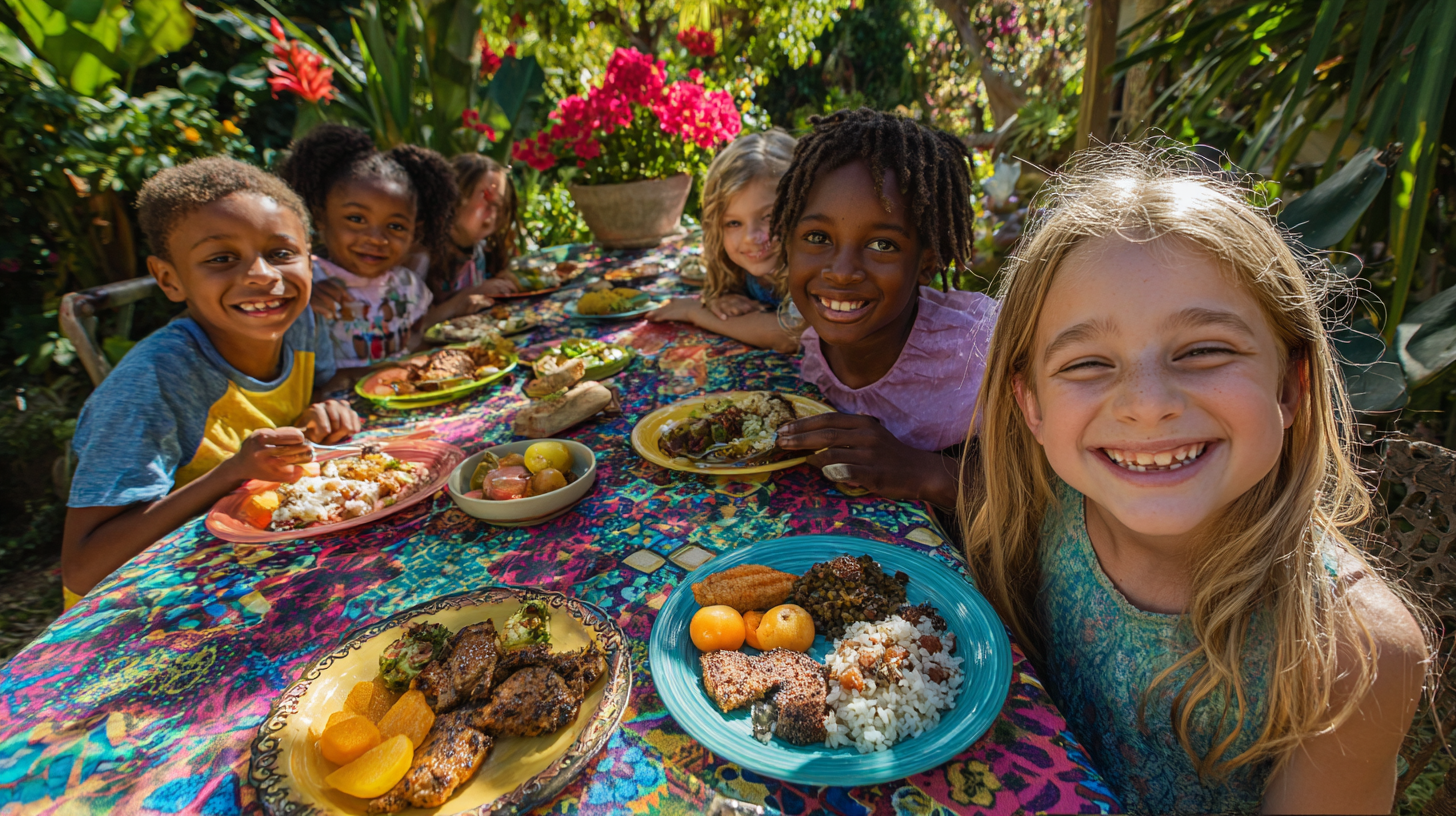
When Traditions and Restrictions Collide
This is where it gets emotionally complicated. Food is culture. Food is memory. Food is how many of us express love. So what happens when the family recipe that’s been passed down for four generations contains an allergen? When the religious holiday centers on a food someone can’t eat? When accommodating one person means changing what the meal means to everyone else?
I get it. Last Easter, I wanted to make my grandmother’s coconut bread—the one she made every year, the one that tastes like my entire childhood. But my niece is allergic to eggs. For a moment, I was genuinely angry. Why should I change this sacred recipe? Then I realized: the recipe isn’t sacred. The gathering is. My niece’s presence, her safety, her ability to participate—that’s what matters. The bread is just bread.
So here’s what I do now: I make two versions. The traditional one for those who can eat it, and an adapted one for those who can’t. I don’t announce which is which. I don’t make a big deal. Both go on the table. Both are delicious. Sometimes the adapted version is better, and it becomes the new tradition. That’s not loss. That’s evolution.
For major holidays, consider making one signature dish allergen-friendly for everyone. For example, if you’re hosting Thanksgiving and the turkey is the star, brine and roast it plain—no butter rub that excludes your dairy-free guests. Serve gravies and sauces on the side. The turkey itself becomes a “safe” anchor everyone shares, and people customize their plates from there. You’d be surprised how well this works. And frankly, most traditional Caribbean dishes in my cookbook—like Stewed Peas Comfort or Cornmeal Porridge—were designed around simple, whole ingredients that naturally accommodate many needs.
What about when traditions truly cannot be modified? Like a kosher Passover Seder or a vegan Thanksgiving where the hosts don’t want animal products in their home? Communicate clearly upfront. “This is a fully plant-based meal—we’re happy to help you find dishes that work for you within that framework.” Or: “This is a kosher kitchen, so we can’t prepare outside food here, but you’re welcome to bring a sealed meal to enjoy with us.” Boundaries are okay. Clarity is kindness.
The Growing Push for Inclusive Spaces
Something is shifting in the culture around food and gatherings. Social media has amplified the voices of people with dietary restrictions, especially on platforms like TikTok and Instagram, where allergy advocates share scripts for asking restaurants about ingredients, tips for navigating social events, and raw stories about feeling excluded. One viral TikTok from an allergy educator simply said: “If you have allergies, you HAVE to speak up. But hosts—you also have to ASK.” The comments section was thousands of people sharing experiences of being forgotten, dismissed, or made to feel difficult.
These conversations are changing expectations. Younger generations—Millennials and Gen Z—are more likely to ask about dietary needs when planning events and to view accommodation as basic courtesy, not extra effort. Restaurants and caterers are catching on too, implementing standardized allergen protocols, separate prep zones, and detailed menu labeling that families can rely on.
Public health organizations now recommend inclusive planning for schools, community centers, and religious institutions. Some schools have gone entirely nut-free. Some workplaces provide allergen-free snack options at every meeting. The goal isn’t perfection—it’s awareness. It’s making “Does anyone have dietary restrictions?” as automatic as “Does anyone need a ride?”
Looking for naturally inclusive recipes your whole family will love? My Caribbean Baby Food Recipe Book features over 75 recipes using simple, whole ingredients like sweet potatoes, coconut milk, plantains, and beans—many naturally free of common allergens. Perfect for introducing authentic island flavors to babies AND adapting for older kids and adults with dietary needs.
What This Looks Like in Real Life
Let me walk you through a recent gathering I hosted—a birthday party for my son’s eighth birthday. Guest list: 15 kids. Dietary restrictions: two nut allergies (one severe), one celiac diagnosis, one vegan family, one lactose-intolerant child. Here’s what I did:
Two weeks before the party, I texted every parent: “Planning the menu—any allergies or dietary needs I should know about?” Got clear answers. One mom sent me a detailed list of safe brands. Another offered to bring her daughter’s special cupcake. I thanked her but said I’d handle it.
Menu: Build-your-own mini pizzas using pre-made crusts (regular and gluten-free, kept separate). Toppings bar: marinara sauce (naturally vegan), shredded mozzarella (dairy), dairy-free cheese shreds, pepperoni, veggies. Kids assembled their own pizzas, I baked them in batches. Everyone got exactly what they wanted. Side: fresh fruit and veggie sticks with hummus (allergy-friendly, crowd-pleasing).
Cake: I made a regular chocolate cake and six allergen-free cupcakes (no eggs, dairy, or nuts—used flax eggs and coconut milk). My son blew out candles on his cupcake first, then we served both options. Five kids chose the “special” cupcakes because they looked cool with purple frosting. The two allergic kids? Thrilled. No “different” moment. No standing aside while others ate. Just kids eating cake.
Total cost difference: maybe ten dollars more for specialty ingredients. Total time difference: an extra 30 minutes of prep. Total impact: immeasurable. Two families thanked me afterward, both saying it was the first party their kids fully participated in. One mom cried. The vegan family brought me flowers. These are the moments that matter.
Your Next Gathering Starts Now
Here’s what I want you to know: inclusive hosting is not harder—it’s just different. It requires forethought instead of autopilot. It asks you to see your guests as whole humans with needs that matter, not inconveniences to work around. And once you shift that mindset, it stops feeling like extra work and starts feeling like basic respect.
You don’t have to be perfect. You don’t have to accommodate every possible restriction in every dish. You just have to try. Ask the questions. Plan with intention. Handle food safely. Normalize difference. And for the love of everything, make sure the people you invite to your table can actually eat at your table.
Because here’s the truth that my cousin’s daughter-in-law taught me that Christmas: hospitality without inclusion is just performance. Real hospitality says, “I see you, I planned for you, and I made sure there’s a place for you here.” That’s the table I want to set. That’s the table where everyone belongs.
The next time you plan a gathering—birthday, holiday, weekend barbecue, whatever—start with this question: “Who’s coming, and what do they need to feel safe and fed?” Then build from there. You’ll be amazed how quickly it becomes second nature. And you’ll never forget the look on someone’s face the first time they walk into your home and realize: there’s food here for me. I don’t have to pretend. I don’t have to go hungry. I belong.
That’s the kind of gathering that changes people. That’s the kind of table worth setting.
Select the commitments you’ll make for your next gathering:
The Table You Set Today
My grandmother used to say that the best meals are the ones where everyone leaves full—not just in body, but in spirit. For too long, we’ve measured successful gatherings by the food on the table. But the real measure? It’s who gets to stay. Who gets to eat. Who gets to participate without fear or shame or hunger.
Every time you host inclusively, you’re doing more than serving dinner. You’re teaching your kids that caring for others is worth effort. You’re telling guests with restrictions that their bodies aren’t burdens. You’re building community where difference is normal, where safety is prioritized, where belonging isn’t conditional on what you can digest.
That Christmas when my cousin’s daughter-in-law stood in the doorway with her water glass? That doesn’t happen at my table anymore. Because I learned that the most important ingredient in any meal isn’t on the menu—it’s intention. The intention to see people, ask questions, make space, and ensure that when someone walks into your home, there’s a place for them at the table and food on the plate they can actually eat.
So go ahead. Plan that gathering. Ask those questions. Adapt those recipes. Set that inclusive table. And watch what happens when everyone—and I mean everyone—gets to feast.

Kelley's culinary creations are a fusion of her Caribbean roots and modern nutritional science, resulting in baby-friendly dishes that are both developmentally appropriate and bursting with flavor. Her expertise in oral motor development and texture progression ensures that every recipe supports your little one's feeding milestones while honoring cultural traditions.
Join Kelley on her flavorful journey as she shares treasured family recipes adapted for tiny taste buds, evidence-based feeding guidance, insightful parenting anecdotes, and the joy of celebrating food, culture, and motherhood. Get ready to immerse yourself in the captivating world of Kelley Black and unlock the vibrant flavors of the Caribbean for your growing baby, one nutritious bite at a time.
- The Feeding Revolution: Why Your Everyday Meals Are Changing the World - October 13, 2026
- Your Feeding Story Matters More Than The “Perfect” One Online - October 12, 2026
- Looking Forward: Stepping Into Your Confident Feeding Future - October 11, 2026