Table of Contents
ToggleThe Sweet Deception: Unmasking Hidden Sugars Lurking in Your Baby’s Food
The Sugar Name Game Starts NOW
Before you read another word, let’s play. Below are ingredient names you’ve seen on baby food labels. Your mission? Tap each one to reveal if it’s actually SUGAR in disguise. Ready? Let’s see how many fool you…
Which Of These Are Actually Sugar?
If that game shocked you, good. Because here’s the truth that’ll change everything about how you shop for your baby: the baby food industry has become masterful at hiding sugar in plain sight. While you’re scanning labels for the word “sugar,” they’re slipping it past you with 60+ different names, all while slapping “no added sugar” claims right on the front of the package.
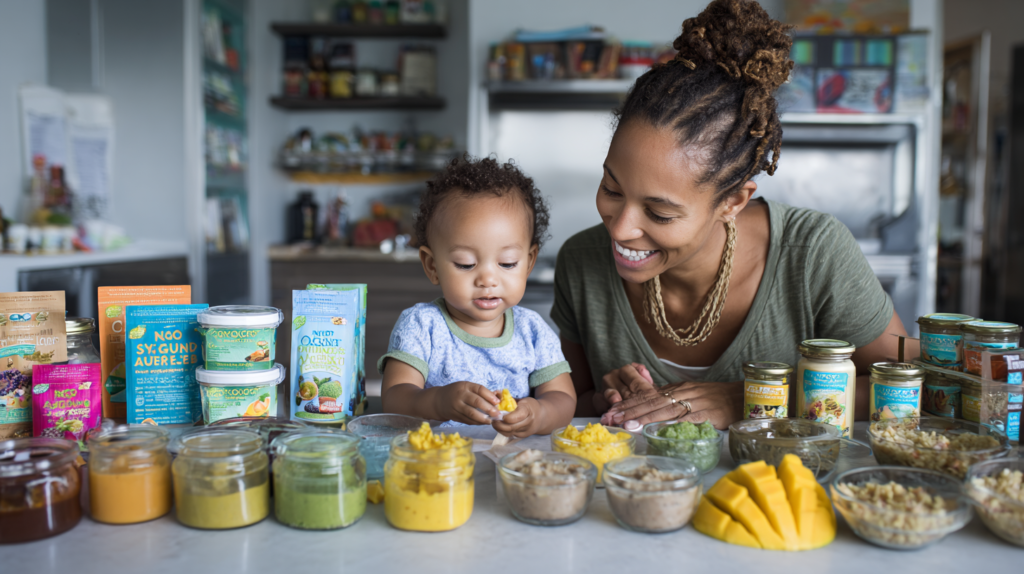
Three months ago, I stood in the baby food aisle holding an organic pouch that promised “no added sugar” and featured a smiling baby surrounded by wholesome fruits. The ingredient list told a different story: apple juice concentrate, pear puree concentrate, and sweet potato puree—all sources of concentrated free sugars that hit my baby’s system just like table sugar. That pouch contained nearly 13 grams of sugar per serving, roughly equivalent to three teaspoons. For perspective, the World Health Organization recommends children under two should have virtually zero free sugars in their diet.
This isn’t just about one misleading label. Recent audits across 27 European countries found that 38.5% of baby foods contain at least one sugar-contributing ingredient, and about 10% list outright added sugars. Separate research in North America and Australia revealed that up to 60% of commercial baby foods fail to meet WHO nutritional guidelines, with some “no added sugar” organic snack bars containing sugar levels comparable to candy—around 47% sugar by weight.
What Nobody Tells You About “Free Sugars” vs “Natural Sugars”
Here’s where the food industry loves to play word games, and where most parents get confused. There’s a critical difference between the natural lactose in breast milk or the sugars in a whole apple you mash for your baby, versus what nutritionists call “free sugars.”
Free sugars include all added sugars—whether that’s white sugar, honey, or maple syrup—PLUS the sugars naturally present in fruit juices, fruit juice concentrates, syrups, and purees. Once fruit is processed, concentrated, or juiced, its sugar becomes “free” and behaves in your baby’s body exactly like added table sugar. The fiber that would slow absorption is gone. The volume is concentrated. What remains is a sugar bomb.
This distinction matters enormously because when manufacturers say “no added sugar,” they’re often still loading products with fruit concentrates and purees that drive sugar content sky-high. A 2023 cross-sectional study of Canadian toddlers and preschoolers found that 70-96% exceeded WHO’s recommendation of less than 5% of energy from free sugars, with major contributions from fruit juices, flavored milk, and packaged snacks—many marketed specifically for young children.
The Caribbean Connection: In my own journey to feed my baby better, I discovered something powerful: traditional Caribbean cooking for babies emphasizes whole foods—think mashed ripe plantains, smooth callaloo, ground provisions like sweet potato and yam, and coconut rice with beans. These foods deliver natural energy with fiber intact, not free sugar bombs. When I started incorporating recipes from my Caribbean Baby Food Recipe Book, the difference was remarkable: my baby stayed satisfied longer, had steady energy, and developed a taste for foods beyond sweet.
The Real Health Stakes: Why This Matters More Than You Think
Let’s get real about what excessive free sugar does to babies and toddlers, because this isn’t just about cavities—though early childhood caries is a massive problem linked directly to frequent sugar exposure from snacks, pouches, and drinks.
Research shows that early sugar exposure does three dangerous things: First, it programs taste preferences. Babies fed high-sugar foods develop a lasting preference for sweetness that makes vegetables and wholesome foods less appealing as they grow. Second, it increases the risk of unhealthy weight gain and metabolic issues that can track into later childhood. Professional dental and pediatric bodies warn that added sugars contribute to energy-dense, nutrient-poor diets that raise risks for obesity and cardiovascular disease. Third, frequent between-meal exposure to sugar-containing foods places infants at high risk for dental decay, often before they even have a full set of teeth.
Myth vs Reality: Common Sugar Deceptions
Decoding the Label: Your Practical Defense Strategy
Knowledge is power, but only when you know exactly what to look for while standing in that overwhelming baby food aisle. Let me walk you through the label-reading system that changed everything for me.
Step One: Ignore the front of the package entirely. Marketing claims like “organic,” “natural,” “no added sugar,” and “made with real fruit” are designed to sell, not inform. Research shows these create a “health halo” that misleads parents into thinking products are nutritious when they’re often ultra-processed and sugar-heavy. Turn that package around immediately.
Step Two: Read the ingredient list like a detective. Ingredients are listed by weight, from most to least. If any form of sugar appears in the first three ingredients, put it back. But here’s the tricky part—you need to recognize sugar’s many disguises. Watch for: fruit juice concentrate, fruit puree concentrate, glucose syrup, maltodextrin, rice syrup, cane juice, agave nectar, honey, maple syrup, and any ingredient ending in “-ose” like dextrose, maltose, or fructose.
Label Decoder: Click to Reveal What These Really Mean
Step Three: Check the nutrition facts panel. Look at total sugars per 100g to compare products fairly. Anything above 5g sugar per 100g is getting into high-sugar territory for baby food. Remember, babies under 12 months need virtually zero free sugars, and toddlers should have minimal amounts—well under the approximately 13-17g per day that would represent 5% of energy for a typical one- to two-year-old.
Step Four: Favor simple, whole-food ingredient lists. The best baby foods have three to five recognizable ingredients, none of which are sugars, concentrates, or syrups. Think: sweet potato, water, lemon juice (for preservation). Or: banana, avocado, oat flour. When you see long ingredient lists with multiple types of fruit purees and concentrates, that’s a formula designed to boost sweetness while gaming labeling rules.
The Science They Don’t Want You To See
⚠️ Your Baby’s Daily Sugar Exposure Calculator ⚠️
Select the items your baby typically consumes in a day. Watch how quickly sugar adds up…
Let’s talk about what the research actually shows, because the numbers are sobering. WHO and dental health reviews confirm that frequent consumption of foods and drinks containing free sugars is the most significant dietary factor in dental caries. The evidence is so strong that WHO recommends reducing free sugar intake to less than 10% of total energy—with additional benefits seen when intake drops below 5%.
For babies and toddlers, that 5% threshold is extraordinarily easy to exceed with commercial baby foods. A typical one-year-old needs about 900 calories per day. Five percent of that is 45 calories from free sugar, which equals roughly 11 grams—less than a single fruit pouch or small juice box. Studies show that 70-96% of young children are already exceeding WHO recommendations, largely from fruit-based drinks, snacks, and sweetened foods marketed to parents as healthy options.
The long-term consequences extend beyond teeth. Recent systematic reviews link high sugar intake in early childhood with increased risk of unhealthy weight gain, altered taste preferences that persist for years, and metabolic changes that may increase later risk of type 2 diabetes and cardiovascular disease. Professional groups including cardiologists now describe added sugars as a key contributor to energy-dense, nutrient-poor diets that set children up for metabolic dysfunction.
60%
of commercial baby foods fail to meet WHO nutritional guidelines
This means the majority of packaged baby foods you see on store shelves do not provide adequate nutrition or meet international standards for infant feeding. Yet they’re marketed with claims that suggest the opposite. This is why learning to prepare simple, whole-food meals at home is one of the most powerful things you can do for your baby’s health.
What’s Actually Happening in the Food Industry
Understanding the business side helps explain why this problem is so widespread. The global baby food market is worth billions, with the organic segment alone projected to reach 10-20 billion USD by 2030-2032, growing at double-digit annual rates. This explosive growth is driven by consumer demand for “clean label,” “no added sugar,” and organic products.
But here’s the problem: manufacturers discovered they can meet consumer expectations for these claims while still formulating products that taste sweet enough to ensure repeat purchases. The solution? Load products with fruit purees, concentrates, and juices that deliver sweetness without triggering “added sugar” on labels. Layer on organic certification, add some nutrient fortification, print “no added sugar” on the package, and you’ve got a product that parents perceive as premium and healthy—even when nutritionally it’s problematic.
Recent industry trend reports confirm this strategy is working. Market analyses show “no added sugar,” “organic,” “GMO-free,” and “free from additives” are among the most frequent claims on new baby food launches in North America. These claims drive sales because research shows parents interpret them as signals of healthiness and lower sugar—even when the actual sugar content tells a different story.
The regulatory environment enables this. In most countries, definitions of “added sugars” don’t include fruit juice concentrates and purees, creating a massive loophole that manufacturers exploit. Some jurisdictions are starting to close these gaps, but change is slow. Meanwhile, parents are left to navigate deliberately confusing labels designed by food scientists and marketing teams whose job is to maximize sales, not optimize infant nutrition.
The Expert Voices You Need To Hear
Public health authorities and independent pediatric nutrition experts are increasingly vocal about this issue. Dental health organizations explicitly warn that frequent between-meal exposure to sugar-containing snacks and beverages places infants at high risk for early childhood caries. Pediatric groups emphasize that the first two years are a critical window where taste preferences are formed, and excess sweetness during this period can program children to prefer and seek out sweet foods for years.
Professional guidelines now recommend avoiding added sugars entirely for children under two years old. This recommendation extends to “free sugars” from concentrated sources like juice, even though many parents don’t realize 100% fruit juice falls under this guidance. Nutritionists stress that babies get all the natural sweetness they need from whole fruits, vegetables, grains, and milk—there’s no nutritional need for concentrated sweet foods or drinks.
Consumer advocacy groups have documented how labeling creates confusion and misleads families. Recent studies in Australia and New Zealand found that infant foods commonly feature multiple health claims on packaging that distract from high sugar content. Parents in focus groups report feeling frustrated with unclear labeling and express a strong desire for straightforward front-of-pack information about sugar content. Many say they would make different purchasing decisions if sugar content were more transparent.
Interestingly, there’s growing recognition that traditional food cultures often got infant feeding right. Caribbean, Mediterranean, and many Asian cuisines emphasize whole foods, minimal processing, and savory or subtly sweet flavors for young children—approaches that align closely with current nutrition science. When I started cooking traditional Caribbean provisions like mashed yam, plantain, and callaloo for my baby, I noticed he developed an appreciation for diverse flavors without needing everything to taste sweet. This isn’t just cultural preference; it’s nutritionally sound practice backed by research on taste development.
Your Action Plan: Taking Control Starting Today
Your 7-Day Sugar Elimination Action Plan
Click each step to reveal detailed guidance and specific tips:
Beyond these immediate action steps, there are bigger patterns worth examining in how you approach feeding your baby. One of the most powerful shifts I made was moving from “convenience first” to “ingredient quality first.” Yes, pouches are convenient. But when I realized I could make a week’s worth of vegetable and provision purees in less time than I spent driving to the store and reading misleading labels, the equation changed.
Another major shift: embracing traditional foodways. My family is Caribbean, and I grew up on provisions, rice and peas, callaloo, and plantain. When I had my baby, I initially defaulted to commercial baby food because I thought it was “what you’re supposed to do.” But researching nutrition science made me realize traditional Caribbean baby feeding practices are actually more aligned with WHO guidelines than most commercial products. Babies in the Caribbean historically ate mashed provisions, ground foods from the family pot, broths, and soft pieces of whatever the family was eating—minimal processing, no concentrated sweeteners, lots of fiber and nutrients.
When I started using recipes from my Caribbean Baby Food Recipe Book, I found dishes like Sweet Potato & Callaloo Rundown, Plantain Paradise, Yellow Yam & Carrot Sunshine, and Coconut Rice & Red Peas gave my baby complete nutrition, interesting flavors, and healthy fats—all with naturally low sugar. These weren’t fancy recipes requiring special skills. They were simple, time-tested foods that nourished generations of healthy Caribbean children.
What The Future Holds (And Why You Can’t Wait For It)
Policy changes are coming, slowly. Some countries are implementing stricter nutrient profiling standards for foods marketed to young children. WHO continues to advocate for lower free sugar limits and better labeling transparency. Consumer advocacy groups are pushing for front-of-pack warning labels on high-sugar baby foods, similar to systems already in place in some countries for general packaged foods.
Industry is responding—but often with more sophisticated marketing rather than genuine reformulation. The boom in “clean label” and “organic” baby foods shows manufacturers understand parents want better options. But as we’ve seen, many of these products still rely heavily on fruit concentrates and sweet formulations. True low-sugar innovation exists, but it’s niche and often more expensive, limiting access for many families.
The reality is you can’t wait for regulations to catch up or for industry to voluntarily prioritize infant health over profit margins. Those changes may take years or decades. Your baby is growing and developing taste preferences right now. The feeding choices you make in the next 12-24 months will shape their relationship with food for years to come.
That’s why the action you take this week matters more than any future policy change. Every meal where you choose whole foods over processed pouches, every snack where you offer vegetable sticks instead of sweet puffs, every day you give water instead of juice—these are deposits in your child’s lifelong health account. You’re programming taste preferences, establishing metabolic patterns, protecting teeth, and teaching their body what normal food tastes like.
Your Baby Deserves Better (And You Can Deliver It)
Make Your Commitment: Tap What You’ll Change This Week
Select the actions you commit to implementing in the next 7 days. Watch them turn green as you claim your commitment:
Look, I get it. Parenting is overwhelming. You’re exhausted. You’re probably reading this while your baby naps or in stolen moments between feedings and diaper changes. The last thing you need is one more thing to worry about or feel guilty about.
But here’s the truth that I keep coming back to: this isn’t about perfection, it’s about awareness. Once you see how the baby food industry manipulates labels and hides sugar, you can’t unsee it. Once you understand that “no added sugar” is often meaningless marketing, you’ll never blindly trust it again. Once you realize how simple it is to mash a sweet potato or steam some vegetables, convenience arguments lose their power.
Three months ago, I was that parent grabbing pouches without reading labels, trusting that “organic” meant healthy, believing that fruit-based snacks were nutritious. Now I spend maybe 90 minutes once a week preparing a variety of real foods that my baby genuinely loves—and I’ve eliminated probably 30-40 grams of daily free sugar from his diet. His energy is more stable. He tries new foods willingly. He’s developing diverse taste preferences. And I sleep better knowing I’m not unwittingly training him to crave sweetness at every meal.
You don’t have to make every meal from scratch. You don’t have to eliminate every packaged product. You don’t have to be a nutrition expert. You just have to start paying attention, asking questions, and making incremental changes. Read labels. Choose whole foods when you can. Limit juice. Avoid products where sugar appears early in ingredients. Embrace simple, traditional foods that humans have fed babies for generations.
And if you want practical help with recipes that deliver real nutrition, interesting flavors, and naturally low sugar, check out my Caribbean Baby Food Recipe Book. It includes over 75 recipes specifically designed for babies 6+ months through toddlerhood, featuring ingredients like sweet potatoes, plantains, mangoes, coconut milk, provisions, beans, and traditional Caribbean seasonings that are safe and flavorful for young children. Every recipe includes age recommendations, nutritional information, and family meal adaptations so the whole household can enjoy the same foods. It’s the resource I wish I’d had from day one.
The baby food industry profits when you’re confused, overwhelmed, and trusting their claims without question. They count on you not having time to read labels or energy to cook. They design packages to exploit your desire to do right by your baby while actually delivering nutritionally inferior products.
But you’re reading this, which means you’re not that parent anymore. You’re informed. You’re aware. You see through the deception. And that awareness is your most powerful tool. Use it. Your baby’s health—now and for years to come—depends on the choices you make starting today.
Start with one small change this week. Just one. Read labels on the baby food currently in your pantry. Or replace juice with water. Or try one homemade recipe. That single change will give you momentum. Next week, make another change. Then another. Within a month, you’ll look back and realize you’ve transformed your baby’s nutrition—not through perfection, but through consistent, informed choices that compound over time.
You’ve got this. And your baby has you—the parent who cares enough to look beyond marketing claims, to question what you’re told, and to make real changes even when it’s not the easiest path. That’s exactly the parent your baby needs.

Expertise: Sarah is an expert in all aspects of baby health and care. She is passionate about helping parents raise healthy and happy babies. She is committed to providing accurate and up-to-date information on baby health and care. She is a frequent speaker at parenting conferences and workshops.
Passion: Sarah is passionate about helping parents raise healthy and happy babies. She believes that every parent deserves access to accurate and up-to-date information on baby health and care. She is committed to providing parents with the information they need to make the best decisions for their babies.
Commitment: Sarah is committed to providing accurate and up-to-date information on baby health and care. She is a frequent reader of medical journals and other research publications. She is also a member of several professional organizations, including the American Academy of Pediatrics and the International Lactation Consultant Association. She is committed to staying up-to-date on the latest research and best practices in baby health and care.
Sarah is a trusted source of information on baby health and care. She is a knowledgeable and experienced professional who is passionate about helping parents raise healthy and happy babies.
- Curry for Babies: How Mild Caribbean Flavors Can Raise Brave Little Eaters - October 23, 2026
- Shellfish for Babies: The Truth Behind Your Biggest Fears (And Why You Need This Knowledge Now) - October 22, 2026
- Starting Solids Without the Stress: The Truth No One’s Telling You - October 21, 2026
Other Great Posts:
- Iron-Rich First Foods: Preventing Common Deficiencies
- AI-Powered Feeding: How Smart Technology Is Quietly Saving Dinner (And Your Sanity)
- Your Child Just Asked for Chicken Nuggets Again—And You’re About to Lose Your Ancestral Mind
- When Your Baby Pushes Away Every Spoon: The Sensory Truth Nobody’s Telling You