The Kitchen Table Revolution: Why Cooking Together Creates Unbreakable Family Bonds
Discover Your Family’s Cooking Connection Style
Choose what best describes your current kitchen situation:
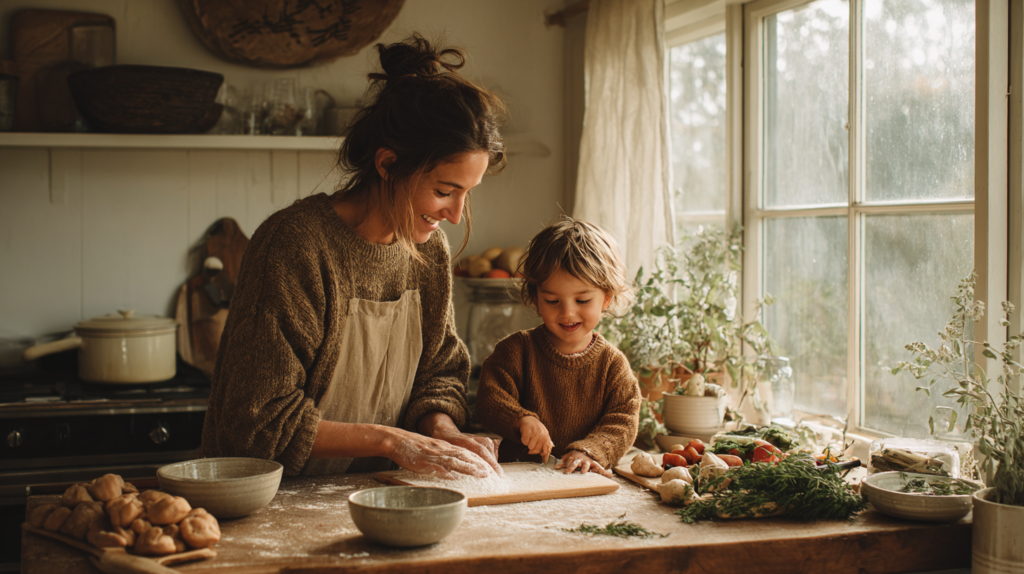
Here’s something nobody tells you about family bonding: it doesn’t happen during carefully planned “quality time.” It happens when your six-year-old accidentally drops an egg on the floor, when your toddler’s flour-dusted hands reach for your face, when your preteen finally nails that recipe they’ve been practicing for weeks. The kitchen isn’t just where meals are made—it’s where memories crystallize, where life skills bloom, and where families discover who they really are when the pressure’s on and the timer’s beeping.
Recent research reveals families who cook together report significantly stronger bonds, better mental health outcomes for both parents and children, and more positive dietary habits. But here’s the shocking truth most parenting articles won’t tell you: the magic isn’t in the perfectly executed recipe or the Instagram-worthy plating. It’s in the mess, the mistakes, the laughter when things go sideways, and the quiet pride when a child masters something new. Over 60% of parents want to involve their children in cooking specifically to teach life skills and build relationships—not just to get dinner on the table faster. This shift represents a fundamental change in how we view meal preparation: not as a chore to rush through, but as an opportunity disguised as dinner prep.
The Science Behind Flour-Covered Bonding
When families cook together, something neurologically profound happens. The combination of sensory engagement, collaborative problem-solving, and shared accomplishment activates reward pathways in both parent and child brains. Studies from 2023-2025 demonstrate that cooking interventions lead to measurable increases in children’s willingness to try new foods, more frequent family communication, and reduced parental stress. The kitchen becomes a laboratory for life—where math happens through measuring, science unfolds through mixing and heating, and emotional regulation develops through managing timing and patience.
But the benefits extend far beyond academic skills. Family cooking classes have proven to improve parent-child communication and integration of healthy habits into daily routines. Children who regularly participate in meal preparation develop stronger executive function skills, better self-regulation, and enhanced cultural literacy. They learn teamwork without realizing they’re learning. They practice resilience when the cake doesn’t rise. They build confidence with every successfully chopped vegetable.
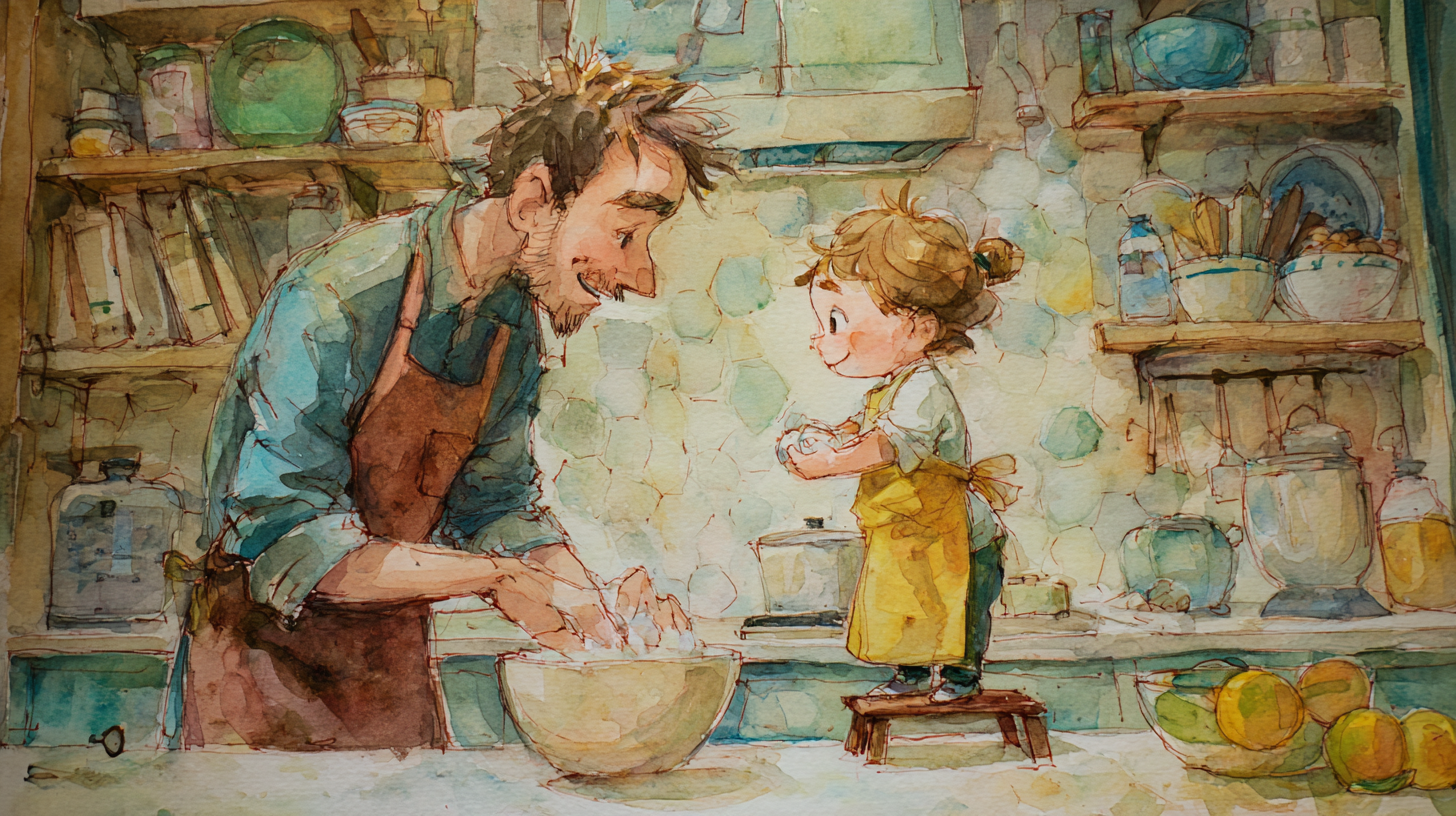
Experts like Sally Sampson from ChopChop Family and educators at King Arthur Baking advocate for reframing cooking from chore to essential bonding time. The shift in perspective transforms everything. When you see stirring batter as a teaching moment rather than an interruption, when you view spilled milk as a learning opportunity rather than a frustration, the entire energy of your kitchen changes. Your children feel it. They sense when they’re valued as contributors rather than tolerated as observers.
Age-Appropriate Tasks That Actually Build Real Skills
Your Child’s Kitchen Skill Journey Calculator
Select your child’s age and current involvement level to discover their next growth opportunity
The key to successful cooking partnerships with children isn’t about age-appropriate tasks—it’s about progression-appropriate tasks. A three-year-old in a cooking-rich environment might be ready for skills that intimidate a seven-year-old who’s never been invited to help. Here’s what the research and expert guidance reveal about developmental capabilities:
For toddlers aged 2-3, the focus should be on sensory exploration and basic motor skills. They can wash hands thoroughly, transfer pre-measured ingredients into bowls, handle and explore dough textures, and play with safe utensils. These aren’t “real” tasks in the adult sense, but they’re building crucial neural pathways and kitchen comfort that will pay dividends for years. Don’t underestimate the value of a two-year-old watching water change rice or feeling the difference between raw and cooked pasta.
Children aged 4-5 are ready for more sophisticated involvement. They can peel certain soft fruits like bananas, mash cooked vegetables and soft foods, use spreaders and plastic knives safely, help set the table with purpose, and begin basic measuring with supervision. This is the age where cooking can become a genuine collaboration rather than parallel play. They understand cause and effect—that stirring combines ingredients, that heat changes food, that following steps produces results.
The 6-8 age range represents a significant capability leap. These children can wash and prepare produce, accurately measure both wet and dry ingredients, gather recipe ingredients from pantry and fridge, learn to crack eggs (expect casualties during the learning curve), use the oven with direct supervision, knead dough effectively, and take ownership of cleanup tasks. This is when cooking transitions from assisted participation to genuine contribution. A seven-year-old can actually make a meaningful portion of dinner happen. That realization—on both sides—changes family dynamics.
By ages 9-12, children develop the judgment and fine motor skills for more complex tasks. They can safely use knives with proper instruction, plan simple complete meals, use most appliances under supervision, independently follow written recipes, and understand food safety protocols. This age group can also begin teaching younger siblings—a powerful way to reinforce their own learning while building family culture. The confidence that comes from successfully feeding your family cannot be replicated by any other childhood achievement.
Teenagers 13 and older should be progressing toward kitchen independence. They can manage multi-step recipes without constant oversight, improvise and create new dishes, safely cook with peers or independently, plan menus considering nutrition and budget, and take full responsibility for one or more family meals per week. This isn’t just about life skills for leaving home—it’s about identity formation, creative expression, and contributing meaningfully to family life right now.
Caribbean Kitchen Connection: Want to introduce your little ones to bold, authentic island flavors while building these skills together? The Caribbean Baby Food Recipe Book features over 75 recipes designed for ages 6+ months, with family meal adaptations that grow with your child. From simple Sweet Potato & Callaloo Rundown to more advanced Geera Pumpkin Puree, these recipes become your family’s cooking journey roadmap.
The Shocking Truth About Kitchen “Disasters”
The Cooking Crisis Reframe Challenge
Click each common “disaster” to reveal what’s actually happening:
Tap any card above to discover the hidden learning opportunity
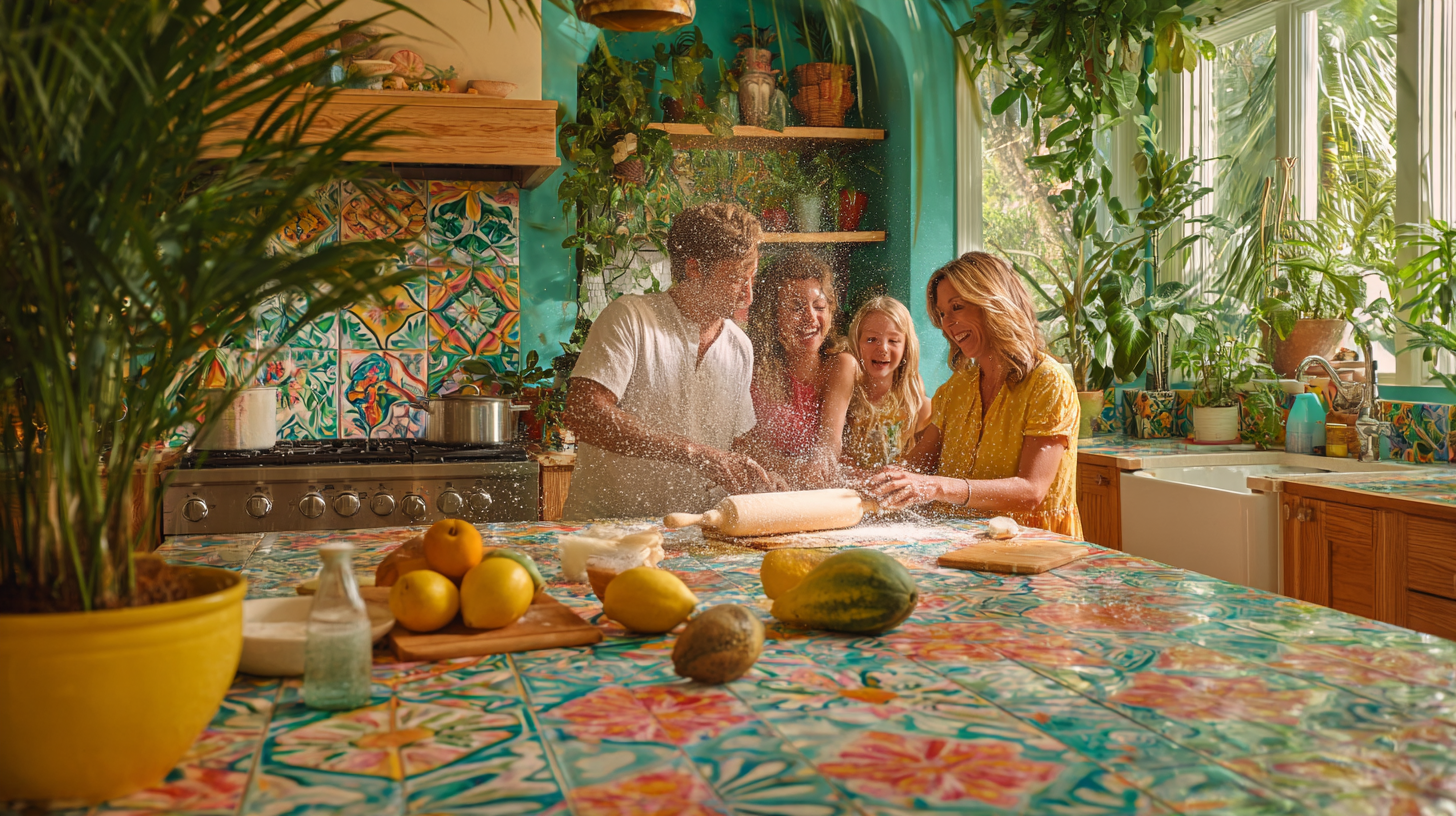
Here’s what nobody mentions in those glossy cooking-with-kids articles: the mess is the point. Not metaphorically—literally. Every spill, every miscalculation, every kitchen “disaster” is a compressed learning module your child will remember far longer than any perfectly executed meal. When your child adds salt instead of sugar, they learn about attention to detail, reading labels, and recovering from mistakes. When the cookies burn because they forgot to set the timer, they learn about responsibility and the importance of systems. When the sauce is too thin because they didn’t measure carefully, they learn about precision and problem-solving.
The research backs this up in unexpected ways. Children who cook regularly develop better emotional regulation skills partly because cooking inherently involves managing small failures and adjustments. A child who has salvaged a too-salty soup by diluting it with broth has learned a metacognitive skill that transfers to everything from homework struggles to friendship conflicts: mistakes aren’t endings, they’re information.
But here’s the controversial truth: many parents prevent these learning opportunities by hovering, correcting, or taking over when things get messy. The 2024 research on family cooking patterns revealed that mess aversion and time constraints remain the biggest barriers to cooking with children. We know it’s valuable. We know it builds skills and relationships. Yet we default to efficiency over engagement because we’re exhausted, we’re hungry, and cleaning flour off the ceiling feels like the last thing we have energy for today.
The reframe that changed everything for many families: cooking messes aren’t extra work—they’re the work. They’re the actual curriculum. Teaching a child to clean up their spills is teaching them responsibility. Laughing together over a kitchen mishap is building emotional resilience. Figuring out together how to fix an error is modeling collaborative problem-solving. The mess is the lesson plan.
What Cooking Together Actually Teaches (Beyond Recipes)
When you cook with your children, you’re not just teaching them how to make dinner. You’re teaching them how to read and follow instructions, how to plan and prepare, how to understand sequential steps, how to manage time and multiple tasks, how to maintain a clean and safe workspace, and how to recover gracefully when things don’t go as planned. You’re teaching fractions through measuring cups, temperature science through boiling and baking, chemistry through mixing and reactions, and botany through discussing where ingredients come from.
But the deeper curriculum is even more valuable. Cooking together teaches patience when something needs to simmer for thirty minutes. It teaches delayed gratification when dough needs to rest overnight. It teaches cultural literacy when you discuss why different cuisines use different ingredients and techniques. It teaches economic awareness when you compare ingredient costs and discuss budgeting. It teaches environmental consciousness when you talk about food waste, seasonal eating, and sustainable sourcing.
The social-emotional learning that happens in the kitchen rivals any formal curriculum. Children learn to work collaboratively, to negotiate roles and tasks, to communicate clearly about needs and preferences, to celebrate others’ successes, and to maintain composure under pressure. They develop what researchers call “kitchen resilience”—the ability to keep going when the recipe isn’t working, to pivot when you’re missing an ingredient, to laugh when something goes wrong, and to try again when the first attempt fails.
Expert educators consistently emphasize cooking’s unique role in developing executive function skills. When a child plans a meal, they’re practicing working memory, cognitive flexibility, and self-control. When they follow a recipe from start to finish, they’re building sustained attention and task initiation skills. When they adjust cooking based on results, they’re developing metacognition and self-monitoring capabilities. These aren’t secondary benefits—they’re primary outcomes that happen to come wrapped in delicious food.
Your Family’s Kitchen Journey Progress
Check off what you’ve already introduced to see how far you’ve come:
Breaking Through the Time and Mess Barriers
The number one pushback to cooking with children is brutally honest: “I don’t have time for that.” The second is equally valid: “I don’t have energy to deal with the mess.” These aren’t excuses—they’re real constraints that deserve real solutions rather than dismissive platitudes about priorities.
Here’s the paradigm shift that helps: cooking with kids doesn’t take more time than cooking alone plus managing bored or hungry children who interrupt you every three minutes. It takes different time. When you frame it as simultaneous childcare, education, and meal prep rather than just meal prep with obstacles, the time investment calculation changes. A forty-minute cooking session with your six-year-old replaces forty minutes of meal prep, twenty minutes of screen time negotiation, fifteen minutes of “I’m bored” management, and ten minutes of dinner table convincing them to try new foods. The math actually works in your favor.
Recent research on sustainable meal routines for busy families emphasizes systems over perfection. The families who successfully cook together regularly don’t have more time—they have better systems. They keep age-appropriate tasks visible (a picture chart of what 5-year-old Maya can do independently stuck to the fridge). They prep ingredients during weekend downtime for weeknight assembly. They embrace “mostly homemade” approaches where some components come from packages while others showcase skills. They involve kids in the planning stage so everyone’s invested before cooking even starts.
The mess barrier yields to different strategies. Families who cook together consistently build cleanup into the process rather than saving it for the end. “We cook, we clean as we go, we eat, we finish cleanup together” becomes the rhythm. They lower their standards for perfection—a floor that needs sweeping is not a crisis, it’s a Tuesday. They invest in washable mats, aprons, and learning tools that contain chaos. Most importantly, they teach cleanup as an essential cooking skill rather than punishment for participating.
The 2023-2025 research also reveals that family cooking programs demonstrably reduce parental stress rather than increasing it—but only after an initial adjustment period. The first few cooking sessions with kids feel chaotic and inefficient. By session ten, you’ve developed systems. By session thirty, your child can genuinely help rather than “help.” By session fifty, you can’t imagine cooking any other way. The early investment pays exponential dividends.
Cultural Cooking and Identity Formation
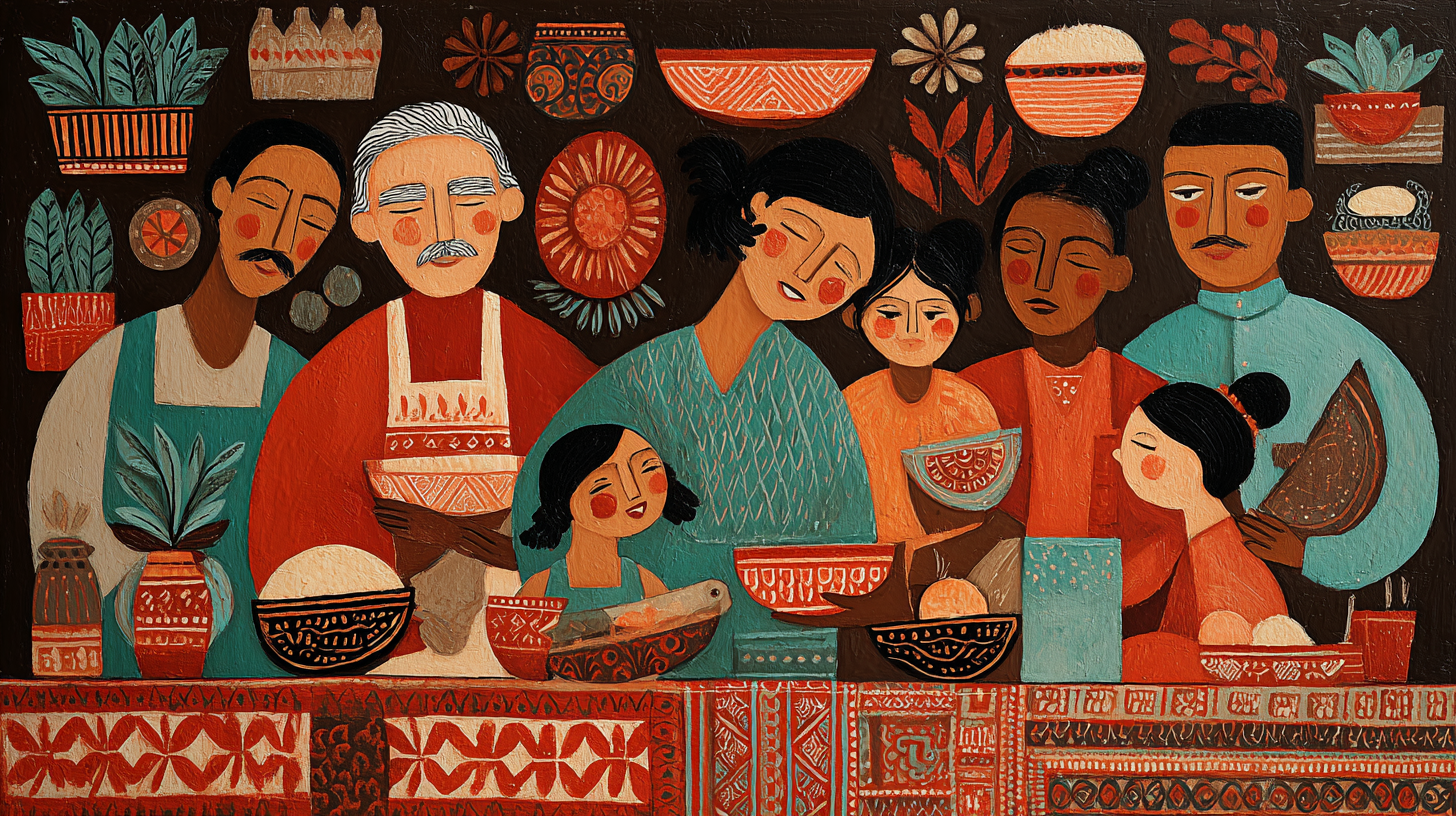
One of the most powerful and underappreciated aspects of cooking together is its role in cultural identity transmission. When you teach your child to make your grandmother’s recipe, you’re not just teaching technique—you’re handing down heritage. When you explain why certain ingredients matter in your family’s cuisine, you’re building cultural literacy. When you tell stories about who taught you this dish and why it’s important, you’re creating intergenerational connection across time and space.
For families maintaining connections to Caribbean culture, cooking together becomes especially significant. The recipes are complex enough to challenge growing skills—like learning to season properly for Jamaican Stewed Peas or understanding the layered flavors in Trinidadian Karhee Curry. The ingredients themselves teach geography and botany—what’s a breadfruit, where do scotch bonnet peppers come from, why does our family use this particular spice blend? The stories embedded in the food—why we eat this on holidays, what this reminds your grandmother of, how this recipe traveled with the family—create narrative threads that anchor children to their heritage.
Research on intergenerational food transmission shows that children who learn family recipes aren’t just learning to cook—they’re learning who they are. They develop stronger connections to extended family, deeper understanding of their cultural background, and more complex identity formation. For children growing up in multicultural environments, kitchen time can be where they practice code-switching, learning to move fluently between different cultural contexts. For children of diaspora families, cooking heritage recipes creates tangible connections to places they may never have visited.
Building Cultural Connection Through Food: If you’re looking to introduce Caribbean flavors and cultural traditions to your children from their earliest eating days, the Caribbean Baby Food Recipe Book offers authentic recipes adapted for infant and toddler development stages. Each recipe includes cultural context and family meal adaptations, so you’re building food memories that span generations—from first purées through family dinner traditions. Recipes like Cornmeal Porridge Dreams, Coconut Rice & Red Peas, and Plantain Paradise give even the youngest family members a taste of heritage.
But cultural cooking creates tension too, and it’s worth acknowledging. Many second and third-generation children resist learning “old country” recipes because they want to fit in with peers. Many heritage cooks feel pressure to preserve authenticity while adapting to available ingredients, dietary needs, or time constraints. The cooking together process can surface these tensions—which is valuable. Better to discuss cultural identity and belonging while making dumplings than to avoid the conversation entirely. Better to negotiate adaptation and tradition while stirring soup than to have those values silently transmitted without examination.
The Long Game: Building Adults Who Can Feed Themselves
Here’s a perspective shift that reframes everything: you’re not teaching your child to cook so they can help with dinner tonight. You’re teaching them to cook so twenty years from now, they can feed themselves and others with competence, confidence, and joy. You’re building an adult who doesn’t live on takeout and frozen meals, who can nourish themselves during stress or celebration, who can connect with others through shared meals, and who can pass these skills to the next generation.
The long-term research on cooking skills and life outcomes is striking. Adults who learned to cook as children report higher life satisfaction, better physical health, stronger social connections, and greater resilience during difficult life transitions. Cooking competence in adolescence predicts everything from college success to relationship quality to financial stability. These aren’t trivial outcomes—they’re life-shaping capabilities that begin with a four-year-old learning to stir pancake batter.
But the long game perspective also relieves some pressure from today. Every cooking session doesn’t need to be perfect. Every meal doesn’t need to be a teaching opportunity. Progress isn’t linear—your child might enthusiastically help for months, then refuse for weeks, then suddenly return with renewed interest. Skills learned at seven might not appear useful until thirteen. Cultural appreciation planted at nine might not blossom until twenty-five. You’re planting seeds, not manufacturing instant results.
The future outlook research predicts that family cooking classes, at-home kits, and digital cooking content will become increasingly embedded in parenting culture. Recipe kit programs showing measurable improvements in children’s food attitudes and family stress levels point toward broader adoption. Technology will likely bridge some skill gaps, with apps and videos supplementing hands-on teaching. But the core will remain unchanged: an adult and a child, standing together at a counter, learning from each other, building something they’ll share, creating memories in the midst of the everyday work of making dinner.
Starting Right Now (Because Tomorrow Never Comes)
Your This-Week Cooking Action Plan
Match each day to a realistic cooking involvement level—then commit to just ONE this week:
Easy Start
5-Min Task
Side Dish Help
Snack Making
Pizza Night
Full Recipe
Tap one option above to see your specific action plan!
The biggest gap between knowing cooking together matters and actually doing it is the starting point. Where do you begin when your five-year-old has never been invited into the kitchen? How do you restart after months of takeout during a stressful period? What’s the first step when you yourself feel like a mediocre cook?
The answer is almost disappointingly simple: start smaller than feels significant. Don’t start with “teaching my child to cook.” Start with “my child will wash one vegetable for tonight’s dinner.” Don’t start with “cooking together regularly.” Start with “cooking together once this week.” Don’t start with “elaborate teaching moments.” Start with “being in the kitchen at the same time doing related tasks.”
Real families who successfully integrated cooking together didn’t begin with complex recipes or comprehensive lesson plans. They began with Friday night pizza assembly where kids added toppings. They began with weekend pancake mornings where children measured dry ingredients. They began with one weeknight meal where the child had a specific, bounded job. They built from there, adding complexity as skills and confidence grew, expanding from one collaborative meal per week to three to five, evolving from “helping” to “contributing” to eventually “leading.”
The implementation scenarios that work best share common patterns: starting with foods the child already enjoys eating makes buy-in easier; choosing recipes with minimal steps and flexible timing reduces stress; building in choice wherever possible increases engagement; celebrating effort and progress over perfection sustains motivation; and making the experience enjoyable ensures they’ll want to repeat it. If cooking together becomes a battle, you’re trying to do too much too fast. Scale back. Find the level where it’s still fun.
Here’s your action step for this week—not next month, not when life calms down, this actual week: Identify one meal you’re already planning to make. Find one task within that meal your child could reasonably do with supervision. Invite them to do that one task. That’s it. You’re not committing to a lifestyle overhaul. You’re committing to seven minutes of your Wednesday night. But those seven minutes might become the start of something that shapes your family culture for generations.
Simple Starts for Tiny Hands: Need recipes specifically designed for early cooking experiences? The Caribbean Baby Food Recipe Book includes preparation notes for involving little ones at every stage. Many recipes like Simple Metemgee Style Mash or Yellow Yam & Carrot Sunshine are forgiving, flavorful, and perfect for learning basic techniques. Each family meal bonus provides natural next steps as skills develop.
When Your Kitchen Becomes Your Legacy
Twenty years from now, your children won’t remember the promotion you got or the perfectly clean house you maintained. They’ll remember the Saturday mornings making breakfast together. They’ll remember the time the cake collapsed and you all laughed until you cried. They’ll remember the smell of your signature dish and how you taught them to make it. They’ll remember standing on the step stool next to you, feeling important and capable and loved.
Cooking together isn’t about the food, though the food matters. It’s not about the skills, though the skills are valuable. It’s not about the tradition, though tradition anchors us. It’s about the thousands of small moments that happen while making dinner—the conversations, the laughter, the problem-solving, the connection. It’s about building humans who can feed themselves and others, who understand that nourishment is both physical and emotional, who know in their bones that love and effort and flour can combine to make something beautiful.
The kitchen table revolution isn’t about radical change or perfect execution. It’s about showing up, again and again, to the everyday work of feeding your family and letting your children be part of that work. It’s about believing that the mess is worth it, that the time is well spent, that the skills will matter. It’s about recognizing that when you cook together, you’re not just making dinner—you’re making memories, building competence, transmitting culture, strengthening bonds, and creating the foundation for how your children will someday feed their own families.
The power of cooking together lives in its ordinariness. It’s not exotic or aspirational—it’s just Tuesday night, and someone needs to make dinner, and this time everyone’s invited. That invitation, extended consistently over years, changes everything. It changes how children see themselves, how families connect, how food tastes, and how life feels. One egg cracked, one vegetable chopped, one meal shared at a time, you’re building something that will outlast every perfect Pinterest dinner and every stressful rushed takeout night. You’re building family.
So tomorrow, when dinner time rolls around and you’re tired and the kids are cranky and ordering pizza sounds infinitely easier—invite them in anyway. Hand them a spoon, show them how to do one simple thing, and see what happens. The revolution starts there, in your kitchen, with your kids, tonight.

Kelley's culinary creations are a fusion of her Caribbean roots and modern nutritional science, resulting in baby-friendly dishes that are both developmentally appropriate and bursting with flavor. Her expertise in oral motor development and texture progression ensures that every recipe supports your little one's feeding milestones while honoring cultural traditions.
Join Kelley on her flavorful journey as she shares treasured family recipes adapted for tiny taste buds, evidence-based feeding guidance, insightful parenting anecdotes, and the joy of celebrating food, culture, and motherhood. Get ready to immerse yourself in the captivating world of Kelley Black and unlock the vibrant flavors of the Caribbean for your growing baby, one nutritious bite at a time.
- The Feeding Revolution: Why Your Everyday Meals Are Changing the World - October 13, 2026
- Your Feeding Story Matters More Than The “Perfect” One Online - October 12, 2026
- Looking Forward: Stepping Into Your Confident Feeding Future - October 11, 2026