
The Hidden Sodium Crisis in Your Kitchen (And the Flavor Revolution That Saves You)
Your Daily Sodium Reality Check
Before we dive in, let’s see what your typical day looks like. Select the foods you ate TODAY:
Sandwich
Store-bought bread + deli meat
Pizza Slice
Restaurant or frozen
Canned Soup
One serving
Cheese
2 oz portion
Fast Food
Burger or fries
Snacks
Chips or pretzels
Your Results:
Stick with me—I’m about to show you how to cut this number in HALF without giving up a single bit of flavor.
Here’s what nobody tells you about salt: your taste buds are lying to you. They’ve been hijacked, reprogrammed by decades of processed food to crave sodium levels that would make your great-grandmother faint. The average American consumes 3,400 mg of sodium daily—that’s 50% more than recommended and nearly double what our bodies actually need. Over 90% of us are walking around with sodium levels so high they’re silently damaging our hearts, kidneys, and blood vessels.
But here’s where it gets interesting. What if I told you that the “bland food” you fear from cutting salt is actually a myth? That your taste buds can reset in as little as two weeks? That there’s an entire universe of flavor waiting for you beyond the salt shaker—flavors so vibrant and complex they make regular table salt look like the amateur it really is?
I learned this the hard way. After my second pregnancy, my doctor dropped the sodium bomb on me. High blood pressure, family history of heart disease, and a kitchen full of what I thought were “healthy” convenience foods that were secretly sodium landmines. I wasn’t about to survive on cardboard-tasting meals for the rest of my life, so I went on a mission. What I discovered changed everything—not just about salt, but about how we experience food itself.
The Shocking Truth About Sodium in Your Home
Let me paint you a picture of what’s really happening. That innocent-looking can of tomato sauce? 700 mg per serving. Your “heart-healthy” whole wheat bread? 230 mg per slice. Even your morning cottage cheese is packing 400 mg per half cup. And here’s the kicker—over 70% of the sodium you consume doesn’t come from your salt shaker. It’s already hiding in your food before you even bring it home.
The food industry has spent billions engineering the perfect “bliss point”—that magical combination of salt, sugar, and fat that keeps you coming back for more. Your taste buds have been trained, like Pavlov’s dogs, to expect intense sodium hits. When you don’t get them, your brain literally throws a tantrum. This is why most people fail at reducing salt—they go cold turkey, hate everything they eat, and give up within a week.
Recent research reveals something fascinating: it takes 10-14 days for your taste receptors to recalibrate. That’s it. Two weeks of gradual reduction, and suddenly foods you thought were bland start revealing hidden flavors you never knew existed. The sweetness in carrots, the earthiness in mushrooms, the natural savory richness in tomatoes—all of it comes alive when you’re not drowning everything in sodium.
Industry experts now recognize that the key isn’t elimination—it’s strategic substitution. Dr. Michael Jacobson, who’s been researching sodium reduction for over three decades, found that people who gradually reduced sodium by 10-20% every two weeks maintained their new eating habits 85% of the time, compared to just 12% who tried drastic overnight changes. The FDA’s 2024 voluntary sodium reduction targets acknowledge this reality, focusing on gradual reformulation rather than shock tactics.
Discover Your Flavor Profile
Understanding your natural preferences makes salt reduction 3x easier. Answer these quick questions:
What describes your ideal meal?
Which ingredient excites you most?
The Gradual Reduction Method That Actually Works
Forget everything you’ve heard about going cold turkey on salt. Your body—and more importantly, your taste buds—need time to adjust. The most successful sodium reduction follows what researchers call the “10% rule.” Every two weeks, you reduce the salt in your regular recipes by just 10%. You won’t even notice the difference at first, but by week 8, you’ve cut your sodium intake nearly in half without suffering through a single bland meal.
Here’s how it works in real life: Say your favorite pasta sauce recipe calls for 1 teaspoon of salt. Week one and two, you use it as normal. Week three and four, you drop it to ⅞ teaspoon (yes, that tiny difference matters). By week seven and eight, you’re down to ½ teaspoon, and I guarantee you won’t miss what you’ve lost. Why? Because during those same weeks, you’ve been building up other flavors—herbs, spices, acids, and aromatics that create depth and complexity salt alone could never achieve.
The secret weapon in this gradual approach is taste bud recalibration. Your salt receptors are remarkably adaptable. Studies from the Monell Chemical Senses Center show that when you consistently lower sodium intake, your taste receptors become more sensitive to salt. Foods that seemed bland at 800 mg of sodium suddenly taste perfectly seasoned at 400 mg—but only after your receptors have had time to adjust. Rush the process, and you trigger what researchers call “flavor deprivation stress,” which leads to cravings and inevitable backsliding.
Think of it like training for a marathon. You don’t go from couch to 26 miles overnight. Your body needs progressive adaptation. The same applies to your palate. Start by identifying your three highest-sodium foods. For most families, it’s bread, cheese, and processed meats. These are your targets, but you won’t eliminate them—you’ll strategically reduce them. Switch to lower-sodium bread (under 100 mg per slice). Use half the cheese you normally would, but upgrade to a sharper, more flavorful variety. Replace half your deli meat with home-cooked, low-sodium chicken or turkey.

Your 8-Week Sodium Reduction Journey
See how gradual reduction transforms your health without sacrificing taste:
Starting Point
Average American intake: 3,400 mg/day. This is where most families begin—50% above recommended levels. Your taste buds are fully adapted to high sodium.
Alternative Seasonings That Blow Salt Out of the Water
Now we get to the fun part—the flavor revolution that makes salt look like the one-trick pony it really is. Most people think reducing sodium means reducing flavor, but that’s only because they’ve never properly explored the incredible world of alternative seasonings. We’re talking about ingredients that don’t just replace salt—they create entirely new flavor dimensions that make your old cooking taste flat by comparison.
Let’s start with acids—the secret weapon professional chefs have been using forever. A squeeze of fresh lime juice, a splash of good vinegar, or even a bit of tamarind paste can brighten and lift flavors in ways that make you forget salt ever existed. Acids work by stimulating different taste receptors than salt, creating a perception of “completeness” in your dish without any sodium at all. Try this: next time you make soup, hold back on salt but add a tablespoon of apple cider vinegar right before serving. The difference is magical.
Then there’s the umami army—those naturally savory ingredients that pack serious flavor punch. Mushrooms (especially dried varieties), tomatoes, nutritional yeast, miso paste (yes, it contains some sodium, but you need so much less than straight salt), and fermented foods like kimchi all contain glutamates that trigger the same satisfaction sensors as salt. A tablespoon of tomato paste in your stew delivers depth that a teaspoon of salt could never achieve. Dried mushroom powder (just grind dried mushrooms in a spice grinder) becomes your new secret seasoning for everything from scrambled eggs to roasted vegetables.
For families wanting to introduce authentic island flavors while reducing sodium, the Caribbean Baby Food Recipe Book demonstrates how ingredients like coconut milk, allspice, and scotch bonnet peppers create intensely flavorful profiles with minimal added salt. The same principles that work for baby food—building complexity through layered aromatics—work brilliantly for family meals.
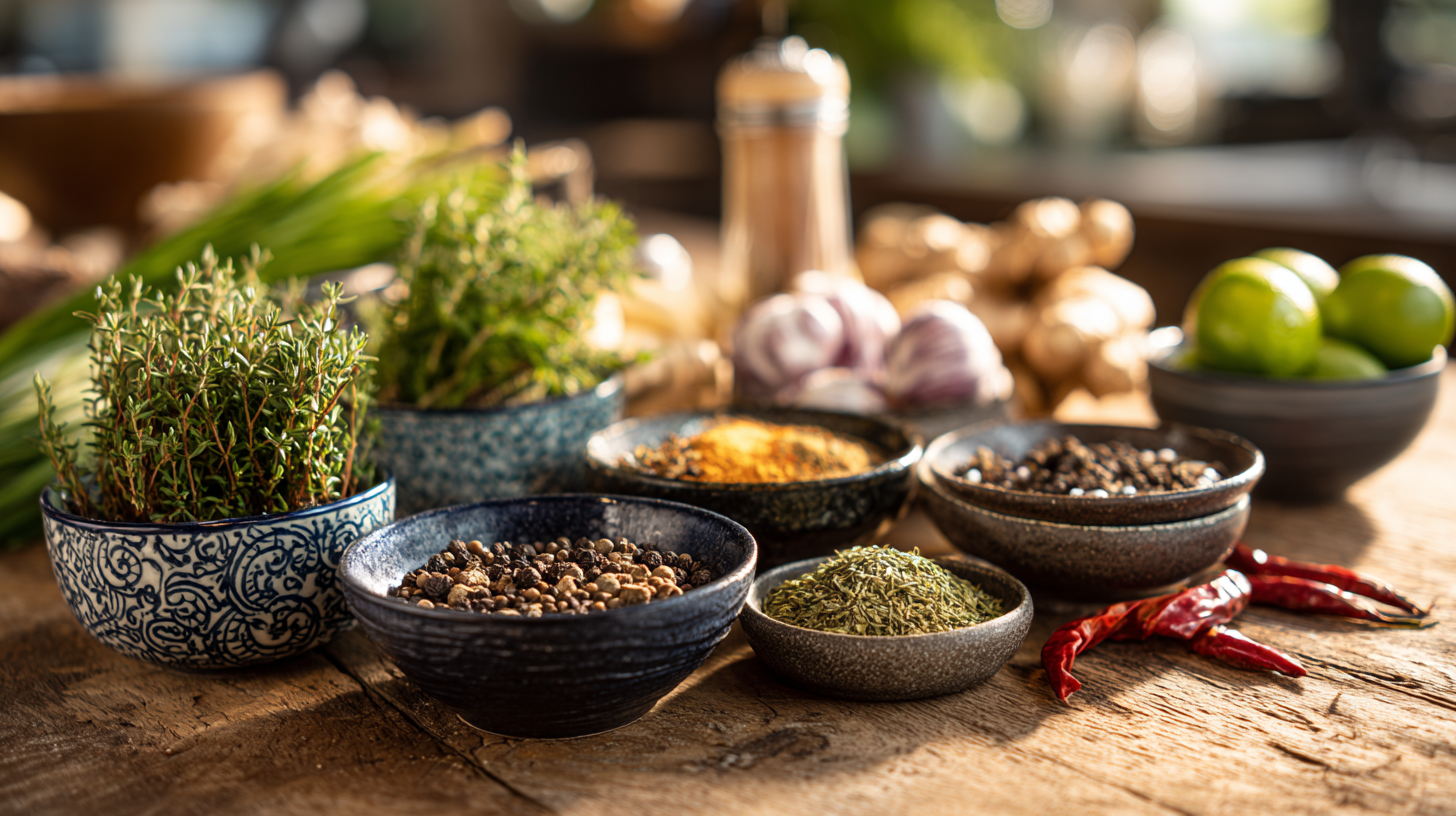
Aromatic vegetables are your foundation. A proper sofrito (onions, garlic, bell peppers sautéed until caramelized) creates such deep, complex flavor that you can cut your salt by half automatically. Same with ginger—fresh ginger is so intensely aromatic and slightly spicy that it tricks your brain into perceiving more flavor complexity than is actually there. Caribbean cooking has known this for generations. That’s why traditional island recipes often use heavy aromatic bases—thyme, scallions, garlic, ginger, peppers—before ever reaching for salt.
️ Your Perfect Spice Match
Click any spice to discover which dishes it transforms (and replaces salt in):
Cumin
Paprika
Turmeric
Thyme
Ginger
Allspice
Mastering Herbs and Spices for Maximum Impact
Here’s something most home cooks get wrong: they treat herbs and spices like afterthoughts, sprinkling them in at the last minute and wondering why their food still tastes flat. The truth is, herbs and spices need technique. Used correctly, they create layers of flavor so complex that salt becomes almost irrelevant. Used incorrectly, they’re just expensive dust in your cabinet.
The number one rule: bloom your spices. This means cooking dried spices in a small amount of fat (oil or butter) for 30-60 seconds before adding other ingredients. This simple step releases aromatic compounds that are fat-soluble, meaning they literally can’t activate in water or broth alone. When you bloom cumin, coriander, or paprika in oil, you unlock 3-4 times more flavor than if you just stirred them into your dish. This is how Indian and Caribbean cooks create such intensely flavored food with relatively little salt.
Fresh herbs versus dried herbs—they’re not interchangeable, and understanding the difference is crucial. Dried herbs are concentrated and work best in longer-cooking dishes (stews, braises, slow-cooked beans) where they have time to rehydrate and release flavor. Fresh herbs are bright and aromatic but lose potency with extended heat. The solution? Use both. Add dried thyme and oregano at the beginning of your tomato sauce, then finish with fresh basil and parsley right before serving. You get depth AND brightness.
Caribbean cooking offers a masterclass in spice layering. Take a traditional Jamaican jerk marinade—it combines allspice, thyme, scotch bonnet peppers, ginger, garlic, and scallions. Notice what’s missing? Salt is minimal because the flavor complexity is so intense your palate doesn’t register its absence. You can apply this same principle to everyday cooking. Instead of salting your chicken breast, make a quick marinade of lime juice, minced garlic, fresh thyme, a pinch of allspice, and black pepper. Let it sit for 30 minutes. The result is more flavorful than any salt-heavy approach.
Here’s my personal spice formula for maximum impact with minimum sodium: Start with aromatics (onion, garlic, ginger). Add whole spices (cumin seeds, coriander seeds, black peppercorns) and bloom them in oil. Layer in ground spices (turmeric, paprika, chili powder). Build your dish. Finish with fresh herbs and a hit of acid (lime, lemon, vinegar). This five-step process creates such multidimensional flavor that salt becomes optional rather than essential.
For families exploring these techniques with younger palates, resources like the Caribbean Baby Food Recipe Book show how gradually introducing complex spice combinations—starting mild and building intensity—trains taste buds to appreciate flavor beyond salt from an early age.
Teaching Your Family Different Flavor Profiles
Here’s where sodium reduction becomes a family adventure rather than a dietary restriction. The goal isn’t just to cut salt—it’s to expand your family’s flavor literacy. Most American palates are embarrassingly one-dimensional: we taste salt, sugar, and fat, and that’s about it. But humans are capable of perceiving hundreds of distinct flavors. Teaching your family to recognize and appreciate different flavor profiles makes salt reduction effortless because you’re not taking something away—you’re opening up entire new worlds of taste.
Start with the five basic tastes: sweet, salty, sour, bitter, and umami. Make it a game. Have a “taste education night” where everyone samples something that represents each taste—honey for sweet, soy sauce for salty and umami, lemon for sour, dark chocolate or arugula for bitter. Talk about where you feel each taste in your mouth (sweetness on the tip of the tongue, bitterness at the back, umami all over). This might seem silly, but it’s powerful. Once people can identify and articulate different tastes, they stop defaulting to salt for everything.
Then introduce flavor profiles from different cuisines. Mexican flavor profiles emphasize earthy (cumin, dried chiles), bright (lime, cilantro), and rich (beans, avocado). Thai profiles balance sweet (palm sugar), sour (tamarind, lime), salty (fish sauce, in small amounts), and spicy (chiles). Caribbean profiles layer warm spices (allspice, cinnamon, nutmeg) with aromatic herbs (thyme, scallions) and heat (scotch bonnet peppers). Pick one profile per week and explore it deeply. Cook three different dishes using that profile. Your family’s palate will expand exponentially.
Make flavor layering visible. When you’re cooking, explain what you’re doing and why. “I’m adding lime juice now because the acid will brighten all the other flavors and make the dish taste more complete without extra salt.” Or, “I’m blooming these spices in oil first because it makes them more aromatic and flavorful.” Kids especially love this. They feel like they’re learning secret chef techniques (which they are), and they become invested in the process.
Create a family spice challenge. Each week, one family member chooses a spice or herb, and everyone has to use it in a dish. Monday might be “cumin night,” where you have cumin-spiced roasted carrots, cumin black bean soup, and cumin-rubbed chicken. By the end of the week, everyone understands what cumin tastes like and how versatile it is. The following week, move to coriander, then smoked paprika, then fresh dill. Within a few months, your family has a sophisticated spice vocabulary that makes low-sodium cooking exciting rather than restrictive.
Sodium Myths That Keep You Stuck
Click each myth to reveal the truth (these might shock you):
Sodium chloride is sodium chloride, regardless of source. Sea salt, Himalayan pink salt, and table salt contain virtually identical amounts of sodium per teaspoon (about 2,300 mg). The trace minerals in “fancy” salts are nutritionally insignificant. The real difference is crystal size, which affects how salt dissolves and where it hits your tongue—but your body processes it exactly the same way.
Unless you’re an elite endurance athlete training for hours in extreme heat, you’re getting more than enough sodium from your regular diet to prevent cramping. Most muscle cramps are caused by dehydration, inadequate stretching, or mineral imbalances (magnesium and potassium)—not sodium deficiency. The average American has sodium to spare.
Your body needs only 500 mg of sodium per day to function. The recommended 2,300 mg limit already includes a massive safety buffer. It’s nearly impossible to eat too little sodium on a normal diet—even very low-sodium whole food diets typically provide 1,000-1,500 mg, which is more than adequate. True sodium deficiency (hyponatremia) occurs almost exclusively in extreme medical situations or endurance events with excessive water intake.
Rinsing canned beans or vegetables removes about 40% of the sodium—helpful, but not a complete solution. The remaining 60% is embedded in the food itself through the brining process. Your best bet? Buy low-sodium or no-salt-added versions from the start, then season to your taste with herbs and spices instead.
Setting Realistic Sodium Goals for Your Family
Let’s get real about sodium targets. The American Heart Association recommends 1,500 mg per day as the “ideal” limit, but for most families living in the modern world, that’s borderline impossible without going full-on whole-food-only and cooking literally everything from scratch. A more realistic goal—and the one the FDA is pushing for—is 2,300 mg per day. That’s still challenging, but achievable with smart strategies and gradual changes.
Here’s how to set family-specific goals that actually work: First, establish your baseline. For one week, track everything your family eats and calculate total sodium. Use an app or just read labels carefully. Most families are shocked—they’re usually consuming 4,000-5,000 mg per day per person without realizing it. Once you know your starting point, set a realistic reduction target: 10% lower every two weeks. If you’re at 4,000 mg, aim for 3,600 mg in weeks 1-2, then 3,200 mg in weeks 3-4, and so on.
Focus on the “Big Three” sodium sources: processed meats, cheese, and bread/baked goods. These three categories account for nearly half of Americans’ sodium intake. You don’t have to eliminate them—just modify them. Switch to low-sodium deli meat (under 400 mg per serving) or replace half with home-cooked chicken. Use sharp cheese so you need less for flavor. Choose bread with less than 150 mg sodium per slice. These three swaps alone can cut your daily sodium by 800-1,000 mg without any other changes.
Create sodium budgets for different meals. Breakfast can be naturally very low-sodium (oatmeal with fruit, eggs with vegetables, smoothies)—aim for under 300 mg. This gives you more flexibility for lunch and dinner. Pack lunches instead of buying them—restaurant and cafeteria food typically contains 1,500-2,000 mg per meal, while a home-packed lunch can be under 500 mg. Dinner becomes your main sodium meal, where you can use 800-1,000 mg and still hit your daily target.
For families with young children, starting early makes a lifetime difference. The Caribbean Baby Food Recipe Book emphasizes introducing babies to naturally flavorful foods—like coconut milk, mango, sweet potato, and mild spices—before their taste buds develop salt dependency. Kids who grow up with diverse, naturally flavorful foods are far more accepting of lower-sodium diets as they get older.
Track progress with positive metrics, not just restriction. Instead of saying, “We’re cutting salt,” say, “We’re trying 15 new herbs and spices this month.” Instead of, “We can’t eat out as much,” reframe it as, “We’re learning to cook five new cuisines.” Psychology matters. When sodium reduction feels like deprivation, people rebel. When it feels like an exciting culinary adventure, they engage.
️ Your 7-Day Low-Sodium Flavor Journey
Each day features a different flavor profile. Click to explore:
️ Mexican Monday – Earthy & Bright
Breakfast: Scrambled eggs with cumin, smoked paprika, fresh cilantro, and diced tomatoes (180 mg)
Lunch: Black bean and sweet potato bowl with lime crema, avocado, and pickled red onions (420 mg)
Dinner: Chicken fajitas with homemade spice blend (chili powder, cumin, garlic, oregano) and fresh salsa verde (550 mg)
Daily Total: 1,150 mg | Key Technique: Bloom cumin and chili powder in oil before adding other ingredients
Caribbean Tuesday – Warm & Aromatic
Breakfast: Coconut cornmeal porridge with cinnamon, nutmeg, and fresh mango (200 mg)
Lunch: Jerk chicken salad with allspice, thyme, scotch bonnet pepper, and pineapple (480 mg)
Dinner: Coconut rice with pigeon peas, sautéed callaloo, and plantains (590 mg)
Daily Total: 1,270 mg | Key Technique: Build flavor base with scallions, garlic, thyme, and fresh ginger before adding main ingredients
Mediterranean Wednesday – Fresh & Herbal
Breakfast: Greek yogurt with olive oil, za’atar, cucumber, and tomatoes (220 mg)
Lunch: Lemon-herb chicken with roasted vegetables and fresh dill (390 mg)
Dinner: Baked fish with tomatoes, olives (rinsed), oregano, garlic, and lemon (620 mg)
Daily Total: 1,230 mg | Key Technique: Use lemon zest AND juice for double citrus impact; add fresh herbs at the end
Asian Thursday – Ginger & Garlic Forward
Breakfast: Congee with fresh ginger, scallions, and soft-boiled egg (240 mg)
Lunch: Ginger-garlic stir-fry with vegetables and cashews over brown rice (410 mg)
Dinner: Miso-glazed salmon (low-sodium miso) with sesame-ginger bok choy (580 mg)
Daily Total: 1,230 mg | Key Technique: Use fresh ginger and garlic generously; add at different stages for layered flavor
Italian Friday – Tomato & Herb Rich
Breakfast: Tomato and basil frittata with fresh herbs (190 mg)
Lunch: Caprese salad with balsamic reduction and fresh basil (280 mg)
Dinner: Pasta with no-salt-added tomato sauce, roasted garlic, fresh basil, and mushrooms (690 mg)
Daily Total: 1,160 mg | Key Technique: Roast tomatoes to concentrate sweetness; layer fresh and dried herbs
Indian Saturday – Warm Spice Blend
Breakfast: Spiced sweet potato hash with turmeric, cumin, and fresh cilantro (210 mg)
Lunch: Chickpea curry with garam masala, ginger, tomatoes, and coconut milk (450 mg)
Dinner: Tandoori-style chicken (yogurt marinade with spices) and cucumber raita (580 mg)
Daily Total: 1,240 mg | Key Technique: Toast whole spices, then grind; bloom ground spices in ghee or oil
Comfort Sunday – Umami Loaded
Breakfast: Mushroom and herb omelet with nutritional yeast (200 mg)
Lunch: Roasted vegetable and lentil soup with dried mushroom powder (420 mg)
Dinner: Slow-roasted tomato and mushroom ragu over pasta with fresh parmesan (680 mg)
Daily Total: 1,300 mg | Key Technique: Use dried mushrooms and tomato paste for natural umami; finish with aged cheese for impact
Real-World Implementation Strategies
Theory is great, but let’s talk about making this work in actual family life—with picky eaters, busy schedules, and the occasional pizza night that you’re not giving up no matter what the sodium guidelines say. The key to long-term success isn’t perfection; it’s sustainable strategies that fit your real life, not some idealized version of it.
Strategy one: The 80/20 rule. Aim to control sodium in 80% of your meals (breakfast, most lunches, and dinners you cook at home), and accept that 20% will be higher-sodium (restaurant meals, social events, those nights when everyone’s exhausted and you order takeout). This approach prevents the all-or-nothing mentality that leads to giving up entirely. When you know you have flexibility built in, you’re far more likely to stick with lower-sodium choices most of the time.
Strategy two: Prep your flavor bases in advance. Every Sunday, make a batch of whatever aromatic base fits your cooking style. Mediterranean families might make a big batch of sofrito (sautéed onions, garlic, tomatoes, bell peppers). Caribbean families might prep a scallion-thyme-garlic-ginger blend. Indian families might toast and grind spice blends. Having these flavor bombs ready to go in your fridge means you’re never tempted to just dump in salt because you don’t have time for “complicated” seasoning.
Strategy three: The gradual restaurant strategy. You can’t control restaurant sodium, but you can make smarter choices. Ask for sauces and dressings on the side. Request that your meal be prepared without added salt (many restaurants will accommodate this). Choose grilled or roasted preparations over fried or heavily sauced. Split an entrée and add a side salad with oil and vinegar. These small modifications can cut restaurant meal sodium by 30-40%.
Strategy four: Batch cook low-sodium versions of family favorites, then freeze portions. Make a huge pot of chili using your gradual-reduction recipe, freeze it in meal-sized portions, and suddenly you have quick, low-sodium dinners ready whenever you need them. Same with pasta sauce, soup, curry bases, or seasoned proteins. The biggest barrier to low-sodium cooking is the perception that it takes more time—batch cooking eliminates that excuse.
Strategy five: Involve your family in the flavor-building process. When everyone participates in choosing spices, tasting as you cook, and discussing what flavors they’re experiencing, they become invested in the outcome. Kids especially love feeling like junior chefs. Give them age-appropriate tasks: younger kids can tear herbs or squeeze citrus, older kids can chop aromatics or measure spices. When they’ve helped create the meal, they’re far more likely to enjoy eating it—even without the salt they’re used to.
Your Quick-Start Action Plan
Week 1-2: Track your current sodium intake without changing anything. Knowledge is power.
Week 3-4: Identify your three highest-sodium foods and find lower-sodium alternatives. Don’t change recipes yet.
Week 5-6: Reduce salt in your most frequent recipes by 10%. Add one new herb or spice per week.
Week 7-8: Another 10% reduction. Try cooking one meal from a new cuisine this week.
Week 9-12: Continue gradual reductions. By now, your taste buds are adapting and you’re building real momentum.
Remember: This is a 12-week journey, not a 12-day sprint. Small, consistent changes create lasting results.
The Science Behind Taste Adaptation
Let’s get nerdy for a minute, because understanding the science makes everything else make sense. Your tongue contains approximately 10,000 taste receptor cells, organized into taste buds that detect sweet, salty, sour, bitter, and umami. These receptors are remarkably adaptable—they can upregulate or downregulate based on consistent exposure to different flavor intensities. When you constantly bombard your salt receptors with high-sodium foods, they become desensitized. You need more and more salt to achieve the same level of satisfaction.
But here’s the fascinating part: this process is reversible. Studies from the Monell Chemical Senses Center demonstrate that salt receptor sensitivity increases measurably after just two weeks of reduced sodium intake. By six weeks, taste testers consistently rated foods 30-40% saltier than they did initially, even though the sodium content hadn’t changed. Your brain literally recalibrates what it considers “normal” salinity. This is why gradual reduction works—you’re giving your taste receptors time to reset without triggering the psychological stress of sudden deprivation.
There’s also a cross-modal flavor enhancement phenomenon at play. When you introduce complex layers of taste (acids, bitterness from herbs, umami from mushrooms, aromatics from spices), your brain perceives greater flavor satisfaction even with less salt. It’s not that these flavors replace salt exactly—it’s that they create such a rich sensory experience that the absence of high sodium doesn’t register as a loss. Professional chefs have known this forever. Home cooks are just catching up.
Genetic factors matter too. About 25% of people are “supertasters”—they have more taste buds than average and experience all flavors more intensely. These individuals often find it easier to reduce sodium because they’re more sensitive to subtle flavors in the first place. Another 25% are “non-tasters” with fewer taste buds, who may rely more heavily on salt and other intense flavors. If you’re struggling with sodium reduction despite following all the strategies, you might be a non-taster—which just means you need to be even more intentional about building flavor complexity through multiple sources, not just salt.
When Flavor Meets Culture and Family Tradition
One of the biggest challenges in sodium reduction isn’t physiological—it’s emotional and cultural. Food carries meaning far beyond nutrition. It’s how we show love, maintain traditions, and connect with our heritage. For many families, especially those from cultures with traditionally higher-sodium cuisines, the idea of reducing salt feels like losing part of their identity. Caribbean families might worry that “real” jerk chicken or stewed peas won’t taste authentic without the salt they remember. Asian families might feel that low-sodium soy sauce somehow betrays generations of cooking tradition.
Here’s the truth: authentic flavor comes from technique and ingredient quality, not just sodium levels. Traditional Caribbean cooking, for example, gets its distinctive character from the interplay of allspice, scotch bonnet peppers, thyme, scallions, and slow-cooking methods—not primarily from salt. When you focus on perfecting these elements, you can reduce salt significantly while maintaining authenticity. The same applies to virtually every cuisine. Italian cooking is about the quality of tomatoes and olive oil, the freshness of herbs, and proper technique. Chinese cooking is about the balance of aromatics (ginger, garlic, scallions) and cooking methods (wok hei from high heat). Salt is important, but it’s not the star.
For families introducing these concepts to children, starting early makes a profound difference. The recipes in resources like the Caribbean Baby Food Recipe Book demonstrate how to build authentic cultural flavor profiles with minimal sodium. Babies fed dishes like Coconut Rice & Red Peas, Callaloo Purée, or Plantain Paradise grow up understanding that bold, satisfying flavor doesn’t require high salt. They develop taste memories based on spices, herbs, and naturally flavorful ingredients—setting them up for a lifetime of healthier eating without feeling deprived.
The key is reframing the conversation. Instead of “we’re cutting salt because it’s unhealthy,” try “we’re exploring the full depth of our traditional cooking by highlighting all the other amazing flavors that make our food special.” It’s a subtle shift, but it transforms sodium reduction from a restriction into a celebration. You’re not losing anything—you’re discovering aspects of your food culture that were being overshadowed by too much salt all along.
Navigating Social Situations and Special Occasions
Let’s be honest—the hardest part of any dietary change isn’t what you do at home. It’s navigating birthday parties, holiday gatherings, restaurant dinners with friends, and those potluck situations where you have no control over ingredients. This is where rigid approaches fail and flexible strategies succeed. The goal isn’t to be the person who brings their own salt-free meal in a cooler and makes everyone uncomfortable. The goal is to maintain your overall sodium reduction while still participating fully in social life.
For restaurant dining, small modifications make huge differences without being difficult. Request grilled or roasted preparations instead of fried or braised (which typically involve high-sodium marinades). Ask for sauces and dressings on the side so you control how much you use. Start with a salad or vegetable-based appetizer, which automatically reduces the proportion of your meal that’s high-sodium. Drink plenty of water throughout the meal, which helps your kidneys process sodium more efficiently. And accept that this one meal is going to be higher in sodium than your home cooking—that’s okay. It’s the overall pattern that matters, not individual meals.
For family gatherings and potlucks, strategic contribution is your best tool. Bring a dish you know is low-sodium and incredibly delicious—something that showcases how flavorful food can be without relying on salt. A Caribbean-inspired mango-lime coleslaw with fresh herbs. A Mediterranean roasted vegetable platter with za’atar and lemon. A bold, spice-forward bean dip with cumin, smoked paprika, and fresh cilantro. When your contribution is so tasty that people ask for the recipe, you’ve just demonstrated that low-sodium doesn’t mean low-flavor—without lecturing anyone or making them feel judged.
Holiday traditions deserve special consideration. These are the meals loaded with emotional significance, and trying to overhaul Thanksgiving dinner or Christmas morning breakfast is a recipe for family conflict. Instead, practice strategic moderation. Keep beloved high-sodium dishes, but reduce portions and balance them with lower-sodium options. Make sure half the table is filled with naturally lower-sodium foods—roasted vegetables, fresh salads, fruit-based sides. This way, everyone gets their traditional favorites, but the overall sodium load is reduced simply through better balance.
Teach your family the “sodium bank” concept for special occasions. If you know you’re going to a wedding or birthday party on Saturday where sodium will be high, be extra careful Thursday and Friday. Think of it like a budget—you’re “saving” sodium during controlled days so you can “spend” it on special occasions without guilt. This approach prevents the all-or-nothing thinking that causes people to give up entirely after one high-sodium event.
Long-Term Health Benefits Worth Fighting For
Every strategy, every herb substitution, every gradual salt reduction—it all leads to this: real, measurable health improvements that affect quality of life far beyond what you might expect. Reducing sodium intake isn’t just about lowering a number on a blood pressure monitor (though that’s important). It’s about preventing the cascade of cardiovascular problems that affect nearly half of American adults and are largely preventable through dietary changes.
The evidence is overwhelming. Reducing sodium intake to 2,300 mg per day decreases systolic blood pressure by an average of 5-6 mm Hg in people with hypertension and 2-3 mm Hg in people with normal blood pressure. That might sound modest, but at the population level, it translates to preventing hundreds of thousands of strokes and heart attacks annually. For individuals, it means lower medication needs (or avoiding medication entirely), reduced risk of kidney disease, better bone health (high sodium increases calcium loss), and even reduced risk of stomach cancer.
But the benefits extend beyond physical health. Families who successfully reduce sodium together report better overall eating patterns, more time cooking together, expanded palates (especially in children), and greater appreciation for fresh, whole foods. These are the benefits that keep the changes sustainable long-term. When sodium reduction improves family connection and makes meals more interesting rather than more restrictive, it becomes a permanent lifestyle shift rather than a temporary diet.
For children especially, the impact is profound. Kids raised on lower-sodium, flavor-diverse diets have measurably different taste preferences than those raised on processed foods. They’re more likely to accept vegetables, try new foods, and maintain healthy eating patterns into adulthood. Research shows that taste preferences formed in childhood persist for decades. When you reduce sodium in your family’s diet starting today, you’re not just changing this generation’s health—you’re potentially changing the trajectory for generations to come.
Your Flavor-Forward Future Starts Now
Here’s what I’ve learned from my own journey and from watching hundreds of families make this transition: sodium reduction is never about what you’re giving up. It’s always about what you’re gaining—more vibrant flavors, better health, expanded culinary skills, and a deeper appreciation for real food. The families who succeed are the ones who approach this as an adventure, not a punishment. They get excited about trying new spices. They turn cooking into a family activity. They celebrate small victories, like the week their blood pressure dropped or the day their picky eater voluntarily ate vegetables because they “tasted really good.”
Your taste buds are waiting to be liberated from their sodium dependency. They want to experience the bright acidity of fresh lime, the complex warmth of cumin and coriander, the aromatic intensity of fresh herbs, the deep umami satisfaction of mushrooms and tomatoes. All of these flavors are there, ready to transform your cooking, but they can’t compete with excessive salt. Lower the sodium, and suddenly your palate wakes up. Foods you thought were boring become interesting. Meals you used to drown in salt become perfectly seasoned with just herbs and spices.
Start small. Choose one strategy from this article and implement it this week. Maybe it’s buying your first jar of smoked paprika and using it on roasted vegetables. Maybe it’s making a big batch of herb-and-garlic aromatics to keep in your freezer. Maybe it’s simply tracking your sodium intake for three days to understand your baseline. Whatever you choose, take that

Kelley's culinary creations are a fusion of her Caribbean roots and modern nutritional science, resulting in baby-friendly dishes that are both developmentally appropriate and bursting with flavor. Her expertise in oral motor development and texture progression ensures that every recipe supports your little one's feeding milestones while honoring cultural traditions.
Join Kelley on her flavorful journey as she shares treasured family recipes adapted for tiny taste buds, evidence-based feeding guidance, insightful parenting anecdotes, and the joy of celebrating food, culture, and motherhood. Get ready to immerse yourself in the captivating world of Kelley Black and unlock the vibrant flavors of the Caribbean for your growing baby, one nutritious bite at a time.
- The Feeding Revolution: Why Your Everyday Meals Are Changing the World - October 13, 2026
- Your Feeding Story Matters More Than The “Perfect” One Online - October 12, 2026
- Looking Forward: Stepping Into Your Confident Feeding Future - October 11, 2026