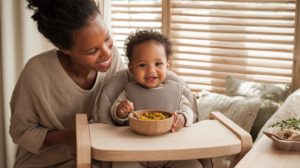
The Feeding Revolution Your Child Deserves: Breaking Free from Diet Culture
Take the Diet Culture Reality Check
Before we dive in, let’s see how deeply diet culture has infiltrated your family’s food environment. This isn’t about judgment—it’s about awareness. Because here’s the thing: you can’t change what you don’t acknowledge.
If you clicked on any of those first six statements, welcome to the club. These phrases seem harmless—even helpful—but they’re actually subtle ways diet culture sneaks into our homes and shapes how our children relate to food and their bodies. And I get it. I’ve caught myself mid-sentence, about to comment on my daughter’s second helping of rice and peas, when I realized: Wait, who told me that was a problem?
The answer? Diet culture. That pervasive, insidious force that’s been whispering in our ears since we were children ourselves, telling us that bodies need to be controlled, food needs to be earned, and thinner is always better.
But here’s what I discovered after diving deep into the research: up to 22% of children and adolescents struggle with disordered eating, and we’re seeing anorexia nervosa rates increase in children under 15. Even more heartbreaking? Children as young as four years old already associate negative characteristics with larger bodies. Four. Years. Old.
That statistic hit me like a ton of bricks. Because while we’re busy trying to get our kids to eat more vegetables and “make healthy choices,” we’re accidentally teaching them that their bodies are projects that need fixing. And the psychological damage from that message far outweighs any potential physical health benefit.
The Hidden Cost of “Healthy Eating”
Let me share something that changed how I think about feeding my children forever. There’s this concept called Health at Every Size—or HAES for short—and it completely flips the script on everything we’ve been taught about health and bodies.
Here’s the shocking truth that most pediatricians won’t tell you: research shows that people who engage in 2-4 healthy habits show no significant difference in mortality risk regardless of their BMI. Read that again. The health behaviors matter more than the body size.
But we’ve been so conditioned to equate health with thinness that we’re willing to sacrifice our children’s mental health, their relationship with food, and their body image in pursuit of a number on a scale. And the research bears this out: parent conversations about weight and size are directly associated with increased risk for disordered eating behaviors in adolescents.
The Myth We Need to Bury
The Myth: “If I don’t monitor what my child eats and how much they weigh, I’m not being a responsible parent.”
The Reality: Studies show that weight-focused parenting actually increases the likelihood of weight gain, disordered eating, depression, and body dissatisfaction. The very thing we’re trying to prevent, we’re causing.
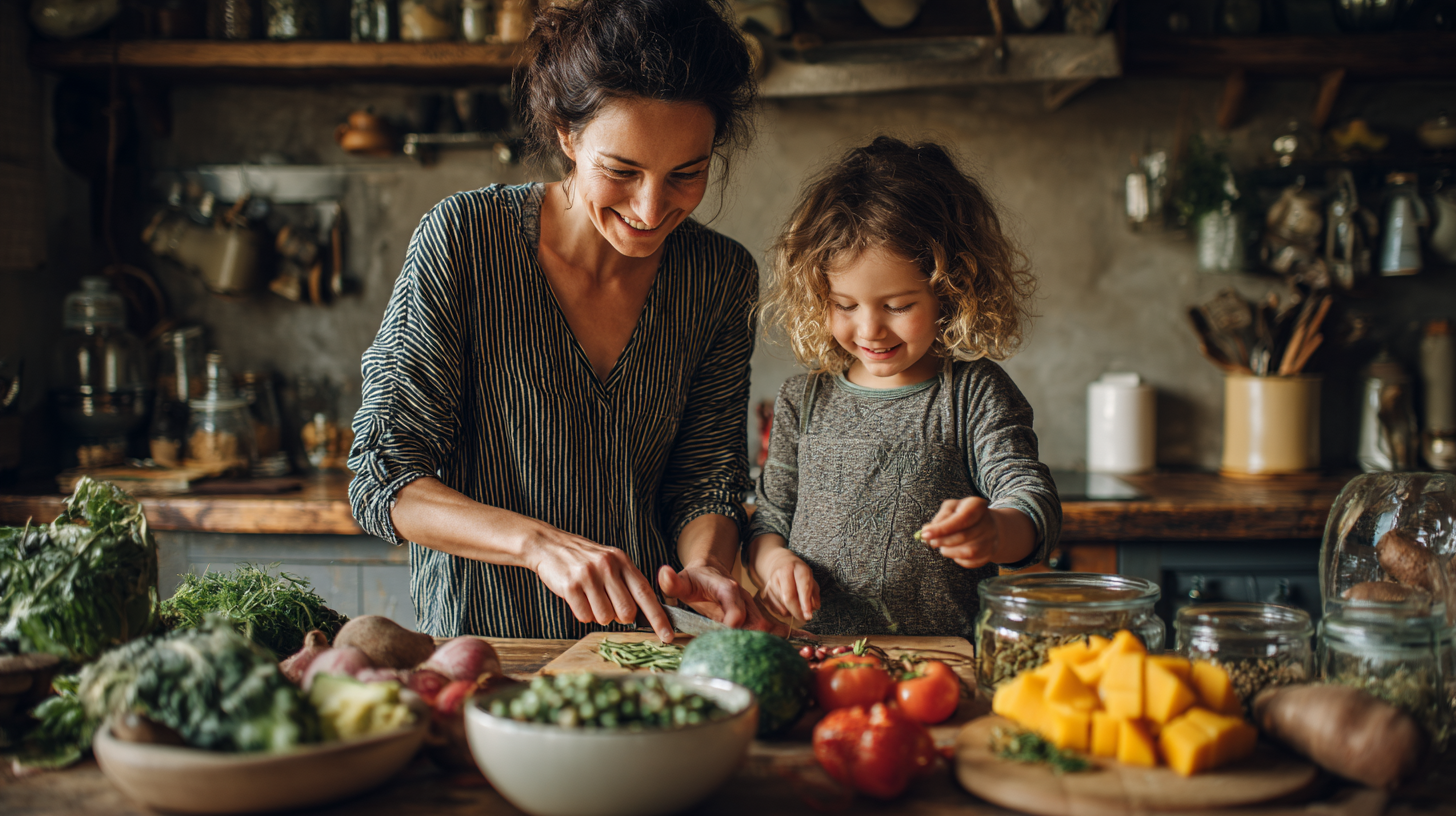
Think about that for a moment. Every time we comment on portion sizes, restrict desserts, or praise a child for “being good” with food, we’re planting seeds that can grow into full-blown eating disorders. Research tracking children over 18 months found that “child-fat talk”—comments specifically about a child’s weight—shows the strongest association with children’s eating problems and weight issues.
What Your Grandma Knew That Science Is Just Confirming
The Ancient Wisdom Modern Research Validates
Click below to discover what traditional Caribbean feeding practices got right all along…
Children know how to eat.
Before diet culture got its hooks in us, this was common knowledge. You offered food at regular intervals. You made a variety of options available. And then—here’s the radical part—you trusted the child to eat what their body needed.
This approach has a name now: the Division of Responsibility, developed by dietitian Ellyn Satter. Parents decide the what, when, and where of eating. Children decide how much and whether to eat.
And it works. Studies on intuitive eating show over 125 research papers documenting benefits including more dietary diversity, higher self-esteem, improved psychological wellbeing, reduction of eating disorder symptoms, increased eating pleasure, and overall life satisfaction.
When I started making traditional dishes from my Caribbean Baby Food Recipe Book—things like Calabaza con Coco or Yellow Yam & Carrot Sunshine—I stopped worrying about whether my daughter ate “enough” vegetables. I focused on making food joyful, cultural, and available without pressure.
The Language Shift That Changes Everything
Words matter more than we realize. And if there’s one practical change you make after reading this, let it be this: eliminate moral judgments about food.
Here’s what needs to go:
Click each card to flip it and see the body-positive alternative
I know what you’re thinking: But if I don’t teach them about healthy eating, how will they learn to make good choices?
Here’s the thing—they’ll learn by watching you. Not by hearing lectures about nutrition, but by observing your relationship with food and your body. Research on parental modeling shows that when parents demonstrate positive self-image and diverse food intake, children naturally develop healthier relationships with food and their bodies.
When I serve my family meals that celebrate our Caribbean heritage—whether it’s Stewed Peas Comfort or Coconut Rice & Red Peas—I talk about how food connects us to our ancestors, how flavors tell stories, how sharing meals brings us together. I don’t talk about nutrients or calories or what’s “good for you.” Those conversations can come later, when they’re older and can understand nutrition without it becoming a moral framework.
The Social Media Minefield Our Kids Are Walking Through
If you think you can raise your child in a body-positive bubble, I have some hard news: 71% of teens use YouTube daily and 58% use TikTok daily. For middle-school-aged users, over half their screen time is on social media. And what are they seeing? Filtered bodies, diet products, before-and-after weight loss transformations, and “what I eat in a day” videos that promote disordered eating as aspirational.
Studies show that adolescent girls who view manipulated Instagram photos report lower body image immediately after exposure, especially those prone to social comparison. And it’s not just girls—boys are increasingly affected too, particularly by fitness culture that promotes extreme exercise and restrictive eating under the guise of “health.”
Here’s what made me take action: weight-based bullying is now the most prevalent form of bullying in schools. Our children are growing up in an environment that constantly tells them their bodies are wrong. And when they come home, if we’re reinforcing those same messages—even unintentionally—we’re not providing them a safe harbor. We’re just another voice telling them they need fixing.
Scenario 1: Your 7-year-old comes home from school and says, “Emma told me I’m fat. Am I fat, mama?”
Scenario 2: Your child asks for a third helping of dinner.
Scenario 3: Your tween mentions wanting to go on a diet because they saw it on TikTok.
These scenarios aren’t theoretical. They’re happening in homes right now. And our responses in these moments shape our children’s relationship with their bodies for years to come.
The Division of Responsibility: Your New Framework
If diet culture’s approach to feeding children doesn’t work, what does? Enter the Division of Responsibility, the framework that’s been validated by over 125 studies on intuitive eating.
Here’s how it works:
Parent’s Job:
- Decide WHAT food is offered
- Decide WHEN meals and snacks happen (regular, predictable times)
- Decide WHERE food is eaten (usually at the table)
- Make meals pleasant and pressure-free
Child’s Job:
- Decide HOW MUCH to eat
- Decide WHETHER to eat
- Eat in whatever order they choose (yes, even dessert first)
This framework eliminates food battles because there’s nothing to fight about. You’re not forcing broccoli. You’re not restricting cookies. You’re offering a variety of foods—including treats—at regular intervals, and trusting your child’s innate ability to regulate their intake.
When I started implementing this with my own family, I noticed something remarkable: my daughter’s “pickiness” disappeared within weeks. Why? Because there was no pressure. When vegetables appeared alongside other foods without commentary, without bribes, without the weight of my anxiety riding on whether she ate them, she started trying them. Not every time. Not in large quantities. But she tried them. And that’s the goal—exposure without pressure.
You know what else happened? She stopped sneaking snacks. When all foods were equally available and neutral, the “forbidden fruit” effect vanished. That bag of plantain chips I caught her eating in her room at midnight? Gone. Not the chips—those are still in the pantry. But the sneaking behavior disappeared because the shame around eating them disappeared.
Practical Implementation: What This Actually Looks Like
Theory is beautiful, but let’s talk about real life. Here’s how to put body-positive feeding into practice, starting today:
Your Body-Positive Feeding Checklist
Click each practice as you implement it. Watch your transformation unfold!
Let me get real about implementation because this isn’t always easy. Last week, my mother-in-law commented on my daughter’s third helping of rice and peas. “She eating a lot, nuh?” The old me would have felt shame, would have maybe redirected my daughter toward salad instead. But I’ve learned that protecting my child’s relationship with food and her body is more important than managing other people’s discomfort.
So I said, calmly: “She’s listening to her body, and that’s what we encourage in this house.” Was it awkward? Yes. Was it necessary? Absolutely.
Because here’s what research shows: when we override children’s internal hunger and fullness cues—whether through pressure to eat more or restriction to eat less—we damage their ability to self-regulate. And self-regulation is the foundation of a healthy relationship with food that lasts a lifetime.
When Vegetables Are the Villain
I know what’s eating at you: But what about nutrition? What about vegetables? Am I really supposed to just let my kid eat cookies for dinner?
Deep breath. Let’s unpack this.
First, the Division of Responsibility doesn’t mean children have unlimited access to all foods at all times. You’re still deciding WHAT is offered. So yes, you can choose not to stock certain foods in your home. What you DON’T do is label them as forbidden or use them as rewards.
Second, research is clear: pressure to eat vegetables makes children LESS likely to eat them over time. The studies showing 8-10 exposures needed for acceptance? Those are exposures without pressure. Just seeing the food on the plate. No cajoling. No bargaining. No “just one bite.”
Third—and this is the part that blew my mind—when you remove pressure and make all foods equally available, children naturally gravitate toward variety. Not because we force them, but because human bodies are wired to seek nutritional diversity when we trust them.
When I make Calabaza con Coco (pumpkin and coconut milk) or Geera Pumpkin Puree from my cookbook, I serve them alongside rice, maybe some festival or plantain, and whatever protein we’re having. Sometimes my daughter eats the pumpkin. Sometimes she doesn’t. But I keep offering it, without comment, and over time I’ve watched her acceptance grow.
The Exposure Principle: Children need to see, smell, touch, and be around new foods 8-15 times before they’ll willingly try them. Each meal where vegetables appear on the table—even if untouched—counts as exposure. You’re not failing. You’re planting seeds.
And you know what? Even if your child genuinely dislikes certain vegetables their entire childhood, that’s okay. I promise you, no adult has ever developed scurvy because they didn’t like broccoli as a kid. But plenty of adults have developed eating disorders because their parents pressured them about food.
The Weight Conversation You Need to Have (With Yourself)
Here’s the uncomfortable truth we need to sit with: many of us are drawn to body-positive parenting not because we’ve healed our own relationship with our bodies, but because we want to spare our children the pain we experienced.
That’s noble. But it’s not enough.
Research on parental modeling is unequivocal: children don’t learn body acceptance from what we tell them. They learn it from what we model. If you’re praising your child’s body while criticizing your own, they’re learning that bodies need criticism—they’re just confused about when it starts.
If you’re serving your child intuitively while you’re on a diet, they’re learning that food freedom is temporary—something you grow out of when you become an adult.
If you’re teaching them that all foods fit while you’re labeling your own meals as “good” or “bad,” they’re learning that dietary restriction is an inevitable part of adulthood.
This is the work, friends. Not just changing how we feed our children, but interrogating and healing our own relationships with food and bodies. And I won’t lie—it’s hard. I still catch myself thinking “I shouldn’t” before reaching for a second helping. I still have to consciously redirect my thoughts when I see myself in photos.
But every time I challenge those thoughts, I’m not just healing myself. I’m modeling for my daughter that body acceptance is possible. That food can be enjoyed without guilt. That health is about so much more than size.
Navigating the System That Works Against You
Let’s be honest: even if you’re doing everything right at home, your child is growing up in a culture that’s actively working against body positivity. Schools do BMI screenings. Pediatricians plot weight on growth charts and comment when children cross percentiles. Relatives make remarks. Other kids repeat what they hear at home.
So what do you do?
First, know your rights. You can request “weight-blind” pediatric appointments where your child isn’t weighed unnecessarily, or where the number isn’t announced in their presence. You can opt your child out of school BMI screenings. Research shows these screenings don’t improve health outcomes but DO increase weight stigma and disordered eating behaviors.
Second, prepare scripts for the inevitable comments. When grandma says your child is “getting chunky,” you can say: “We don’t talk about bodies that way in our family. We focus on health, not size.” When another parent comments on what your child is eating, you can say: “We trust our children to listen to their bodies.”
Will it be awkward? Yes. Will some people think you’re being oversensitive? Probably. But consider the alternative: remaining silent while your child absorbs message after message that their body is wrong.
What the Research Really Shows
Among adolescents, 44% and 63% reported they never want their mothers and fathers, respectively, to talk about their weight—even when parents communicated positive messages. The takeaway? Don’t talk about weight. Period. Talk about health behaviors, yes. Body functionality, absolutely. But weight itself? Off limits.
The Long Game
I’m not going to promise you that implementing these practices will result in a child who eats vegetables at every meal or maintains a specific body size. That’s not the goal. The goal is raising a child who:
- Trusts their body’s signals of hunger and fullness
- Enjoys a wide variety of foods without guilt or anxiety
- Views their body with neutrality or appreciation rather than criticism
- Recognizes and challenges diet culture messaging when they encounter it
- Develops a relationship with food that nourishes both body and soul
Research tracking children whose parents used responsive feeding practices shows these children have healthier eating attitudes, more dietary diversity, higher self-esteem, and lower risk of eating disorders as they grow.
But here’s what the research doesn’t fully capture: the peace. The absence of food battles. The joy of watching your child discover that they love the tangy sweetness of tamarind in Tambran Ball Inspired puree or the creamy comfort of Coconut Rice & Red Peas. The relief of knowing you’re not accidentally planting the seeds of an eating disorder while trying to promote health.
This isn’t about being a perfect parent. It’s about being a conscious one. It’s about recognizing that every meal is an opportunity to send a message about food, bodies, and worthiness. And choosing to send messages of trust, abundance, and unconditional acceptance rather than control, scarcity, and conditional love.
Your Revolution Starts at the Table
Every revolution starts with a single act of resistance. In your home, that act might be serving dessert alongside dinner instead of as a reward. It might be biting your tongue when you want to comment on how much your child is eating. It might be catching your own negative self-talk about your body and choosing different words.
These seem like small things. But research shows that parenting interventions focused on body image and feeding practices have measurable, lasting effects on children’s wellbeing. Programs like “Confident Body, Confident Child” show that when parents receive education and support around body-positive feeding, their children show improvements in eating patterns and body image indicators at 18-month follow-up.
You don’t need a formal program to start this work. You just need awareness, intention, and the willingness to challenge the cultural messages you’ve internalized about food and bodies.
When I flip through my Caribbean Baby Food Recipe Book now, I see it differently than I did when I first wrote it. Yes, it’s about nutrition—these recipes featuring ingredients like sweet potatoes, coconut milk, plantains, and callaloo provide wonderful nourishment for growing bodies. But more importantly, it’s about joy. About culture. About the stories we tell through food and the connections we forge around the table.
When my daughter helps me prepare Cornmeal Porridge Dreams or Stewed Peas Comfort, we’re not just cooking. We’re participating in a tradition that stretches back generations. We’re learning that food is about so much more than nutrients or calories or body size. It’s about love, heritage, comfort, celebration.
That’s the revolution we’re building: one where food is freed from moral judgment. Where bodies are accepted in their natural diversity. Where children grow up trusting themselves instead of fighting themselves.
The Choice in Front of You
You can’t unhear what you’ve learned today. You can’t unknow that weight-focused parenting increases the exact outcomes we’re trying to prevent. You can’t unsee the research showing that children as young as four already internalize weight stigma.
So now you have a choice. You can continue doing what diet culture has conditioned you to do—monitoring, controlling, restricting, commenting. Or you can take a different path. One that’s backed by research, validated by experts, and proven to support children’s long-term physical and mental health.
Will this path be comfortable? No. You’ll face judgment from people who don’t understand. You’ll have moments of doubt when your child rejects vegetables for the tenth meal in a row. You’ll catch yourself falling back into old patterns and have to consciously redirect.
But here’s what I know: every day you stay committed to this approach is a day your child’s relationship with food and their body gets stronger. Every meal where you trust instead of control is practice in self-regulation that will serve them for life. Every moment you model body acceptance is teaching them that they are worthy exactly as they are.
The research is clear. The path forward is mapped. The only question is: are you ready to take the first step?
Because your child is watching. Not to see if you feed them perfectly. But to see if you trust them. To see if you accept them. To see if their worthiness is conditional on their body size or absolute regardless of it.
What will they see when they look at you?
Your Action Plan for This Week
Don’t try to change everything at once. Pick ONE practice from this article and implement it consistently for seven days. Just one. Maybe it’s eliminating “good” and “bad” food language. Maybe it’s serving dessert alongside meals. Maybe it’s stopping yourself before commenting on how much your child is eating.
One practice. Seven days. And watch what shifts—not just in your child, but in yourself. Because that’s where the real revolution begins. Not out there in the world, but right here in your home, at your table, in this moment.
The magic is in the here and now. All we have is this moment, this meal, this opportunity to choose trust over control. So let’s choose well. Our children are counting on us.

Kelley's culinary creations are a fusion of her Caribbean roots and modern nutritional science, resulting in baby-friendly dishes that are both developmentally appropriate and bursting with flavor. Her expertise in oral motor development and texture progression ensures that every recipe supports your little one's feeding milestones while honoring cultural traditions.
Join Kelley on her flavorful journey as she shares treasured family recipes adapted for tiny taste buds, evidence-based feeding guidance, insightful parenting anecdotes, and the joy of celebrating food, culture, and motherhood. Get ready to immerse yourself in the captivating world of Kelley Black and unlock the vibrant flavors of the Caribbean for your growing baby, one nutritious bite at a time.
- The Feeding Revolution: Why Your Everyday Meals Are Changing the World - October 13, 2026
- Your Feeding Story Matters More Than The “Perfect” One Online - October 12, 2026
- Looking Forward: Stepping Into Your Confident Feeding Future - October 11, 2026