
The Feeding Method Truth Bomb: What Science Actually Says (Spoiler: It’s Not What Instagram Told You)
Here’s something nobody tells you at your first pediatrician visit: in ten years, you won’t remember whether you started with purees or baby-led weaning. But you’ll definitely remember the anxiety you felt scrolling through Instagram at 2 AM, watching perfect mothers with spotless kitchens champion their chosen feeding method like it’s a religion.
I learned this the hard way. There I was, my six-month-old daughter sitting in her high chair, and me standing in my kitchen with a sweet potato in one hand and my phone in the other, paralyzed. One influencer swore purees would make her a picky eater. Another claimed baby-led weaning was the only “natural” way. A third warned that if I didn’t introduce allergens at exactly 4.5 months, I was basically signing her up for a lifetime of EpiPens.
The truth? Almost everything we stress about regarding feeding methods has little to do with actual science and everything to do with marketing, mom-guilt, and the algorithm’s need to keep us scrolling.
So let me save you years of anxiety and thousands of dollars in unnecessary products: I dug through the actual research—the real studies published in medical journals, not the blog posts sponsored by baby food companies. What I found will probably surprise you, maybe even irritate you, but most importantly, it’ll set you free from the feeding method wars.
Baby-led weaning is safer because babies can’t choke on finger foods.
Research shows choking rates are nearly identical: 5.4% for spoon-feeding vs. 6.9% for BLW. Safety depends on food preparation, not method.
You must avoid allergens until after 12 months to prevent allergies.
The opposite is true! Introducing allergens between 4-6 months reduces egg allergy risk by 40% according to high-certainty evidence from 9 trials.
Purees will make your baby a picky eater who refuses textures.
By 12 months, babies eat similar foods regardless of starting method. The key is progressing to varied textures by 8 months—not the initial approach.
BLW babies can’t get enough iron and will become deficient.
The BLISS study found no significant difference in iron levels at 12 months when parents emphasize iron-rich foods (2.4 vs 0.8 servings/day).
The Research Nobody’s Talking About (Because It Doesn’t Sell Products)
Let’s start with what actually matters according to science. After reviewing dozens of studies, randomized controlled trials, and systematic reviews, here’s the uncomfortable truth: both baby-led weaning and traditional spoon-feeding work just fine.
I know, I know. That’s not sexy. It doesn’t make for good clickbait. You can’t build a brand empire around “do whatever works for your family.” But that’s exactly what the best research tells us.
The landmark BLISS study—the most rigorous research we have—followed 206 babies randomized to different feeding methods. The result? No significant differences in growth, iron status, or choking risk when parents received proper guidance. The babies all ended up in the same place by their first birthday, eating similar foods with similar skills.
As pediatric gastroenterologist Mark Corkins puts it: “We don’t recommend doing purees from six to 12 months. Nobody recommends that. What’s recommended is that the purees are only at the very, very, very beginning.” Translation: the puree phase should be brief—weeks, not months—regardless of your chosen method.
The Three Things That Actually Matter (According to Evidence, Not Influencers)
After swimming through hundreds of pages of research, three principles emerge with the strongest scientific backing. Everything else? Noise.
First: Early allergen introduction. This one’s backed by the most robust evidence we have. The LEAP study and multiple trials involving nearly 5,000 babies show that introducing common allergens—especially eggs and peanuts—between 4-6 months reduces allergy risk by approximately 40%. That’s a massive effect size in nutrition research.
Yet somehow, we’re still having debates about puree size and spoon angles while many parents never get this crucial message. If I could tattoo one piece of feeding advice on every new parent’s hand, this would be it: introduce peanut butter, eggs, and other allergens around 6 months. No pre-screening needed for most babies. Just do it.
Second: Responsive feeding. This means watching your baby’s hunger and fullness cues rather than following rigid schedules or forcing them to finish every bottle or bowl. Research shows this promotes healthy weight gain and helps babies develop self-regulation skills that last into childhood.
Whether you’re spooning puree or offering finger foods matters way less than whether you’re paying attention to your baby’s signals. Are they turning away? Clamping their mouth shut? Getting distracted? Then they’re done—regardless of how much is left in the bowl or what the feeding app says they “should” eat.
Third: Texture progression by 8 months. Here’s where many parents—regardless of method—miss the boat. Babies need exposure to varied textures and finger foods by 8 months. If you start with purees, you can’t stay there. If you start with BLW, you still need to ensure variety.
By 12 months, feeding method becomes irrelevant. All babies should be eating similar family foods and handling similar textures. The path doesn’t matter; the destination does.
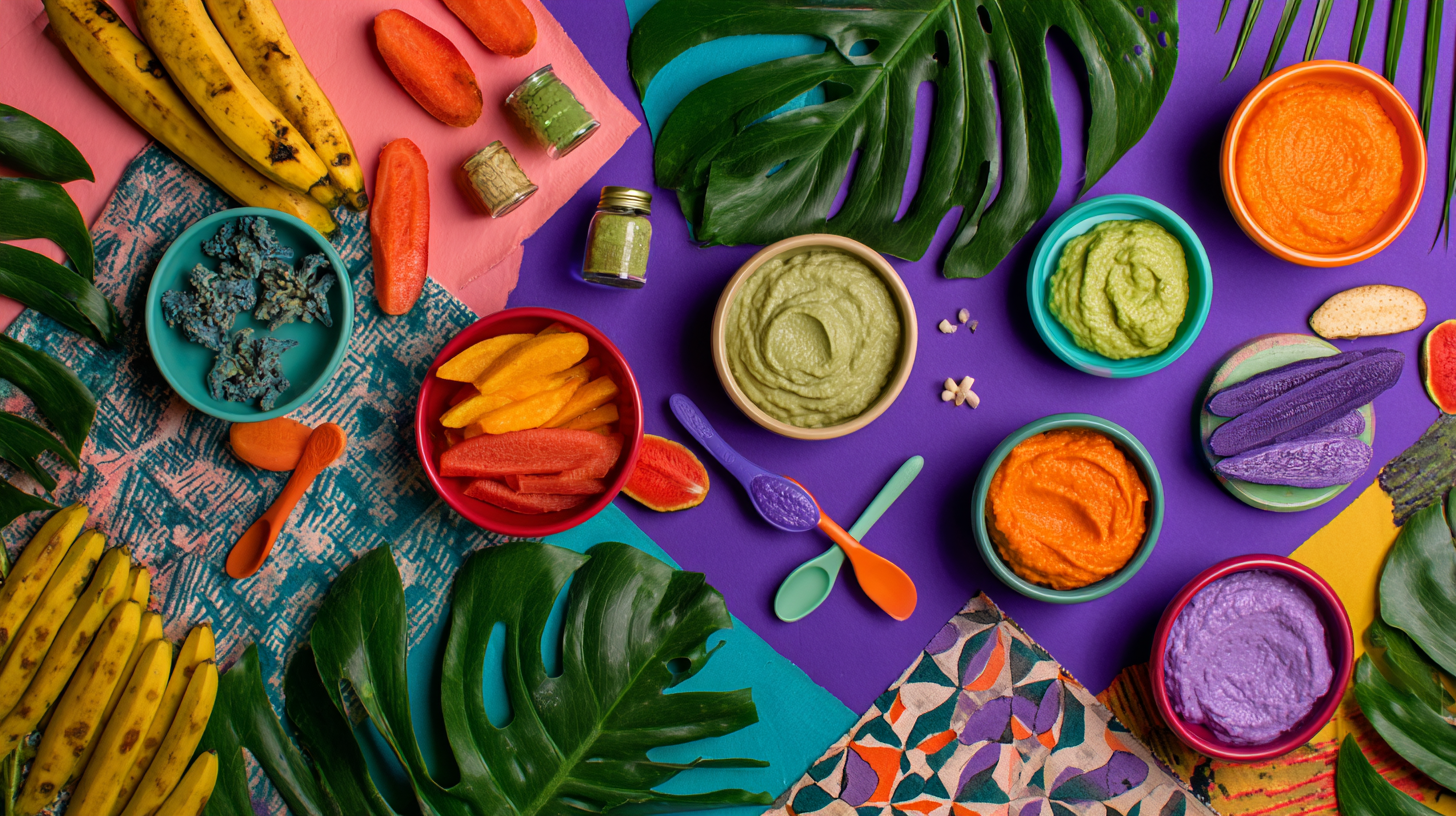
When my daughter was starting solids, I was making Caribbean-inspired purees—pumpkin with coconut milk, sweet potato with a hint of thyme—using recipes from the Caribbean Baby Food Recipe Book. But I quickly realized the real magic wasn’t in choosing purees versus finger foods. It was in watching her face light up at new flavors, respecting when she’d had enough, and gradually introducing new textures every few weeks.
How Strong Is The Evidence? (Tap to See Research Quality)
Based on 9 randomized controlled trials with 4,811 participants. The LEAP study alone showed 80% reduction in peanut allergy. This is gold-standard evidence—multiple large trials all pointing the same direction.
Most studies are observational with self-selection bias. The BLISS RCT is our best evidence, showing no major differences. Bottom line: both methods work when done properly.
Several RCTs show responsive feeding leads to lower BMI through age 9, though effects are modest and may fade over time. More research needed on long-term outcomes.
Multiple systematic reviews show similar rates (5.4% vs. 6.9%). The key factor is food preparation and parent education—not the method itself. Very clear evidence.
The BLISS RCT specifically addressed this concern. When parents emphasize iron-rich foods (meat, fortified cereals), there’s no difference in iron status at 12 months. Problem solved with education.
Why The Feeding Wars Are Really About Marketing (Not Science)
Here’s what nobody wants to admit: the baby food industry is worth $64.93 billion globally and projected to hit $110.53 billion by 2032. That’s a lot of motivation to convince parents they need specialized products, specific methods, and expensive equipment.
The feeding method wars aren’t happening in pediatric journals—they’re happening on Instagram, in Facebook groups, and in the comments sections of parenting blogs. They’re fueled by influencers with affiliate links, baby food companies with products to sell, and the algorithm’s preference for controversy over nuance.
Think about it: “Do what works for your family” doesn’t sell $400 feeding courses or specialized silicone spoons or subscription meal kits. But “If you don’t do BLW, your baby will be a picky eater forever” or “Purees are the only safe option”? Those messages sell products. They sell fear. They sell the promise that if you just buy the right thing and follow the right method, you’ll achieve feeding perfection.
A 2024 study on pediatric social media found that while platforms offer opportunities for evidence-based education, they primarily spread misinformation requiring better regulation. One feeding specialist described herself as “a PhD candidate with a research focus on misinformation in speech language pathology on social media.” Think about that—we now need PhD-level researchers studying misinformation in baby feeding advice.
As one public health nutrition expert lamented on Instagram in September 2024: “One of my biggest public health nutrition concerns at the moment is how people are taking sides on issues that don’t need sides.” The tribalism has gotten so intense that evidence-based nuance gets drowned out by dogma.

The Questions You Should Actually Be Asking
Instead of “Should I do BLW or purees?”—a question the research tells us doesn’t really matter—here are the questions that do:
“Has my baby had exposure to common allergens by 6 months?” This is the single most evidence-backed intervention in complementary feeding. Introduce peanut butter, eggs, fish, and other common allergens early and often. The research is crystal clear here.
“Am I following my baby’s hunger and fullness cues?” Are you stopping when they signal they’re done? Not pressuring them to finish? Offering food when they show interest? This matters infinitely more than the method.
“Is my baby progressing to varied textures?” By 8 months, babies should be experiencing different textures—soft chunks, mashed foods, finger foods. Staying with smooth purees too long or offering only one texture type can lead to feeding difficulties later.
“Am I emphasizing iron-rich foods?” Whether you’re doing BLW or spoon-feeding, iron matters. Meat, fortified cereals, beans, lentils—these should be daily offerings. The BLISS study showed that BLW families who prioritized iron-rich foods (2.4 servings per day) had no iron deficiency issues.
“What does my family’s food culture bring to this?” This one’s personal to me. Growing up Caribbean, our babies eat differently than the Instagram perfect feeding accounts suggest. We introduce bold spices early. We share family meals with callaloo, rice and peas, plantain. And guess what? That’s not just okay—it’s beneficial. Cultural food traditions matter. They’re part of your baby’s heritage and your family’s identity.
The Caribbean Baby Food Recipe Book helped me navigate this beautifully—with over 75 recipes that honor Caribbean flavors while meeting nutritional needs. Think Calabaza con Coco (pumpkin and coconut milk), Geera Pumpkin Puree, or Cornmeal Porridge Dreams. These aren’t “baby foods”—they’re family foods, adapted for tiny mouths.
Which Approach Fits YOUR Life? (Not Instagram’s Life)
Your Evidence-Based Recommendation:
Evidence-Based Feeding Timeline: What Matters When
At 6 months:
- Priority #1: Introduce common allergens (peanut, egg, milk, fish)
- Priority #2: Start offering iron-rich foods daily (meat, fortified cereals, beans)
- Priority #3: Begin with whatever method you prefer—purees, finger foods, or both
- Caribbean tip: Try soft-cooked sweet potato with coconut milk or mashed plantain
The Real Feeding Method: Flexibility + Responsiveness + Culture
Here’s what worked for us, backed by both research and lived experience: we did everything.
Some days I spooned Caribbean-style purees—think Baigan Choka Smooth (roasted eggplant) or Basic Mixed Dhal Pure—while my daughter grabbed at the spoon and made a glorious mess. Other days I put soft finger foods on her tray and let her explore. Many meals combined both. The research calls this a “mixed approach,” and guess what? A 2023 randomized trial found it’s just as effective as strict adherence to any single method.
The secret wasn’t the method. It was paying attention. When she clamped her mouth shut, we stopped. When she reached for more, we offered it. When she showed interest in our plates, we shared what we were eating (appropriately prepared, of course).
By 8 months, she was eating Cook-Up Rice & Beans Smooth one day and finger foods of soft plantain the next. By 10 months, she joined us for family meals of Karhee Curry (mild version) and Coconut Rice & Red Peas. By 12 months, the feeding method we’d started with was completely irrelevant—she ate everything we ate, just cut smaller.
That’s what the research shows happens for everyone, regardless of starting method. The path doesn’t matter as much as we think it does. The destination—a child who eats family foods, self-regulates their intake, and has been exposed to a variety of flavors and textures—is the same.
How to Actually Use Research (Without Losing Your Mind)
Okay, so you want to be evidence-based. Amazing. Here’s how to do that without falling down the rabbit hole of conflicting studies and biased blog posts:
Trust systematic reviews and meta-analyses over single studies. One study can tell you something interesting. Ten studies analyzed together tell you what’s actually true. The Cochrane reviews on allergen introduction? That’s the good stuff. A single observational study on Instagram? Not so much.
Understand the difference between correlation and causation. “Babies who did BLW had lower BMI” sounds compelling until you realize that parents who choose BLW tend to be more educated, higher income, and more health-conscious—factors that independently affect child weight. The method didn’t cause the outcome; selection bias did.
Be skeptical of anyone selling you something. If the feeding advice comes with an affiliate link, a product recommendation, or a paid course, that doesn’t automatically make it wrong—but it does mean you should verify the claims independently. Follow the money.
Look for the words “randomized controlled trial.” These are the gold standard. When babies are randomly assigned to different feeding methods (like in the BLISS study), you eliminate selection bias. Not all RCTs are created equal, but they’re generally more reliable than observational studies where parents self-select their approach.
Pay attention to who’s making the claim. Is it a pediatric gastroenterologist published in a peer-reviewed journal? Or is it an influencer with a perfect kitchen and 10,000 sponsored posts? Both might be giving good advice, but the threshold of skepticism should be different.
Can You Spot the BS? Test Your Research BS Detector
Tap each claim to reveal whether it’s backed by solid evidence or just feeding method marketing
What About Your Specific Situation?
Here’s the thing about research: it tells you what works on average for large groups. It doesn’t tell you what will work for your specific baby in your specific kitchen with your specific family circumstances.
Maybe you’re a working parent with 30 minutes to prep meals for the week. Maybe you have twins and BLW sounds like an actual nightmare. Maybe your baby has reflux and tolerates purees better. Maybe your partner is terrified of choking. Maybe you’re Caribbean like me and want to incorporate plantain, cassava, and callaloo but aren’t sure how.
All of these factors matter. The research gives you the guardrails—introduce allergens early, emphasize iron, follow responsive feeding, progress textures by 8 months. Within those guardrails, you have enormous flexibility to do what works for your life.
For me, having Caribbean-inspired recipes designed for babies was a game-changer. I didn’t have to choose between my food culture and “proper” baby food. Recipes like Yellow Yam & Carrot Sunshine, Sweet Potato & Callaloo Rundown, or Stewed Peas Comfort (all in the Caribbean Baby Food Recipe Book) let me honor our heritage while meeting all the nutritional guidelines.
Your version of that might look completely different. And that’s the point—the research supports flexibility, not rigidity.
Create Your Evidence-Based Action Plan
Select your top priorities (choose 2-3):
Your Custom Evidence-Based Action Plan:
The Freedom on the Other Side of the Feeding Wars
Here’s what happened when I stopped obsessing over feeding methods and started focusing on the evidence-backed principles: feeding became easier. Way easier.
I stopped second-guessing every spoonful. I stopped scrolling Instagram at midnight looking for validation. I stopped feeling guilty when we had scrambled eggs for dinner three nights in a row because that’s what everyone would eat.
Instead, I focused on what mattered: Is she getting iron? Check—she loves the Geera Pumpkin Puree with beef. Has she tried the major allergens? Check—peanut butter, eggs, fish, all introduced by 6 months. Am I respecting her cues? Check—when she turns away, we’re done, even if the bowl isn’t empty. Is she progressing to new textures? Check—at 8 months she’s eating soft finger foods alongside purees.
Everything else? Noise. Feeding method tribalism. Instagram performance. Marketing disguised as advice.
And you know what’s beautiful? The research backs this up. The evidence says you don’t need to be perfect. You don’t need to follow one method religiously. You don’t need to buy special equipment or expensive courses. You just need to do a few key things consistently—things that work regardless of whether you start with purees, finger foods, or a combination.
Your baby doesn’t need you to be an Instagram-perfect feeding warrior. They need you to offer nutritious food, respect their appetite, introduce variety and allergens, and share your food culture with them. The method you use to do that? Almost irrelevant in the long run.
Your Next Step (The Only One That Actually Matters)
If I could go back and tell my anxious, overwhelmed new-parent self standing in the kitchen with that sweet potato one thing, it would be this: Stop researching feeding methods. Start feeding your baby.
Not because research doesn’t matter—it absolutely does. But because you already know enough. You know to introduce allergens early. You know to offer iron-rich foods. You know to watch for their cues. You know to progress to varied textures.
The rest? Just do what works for your family. Purees, finger foods, a mix of both—it genuinely doesn’t matter as much as everyone online wants you to believe.
What does matter: that first smile when they taste plantain. The way they light up at coconut milk porridge. The pride when they pick up a soft piece of mango all by themselves. The connection when they eat what you eat, together at the table.
Those moments? They’re the same regardless of feeding method. And they’re the only ones you’ll remember in ten years.
So put down your phone. Pick up whatever food makes sense for right now—a spoon of puree, a finger of soft avocado, a bowl of culturally meaningful porridge. And feed your baby.
The method doesn’t matter. The moment does.
And if you want recipes that honor your heritage while meeting all the evidence-based nutrition guidelines—whether you’re doing purees, BLW, or both—the Caribbean Baby Food Recipe Book has over 75 options that’ll save you time and stress. From simple first purees to 12+ month family meals, it’s designed for real life, not Instagram perfection.
Now go feed that baby. They’re hungry, you’re ready, and you already know enough.

Kelley's culinary creations are a fusion of her Caribbean roots and modern nutritional science, resulting in baby-friendly dishes that are both developmentally appropriate and bursting with flavor. Her expertise in oral motor development and texture progression ensures that every recipe supports your little one's feeding milestones while honoring cultural traditions.
Join Kelley on her flavorful journey as she shares treasured family recipes adapted for tiny taste buds, evidence-based feeding guidance, insightful parenting anecdotes, and the joy of celebrating food, culture, and motherhood. Get ready to immerse yourself in the captivating world of Kelley Black and unlock the vibrant flavors of the Caribbean for your growing baby, one nutritious bite at a time.
- The Feeding Revolution: Why Your Everyday Meals Are Changing the World - October 13, 2026
- Your Feeding Story Matters More Than The “Perfect” One Online - October 12, 2026
- Looking Forward: Stepping Into Your Confident Feeding Future - October 11, 2026