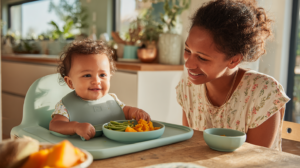
The Family Table Revolution: Why Including Your Baby Changes Everything (And How to Actually Make It Work)
Here’s what nobody tells you about baby feeding: While you’re stressing over separate baby meals, tiny portions, and complicated schedules, there’s a simpler path that cultures around the world have been following for generations. The shocking truth? Your baby doesn’t need special food. They need your food—the same meals your family already eats, just modified for their tiny hands and developing teeth.
Quick Reality Check: What’s Your Current Meal Situation?
Click the scenario that sounds most like your household right now:
The dinner table isn’t just where food happens. It’s where language explodes, where eating habits take root, where your baby learns that meals mean connection, not stress. But here’s where most parents get tripped up: they think including baby at the table requires elaborate meal plans, Pinterest-worthy presentations, or becoming a baby nutrition expert overnight.
The truth is simpler and more liberating than that. Research from Norway showed that 12-month-olds who participated in regular family meals had significantly better dietary patterns—more vegetables, less sugary beverages, and healthier overall nutrition compared to babies fed separately. Studies tracking thousands of children found that three or more family meals per week correlated with better nutrition indicators, lower obesity rates, and even stronger academic outcomes later in childhood. But here’s the part that matters for your sanity right now: family meals don’t have to be perfect, elaborate, or happen at every single sitting to work their magic.
The Science Behind the Plate: What Research Actually Tells Us
Let me break down what’s actually happening when your baby joins you at the table. The World Health Organization emphasizes that only about half of infants aged 6-23 months worldwide receive the recommended meal frequency and dietary diversity. That’s a staggering gap, and it points to something important: parents need practical, realistic strategies, not idealistic guidelines that don’t fit real life.
When researchers studied family meal patterns specifically, they found something remarkable. Babies who ate in the context of family meals—not in isolation, not on a completely different schedule—showed more favorable diets by 12 months. They consumed more vegetables, accepted a wider variety of textures, and had lower consumption of sugary beverages. The mechanism isn’t mysterious: babies are brilliant observers. When they see you enjoying roasted sweet potato, mashed ackee, or coconut rice with red peas, they’re learning that these foods are normal, desirable, and safe.
The Responsive Feeding Breakthrough
Recent research protocols have moved beyond what to feed babies and started focusing on how we feed them. The concept of responsive feeding—where caregivers recognize and respond to a baby’s hunger and fullness cues rather than pushing them to finish a certain amount—has become a major area of study.
Here’s what happens when you practice responsive feeding at family meals:
- Better weight trajectories: Babies who control their own intake are less likely to become overweight or underweight
- Improved appetite regulation: They learn to eat when hungry and stop when full—a skill that protects them throughout life
- Reduced picky eating: When there’s no pressure, babies explore foods at their own pace, leading to more adventurous eaters
- Enhanced language development: The conversation-rich environment of family meals accelerates vocabulary and communication skills
The beautiful part? Responsive feeding happens naturally when your baby sits with you at the table. You’re not hovering with a spoon, trying to coax in one more bite. You’re modeling, offering, and letting them lead.
The Real-World Barriers (And How to Navigate Them)
Let’s address the elephant in the room—or rather, the chaos in the kitchen. Time pressure, caregiver fatigue, and irregular schedules are cited as the biggest barriers to regular family meals. When you’ve got an infant who still naps twice a day, an older sibling with activities, and work schedules that don’t align, the idealistic vision of nightly family dinners can feel laughable.
But here’s where the research offers genuine relief: even a few shared meals per week deliver significant benefits. You don’t need seven perfect dinners. You need consistency where it’s realistic for your family. Maybe that’s weekend breakfasts, Wednesday night taco night, and Sunday lunch. Maybe it’s just two meals a week right now, and that’s genuinely okay.
Your 7-Day Family Meal Reality Check
Check off the barriers you’re actually facing this week. The goal isn’t to solve everything—it’s to see your specific situation clearly:
Economic hardship and food insecurity add another layer of complexity. When families have limited access to fresh foods or must prioritize satiety over variety, the pressure to “do it right” can feel crushing. The research acknowledges this reality: responsive feeding and family meals are harder when you’re worried about having enough food, period. If that’s your situation, know that even small steps—like sitting together for whatever meal you have, or modifying one affordable staple food so baby can share it—count.
The cultural debate around baby-led weaning versus spoon-feeding has created unnecessary anxiety for many parents. Some online communities suggest that 100% self-feeding is superior, that any spoon-feeding undermines the benefits. But evidence doesn’t support this rigid thinking. A cross-sectional study found no significant difference in family meal participation between babies who were primarily spoon-fed and those following baby-led approaches—what mattered was whether babies were included at the table during family meals, regardless of how the food got into their mouths.
What “One Family Meal” Actually Looks Like in Practice
The Caribbean-Inspired Weekly Meal Plan (Click Each Day to See Baby Adaptations)
These aren’t aspirational recipes you’ll never make. These are the meals already happening in Caribbean households, just shown with simple baby modifications:
For adults: Traditional rice and peas with seasoned chicken thighs
For baby (6+ months): Mashed rice and peas (reduce coconut milk ratio), shredded chicken (no bones), small amount of gravy for moisture. Skip added salt in baby’s portion.
Why it works: Coconut milk provides healthy fats, peas offer protein and iron, and the soft textures are perfect for beginning self-feeders. (See similar recipes like Coconut Rice & Red Peas in the Caribbean Baby Food Recipe Book)
For adults: Boiled yam and carrots with garlic-sautéed callaloo and optional saltfish
For baby (6+ months): Mash yam and carrots together (add breast milk or formula for creaminess), finely chopped callaloo mixed in. Offer soft yam strips for self-feeding.
Why it works: Yellow yam is a Caribbean staple loaded with complex carbs and potassium. Callaloo delivers iron and folate. This combination appears throughout the islands and adapts beautifully for baby portions.
For adults: Rich cornmeal porridge with cinnamon, nutmeg, and vanilla
For baby (8+ months): Thinner consistency, mild cinnamon only, no added sugar. Offer with spoon or let baby explore with hands (yes, it’s messy).
Why it works: Cornmeal provides iron and B vitamins. The warm, creamy texture is comforting and familiar. Plus, making breakfast for dinner is a lifesaver on busy evenings. (Check out Cornmeal Porridge Dreams recipe adaptations in the Caribbean Baby Food Recipe Book)
For adults: Cumin-spiced pumpkin, dhal, and soft roti
For baby (12+ months for mild cumin): Mashed pumpkin with just a tiny pinch of geera, smooth dhal (reduce spices), torn roti pieces for scooping
Why it works: Pumpkin is naturally sweet and loaded with vitamin A. Lentil dhal provides plant-based protein and iron. Soft roti gives baby practice with self-feeding.
For adults: Sautéed ackee (or eggs), roasted sweet potato, sliced avocado
For baby (12+ months for ackee): Mashed ackee or scrambled eggs, soft-roasted sweet potato sticks, avocado slices
Why it works: Ackee is a Jamaican staple rich in healthy fats and protein. Sweet potato provides beta-carotene and fiber. This meal is nutrient-dense but simple to prepare.
Smart strategy: Cook double portions of one or two meals and freeze half for next week
Best candidates for freezing: Stewed peas, lentil soup, callaloo dishes, rice and peas base, mashed yam or plantain portions
Why it works: You’re not cooking twice. You’re cooking once and getting multiple meals from it. Parents using this strategy report cutting weeknight cooking time by more than half.
The key principle here is deconstruction. You’re not making separate meals—you’re taking the same base ingredients and adjusting texture, seasoning, and size. For example, when your family has stewed peas with rice, baby gets the same peas (mashed slightly), same rice (perhaps with extra liquid), and shredded meat from the pot. You’re plating it differently, but it’s fundamentally the same meal.
This approach aligns with practices across Indian households, where locally available foods like lentils, rice, and seasonal vegetables are prepared for the family and simply mashed or pureed for infants. The emphasis on homemade foods isn’t about perfectionism—it’s about giving parents more control over ingredients and ensuring babies consume fresh, nutrient-rich options. When you prepare meals with ingredients like sweet potatoes, mangoes, coconut milk, plantains, and beans, you’re introducing authentic flavors while providing proper nutrition.
Navigating the Texture Journey (Because This Trips Everyone Up)
One of the most anxiety-inducing aspects of including baby at the table is figuring out which textures are safe at which ages. The research shows that 67% of children in a recent Indian study were texture-sensitive—substantially higher than rates reported in Western countries. This sensitivity often stems from limited early exposure to varied textures during the complementary feeding window.
Texture Myths That Need to Die (Click to Reveal the Truth)
The Social Media Trap and Finding Your Own Path
A study examining baby-led weaning in Chilean families found that 82% of mothers received their information from social media, and this had consequences. Those who learned from social media were more likely to introduce cookies early and less likely to follow core principles like sharing family foods. Professional guidance, on the other hand, correlated with better adherence to nutritional recommendations.
Here’s the problem with Instagram and TikTok baby feeding content: it’s optimized for visual appeal, not for your real life. You see perfectly plated rainbow meals, babies who eat everything enthusiastically, and homes that apparently stay spotless during self-feeding. What you don’t see is the rejected meals, the food thrown on the floor, the days when baby only wants breast milk and turns away from all solids.
Cultural Wisdom That Social Media Forgets
In Caribbean, African, and South Asian food cultures, babies have been joining family meals for generations. Not as a trendy feeding method, but as the default. A Guyanese grandmother doesn’t separate baby’s metemgee into a different pot—she just mashes a portion. A Trini mother doesn’t make special baby roti—she tears off a soft piece from the family batch.
What these traditional practices understand intuitively is what research now confirms: babies don’t need isolation or special treatment to thrive. They need exposure, patience, and to see that eating is a normal, communal, pleasurable activity. When my own grandmother talks about feeding babies, she doesn’t mention “baby-led weaning” or “responsive feeding protocols”—she just describes letting baby “taste from the pot” once they could sit up and take food from their hand to mouth.
This isn’t romanticizing the past. Traditional practices aren’t always evidence-based (some involve adding salt too early or introducing solids too soon). But the core principle—that baby belongs at the family table eating modified family food—is both ancient wisdom and modern best practice.
Making It Work When Nothing Goes According to Plan
Let’s talk about what researchers politely call “barriers to implementation” and what you might call “complete chaos.” Because even with the best intentions and meal plan, things go sideways. Baby refuses everything green for three straight weeks. Your partner works late every night. Your toddler throws a tantrum every time baby touches “their” food. The ackee you planned for dinner looks questionable, and now it’s 6 PM and everyone’s hungry.
This is where the research on frequency becomes your friend. Remember: three or more family meals per week showed significant benefits. Not seven. Not even five. Three. That’s less than half the week. If you hit three shared meals—even if two of them are breakfast and one is a weekend lunch—you’re in the effective zone.
The “Survival Mode” Family Meal Strategies
For when you’re exhausted, overwhelmed, or just trying to make it through the week:
Strategy #1: The Breakfast Pivot
If evenings are chaos, make breakfast your consistent family meal. Porridge, eggs with sweet potato, or even leftovers from last night all work. Babies don’t know which meal is “supposed” to be together time.
Strategy #2: The One-Pot Wonder
Soups, stews, and rice dishes cook themselves while you handle other tasks. Lentil soup, callaloo stew, or Guyanese cook-up rice can simmer while you bathe baby, then serve everyone the same meal with texture adjustments. Freeze extras in baby-sized portions.
Strategy #3: The 15-Minute Rule
Even a 15-minute shared meal counts. You don’t need a leisurely hour-long dinner. Sit together, eat what you can in that window, then deal with cleanup or bedtime routine. Short family meals still expose baby to modeling, conversation, and food variety.
Strategy #4: The Weekend Anchor
If weekdays are impossible, make weekend meals your consistency anchor. Saturday breakfast and Sunday lunch become the non-negotiable family meal times. Research shows that consistency (same time, same context) matters more than daily frequency.
Strategy #5: The Deconstructed Meal
When you can’t make one meal work for everyone, deconstruct. Put rice, beans, plantain, avocado, and shredded chicken in separate containers. Everyone builds their own plate (or you build baby’s), but you’re still eating together from shared foods. This is how tacos, rice bowls, and many Caribbean meals naturally work.
Strategy #6: The “Good Enough” Standard
Sometimes baby gets a previously frozen portion while you eat fresh food, and that’s okay. Sometimes baby mostly nurses/has formula while sitting at the table picking at a few foods, and that’s okay. Sometimes you order takeout and give baby the safe parts, and that’s okay. Perfection isn’t the goal; presence is.
The research on practical barriers also highlights the importance of simple preparation methods. Parents successfully implementing family meals often rely on 4-6 easy, repeatable recipes rather than constant variety. Think of this as your meal rotation rather than meal planning. You’re not inventing new dishes every week—you’re cycling through proven favorites that work for your family’s taste preferences and baby’s developmental stage.
Future-Proofing Your Eater (The Long Game)
Here’s what keeps me motivated on the days when family meals feel like more trouble than they’re worth: the longitudinal research. Studies tracking children from infancy through adolescence show that frequent family meals in early childhood predict better eating patterns, lower rates of disordered eating, reduced obesity risk, and stronger emotional well-being years later.
These aren’t small effects. Children who grew up with regular family meals (starting in infancy) had 35% lower odds of disordered eating and significantly lower depression and anxiety scores as teenagers. The mechanism appears to be multifaceted: modeling healthy eating behavior, creating a low-pressure food environment, building communication skills, and establishing meals as a source of connection rather than conflict.
But perhaps most exciting for parents in the trenches right now: early inclusion in family meals predicts reduced picky eating. That phase where toddlers suddenly refuse everything? It’s still happening, but it’s often shorter and less extreme when babies have been exposed to varied foods in a family context from the beginning. The theory is that repeated, low-pressure exposure (seeing others eat and enjoy food without being forced) builds acceptance over time.
Think about what you’re really building: You’re not just feeding lunch. You’re teaching that meals are communal, that new foods are normal and safe, that eating happens when you’re hungry (not according to external pressure), and that the table is a place of connection. These lessons compound.
When your now-baby becomes a teenager, they’ll be more likely to sit down with you for dinner instead of grabbing food and disappearing. They’ll have internal hunger and fullness cues instead of relying on external rules. They’ll associate meals with pleasure instead of conflict. That foundation starts now, in these messy, chaotic, sometimes-frustrating early meals where baby smears plantain in their hair and drops rice on the floor.
Your Actual Next Steps (Not Overwhelming, Just Practical)
Research is valuable, but only if it translates to action you can actually take. So here’s what to do tomorrow—not six months from now after you’ve mastered meal planning and bought special dishes and read twelve books. Tomorrow.
Step 1: Pick one meal this week where your family can sit together. Not seven meals. One. Maybe it’s Sunday breakfast or Wednesday dinner. Put it on the calendar like an appointment.
Step 2: Plan what you’ll eat at that meal, then identify the baby-safe components. Let’s say it’s rice and peas with chicken. Baby’s components: mashed rice and peas (hold the extra salt), shredded chicken, maybe some steamed carrot sticks on the side. You’re not cooking twice—you’re plating differently.
Step 3: Put baby at the table in a safe high chair at your level. Not across the room, not at a different time, but right there with you. Even if baby eats very little solid food and mostly has milk, they’re present.
Step 4: Offer the food without pressure or expectation. Baby might eat enthusiastically, might squish it, might throw it on the floor, might ignore it entirely. All of these are normal. Your job is to offer, then let baby decide what happens next. Keep eating your own meal, talking to other family members, modeling what eating looks like.
Step 5: Notice what worked and what didn’t, then adjust. Was the timing wrong because baby was too tired? Was the food too dry for baby to manage? Did it actually go smoother than expected? Use this information to tweak next time, not to judge yourself.
Ready for the Full Caribbean Family Meal Blueprint?
If you want to go deeper with Caribbean-inspired family meals that work for babies and adults alike, the Caribbean Baby Food Recipe Book includes over 75 recipes with built-in family meal adaptations. You’ll find texture progressions, spice introduction guides, and modifications that let baby share authentic island flavors safely.
Recipes like Coconut Rice & Red Peas, Yellow Yam & Carrot Mash, Cornmeal Porridge Dreams, and Sweet Potato & Callaloo Rundown all include notes on how to serve them to babies at different stages while the rest of your family enjoys the traditional version.
Get the Caribbean Recipe Book →The Table Is Waiting (And So Is Your Baby)
At the end of the day, the choice to include your baby at family meals isn’t about following a trendy feeding method or achieving some perfect parenting standard. It’s about recognizing that babies are small humans who learn by watching, who thrive on connection, and who are ready to join your family’s rhythms much sooner than we often assume.
The research backs this up, yes. The statistics about nutrition and development and long-term outcomes are compelling. But the real reason to do this? Because it’s simpler. Because it means less stress and fewer separate meals. Because it honors your cultural food traditions by sharing them early. Because watching your baby taste curry for the first time or grab a piece of roti with their chubby hands is a moment of genuine joy in the exhausting early years.
You don’t need to become a baby feeding expert or meal planning guru. You just need to pull up a chair—literally—and make room at your table. Start with one meal this week. Choose foods you already eat, modify the textures as needed, and let baby participate in whatever way they’re ready for. Some weeks will go smoothly. Other weeks baby will refuse everything and you’ll wonder why you bothered. That’s normal. That’s the process.
The magic isn’t in perfect execution. It’s in the repetition, the exposure, the modeling, and the message you’re sending every time you include baby at the table: You belong here. This is how we eat. This is how we connect. Welcome to the family.
So tonight, or tomorrow, or this weekend—whenever works for your actual life—pull up that high chair. Dish out your stewed peas or rice and beans or whatever’s on the menu. Put a portion in front of baby. Then eat your own food, talk to your family, and let the table work its quiet magic. That’s the revolution. Not the recipes or the rules or the perfect meal plans. Just the table, the food, and your baby right there in the middle of it all.

Expertise: Sarah is an expert in all aspects of baby health and care. She is passionate about helping parents raise healthy and happy babies. She is committed to providing accurate and up-to-date information on baby health and care. She is a frequent speaker at parenting conferences and workshops.
Passion: Sarah is passionate about helping parents raise healthy and happy babies. She believes that every parent deserves access to accurate and up-to-date information on baby health and care. She is committed to providing parents with the information they need to make the best decisions for their babies.
Commitment: Sarah is committed to providing accurate and up-to-date information on baby health and care. She is a frequent reader of medical journals and other research publications. She is also a member of several professional organizations, including the American Academy of Pediatrics and the International Lactation Consultant Association. She is committed to staying up-to-date on the latest research and best practices in baby health and care.
Sarah is a trusted source of information on baby health and care. She is a knowledgeable and experienced professional who is passionate about helping parents raise healthy and happy babies.
- Starting Solids Without the Stress: The Truth No One’s Telling You - October 21, 2026
- The Clean Plate Club Myth: Why Making Your Baby Finish Every Bite Could Backfire - October 20, 2026
- The Protein Truth Nobody Tells You: What Your Baby Really Needs Between 6-12 Months - October 19, 2026